Hello. I’m Mr. Linen.
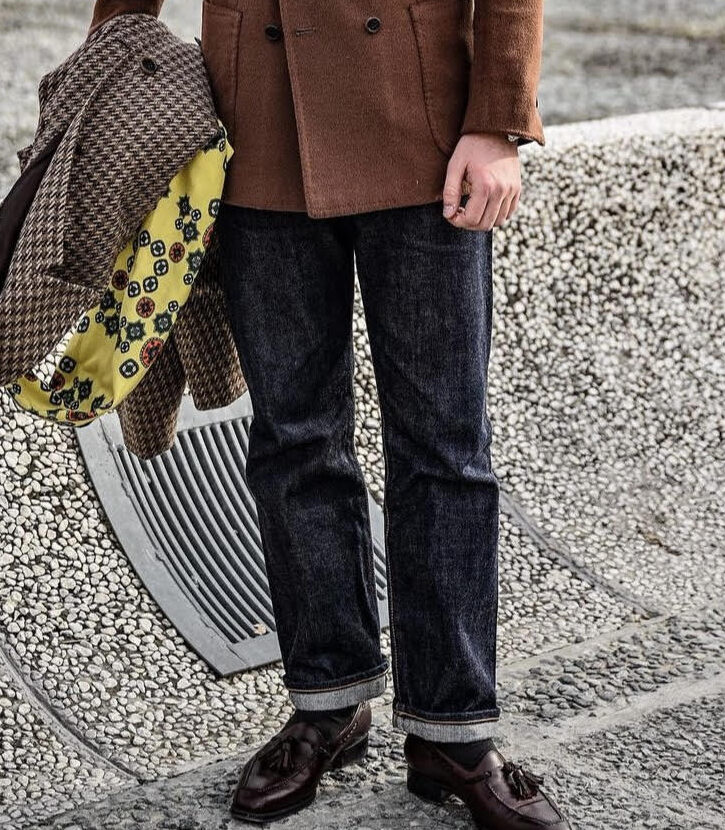
I love wearing denim with tailored jackets.
A tailored jacket gives the outfit a certain level of refinement, while denim adds a relaxed element and prevents the whole look from appearing as though you’ve tried too hard.
I want to look somewhat grown-up and sophisticated, but I also don’t want people to think I’ve made too much effort. Yes, I’m probably a slightly overly self-conscious person with rather complicated ideas about how I want to dress.
Putting aside the advantage of not looking overly dressed, I think the combination of a tailored jacket and denim is incredibly versatile.
Of course, wearing denim with a casual jacket or blouson on the weekend looks great. But don’t you sometimes want to look just a little more refined?
For example, when going to a nice restaurant, visiting a museum, having drinks with an older acquaintance or a client, or going on a date.
If you pair dark denim with a navy blazer, I think it can even work for the office in some workplaces, depending on the dress code.
When wearing tailored jackets with denim, I think one of the most important details is the length of the jeans.
Just as with tailored trousers, should the jeans have a half break, or should they have no break at all?
And if you plan to roll them up, you need to take that into account when deciding on the original length.
In this article, I’ll examine these points in detail.
Related articles

Conclusion: No Break to Half Break Is Best
Let me give you my conclusion first.
I believe the ideal denim length for wearing with a tailored jacket is somewhere between a no-break and half-break: the hem should just touch the shoe and create a very slight amount of stacking.

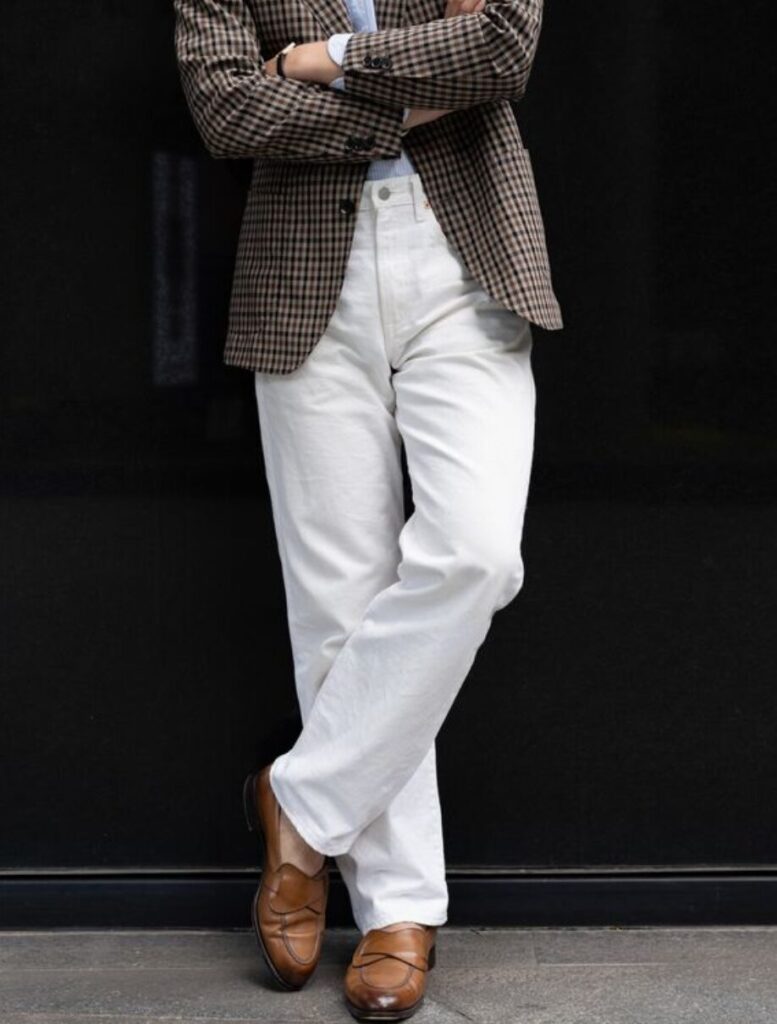
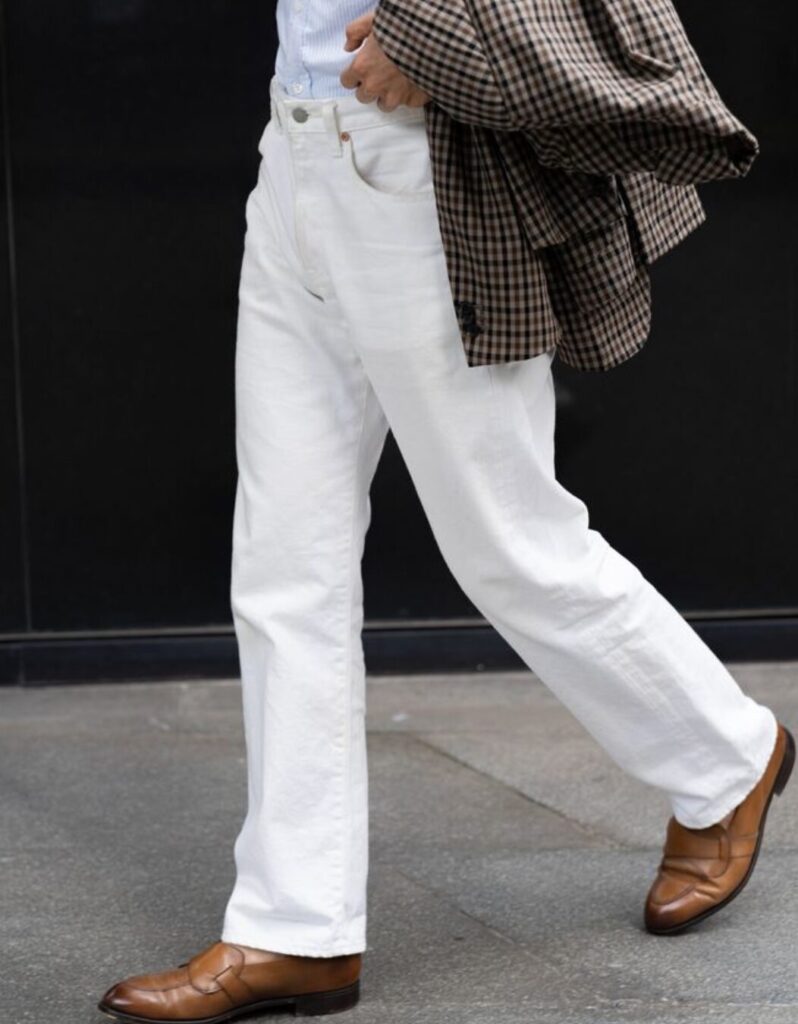
With tailored trousers, I personally prefer something around a half break to a full break, so with denim I think it looks better when the hem is just slightly shorter.
Of course, denim does not have the same set of formal rules as suit trousers, so you are free to wear it however you like. (Perhaps suit trousers are also more flexible than we sometimes make them out to be.)
Please keep in mind that this is very much a matter of personal preference on my part.
With that in mind, let me explain why I think no break to half break works particularly well.
First, if denim is too long, it can work with a classic, rugged American workwear look, but I don’t think it works as well with a tailored jacket.
When the jeans are too long, excess fabric gathers around the hem, creating a heavier and more untidy appearance.
But that doesn’t mean shorter is always better.
If the jeans are short enough to expose the ankle, they can look awkwardly cropped and undersized, much like trousers that are simply too short.
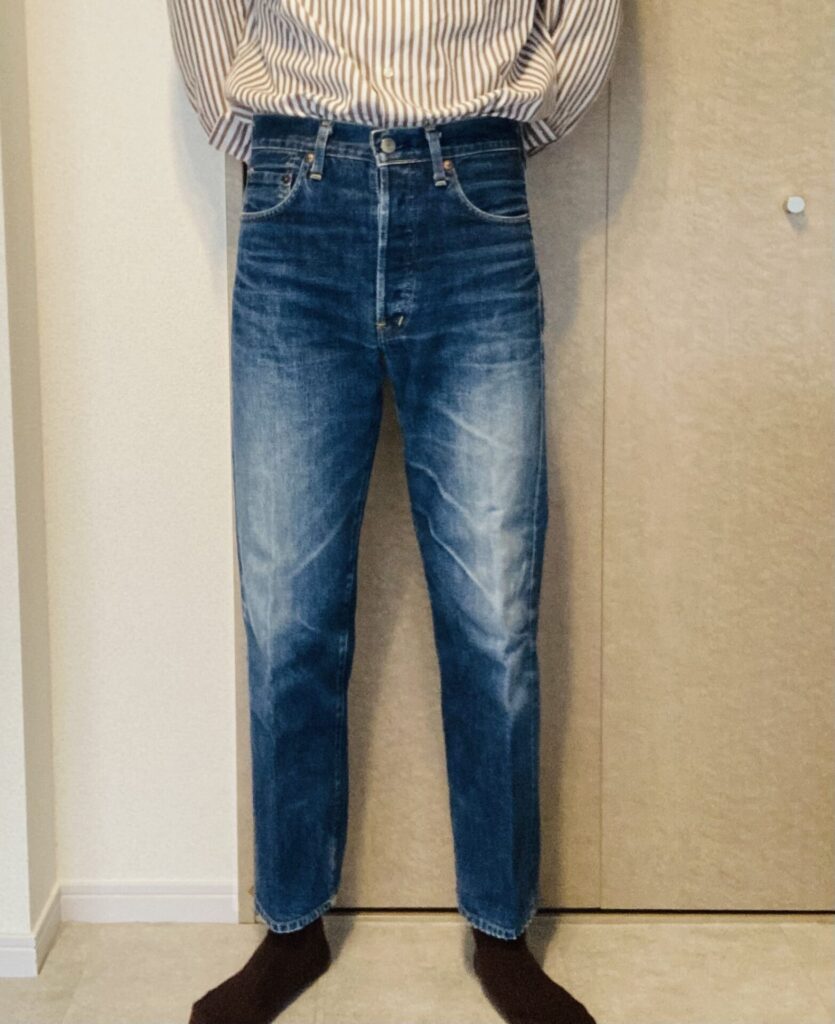
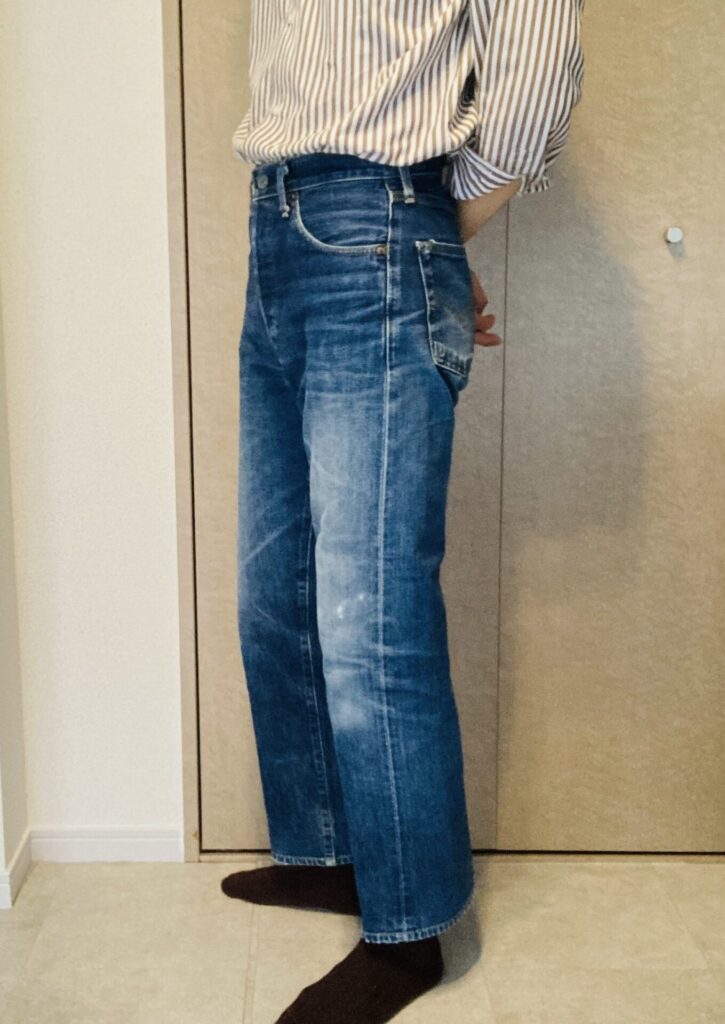
Even if they aren’t quite as short as the jeans in these photos, a slightly longer no-break length can look clean and well-proportioned. However, I find that it can sometimes look a little too polished. A tiny amount of stacking feels more natural and relaxed, without becoming sloppy, and to me that is the sweet spot for denim.
There is another consideration: denim is often rolled up.
If you roll up a pair of jeans that is already at a no-break length, even a single turn can make them look noticeably too short. With a half-break, however, rolling them up brings them to roughly a slightly shorter no-break length.
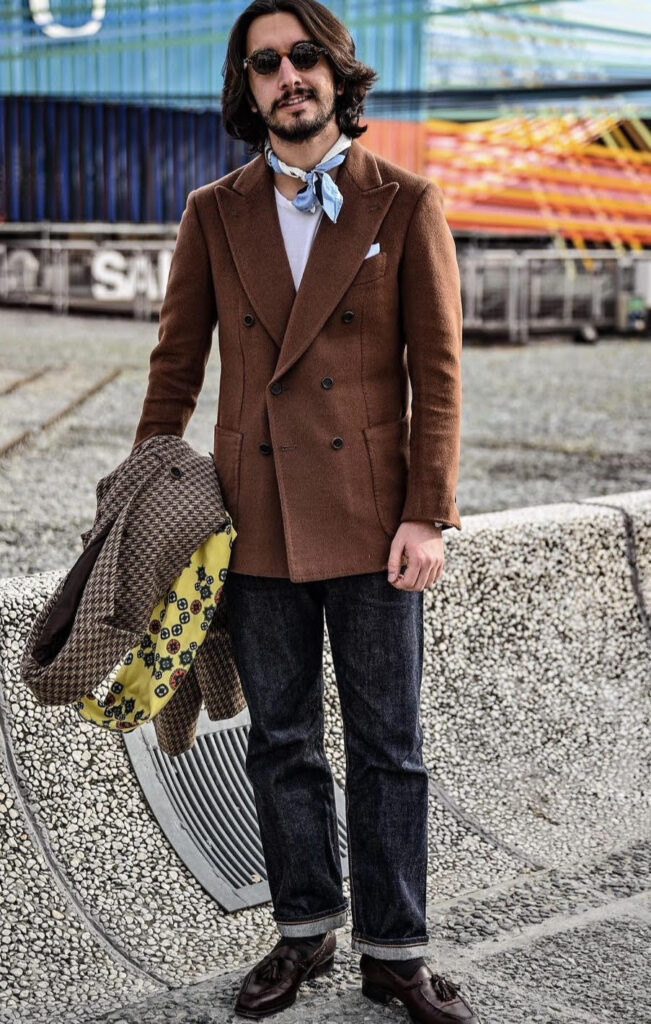
In other words, one advantage is that the jeans work both rolled up and unrolled.
If you are someone who always wants to roll up your jeans, however, you should determine the length based on how they look when rolled up.
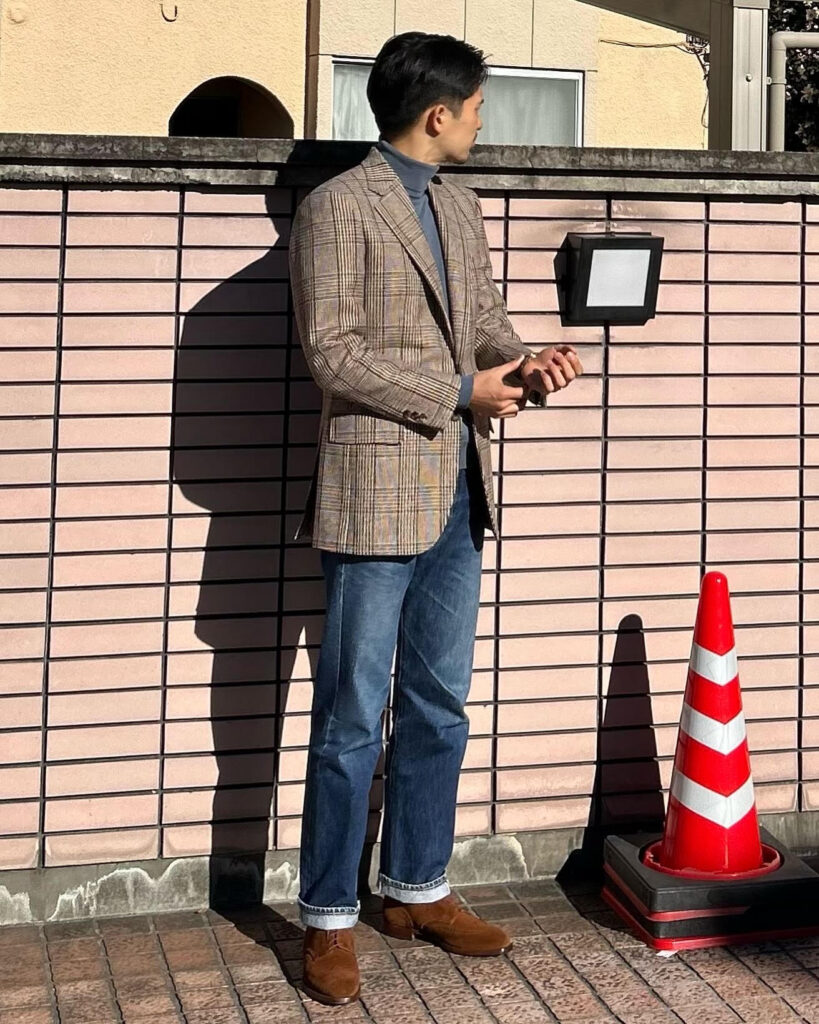
When rolled up, I think a length slightly shorter than no-break to half-break works best—in other words, a clean, just-barely-no-break length.
The reason is that a roll-up combined with a break can make the hem look bulky and untidy. The fabric is already doubled over because of the roll-up, so allowing additional fabric to bunch up underneath it can easily become too much.
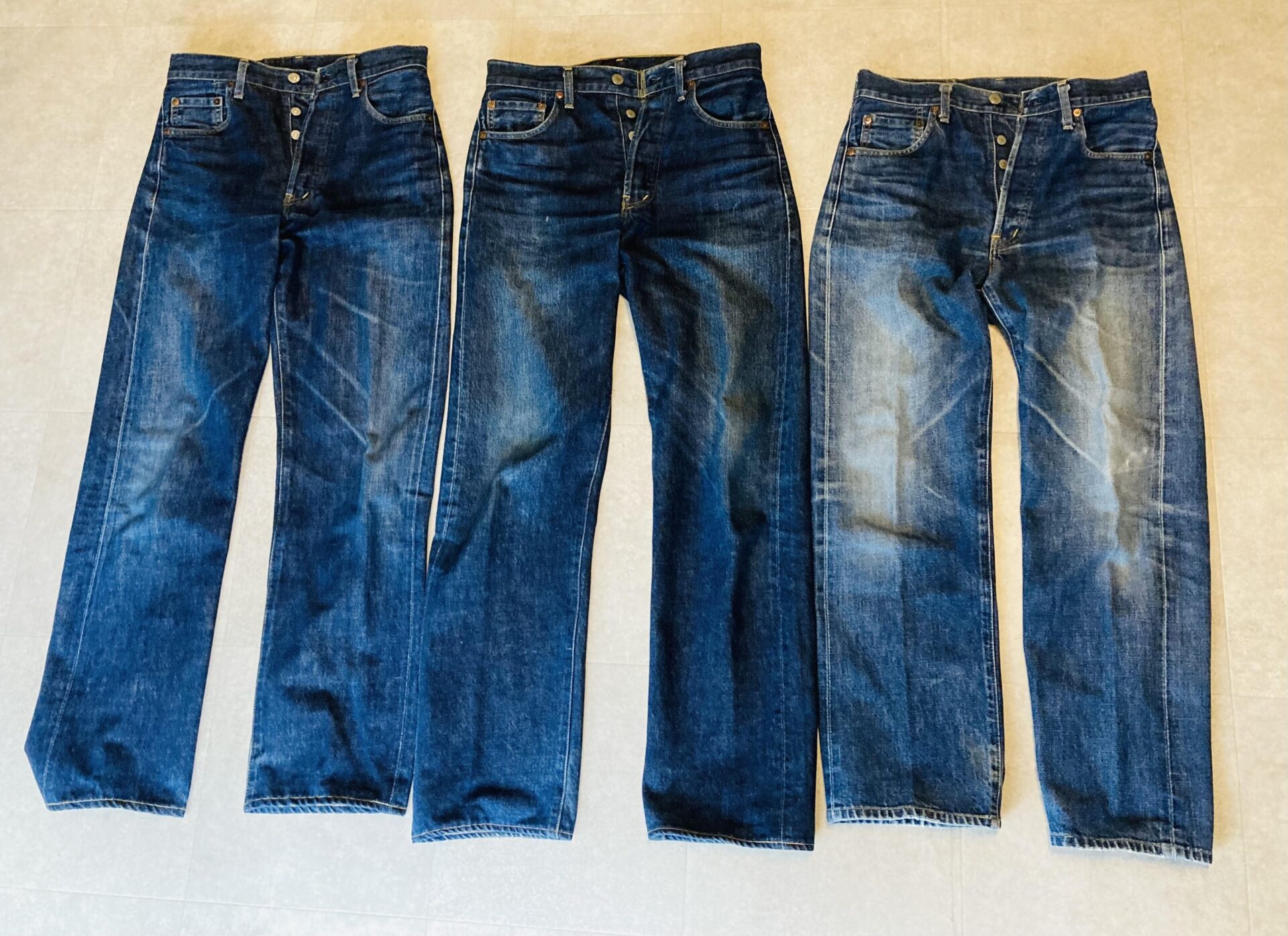
The denim in this photo would have roughly a two-break length if worn unrolled, but when rolled up it becomes a clean no-break length. I therefore wear this kind of denim with rolling up in mind from the beginning.
Hem Width Matters
Many of you will have noticed that there are many different types of denim: slim, straight, wide, and everything in between.
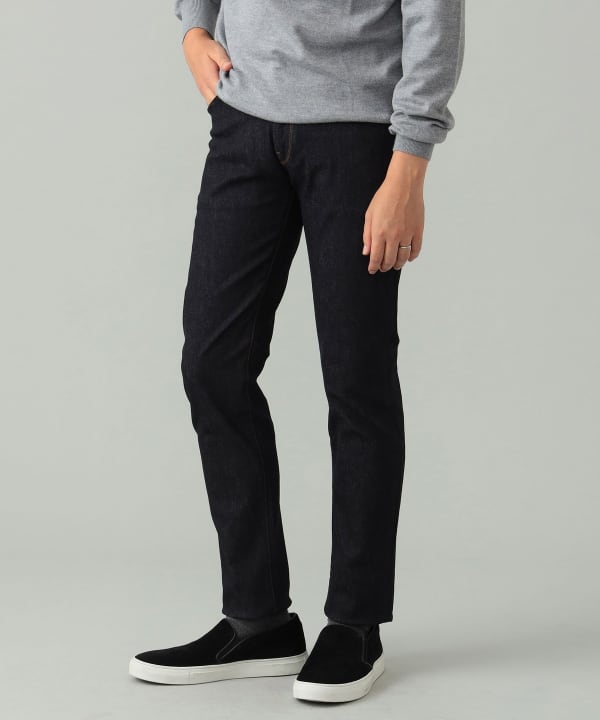
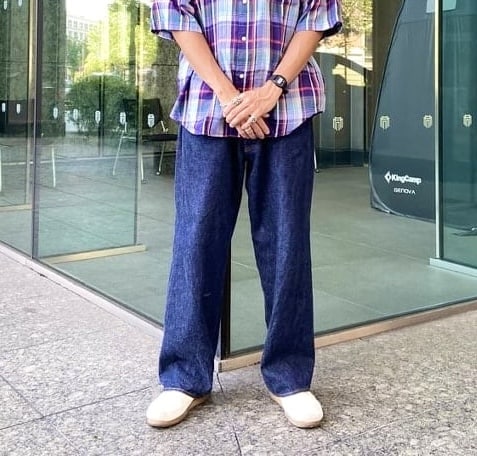
As with tailored trousers, the narrower the hem, the better a relatively shorter length tends to look. With wider jeans, a relatively longer length usually creates better proportions.
With slim denim that is narrow enough to tuck into boots, I think it looks cleaner without any excess fabric at the hem, so a no-break length or even slightly shorter works well.
With wider denim, however, a no-break length can easily look too short once the hem rises as you walk. In that case, I prefer around a one-break length, or slightly longer.
Which Denim Brands Work with Tailored Jackets?
When it comes to denim worn with tailored jackets, my favorite is the classic Levi’s 501.
It doesn’t necessarily have to be the Levi’s 501 itself. I generally prefer a very ordinary straight-leg silhouette with a similar feel.
There are also many excellent denim brands outside of Levi’s, particularly in Japan.
WAREHOUSE, FULL COUNT, SUGAR CANE, RESOLUTE, and many others.
I’m reminded of how fortunate I am to live in Japan, where I can buy denim from these brands without having to pay expensive international shipping.
There are also Italian brands that make slim, stylish denim, as well as brands that deliberately create much wider, almost baggy silhouettes.
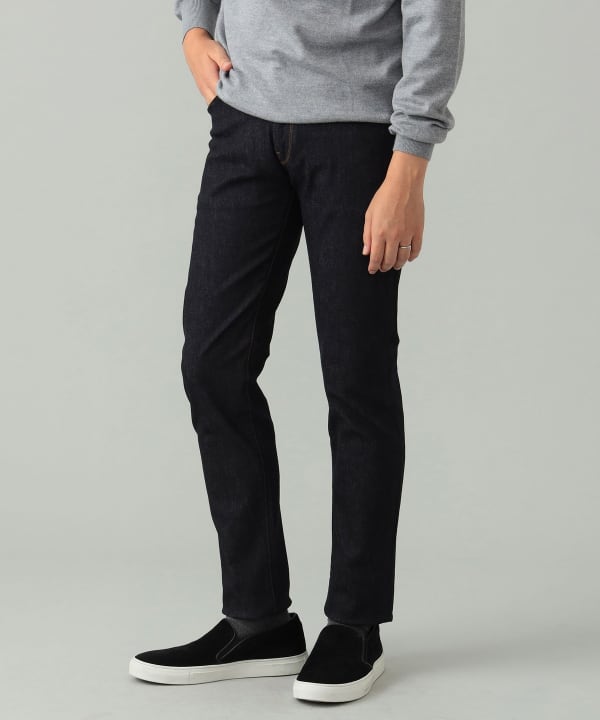
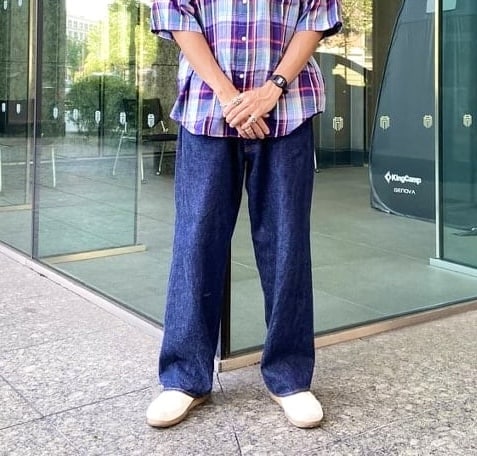
I think both styles look great as denim on their own. However, when paired with a tailored jacket, they can make the outfit look more deliberately fashionable, which takes away some of the appeal of denim—the feeling that you didn’t try too hard. Personally, I’d rather wear these kinds of denim with something other than a tailored jacket on top.
For those like me who can’t afford vintage Levi’s 501s at today’s prices, one model I recommend is the Levi’s 503B.
I wrote about it in detail here. (sorry this is only in Japanese.)
Conclusion
The ideal denim length for wearing with a tailored jacket is a no-break to half-break length, where the hem just touches the shoe and creates a very slight amount of stacking.
I’ve explained the reasons why I think this works best.
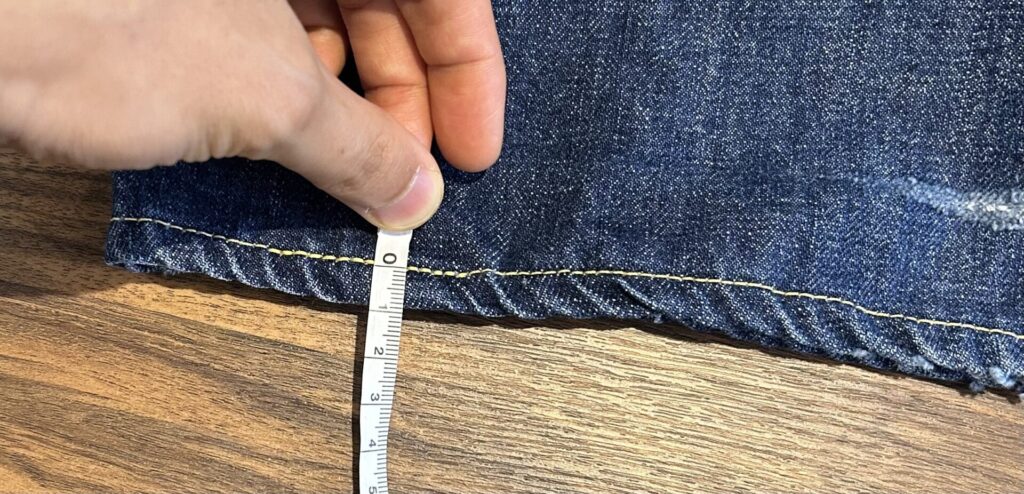
One final point: when hemming denim, the width of the hem below the original stitching and the type of sewing machine used are both important details.
I explain these points in more detail in this article as well, so please take a look if you’re interested.
That’s all for today.
Thank you very much for reading.

コメント