Hello, this is Mr. Linen.
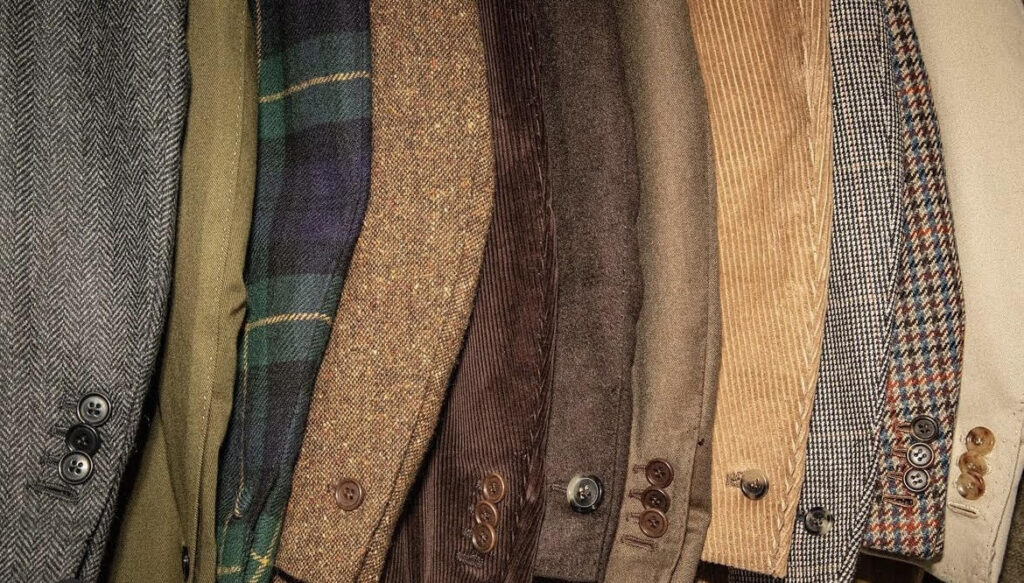
When it comes to tailored jacket buttons, it may be common knowledge that natural materials—such as horn, corozo (tagua nut), or shell—are preferable to plastic.
There are also classic pairings between fabric and button materials: horn for wool, nut for tweed, and shell for linen, for example.
But what about the color of the buttons?
In this article, I’d like to explore how to choose button colors, and how they relate to the color of your leather shoes.
The Basics of Choosing Button Colors
When selecting button colors for a tailored jacket, it’s often said that matching them closely to the fabric color is the safest choice. Even if there’s a slight variation, staying within the same color family is recommended.
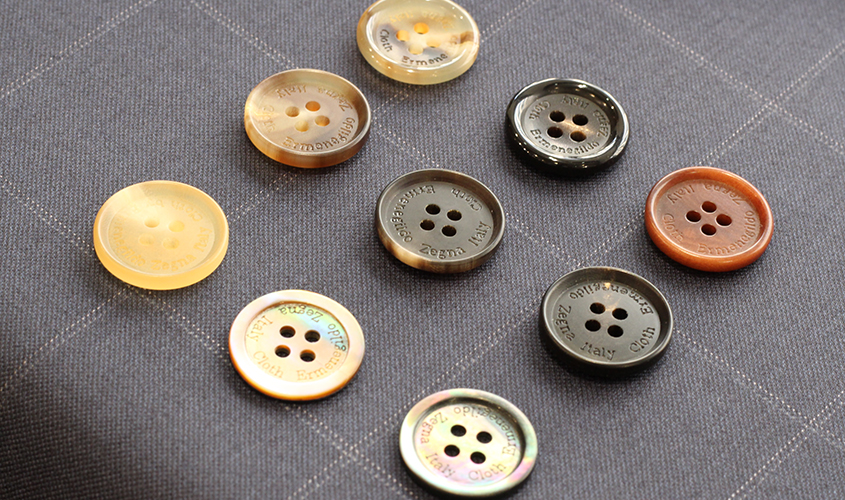
This is because the buttons won’t stand out too much and will remain understated.
That said, intentionally contrasting the button color can also look great—if done correctly.
A good example is pairing a blue linen jacket with white mother-of-pearl buttons. It feels summery and fresh, without looking overly flashy.
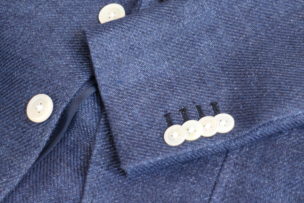
With a blue linen jacket, blue-toned buttons also work, and black shell buttons can add subtle summer character. However, in my opinion, nothing matches the freshness of white mother-of-pearl.
Another good combination is brown buttons on a white or ivory jacket.
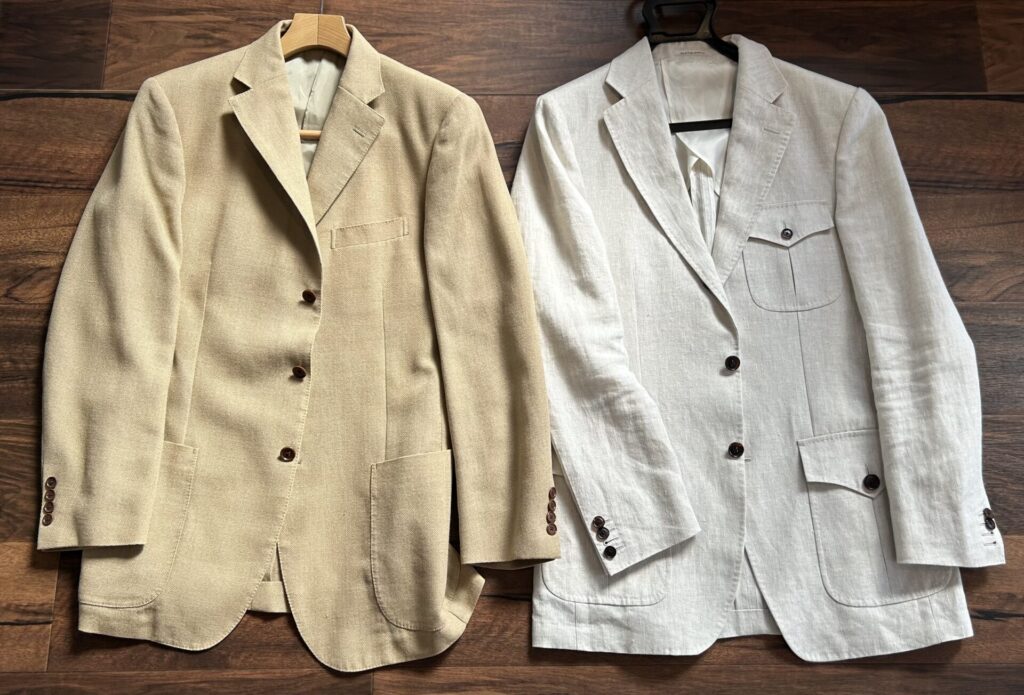
Using white or ivory buttons instead can look elegant, but it also makes styling slightly more challenging.
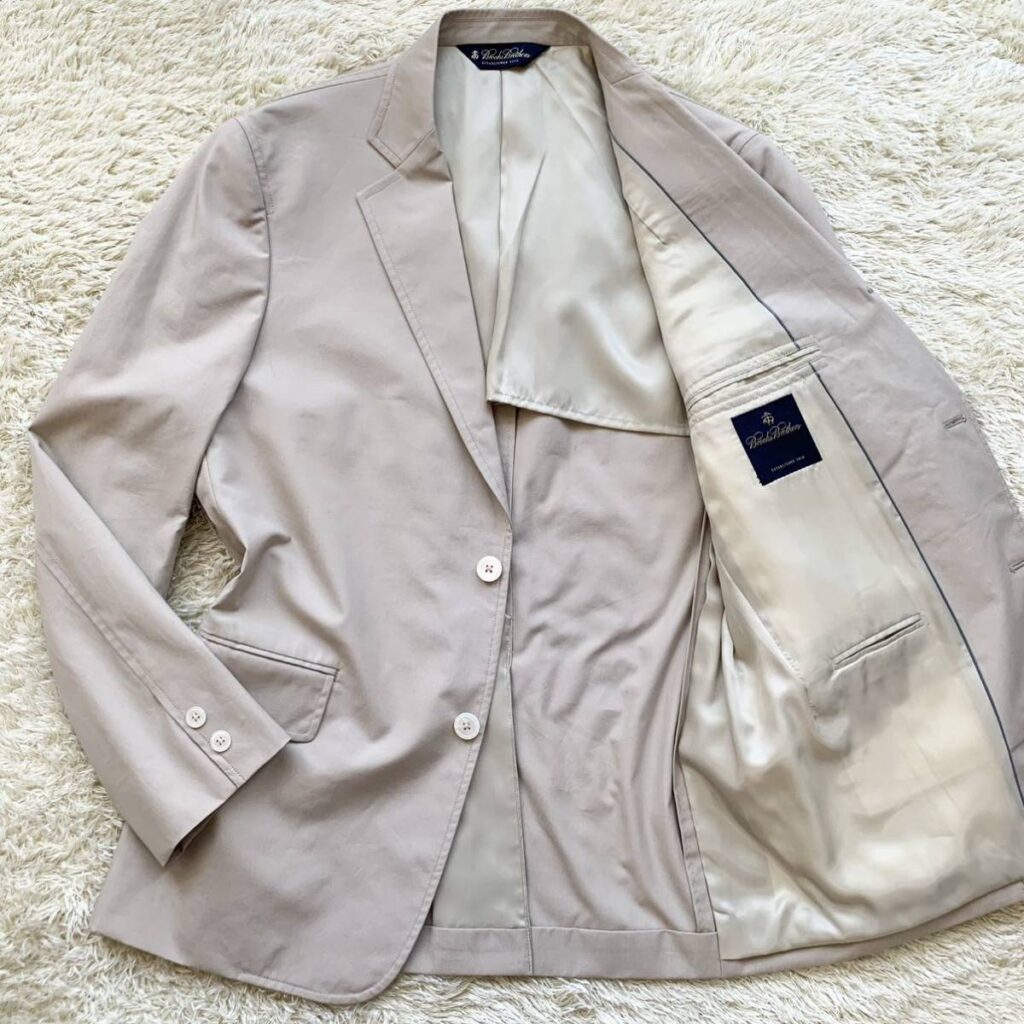
As you can see, varying button color is quite common. However, for more formal, subdued suits, buttons are usually matched closely to the fabric.
That said, dark brown and black buttons are widely used regardless of suit color, as they are subtle and unobtrusive.
For a navy suit, navy buttons are standard—but dark brown or black also work well.
The same applies to gray suits. In fact, dark brown or black buttons are often more common than gray ones.
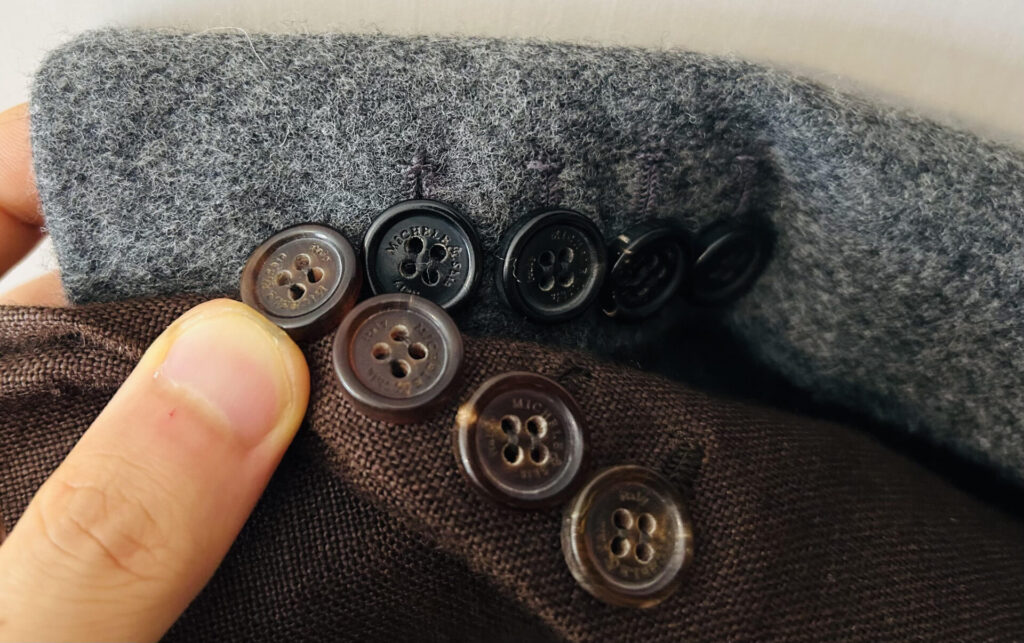
For brown suits, dark brown buttons are an obvious match. Black buttons can work, but may feel slightly out of place—especially with lighter shades of brown.
To summarize this section: matching button color to the jacket is the safest choice.
Lighter-colored buttons are more stylish but harder to coordinate.
Dark brown and black buttons are the most versatile and commonly used.
The Relationship Between Buttons and Shoes
Now, what interests me most is the relationship between button color and shoe color.
In my opinion, they don’t have to match exactly—but they should be relatively close in tone.
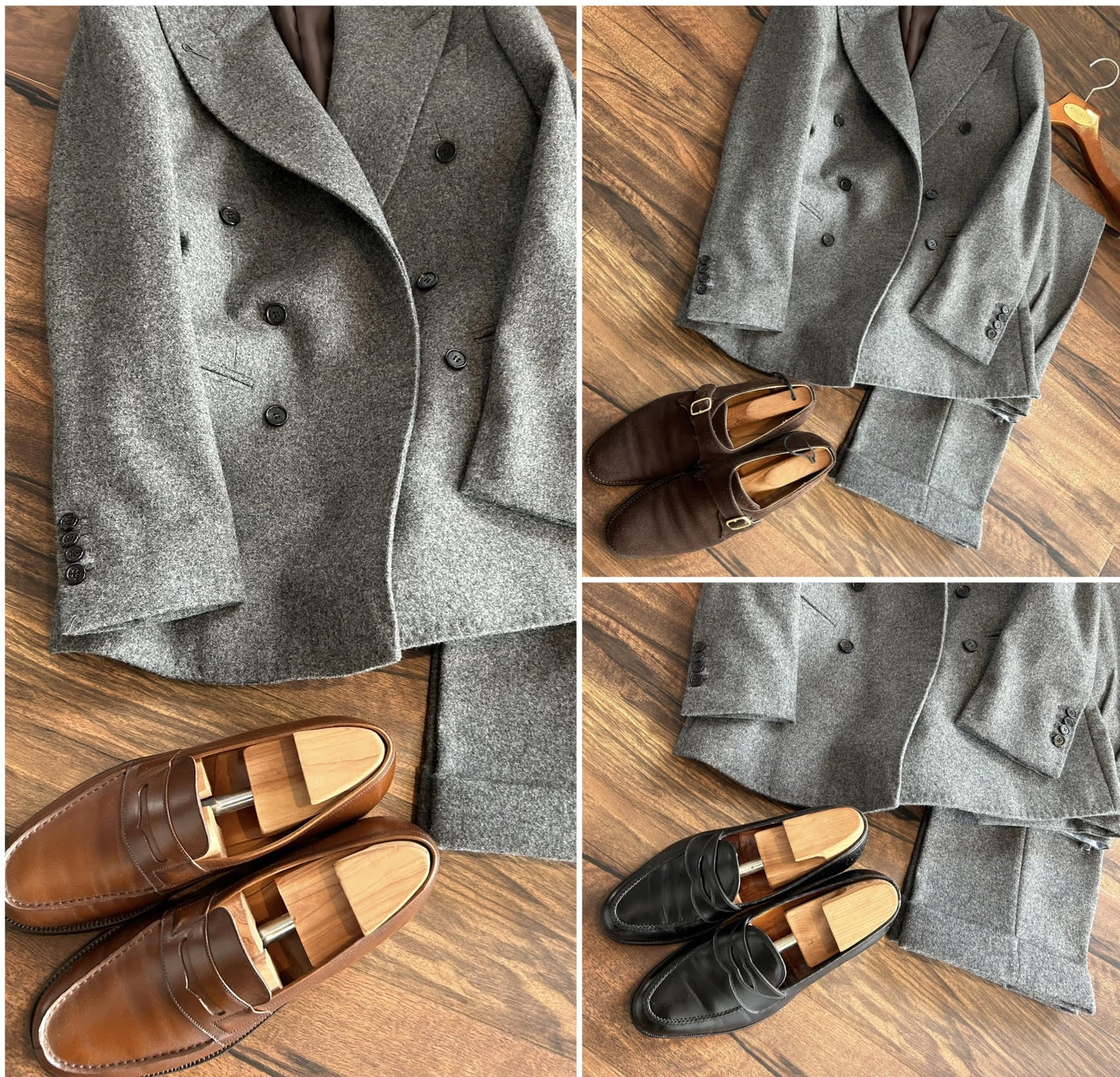
For example, if you have a gray suit with black buttons:
Black shoes are a perfect match, and dark brown shoes also work well.
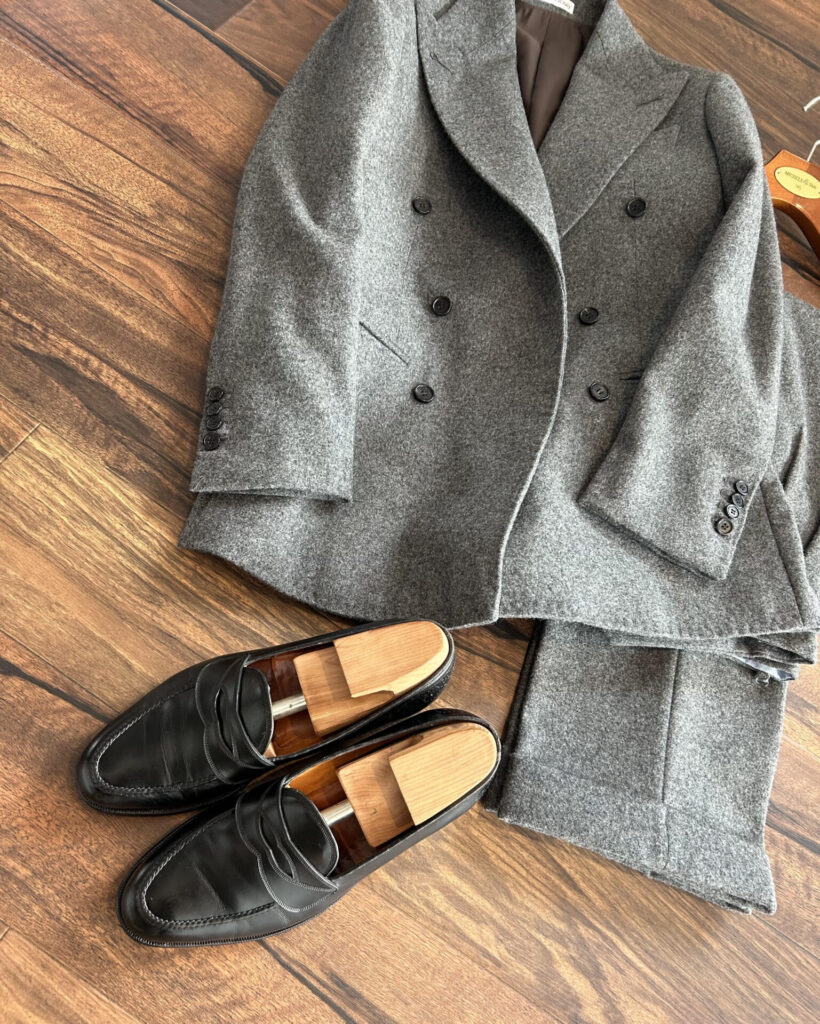
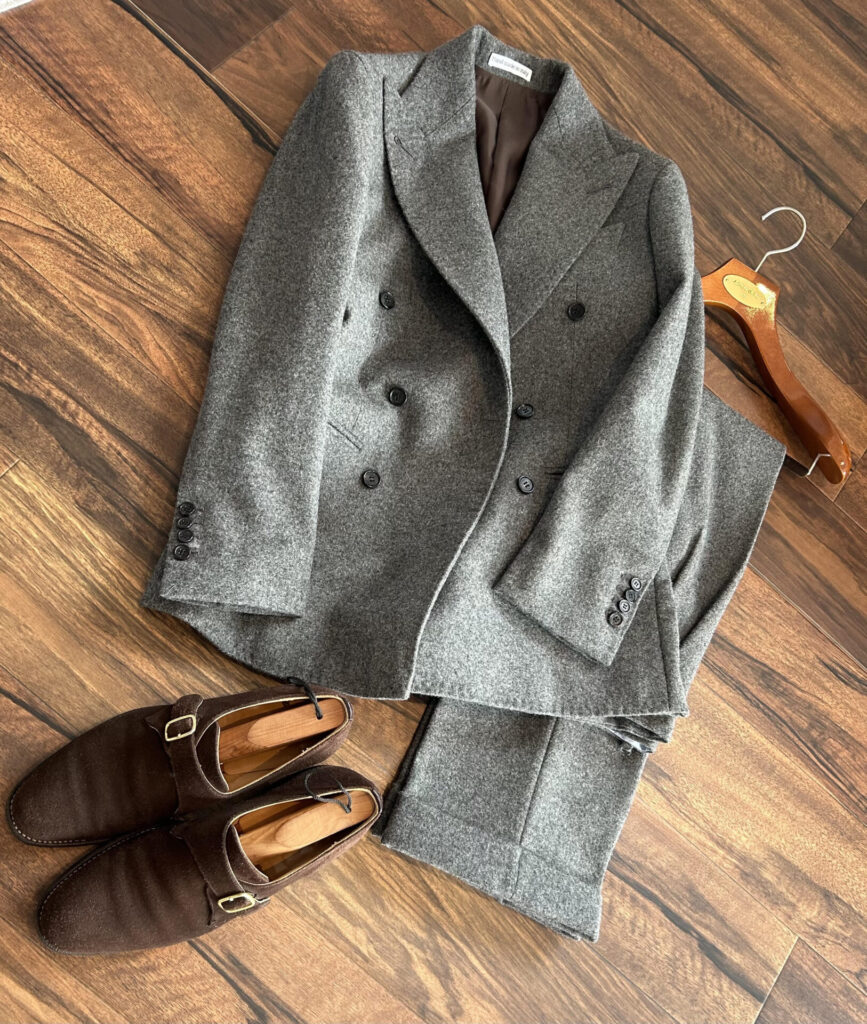
However, pairing it with lighter brown shoes can feel slightly mismatched.
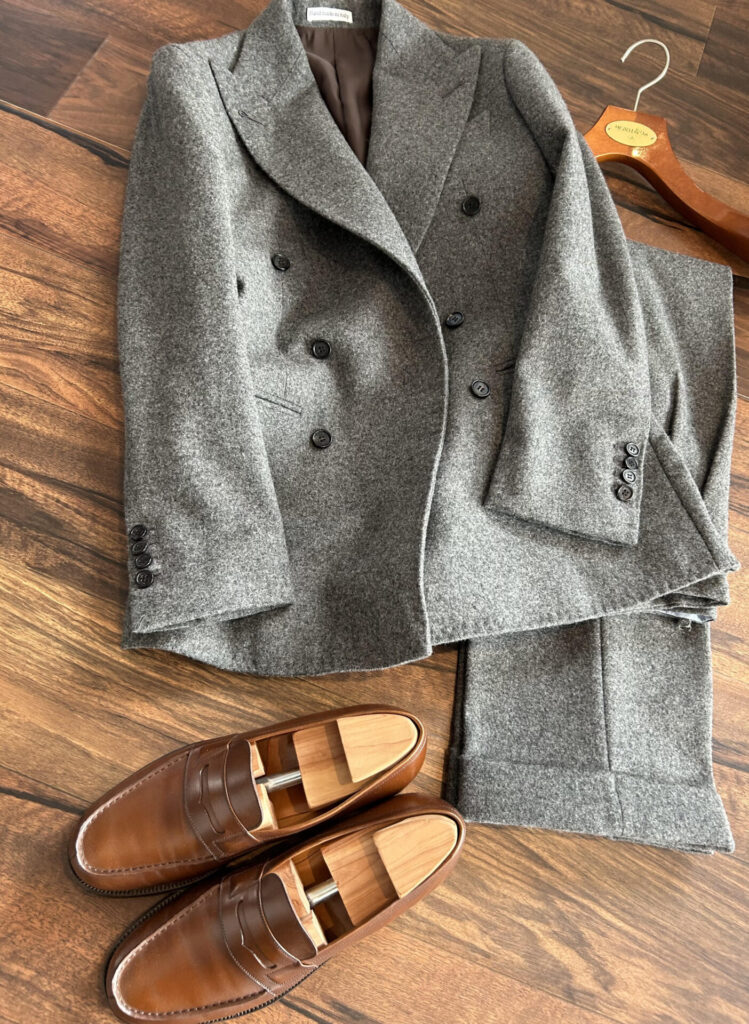
If the buttons were dark brown or lighter brown, then lighter brown shoes would work perfectly.
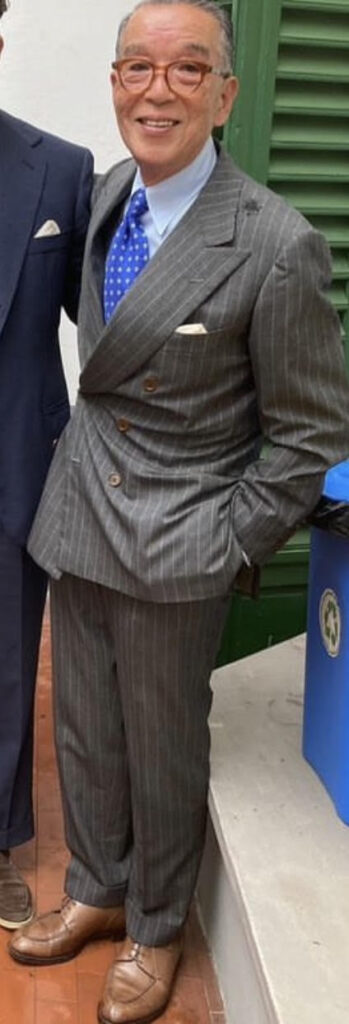
Considering all this, the safest approach is to match the button color with the jacket fabric.
That way, by focusing on the jacket color alone, you naturally account for the button color as well—and you don’t have to overthink the relationship with your shoes.
When the jacket and button colors differ, choosing shoes becomes more complicated.
The Case for Dark Brown Buttons
I mentioned that matching jacket and button colors is the easiest approach—but what about patterned jackets with multiple colors?
In a fabric like this, with beige and brown tones, light brown buttons look perfectly matched (even though this is a coat).
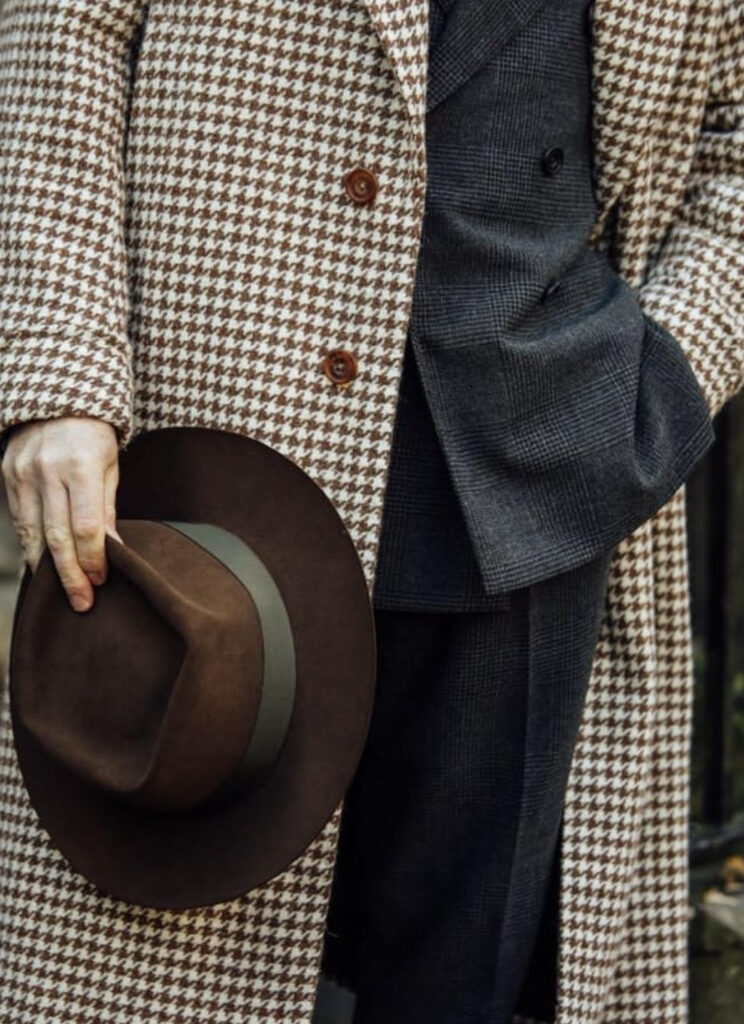
For more complex patterns with three or more colors—such as those including blue or red—choosing blue or red buttons can be risky. In such cases, brown-toned buttons are the safest option.
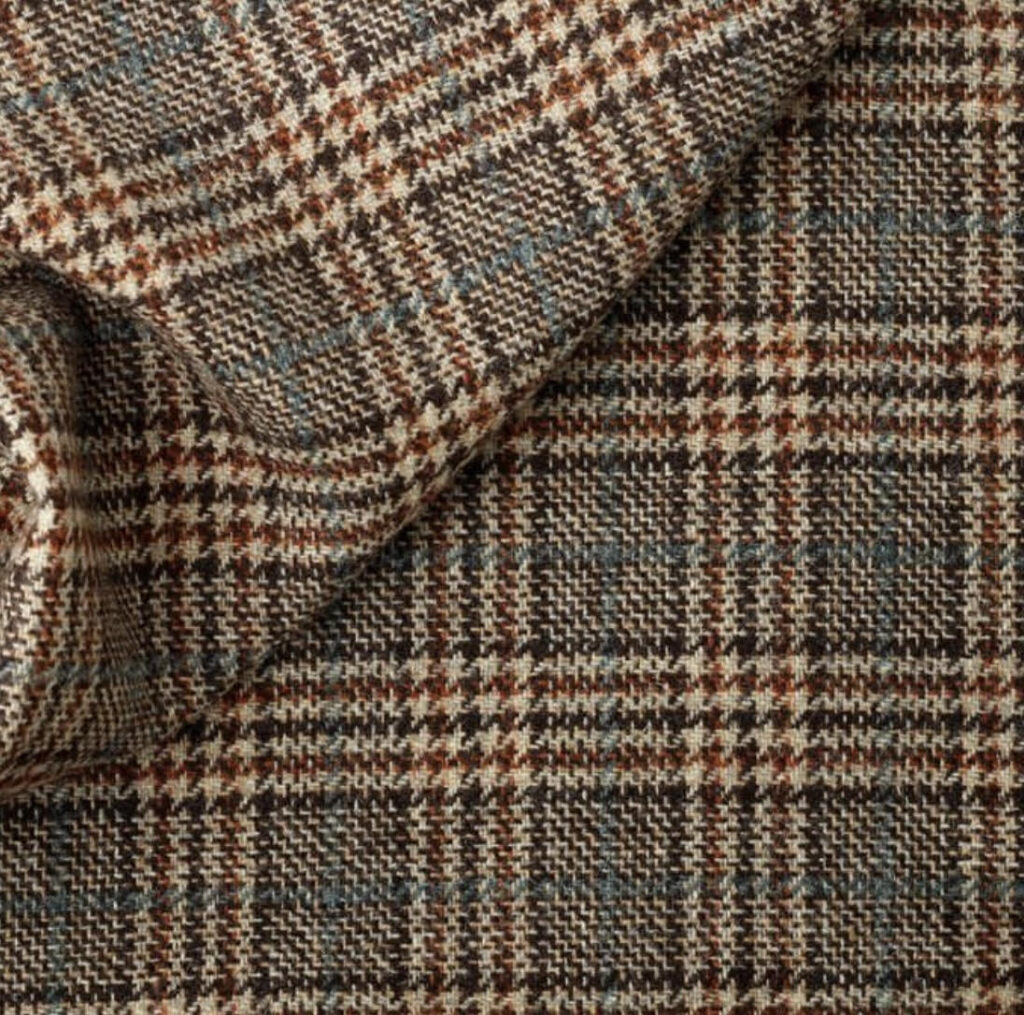
Within brown tones, both light and dark can work depending on the fabric.
Light brown buttons can look fantastic—but dark brown is, in my opinion, the most versatile.
It works with navy, gray, and brown fabrics—plain or patterned. I can’t think of many fabrics it doesn’t suit.
It even works with white fabrics.
The only exception might be very formal black or dark navy tuxedos.
Dark brown buttons are not just versatile for fabrics—they also work with almost any shoe color.
They pair well with black shoes, dark brown shoes, and even lighter brown shoes.
This is because dark brown sits between black and light brown, minimizing contrast no matter which direction you go.
It’s similar to belts: a light brown belt with black shoes looks off, but a dark brown belt is more forgiving.
Conclusion
The basic rule is to match button color with the jacket fabric.
Shoe color should not be too far from the button color.
The most versatile button color—one that works with almost any jacket and shoe—is dark brown.
If you own many pairs of shoes, you can simply choose footwear that matches your buttons.
But if you’re like me and don’t have a large shoe collection, choosing buttons that match the jacket—or going with dark brown—is the most practical and cost-effective solution.
That’s all—thank you for reading.


コメント