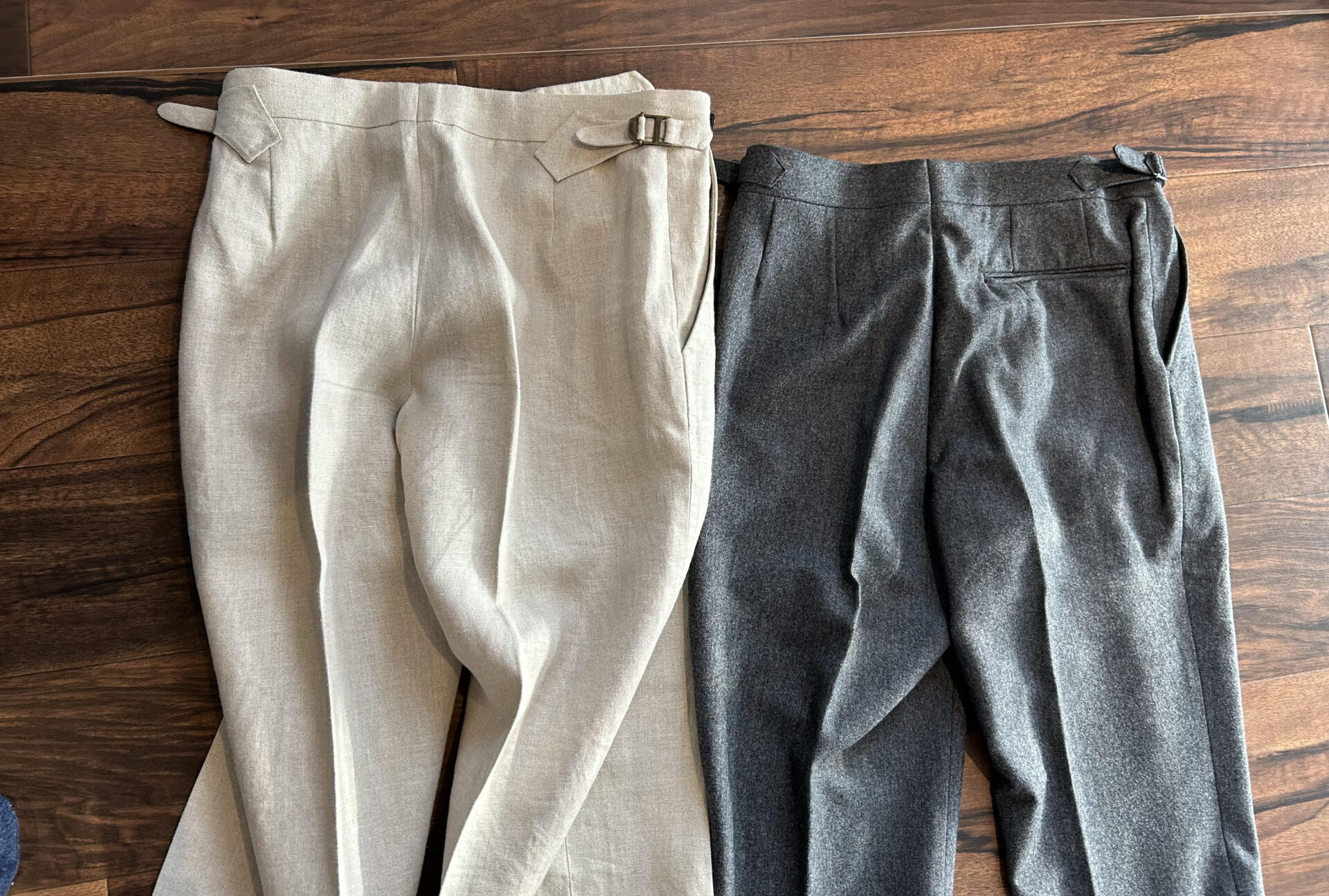
Hello.
I’m Mr. Linen.
One thing you often hear about bespoke suits is:
“Your first suit probably won’t be perfect. Order from the same tailor several times, and gradually, you’ll get closer to your ideal suit.”
That is certainly one way of looking at it.
From the tailor’s perspective, as you place more orders, they gradually gain a deeper understanding of your body, your preferences, and the details necessary to make a better suit for you.
From the customer’s perspective, I think something similar happens. You gradually become more aware of what you like in a suit, what bothers you about the fit and comfort, and what your own “ideal suit” actually looks and feels like.
Speaking from the customer’s perspective, someone with extensive experience ordering bespoke suits may already have a very clear idea of their ideal suit. They understand what bothers them about fit and comfort and can communicate those preferences clearly to the tailor. In that case, even with a tailor they have never used before, I think there is a good chance of getting very close to their ideal suit on the first attempt.
But I am nowhere near that level of experience. Even after all the suits I have ordered, there have been plenty of occasions when I have thought, “I wish I had done this differently.”
After making those mistakes and learning from them, I am now much better at telling my tailor exactly what I consider important when ordering a suit, and the number of regrets I have has dropped considerably.
Even so, I have only ordered around 15 suits in my life, so I certainly wouldn’t call myself highly experienced. I’m sure I will continue to make a few mistakes in the future.
In this article, I’ll share some of the things I have regretted when ordering bespoke (including MTM) suits.
Of course, you and I may value completely different things in a suit. There will inevitably be points in this article that are irrelevant to you, or things you simply don’t care about.
But perhaps there will also be something here that you have never thought about before, yet sounds important once someone points it out.
If even one of these points proves useful when you order a suit in the future, I thought it would be worth sharing.
Jacket
Let’s start with my regrets concerning jackets.
Jacket Length
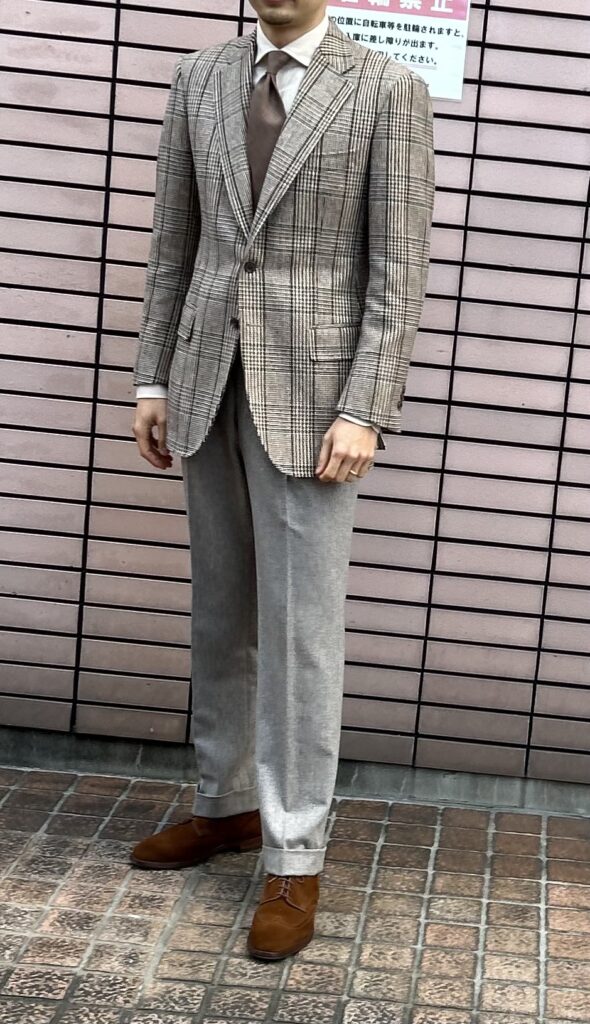
I regret not making the jacket a little longer.
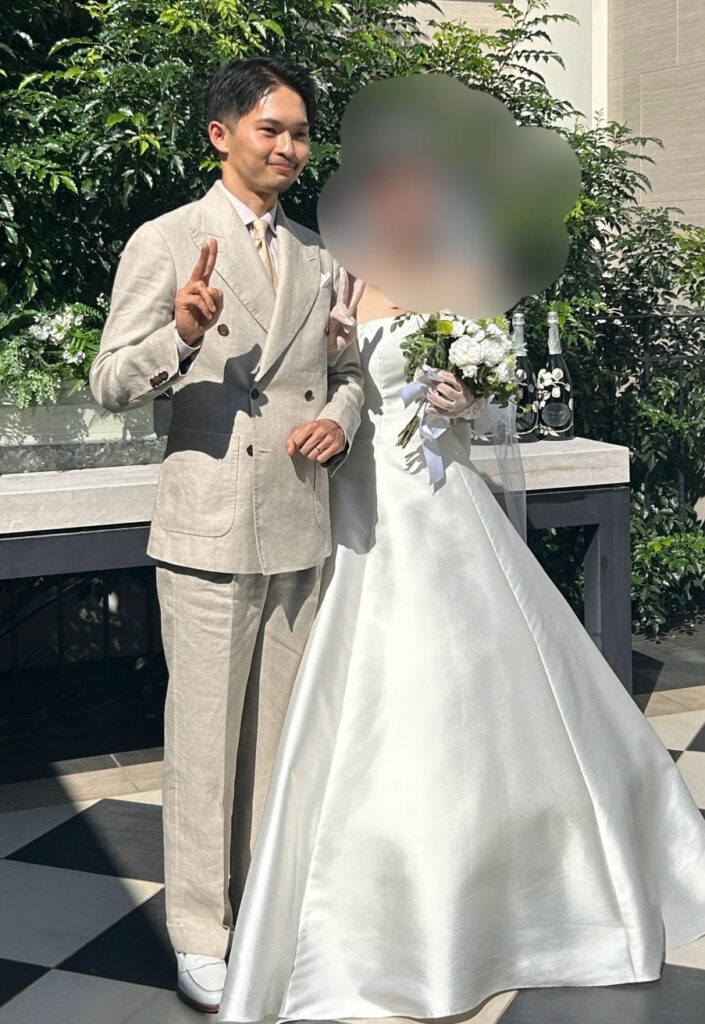
On the other hand, I have never regretted making a jacket too short.
I think that is because I like classic clothing, and even when I look at contemporary brands, I usually feel that their jackets are too short. If you already know that you prefer shorter jackets, however, you may feel exactly the opposite.
A tailor may ask you, “How long do you like your jacket?” But especially if you are relatively inexperienced, you may not even know what your preferred length actually is.
With a bespoke order that includes a basted fitting, the tailor may sometimes show you two options, one longer and one shorter. But when the jacket is still in its basted state, it can be difficult to imagine what the finished garment will actually look like, making the decision surprisingly difficult.
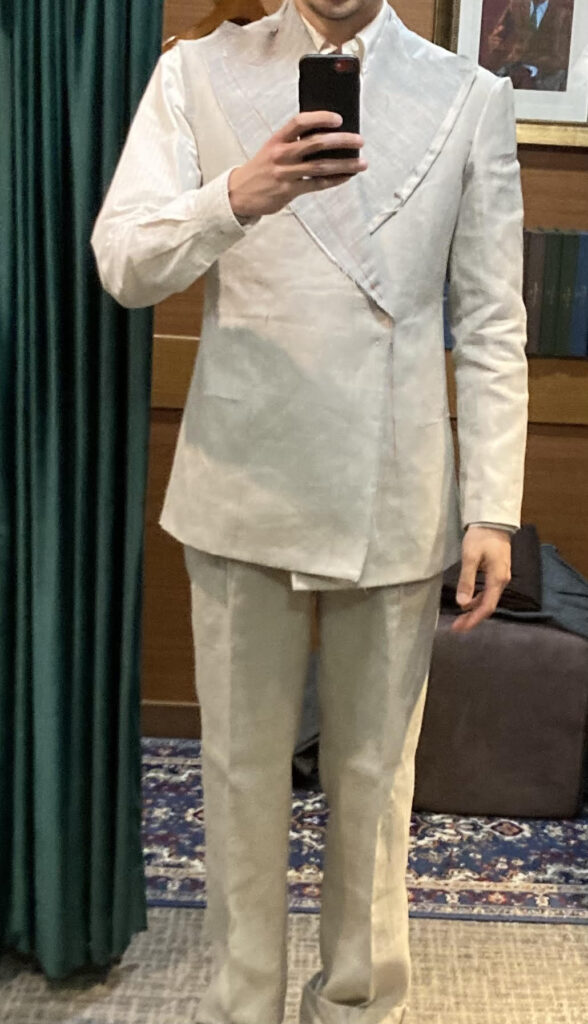
The appropriate jacket length can be estimated according to a person’s height, but it also varies somewhat depending on body type. Ultimately, it comes down to the tailor’s sense of proportion and aesthetic judgment.
If you trust your tailor completely, I think it is easiest and safest to simply let them decide. But if you find yourself wondering, “Am I really comfortable leaving this decision to this person?”—for example, if you are dealing with a very inexperienced salesperson at a large suit retailer—I would personally recommend choosing slightly longer than their recommendation.
The following article may be useful if you want specific measurements and guidelines.

Sleeve Length
I have never regretted the sleeve length of my jackets.
That is because I have established the dimensions of the shirts I wear and determine my jacket sleeve length based on them.
Related article
Body Width
I regret not allowing a little more room through the body.
I have never regretted making it tighter.
A jacket that follows the body very closely certainly has that unmistakable bespoke quality. But if the body line is emphasized too strongly, the result can become somewhat vulgar rather than elegant.
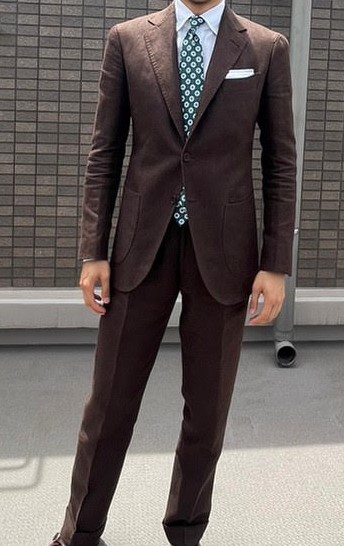
I have a slim—almost skinny—body type, but relatively broad shoulders. In European sizing, my shoulders are roughly around 48–50, while my waist is around 44–46. If the jacket follows my body too closely, the waist becomes extremely tapered.
I also wanted a pronounced S-shaped curve down the back, from the protruding shoulder blades to the indentation at the waist, so I used to order my jackets quite slim. These days, however, I feel that a little more ease looks more elegant.
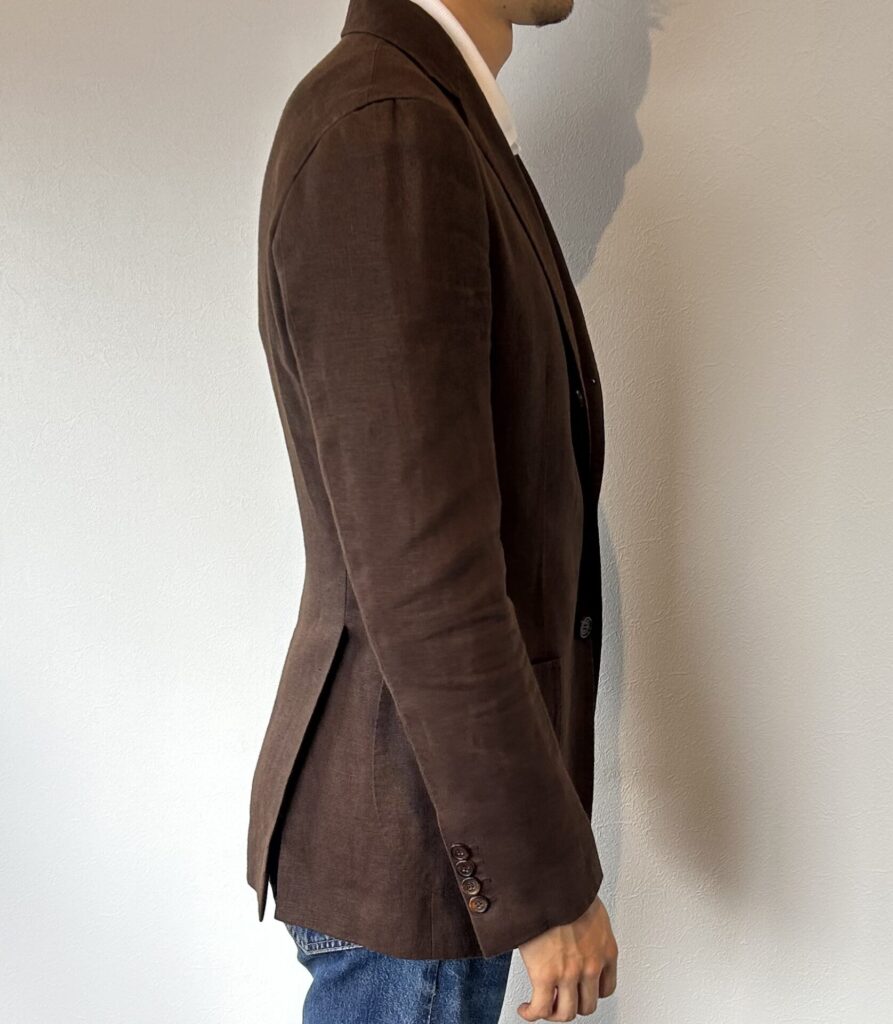
(This is not the tailor’s fault. I was the one who specifically asked for the jacket to follow my body closely.)
There is another practical issue. As you get older, you will probably gain at least a little weight around the stomach, and if the jacket is already tight, you may eventually find that you can no longer wear it comfortably.
If I were ordering a new jacket today, I would choose an elegant waist suppression with a little extra room—enough to accommodate a modest increase in weight.
Related article
Sleeve Width
With bespoke tailoring, you can make the sleeves almost as narrow as you want.
I have regretted making them too narrow, and I have also regretted making them too wide.
When I had almost no experience ordering bespoke suits, I went very slim here too, just as I did with the body of the jacket.
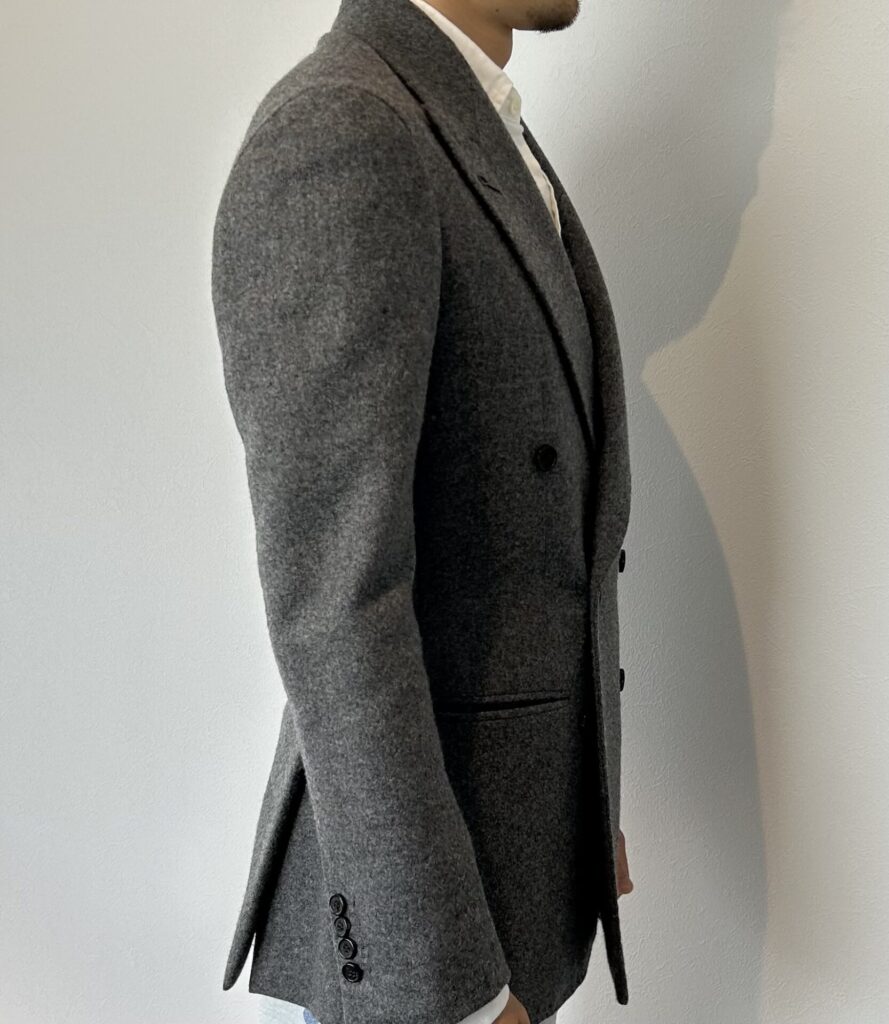
The sleeves were so narrow that bending my elbows felt restrictive, to the point where I could barely bend them all the way.
Obviously, that makes the jacket difficult to move in. It also has another disadvantage with summer suits such as linen suits: the narrow sleeves trap heat and can make the jacket feel hotter.
After learning my lesson, I ordered a linen suit with relatively wide sleeves.
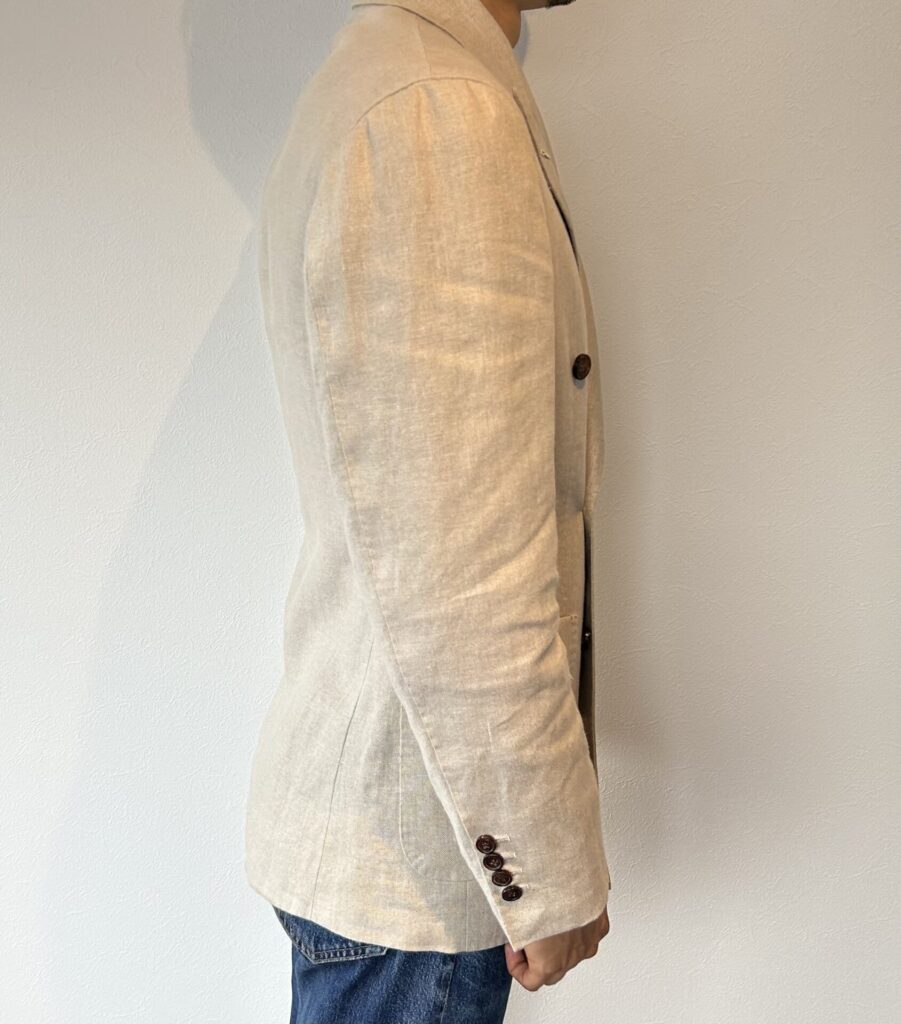
And then I felt that they were too wide.
If anything, I think wider sleeves look more classic. But personally, I found it strange to have wide sleeves when the body of the jacket was still relatively slim.
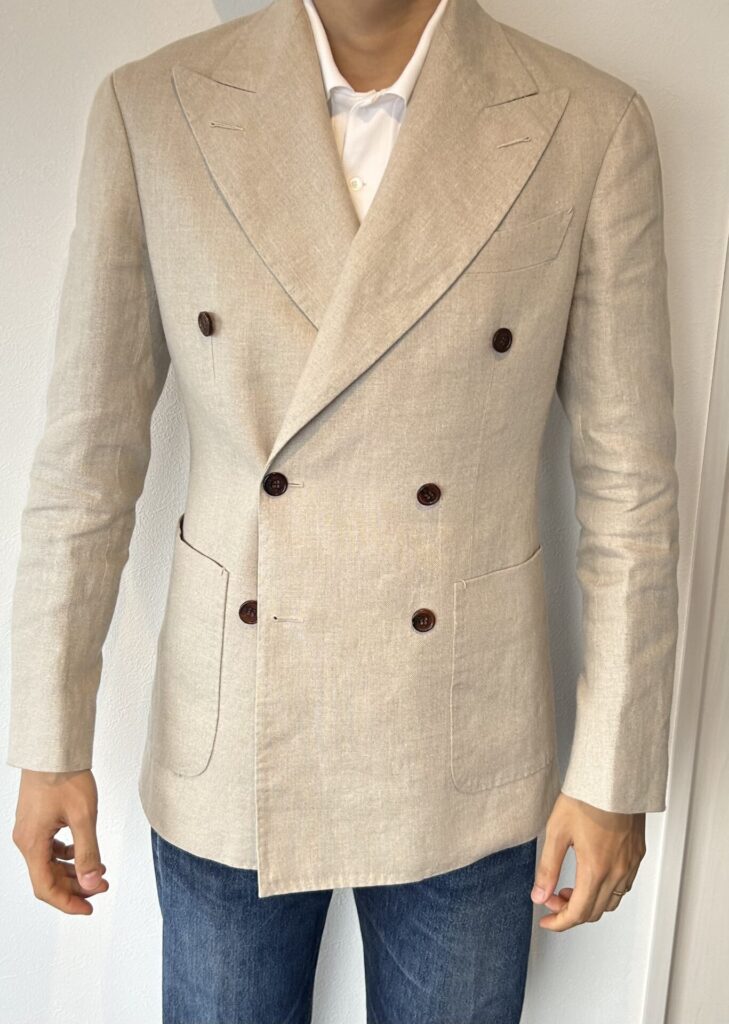
There is also a specific issue with linen suits. When the sleeves are too wide, fewer wrinkles develop around the elbows, which means you do not get as much of the characteristic relaxed appearance that makes linen suits attractive.
In the end, the obvious conclusion is that a moderate sleeve width is best. But if I had to establish a practical guideline, I would say the sleeves should be just about tight enough that you can feel a slight amount of resistance when bending your elbows.
Related article

Lapel Width
When it comes to lapel width, I do regret not making them wider, but I have never regretted making them too wide.
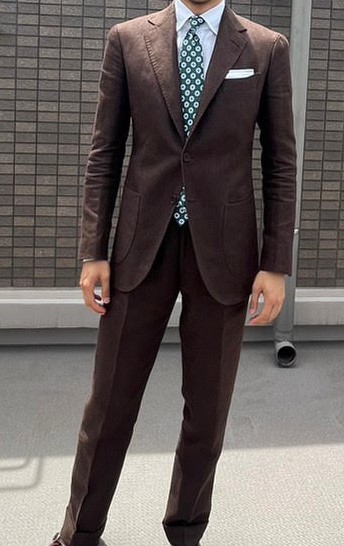
If you are unsure, I think going slightly wider is the safer choice. For a single-breasted jacket, I would suggest around 9–9.5 cm (3.5–3.7 in).
That said, there is a good chance I am being influenced by current fashion trends.
I have researched what I consider a lapel width that is less susceptible to fashion trends, so please take a look if you are interested.
Gorge Height
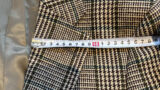
I have never regretted making the gorge higher or lower.
This is an area that can change significantly with fashion, so I have always tried to keep it relatively moderate—not particularly high and not particularly low.
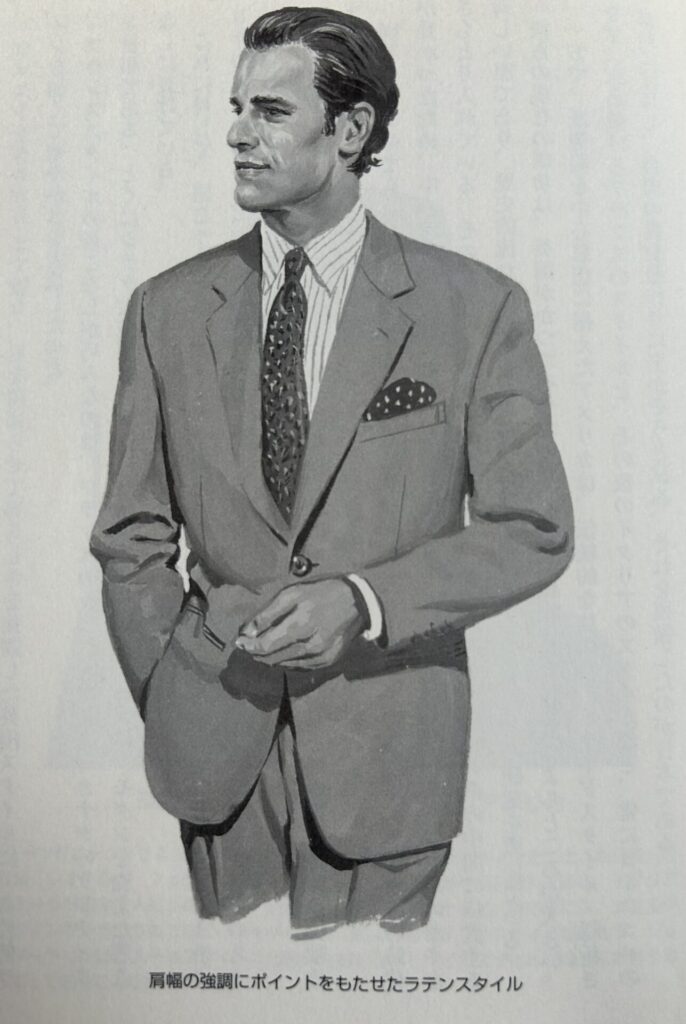
I am not entirely sure how gorge height is officially measured, but my tailor told me this one is around 7–8 cm (2.8–3.1 in).
One thing to be aware of with double-breasted jackets is that the top of the lapel sits higher when the jacket is worn open than when it is buttoned.
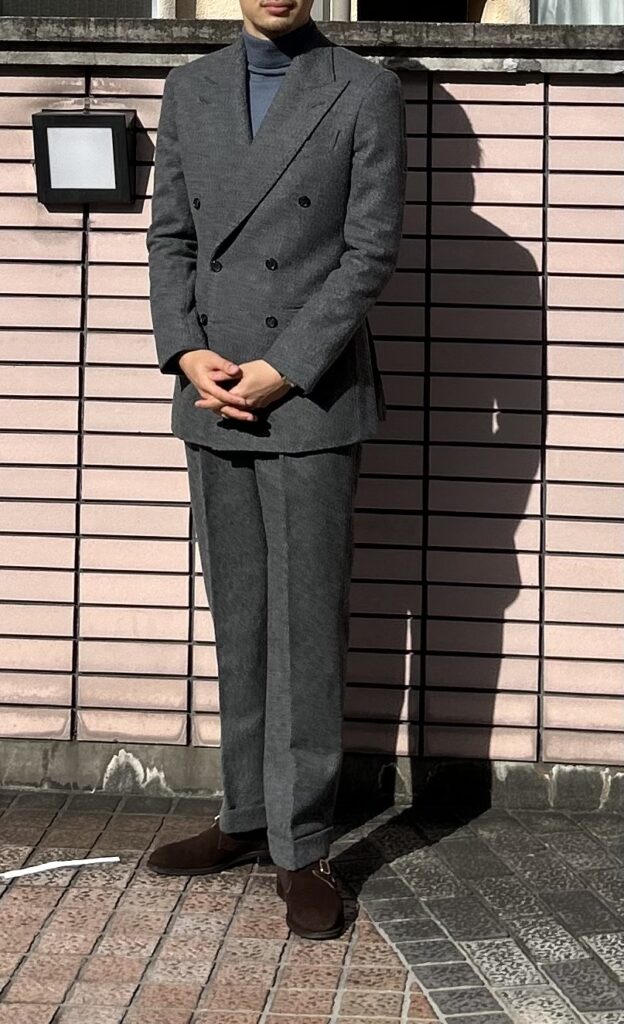
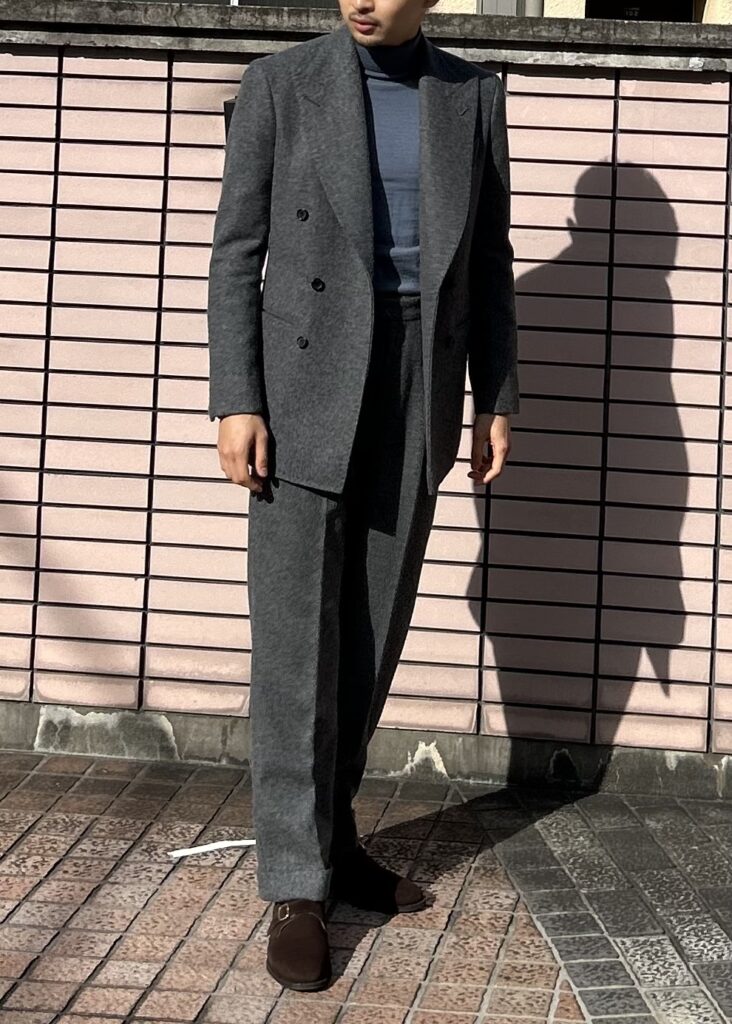
If the jacket is worn open and the top of the lapel rises beyond the shoulder line, I would consider the gorge too high.
Pocket Style
There is a choice between ordinary welt pockets and patch pockets.
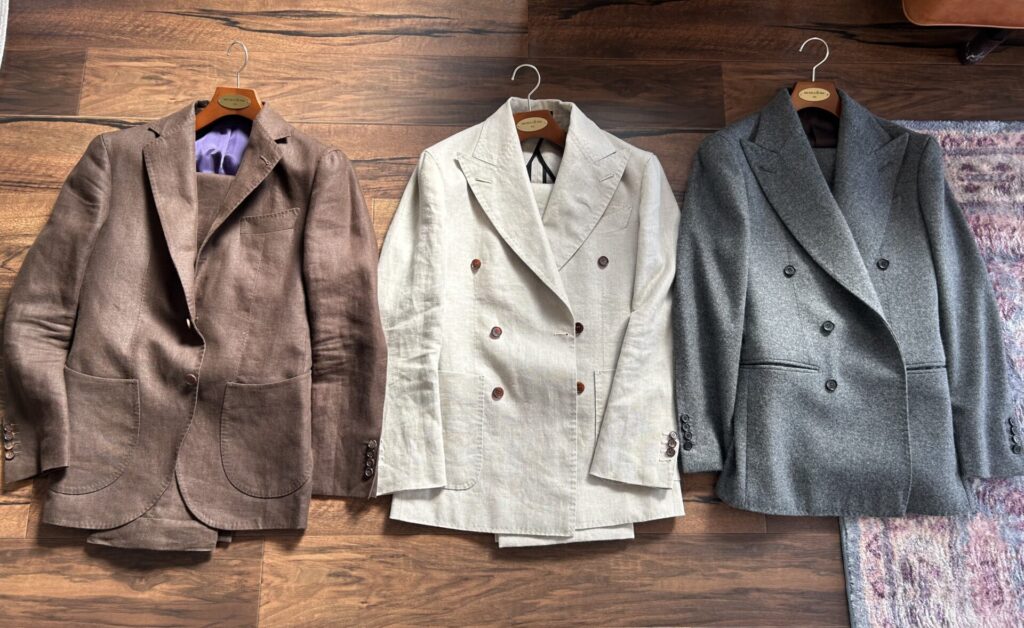
That is one of the choices you will have to make.
A general guideline is that formal suits use welt pockets, while casual suits and sport jackets are often made with patch pockets.
For a genuinely formal suit, welt pockets are the obvious choice. On casual suits and jackets, however, patch pockets are particularly common, including in contemporary tailoring.
I used to have the mistaken idea that a jacket intended to be worn separately from its matching trousers must have patch pockets. Because of that misunderstanding, I thought that any suit I wanted to use as a separate jacket—for example, a linen suit—had to have patch pockets.
That was wrong.
Related article
Patch pockets certainly work very well when a jacket is intended to be worn separately, but welt pockets with flaps also work perfectly well with odd trousers. From now on, I intend to think more carefully about the choice depending on the fabric and overall design.
Lining Color and Coverage
Now, the lining.
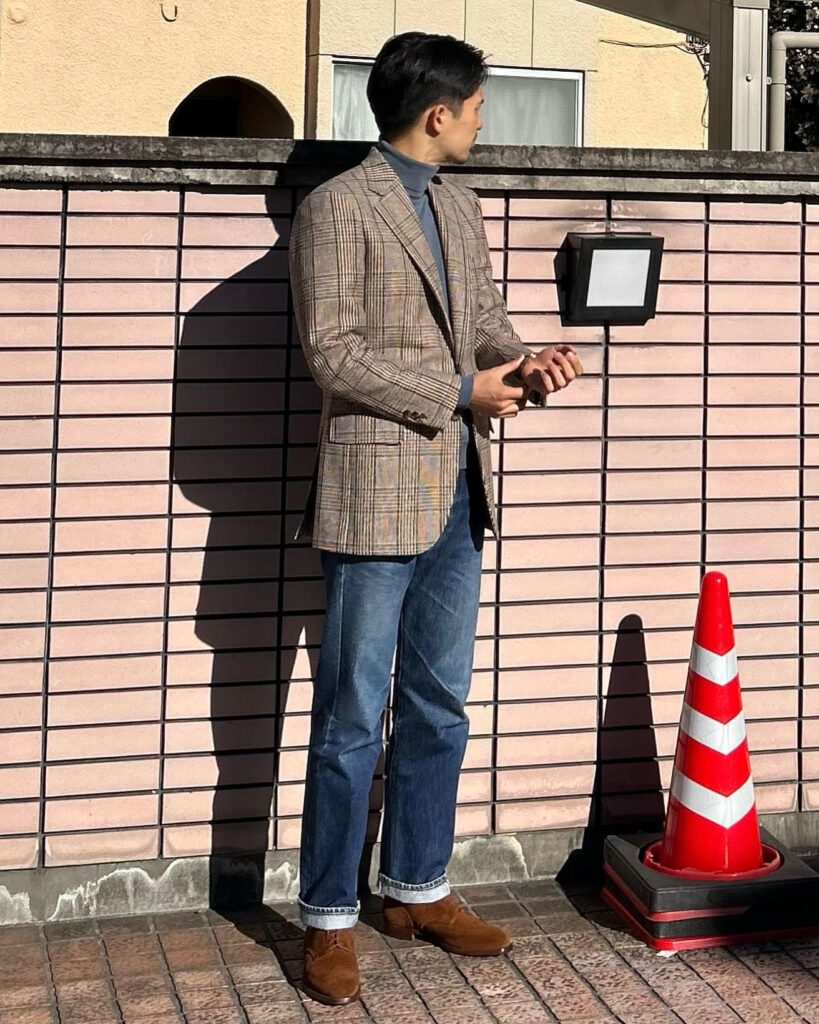
I regret choosing a lining color that was a little too flashy.
This is a brown linen suit with a purple lining.
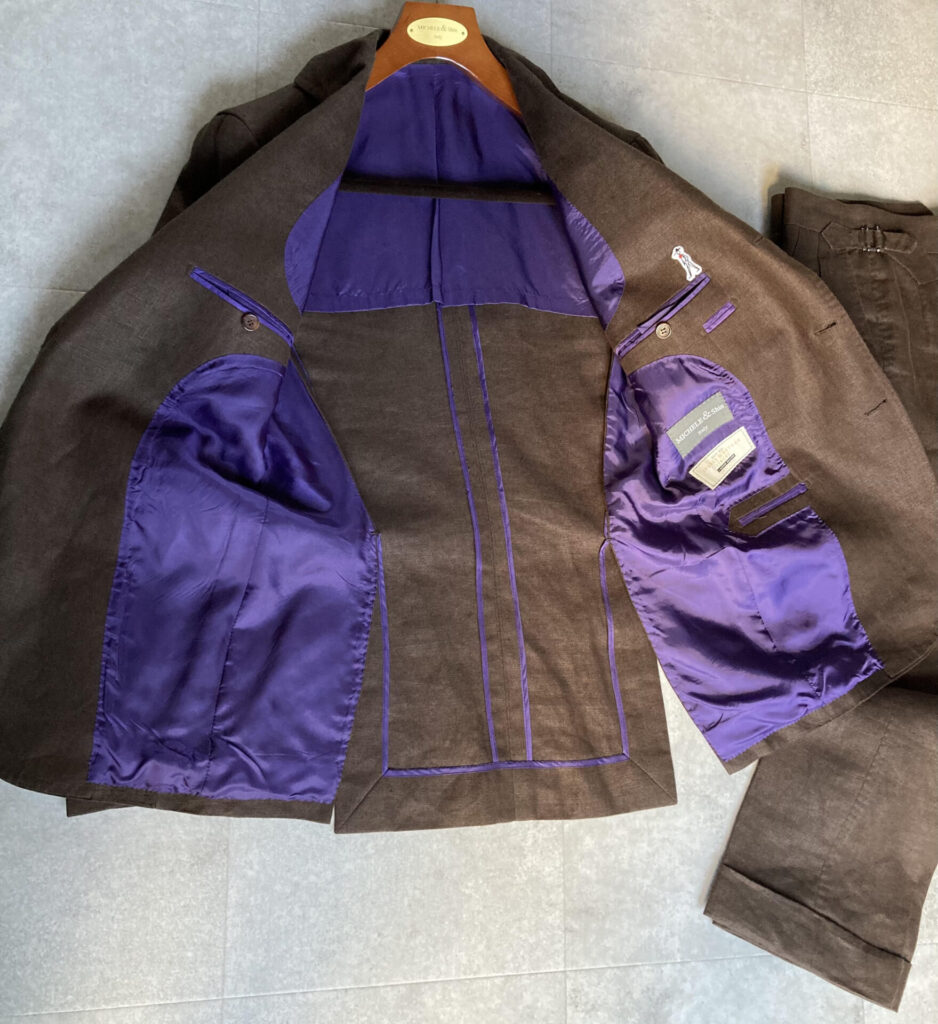
I think the purple is a beautiful color, but I would have preferred the lining to be brown, matching the suit.
I simply do not want someone to see the lining when I take off my jacket and think, “Look at this guy trying way too hard to show how stylish he is.” I realize that is probably overly self-conscious of me.
There is also the question of how much of the jacket should be lined—fully lined or partially lined. For suits intended for summer, I think a half lining is ideal, while a fully lined construction makes more sense for the other seasons.
In fact, I would like to try a completely unlined linen suit someday, with no lining at all—not even in the back or sleeves.
I feel that even a small amount of lining can significantly reduce the cooling effect of linen.
As for sleeve lining, removing it can make it more difficult for your arms to slide smoothly into the sleeves. If you choose to go without it, you may want to make the sleeves slightly wider.
Buttonholes
If you have the option of choosing between hand-worked and machine-sewn buttonholes:
I think it is worth spending a little extra money to have them done by hand. Again, this is partly because of my own excessive self-consciousness. I feel that if someone looks closely at my buttonholes and sees that they are hand-worked, perhaps they are less likely to underestimate the quality of the suit.
Among hand-worked buttonholes, there is also a style known as the Milanese buttonhole.
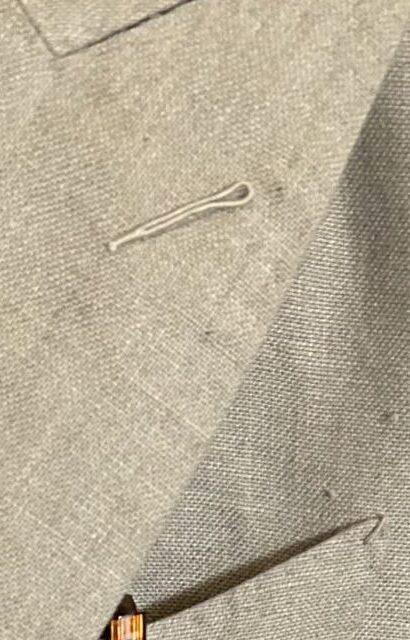
This style has a very obvious hand-crafted appearance, which I find beautiful.
I have had this style made several times, but these days I feel it may be slightly too much.
To me, a simple hand-worked buttonhole strikes a better balance: you can see the handwork, but it does not feel as though it is deliberately trying to advertise itself.
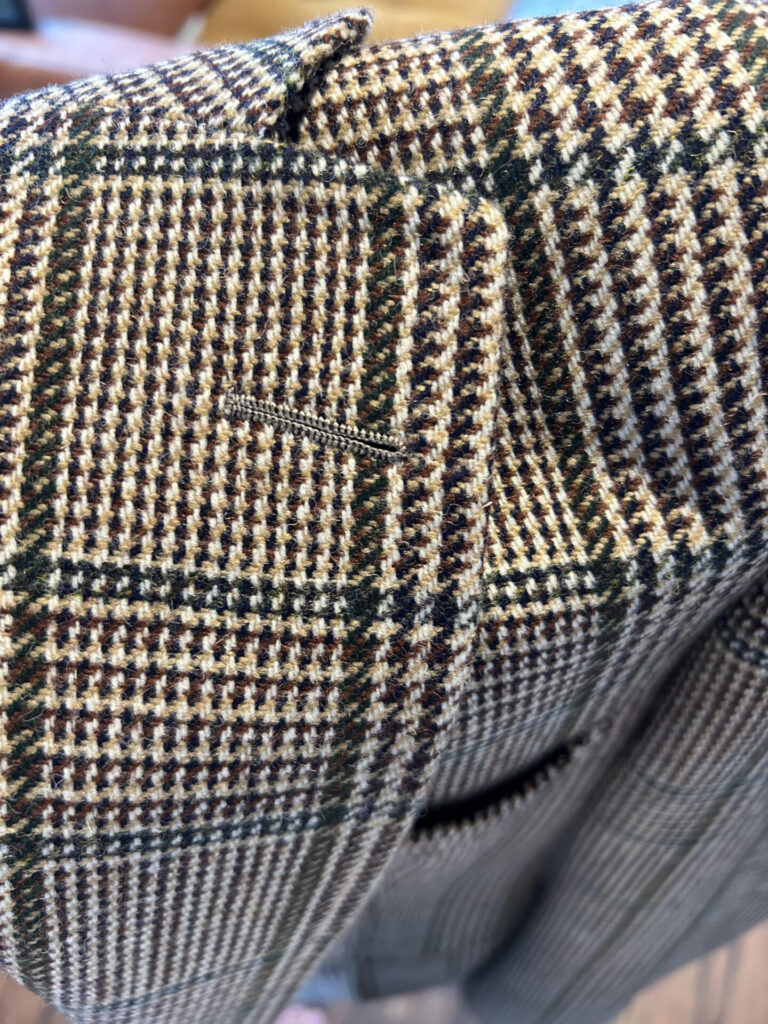
For my most recent order from DORSO, I also chose the hand-worked buttonhole option, but I did not choose the Milanese style.
That said, DORSO’s Milanese buttonholes are relatively understated, and I might choose them in the future. Forgive me for sounding so authoritative about it.
Related article
Spalla Camicia / Manica Camicia
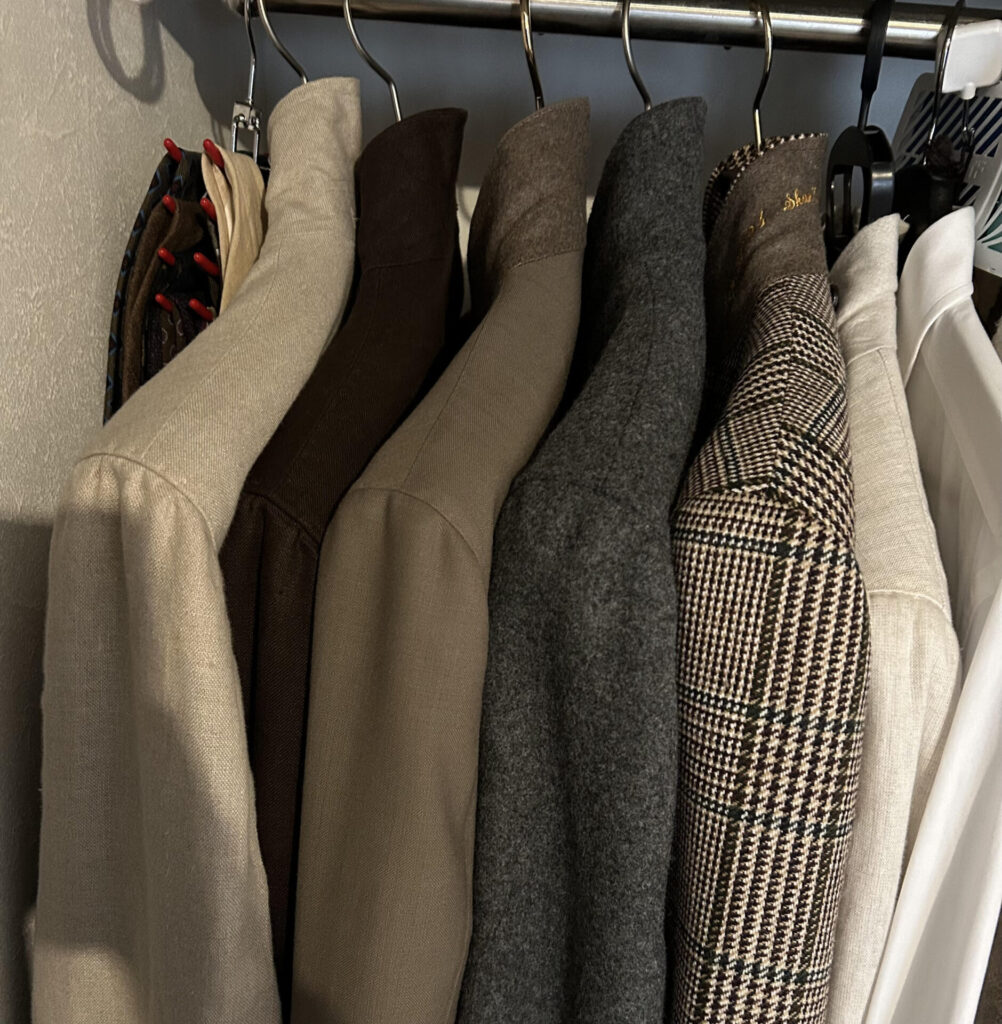
There is a sleeve-setting technique commonly known as spalla camicia or manica camicia, in which wrinkles are intentionally created around the sleeve head.
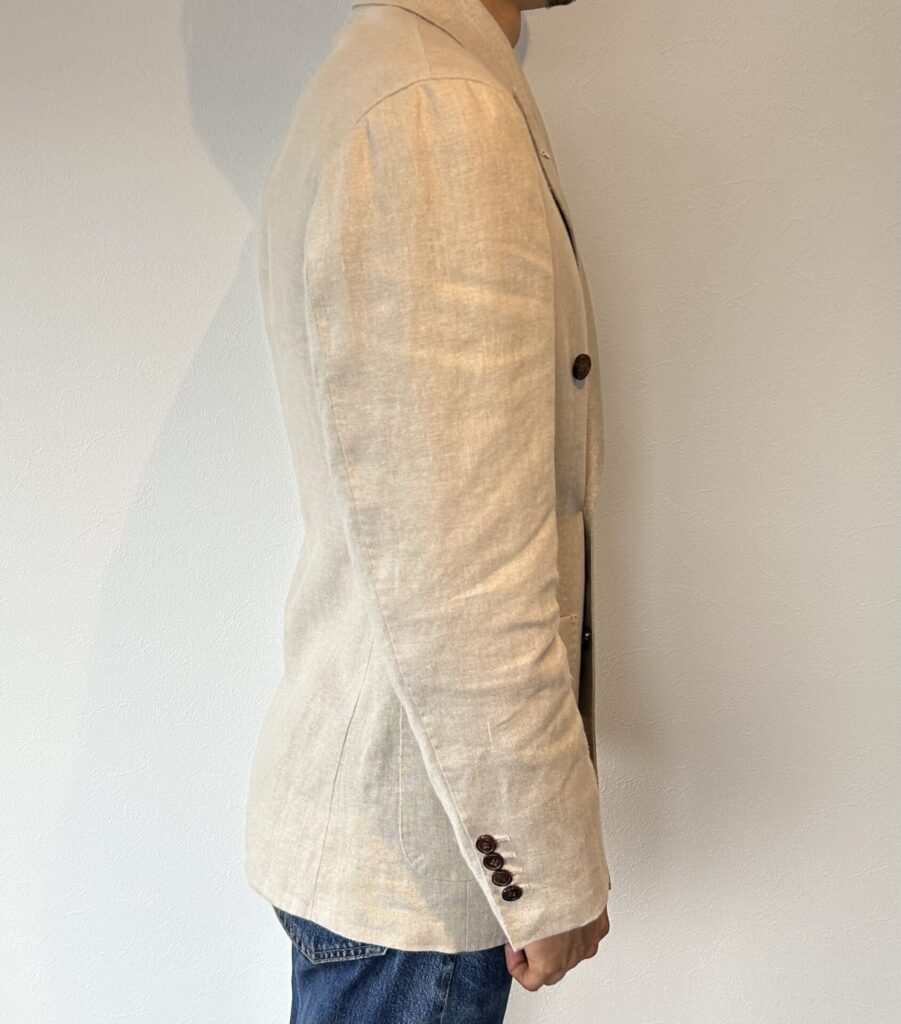
I have heard that it is frequently used in Italian tailoring, particularly in southern regions such as Naples. I like it because it gives the jacket a natural quality and a sense of human craftsmanship.
However, I have tried it several times in the past. I would not go so far as to call it a regret, but I have come to think that I could have done without it.
Just like with the buttonholes, I sometimes feel that it draws too much attention to the craftsmanship.
There are different degrees of spalla camicia. With heavier fabrics, for example, the wrinkles may be extremely subtle, creating a very nice balance. But generally speaking, these days I feel that I would have been happier without deliberately adding wrinkles around the shoulder.
That is everything for the jacket.
I have had quite a few regrets, but if I had to summarize them in one word, it would be:
“Ordinary.”
There may be British style, Italian style, Neapolitan style, or the distinctive style of a particular tailor. But these days, I have come to prefer a style that is as unremarkable and understated as possible.
If you have already established your own personal style, I think it is incredibly cool to stick to it. But if you have not, I think there is something to be said for pursuing a well-balanced, “ordinary” suit.
Trousers
This article has already become extremely long, but we have finally arrived at the trousers.
Trouser Length
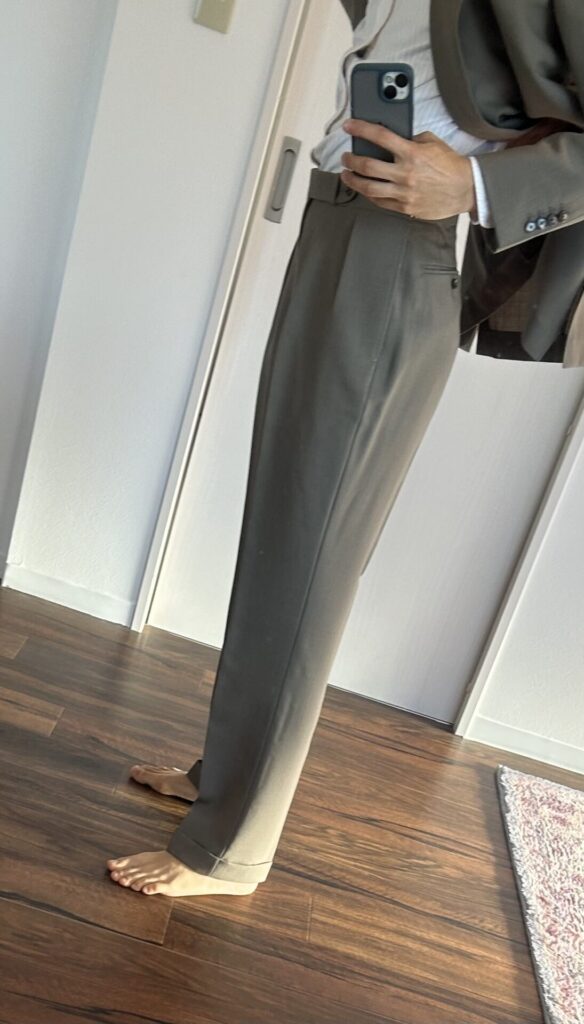
Of all the details on a pair of suit trousers, I think the trouser length is one of the most important.
I have regretted making trousers too short, but I have never regretted making them too long.
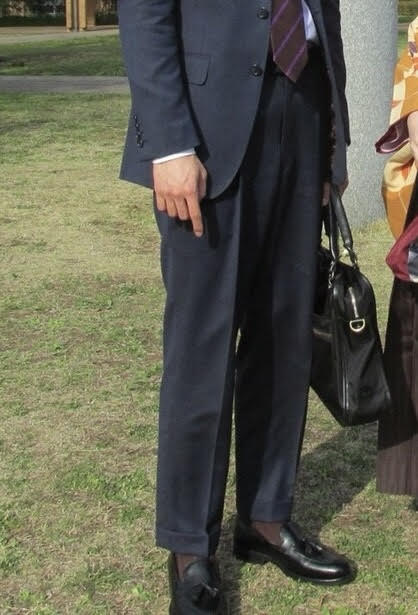
As of January 2025, the general trend in suit trousers seems to be a moderate width with a length somewhere between no break and a half break.
A few years ago, very slim trousers with no break were fashionable.
There are probably quite a few people who bought or made trousers during that period and now find them too short and too narrow, leading them to have alterations done to make them longer and wider.
If there is enough fabric, alterations can solve the problem. But there are also cases where there simply is not enough fabric to make the trousers longer or wider.
I followed the trend at the time and had a pair like this made. Unfortunately, there was not enough fabric left to alter them, and I was unable to fix the problem.
Perhaps very wide, long, baggy trousers will become fashionable in the future.
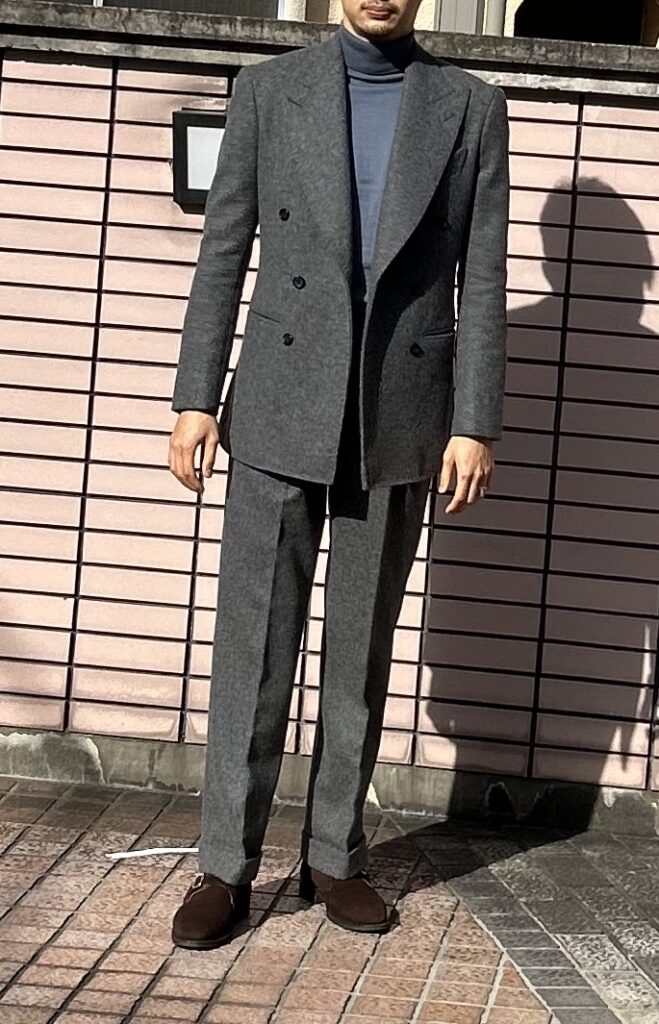
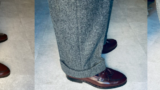
But as I said in the conclusion about jackets, I think “ordinary” is ultimately the safest choice. For a conventional pair of suit trousers, I consider a half break to one full break to be a good classic length.
Related article
Trouser Width
As for trouser width, I prefer something between average and slightly wide, and I have never regretted that choice.
In terms of the thigh width, mine is around 33 cm (12.9 in).
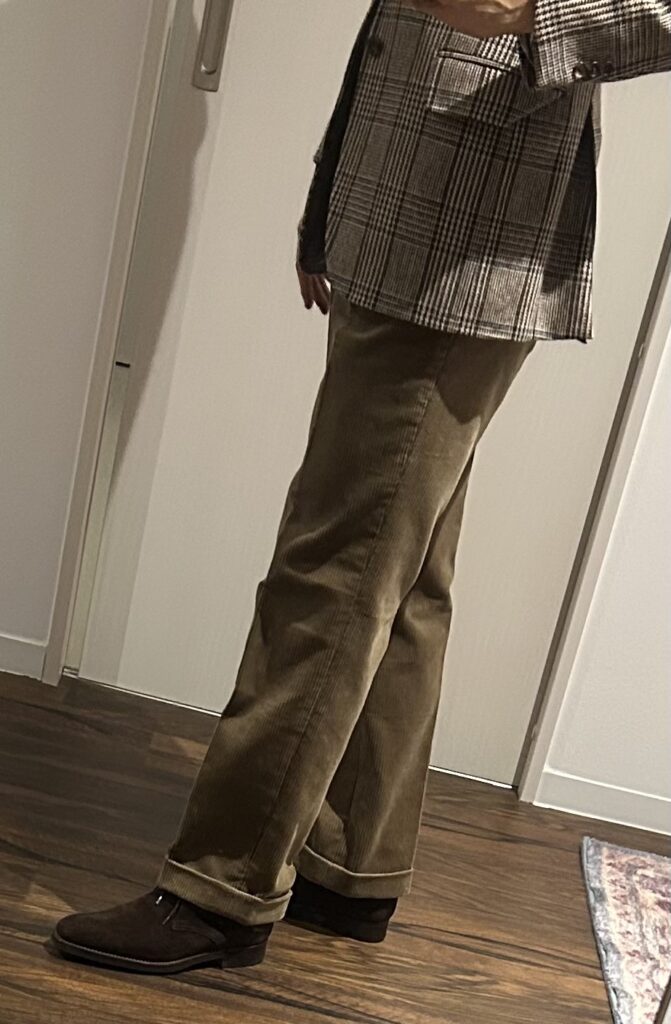
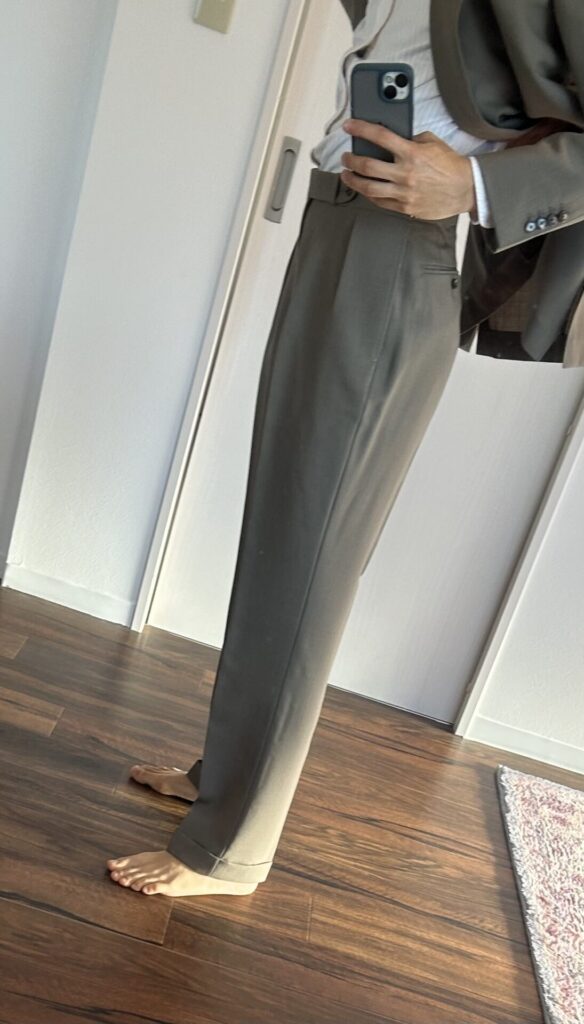
Wider trousers are less prone to showing sharp wrinkles, fall beautifully straight down from the body, and keep sweat away from the fabric more effectively. There are many advantages.
I think I have already settled on my preferred trouser width, and I am confident that this preference will not change in the future.
Turn-Up Width
If you choose turn-ups on your trousers, you also have to decide how wide the turn-up should be.
I regret not making mine slightly narrower.
I once heard Yukio Akamine, a highly influential Japanese authority on classic menswear and tailoring, say that the basic turn-up width should be 5 cm (2.0 in), so I used 5 cm for quite a while.
These days, however, I think around 4–4.5 cm (1.6–1.8 in) looks better.
The ideal turn-up width also depends on the fabric and, as I will explain shortly, the width of the trouser leg. For example, if you have heavy linen trousers with a relatively wide leg opening of around 23 cm (9.1 in), I think a 5 cm (2.0 in) turn-up can make the lower part of the trousers feel slightly too heavy.
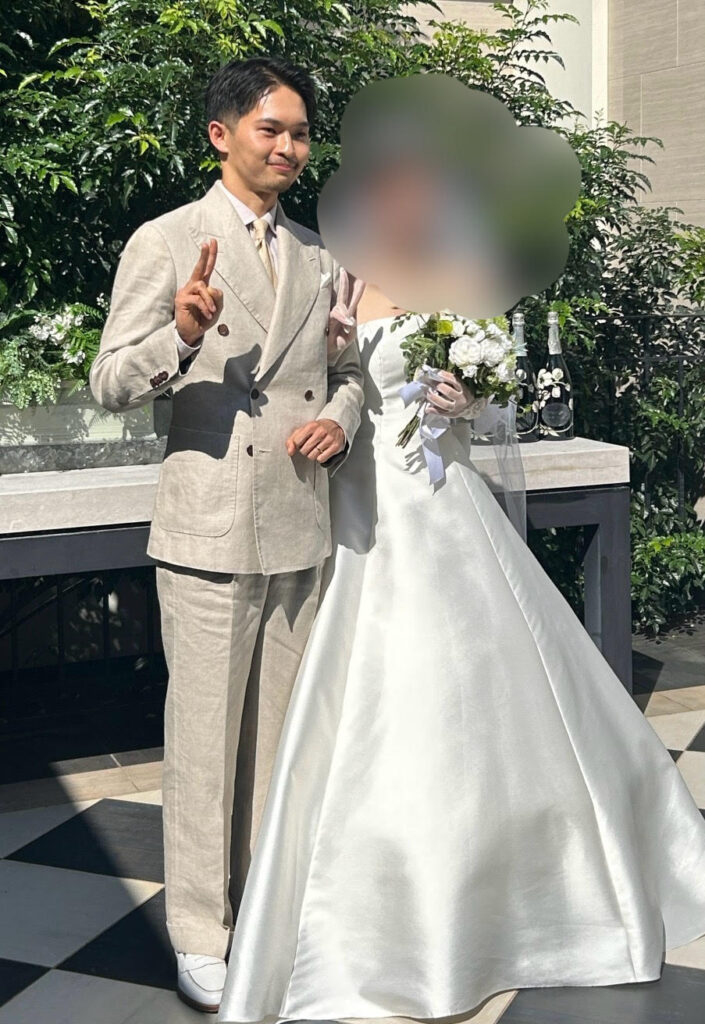
Masakatsu Ochiai, another influential Japanese writer and authority on classic menswear, wrote in one of his books that 3.5–4 cm (1.4–1.6 in) is the most classic range.
I think you can choose anywhere between roughly 3.5–5 cm (1.4–2.0 in) according to your personal preference, but for me, 4–4.5 cm (1.6–1.8 in) is the basic choice.
Related article
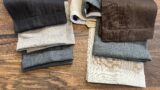
Turn-Ups: Thread or Snap Buttons?
Those who prefer classic tailoring will probably choose thread to secure the turn-ups, but snap buttons make it easier to remove dust that accumulates inside the fold.
The disadvantage of snap buttons is that they look unattractive when they become visible.
I have regretted using snap buttons, but I have never regretted using thread.
That is because I prioritize appearance over function.
Leg Opening
As with turn-up width, this is largely a matter of personal preference. But while I have regretted not making the leg opening wider, I have never regretted making it narrower.
The ideal measurement depends on the overall trouser width, the length of your legs, and the design of the jacket you wear with them. But I think a classic range is around 21–24 cm (8.3–9.4 in).
Zipper or Button Fly?
I have only ever chosen zippers for my bespoke trousers, so I have no experience with button flies.
I think button flies look better, but I have always prioritized convenience.
I have never regretted choosing a zipper. In fact, I feel that if I chose a button fly, I would probably regret it every time I went to the bathroom.
Back Pockets
You can choose to have two back pockets, one, or none at all.
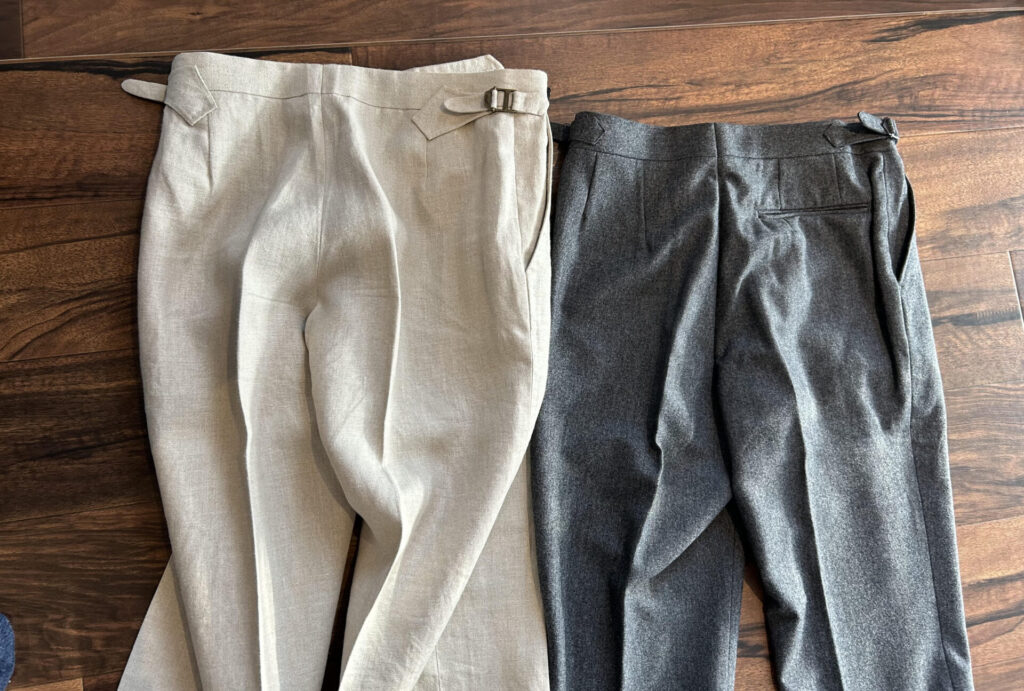
After trying all of these options, I think having two is best. At the very least, I think you need one on your dominant-hand side.
I once decided that having no back pockets looked clean and elegant, but I found it extremely inconvenient and regret that decision.
If you put your smartphone or other items in the side pockets of your trousers, the silhouette becomes distorted. So when you want to carry something on your body without ruining the line of the trousers, a back pocket is useful.
Belt Loops or Side Adjusters?
I like side adjusters, and I have never ordered bespoke trousers with belt loops. I have no regrets about that choice.
Should You Add Suspender Buttons?
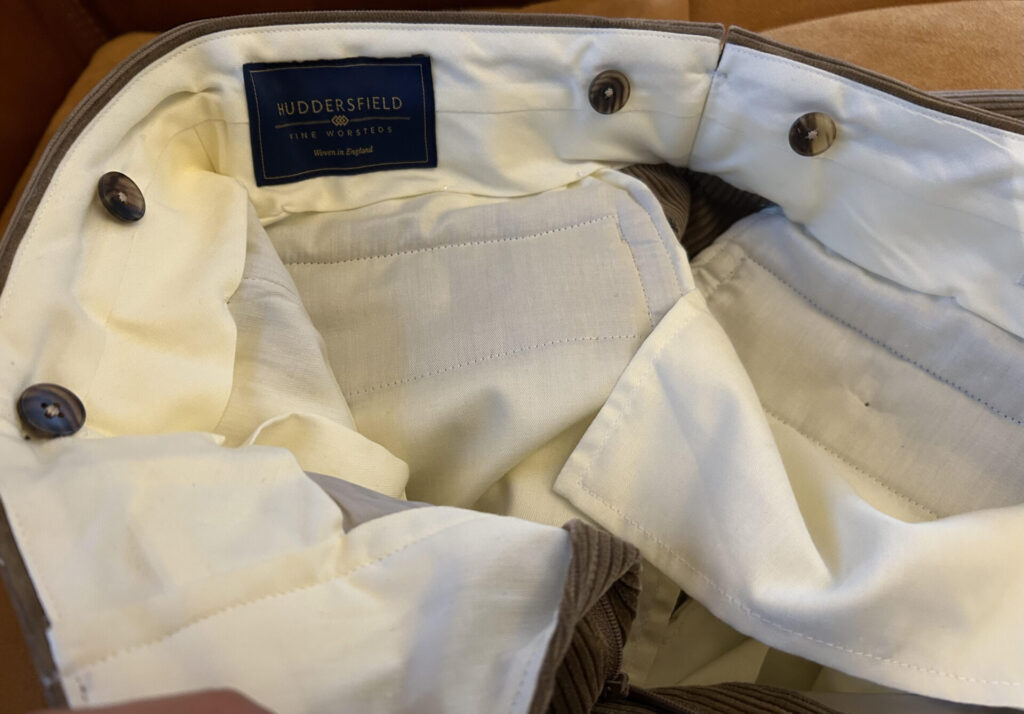
This refers to whether you should add buttons inside the waistband for attaching suspenders.
I have regretted not having them added.
Even if you never wear suspenders, there is no real disadvantage to having the buttons there. So I think it is better to have them added just in case.
Number and Direction of Pleats
This is also a matter of personal preference. I always choose two pleats, while the direction—forward or reverse—is something I vary depending on the trousers. I have never regretted either choice.
Forward pleats are probably easier to press, though.
Trouser Lining
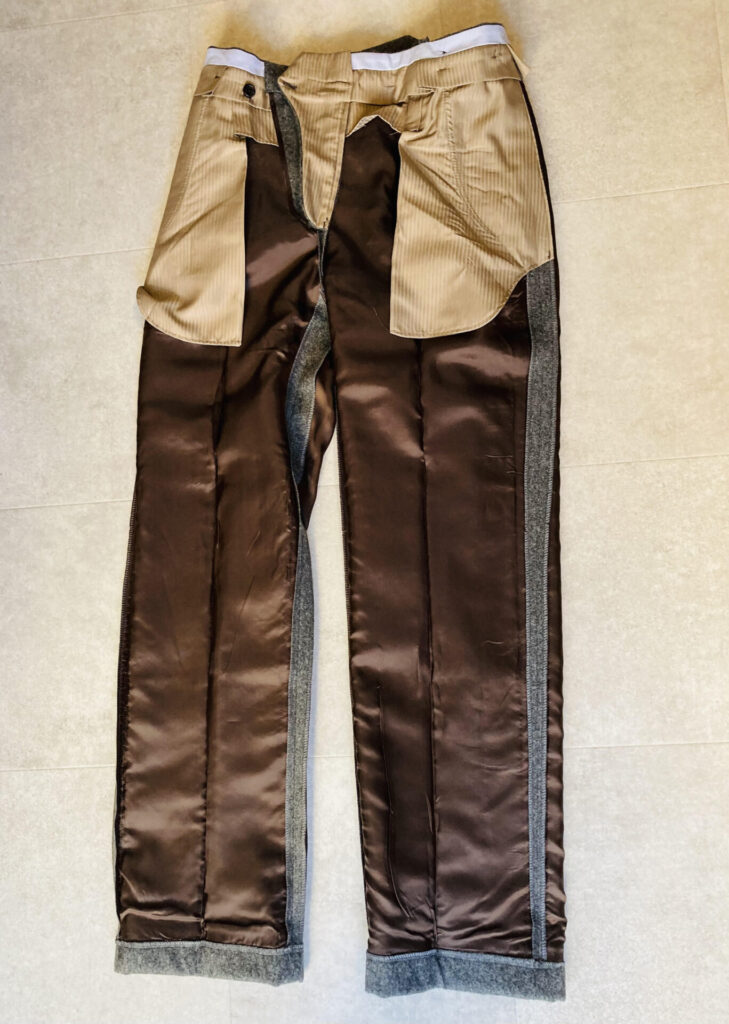
For spring and summer fabrics, I line only the front thigh area. For autumn and winter fabrics, I use a full lining. This is the compromise I have arrived at after balancing two conflicting desires: protecting the fabric from sweat and other moisture while also avoiding excessive heat.
Related article
I have regretted not having a full lining in autumn and winter trousers.
That is because, unfortunately, there have been occasions when residual urine has reached the unlined parts of the trousers. Sorry for the unpleasant detail.
If you wear traditional Japanese undergarments such as suteteko—lightweight knee-length undershorts—together with knee-high dress socks year-round, thereby preventing sweat from coming directly into contact with the fabric, I think it could be perfectly reasonable to have no lining at all, especially with lightweight summer fabrics.
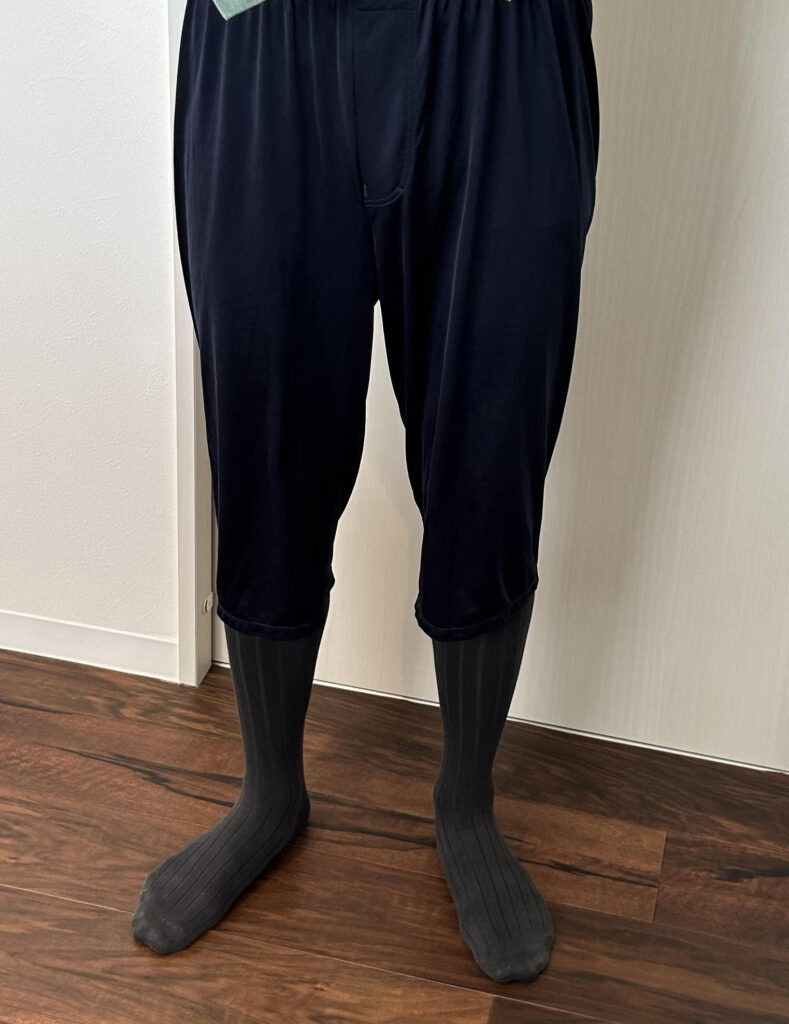
Keeping cool is my top priority.
Conclusion
This became incredibly long.
I have shared some examples of things I have regretted when ordering suits. Looking back, almost all of those regrets happened when I moved away from what I would describe as “ordinary,” “classic,” or “internationally timeless.”
I have probably accumulated so many of these regrets because I personally prefer suits without too much individuality. But I actually admire people who have a strong personal style and stick to it confidently, even when other people tell them that their choices are unconventional or even “wrong.”
I am still learning, so for the time being, I want to continue buying and wearing suits without trying too hard to impose a strong personal identity on them.
Then, over many years, I hope to discover my own style and eventually become confident enough to express it without hesitation.



コメント