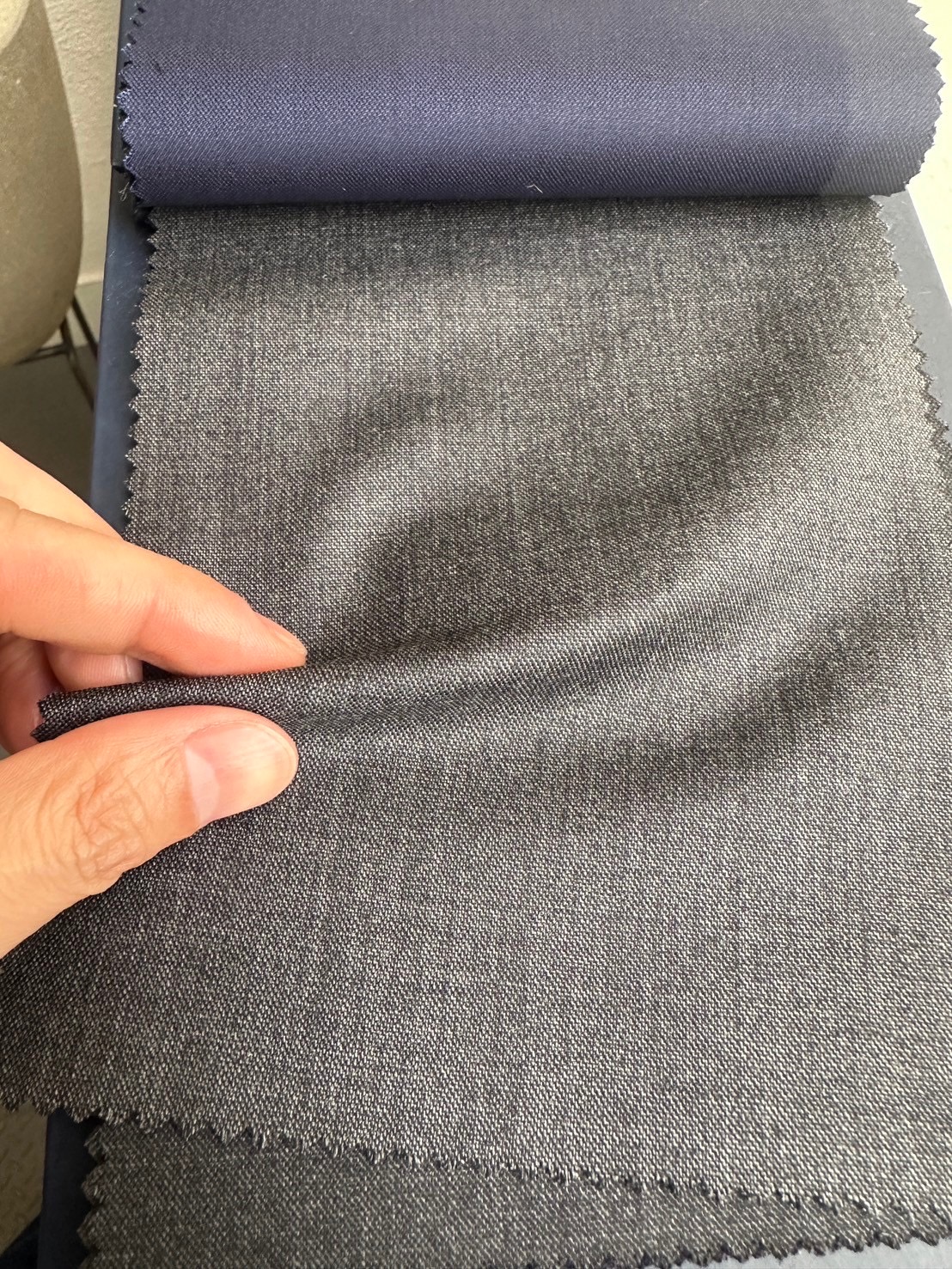
Hello, I’m Mr. Linen.
When it comes to the two basic colors of suits, almost everyone would probably name navy and grey.
Asking which is better, navy or grey, is a bit like asking whether coffee or tea is better. I don’t think there is any objective way to declare one the winner.
With that said, I personally prefer grey suits by a considerable margin.
Part of that is simply personal preference, but I also believe that grey suits have several objective advantages over navy suits.
I’ll try to keep my own biases under control as much as possible and explain why I think grey suits are the better choice.
If navy and grey are the two fundamental suit colors, which one is more formal and dressy?
As far as I know, the answer is navy.
More precisely, I’m talking about very dark shades of navy, sometimes referred to as dark navy or midnight navy, which are close to black.
As a general rule, the darker the color, the more formal it tends to be. A black tuxedo is a good example.
My basis for considering navy slightly more formal than grey comes from the writings of Masakatsu Ochiai, a Japanese menswear writer whom I personally regard as one of my mentors.
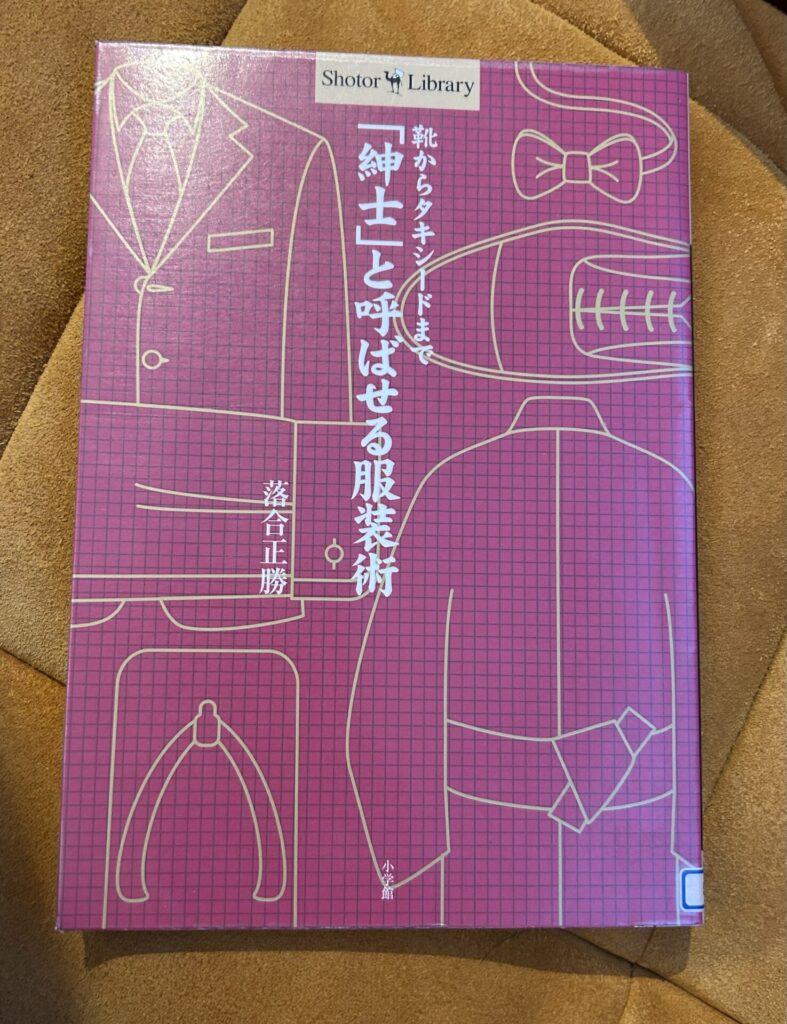
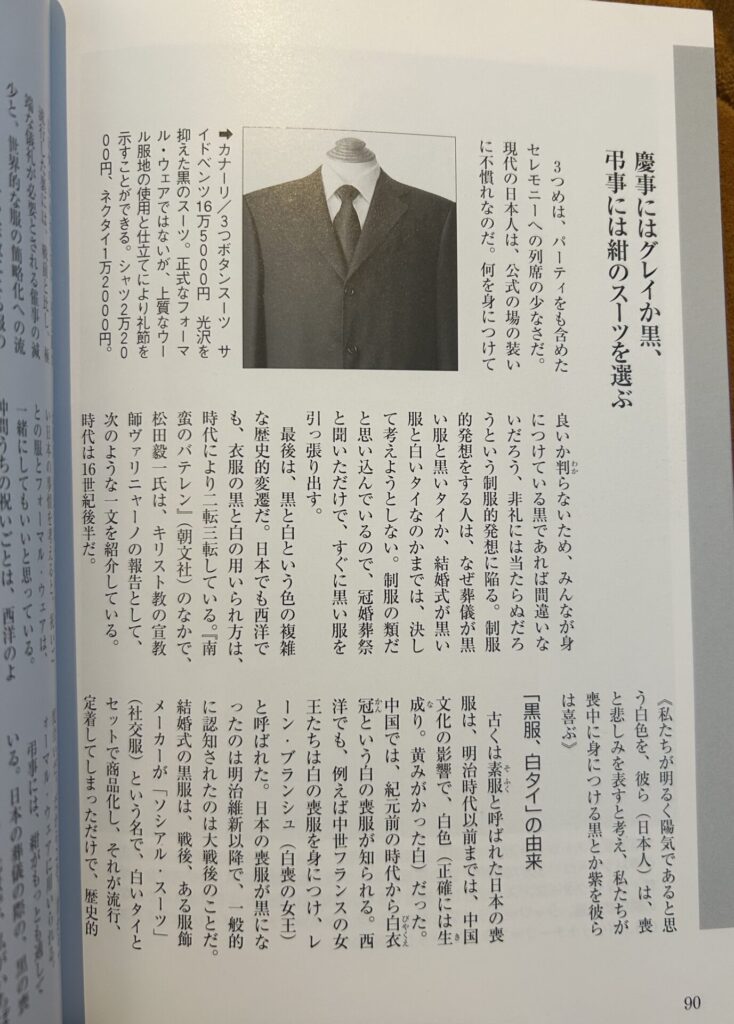

The book explains that suits worn for formal occasions can be grey or black for celebrations, while navy is appropriate for mourning. It also states that a tailcoat should be black or dark navy.
According to this book, navy is slightly more formal, but grey is still a highly formal color and is by no means far behind.
Looking beyond the book, when I look at photographs of people attending the funeral of Queen Elizabeth II, there were many people wearing black, but there were also quite a few wearing navy.
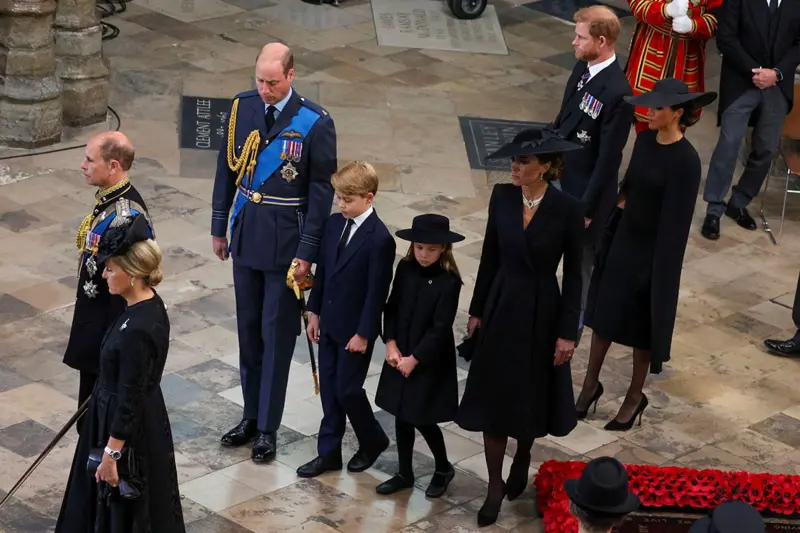

Judging from the photographs of Queen Elizabeth II’s funeral, there were very few people wearing grey suits. Most were wearing either black or navy. So, if I had to compare the two, I don’t think it would be wrong to say that navy is more formal than grey.
Yukio Akamine, a Strong Advocate of Grey
The previous section was about a funeral, one of the occasions where the highest level of formality is required. But outside of such occasions, I don’t think there is much difference between navy and grey when it comes to versatility.
For example, when attending a wedding, either color is perfectly acceptable.
Whenever the subject of what suit a young professional should buy first comes up, I think the answer is almost always, “Start with navy.”
In Japan, this isn’t because navy can be used for both business and every formal occasion. Funerals in Japan traditionally require a black suit, so navy doesn’t actually cover every occasion.
Rather, I suspect the reason is that navy tends to look fresher and more youthful, making it easier for younger people to wear than grey.
Mr. Haruto Takeuchi, owner of Atelier Bern, said in one of his videos that grey can be a good option for men over 40, but that the first suit one should own is still navy.
On the other hand, one of the most prominent advocates of grey in the world of classic menswear is Mr. Yukio Akamine.
Among the various shades of grey, he has repeatedly said that medium grey is the best choice regardless of age.
Taking the opinions of Mr. Akamine and many other professionals in the tailoring and menswear world into consideration, I’d like to explain below some of the reasons why I believe grey is superior to navy.
Reason 1: Grey Is Achromatic
The greatest advantage of grey is that it is achromatic. In other words, it is essentially made up of black and white, without a hue of its own.
Navy, on the other hand, contains blue as a distinct color element.
In menswear, it is often said that an outfit works best when the number of colors is kept relatively low, ideally around two or three. Once blue enters the equation, the range of colors you can comfortably introduce elsewhere becomes somewhat more limited.
With grey, because it doesn’t really count as a color in the same way, you have much more freedom to introduce color through your tie, pocket square, socks, and other accessories.
However, the versatility of grey that Mr. Akamine talks about specifically applies to medium grey.

When it comes to light grey or charcoal grey, there are situations where navy can actually be more versatile.
Of course, the same principle applies to navy. A very bright navy that could almost be called blue, or an extremely dark navy that is nearly black, is less versatile than a medium navy.
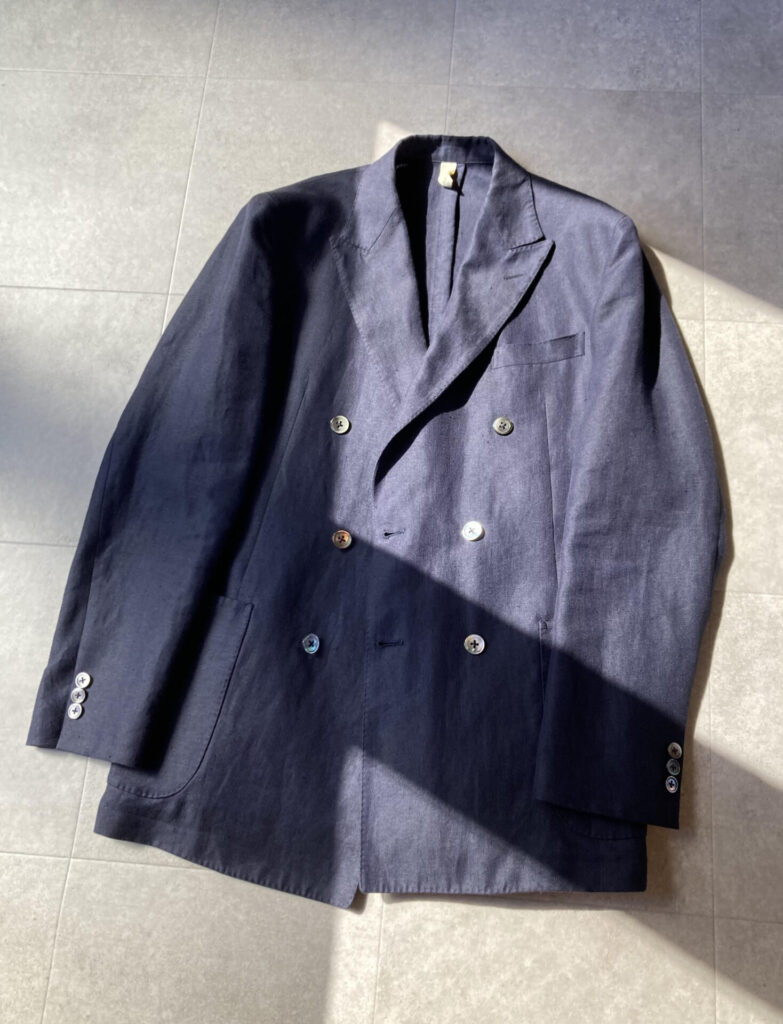
From this point onward, I’ll be comparing medium grey and medium navy as the standard shades for both colors.
Reason 2: The Trousers Can Be Worn Separately
The second major advantage of a grey suit is that the trousers can be worn separately.
Grey trousers are, without saying, one of the most basic and versatile pieces in classic menswear.
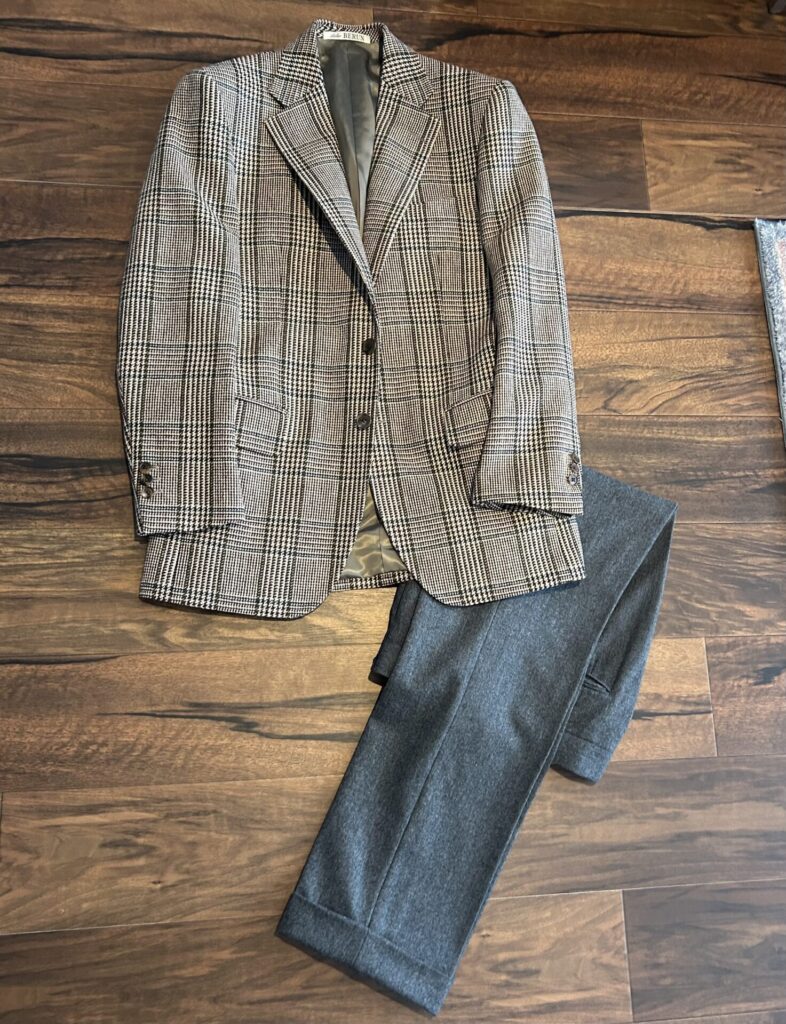
Pair them with a navy blazer and they can work even in relatively formal dress situations,
or combine them with a more casual jacket for a business-casual outfit,
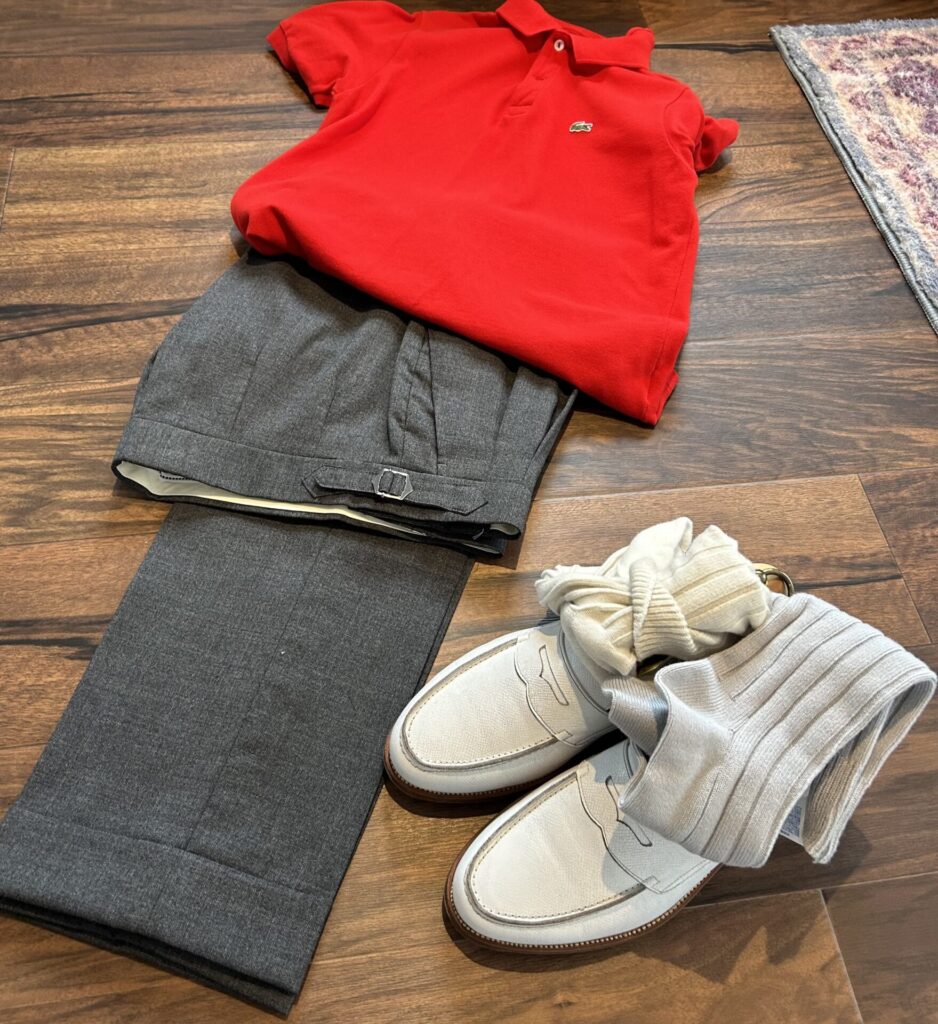
and they can even be worn with casual items such as a blouson jacket, polo shirt, or sneakers.
Of course, this depends on the fabric of the grey suit.
A dressy grey suit made from fine, lustrous fabric does not necessarily work well as a pair of odd trousers. It can be particularly difficult to combine with casual items.
On the other hand, fabrics with a more understated level of formality, such as fresco for spring and summer or flannel for autumn and winter, have less shine and a more casual character. These fabrics are much easier to combine with everything from a navy blazer to a leather jacket.
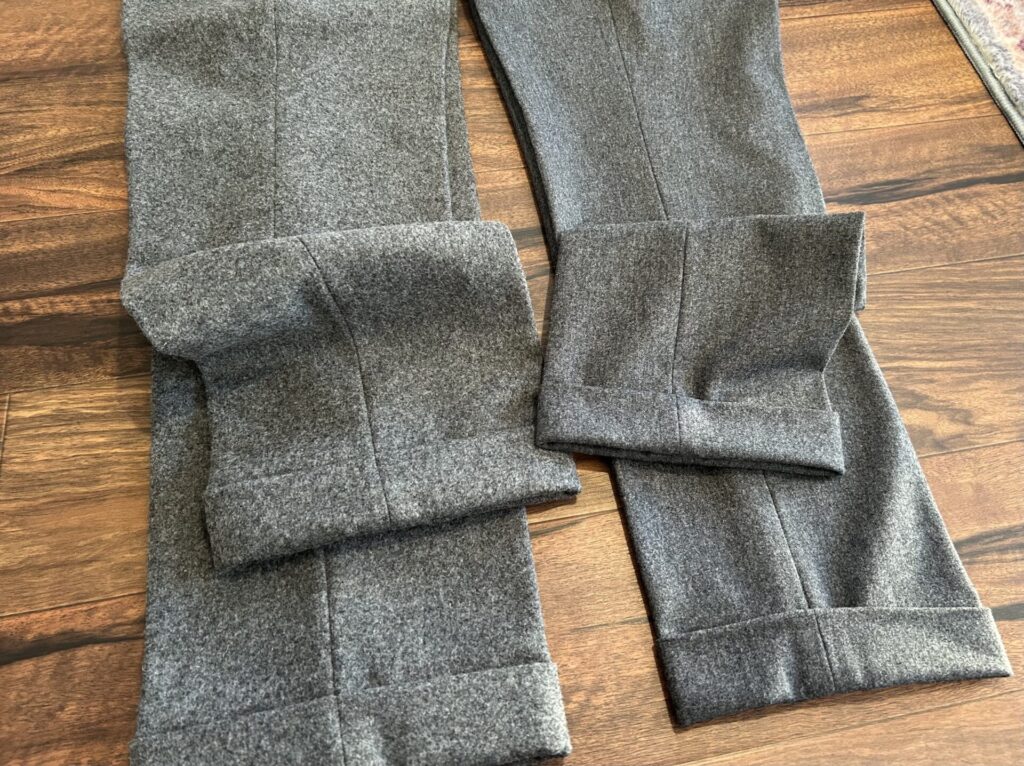
Incidentally, one of the books I have read compares a white shirt to a staple food like plain rice, and grey trousers to a basic soup or side dish that goes with almost anything.
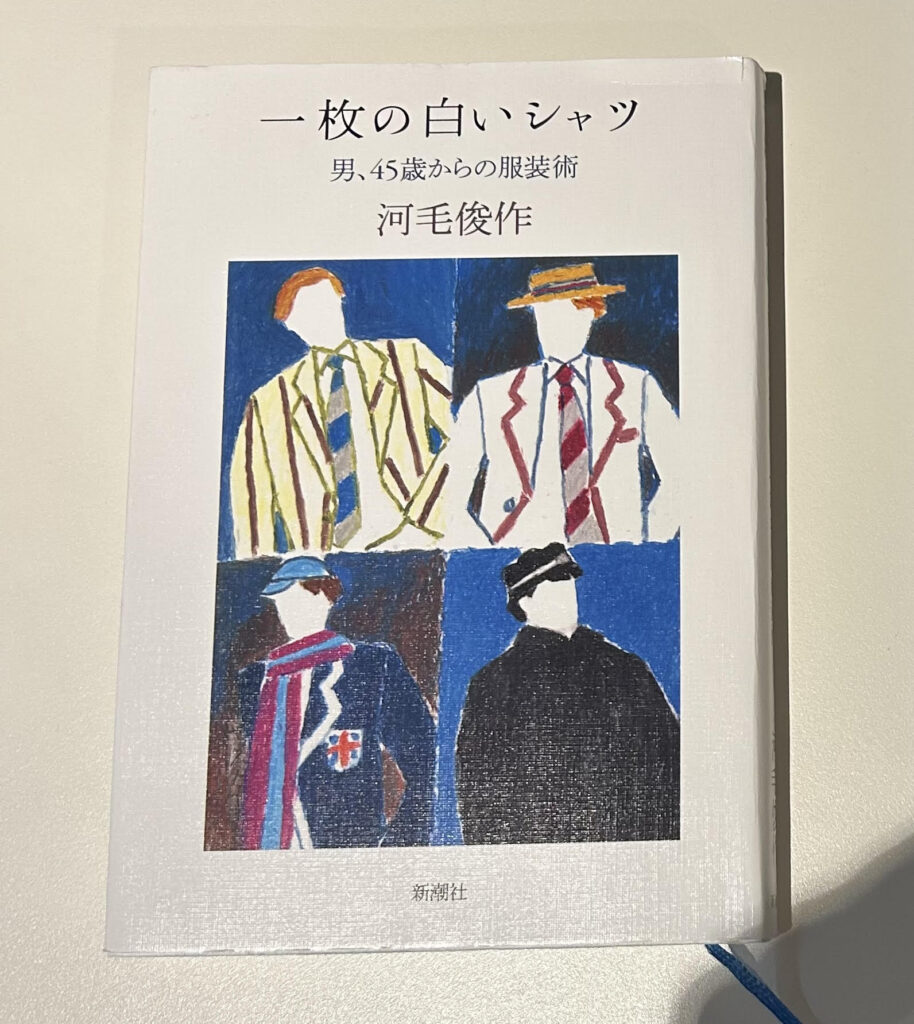
That comparison makes sense. Just as a simple, neutral accompaniment can work with everything from grilled fish and steak to burgers and rice dishes, grey trousers seem to work with almost anything.
By contrast, the trousers from a navy suit are extremely difficult to use on their own.
Whenever I wear navy suit trousers separately, I personally struggle to find a top that feels completely right with them, regardless of the color.
Navy trousers made from casual fabrics such as linen, corduroy, or tweed may be easier to wear separately. I can imagine them working well with brown or beige jackets.
But even with those same jackets, grey trousers almost always look better to me.
Incidentally, someone who prefers navy suits might argue that a navy suit jacket can be worn separately, whereas a grey suit jacket cannot.
This may be obvious to serious menswear enthusiasts, but fundamentally, neither a navy suit nor a grey suit jacket is designed to be worn as a standalone jacket.
That is because a suit jacket and a standalone jacket such as a navy blazer are made from different types of fabric and constructed differently. Wearing only the jacket from a suit can therefore easily result in an unbalanced appearance.
Reason 3: Different From Everyone Else, Yet Still Conservative
Perhaps because of the widespread belief that navy is the safest possible suit choice, navy suits are by far the most common.
Of course, plenty of people wear grey suits as well. But while charcoal grey is relatively common, I think medium grey is still somewhat of a minority choice.
If you simply want to wear something different from everyone else, you could choose brown, beige, red, white, or almost any other color. But in Japan in particular, colors other than navy and grey can be difficult to wear in a conventional business environment.
Medium grey allows you to satisfy that desire to wear something a little different without standing out in a bad way.
Reason 4: It Becomes More and More Your Own as You Get Older
Generally speaking, navy has a youthful and fresh image, while grey tends to have a more mature and composed character.
For example, if a recent university graduate in his first year at a company wore a medium grey suit, it might feel slightly unusual.
Conversely, there is absolutely nothing strange about a veteran employee in his 60s wearing a navy suit. But if that same man wore a grey suit, somehow it feels as though the suit would suit him more naturally and embrace his experience.
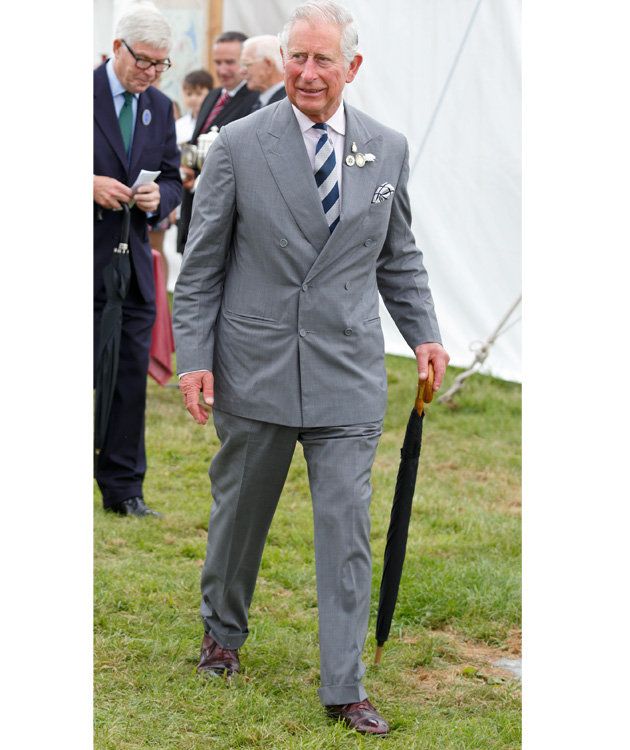
In other words, grey suits become more and more flattering as you get older.
For someone who loves classic menswear, wouldn’t the ideal be to buy a reasonably good suit in a timeless cut and continue wearing it for decades, much like Mr. Yukio Akamine?
I imagine there is something wonderful and rewarding about your clothes gradually becoming more and more “yours” as you grow older.
On the other hand, it would be rather sad if you found yourself thinking that a particular piece of clothing suited you less and less as you aged.
Reason 5: It Doesn’t Fade to White as Easily
This is the last one.
If you wear a navy suit hard for decades, the fabric can eventually start to look whitish and faded.
I have never personally worn a single suit for several decades, so this is partly speculation. But I imagine many people have experienced how dark fabrics such as navy and black can gradually lose their color and become lighter with prolonged wear.
This is particularly noticeable with navy chinos and other cotton garments. Wool fabrics, I believe, are less prone to this kind of visible fading.
If you have actually worn a navy wool suit for several decades, please let me know what happened to it.
Grey, on the other hand, does fade, but the change tends to be less noticeable.
I have thought about why this might be the case. Grey is originally a mixture of black and white, so when it becomes lighter with wear, it is essentially just gaining a little more of its existing white component. In other words, if you start with medium grey, some fading simply moves it closer to light grey, making the change less obvious.
Combined with the advantage mentioned in the previous section—that grey can become more flattering as you get older—I believe grey is the better choice for a suit that you intend to wear for many years.
Conclusion
I’ve introduced five reasons why I believe grey suits are superior to navy suits.
They are achromatic and highly versatile.
The trousers can be worn separately.
They are different from what everyone else is wearing, yet still conservative.
They become more and more your own as you get older.
They don’t show fading as easily.
On a personal note, I bought my first grey suit after hearing Mr. Yukio Akamine say that medium grey is the true foundation of classic menswear.
Before that, I had only worn navy suits or, at most, charcoal grey suits. Inspired by Mr. Akamine, I decided to impose a personal rule on myself: grey suits only.
As a result, I eventually gave away all of my navy and charcoal grey suits, and I somehow became a man who can love nothing but grey.
When I recently visited DORSO, I was tempted to try navy again, but in the end, I chose medium grey.
Related article


For now, my interest in navy hasn’t returned at all. Going forward, I think I’ll continue down the road of medium grey, perhaps light grey, and once my collection becomes larger, grey stripes as well.
That’s all. Thank you for reading.



コメント