Hello, this is Mr. Linen.
Do you wear a pocket square when dressing in a suit or a sport coat and trousers combination?
Some people believe that whenever a jacket is worn—whether with a full suit or separates—a pocket square is essential.
Others may feel that a pocket square looks overly decorative and therefore avoid wearing one except at weddings or formal parties.
I am certainly not an etiquette expert, so I cannot tell you exactly when you should wear a pocket square from a manners perspective.
What I would like to explore today is which types of outfits benefit from a pocket square.
A Pocket Square Is Decoration, Not Etiquette (Unlike a Tie)
In classic tailoring, neckties and pocket squares are the only items that serve no practical function and exist purely as accessories. (Unless, of course, you actually use your pocket square as a handkerchief.)
That said, while a tie has no practical purpose as clothing, it does have a social function.
According to the late menswear writer Masakatsu Ochiai, in many Western countries whether or not a man wears a tie can be considered more important than whether or not he wears a jacket.
Some establishments may object to a jacket worn without a tie, while a tie worn without a jacket may still be acceptable.
A pocket square, on the other hand, carries almost no social function.
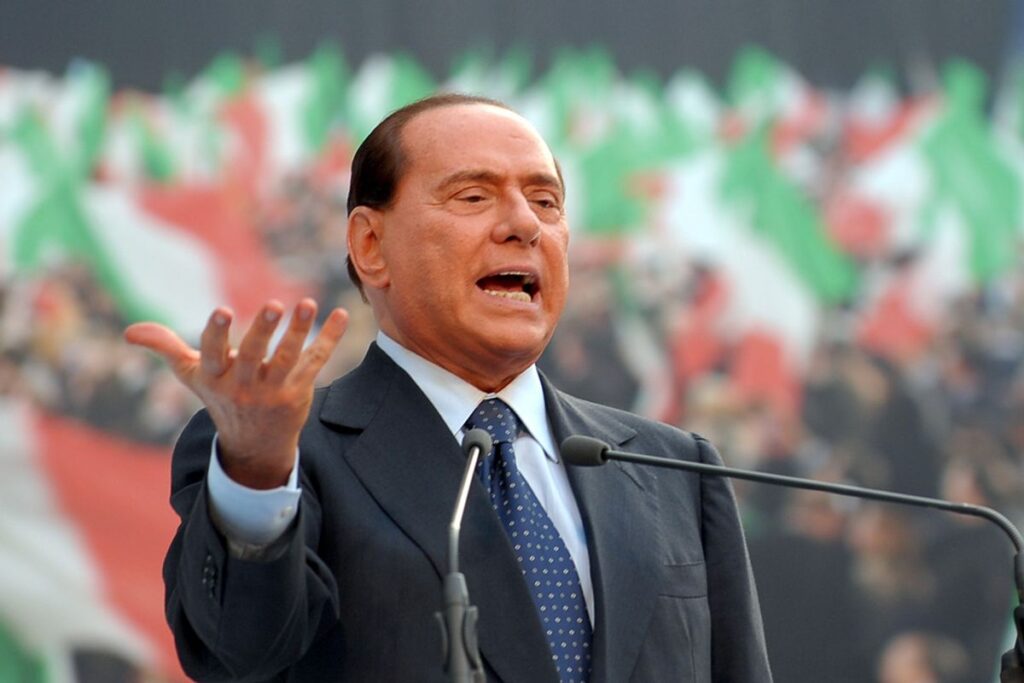
Imagine a classic business suit: a dark suit, a white or light blue shirt, a navy tie (solid or with subtle dots), and black cap-toe Oxfords.
If such an outfit is worn without a pocket square, some people may feel that something is missing, but nobody is likely to think it is rude or improper.
https://forbesjapan.com/articles/detail/21079
Unlike a tie, I do not believe a pocket square carries any etiquette-related obligation.
It is purely decorative, and whether to wear one is entirely a matter of personal choice.
Essential with a Suit
So, when does a pocket square actually improve an outfit?
Let’s divide the discussion into two categories: suits and sport coat combinations.
First, let’s consider a traditional suit outfit (matching jacket and trousers, shirt, and tie).
In my opinion, a pocket square is essentially indispensable.
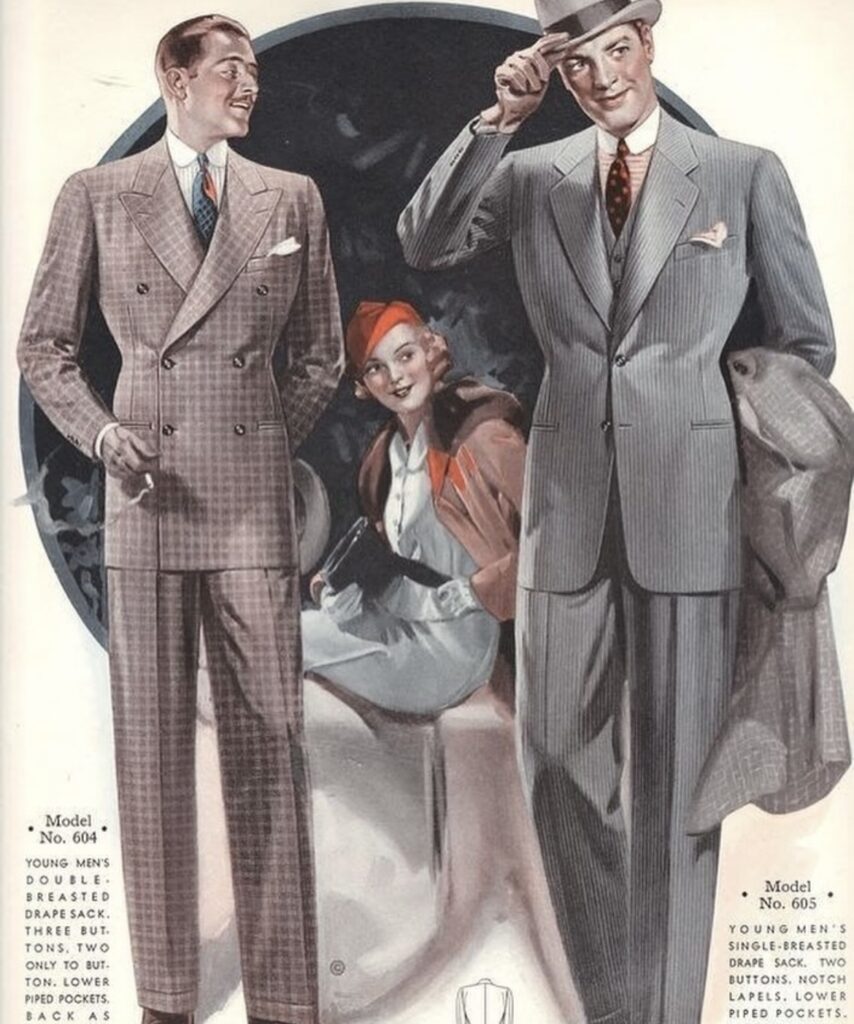
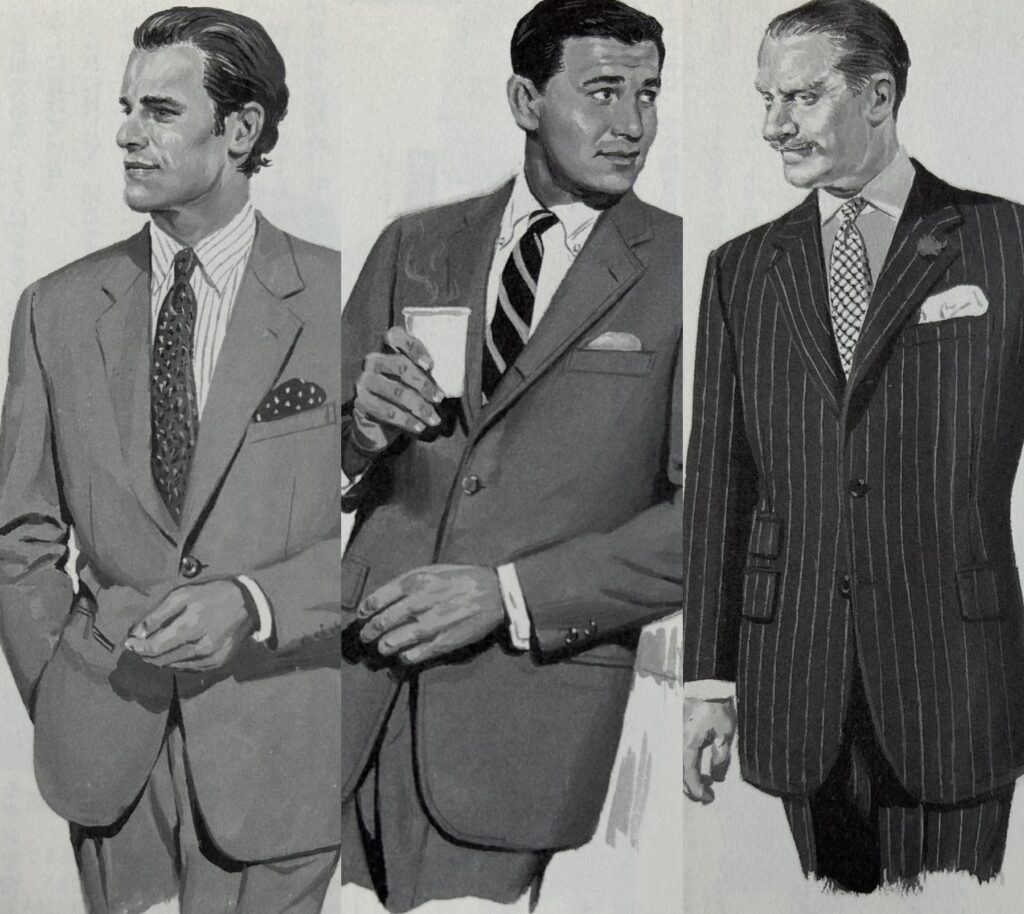
A suit is inherently dressy, and without a pocket square it often feels as though the outfit is missing a finishing touch.
Not only at weddings and formal events, but also in ordinary business settings, a matching suit worn with a tie feels incomplete without a pocket square. (Again, this is not an etiquette requirement.)
There are, however, exceptions depending on the fabric.
With more casual suit fabrics such as linen or tweed, a pocket square feels less necessary, even when a tie is worn.
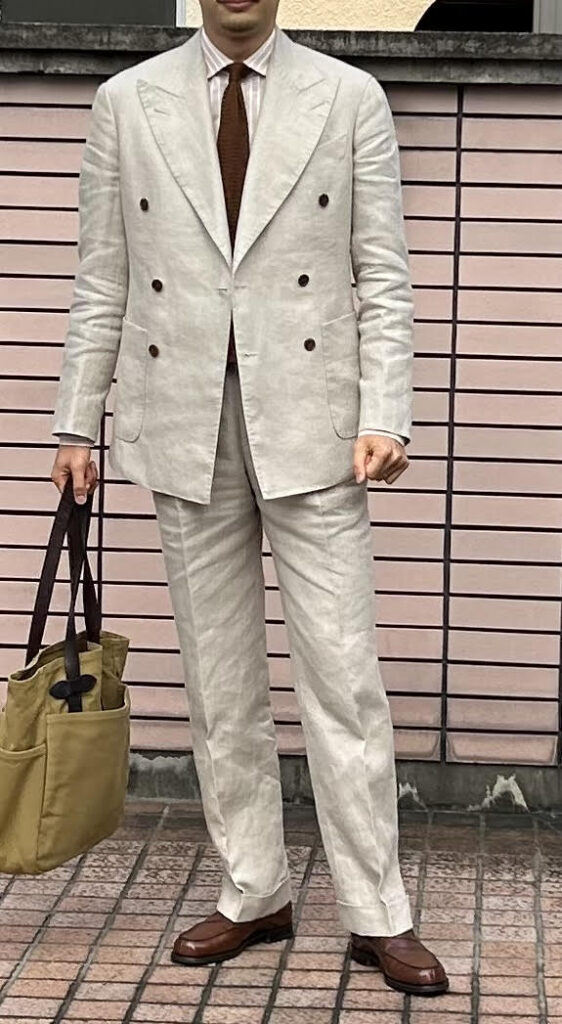
The same applies when the suit is worn without a tie—perhaps with just a shirt or a knitwear layer underneath.
(At that point, perhaps we should call it a coordinated set rather than a traditional suit.)
If a pocket square feels a little too formal but leaving the pocket empty feels incomplete, placing a pair of glasses in the breast pocket can work surprisingly well.
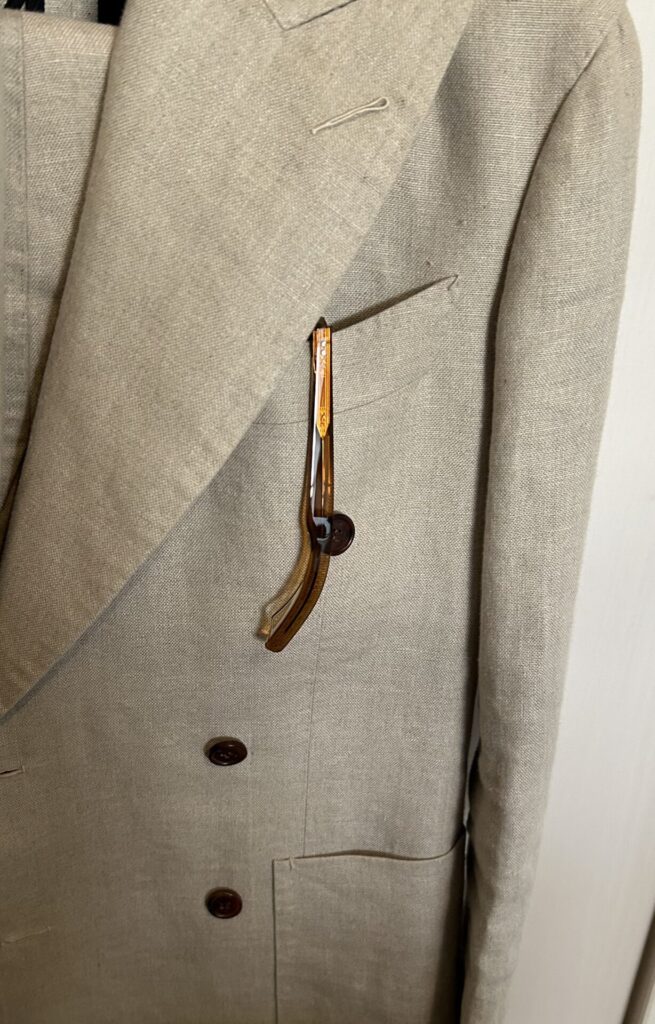
Of course, the color, pattern, fabric, and folding style of a pocket square dramatically affect the overall impression, but that would make this discussion far more complicated, so I’ll leave that topic for another day.
Sport Coat and Trousers Combinations
Now let’s move on to sport coat combinations.
This category covers a huge range of formality—from a tweed jacket worn with denim and a turtleneck sweater, all the way to a navy blazer paired with grey wool trousers.
The dressier the combination, the closer it comes to a suit, and therefore the more naturally a pocket square fits into the outfit.
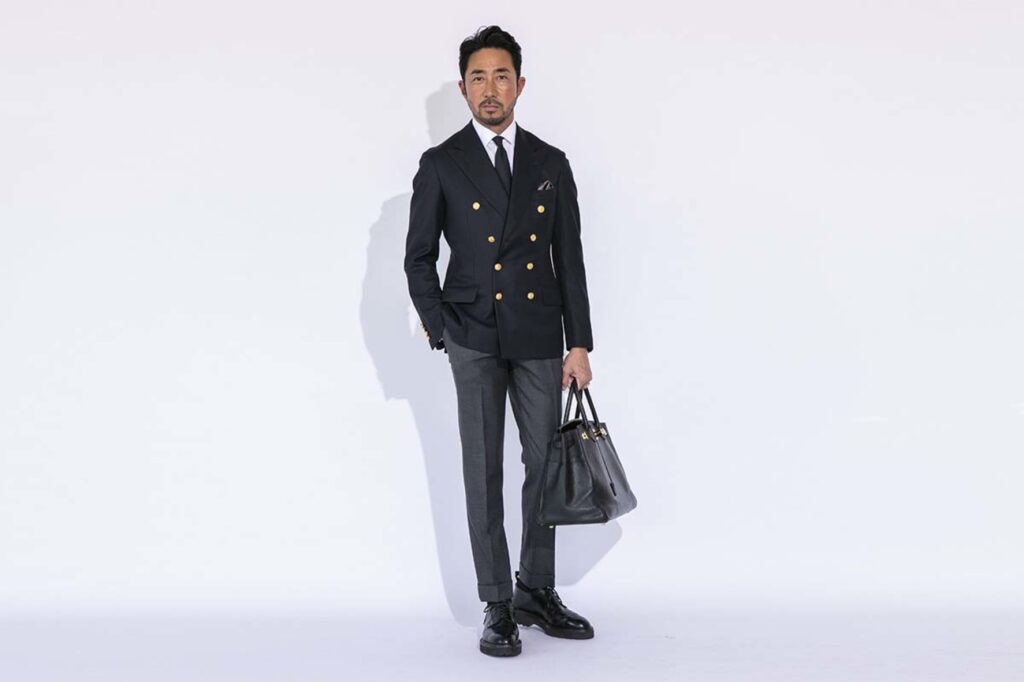
Dressier combinations are relatively easy to judge. The more casual the outfit becomes, the more the pocket square becomes a matter of personal taste.
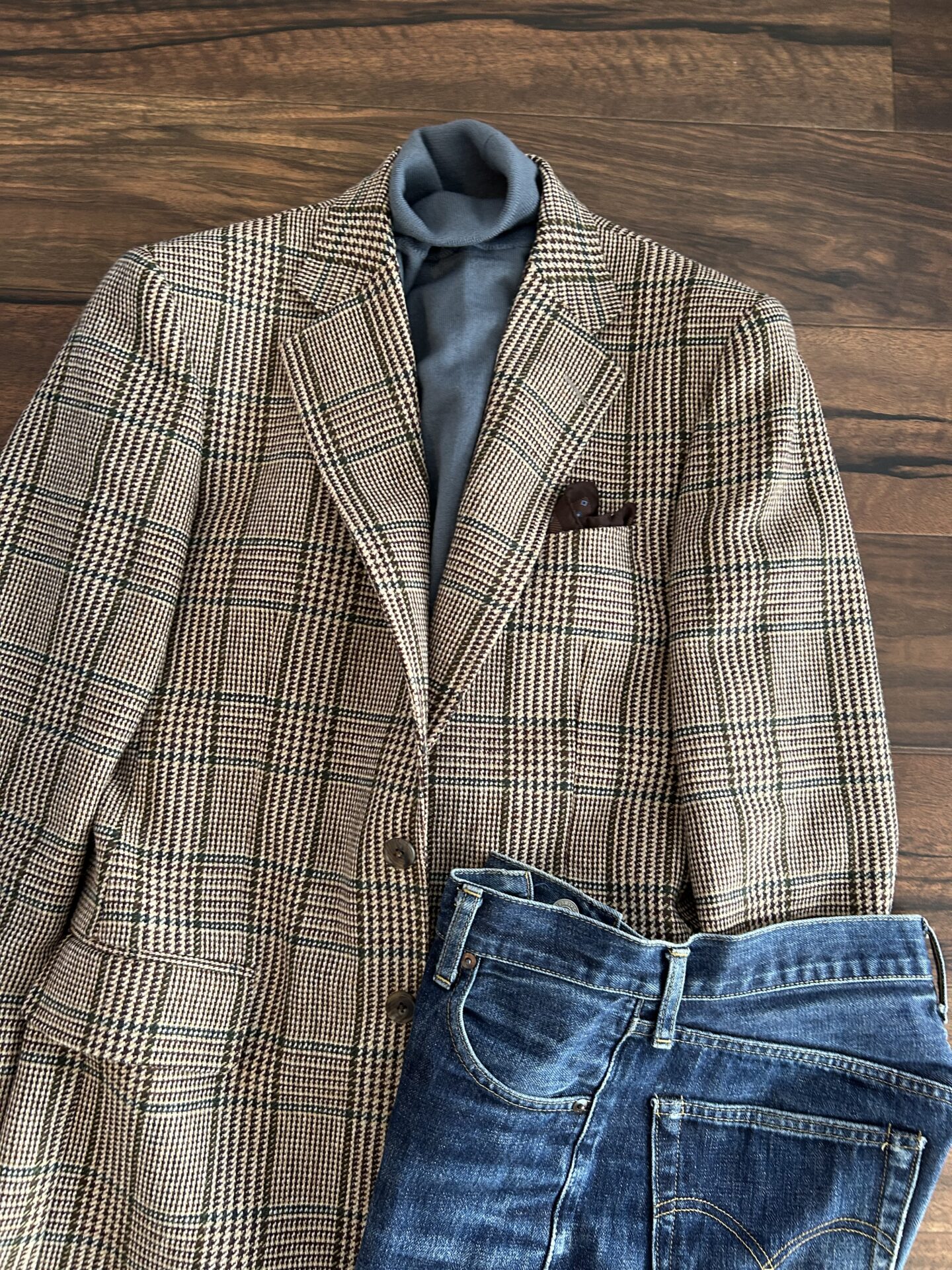
For example, consider denim, a knit sweater, and a tweed jacket. Do you think a pocket square improves the outfit?
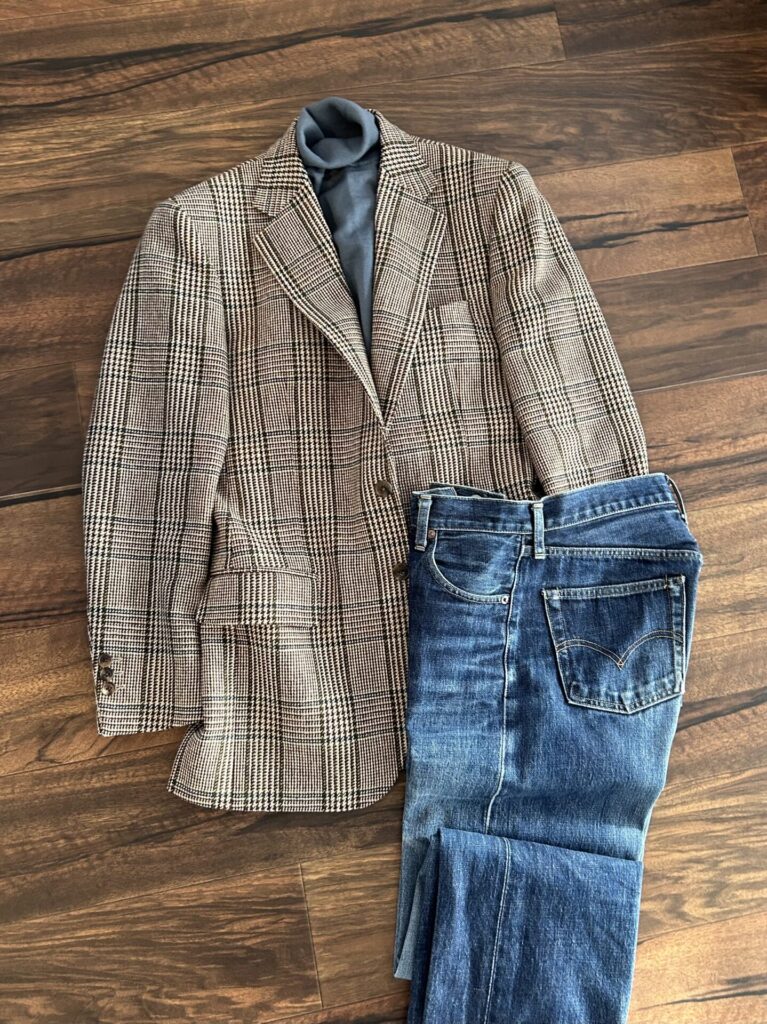
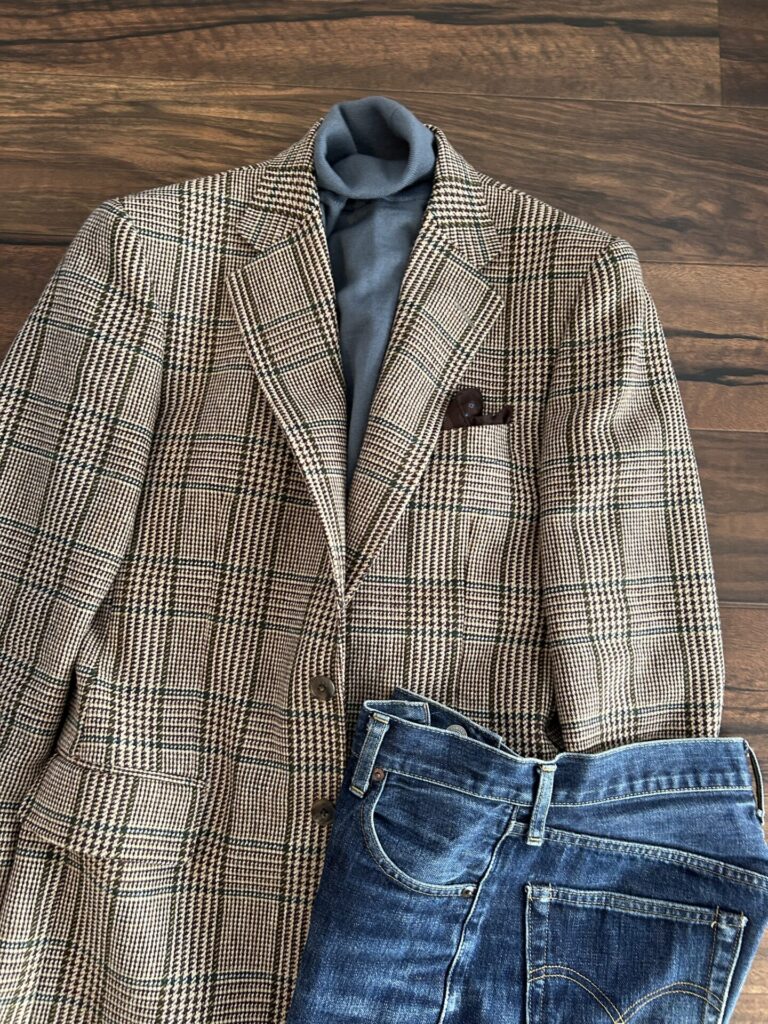
The answer depends on factors such as the jacket’s pattern, the degree of fading in the denim, and the footwear chosen, but personally I prefer the version without a pocket square.
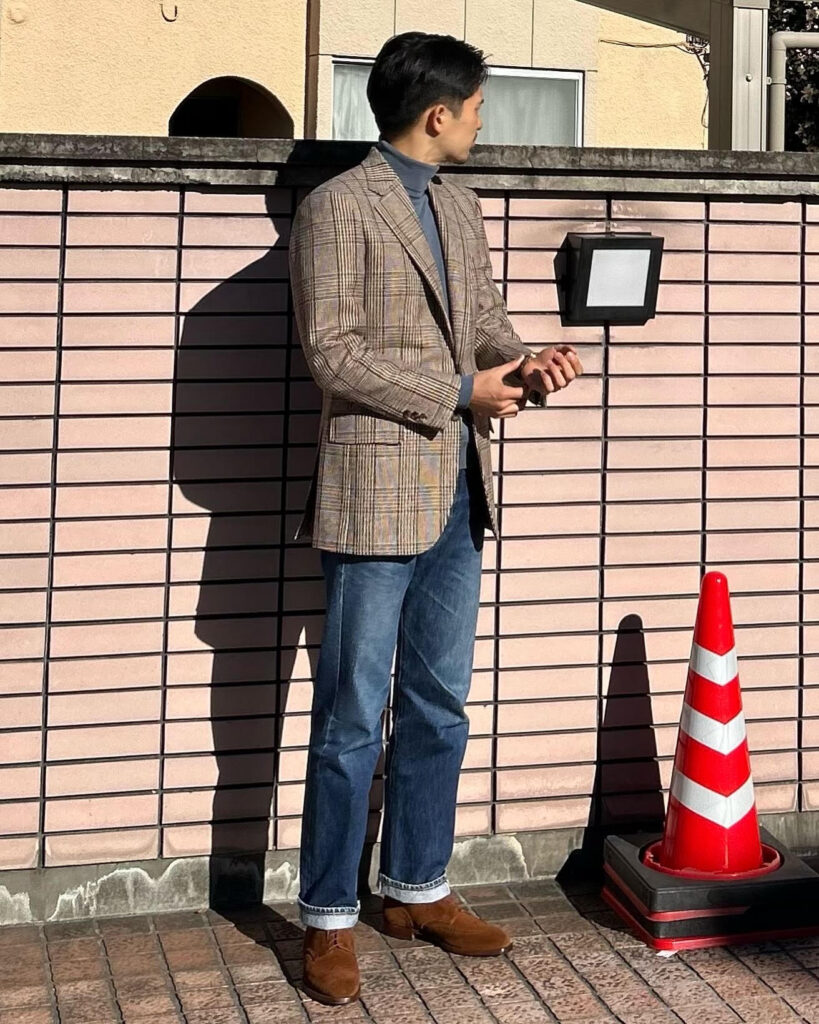
Denim and tweed naturally create a relaxed country-inspired aesthetic. Adding a pocket square can sometimes make the outfit feel overly calculated.
Someone who wears pocket squares every day may be able to incorporate one effortlessly, but for most people, leaving it out is probably the safer choice.
As mentioned earlier, glasses or even a pen in the breast pocket can be alternatives, though they carry a similar risk of looking intentionally styled.
Ultimately, It’s a Matter of Taste
We’ve looked at two extremes of sport coat style:
Grey trousers with a navy blazer.
Denim with a tweed jacket.
But what about all the combinations that fall somewhere in between?
For example, beige flannel trousers with a tweed jacket and tie.
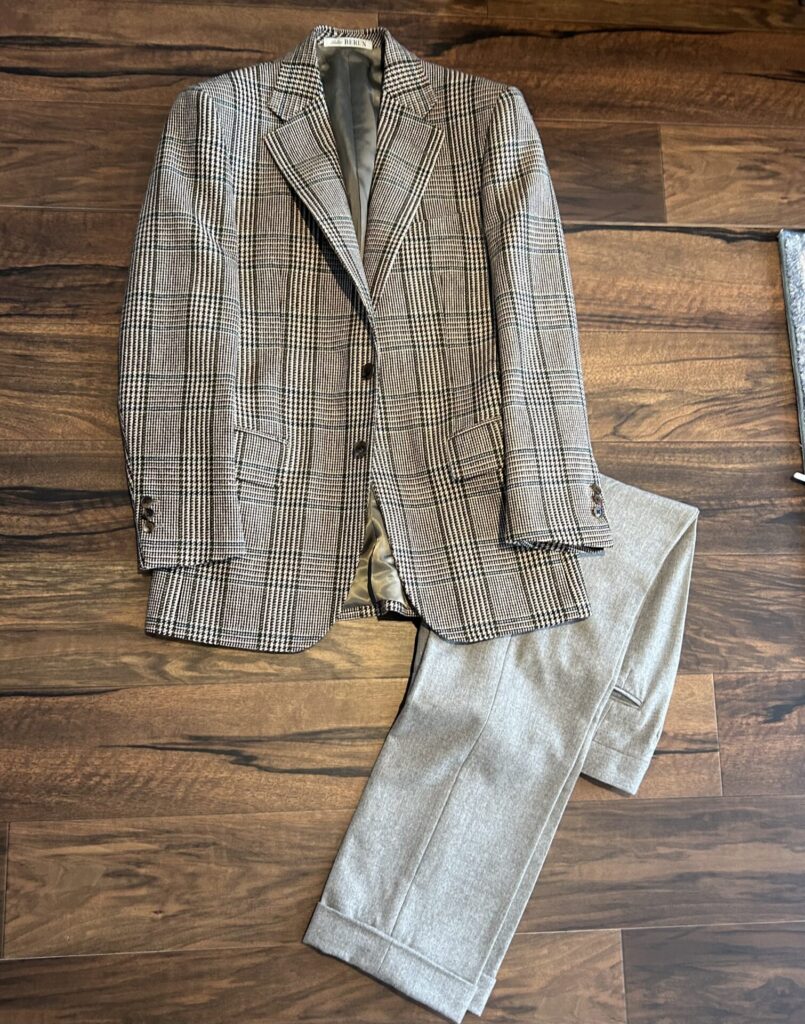
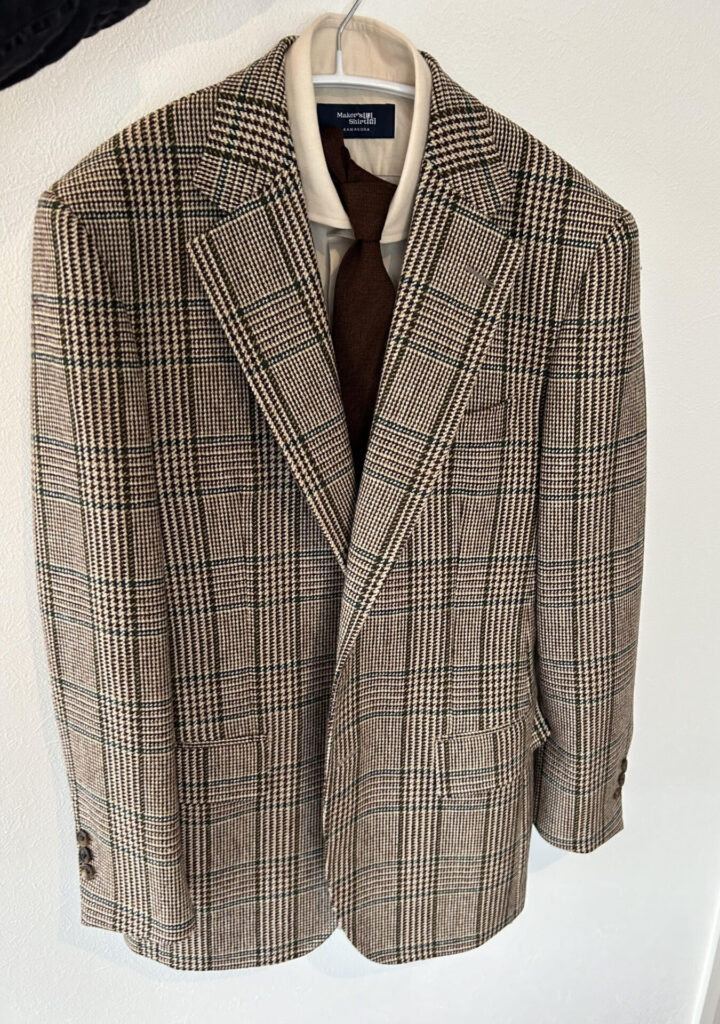
Or chinos with a navy blazer and tie.
Or denim with a navy blazer and a turtleneck sweater.
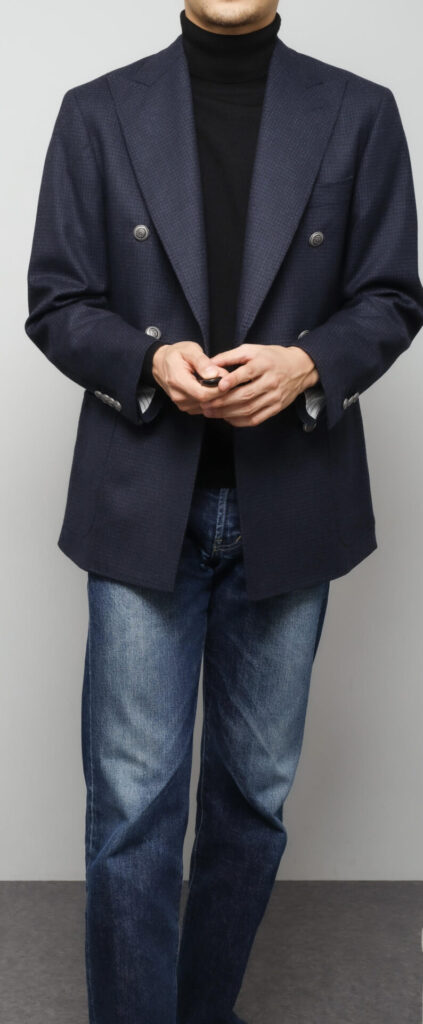
All of these outfits work perfectly well either with or without a pocket square. In the end, it comes down to individual taste and aesthetic preference.
Personally, I don’t feel particularly confident in my ability to wear a pocket square well in every situation. As a result, I always wear one with a suit, but with sport coat combinations I generally avoid one unless I’m wearing the classic grey-trousers-and-navy-blazer combination.
If you prefer having a simple rule, one option might be this: whenever you wear a tie, wear a pocket square as well.
That’s all for today.
Thank you for reading.

コメント