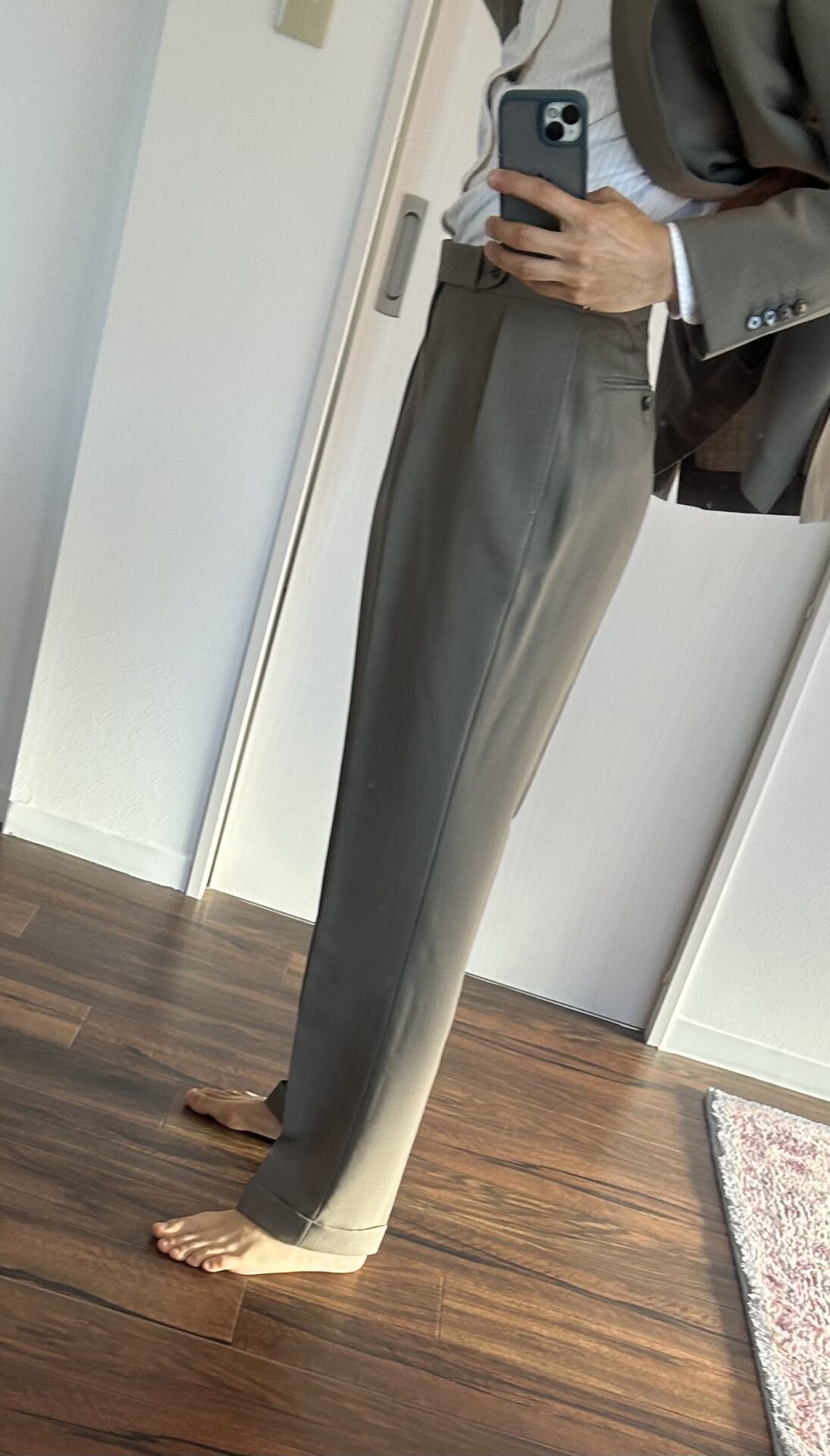
Hello.
I’m Mr. Linen.
I love classic suits, and ideally, I would like to order a new suit about once a month. Unfortunately, I don’t have anywhere near that kind of budget.
For me, ordering a suit once or twice a year is about the limit. The rest of the time, I buy ready-to-wear suits secondhand and have them altered to fit me.
I have essentially ruled out buying ready-to-wear suits at full retail price.
Even a high-quality ready-to-wear suit from a good brand can cost more than $1,300 for the jacket and trousers. And even if you buy one brand new at full price, you may still need alterations. If I am going to spend that much money, I would rather put it toward a made-to-measure suit.
When you buy a secondhand suit and have it altered, the fit can become considerably better. But if you try to get the fit as close as possible to a made-to-measure suit, the alteration costs can eventually bring the total price surprisingly close to that of a made-to-measure suit.
That would defeat the purpose, so there is a limit to how much I am willing to spend on alterations. Sometimes, I simply have to accept a fit that is not quite perfect.
And it is not only about fit. Things like the number of buttons or the color of the lining will almost never match your personal preferences perfectly.
For that reason, I think some degree of compromise is inevitable when buying and altering a secondhand suit.
So, if you want to get a suit that comes as close as possible to the quality of a made-to-measure suit by buying secondhand and having it altered, what should you pay attention to?
As someone who considers himself a secondhand-suit-buying and alteration enthusiast, I would like to share what I have learned.
The Typical Prices of Made-to-Measure and Secondhand Suits
The price of a made-to-measure suit can range from around $200 at mass-market retailers to well over $7,000 from an overseas tailor. Personally, I consider a suit priced at around $1,500 or more for a jacket and trousers to be within the range where I would call it genuinely high quality.
A full bespoke suit can easily cost about twice that amount. However, there are several excellent Japanese tailors offering MTM (Made to Measure) or pattern-order suits, which sit somewhere between ready-to-wear and full bespoke, for around $1,300–$2,000.

By comparison, secondhand suits can be found for as little as around $200 at stores such as Safari No. 3 in Koenji, Tokyo, even when they are from well-known brands.
On online marketplaces such as Mercari and Yahoo! JAPAN Auction, you can sometimes find suits for around $70 or even less. If you do not care about the brand, it is possible to find suits for around $20.
When it comes to suits, I don’t think the brand name itself makes the suit better. However, I do think brands can be useful as a rough indication of quality. For example, Japanese makers such as Ring Jacket and BEAMS F, or Italian makers such as Kiton, give you some reassurance that the suit was made by a company with a strong reputation for quality.
How Much Do Alterations Cost?
If you are buying a suit secondhand, the chance of finding one that happens to match your body measurements exactly is close to zero.
If you have a body type that happens to work well with ready-to-wear clothing, you may get lucky and only need to shorten the trousers. For most people, however, several alterations to both the jacket and trousers will usually be necessary.
You need to add the purchase price of the secondhand suit and the alteration costs together, then compare that total with the price of ordering a suit. That is how I decide which option makes more sense.
Alteration prices vary considerably from one tailor or alteration shop to another. As a useful reference, I recommend looking at Shinsaibashi Reform, one of the largest alteration companies in Japan and one that has a strong reputation for the quality of its work.
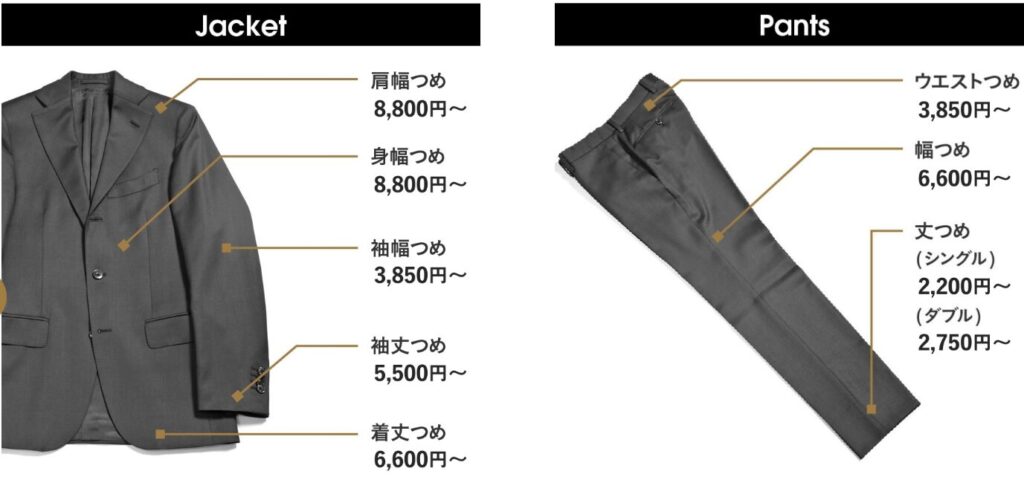
In my case, I take simple jobs such as trouser hemming to a local alteration shop, while I take more complicated jobs, such as reducing the chest width of a jacket or altering leather garments, to Shinsaibashi Reform. (This is before I knew SARTO Ginza, where I work now. I recommend both companies.)
With Shinsaibashi Reform, there are very few things they simply cannot alter. They can handle an impressively wide range of work.
They can of course make garments smaller, but they can also make them larger. Even when you might think there is not enough excess fabric to let a garment out, they may be able to transfer fabric from another part of the garment or use a similar fabric to make it work.
Things such as trouser length and trouser waist adjustments are relatively straightforward, meaning they are also comparatively inexpensive.
Adjustments to the jacket shoulders, chest width, collar area, and jacket length, on the other hand, are relatively substantial operations and therefore more expensive.
The exact price cannot be determined without seeing the actual garment, but approximate prices are listed on their website.
If the alteration you need is not listed there, you can also contact them by phone.
Another thing to keep in mind is that you may think you know exactly what needs to be altered, but once you take the garment to a professional, they may point out additional areas that need adjustment. The final cost can therefore be higher than you expected.
For example, I once brought in a leather tailored jacket that was much too large for me.

I managed to buy the jacket very cheaply, for only about $180, but the alterations ended up costing approximately $900.
Even so, a made-to-measure leather tailored jacket would cost more than $2,000, so technically it was still cheaper.
However, considering that it was a used garment that already showed some signs of wear, I cannot really say that it was a bargain.
If I had known beforehand that the alterations would cost that much, I probably would not have bought it.
Leather may be an exception because alterations can cost nearly twice as much as alterations to ordinary cloth garments. Nevertheless, if you are buying a secondhand suit online, I recommend calling an alteration shop before purchasing it and asking for at least a rough estimate of the alteration cost.
Which Measurements Should You Prioritize When Buying Secondhand?
First of all, the ideal fit depends on the individual.
Some people prefer a slimmer fit, while others prefer something more relaxed. But when we are talking specifically about classic tailoring rather than casual or fashion-forward clothing, I believe that the jacket shoulder width, jacket length, and sleeve length have certain appropriate dimensions that remain valid regardless of personal preference or changes in fashion.
On the other hand, things such as jacket chest width, trouser width, and trouser length can vary somewhat according to personal preference without necessarily falling outside the boundaries of classic tailoring.
That is the assumption I will use for the rest of this section.
When buying a secondhand suit, it is generally safer to avoid one that is too small, because making a garment larger is difficult. When it comes to alterations, taking fabric in is usually much easier than letting it out.
The two measurements I believe you should pay the most attention to are the jacket’s length and shoulder width.
It is possible to reduce both the jacket length and shoulder width, but these alterations are more expensive than many other adjustments.
With jacket length, you might think you can simply cut the bottom shorter. However, because jackets have pockets, shortening the jacket can leave the pockets sitting unnaturally low.
The late Japanese menswear writer Masakatsu Ochiai wrote in his book Men’s Clothing Techniques that, for a classic jacket, the distance from the bottom hem of the jacket to the top edge of the pocket should be 23–25 cm (9.1–9.8 in), regardless of the wearer’s height.
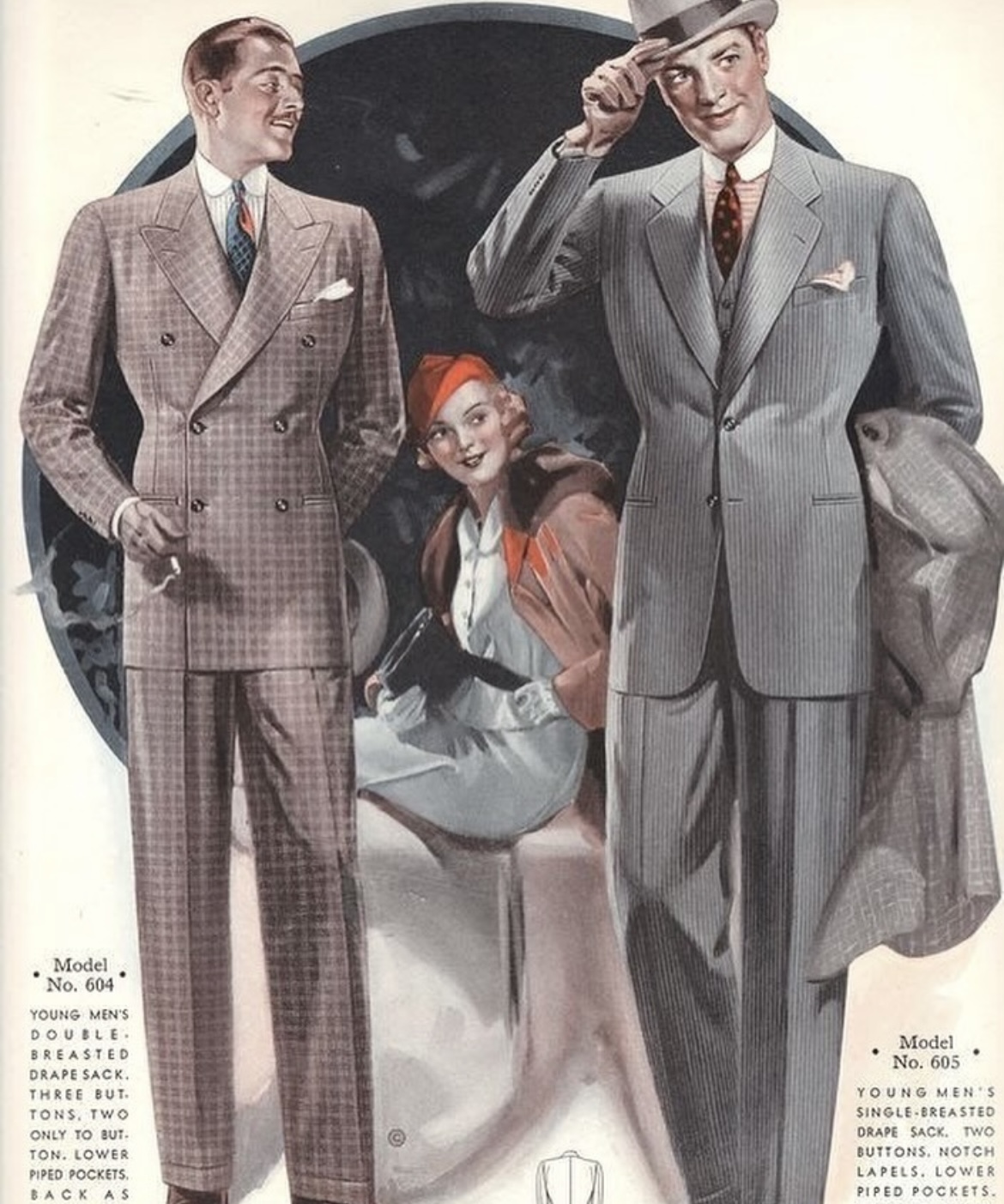
With patch pockets, it is possible to reposition the pockets. With welt pockets, it is also possible to shorten the jacket from the shoulder area rather than simply cutting off the bottom. However, these methods require more work and therefore cost more.
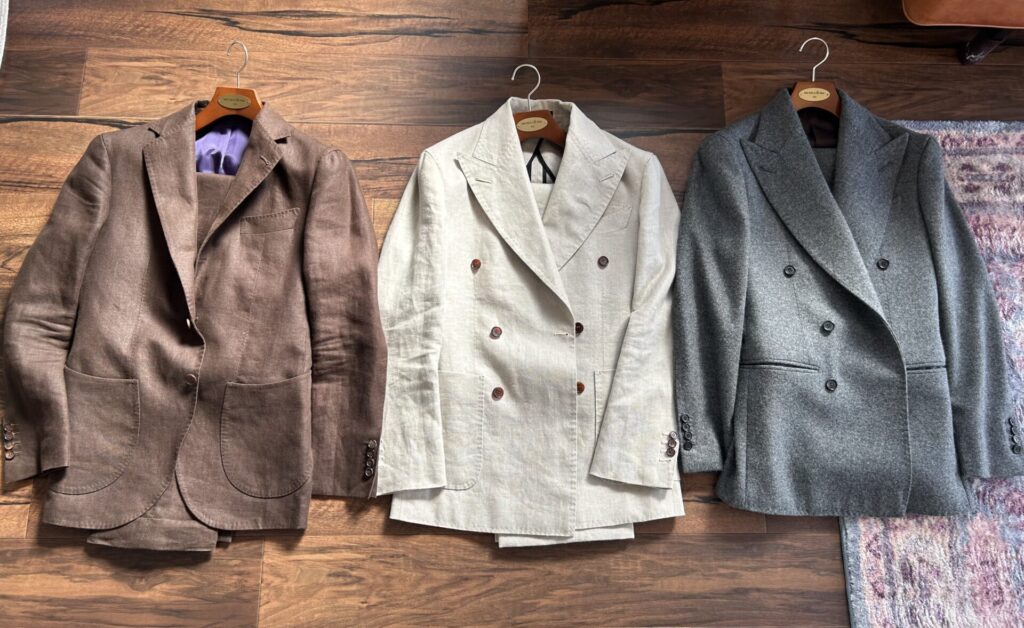
If you shorten the jacket by around 1 cm (0.4 in), the pocket position will usually not make a major visual difference. If you shorten it by more than that, however, you need to be careful.
As for the jacket shoulders, reducing the shoulder width is a fairly normal alteration. However, the sleeves have to be removed and reattached. Since sleeve construction is often one of the areas where a particular brand or tailor expresses its craftsmanship, I personally prefer not to disturb the original sleeve setting if possible.
Unlike shortening the jacket length or reducing the shoulder width, reducing the chest width, removing wrinkles around the neck and upper back, or narrowing the sleeve width are relatively straightforward alterations and do not usually cost as much.
Chest width and sleeve width are heavily influenced by fashion and personal preference. Extremely tight clothing is not particularly elegant, but I also think a slightly relaxed fit can look excellent. A jacket does not necessarily have to follow every contour of the body to be considered well fitted.

Sleeve length requires a little more caution. You can shorten a sleeve simply by cutting it, but there are buttons at the cuff. If you shorten the sleeve by more than about 1 cm (0.4 in), there is a risk that the distance between the cuff edge and the buttons will become unnaturally short.
If the buttonholes have not yet been opened, you can cut the sleeve shorter and then move the buttons upward. This allows you to restore the original distance between the cuff edge and the buttons.
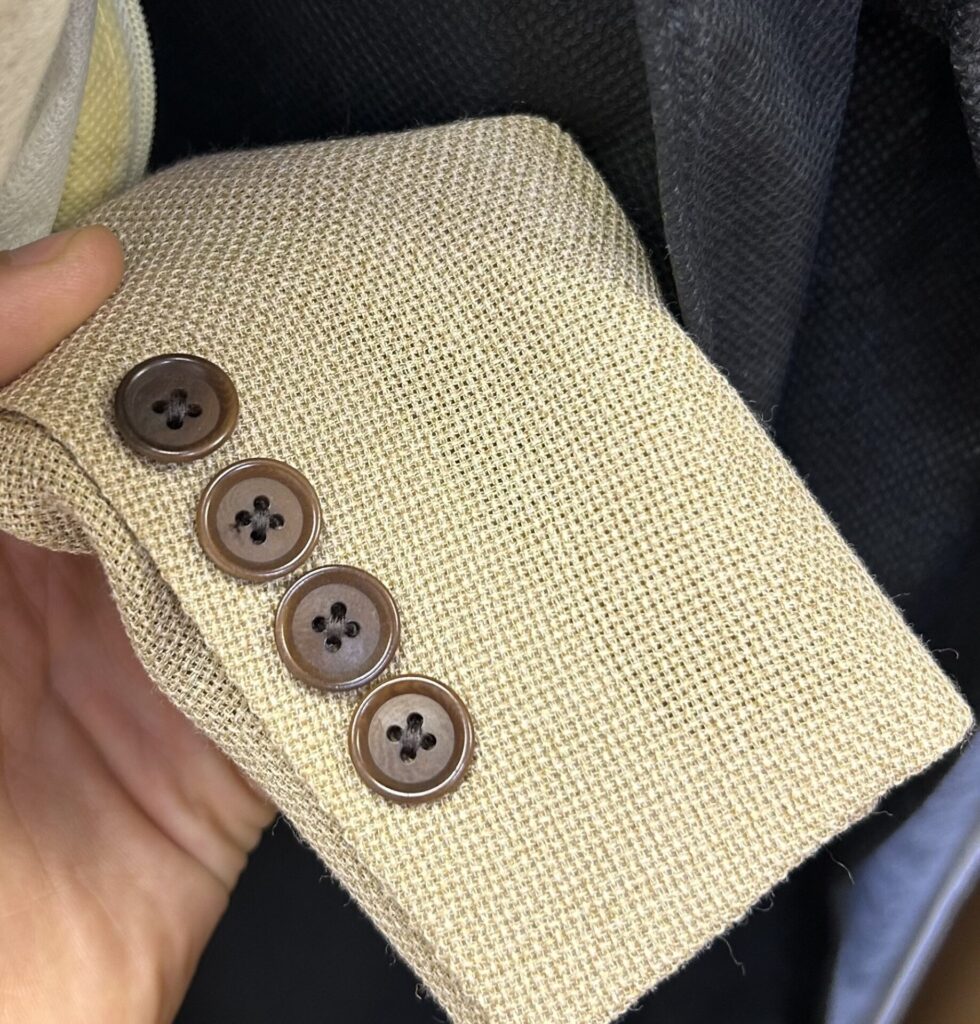
However, with so-called surgeon’s cuffs, where the buttonholes are functional and the buttons can actually be opened and closed, closing the existing buttonholes is difficult. As a result, shortening the sleeve can leave the buttons uncomfortably close to the cuff edge.
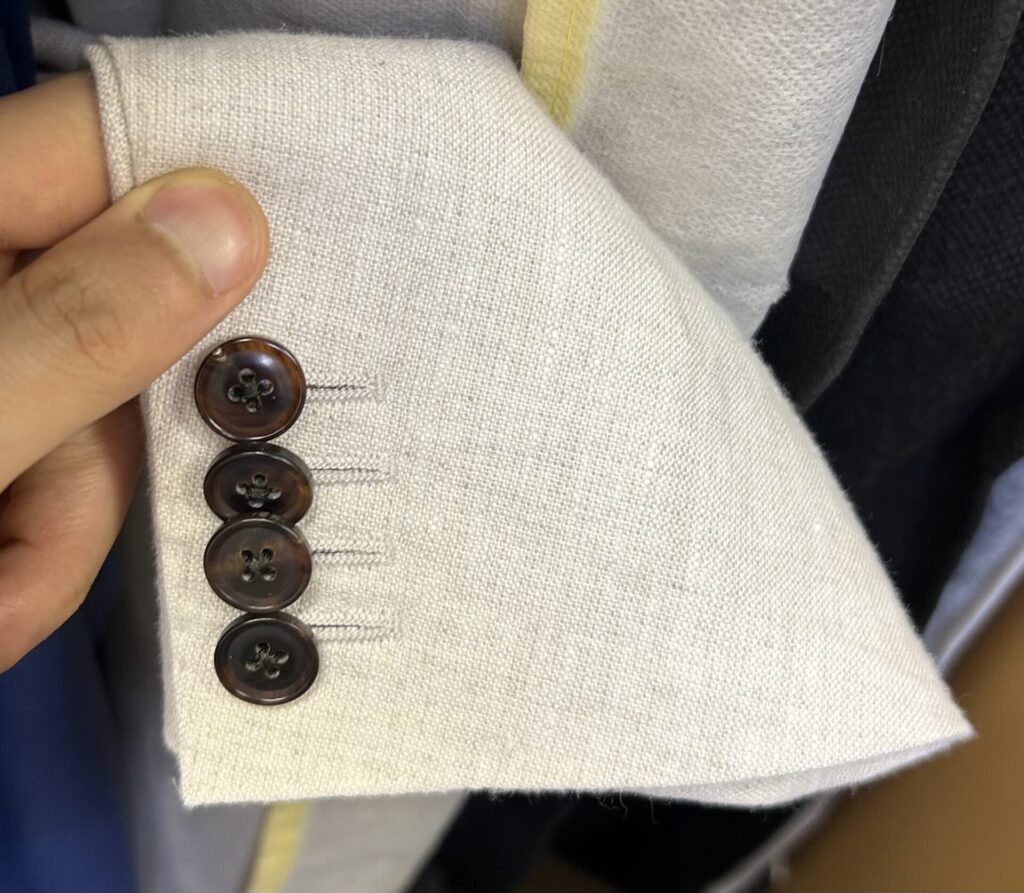
When shortening sleeves with functional buttonholes, another option is to shorten them from the shoulder. However, this costs more, and as mentioned above, it requires disturbing the original sleeve attachment.
As for trousers, adjusting the waist, shortening the hem, narrowing the hem width, or slimming the overall silhouette are all relatively straightforward compared with alterations to a jacket.
As of March 2025, the general trend seems to favor a somewhat relaxed silhouette rather than trousers that are excessively slim or short. In many cases, around 1.2 cm (0.5 in) of additional length or width can be let out if there is enough seam allowance.
So, to summarize this section: when buying a secondhand suit, you should pay the most attention to the jacket shoulder width and jacket length. Most of the other measurements can be adjusted relatively easily.
The Best Way to Know Your Own Measurements
If you are buying a secondhand suit at a vintage or used-clothing store, you can try it on, so it is relatively easy to imagine what needs to be altered. But when buying online, you have little choice but to rely on the garment’s actual measurements.
That means you need to know your own body measurements.
One way to find out your measurements is to have someone measure you. But unless you happen to know a professional tailor, the measurements will probably be taken by an amateur.
One method I recommend is asking a tailor to show you the measurement data they took when you previously ordered a suit from them.
You may need to be tactful about how you ask. Simply saying, “I need these measurements because I want to buy secondhand suits,” might not leave the best impression. But if you explain the reason appropriately, many tailors will probably be willing to show you the measurements.
One important thing to understand is that your so-called “body measurements” and the actual measurements of a garment are not the same thing.
For example, suppose your actual waist measurement is 76 cm (29.9 in). If you buy trousers that measure 38 cm (15.0 in) across when laid flat, giving a nominal circumference of 76 cm (29.9 in), they will probably feel tight.
That is because the 76 cm (29.9 in) measurement includes the thickness of the fabric. The actual inner circumference of the trousers will therefore be closer to 75 cm (29.5 in).
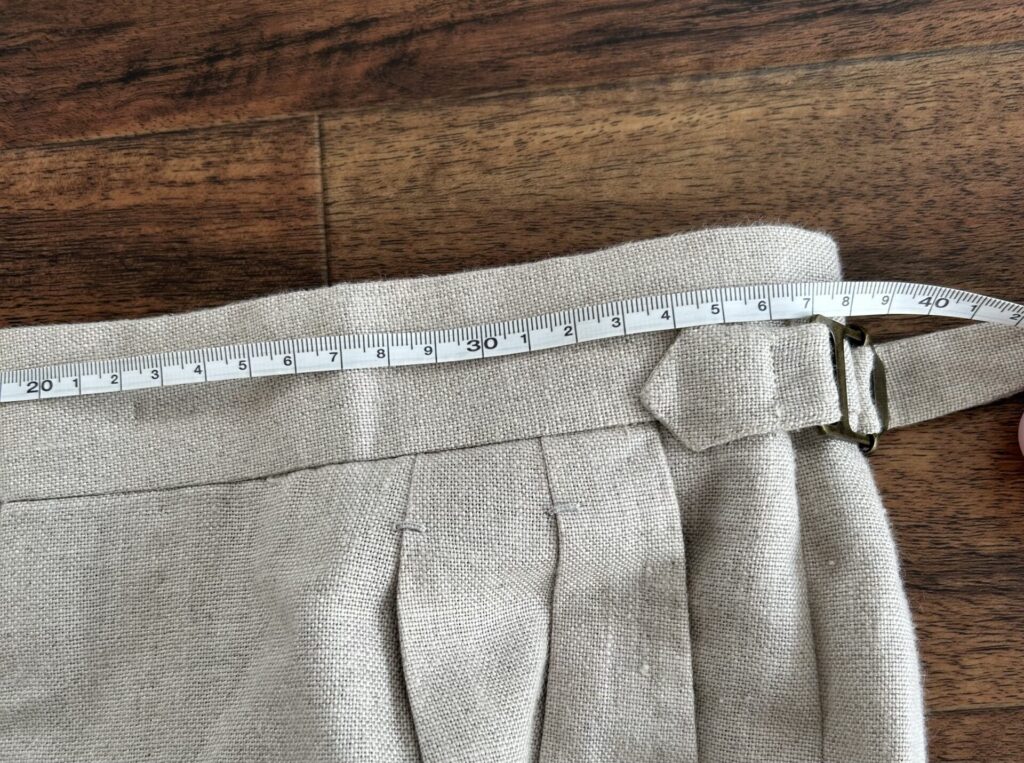
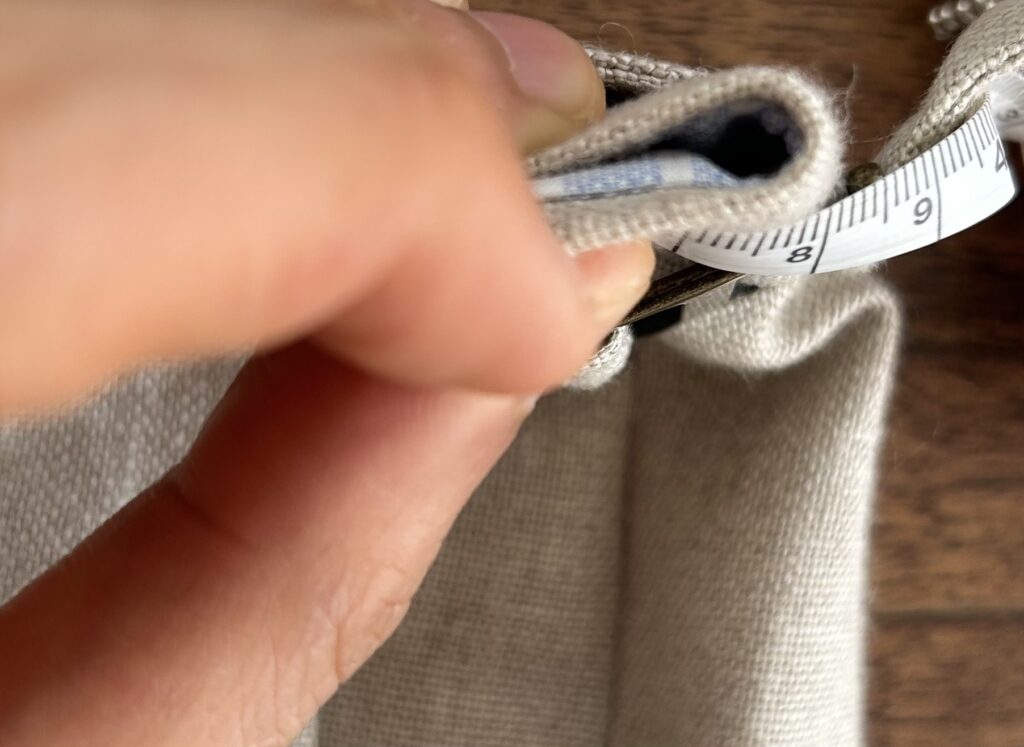
If you have never visited a tailor and do not plan to, another option is to take a suit you already own that fits you well, lay it flat, and measure it. You can then use those measurements as your reference when shopping online.
However, even with flat measurements, there can be a difference of around 1 cm (0.4 in) depending on whether the fabric is pulled taut while measuring or simply measured while lying naturally.
Even “shoulder width” can vary by around 0.5 cm (0.2 in), depending on whether you measure from the sleeve attachment point or from the outermost point of the shoulder.
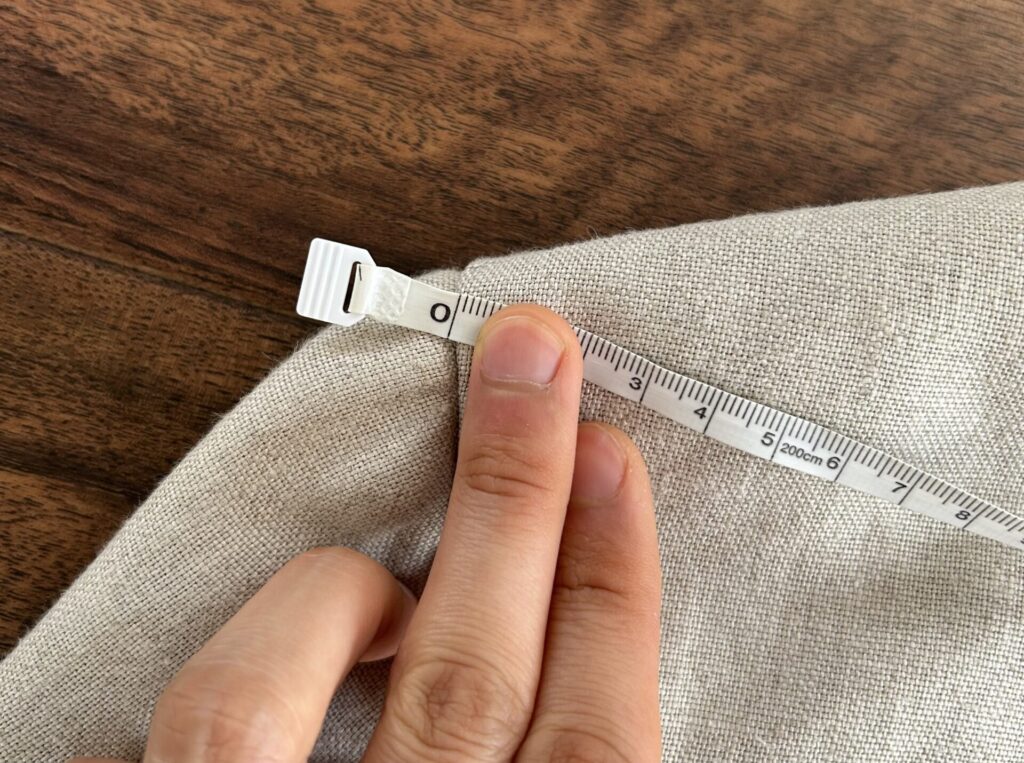
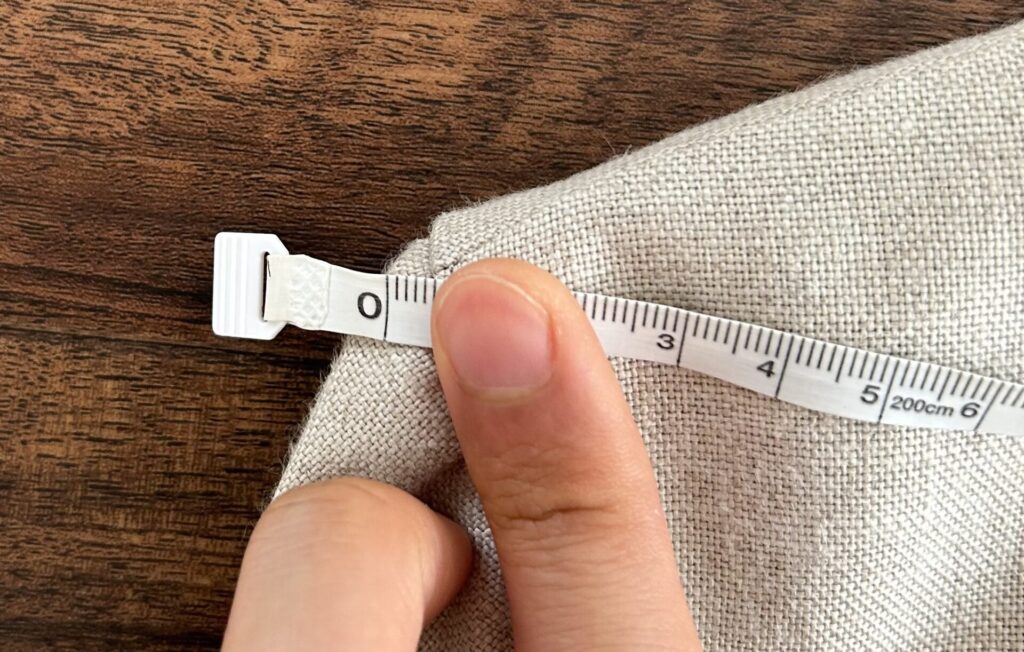
When buying online, you have no way of knowing exactly how the seller measured the garment. But when it comes to suit fitting, even 5 mm (0.2 in) can make a noticeable difference.
No matter how carefully you approach it, buying a suit online always involves some degree of risk.
Conclusion
I have written this article as though ready-to-wear suits and made-to-measure suits are directly comparable, but I actually think it is better to consider them as fundamentally different things.
The idea that “made-to-measure means perfect fit, while ready-to-wear always has some aspect of imperfect fit” is probably not quite correct either.
The reason is that a perfect fit does not necessarily mean a fit that hugs the body as closely as possible.
Also, ready-to-wear suits are not necessarily designed with the assumption that you will wear them without any alterations whatsoever. It is perfectly normal to make some adjustments before wearing a ready-to-wear suit.
For that reason, when you buy a new ready-to-wear suit, the manufacturer will often offer alterations at a relatively low cost.
Personally, because of my budget, I don’t expect to buy ready-to-wear suits at full retail price very often in the future either. I intend to continue using a combination of secondhand ready-to-wear suits and made-to-measure suits.
I will use made-to-measure when I want something more formal, such as a three-piece suit or a tuxedo, or when I want a suit or jacket made from a particular fabric that I cannot find on the secondhand market.
For secondhand ready-to-wear suits, I mainly use them to satisfy my desire to own beautiful clothes.
Even if I specifically decide, “I want a double-breasted suit in this particular fabric,” the chances of finding exactly that suit in my size are close to zero. So instead, I browse the secondhand market when I have some free time, and if I happen to find something in my size that I like, I buy it.
That’s all for today.
I hope there is something in this article that will be useful to anyone looking for an affordable way to get a good suit.
Thank you for reading.

コメント