Hello.
I’m Mr. Linen.
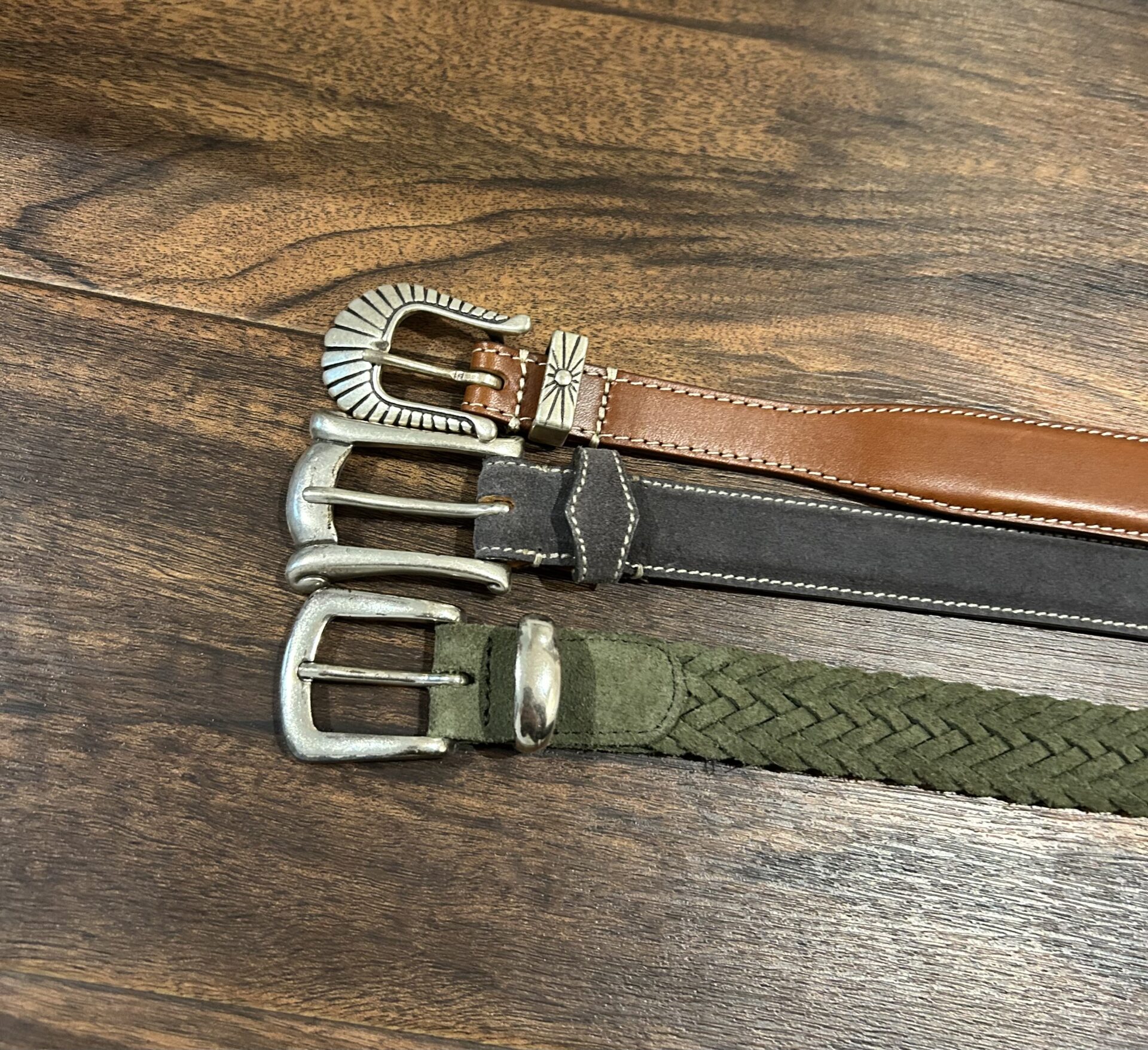
Western belts have been quite popular recently, at least here in Japan as of March 2025.
Western shirts have also been making a comeback, so perhaps there is a broader Western-inspired trend happening right now.
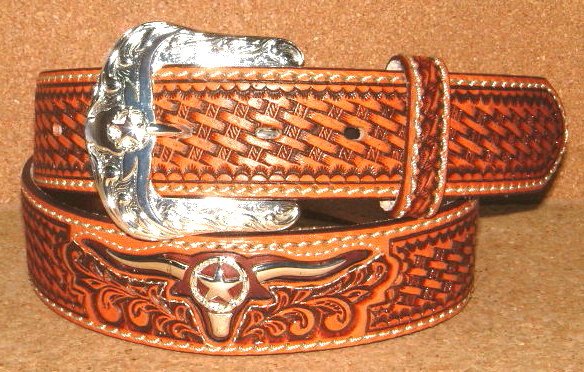
I wasn’t looking for a serious Western belt with a very wide strap and a huge buckle. I wanted something more understated—something that could add a subtle accent to an everyday outfit. So I did some research and ended up buying several belts to see what worked.
What type of Western belt is actually easy to wear?
What brands are out there?
I’ll put everything I’ve learned together in this article.
A Slimmer Western Belt Is Easier to Wear
Western belts originally developed as belts meant to be worn with Western clothing, so they tend to have wide straps and large, distinctive buckles. But they can be surprisingly difficult to incorporate into an everyday wardrobe.
For everyday streetwear and casual tailoring, I think a belt with a relatively slim strap and a smaller buckle is much easier to style.
As a general guideline, I would consider 3 cm (1.18 in) to be a good standard width. Anything 2.5 cm (0.98 in) or narrower feels relatively slim, while 3.5 cm (1.38 in) or wider starts to feel quite substantial.
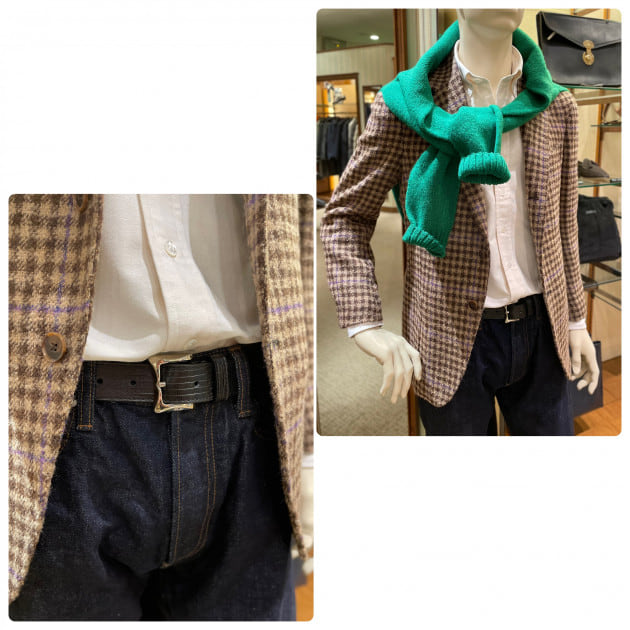
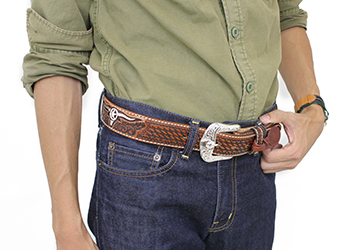
As for the buckle, I couldn’t find any specific guidelines regarding its dimensions, but I think a buckle that is slightly larger than that of a conventional belt helps create the right Western feel.
The buckle may feature engraved metal details or stones such as turquoise. On the other hand, there are also simple metal buckles without much decoration.
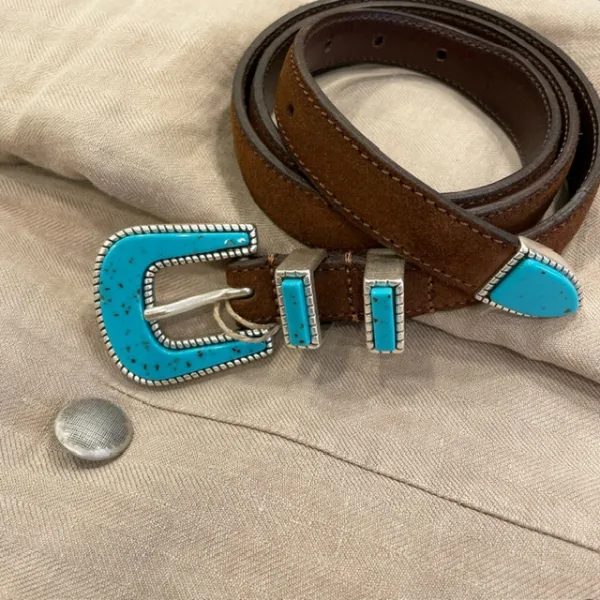
Another important detail that makes a belt look distinctly Western is the metal tip covering the end of the leather strap. It is usually made from a metal finish that complements the buckle.
A Great Example of How to Wear a Western Belt
When it comes to wearing a Western belt, one person whose style I find both stylish and relatively easy to replicate is this gentleman.
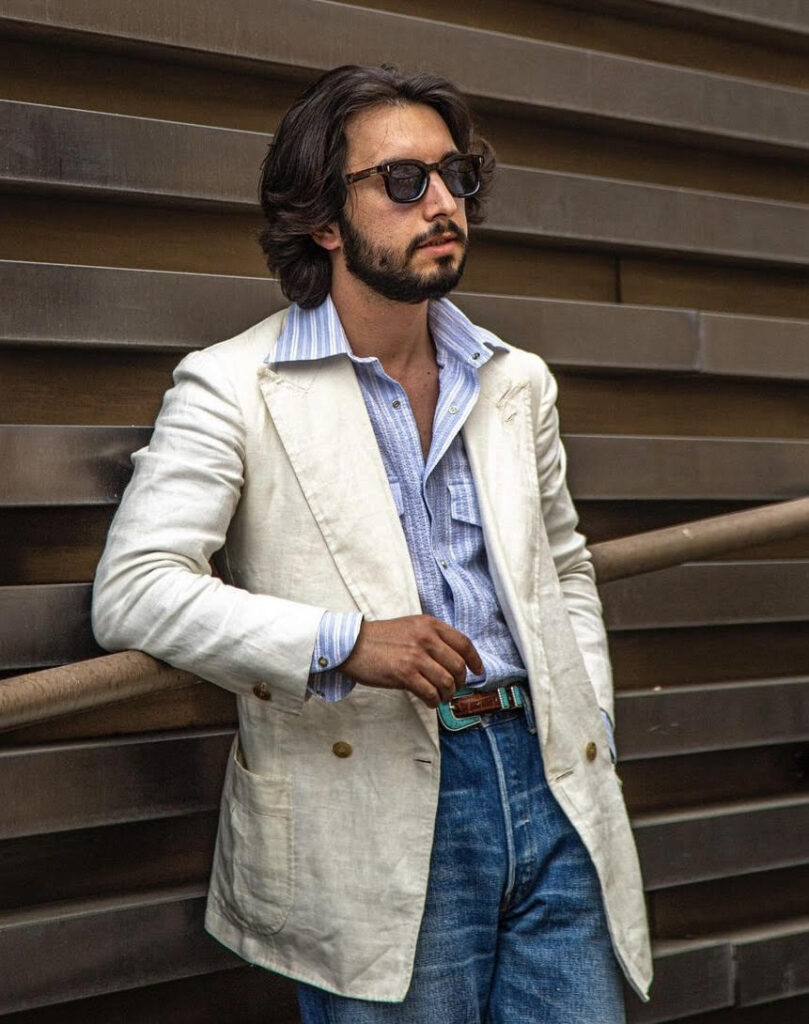
His name is Mr. Nicola. He is Italian and runs the clothing brand Spacca Neapolis, and he also frequently visits Japan.
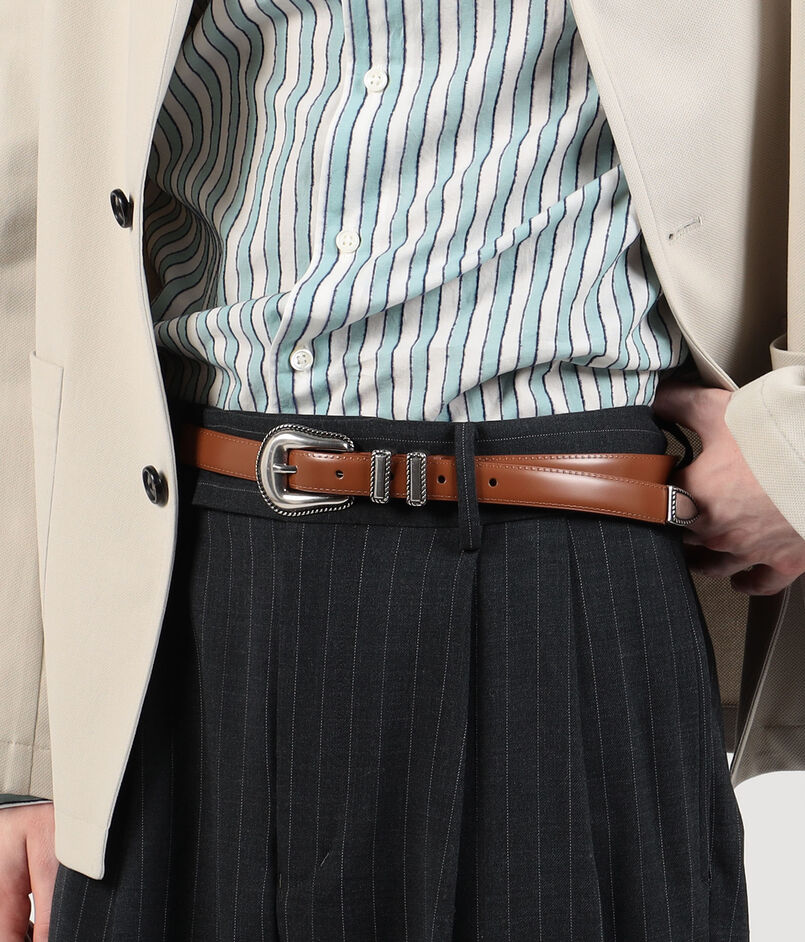
Even with a very Western combination of denim, a Western shirt, and a Western belt, adding a tailored jacket on top tones down the overt American Western feel and gives the outfit a more distinctly Italian character.
Mr. Nicola also wears Western belts with suits, not just casual outfits.
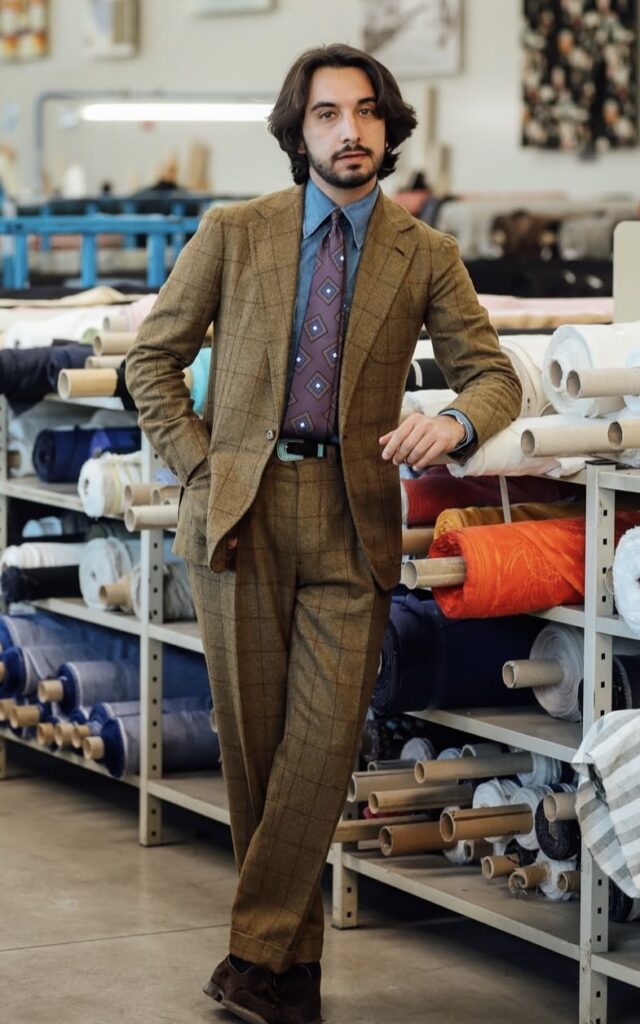
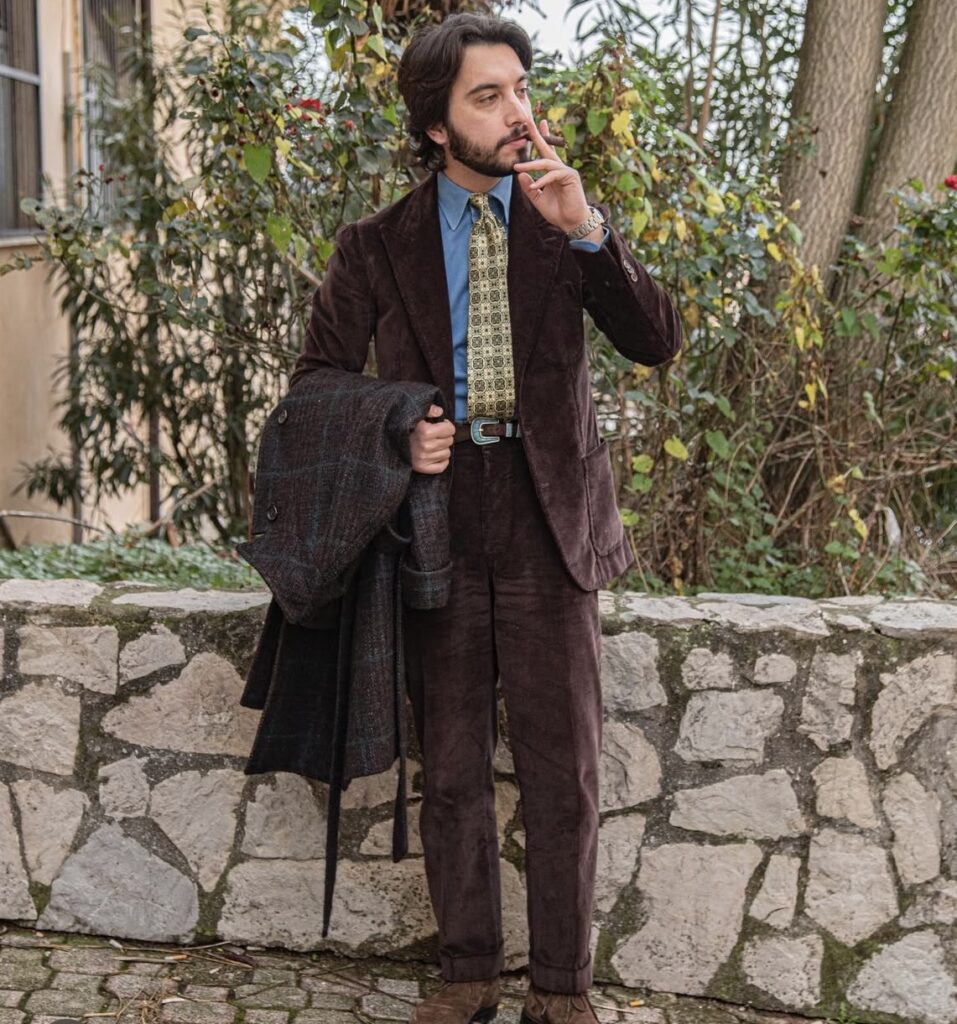
Because the belt itself is casual, I think it can work with suits made from more casual fabrics such as linen or corduroy. However, wearing one with a more formal, traditionally tailored suit and a shirt-and-tie combination seems considerably more difficult.
With a jacket-and-trousers combination, on the other hand, Western belts work exceptionally well.
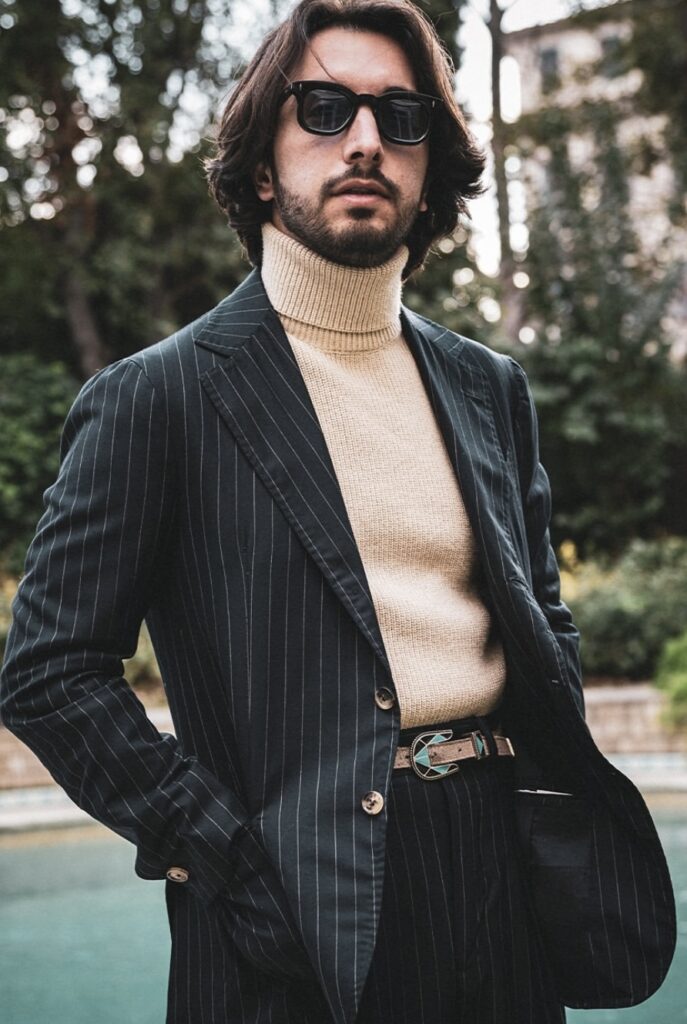
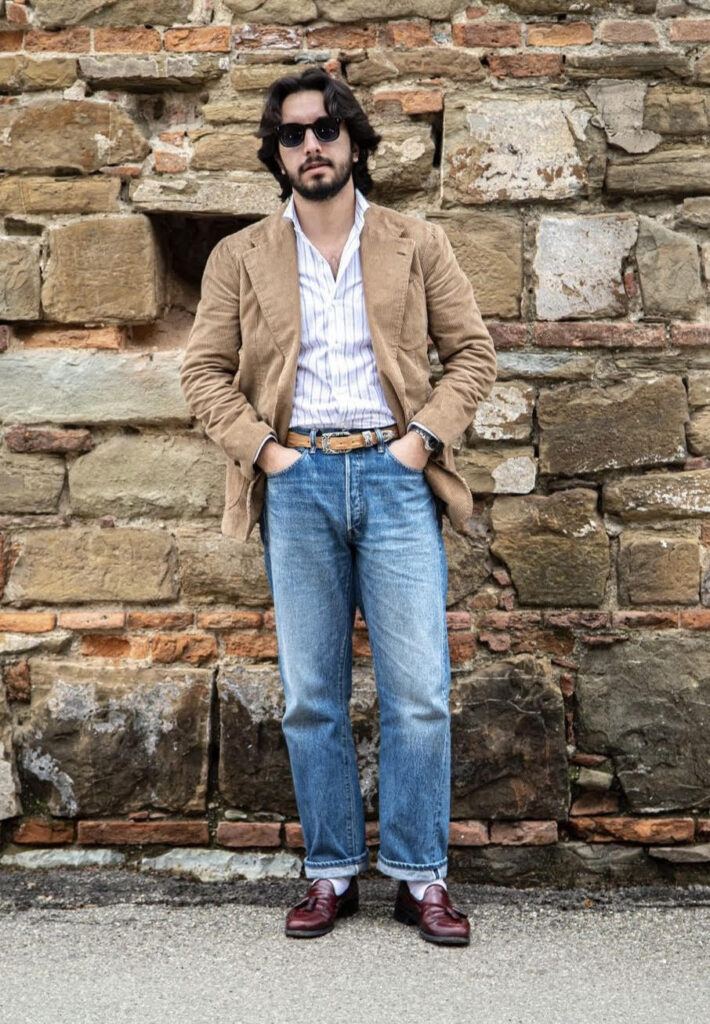
In particular, when the jacket is worn with just a shirt or a knit rather than a shirt and tie, the outfit can sometimes feel a little too simple.
That’s where a Western belt can add just the right amount of interest around the waist.
Why Are Some Western Belts Tapered?
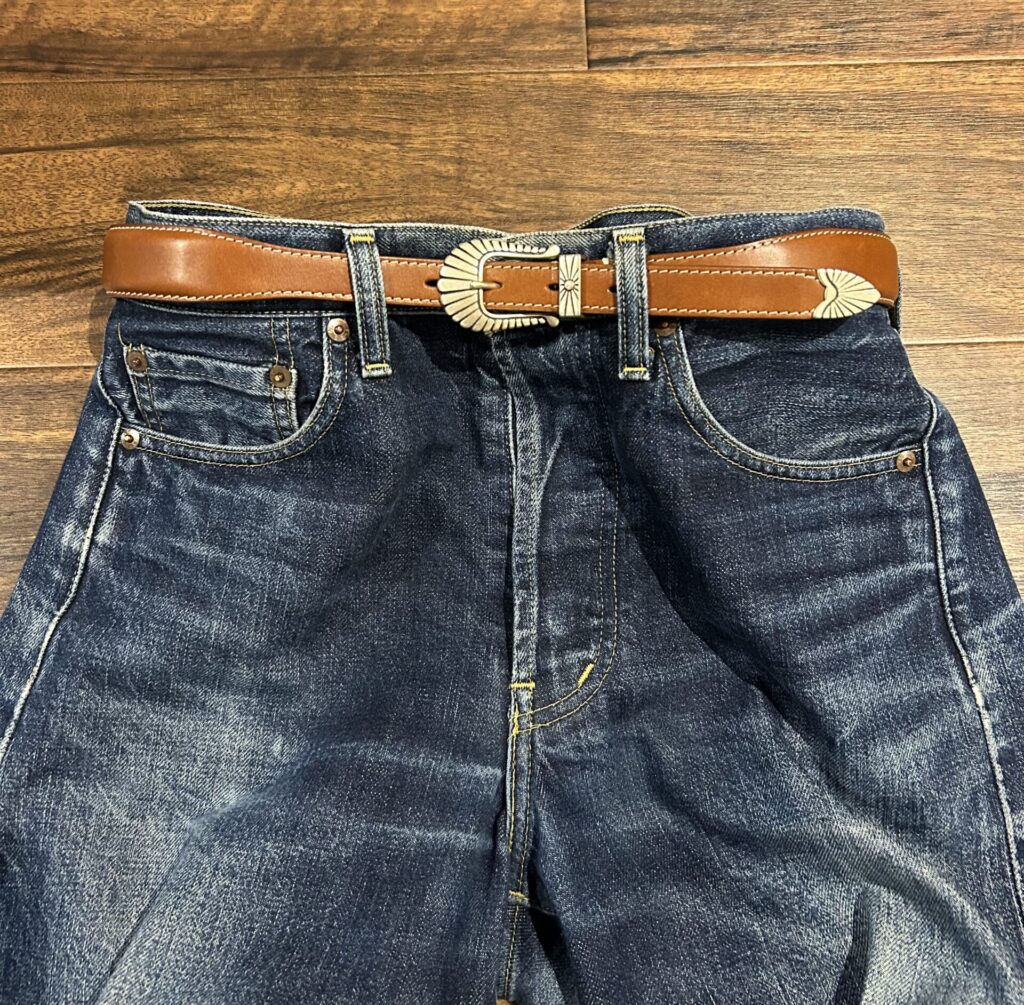
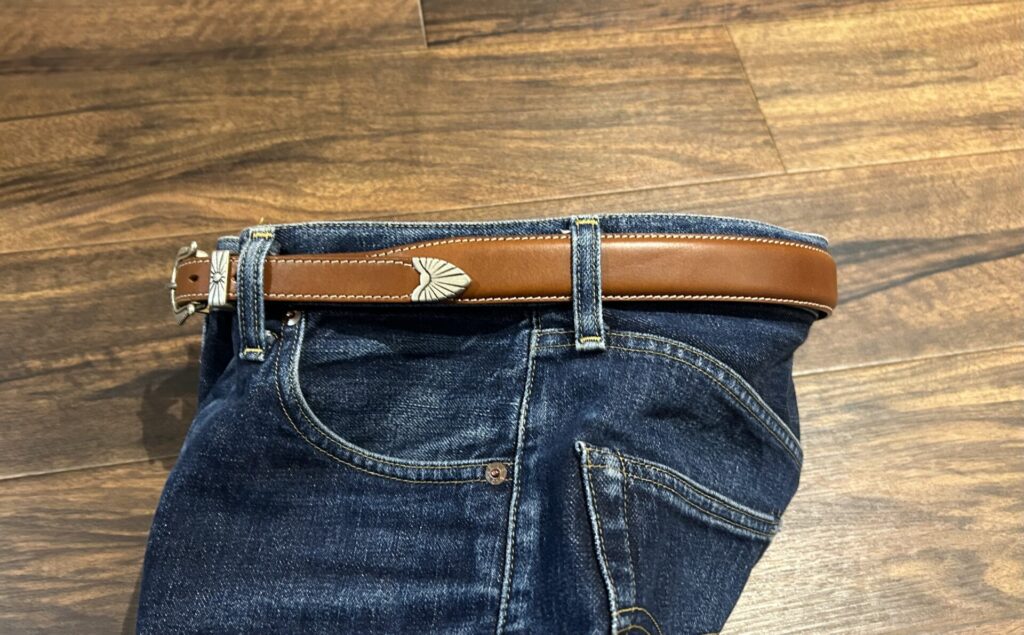
Many Western belts have a tapered section around the buckle, meaning that the leather becomes narrower toward the front of the body. Personally, I think this looks better than a belt that maintains the same width all the way around.
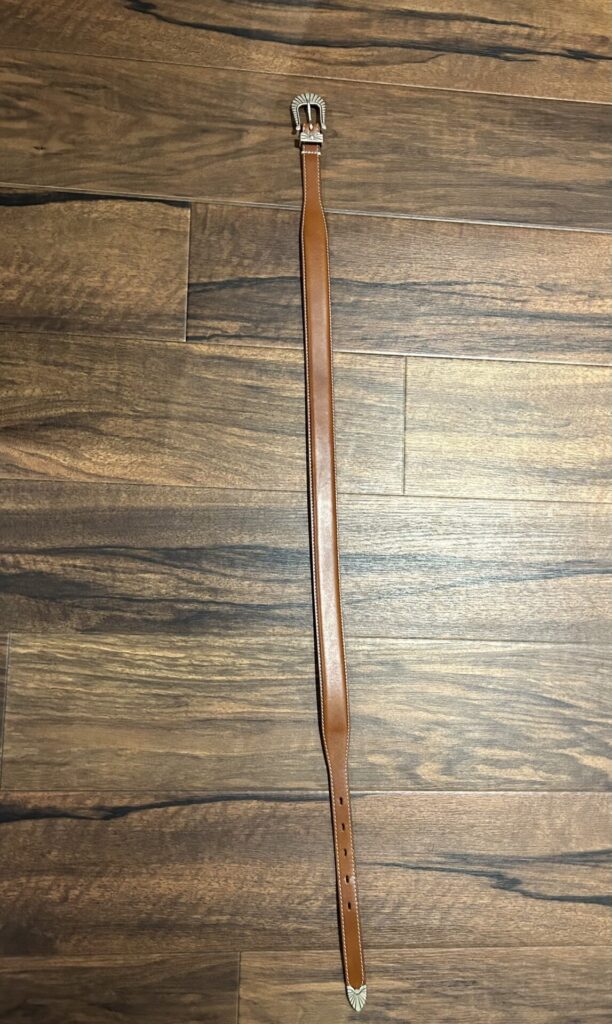
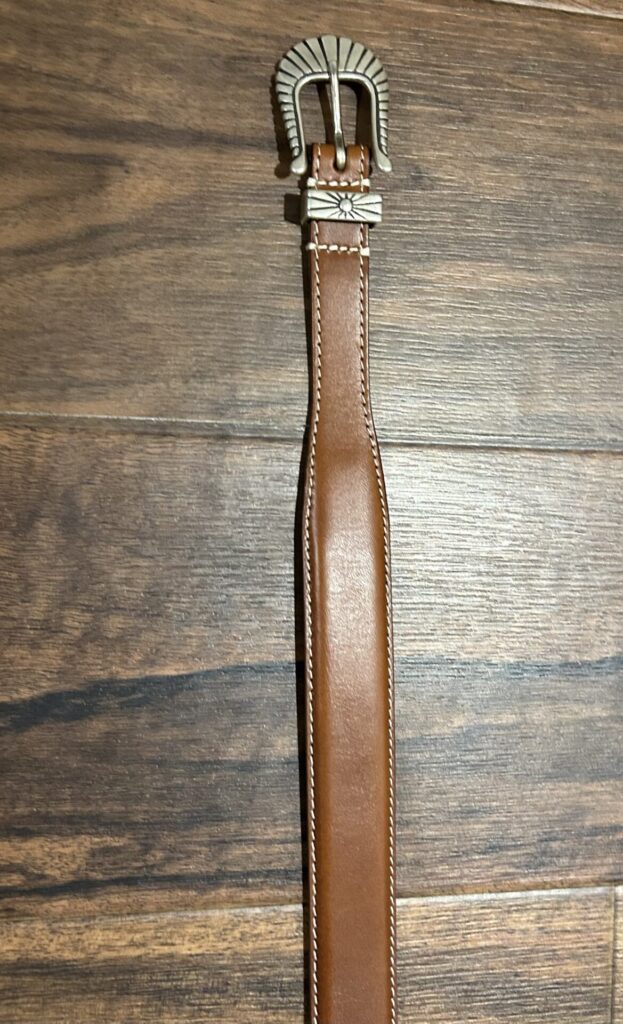
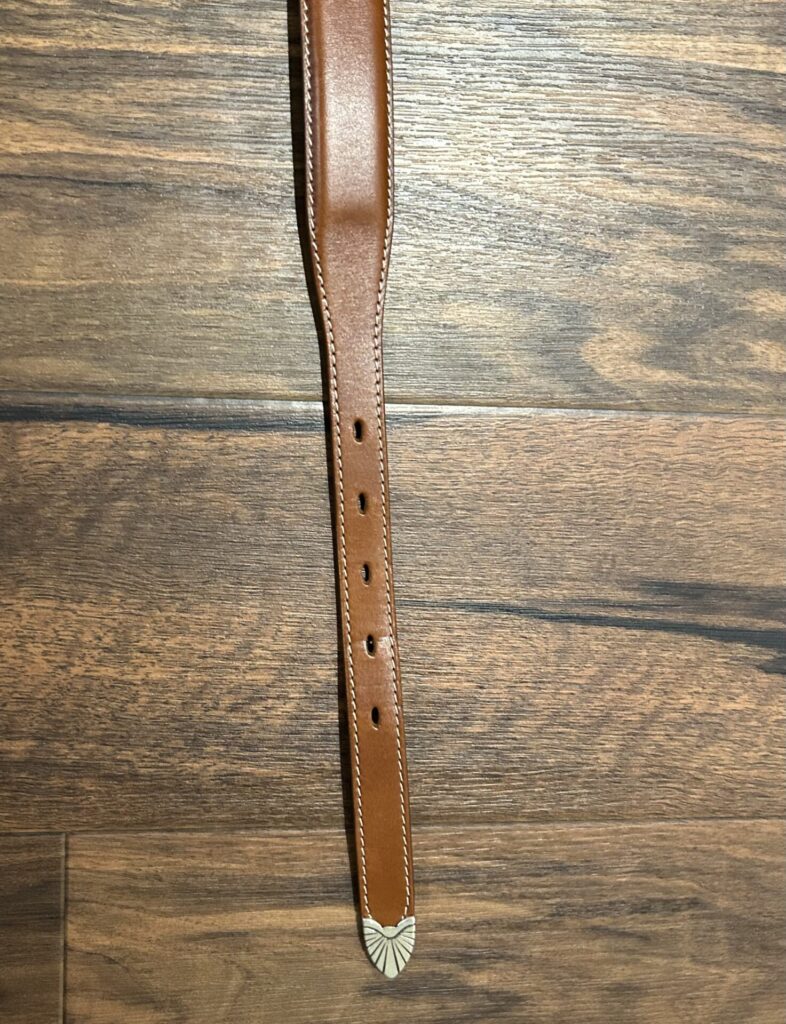
Western belts naturally tend to look quite substantial, so making the strap narrower helps balance out the visual impact of the buckle. However, if the entire belt is too narrow, it can look excessively thin when viewed from the side or back. Such a belt may work with dress trousers, but can look out of place with denim or chinos.
For that reason, I suspect tapered Western belts have become popular because they maintain a conventional width at the sides and back while appearing narrower only from the front.
Which Brands Are Worth Looking At?
When I actually started looking for a Western belt to buy, I realized that they are surprisingly difficult to find in Japan.
Perhaps because Western belts have become more fashionable recently, however, more stores are starting to carry stylish Western belts from overseas, particularly Italian brands.
One brand I come across particularly often is the Italian brand Alberto Luti.
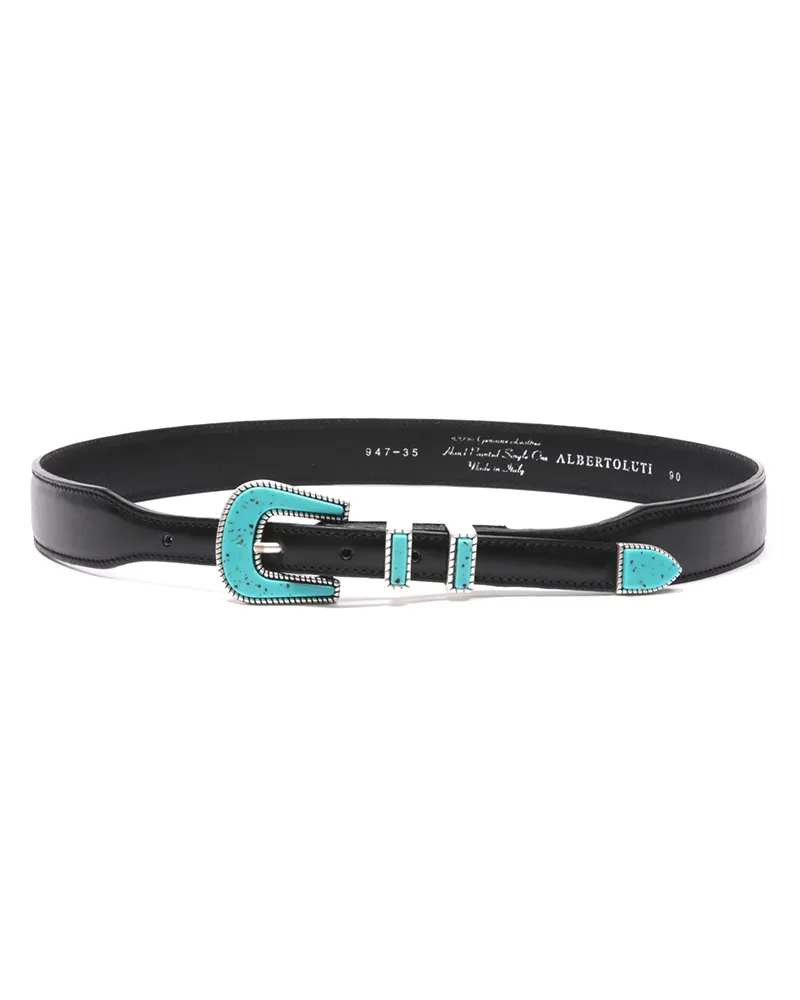
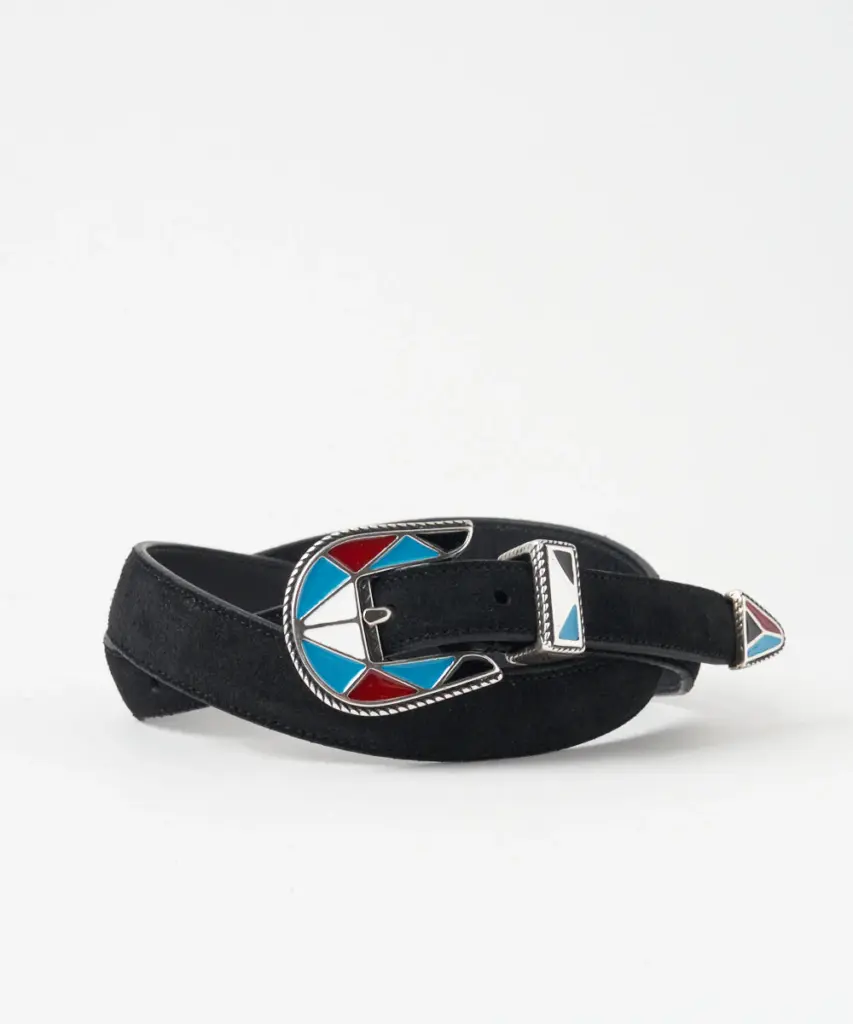
The buckles have a strong presence without looking vulgar, the leather has what I consider to be an ideal width, and many models are tapered as well. Overall, they look very close to my idea of an ideal Western belt.
They cost around $200.
People often describe them as offering good value for money, but personally, I still find them difficult to buy without hesitation.
Another Italian brand worth mentioning is Adriano Meneghetti.
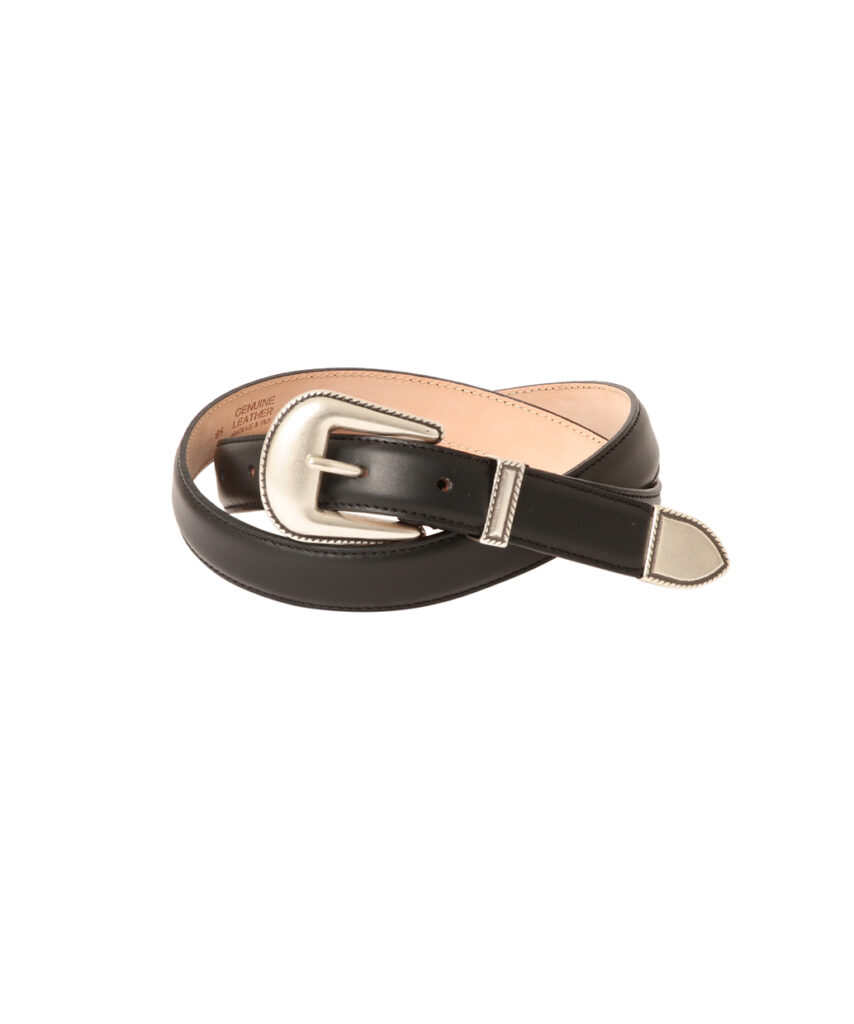
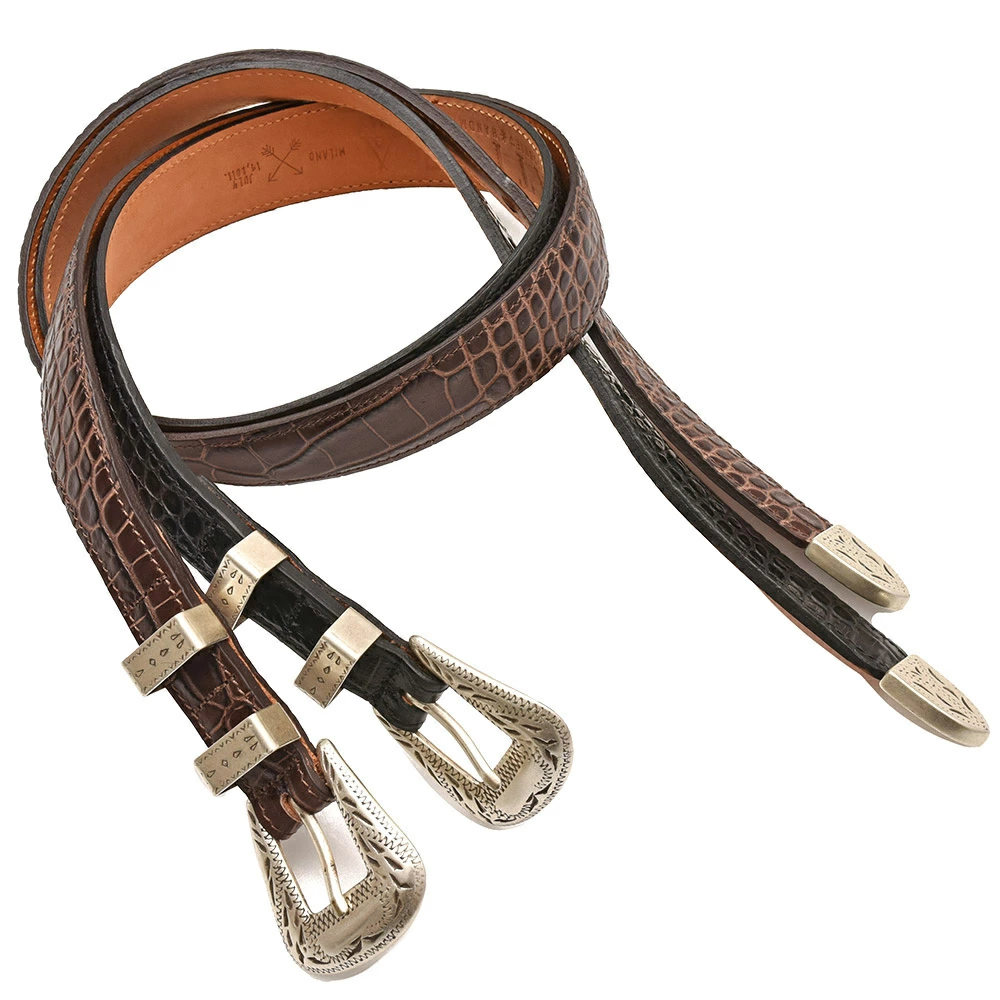
These are also very stylish, but they cost around $233, making them even more expensive.
I managed to find this particular model from the same brand as a pre-owned item that had apparently seen little or no use.
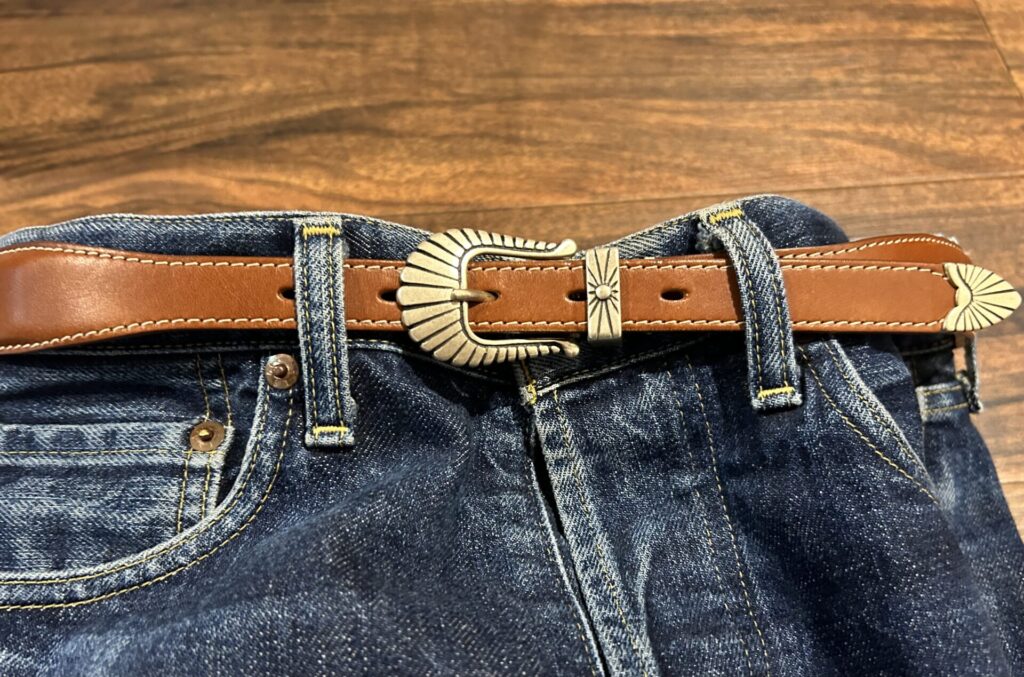
The buckle isn’t particularly large and the design isn’t overly distinctive, which makes it very easy to wear.
Next, Spacca Neapolis, the brand run by Mr. Nicola whom I introduced earlier as a style reference, also sells Western belts. The regular price is €170, but as of March 2025 they were on sale for €85.
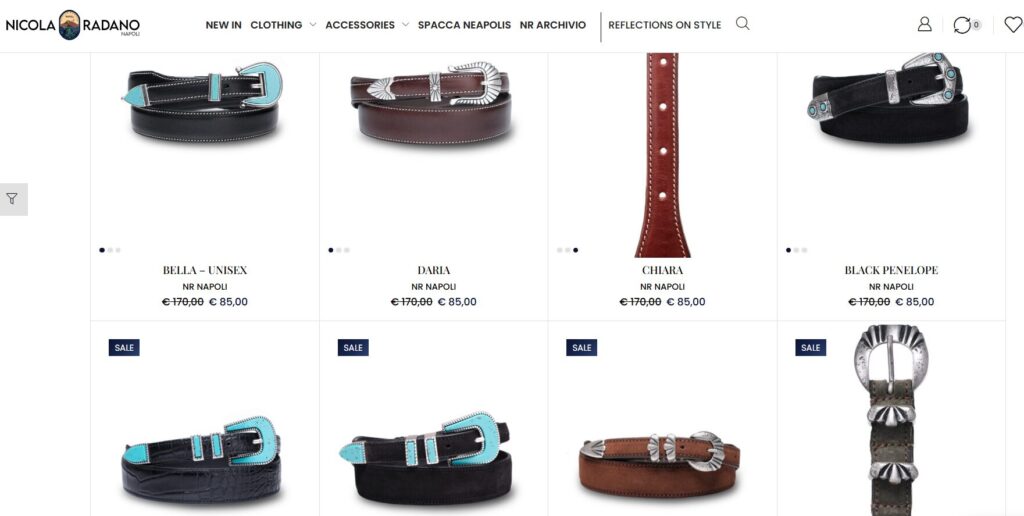
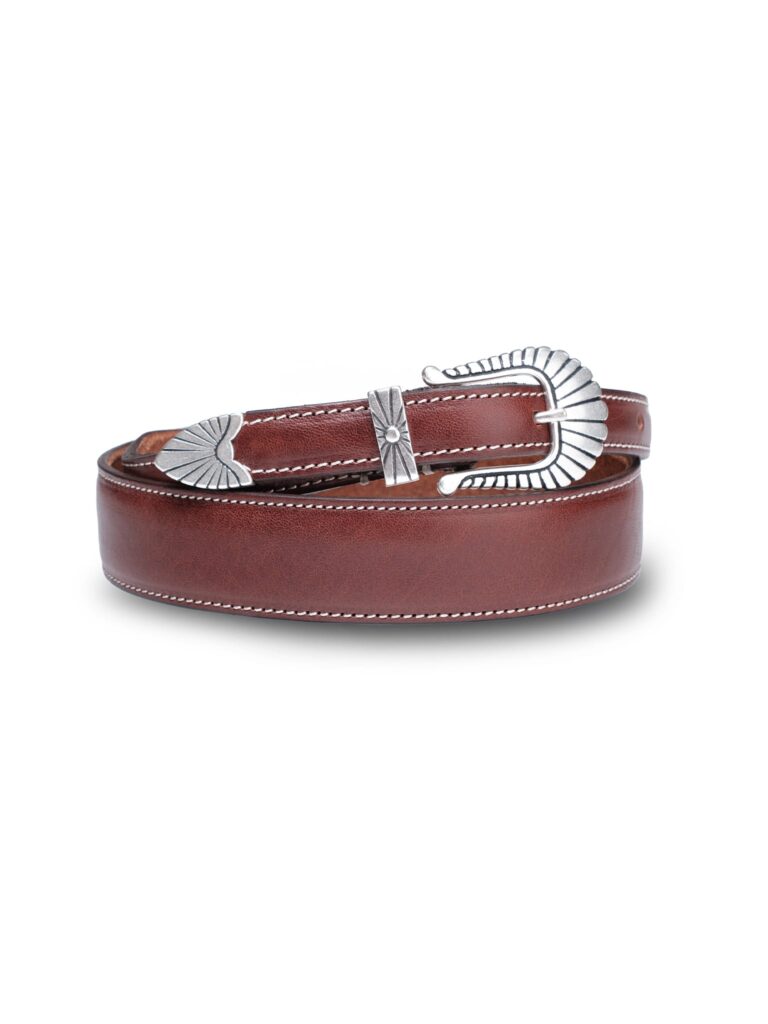
If you buy directly from an overseas brand, the shipping cost is understandably quite high. An additional €30 shipping charge brings the total to €115, or roughly $124 based on the exchange rate in March 2025.
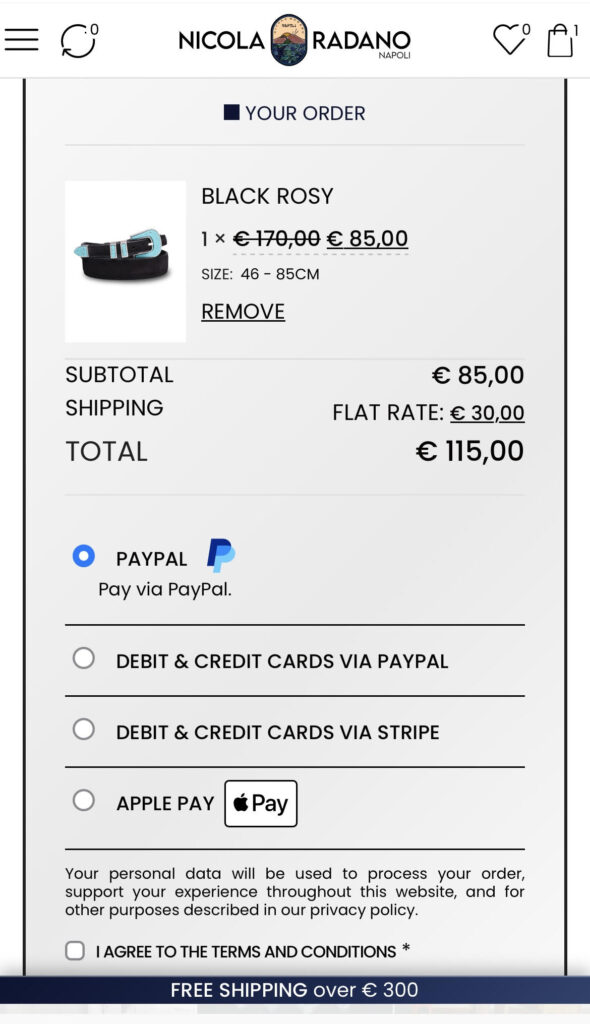
I don’t know exactly what customs duties and consumption tax would apply when importing it, but if the total cost comes to around $133, it still seems like a pretty good deal.
Incidentally, the smallest size is size 46, corresponding to a waist measurement of 85 cm (33.5 in), and many of the belts come with four holes.
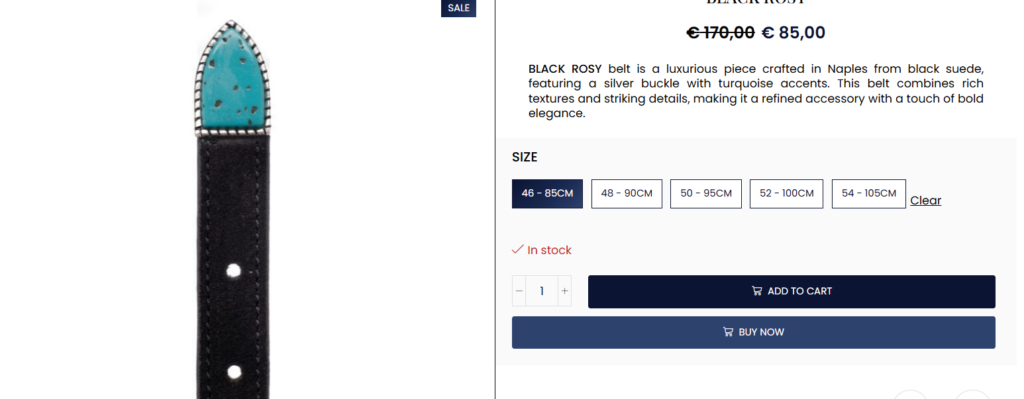
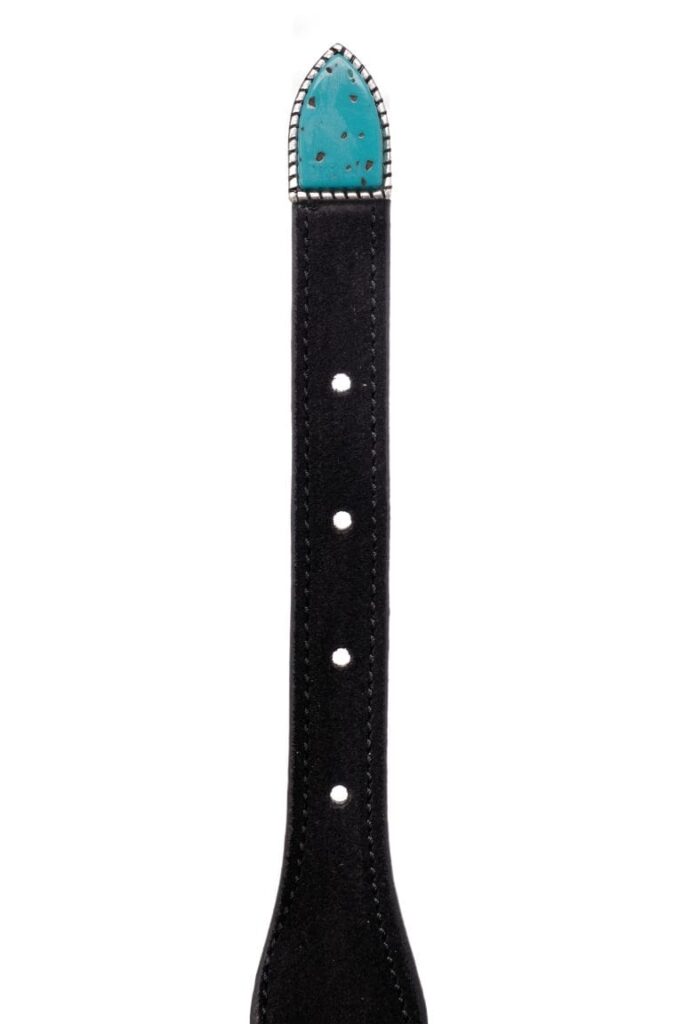
With a traditional five-hole belt, the stated size will usually refer to the measurement to the middle hole. With a four-hole belt, however, it isn’t always clear which hole the stated measurement refers to. If you’re thinking of buying one, it may be worth contacting the seller to confirm the actual measurements.
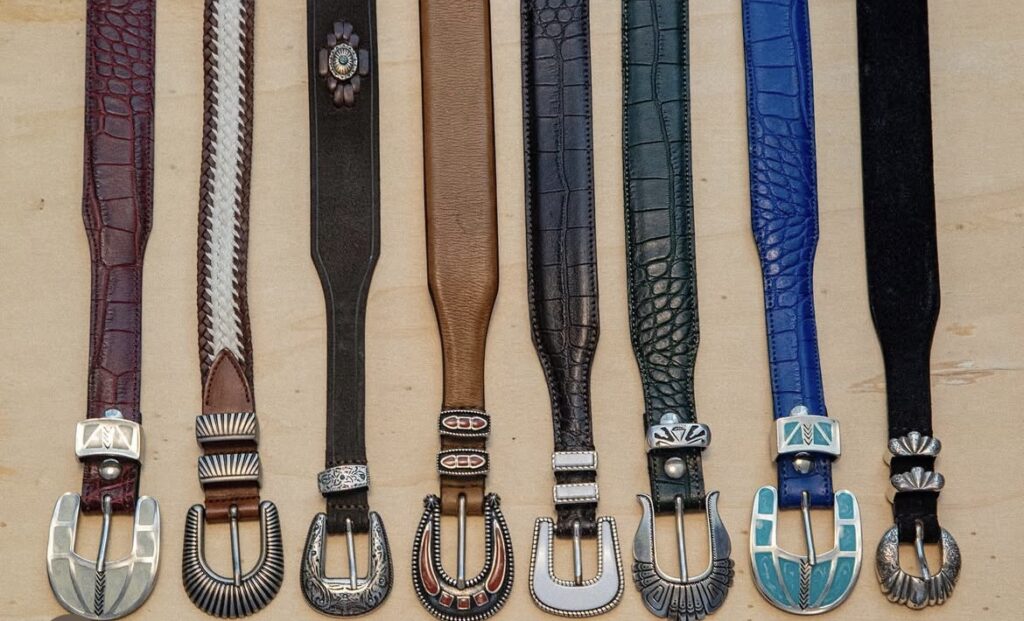
Next, Tory Leather also has some promising Western belts.
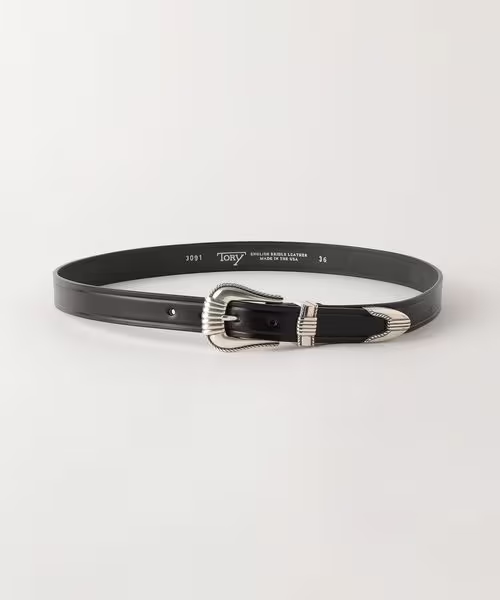
This particular style is simple, and at around $120, I think it offers good value. Personally, though, something about it doesn’t quite click with me.
I’m not entirely sure why. Perhaps it’s because it isn’t tapered, or perhaps because the leather is smooth and doesn’t have any visible stitching.
There are undoubtedly many other brands out there. If you know of any recommendations that are stylish without being too expensive, I’d love to hear about them.
There Are Also Belts That Are “Western-Inspired”
If a conventional belt feels too plain, but the Western belts we’ve looked at so far feel too flashy or intimidating, there is another option: a belt that is simply Western-inspired.
In practical terms, these belts might have an even simpler buckle, or they might lack the metal tip at the end of the strap. In other words, they occupy a middle ground between a conventional belt and a true Western belt.
Because “Western-inspired belt” isn’t really an established category in the same way as a Western belt, the designs vary considerably from one belt to another.
The following are the kinds of belts that I personally consider Western-inspired.
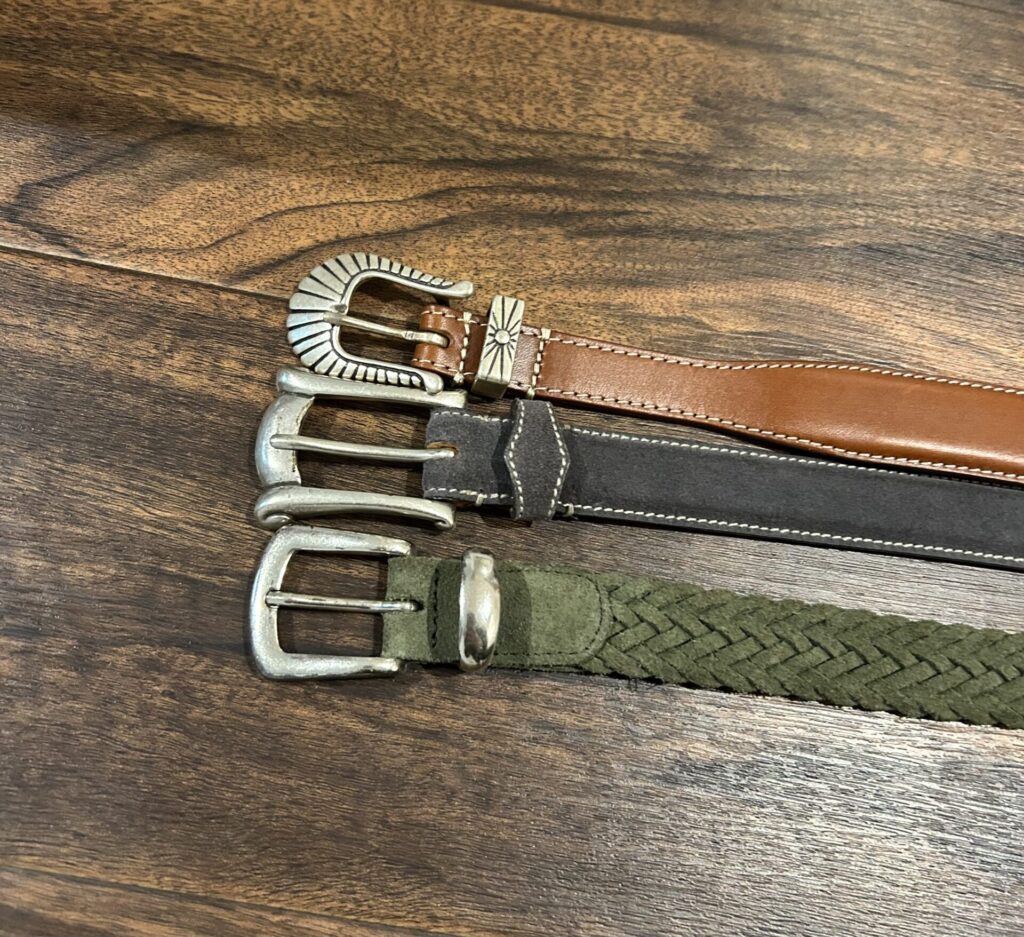
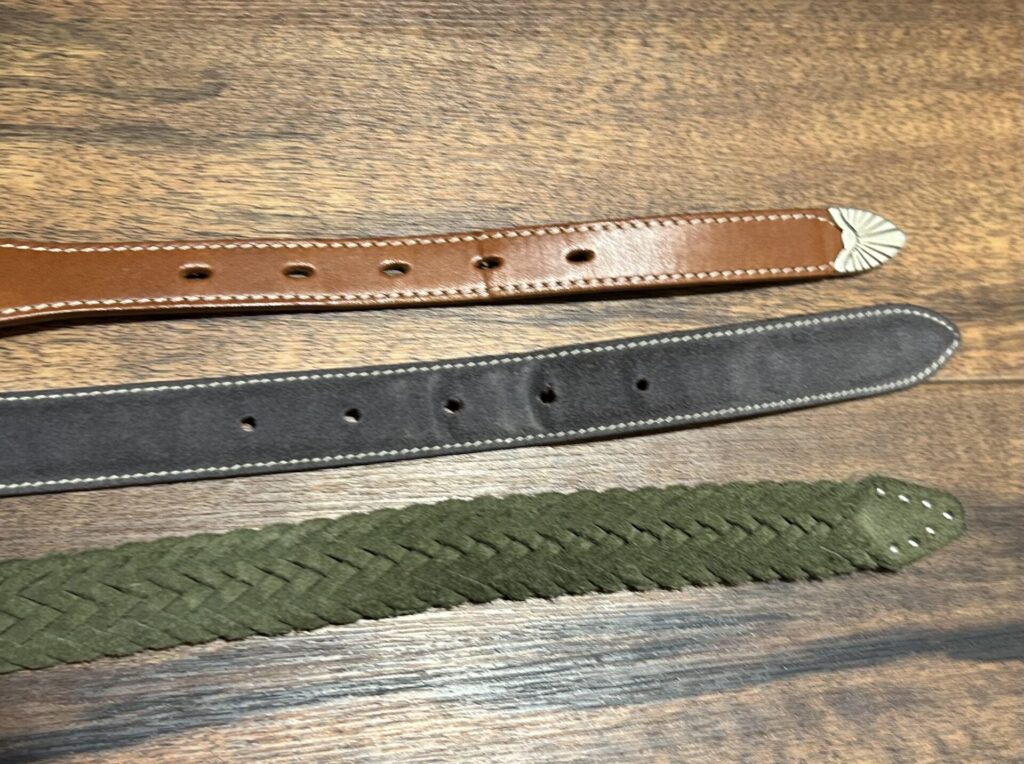
I like these because they provide just a hint of visual interest while working perfectly well with both denim and dress trousers.
The problem is that it’s difficult to know what to search for online when looking for this kind of belt. If you happen to come across one in a vintage or secondhand clothing store, you might just consider yourself lucky.
Conclusion
The characteristics that make a Western belt easy to wear.
The brands that are worth looking at.
I’ve shared what I learned from researching Western belts, as well as my own thoughts on what makes one versatile.
Because Western belts are currently fashionable, stylish ones tend to sell out very quickly on Japanese secondhand marketplaces such as Mercari as soon as they appear.
I really wish a Japanese brand would make a stylish Western belt for under $150 or so.
That’s all for today.
Thank you very much for reading.


コメント