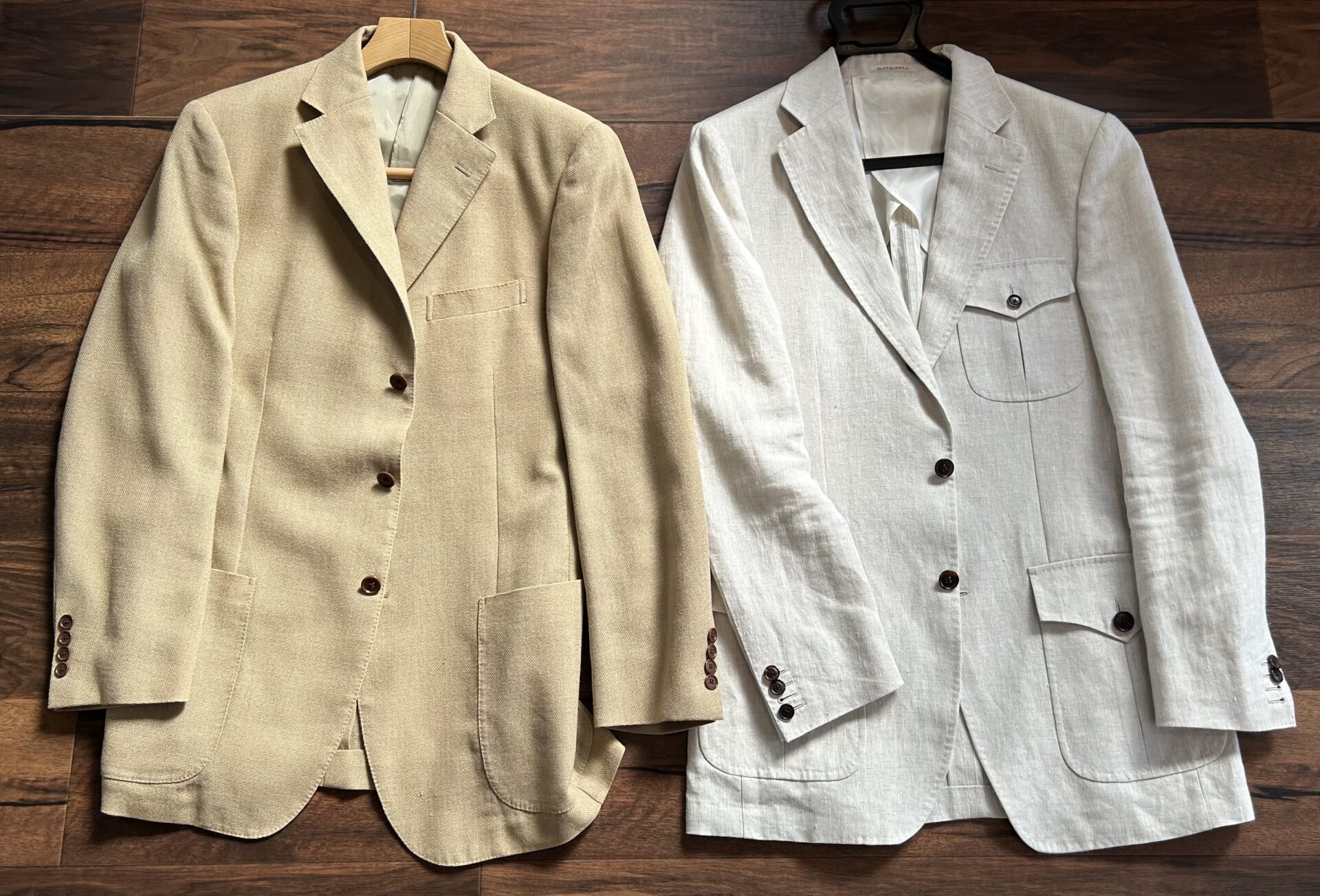
Hello.
I’m Mr. Linen.
Today, the two most common styles of modern single-breasted jackets are, in my opinion, the two-button jacket and the classic three-roll-two jacket.
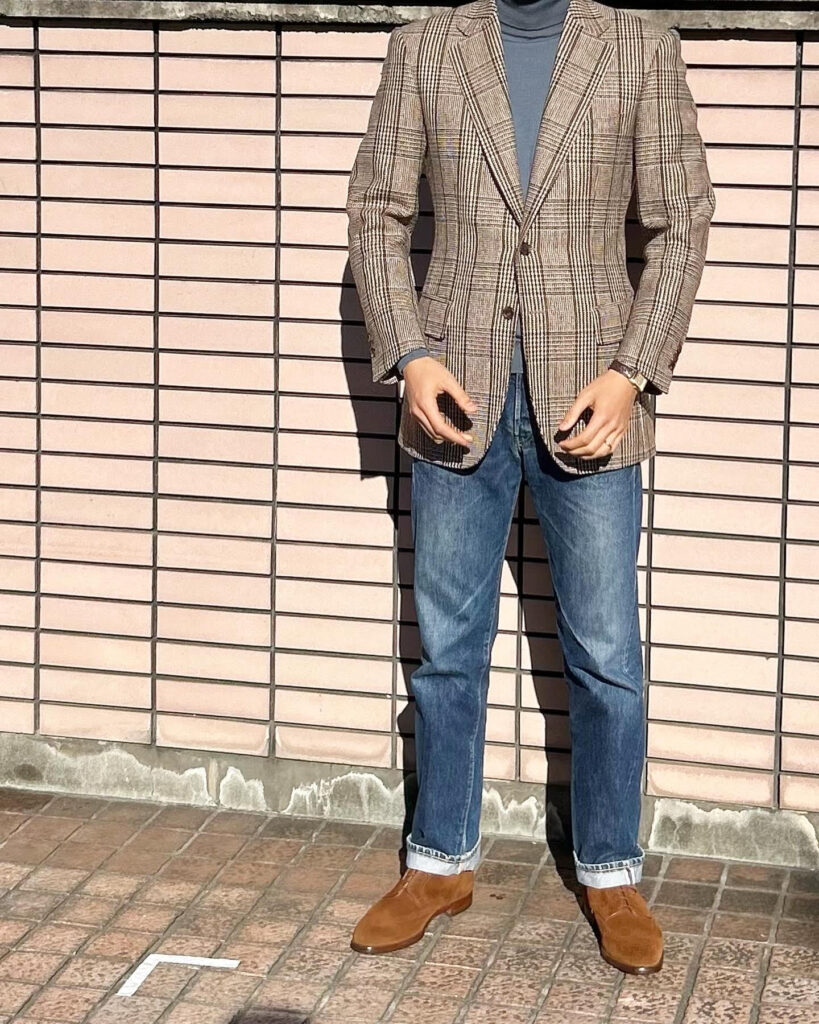

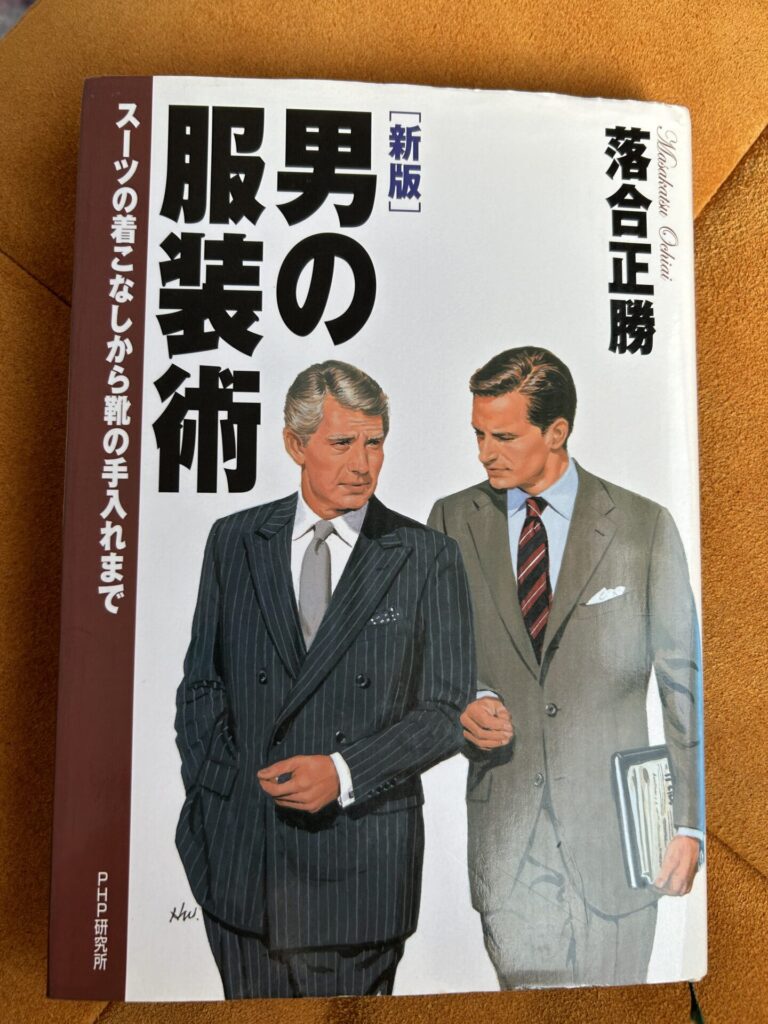
When I say “modern,” I don’t mean that these styles are merely fashionable. Yukio Akamine, a well-known Japanese authority on classic menswear, has also described both styles as timeless classics that are not tied to any particular era.
If anything, I feel that the three-roll-two style is more popular.
There is, however, another configuration: a three-button jacket designed to be fastened with the top two buttons.
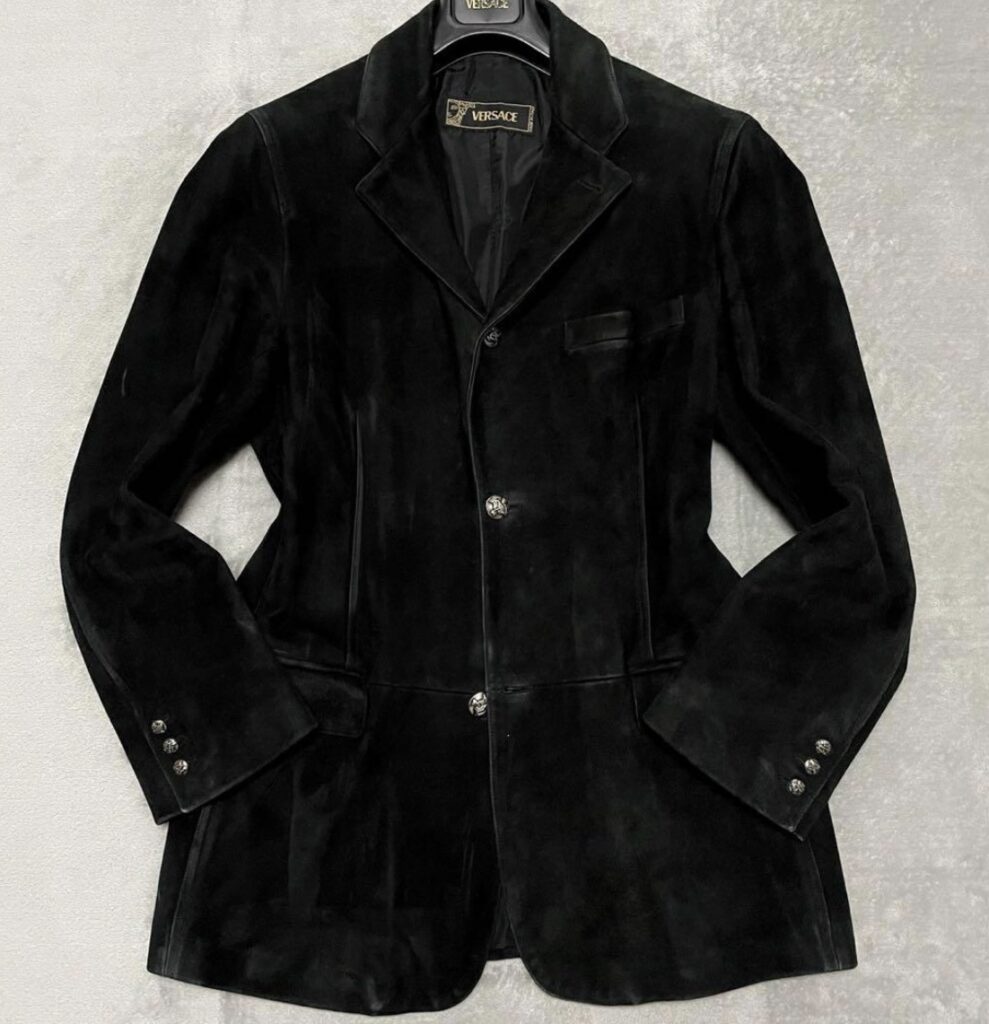
Of the three buttons, the top two are fastened, creating a relatively compact V-zone.
Today, it is extremely rare to see anyone wearing this type of three-button, two-fastening jacket, and it is also very uncommon to find one among ready-to-wear jackets.
So, if I found a vintage single-breasted jacket that I really liked, but it happened to be a three-button, two-fastening jacket, I wondered whether it might somehow be possible to convert it into a three-roll-two jacket.
After experimenting with several jackets, I realized that some can be converted, while others cannot.
Here are the points I have noticed through my own experiments.
How Can You Change the Roll of the Lapel?
My first thought was that perhaps a three-button, two-fastening jacket could simply be turned into a three-roll-two jacket by leaving the top button unfastened.
When I actually tried it, however, it did not look anything like a three-roll-two jacket. It simply looked like the top button had been left undone.
The reason is that the lapel already has a crease at the position determined by the original three-button, two-fastening construction.
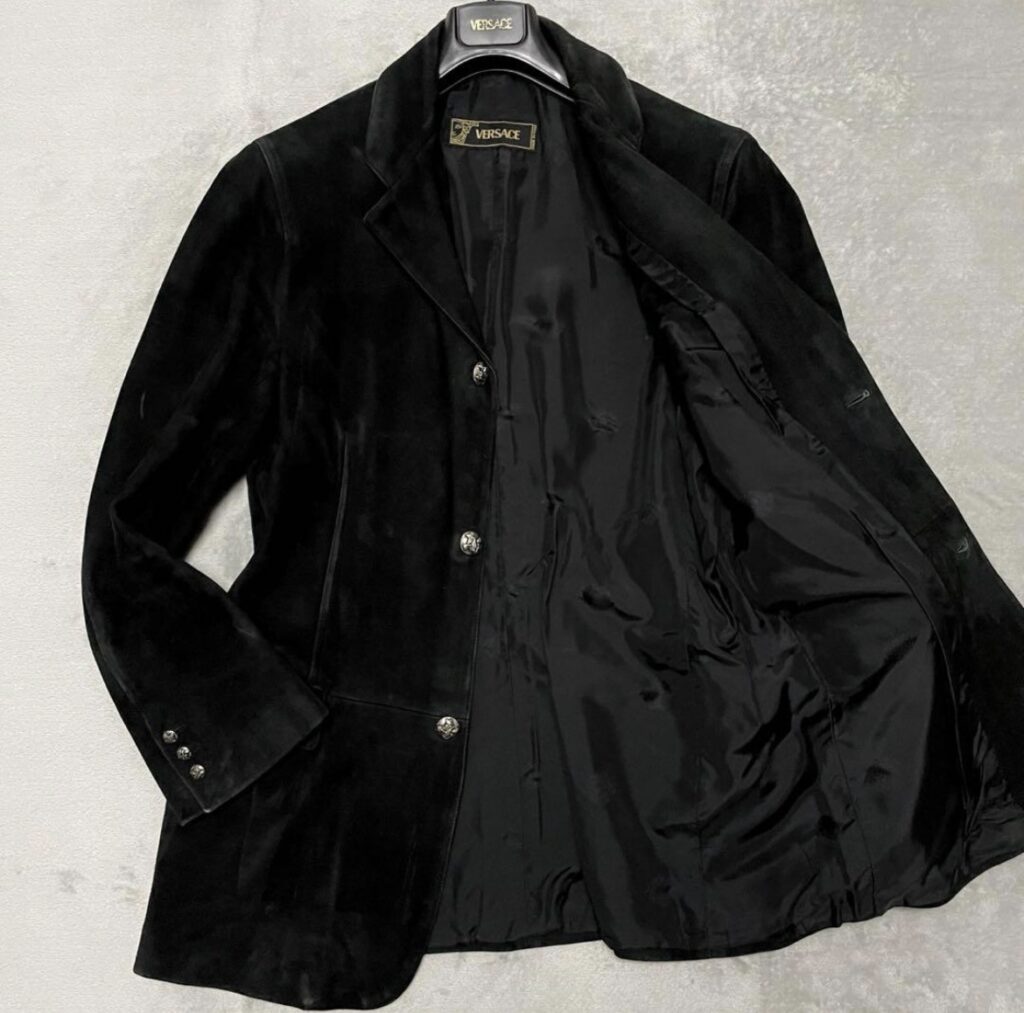
I then thought that perhaps I could simply force the lapel open, press it with an iron, and move the crease to the desired position. Unfortunately, that did not work.
For example, with this beige jacket, I found that it is made from a lightweight fabric intended for summer. The area where the lapel folds either has no canvas or has such a thin layer of interlining that it is almost transparent.
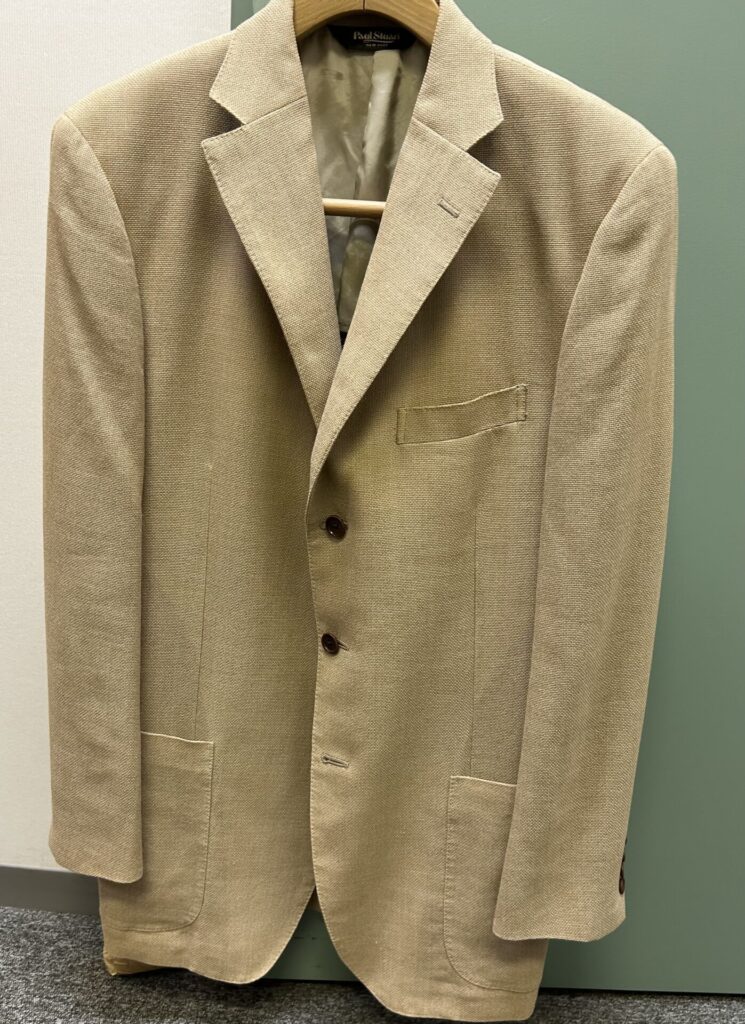
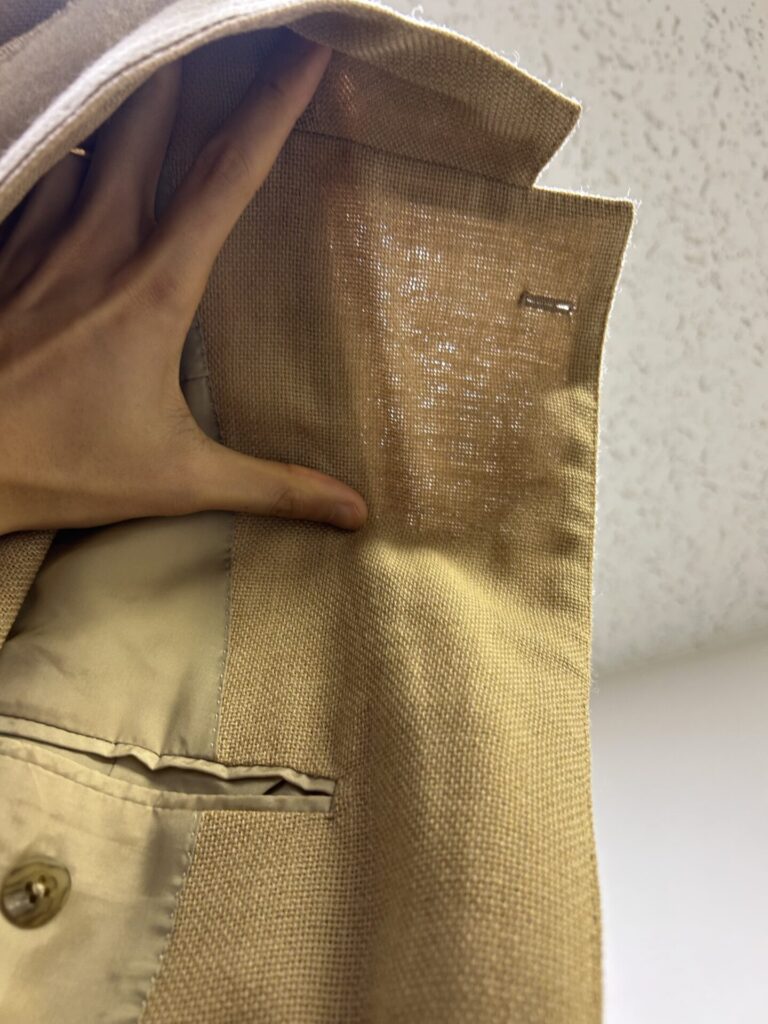
As a result, the position of the fold is essentially fixed. If you try to force the crease into a new position, you would have to create the fold in an area where the interlining is much thicker, making it practically impossible.
Let’s test this on another jacket.
This one is made of leather—specifically suede.
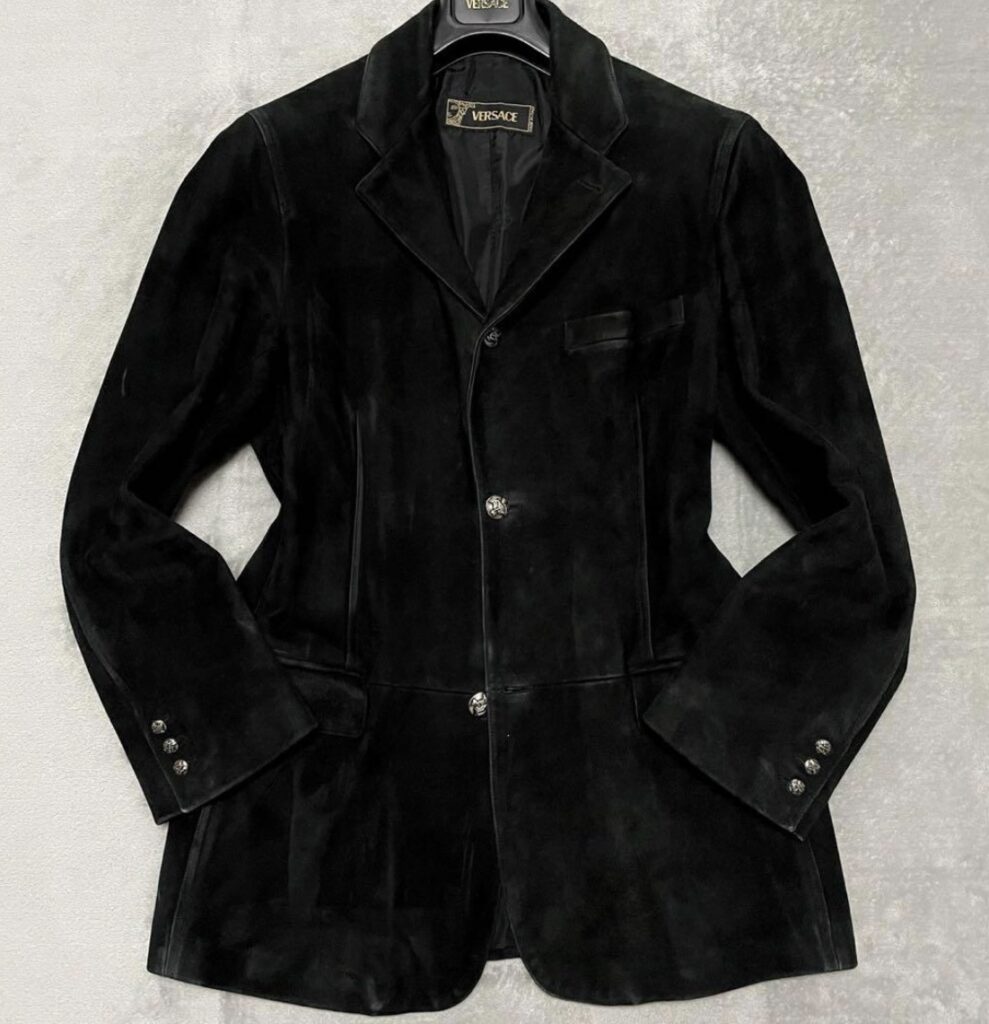
Since leather cannot be ironed, I did not have high hopes of being able to move the crease. However, simply applying light pressure with my hands allowed me to create a new crease at the appropriate position for a three-roll-two jacket, and I was able to change the shape of the lapel quite easily.
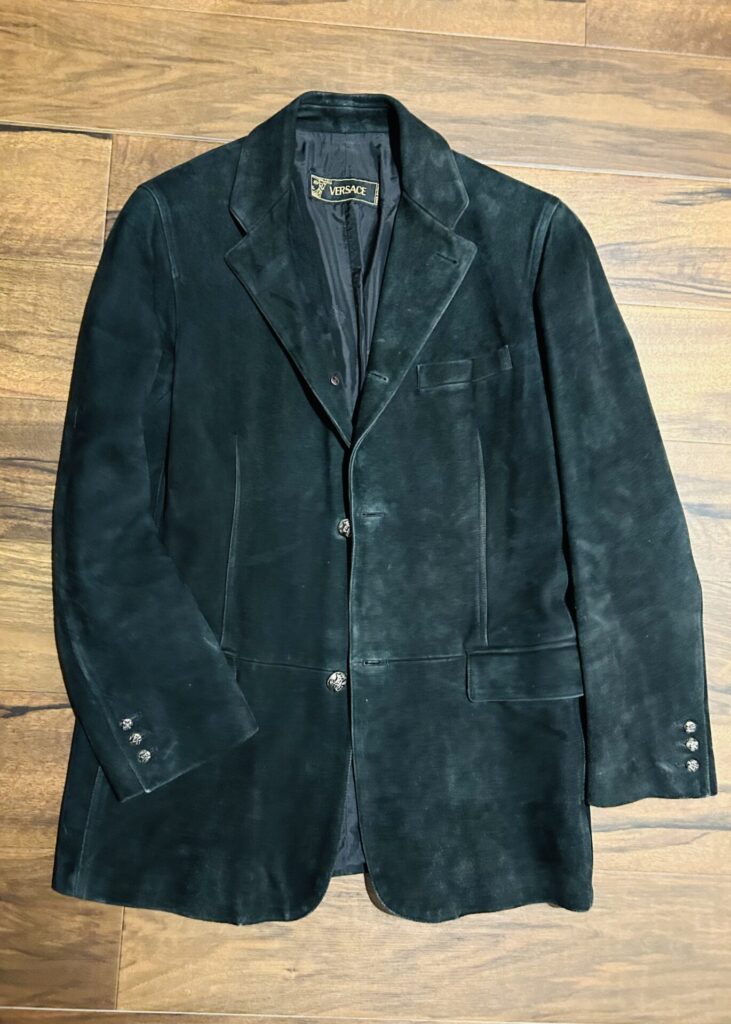
When I felt the inside of the lapel, I found that there was only an extremely thin layer of interlining, and the leather itself was soft. This made it easy to create the new fold.
However, the fact that the new crease was easy to create also meant that it was difficult to make it permanent.
The original crease from the three-button, two-fastening configuration was stronger than the new crease for the three-roll-two configuration. If I was not careful, the lapel would gradually return to its original shape.
When storing the jacket on a hanger, I found that it was necessary to hold the lapel crease in place—for example, with clothespins—and allow it to gradually develop a new crease at the three-roll-two position over time.
(Update) No matter how much I tried to train the lapel into the new position, I could not make the change permanent. The internal interlining needed to be replaced with one shaped specifically for a three-roll-two configuration, meaning that the jacket ultimately had to be taken to a professional alteration shop. In the end, I took it to an alteration shop, where they carried out the alteration.
In short, whether or not you can change the position of the lapel crease depends on factors such as the fabric and the amount and structure of the interlining.
The Button Placement Can Make the Proportions Look Wrong
Even if you are able to move the lapel crease, there is another important point to consider.
That is the button placement.
Even among three-button, two-fastening jackets, there are different button placements. Some have the buttons positioned relatively high, resulting in a narrow V-zone, while others have the buttons positioned lower, creating a relatively deep V-zone.
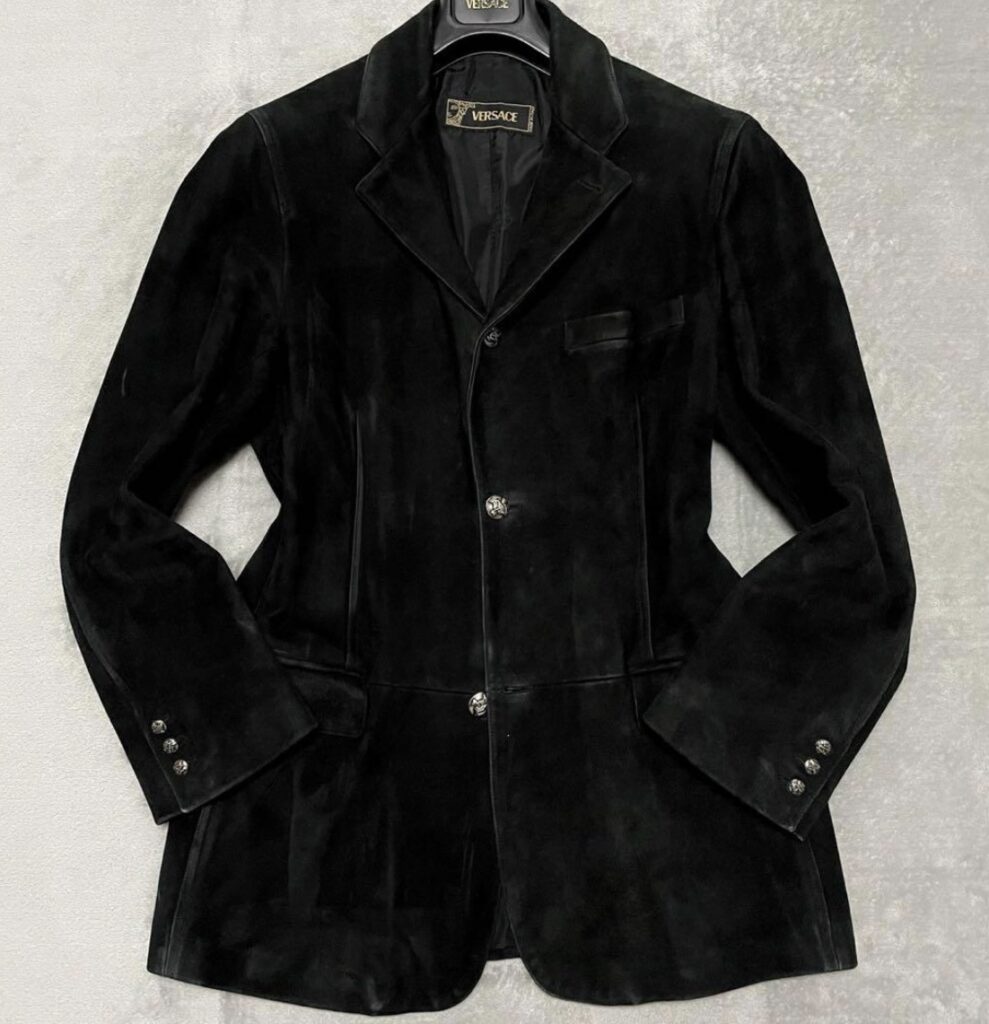
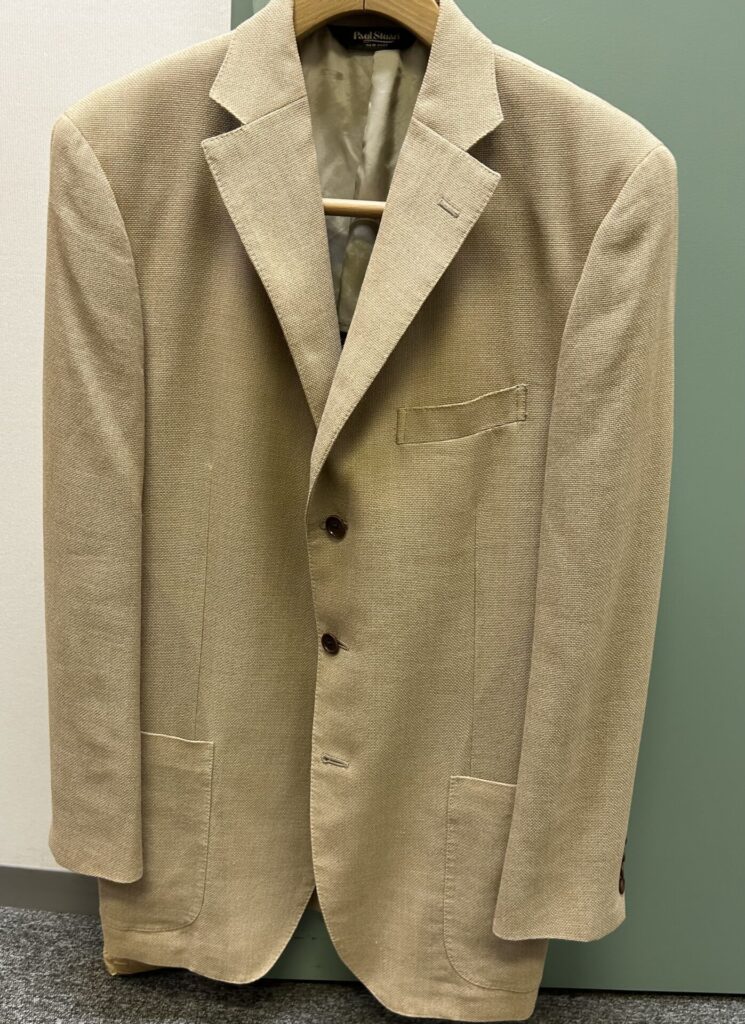
The former type is more likely to work well as a three-roll-two jacket, while the latter is much more difficult to convert successfully.
Let me explain why.
A well-balanced three-roll-two jacket has the top button hidden behind the roll of the lapel, while roughly half of the reverse side of the top buttonhole remains visible.
With a three-button, two-fastening jacket that has relatively high button placement, moving the lapel crease can produce an excellent result: the top button becomes hidden behind the lapel roll, the reverse side of the top buttonhole becomes visible—in this case, perhaps slightly too much—and the V-zone becomes a comfortable, well-proportioned width.
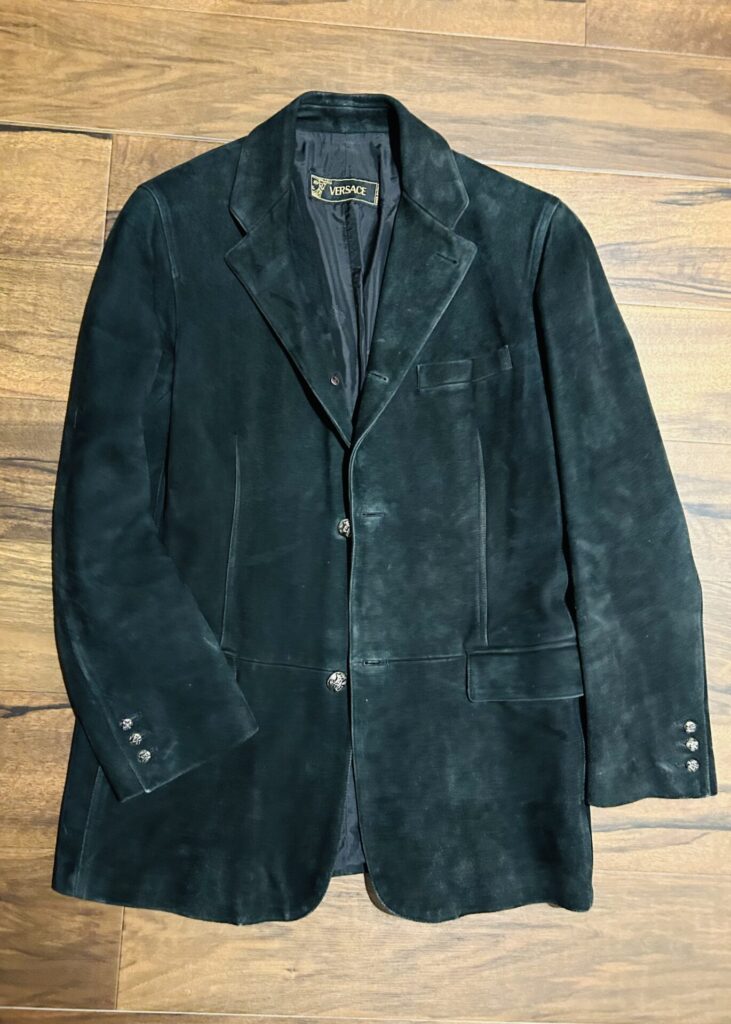
By contrast, if the original three-button, two-fastening jacket has a low button placement, moving the lapel crease can make the V-zone excessively deep.
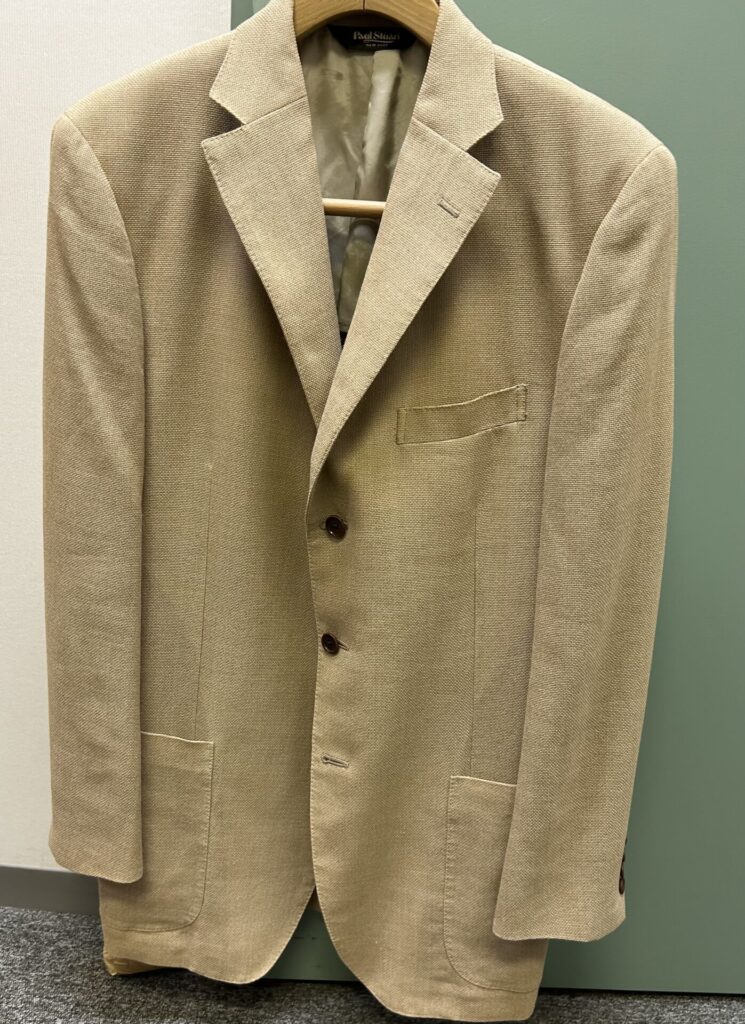
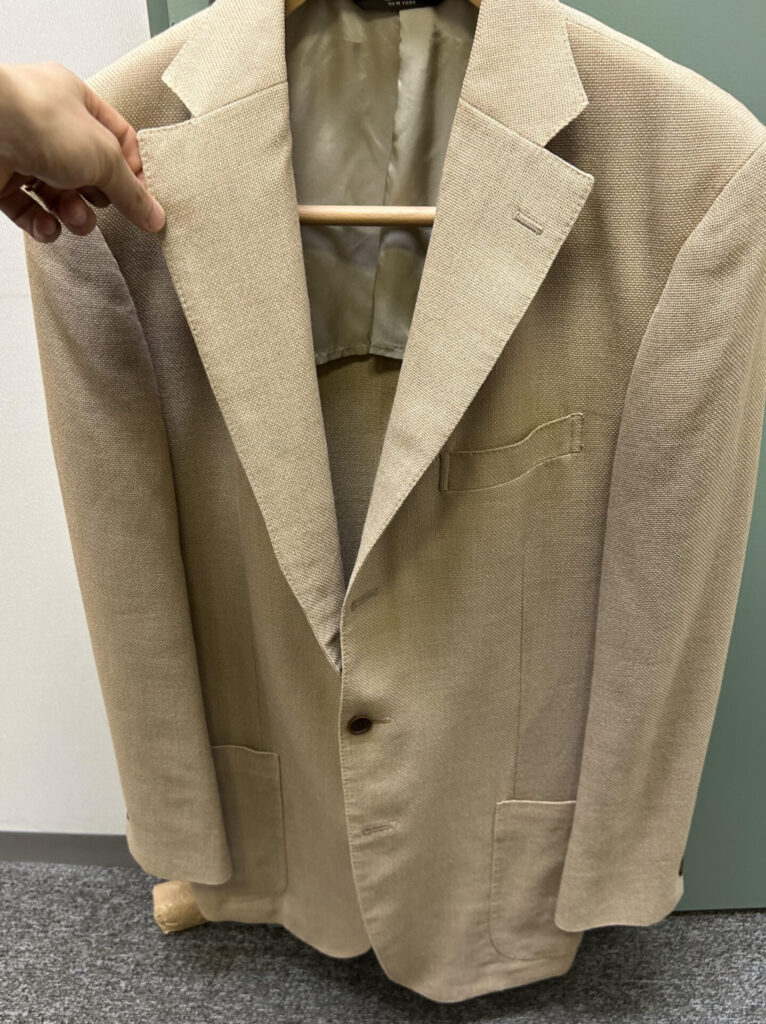
Whether you like this deeper V-zone is ultimately a matter of personal preference, but to my eye, it no longer falls comfortably within the proportions of a classic suit.
Conclusion
A three-button, two-fastening single-breasted jacket can sometimes be converted into a three-roll-two jacket.
The conditions are that the fabric is soft enough and the interlining is light enough to allow the lapel crease to be repositioned, and that the V-zone is not already too deep to begin with.
That’s all for today.
Thank you for reading.
Update added later: Here is the result after I had the suede jacket altered from a three-button, two-fastening configuration to a three-roll-two jacket.





コメント