Hello, this is Mr. Linen.
When wearing a jacket-and-trousers combination, what kind of jacket do you usually choose?
People often say that simply wearing a suit jacket separately as part of a sport coat outfit is a mistake. But specifically, what kind of jacket actually works well for this style?
There are many factors to consider — fabric, pattern, buttons, silhouette (whether structured or soft and rounded), and so on. However, today I would like to focus on one particular detail: pockets.
More specifically, I want to discuss whether patch pockets work well in jacket-and-trousers style.
目次
What Are Patch Pockets?
Broadly speaking, jacket pockets can be divided into two types depending on whether the fabric itself is cut open.
The first type involves cutting into the jacket fabric, creating pockets embedded inside the jacket.
This is called welt pocket.
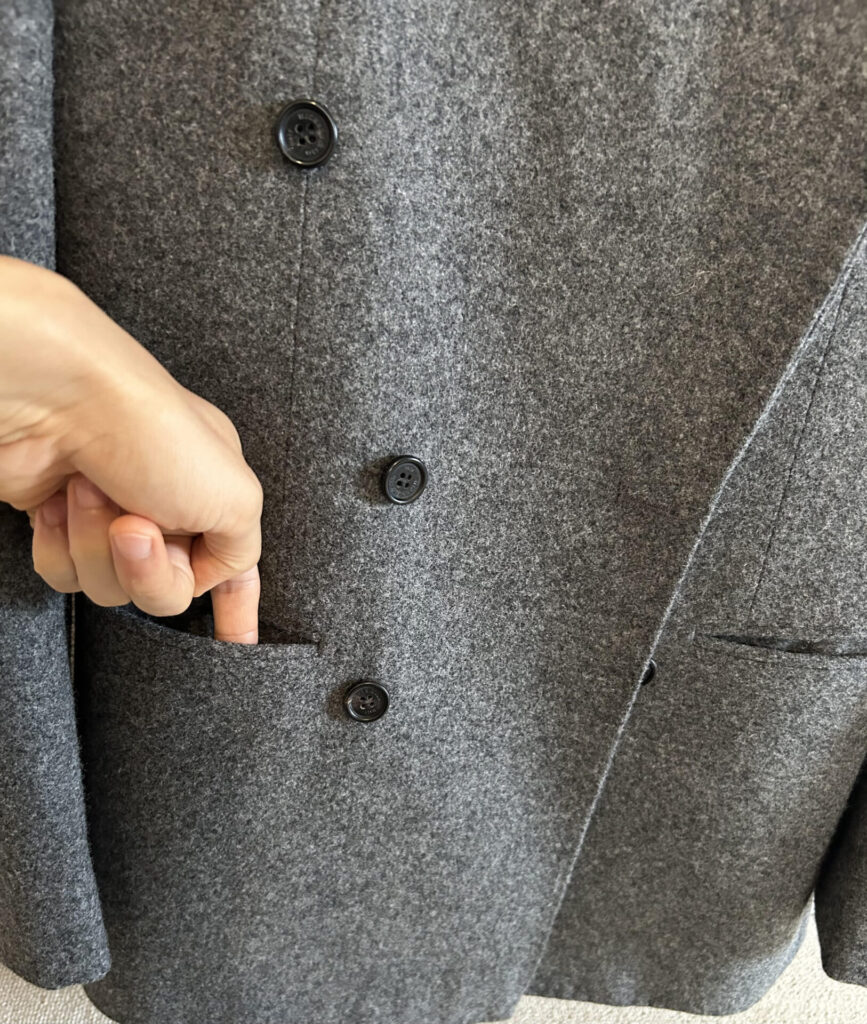
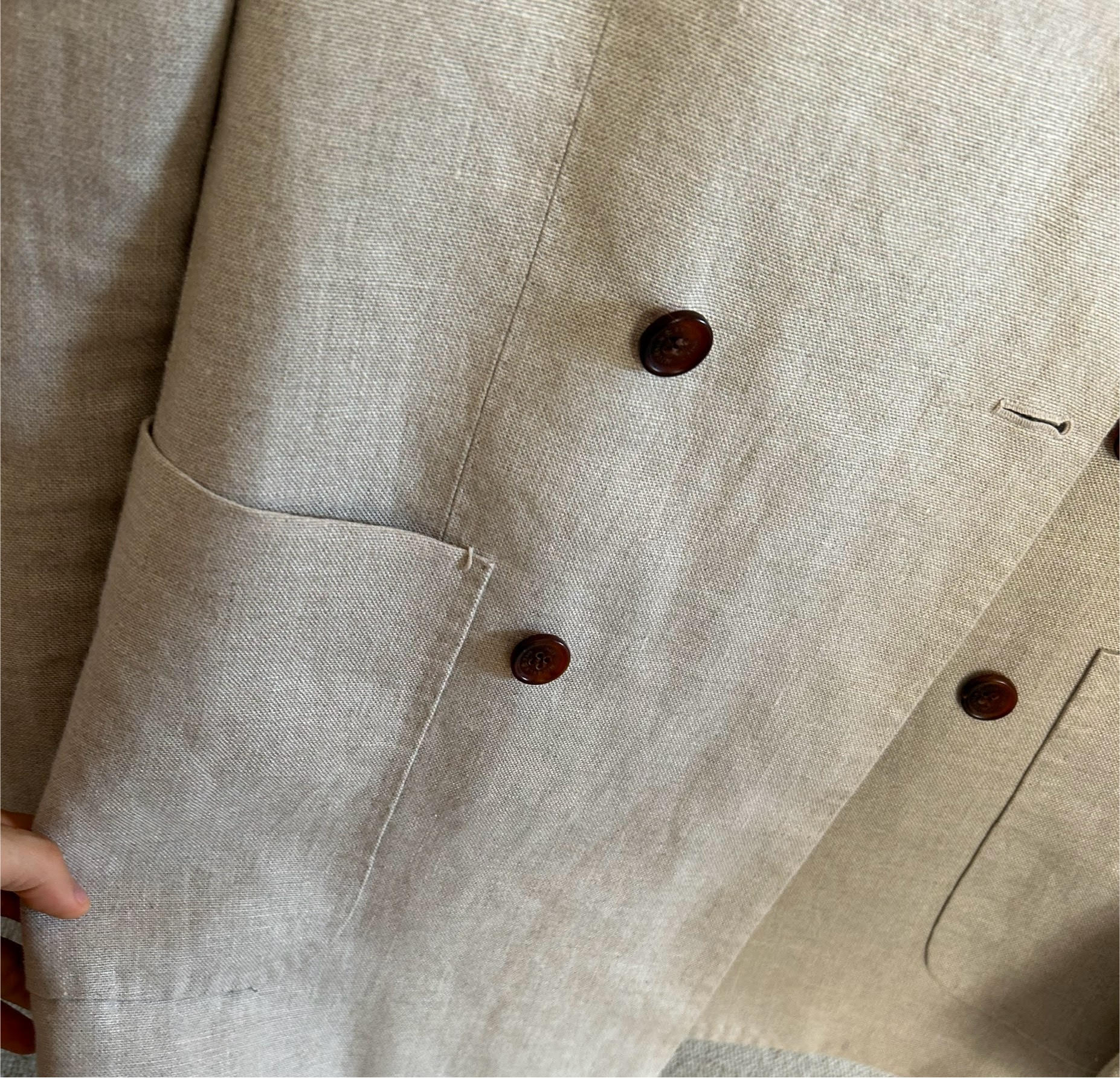
Sometimes these pockets come with flaps, and sometimes they do not, but for this article I will ignore the presence or absence of flaps since it is only a minor variation.
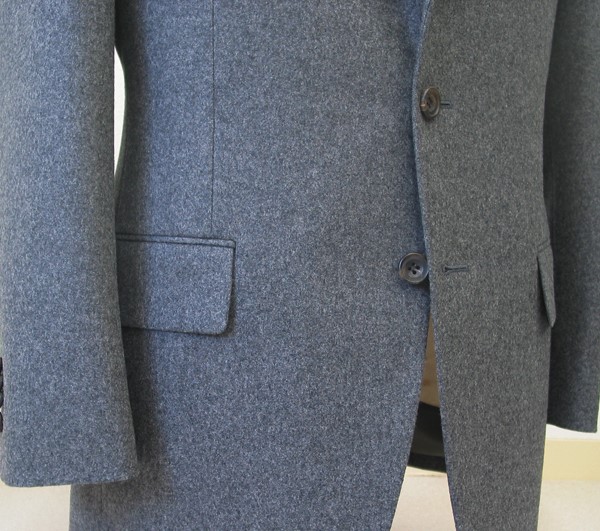
The other type does not require cutting into the jacket fabric. Instead, the pocket is sewn onto the outside of the jacket.
This is what is known as a patch pocket.
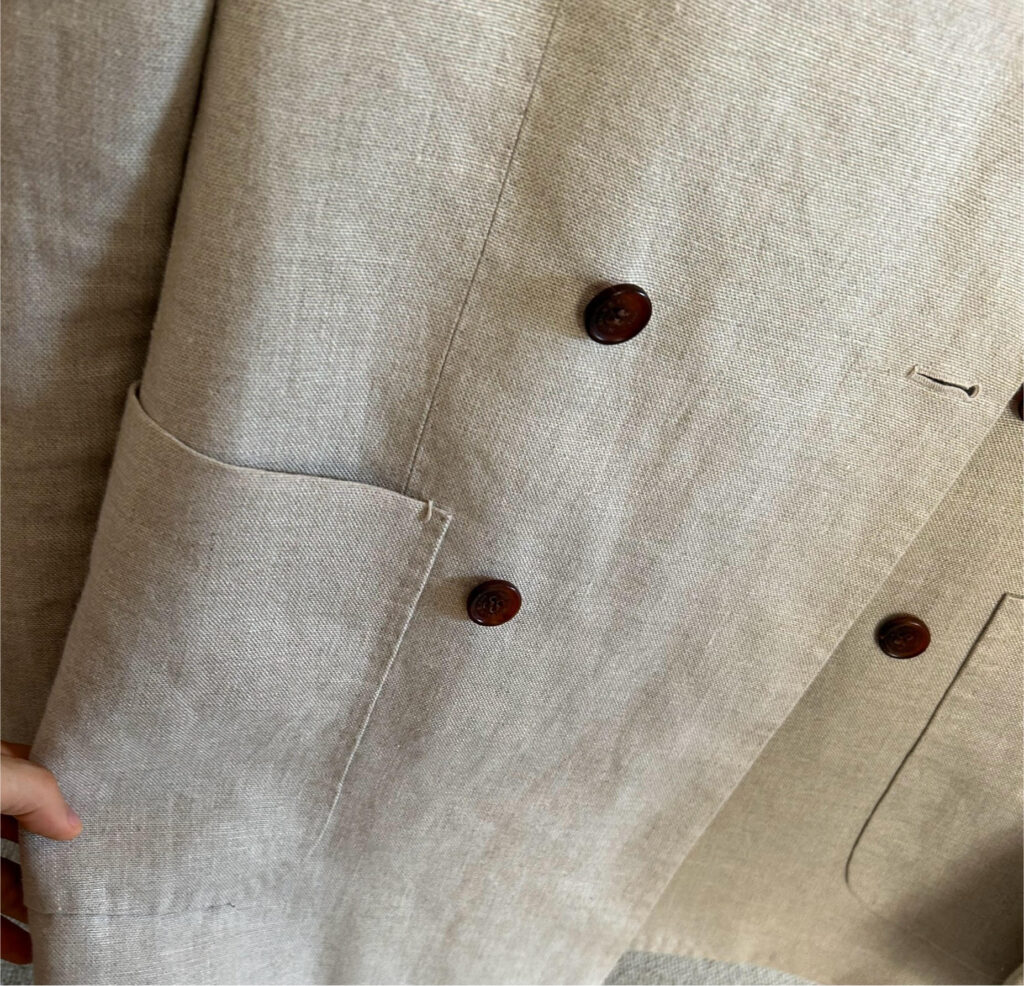
Just like the first type, patch pockets may or may not have flaps.
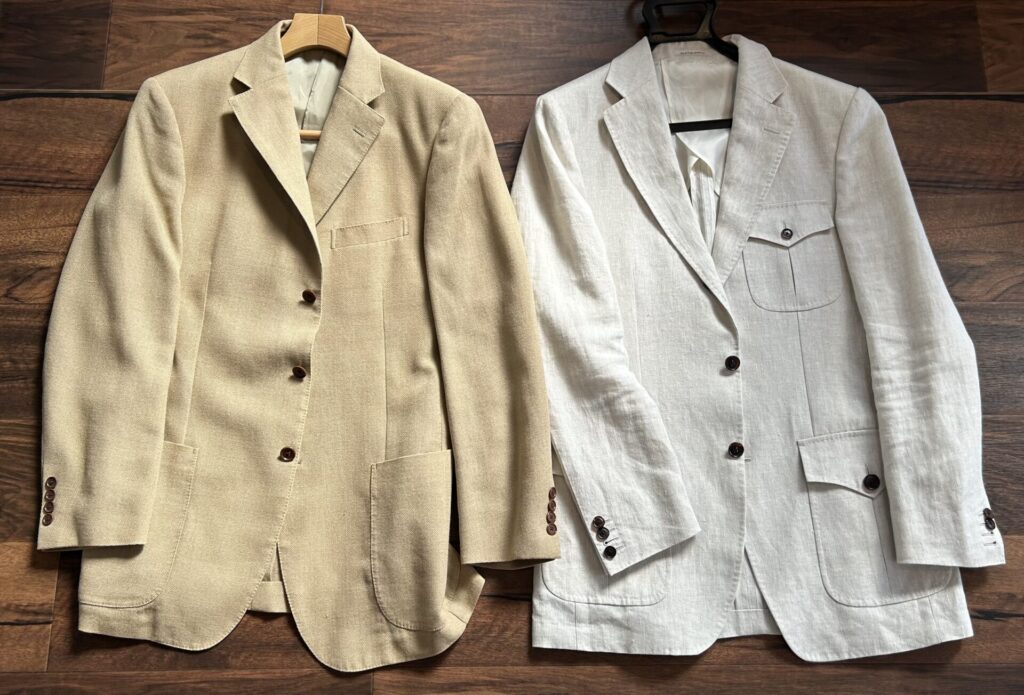
The Impression Created by Patch Pockets
Compared to standard welt pockets, patch pockets give a jacket a more casual appearance.
In fact, many standalone jackets currently sold on the market feature patch pockets.
Since jacket-and-trousers style itself is more casual than wearing a full suit, it makes sense that patch pockets pair naturally with it.

On the other hand, jackets sold as part of matching suits are almost always made with standard welt pockets.
That is because suits are inherently dressier garments, and standard pockets suit them better than patch pockets do.
Rather than simply “matching better,” one could even argue that a suit without standard pockets may no longer be considered a proper formal suit.
To repeat myself, both patch pockets and standard pockets may come with or without flaps, but I will ignore that distinction in this article. That said, I do think flap pockets lean slightly more casual than flapless ones.
As an exception, suits made from fabrics such as linen, cotton, or tweed sometimes feature patch pockets.
Even though they are technically suits, the casual nature of these fabrics pairs naturally with patch pockets.
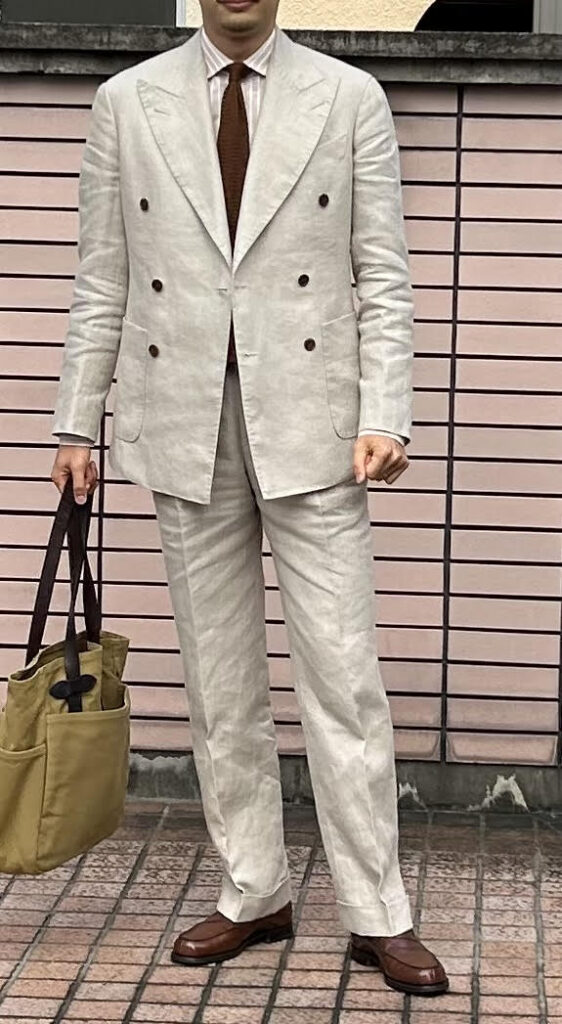
A suit with patch pockets can also work well when the jacket is worn separately.
You can pair it with wool trousers for a refined jacket-and-trousers look, or wear it with denim or chinos for something more relaxed.
Even in the photo above, I personally think the outfit would still work if the trousers were replaced with jeans.

Must a Standalone Jacket Have Patch Pockets?
Suit = standard pockets
Sport coat = patch pockets
That formula became so deeply ingrained in my mind that I started thinking this way:
“A standalone jacket for separates must have patch pockets.”
Whenever I saw someone on Instagram wearing a jacket with standard welt pockets as part of a separates outfit, I would even think, “This person doesn’t really understand classic menswear.”
Only recently did I realize how completely mistaken I had been.
“A standalone jacket for separates must have patch pockets.”
There was never such a rule.
The more accurate statement would be:
“A standalone jacket for separates can have patch pockets.”
Patch pockets are perfectly acceptable, but standard welt pockets are equally acceptable.
After realizing my misunderstanding, I began noticing that many well-dressed men freely alternate between standard pockets and patch pockets when wearing separates.
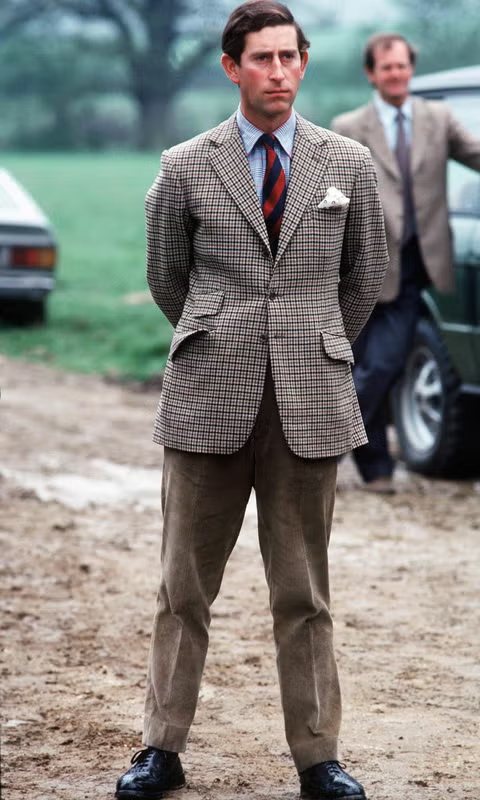


This is only my personal theory, but I believe that the choice between standard welt pockets and patch pockets in jacket-and-trousers style ultimately comes down to personal preference.
There may be trends depending on fabric, cut, era, or even country, but I do not think this is a strict rule that must be followed.
(My impression is that patch pockets may be favored slightly more in Italian tailoring than in traditional British tailoring, though I could be wrong.)
A Look at My Own Jackets (Mostly Patch Pockets)
I only realized the misunderstanding I described in the previous section quite recently, and until then, I consistently preferred patch pockets and chose them almost exclusively.
Partly because I rarely need to wear formal suits, and partly because I simply enjoy wearing jackets casually. Since jacket-and-trousers style is my main way of dressing, I assumed patch pockets were naturally the easier option for separates.
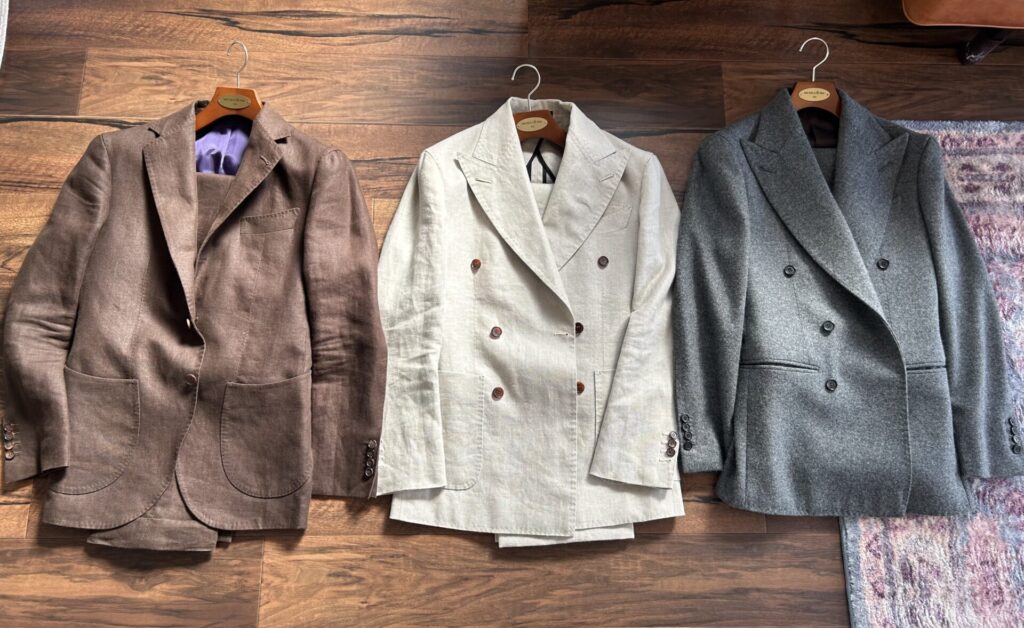
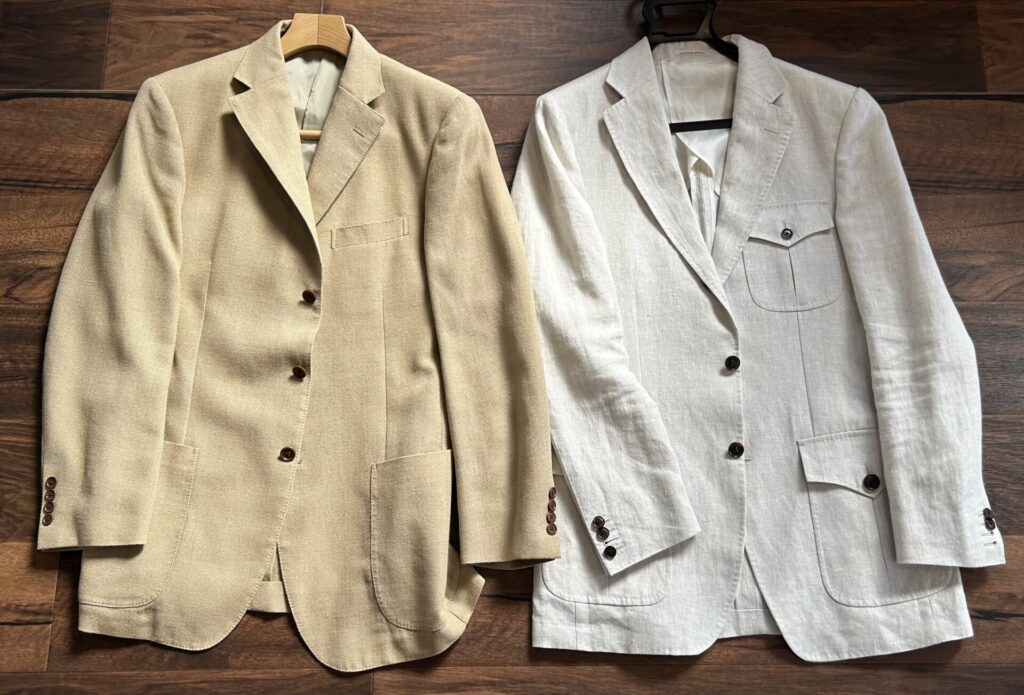
Among the jackets shown in these photos, the only one with welt pockets is the grey double-breasted suit, which is made from flannel.
All of my beloved linen suits and jackets feature patch pockets.
However, the next time I commission a linen suit, I think I will try welt pockets instead.
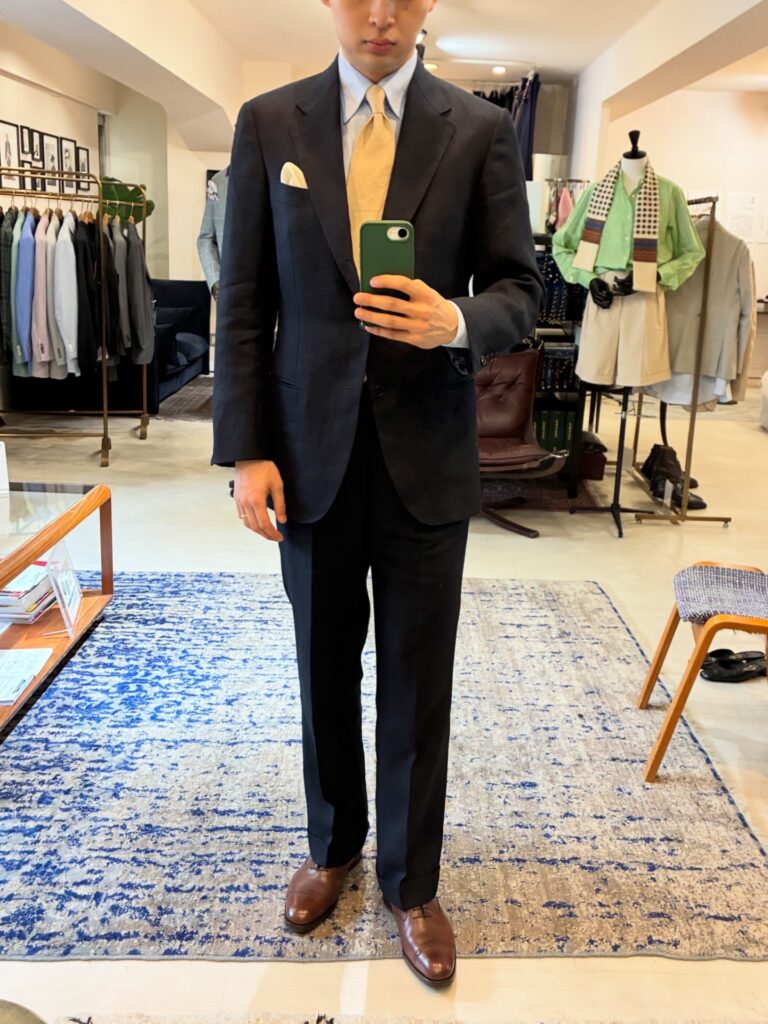
This jacket, which I ordered from Atelier Berun specifically for jacket-and-trousers wear, has welt pockets with flaps.
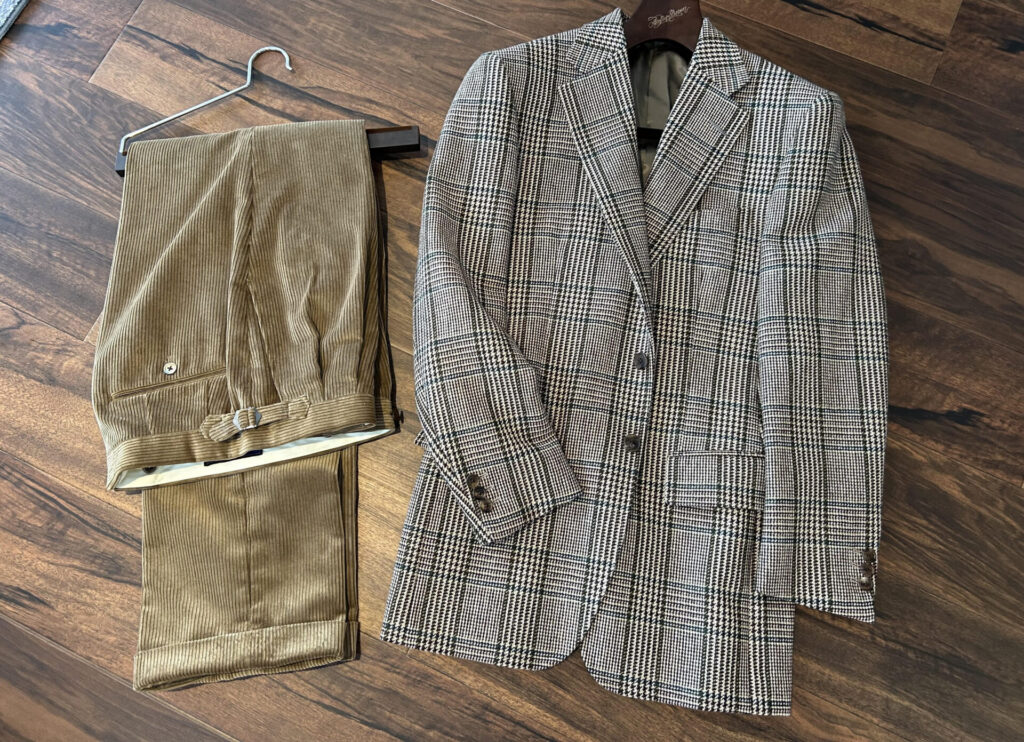
If nobody had pointed out my misunderstanding, I definitely would have ordered patch pockets again. Because of that, this jacket has become a memorable piece that reminds me how important it is to question my own assumptions.
Related article


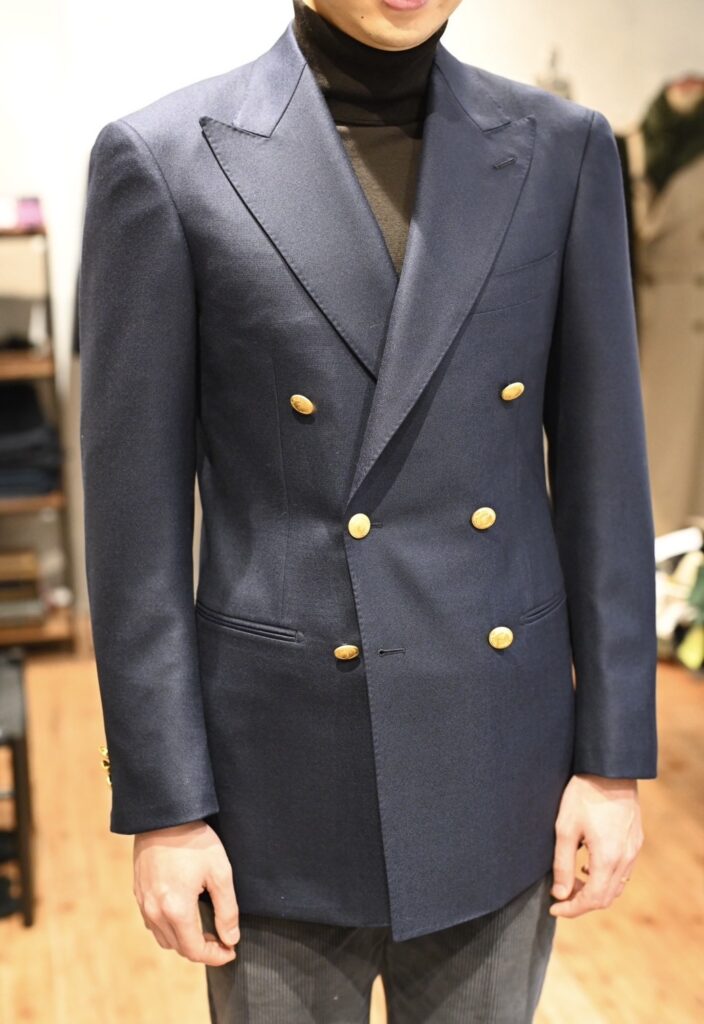
Finally, let us consider the navy blazer.
When people think of a navy blazer, they usually imagine a jacket with metal buttons — a garment designed specifically to be worn separately rather than as part of a matching suit.
Looking around the market, patch pockets certainly seem common, but blazers with welt pockets can also be found fairly often.
In those cases, they usually feature flaps.

If we look at King Charles III of the United Kingdom — the country most associated with the origins of the blazer — his blazer appears to feature welt pockets without flaps. (Though it is possible the flaps are simply tucked inside.)
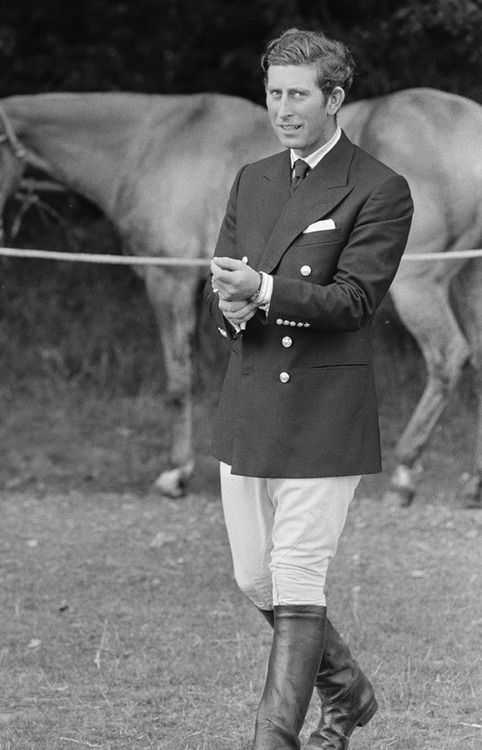
One could argue that, if we take King Charles as the benchmark, blazers should always have welt pockets and no flaps. However, I think it is more accurate to say that — just like with other jackets — pocket style on a blazer ultimately comes down to personal preference.
(Later I got a blazer with welt pockets with no flaps)
Conclusion
After this rather long discussion, the conclusion of this article is actually very simple:
“Any pocket style is acceptable on a standalone jacket.”
If you want your jacket-and-trousers outfit to feel slightly more refined and formal, choose welt pockets.
If you want a more casual appearance, choose patch pockets.
And whether or not to include flaps is simply a matter of personal preference.
That is currently how I understand the subject. However, if I have misunderstood anything, I would sincerely appreciate hearing from readers who know more than I do.


コメント