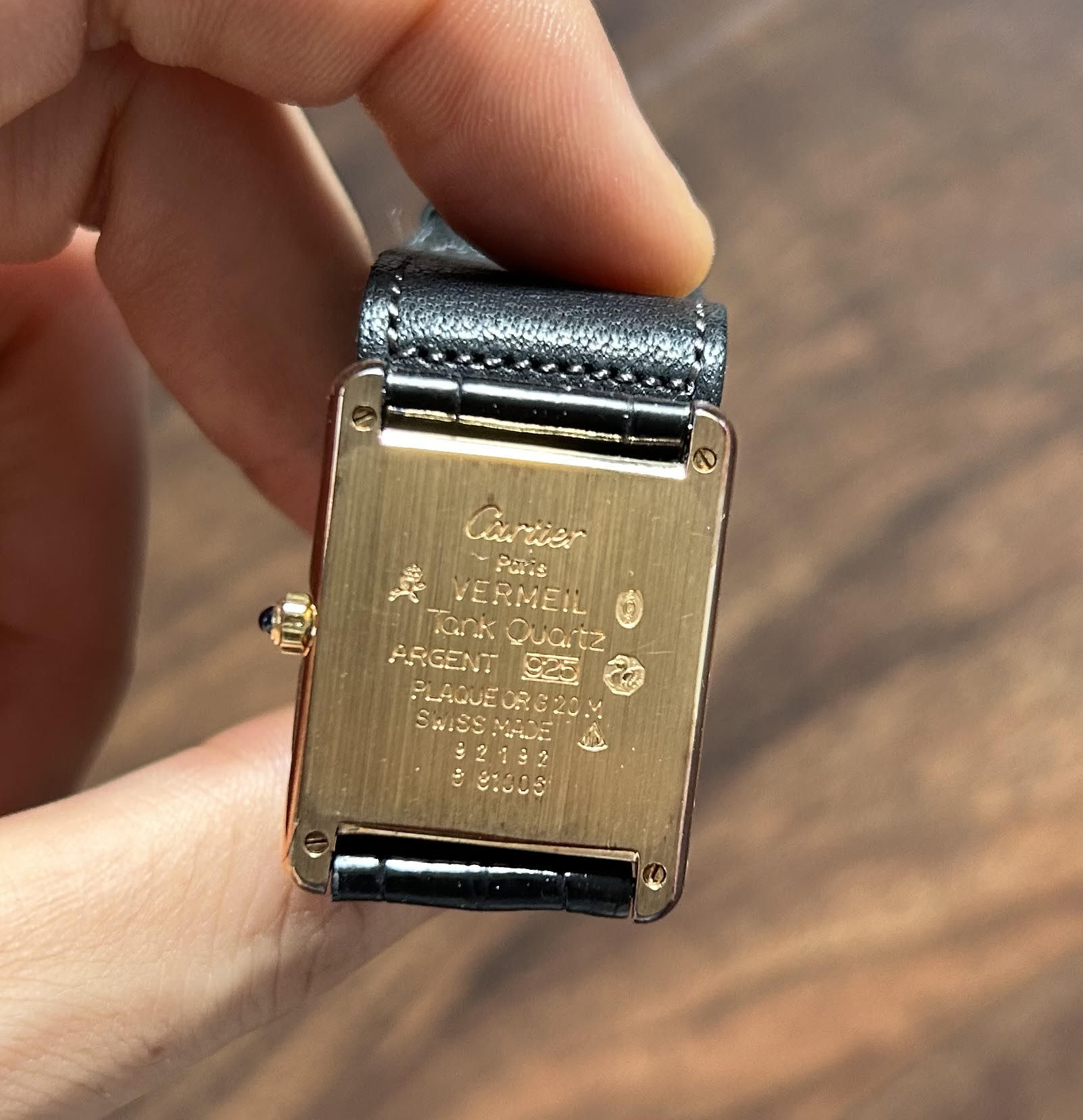
Hello, I’m Mr. Linen.
When it comes to wristwatch colors, there are three main categories: silver tones (stainless steel, white gold, platinum), yellow tones (yellow gold), and pink tones (rose gold).
If we focus on materials rather than color, watches can largely be divided into precious metals such as solid gold or platinum, and stainless steel.
There are also materials like titanium and ceramic, but I’ll set those aside as exceptions for this discussion.
Positioned between solid gold and stainless steel is gold plating.
Both vintage and modern watches often come in gold-plated versions.
If both cost the same, anyone would naturally choose solid gold over gold plating.
But solid gold is, of course, very expensive.
Gold plating is a wonderful technology that allows you to enjoy the look of gold at a more affordable price.
However, gold plating comes with several issues.
So the question is: are gold-plated watches worth buying?
Types of Gold Plating
There are several types of gold plating.
First, let’s look at the base material underneath the plating.
The most common base is stainless steel, followed by brass.
As an exception, some watches use solid silver (925 sterling silver).
This technique, known as vermeil, was commonly used in watches produced between the 1970s and 1990s.
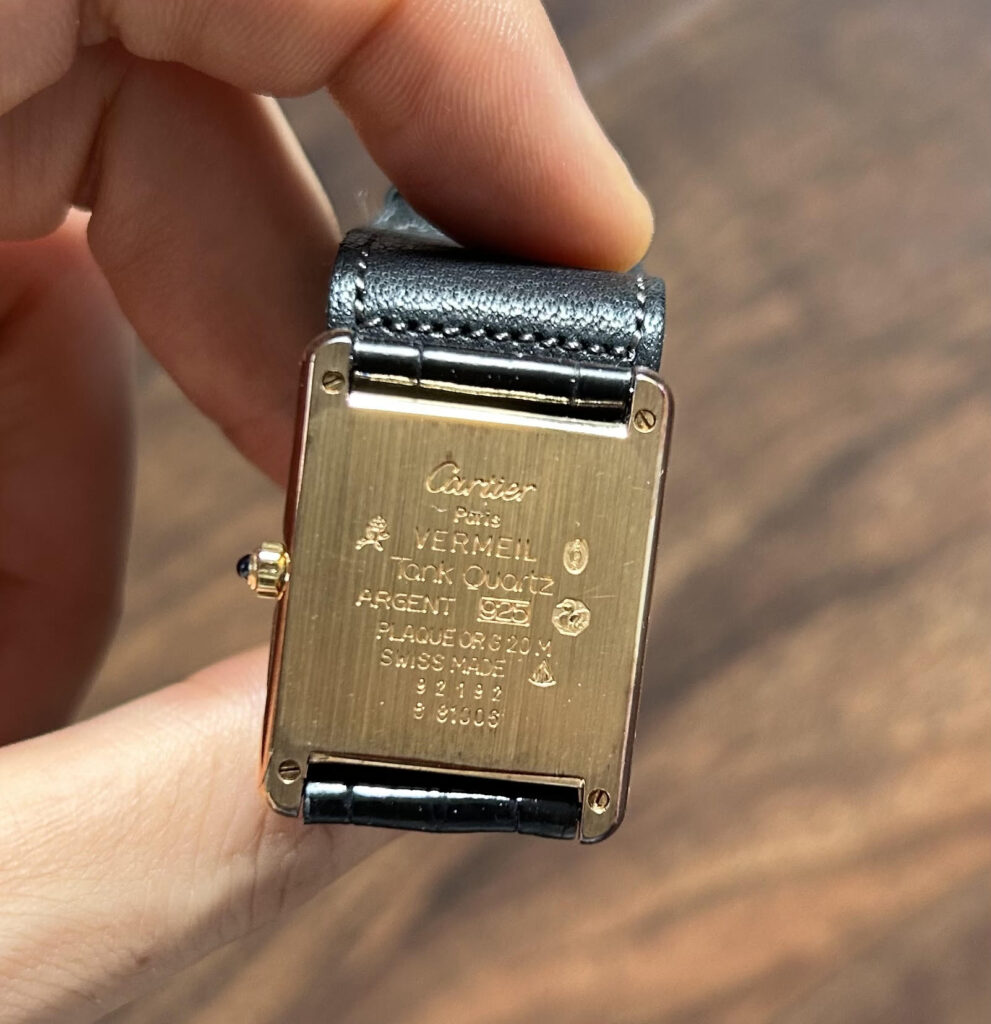
In this case, a relatively thick layer of gold is applied over a solid silver case.
Although not gold, the base is still a precious metal, so it can be considered more luxurious than stainless steel or brass.
Now that we’ve covered base materials, let’s look at the plating itself.
You may come across terms like Gold Filled, Gold Plated, or Gold Plaqué, but the main difference is simply the thickness of the gold layer.
I don’t know the exact micron thresholds, but some plating is extremely thin, while others are thicker.
Thicker plating uses more gold, making it more durable and visually closer to solid gold, and therefore more premium.
That said, as far as I know, the thickness never reaches millimeters—it’s all measured in microns.
As for how plating is applied, I used to imagine something like dipping the case into molten gold like chocolate fondue—but that’s not correct.
In reality, it involves advanced techniques such as electroplating using electrical currents.
Advantages of Gold-Plated Watches
The main advantage is that you can enjoy a gold-colored watch at a relatively low cost.
Gold plating is lighter than solid gold, but since watches aren’t particularly heavy to begin with, this isn’t a significant benefit.
Some argue that solid gold is soft and less durable, making plating preferable. However, if you hit the watch hard enough, the plating can peel off anyway, so durability isn’t really an advantage of gold plating.
Disadvantages of Gold-Plated Watches
There are several downsides to gold plating.
It Will Eventually Wear Off
Plating can peel off when the watch is bumped. Polishing to remove scratches will thin the plating, and eventually remove it entirely. Even gently wiping sweat with a soft cloth can gradually wear it down.
It Doesn’t Look Exactly Like Solid Gold
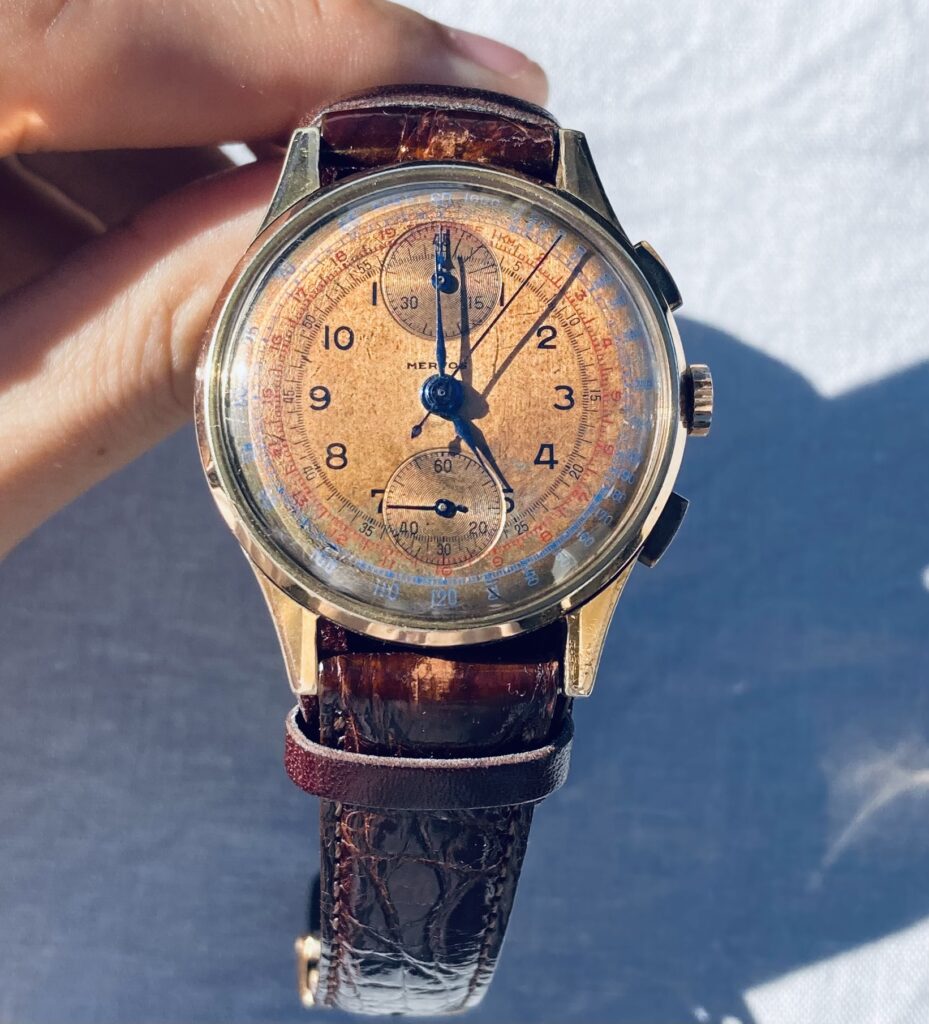
When placed side by side, the difference between solid gold and gold plating becomes noticeable. Most people won’t notice at a glance, but those who care about details might.
Less Emotional Satisfaction
This is my personal opinion, but solid gold just feels special, doesn’t it? Gold plating isn’t fake, but it doesn’t quite give the same excitement.
Maybe that’s superficial, but that’s honestly how I feel.
Discoloration Can Occur
This is especially noticeable in vermeil watches with silver bases. As the silver underneath tarnishes, the gold plating can also appear discolored.
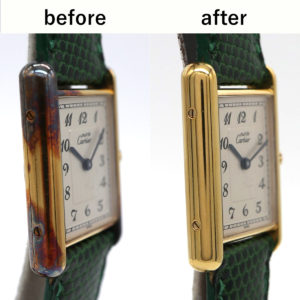
Silver tarnishes very easily. Anyone who wears silver jewelry knows how quickly it darkens.
Even thick plating can’t fully block this effect, since it’s still relatively thin.
That said, even solid gold can discolor slightly over long periods, turning a bit brownish.
However, solid gold can be polished back to its original shine, whereas plating is not suitable for polishing.
Replating as a Solution
Even if the plating wears off or discolors, you can have the watch replated.
The old plating is completely removed, and a new layer is applied.
Like applying makeup, you can’t just layer it endlessly—you need to start with a clean surface.
Costs vary widely depending on the shop, but typically range from about $130 to $330.
For watches valued around $1,300–$2,700, I personally find it hard to justify the cost of replating.
I’ve written more about this in another article:

Conclusion: Are Gold-Plated Watches Worth It?
Considering the relatively low price along with the various drawbacks, are gold-plated watches worth buying?
What do you think?
As for me, I’ll give a clear answer: I don’t recommend them.
I’ve personally bought five gold-plated watches.
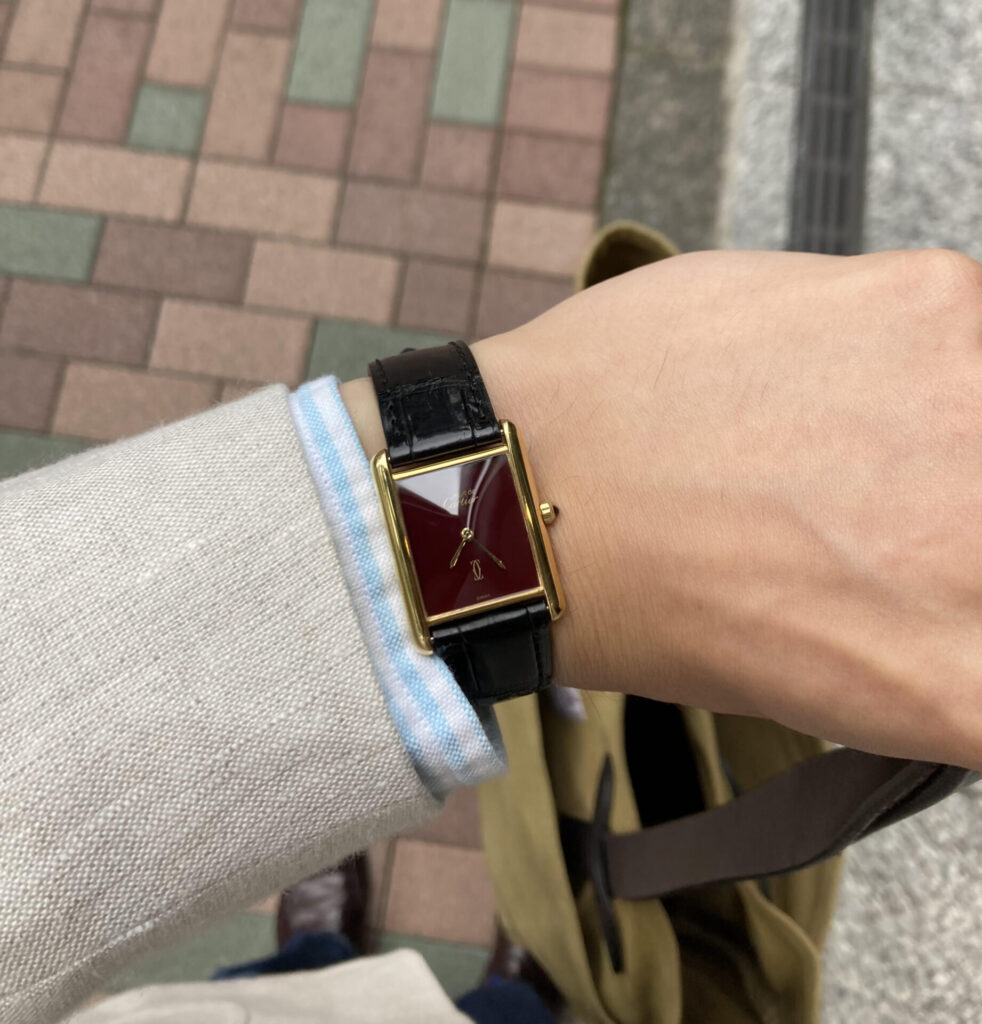
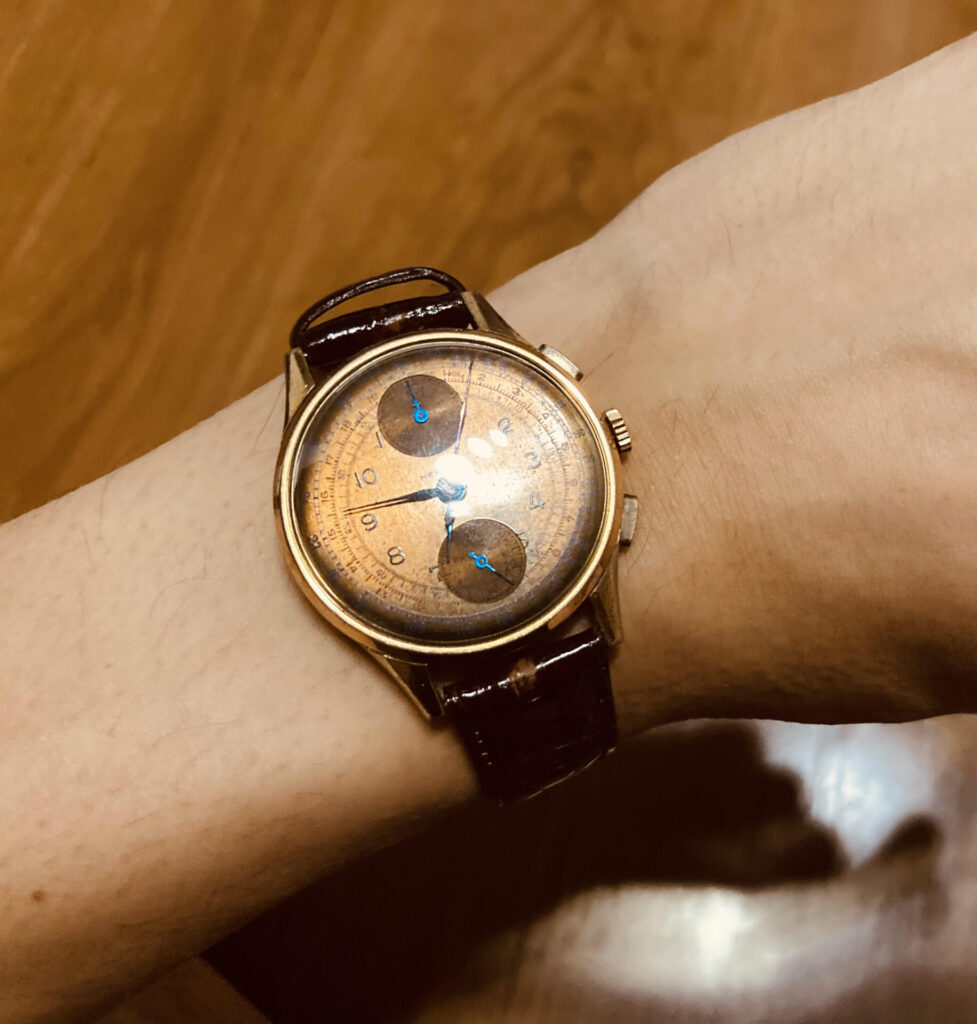
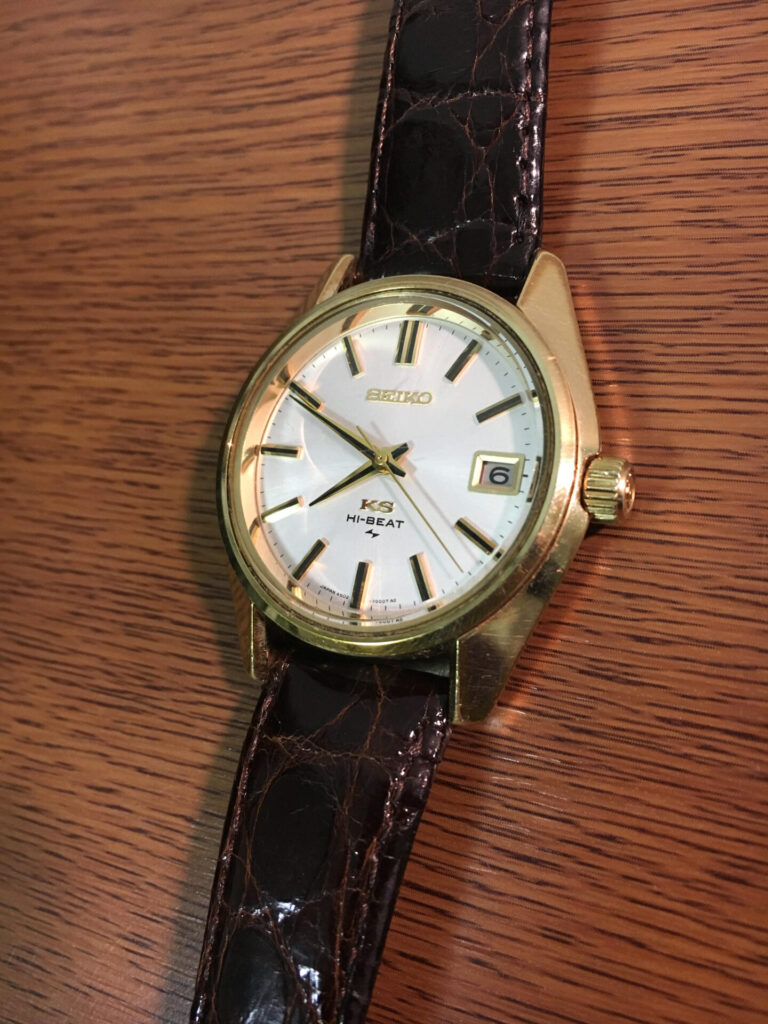
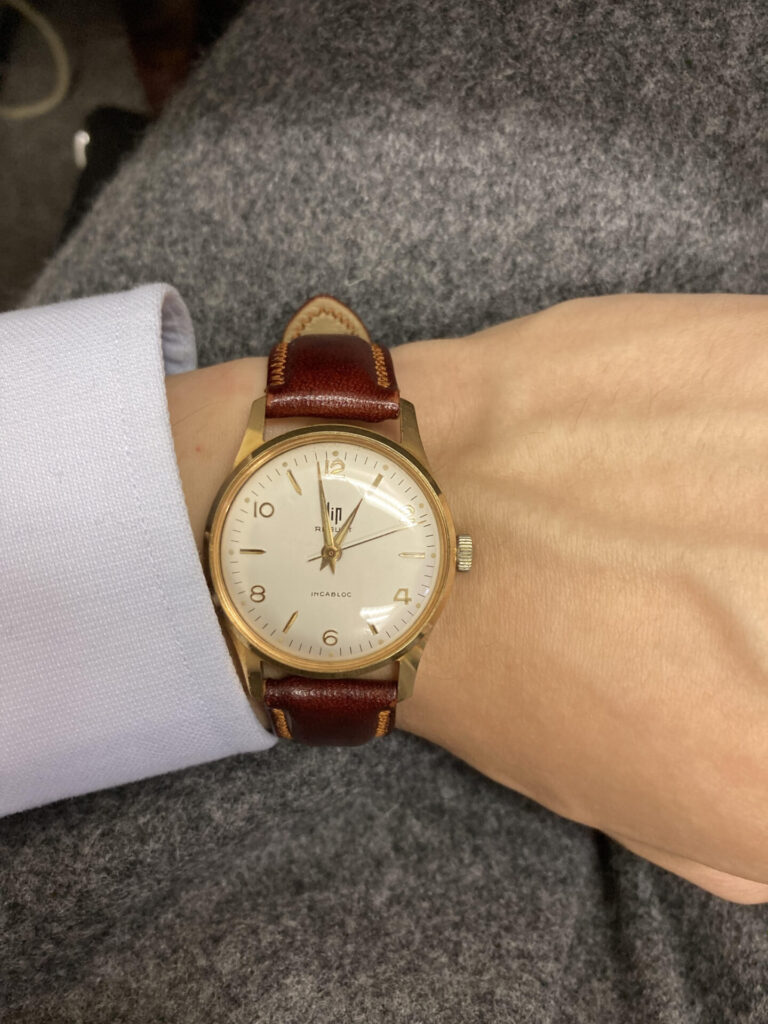
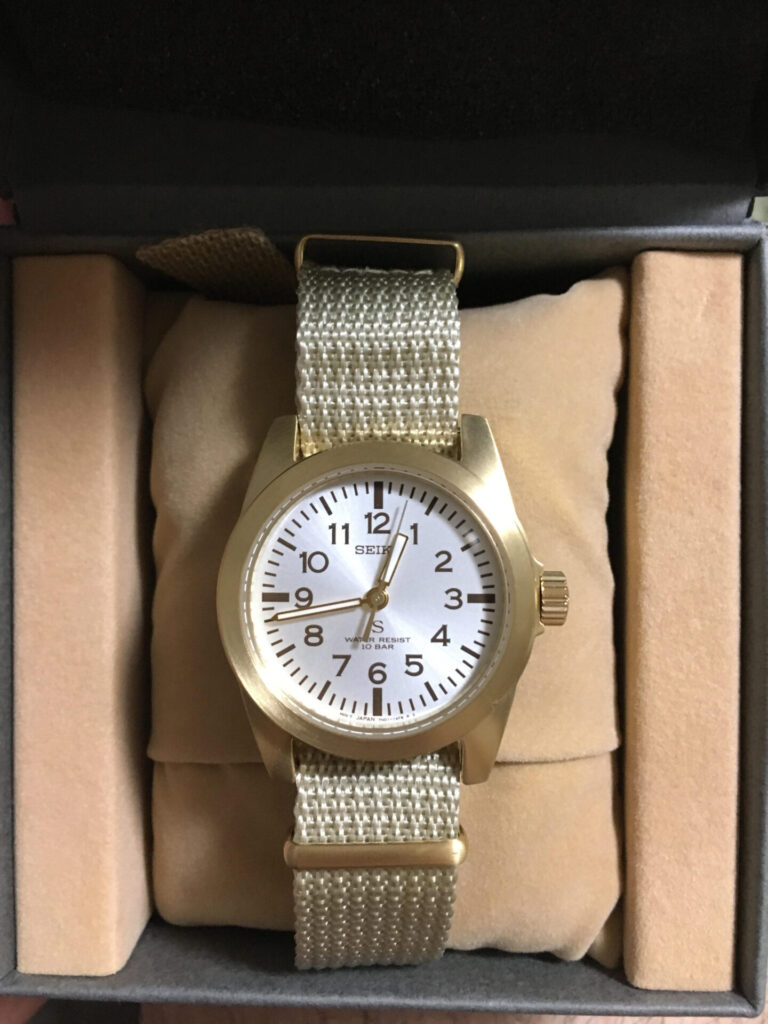
I bought all of them because I liked the design.
However, the downsides always bothered me, and I could never love them 100%—more like 70%.
In hindsight, I wish I had bought one solid gold watch instead of five plated ones.
The only solid gold watch I own, a Reverso, I absolutely love—100%.
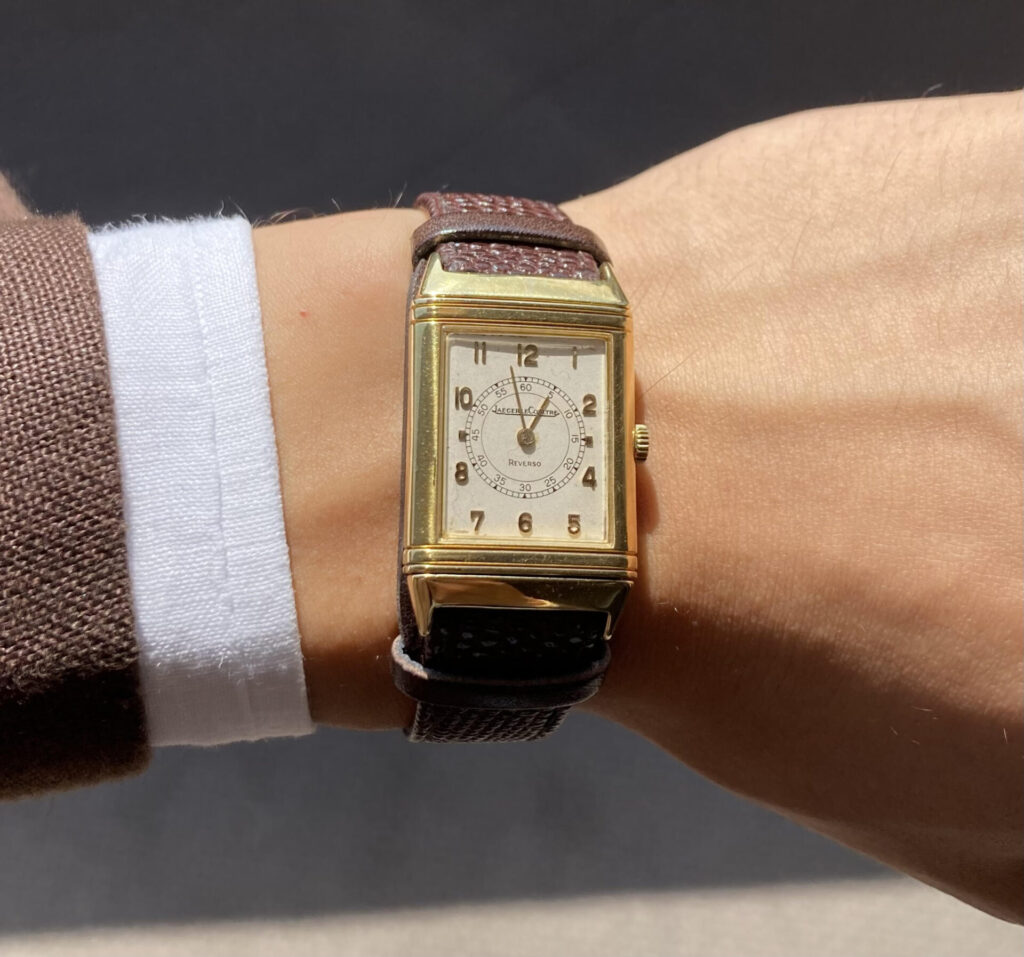
Maybe I’m just materialistic.
Reference article:
In particular, discoloration in vermeil watches bothers me a lot. Even if I love the design, it drops my overall satisfaction to about 40%.
If discoloration happened after 20 years, that would be fine—but it can occur in just a few years, and frequent replating isn’t realistic.
That said, there is one gold-plated watch I like about 95%.
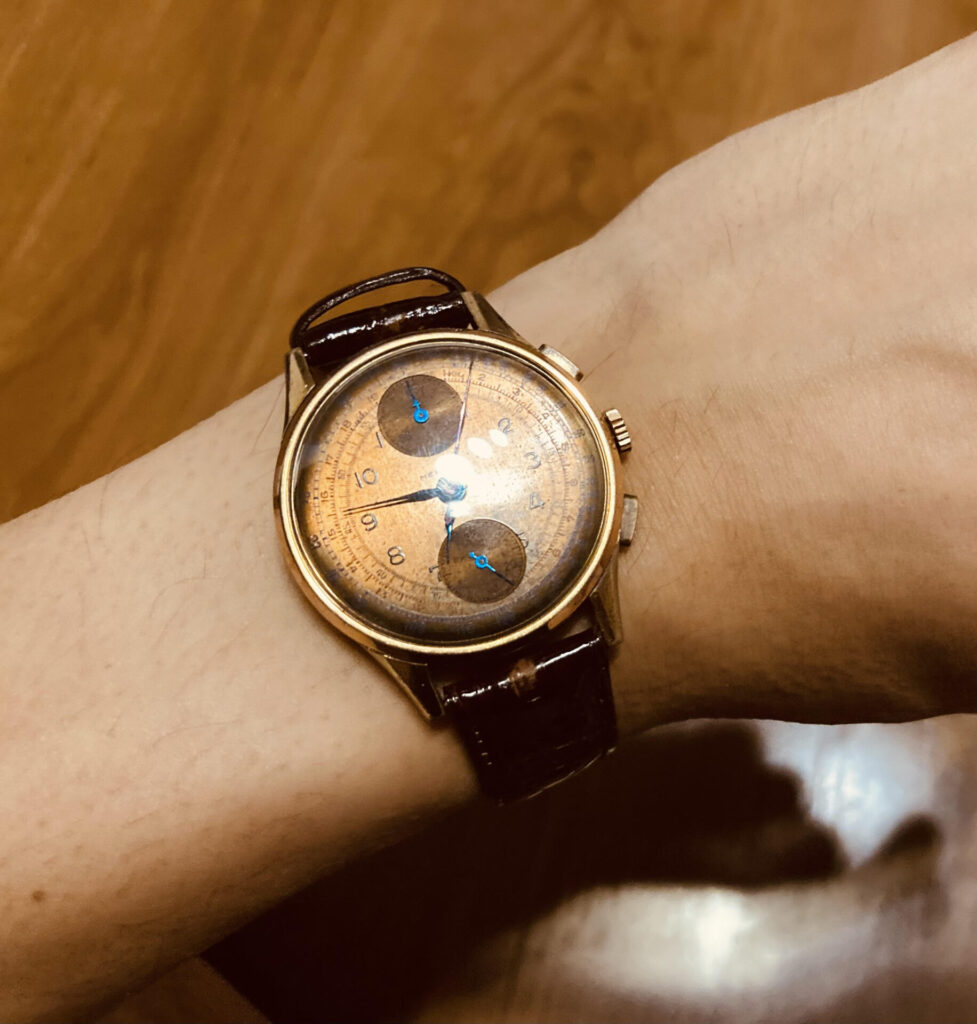
I love the dial so much that it outweighs the drawbacks of plating.
Still, I can’t help but wish it were solid gold.
So overall, I cannot recommend gold-plated watches.
That’s my conclusion for today.


コメント