Hello, I’m Mr. Linen.
I love linen so much that I go by the name “Mr. Linen,” and I have a habit of buying mostly linen garments.
Even when it comes to shirts worn under suits, I tend to wear linen for most of the year.
This is because of its many advantages: comfort, durability, quick-drying properties, and although it wrinkles easily, those wrinkles also relax quickly.
That said, when it comes to the most formal shirts, cotton is still king. When wearing a formal suit, I believe cotton shirts are more appropriate than linen.
Somewhere between the two, there exists the cotton-linen blend shirt.
In this article, I’ll share my thoughts on the advantages and disadvantages of cotton-linen shirts.
Characteristics of Cotton Shirts
First, let’s review the characteristics of cotton and linen shirts individually.
Starting with cotton shirts.
There are many types of cotton fabrics.
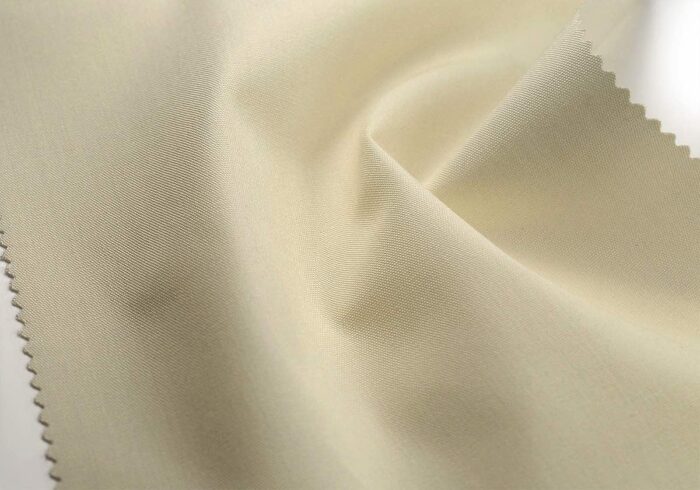
The smoothest and most formal type is known as poplin.
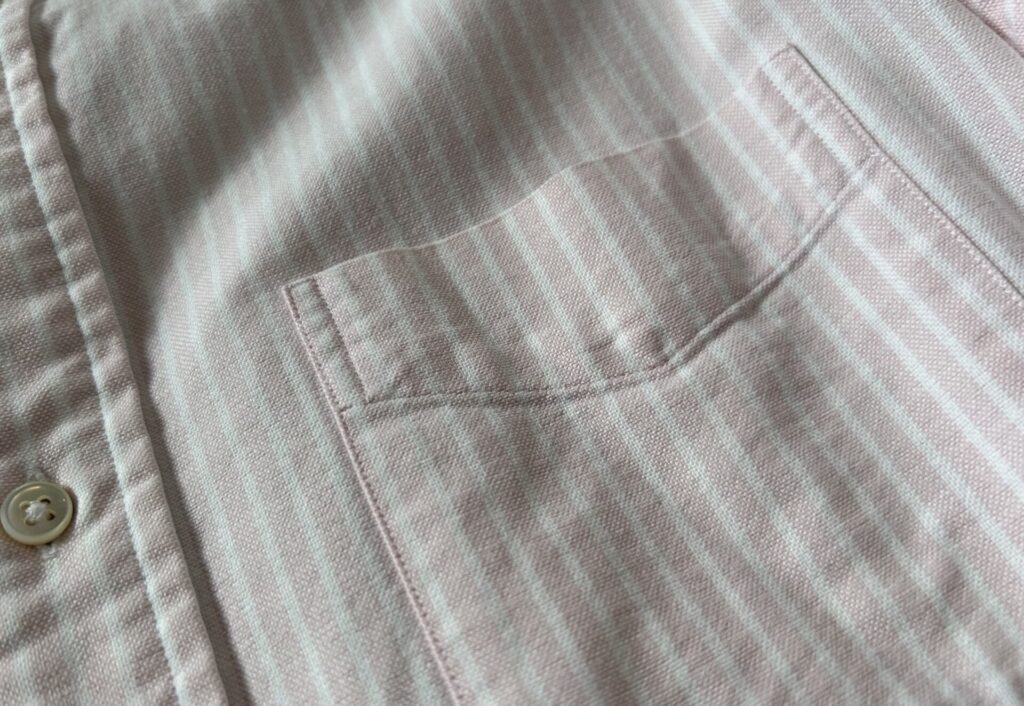
There are also more casual fabrics like Oxford, which has a slightly rough texture and is often used for button-down shirts.
Beyond that, there are mesh fabrics, brushed flannel, and many others.
Grouping all of these together is a simplification, but to keep things straightforward, I’ll refer to them collectively as “cotton” in this article.
Cotton shirts absorb sweat well and feel soft against the skin, as expected from a natural fiber.
Poplin, in particular, offers the most formal appearance.
The downside is that they wrinkle heavily after washing.
Ironing is generally required.
Characteristics of Linen Shirts
Next, let’s look at linen shirts.
Like cotton, linen absorbs sweat well—but it dries much faster.
Some people may associate linen with rough textures (like burlap used for coffee sacks), but shirt-grade linen is actually quite gentle on the skin.
While cotton shirts tend to look worn out after repeated washing, linen shirts actually become stronger as the fibers tighten with use.
Rather than deteriorating, they develop character and a more appealing texture over time.
Of course, they don’t last forever—but compared to cotton, they are more resilient to washing.
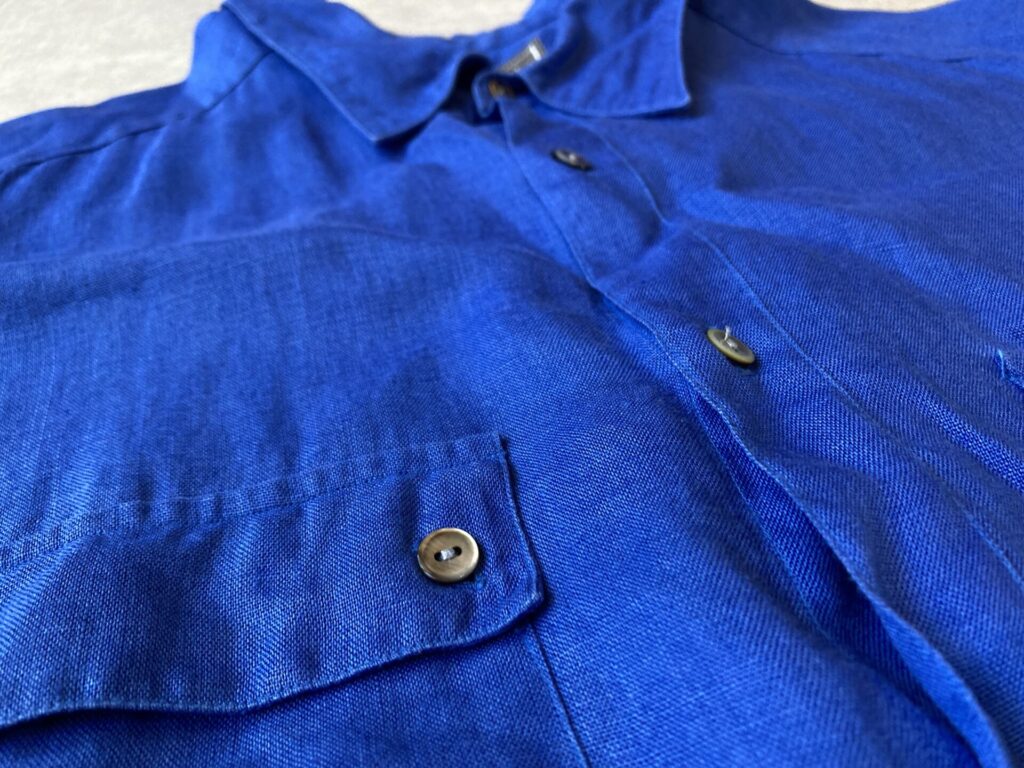
The downside is that linen wrinkles easily.
I personally find those wrinkles elegant, but opinions may differ.
When worn alone, the wrinkles can look refined—but if you wear a jacket over it and then take the jacket off, the wrinkles (especially around the upper arms) can look far less elegant.
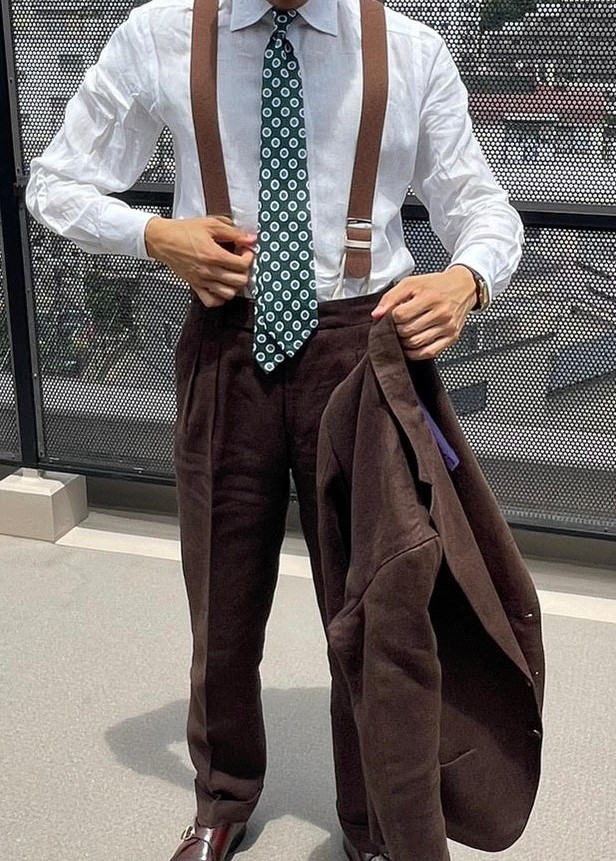
Related article:


However, the ease of wrinkling also means wrinkles release quickly.
Simply spraying with water and hanging it indoors will smooth them out in no time.
For example, when traveling, a linen shirt may come out of your suitcase wrinkled—but after a light mist and a few hours hanging in a hotel room, it looks crisp again.
Even after washing, if you minimize spin-drying and smooth it out while hanging, it can be worn without ironing.
Of course, ironing is an option—but since wrinkles return quickly, I usually skip it even when dressing smartly.
Whether you see wrinkles as a drawback is subjective—but for me, it means linen is essentially no-iron.
If wearing a tie, you might just iron the collar.
This may sound biased, but linen is simply very practical.
Do Cotton-Linen Blends Eliminate Each Other’s Weaknesses?
So what happens when you blend cotton and linen?
Does linen solve cotton’s post-wash wrinkling?
The answer is no.
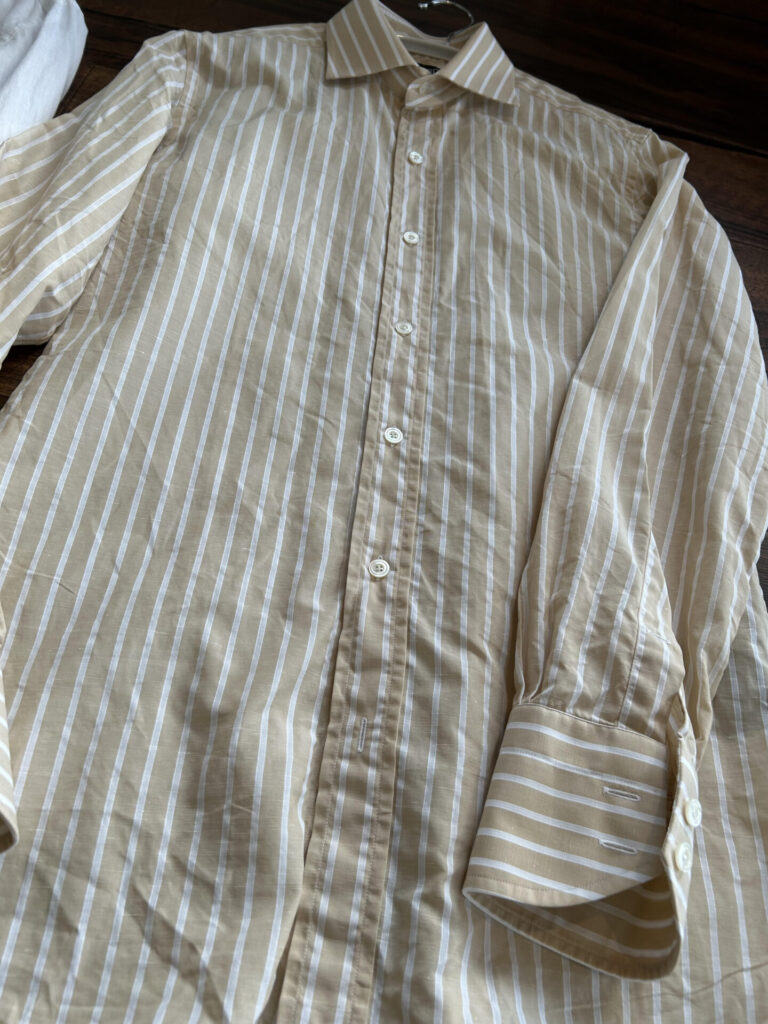
Cotton remains dominant, and wrinkles do not release easily.
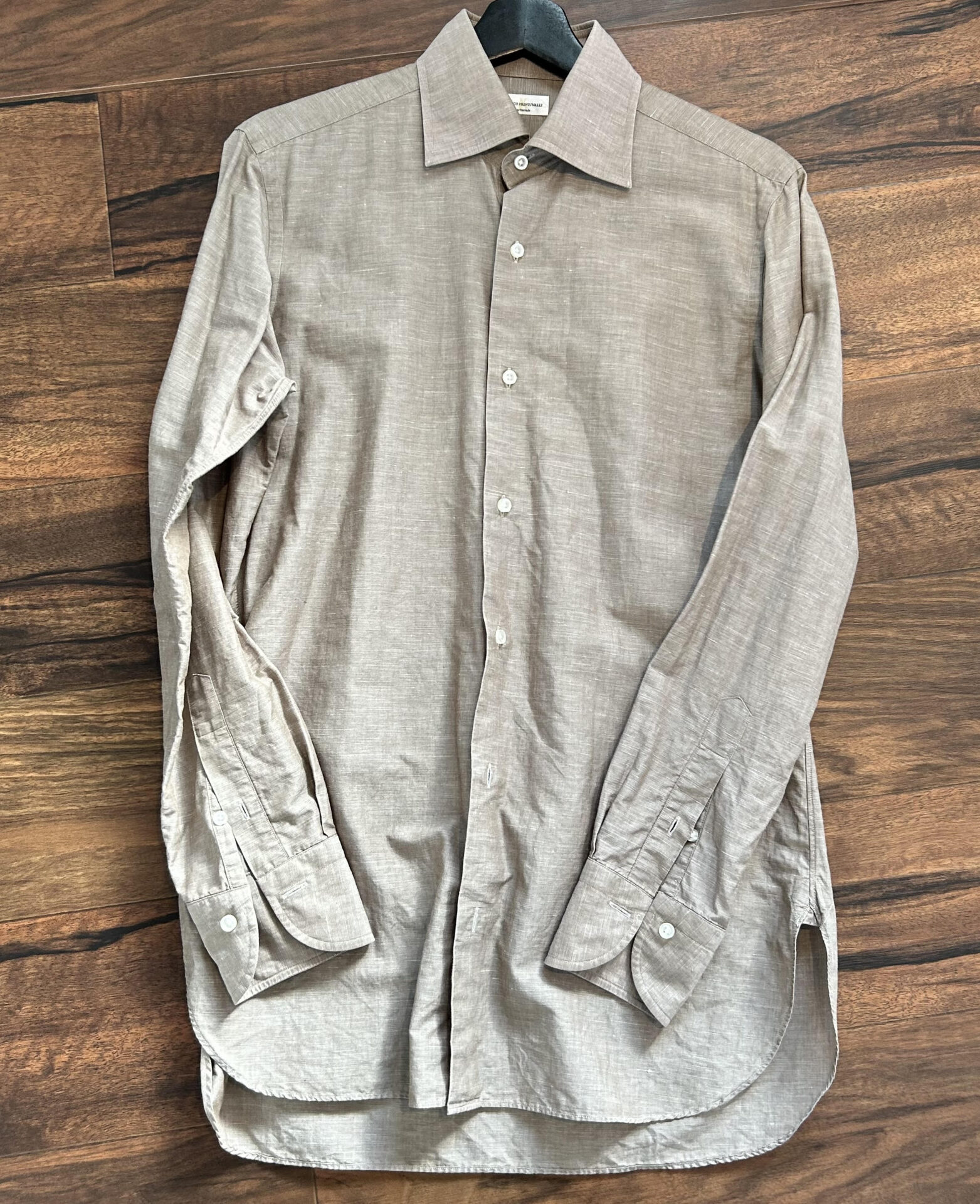
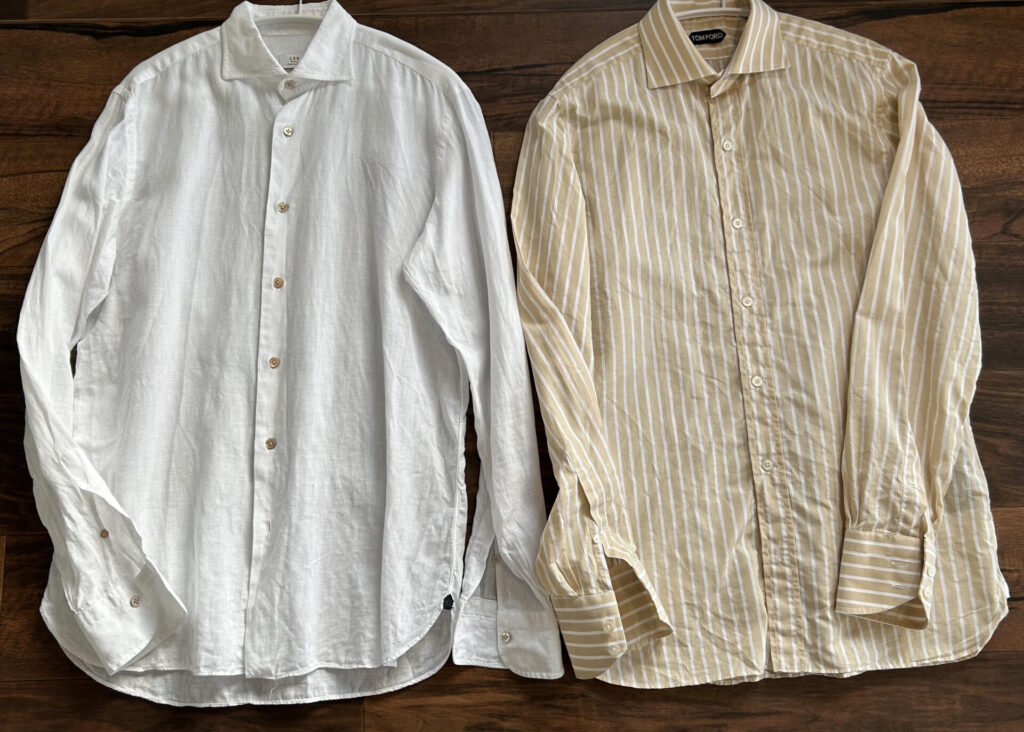
This shirt was lightly spin-dried and carefully stretched before hanging, yet it still shows the kind of tired wrinkles typical of cotton.
With 100% linen, wrinkles still appear—but they look more natural and less worn-out.
Now, does cotton reduce linen’s tendency to wrinkle during wear?
Again, the answer is no.
While it wrinkles slightly less than pure linen, it still wrinkles more than pure cotton.
In other words, neither material successfully compensates for the other’s weaknesses.
Do They Enhance Each Other’s Strengths?
What about the advantages?
First, comfort—one of cotton’s strengths.
This remains unchanged. Linen is also comfortable, so there’s no downside here.
Second, cotton’s formal appearance (especially poplin).
This is mostly preserved, depending on the blend ratio.
However, there is a subtle shift.
Linen’s natural irregularities and thicker fibers introduce a slightly more casual feel.
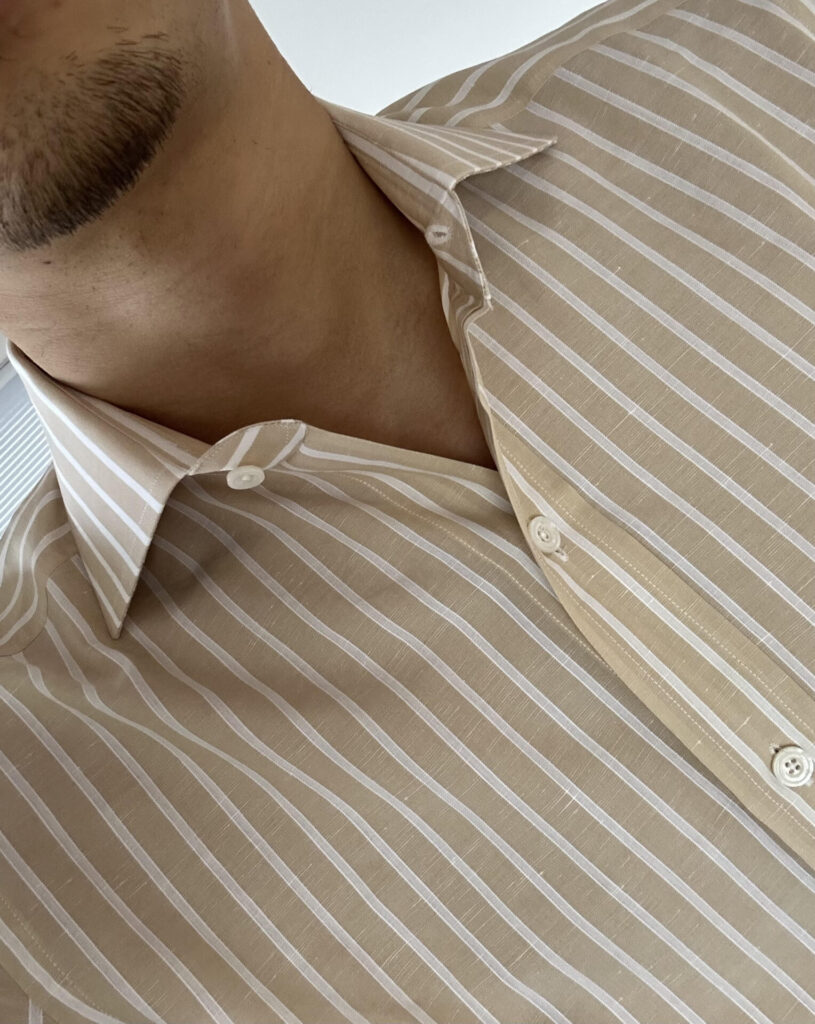
So cotton’s strengths are either maintained (comfort) or slightly reduced (formality).
As for linen’s strengths—durability, quick drying, and wrinkle recovery—all are weakened when cotton is introduced.
In short, the strengths are at best preserved, but often diminished.
Conclusion: No Real Benefit to Cotton-Linen
It fails to eliminate weaknesses and weakens strengths.
Unfortunately, that’s the reality.
My Personal Experience
I own two cotton-linen shirts.
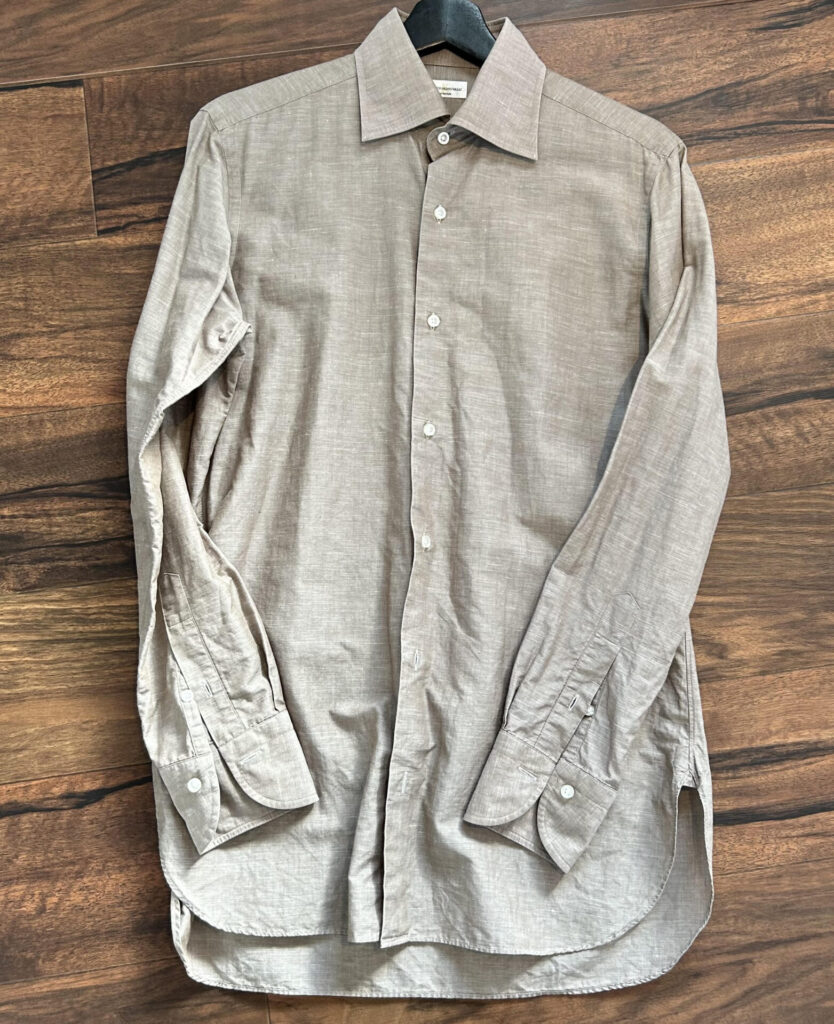
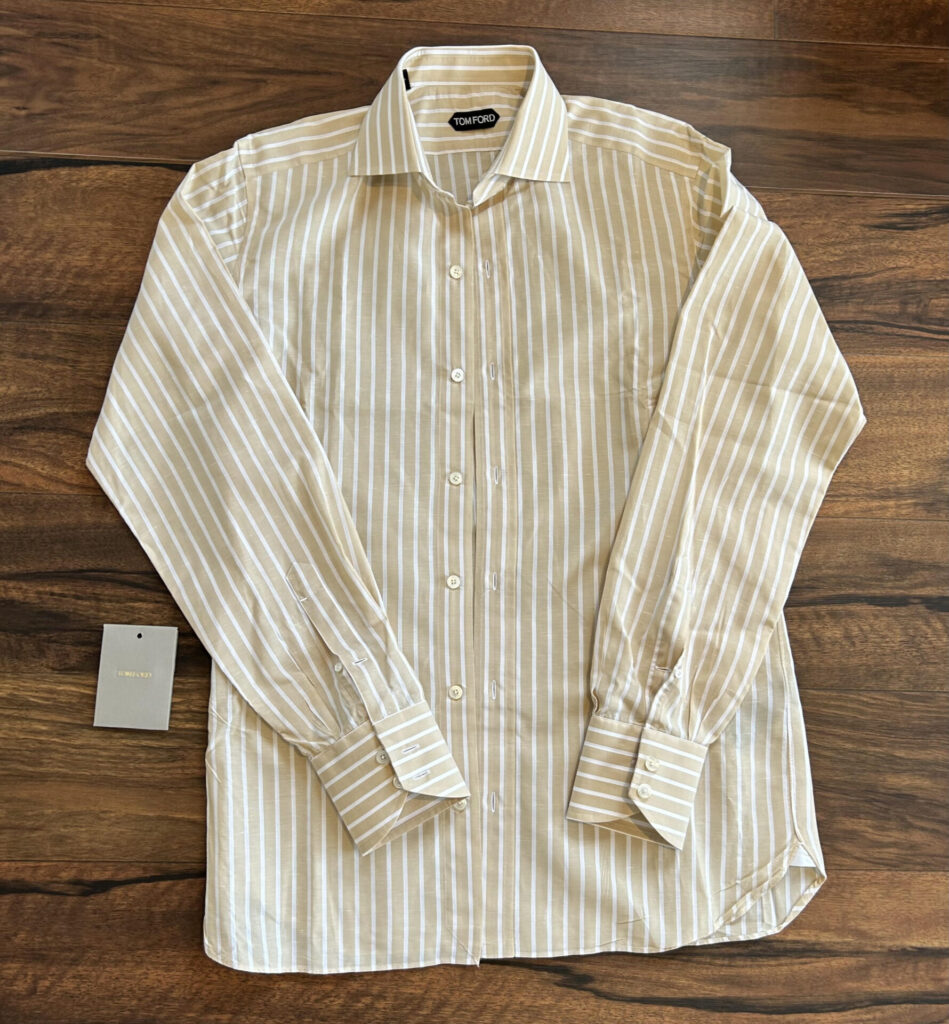
The blends are 66% cotton / 34% linen and 71% cotton / 29% linen.
Both are comfortable to wear, but I wish they were either fully cotton for a more formal look or fully linen to maximize its strengths.
I initially thought they might be useful for achieving a slightly more casual look than pure cotton—but even 100% linen can achieve that balance with proper ironing.
Also, while 100% cotton works year-round, adding linen can make the shirt feel slightly out of place in winter.
In the end, I prefer either 100% cotton or 100% linen.
If you’ve found a real advantage to cotton-linen shirts, I’d genuinely love to hear about it.
(Update: I later reconsidered one point. Rather than making a shirt feel “too summery,” the addition of linen can add subtle texture while maintaining elegance, making it suitable for pairing with textured winter fabrics like flannel or tweed. So my earlier claim that cotton-linen has “no advantages” may have been a bit premature.)



コメント