Hello, I’m Mr. Linen.
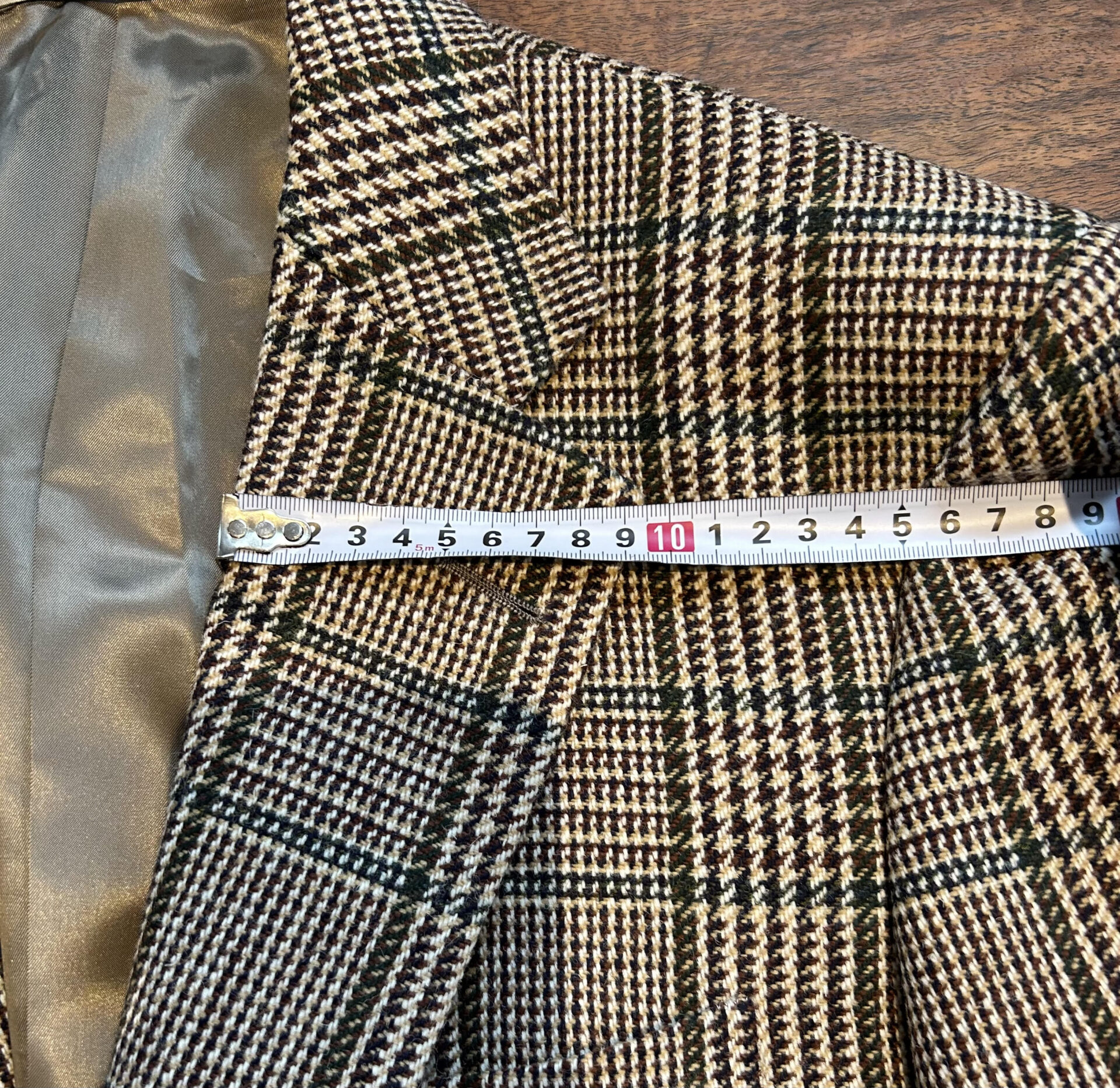
Today, I’ll be exploring the width of the lapel—the face of a jacket (the folded part of the collar).
As you may know, lapels come in a wide range—from very narrow to very wide—and are one of the elements most influenced by trends and changing times.
The philosophy of this blog is “classic.”
I aim for a timeless style that is not affected by trends.
Part of it is the idea that a man with a consistent style looks good. But more importantly, I simply find it wasteful when clothes become unwearable just because trends have changed. That’s why I prefer classic style.
Ideally, clothes you buy in your 20s should still be wearable in your 60s. That way, you truly get your money’s worth.
In this article, I’ll explore the most standard and classic lapel width.
How to Measure Lapel Width
Even when we talk about lapel width, people often interpret the measurement differently.
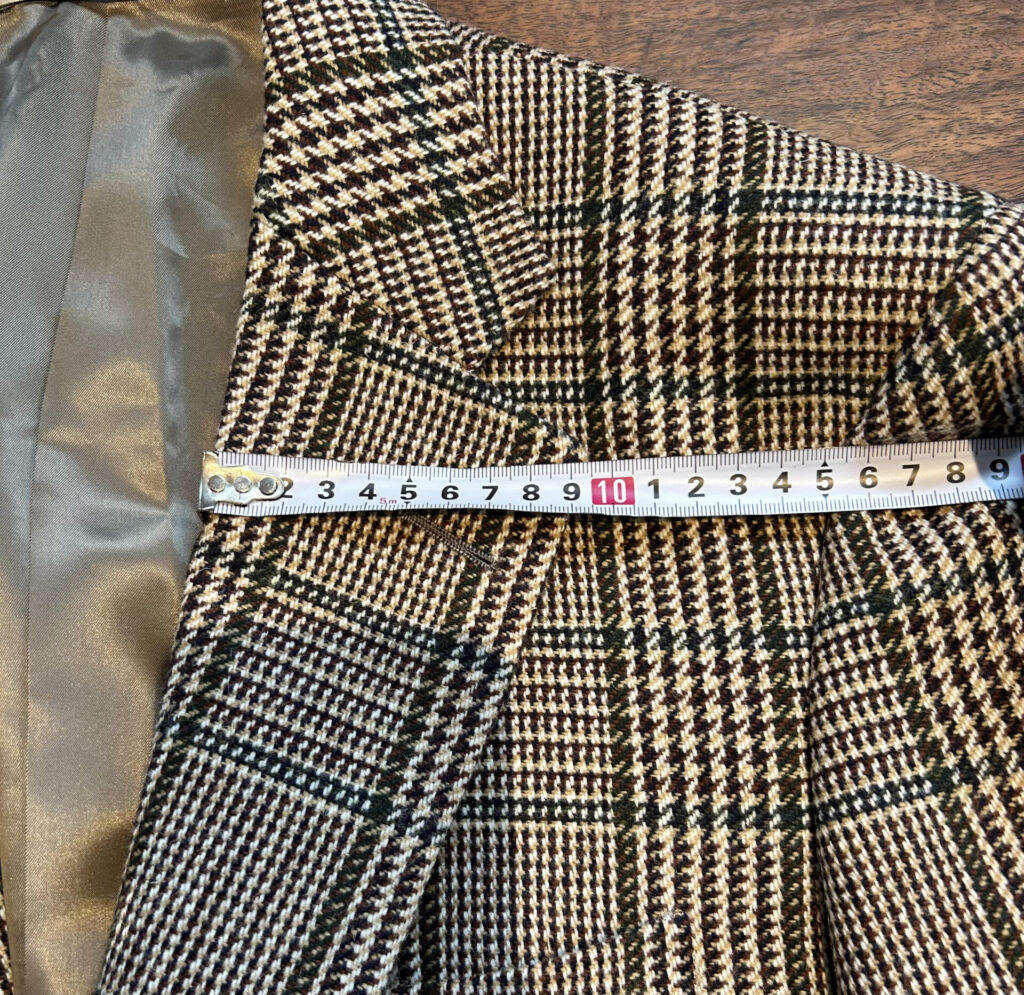
Is it the length measured horizontally (parallel to the ground) from the peak of the lapel to the outer edge?
Or is it the length measured perpendicular to the lapel line, up to the peak?
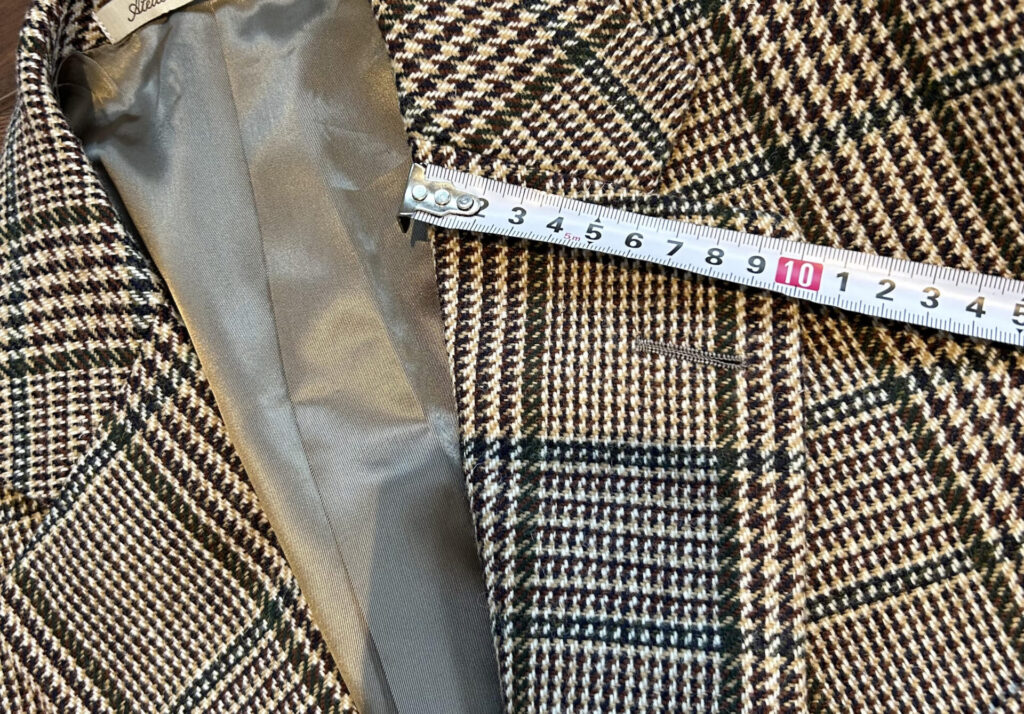
Even for the same jacket, the measurement changes depending on the method used.
There doesn’t seem to be a single “correct” method.
So when discussing lapel width, it’s important to clarify exactly how it is being measured.
Single vs Double-Breasted Jackets
Jackets are broadly divided into single-breasted and double-breasted styles. Generally, double-breasted jackets look more balanced with slightly wider lapels than single-breasted ones.
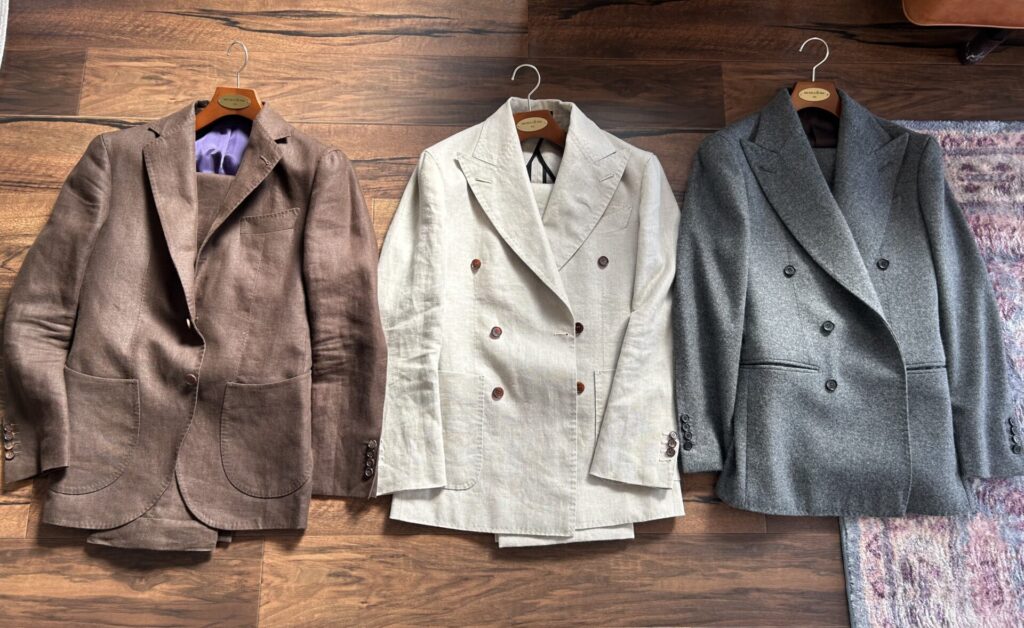
Double-breasted jackets have a heavier, more structured impression, which likely explains why wider lapels suit them better.
Specific Measurements
Because there are multiple ways to measure lapel width, discussing it strictly in numbers (e.g., centimeters) requires caution.
Different methods can easily create a difference of about 0.5 cm (0.2 inches), and even that small difference can significantly affect the visual impression.
The late Masakatsu Ochiai wrote that a classic lapel width for single-breasted jackets is 9–10 cm (3.5–3.9 inches).
Hiroto Takeuchi of Atelier BERUN suggests 8.5–9.5 cm (3.3–3.7 inches).
Lapel: Small Detail, Big Impact | Atelier BERUN
Considering the differences in measurement methods, it may be reasonable to interpret the classic lapel width more broadly as 8.0–10.5 cm (3.1–4.1 inches). Still, expressing it purely in numbers may not be the best approach.
Differences Based on Body Type
Both experts referenced above provide a range rather than a fixed number, likely because body proportions vary from person to person.
Height, shoulder width, and face size all influence what looks balanced.
In my view, the most important factor influencing ideal lapel width is its relationship with chest width.
If your chest is broader, a wider lapel will generally create better balance.
The Middle of Chest Width Is Classic
I’m not sure if “chest width” is a standard term, but here’s what I mean:
The horizontal distance (parallel to the ground) from where the lapel starts, passing through the lapel peak, to where it reaches the sleeve.
For single-breasted jackets, it seems that many classic dressers favor a lapel width that is around the midpoint—or slightly narrower—relative to this chest width.
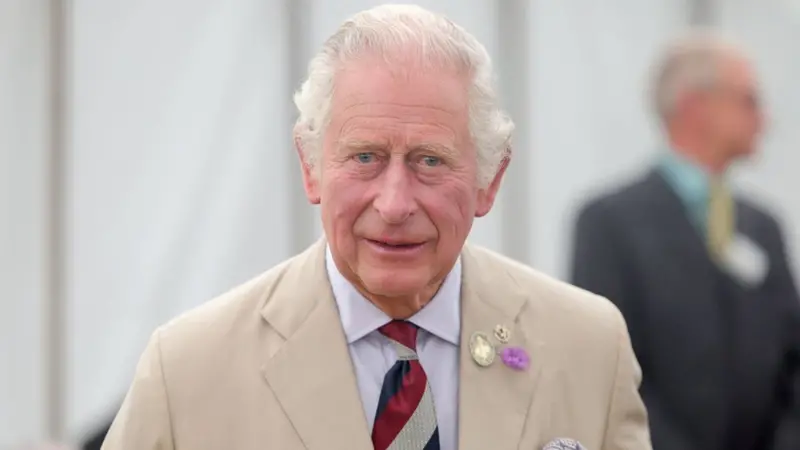
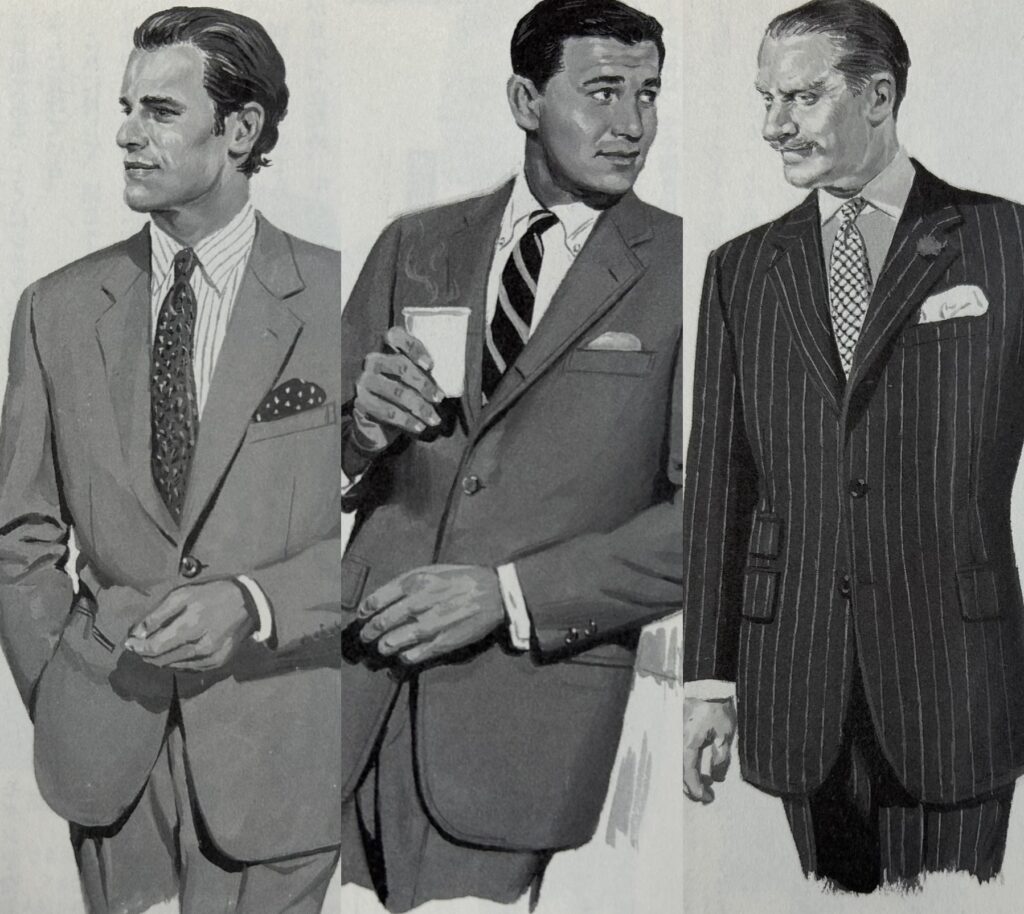
In recent years (around 2024), the trend seems to lean toward the midpoint to slightly wider than the midpoint.
Also, compared to British tailoring, Italian tailoring tends to favor slightly wider lapels.
If asked what the most classic width is, I don’t believe there is a single correct answer. However, a lapel width that sits right in the middle—neither too wide nor too narrow—may be the safest and most timeless choice.
This is because the midpoint avoids giving either a “too narrow” or “too wide” impression, making it the least likely to feel visually off-balance.
Just like human faces—people tend to find symmetry beautiful, and any imbalance creates a sense of discomfort.
For double-breasted jackets, going slightly beyond that midpoint—just a bit wider—tends to work best.
Conclusion
For single-breasted jackets, my conclusion is that the most classic lapel width sits right at the midpoint of the chest width (and slightly wider for double-breasted jackets).
That said, Yukio Akamine, a highly respected figure in classic menswear, is known for wearing relatively wide lapels. From what I’ve observed, his jackets often go beyond the midpoint of chest width.
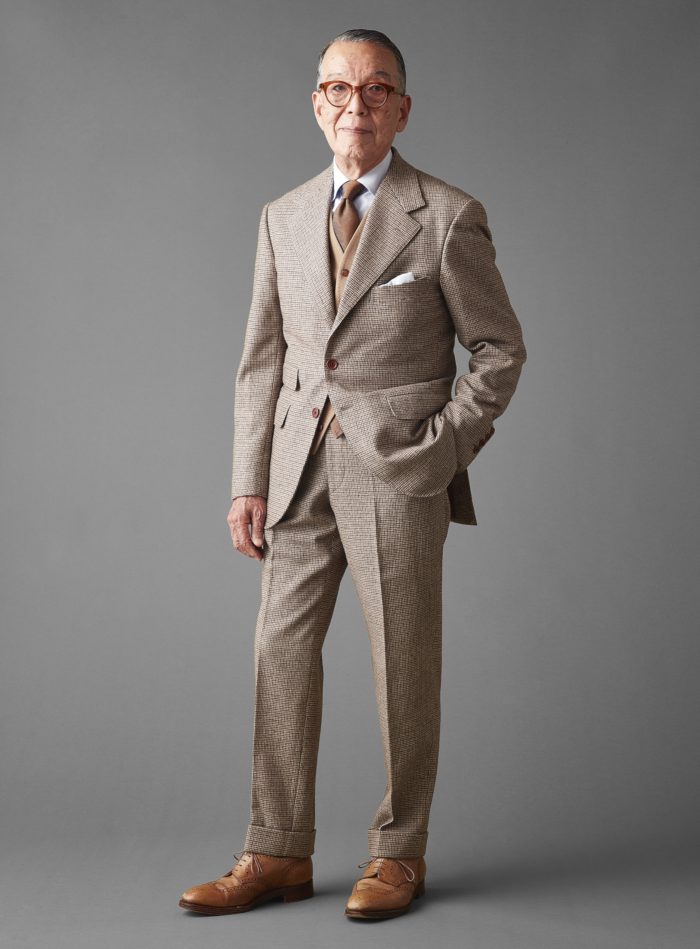
So does that mean he is not classic? Perhaps you could argue that.
But someone like him, who fully understands classic style and has established his own identity, can wear it convincingly.
If I were to wear the same wide lapels, it might look like I’m trying too hard or imitating someone else’s style.
That’s because I haven’t yet made wide lapels truly my own.
As for me, I want to build my own style over time, so I plan to stick with the most neutral and balanced option—the midpoint of chest width.
I do own a double-breasted jacket with quite wide lapels. While I think it looks great as an object, I haven’t fully grown into it yet. Over the coming decades, I hope to keep wearing it and eventually carry wide lapels with confidence.


コメント