Hello, I’m Mr. Linen.
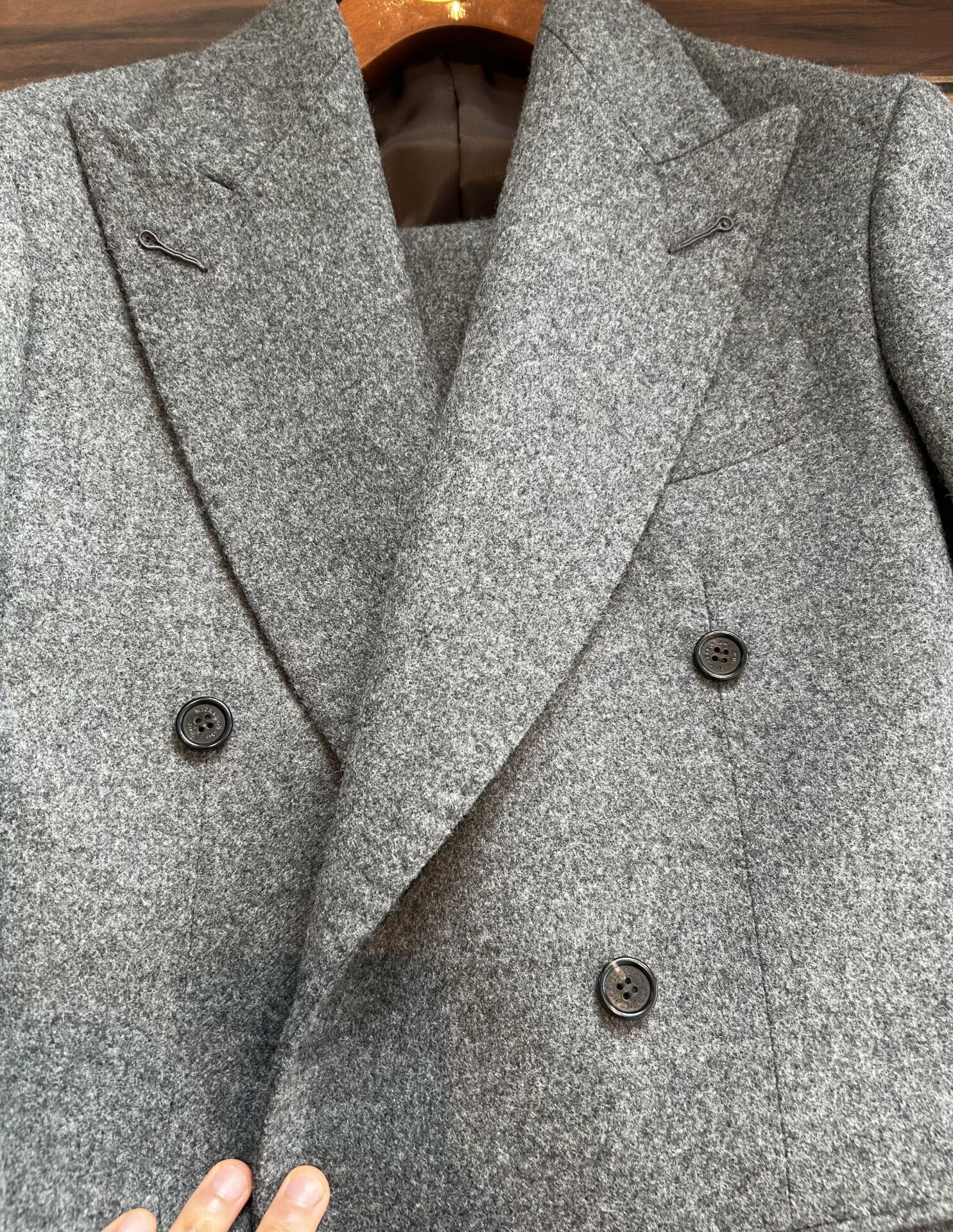
The lapel of a tailored jacket is essentially its face.
There are pointed lapels known as peaked lapels, and more standard, non-pointed ones called notched lapels.
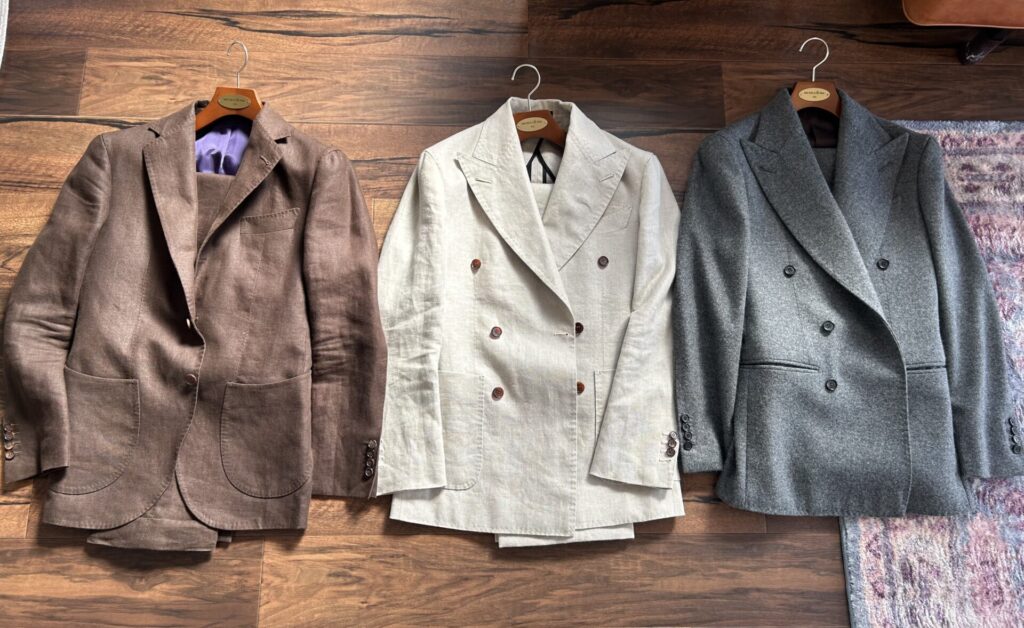
Not only the shape of the tip, but also the width varies. Narrow lapels feel more modern, wider ones often feel more Italian, and a moderate width is considered classic.
The height where the lapel starts—also known as the gorge line—also changes the overall impression.
In this article, however, I want to focus not on the tip, width, or height, but on the curve of the lapel.
What Is a Curved Lapel?
What exactly does “curved lapel” mean?
Take a look at the photos below.
The first shows a straight lapel, while the second shows a curved lapel.
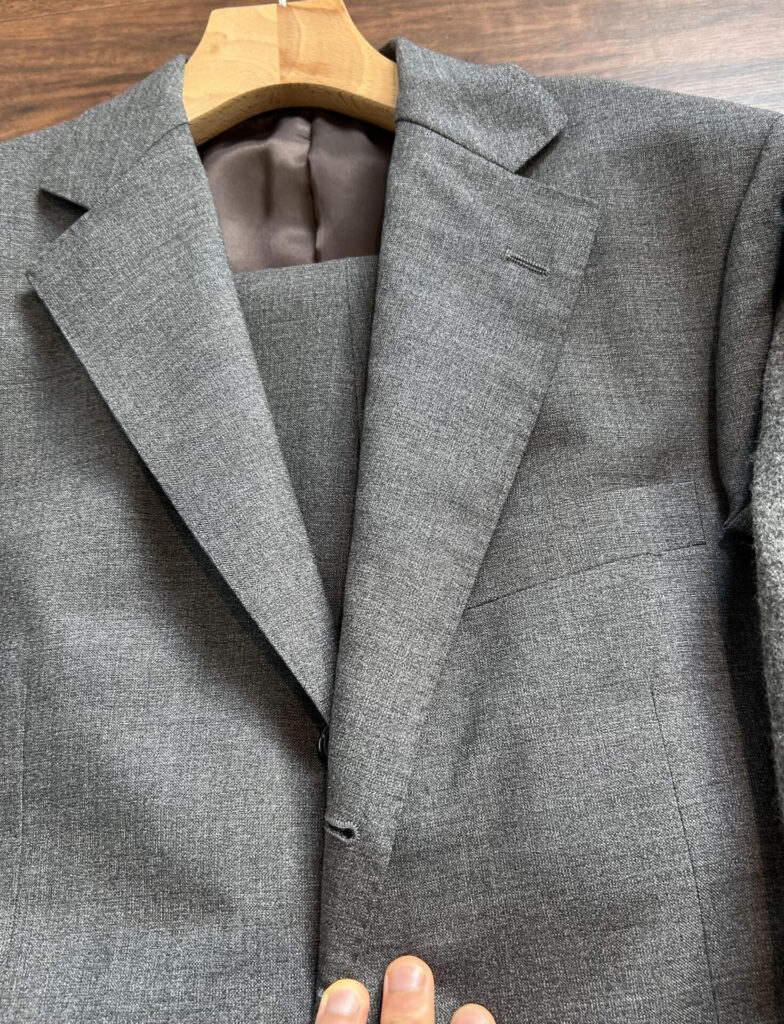
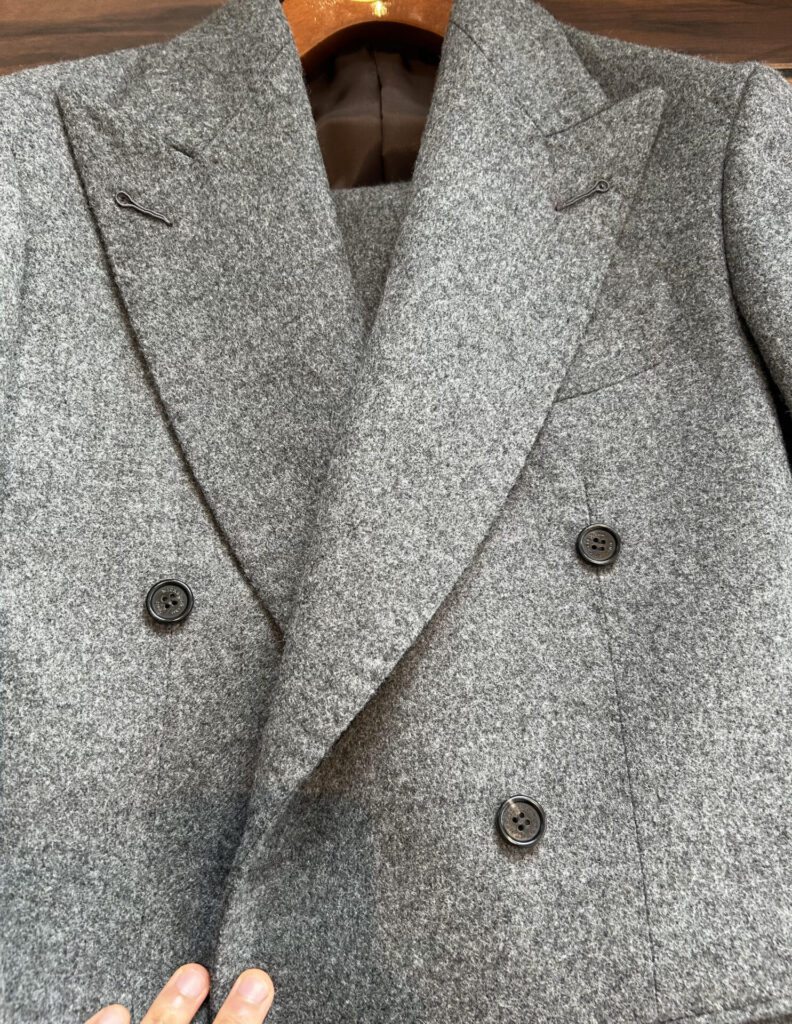
A lapel that curves outward like a rounded shape is often called a “bellied lapel.”
As the name suggests, it comes from the word “belly.”
According to fashion terminology sources, a bellied lapel is a style popularized in Italy in the 1970s, characterized by a large, flowing curve. It requires advanced craftsmanship and is still used in coats and tuxedos today.
On the other hand, there are also lapels that curve inward.
I’m not sure if there is a widely accepted term, but they look like this:
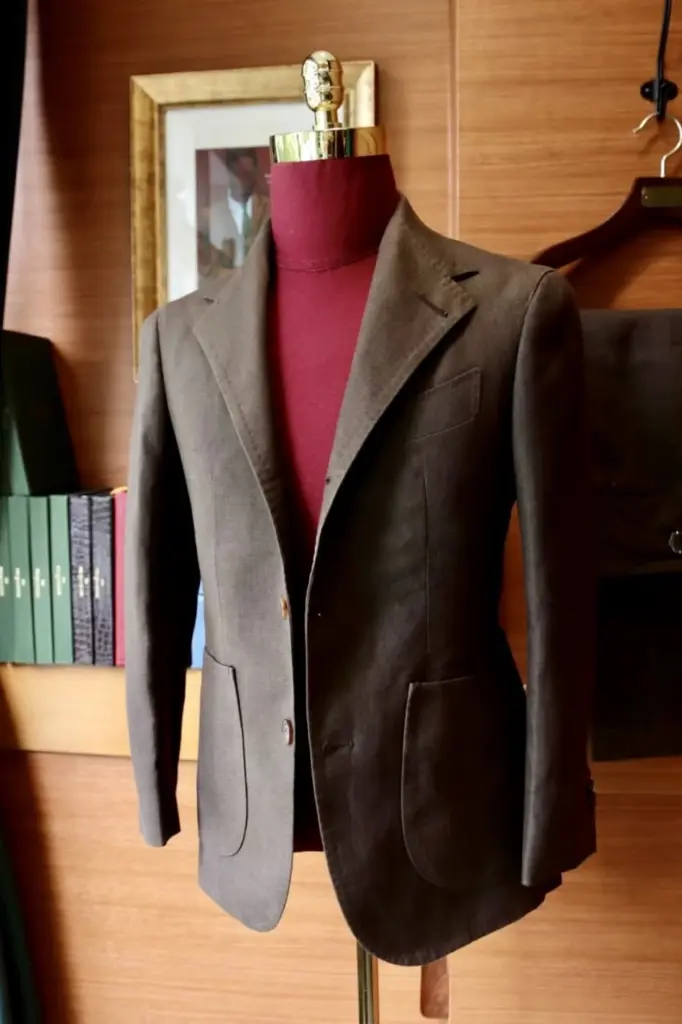
There is a general idea that straight lines feel artificial, while curves feel natural—and curved lapels are said to be achievable only through handwork.
It makes sense when you imagine cutting fabric little by little with scissors to create a smooth curve.
The degree of curvature varies—from very pronounced curves to subtle ones that are almost straight.
Peaked vs Notched Lapels
Curved lapels tend to pair particularly well with peaked lapels.
Notched lapels can also be curved, but peaked lapels have a longer edge line, which makes the curve appear more fluid and elegant.
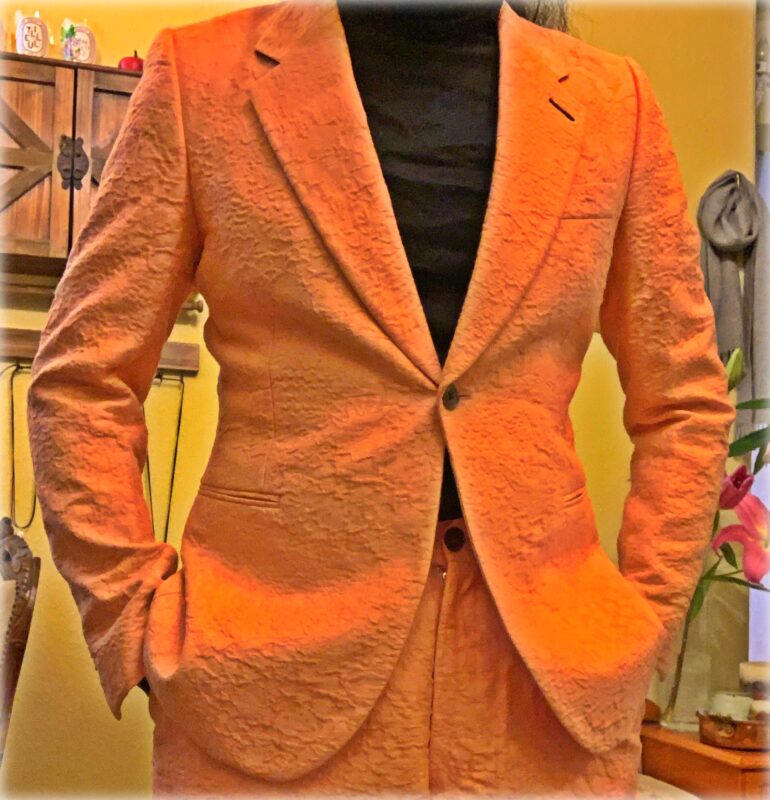
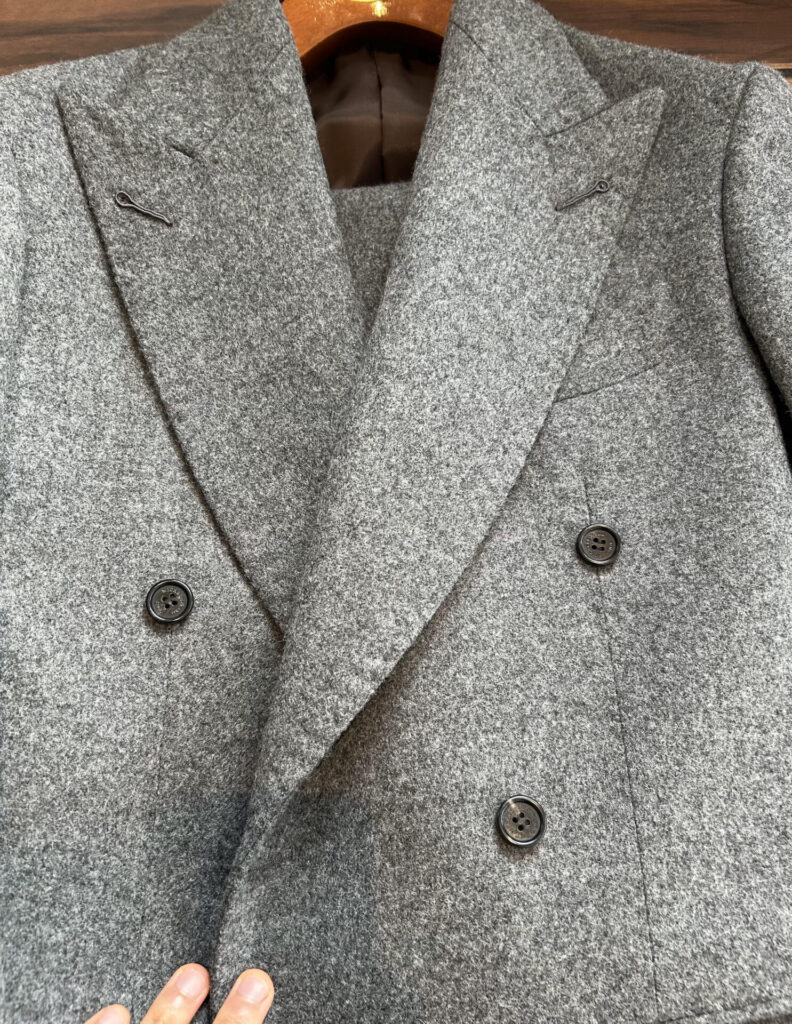
Jackets come in single-breasted and double-breasted styles, and most double-breasted jackets use peaked lapels.
That also means curved lapels are often seen on double-breasted jackets with peaked lapels.
Does Curved Mean Luxurious?
Since creating a curved lapel requires handwork, it increases labor costs, which naturally raises the price.
So in that sense, “curved lapel equals luxury” is not entirely wrong.
However, not all high-end jackets have curved lapels.
While it’s rare to see curved lapels on inexpensive garments, curvature is ultimately just one design choice.
Does Curved Mean Italian Style?
As mentioned earlier, curved lapels became popular in Italy in the 1970s.
Even today, you often see Italian men wearing jackets with curved lapels.
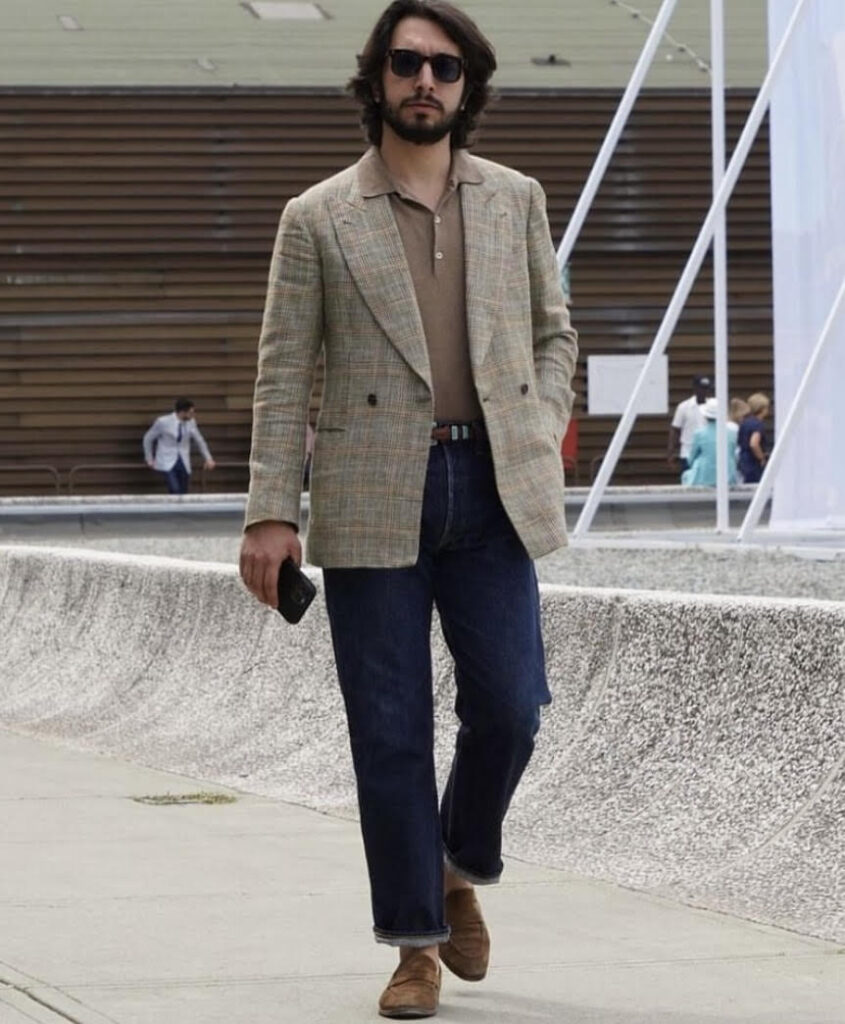
Japanese tailors inspired by Neapolitan style, such as Michele & Shin, also frequently use curved lapels.
So it’s fair to say curved lapels are commonly associated with Italian style.
However, if we look at another major tailoring tradition—British tailoring—curved lapels are also present.
In fact, King Charles himself wears them.
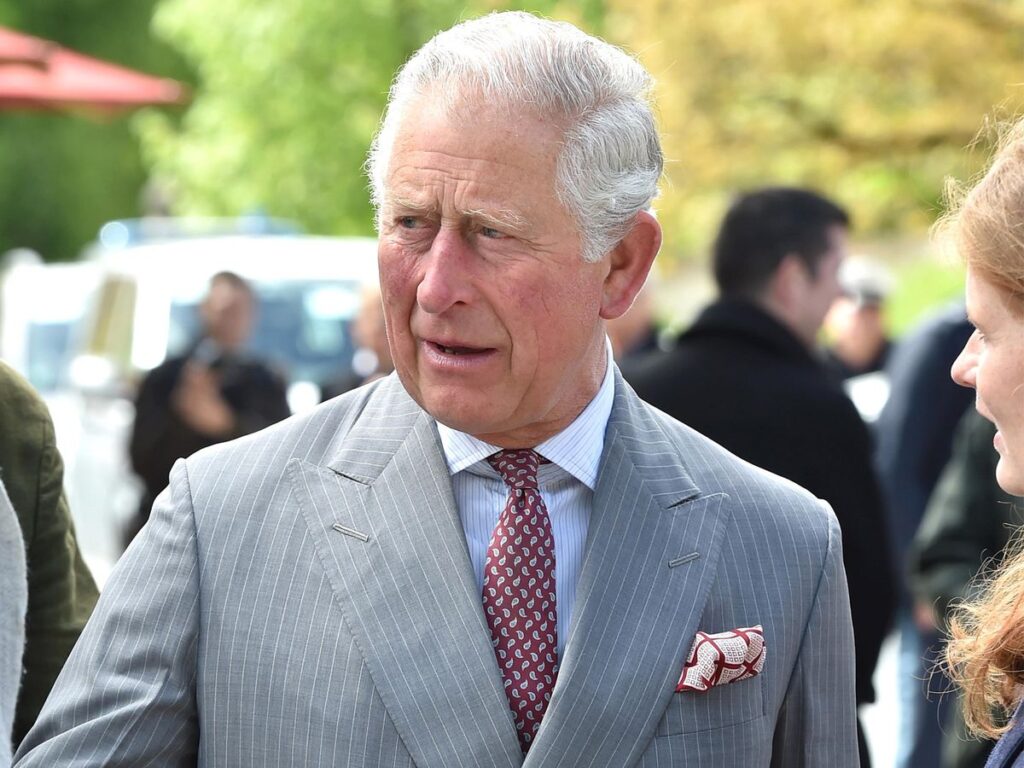
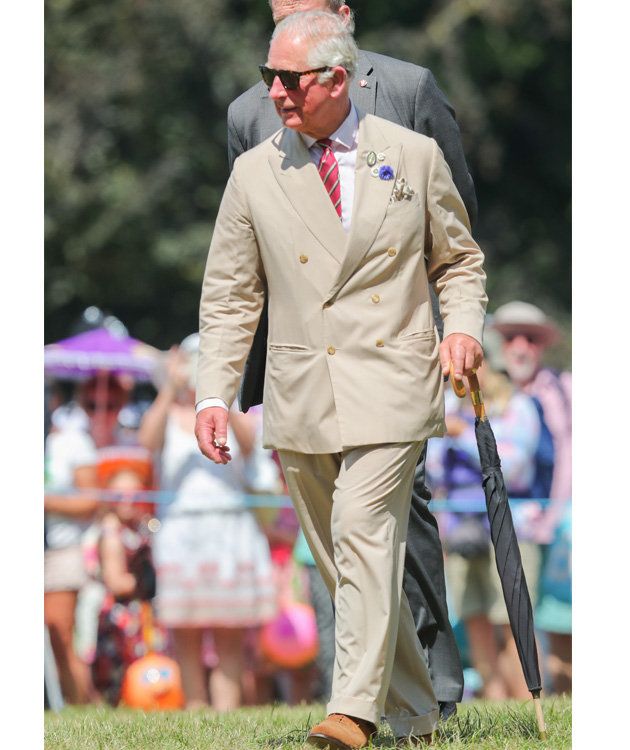
So whether curved lapels are “Italian,” or whether King Charles is simply an exception, I cannot say with certainty.
Are Curved Lapels Classic?
I mentioned that curved lapels are just a design element—but can they be considered classic?
I define “classic” not as “old-fashioned,” but as “of the highest standard.”
From that perspective, curved lapels—which require advanced skill—can certainly be considered classic.
Considering that King Charles, often seen as a benchmark of classic style, wears curved lapels, this idea becomes even more convincing.
That said, moderation is key.
Overly exaggerated curves can feel too showy and deviate from the understated elegance associated with classic British style.
A subtle curve—like the ones worn by King Charles—stays within the boundaries of classic style, in my opinion.
Conclusion
What is a curved lapel?
What makes it appealing?
Is it inherently Italian?
Is it truly classic?
I’ve shared my personal thoughts on these questions.
In my own experience, when I had a suit made by Michele & Shin, I requested curved lapels for a double-breasted jacket—but kept the curve very subtle so it would suit me.
I was very pleased with the result.
That said, I’d also like to try a double-breasted jacket with straight lapels in the future.
I don’t want to stick to just one style—I’d rather explore and refine my own preferences.
Something like this:
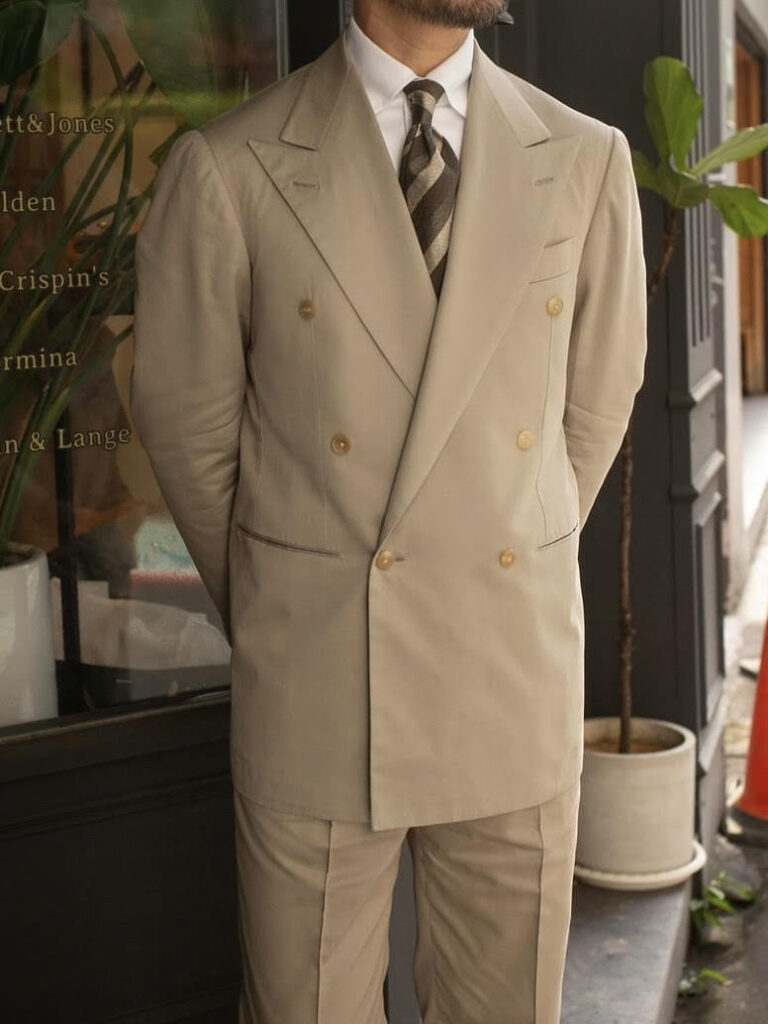
What level of curvature do you prefer?


コメント