Hello.
I’m Mr. Linen.
Does the way a jacket’s lapel roll looks—whether it is flat or has a soft, rounded roll—tell us something about the quality of its construction?
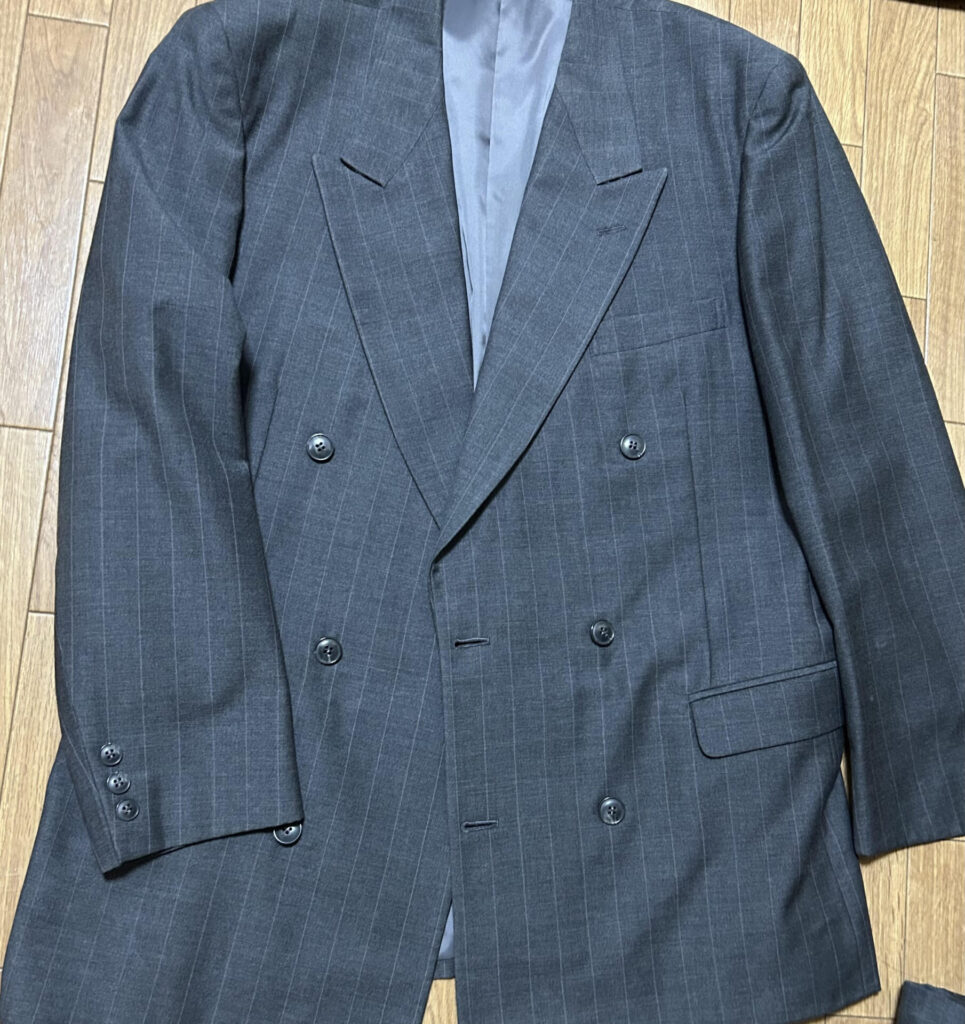
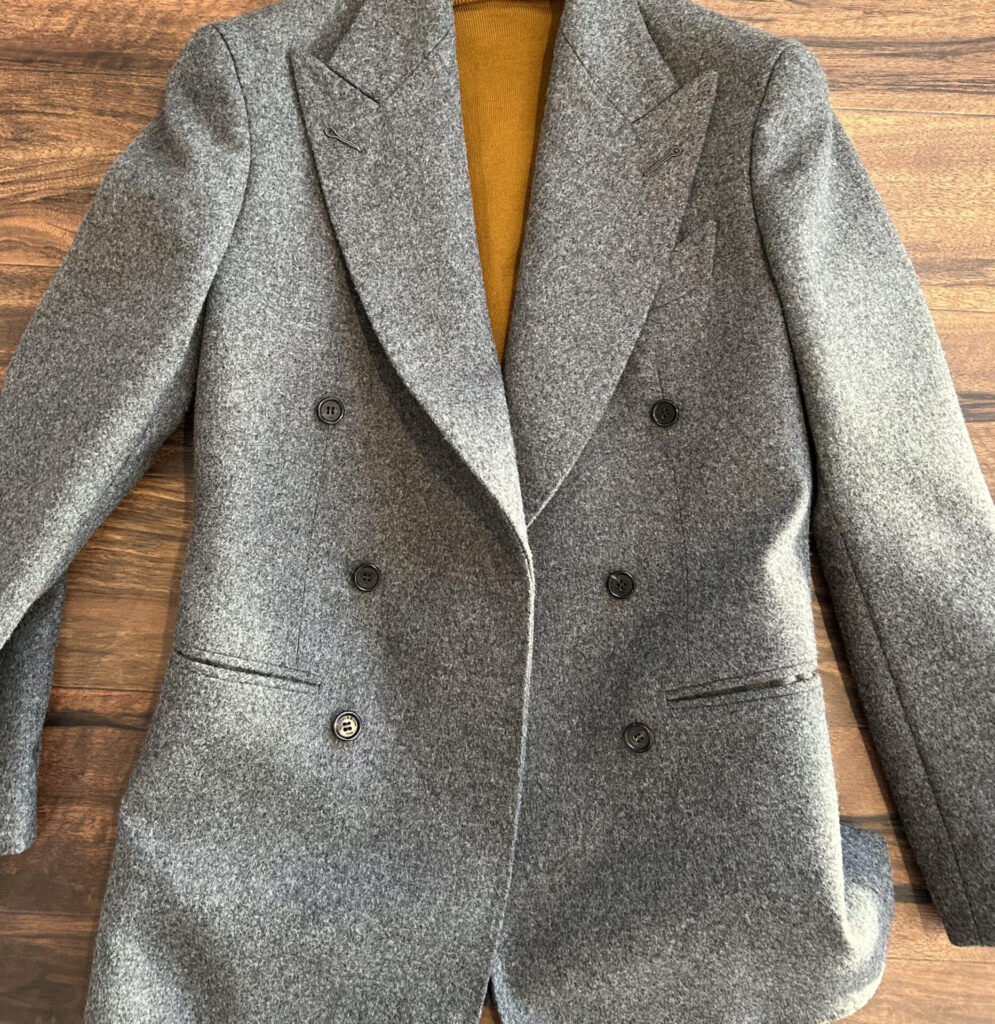
The Michele & Shin blog, written by a tailor in Ginza, Tokyo where I have ordered suits several times, explains it as follows:
“A soft, airy, feather-like lapel can be achieved. To create this look, hand stitching through the canvas, the choice of interlining materials, and the cutting are all important. If there is too much stitching, this softness is lost, resulting instead in a stiff, armor-like appearance.”
I don’t know all the technical details myself, but I do understand that creating a soft and rounded lapel roll is not an easy task.
In other words, I think it is fair to say that a soft, rounded lapel roll can be one indication of high-quality tailoring.
Of course, whether you like a soft lapel roll or not is a matter of personal taste. But personally, I find a jacket especially beautiful when the lapel has a soft, three-dimensional roll.
So I wanted to find a way to make my lapels look fuller and softer, and after giving it some thought, I came up with a little trick.
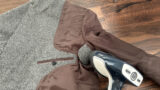
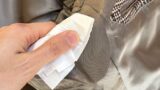
The conventional method, I believe, is to press the underside of the lapel with an iron.
By doing this, even after the lapel is folded over, the fabric and internal structure retain some tendency to spring back into shape, allowing the lapel to maintain a fuller roll for a while.
But there is an even simpler way to encourage a fuller lapel roll—one that requires virtually no extra effort at all.
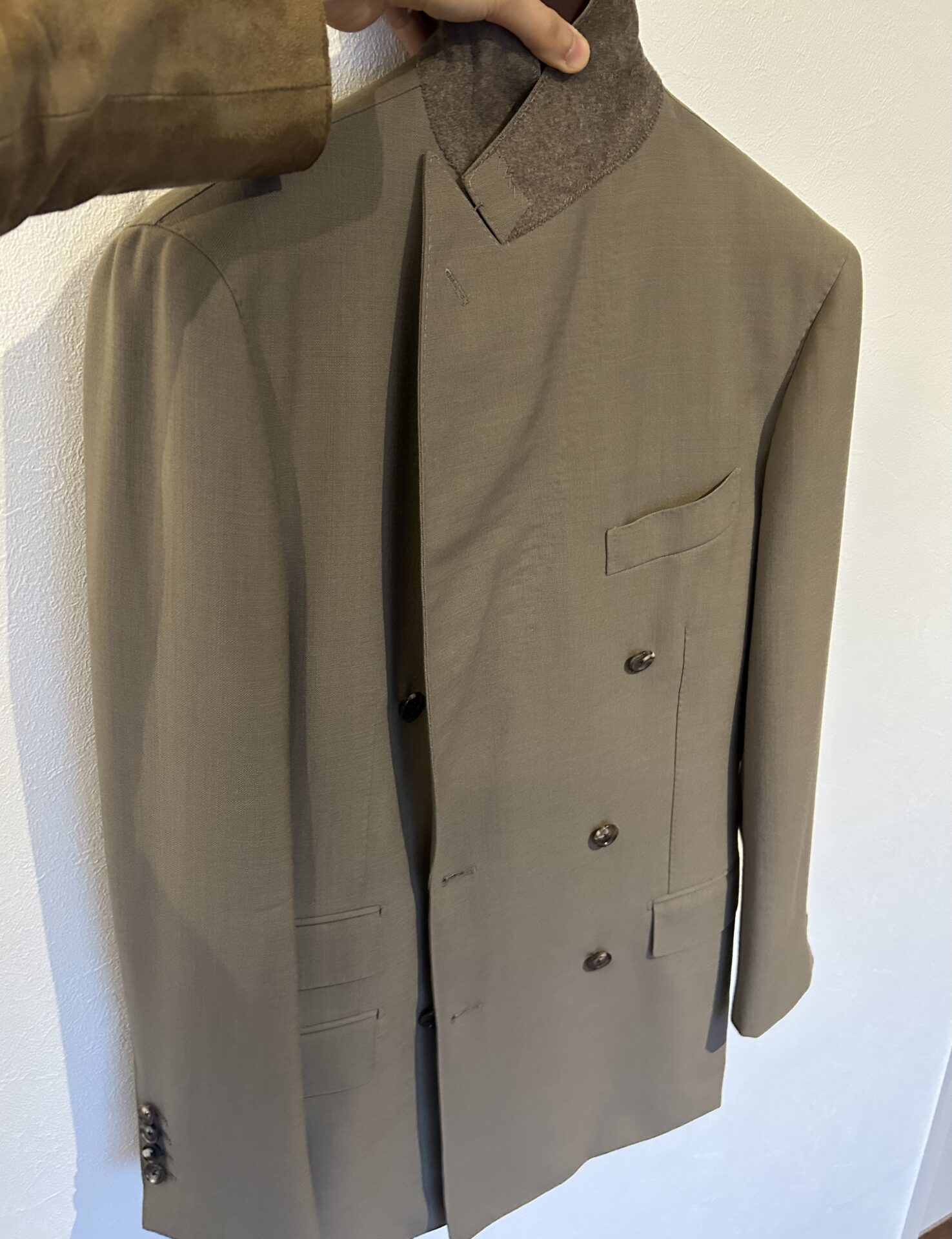
“When hanging the jacket in your closet, leave the lapels standing upright.”

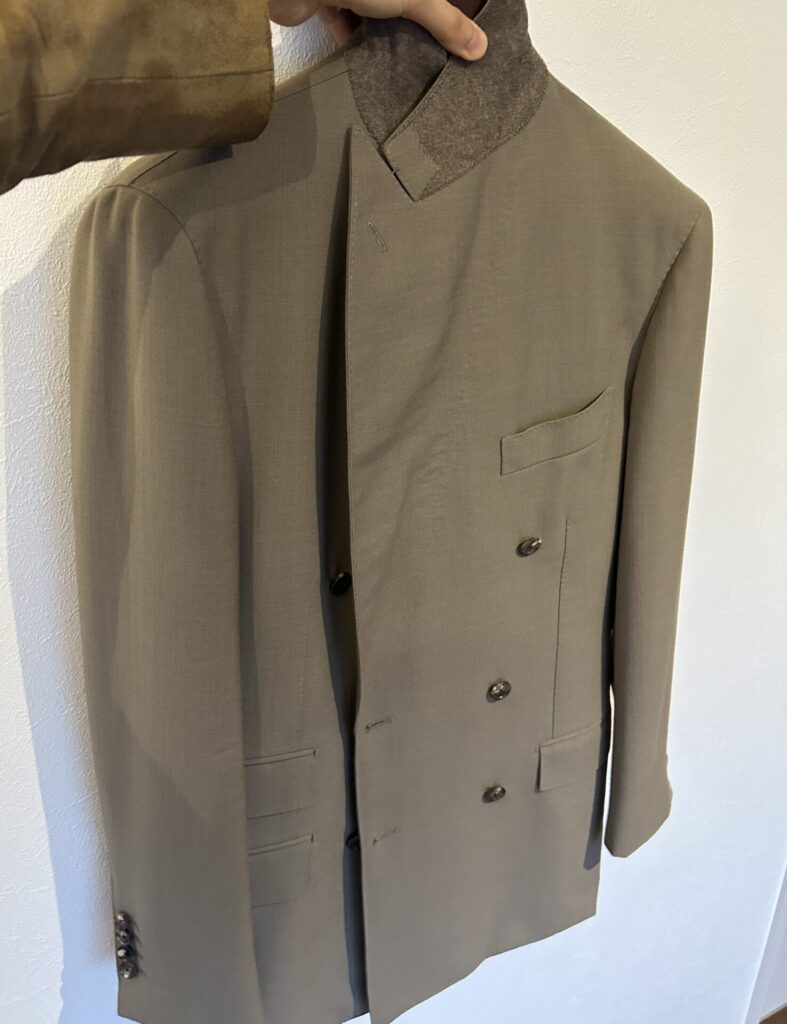
That’s the trick.
By doing this, the upright position becomes the lapel’s “normal” resting position, gradually encouraging it to retain that shape.
When you are wearing the jacket, you could almost think of it as an “emergency situation”: the lapel is being forced down from its normal upright position.
As a result, even while you are wearing the jacket, the lapel still has a tendency to spring upward, creating a softer, fuller roll.
Let’s look at this more concretely.
Suppose you wear one particular jacket twice a week, for 8–12 hours each time. That means the lapel is folded down for a maximum of around 24 hours per week.
In other words, the lapel is lying flat for roughly 1/7 of the week while you are wearing the jacket, but it remains upright for roughly 6/7 of the week while the jacket is hanging in the closet. The upright position therefore becomes its “normal” state.
Speaking of storage, when people put suits and jackets away in a closet, many of us—unless we are lucky enough to have an exceptionally spacious walk-in closet—store our clothes relatively close together.
If you store jackets tightly packed together with the lapels lying flat, it seems likely that the lapels will gradually develop a tendency to stay flat, which isn’t ideal.
If you store them with the lapels standing upright, you don’t have to worry about that.

As part of my regular suit-care routine, I recommend the following:
After wearing a suit for a full day, give the entire suit a light brushing, and restore the center crease of the trousers with an iron while the suit is still fresh from wearing.
Since you already have the iron out, take the opportunity to press the underside of the jacket’s lapels as well. Pressing the underside of the lapel takes less than 30 seconds.
Then hang both the trousers and jacket properly and let them rest and dry overnight.
That way, the next time you wear the suit, you can put on a crisp, well-presented suit in the morning without having to take out the iron again.
If you are wearing a jacket with jeans, for example, and therefore aren’t wearing the matching trousers, there may be no reason to take out the iron at all. In that case, you can simply skip pressing the underside of the lapel and store the jacket with the lapels standing upright. Even this alone is enough to encourage the lapels to develop a fuller roll.
Pressing the underside of the lapel is simply something I consider worth doing when you already have the iron out to press your trousers. It adds virtually no extra work, so why not?
That’s all for today. I hope this little trick is useful.
Thank you for reading.



コメント