I’m Mr. Linen.
Have you ever had a pair of well-worn jeans hemmed, only to find that the newly shortened hem looks completely flat and unfaded compared with the rest of the jeans?
In this article, I’ll show you a simple way to accelerate the fading and wear at the hem only.
The method is almost ridiculously simple: wash only the hem, and wash it a lot.
A Side Story: Why I Decided to Hem My Well-Worn Jeans
Many of you might already know TCB Jeans, a Japanese denim brand known for faithfully reproducing vintage-style jeans.
I think they are a fantastic brand, especially considering that their prices are relatively reasonable for the level of quality. I bought one of their reproduction jeans based on denim styles from the 1920s.
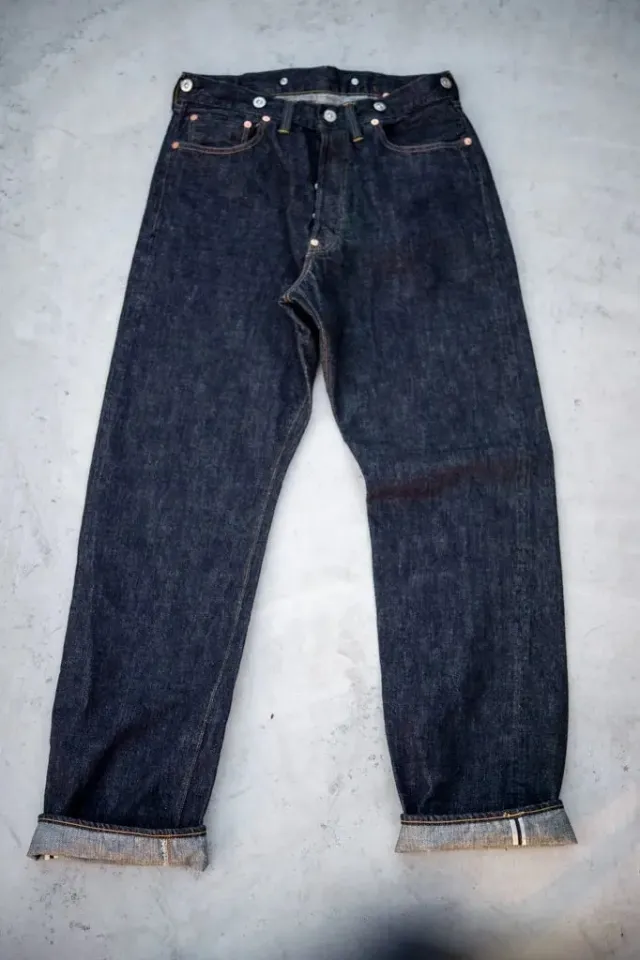
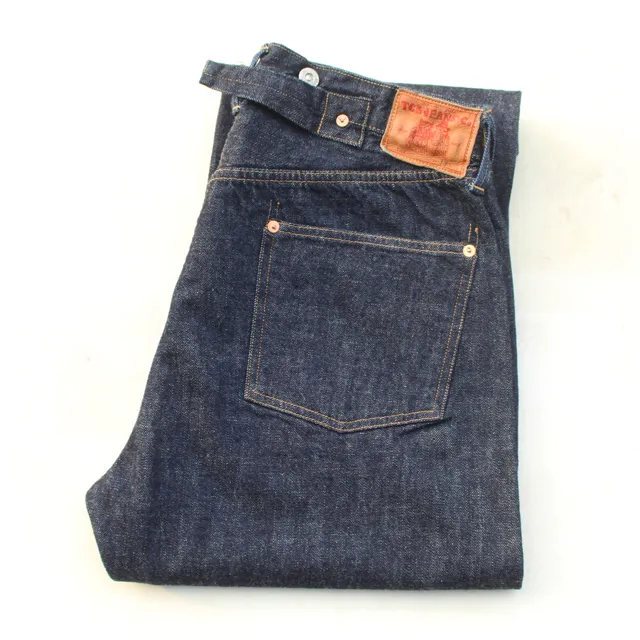
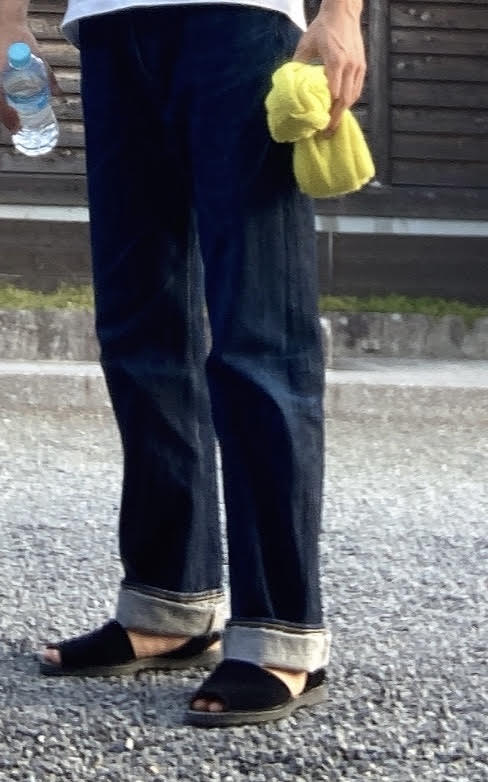
I wore them for 7–8 years from new, with the hems rolled up twice.
Rather than simply folding the hem twice, I first made one long fold of about 15 cm (5.9 inches), and then folded that section in half again.
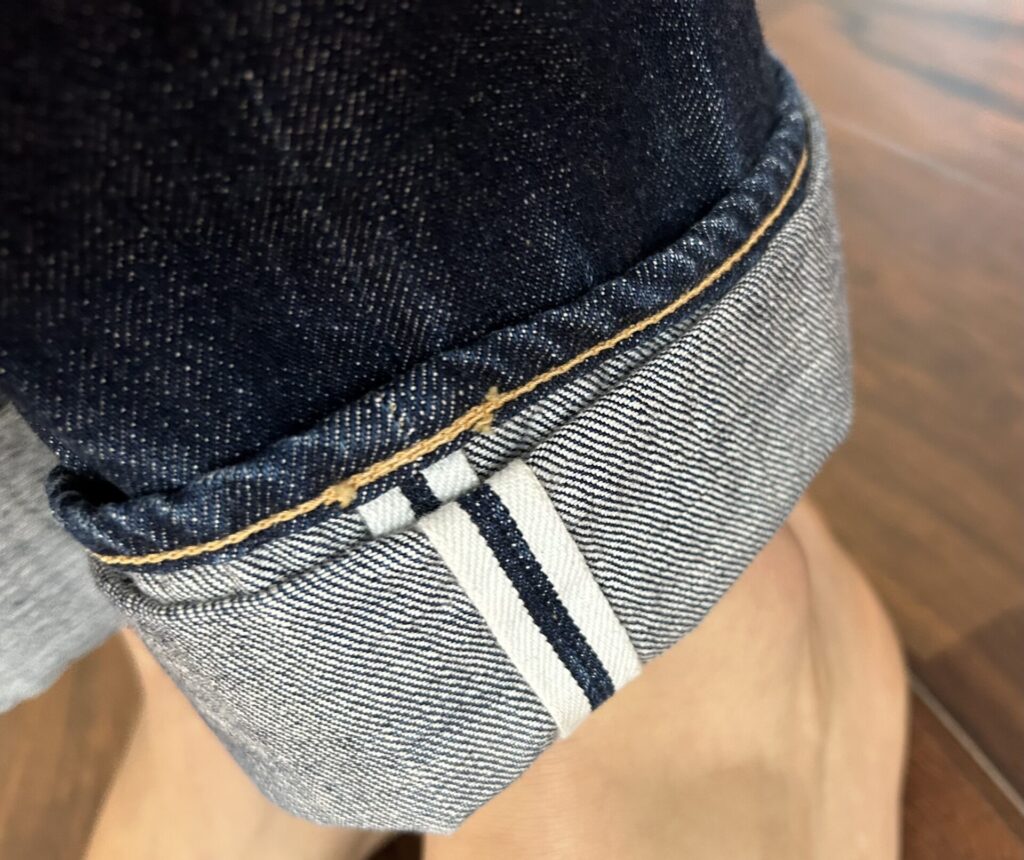
Apparently, this particular way of rolling the hem was originally used to create a fold where cigarette butts could be tucked away. I’ve never even been a smoker, but I copied the technique anyway.
However, once the double roll became part of the look, I gradually felt that it made the jeans too casual and didn’t work very well with tailored jackets. So I decided to have them hemmed.
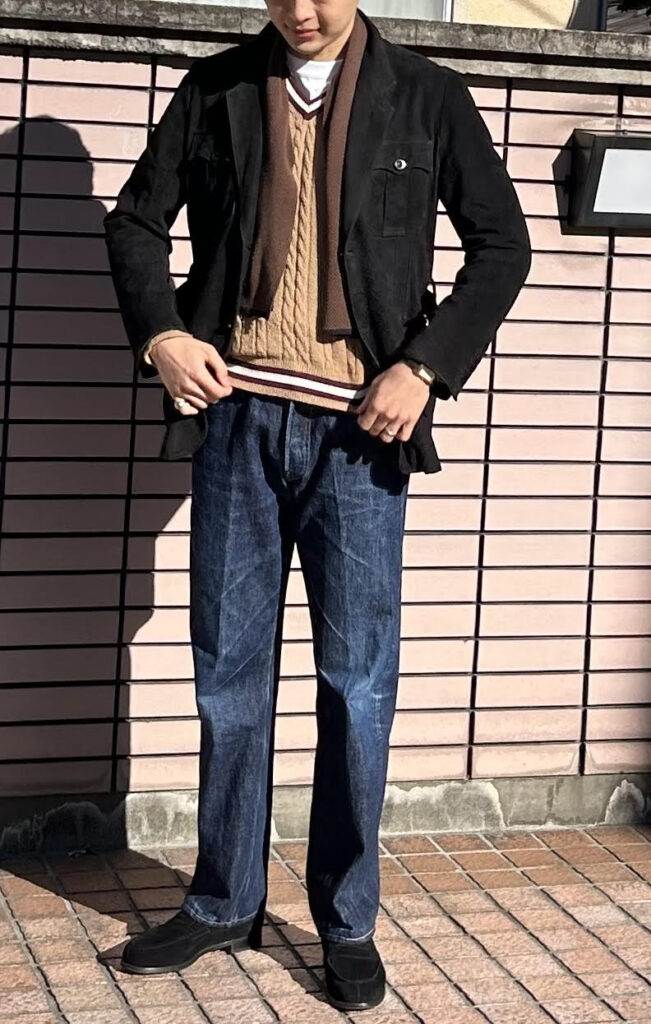
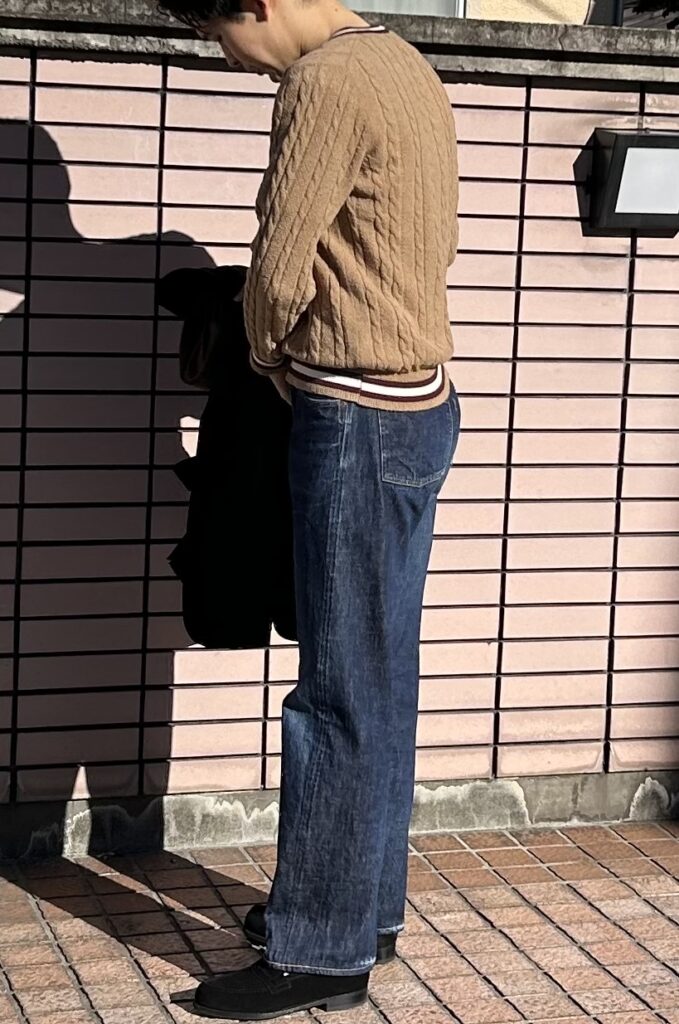
The overall impression changed quite a bit, but I personally think the jeans became less casual and started working much better with tailored jackets.
The silhouette is straight, but the hem is slightly wider than usual, which gives them a somewhat flared appearance.
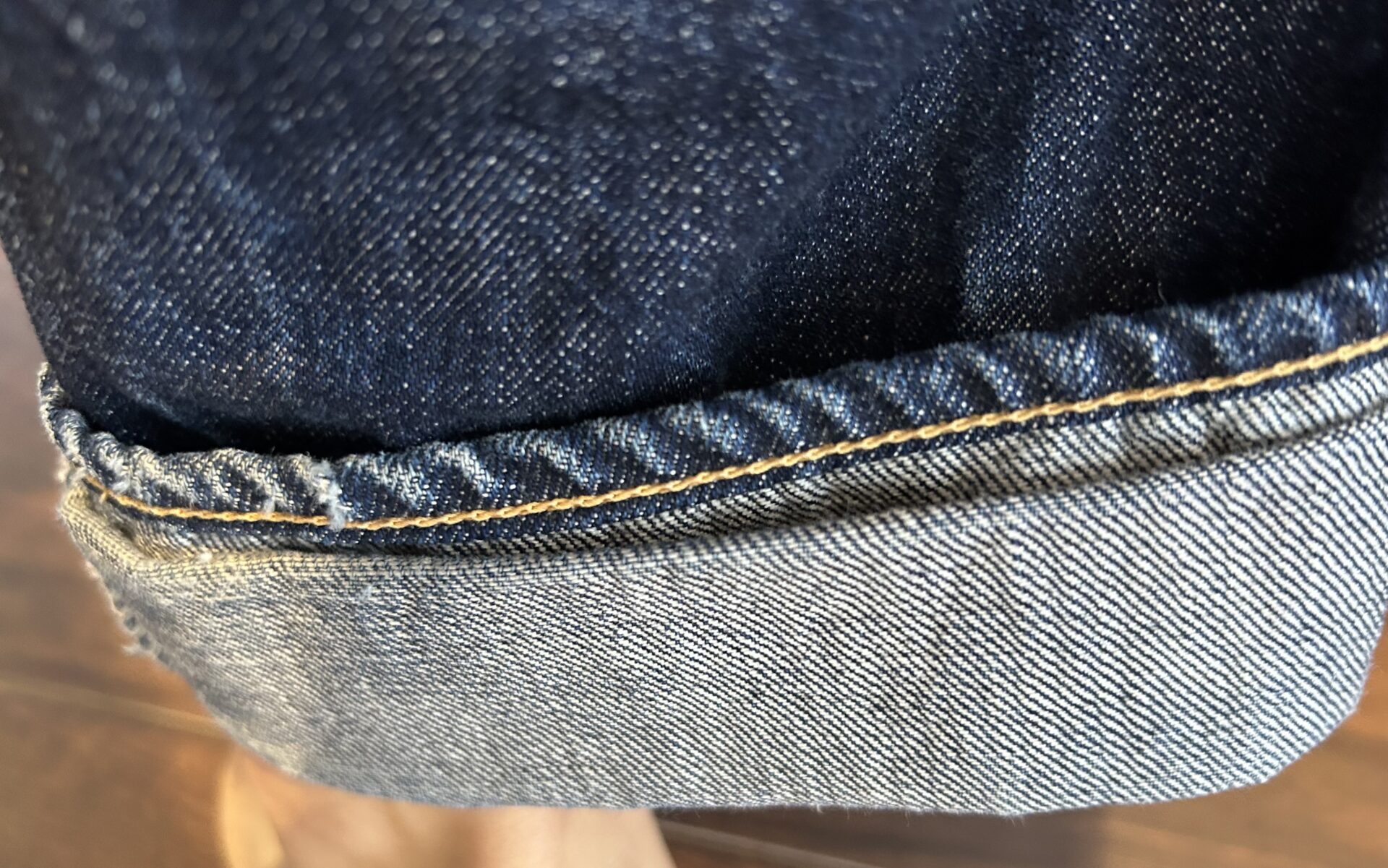
When you hem a heavily worn pair of jeans partway through their life like I did, the areas around the thighs and knees already have plenty of fading and wear, while the newly shortened hem remains completely smooth and dark. It makes it obvious that the jeans were hemmed after they had already been worn for years.
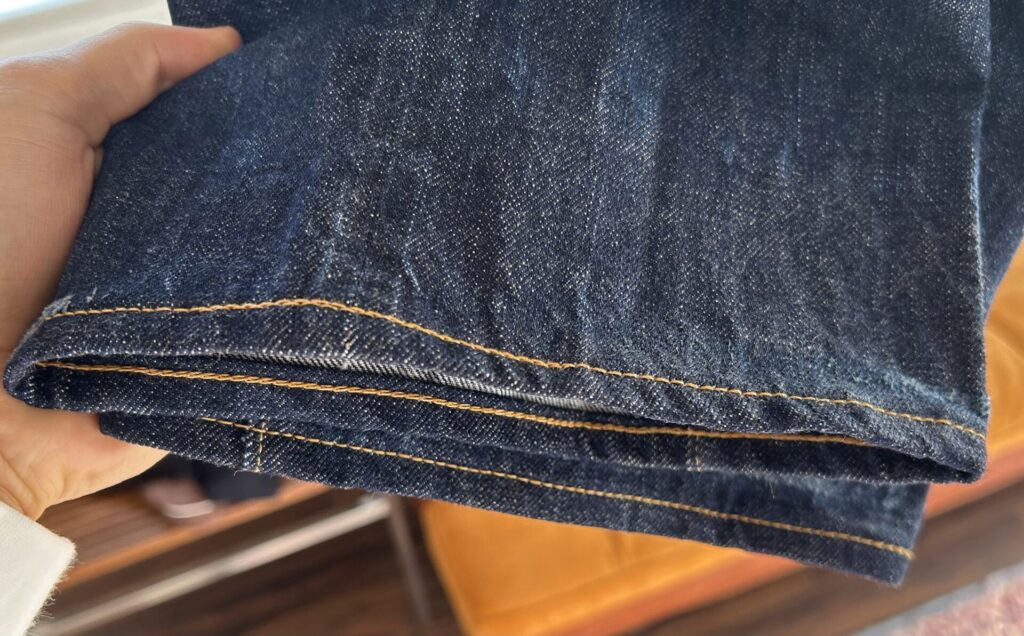
If you simply keep washing the jeans over and over, the hem will eventually develop its own fading and wear patterns. But if you repeatedly put the entire pair into the washing machine every day, the rest of the jeans will also continue to fade.
So I started wondering if there was some way to make only the hem develop those worn-in characteristics.
Before hemming, the fading and wear on these jeans was, if I may say so myself, almost perfect. My goal was to get the newly hemmed portion to look as close to that as possible.
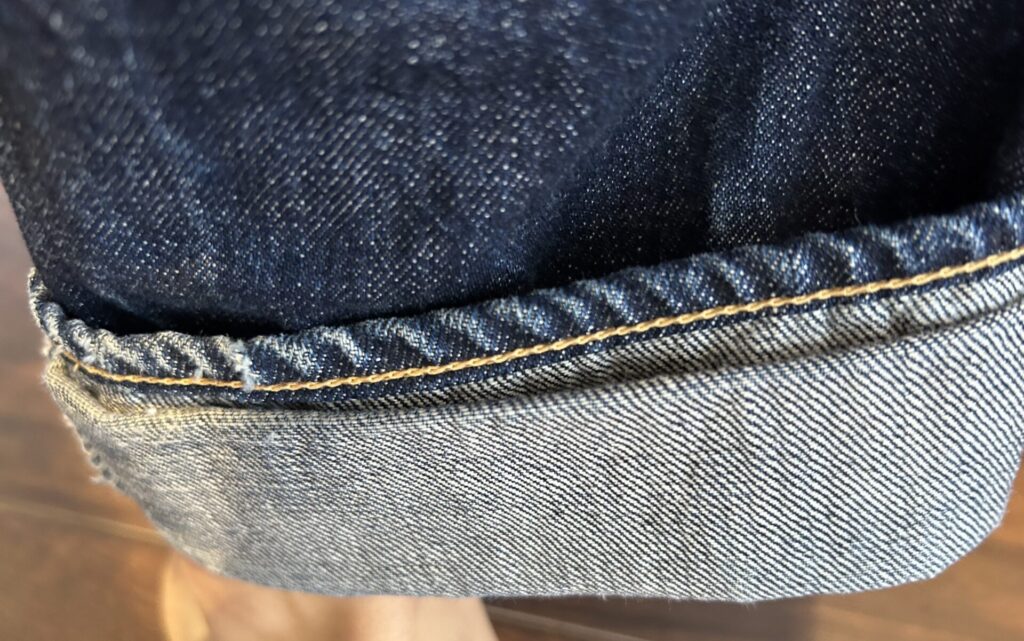
There is one important prerequisite if you want to develop those beautiful diagonal wear patterns at the hem.
The jeans need to be hemmed with a chain stitch, ideally using a special sewing machine known as a Union Special.
There are also a few other important details to consider, which I covered in the article below.

Wash It Every Day—Ideally Two or Three Times a Day
The method I came up with for accelerating fading at the hem was simply to wash only the hem. Pretty obvious, right?
I put only the hem under water in the sink, squeeze out the excess water, and hang it up to dry.
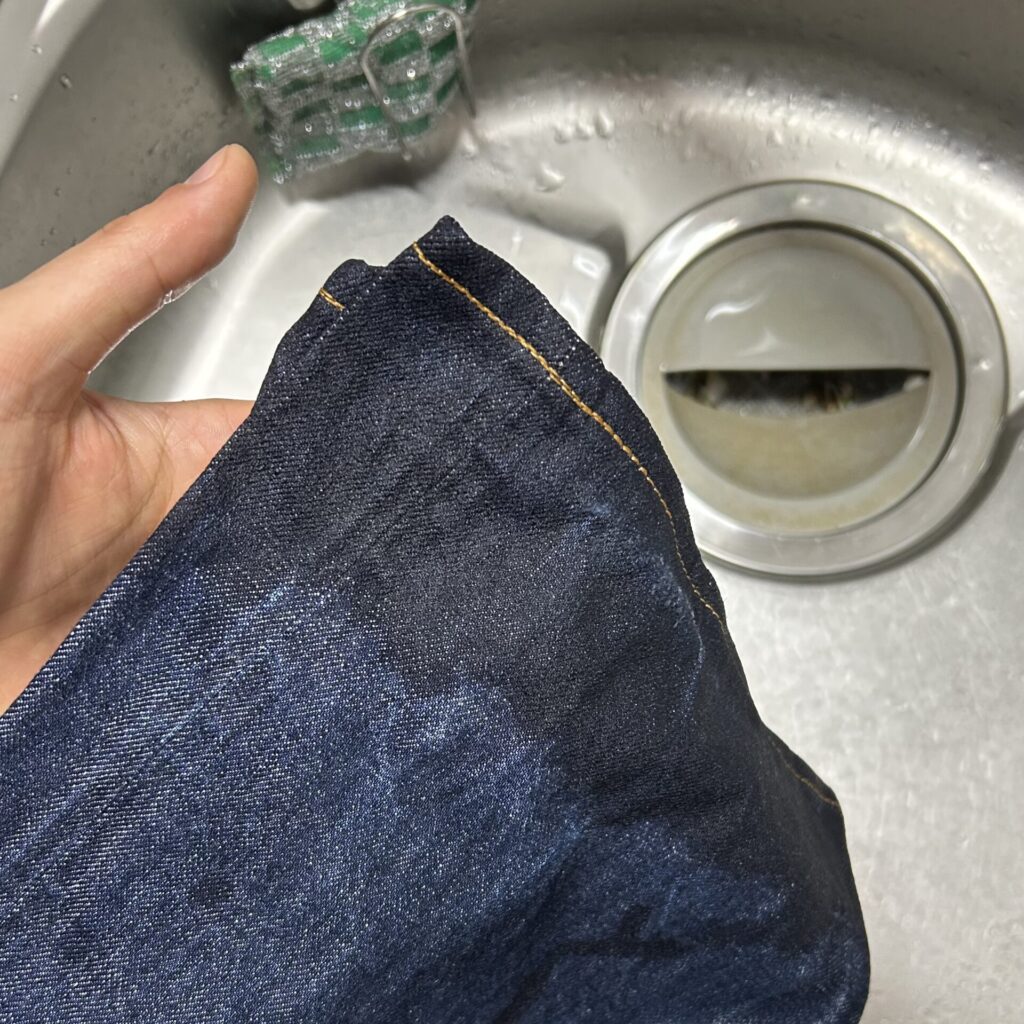
That’s it.
I’ve used this method several times on vintage jeans that I bought secondhand but had to hem because the inseam was too long, specifically to develop fading and wear at the newly shortened hem.
In the past, washing the hem three to five times was usually enough to produce a nice result. With these particular jeans, however, I’m not sure whether the denim itself is the reason or whether it has something to do with the way they were hemmed, but even after washing the hem every day for a week, there was very little visible change.
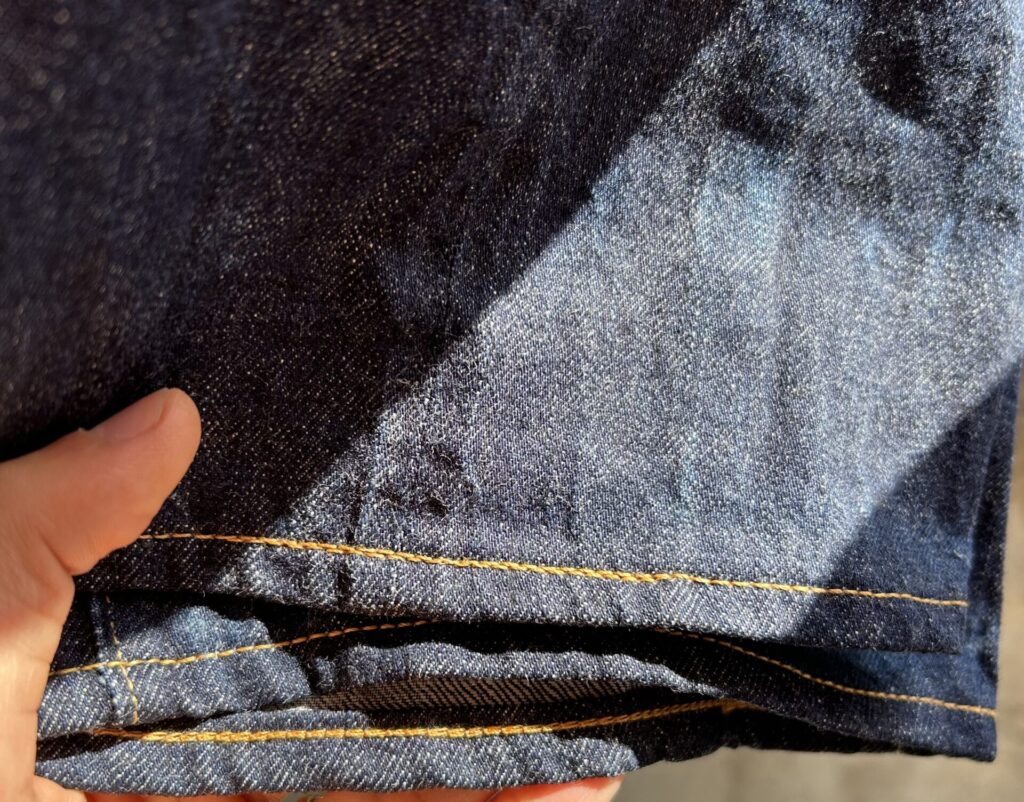
Incidentally, I also have a pair of Levi’s white jeans that I had hemmed on exactly the same day, at exactly the same shop, using the same sewing machine. With those jeans, the wear at the hem started becoming noticeable after only the second or third wash.
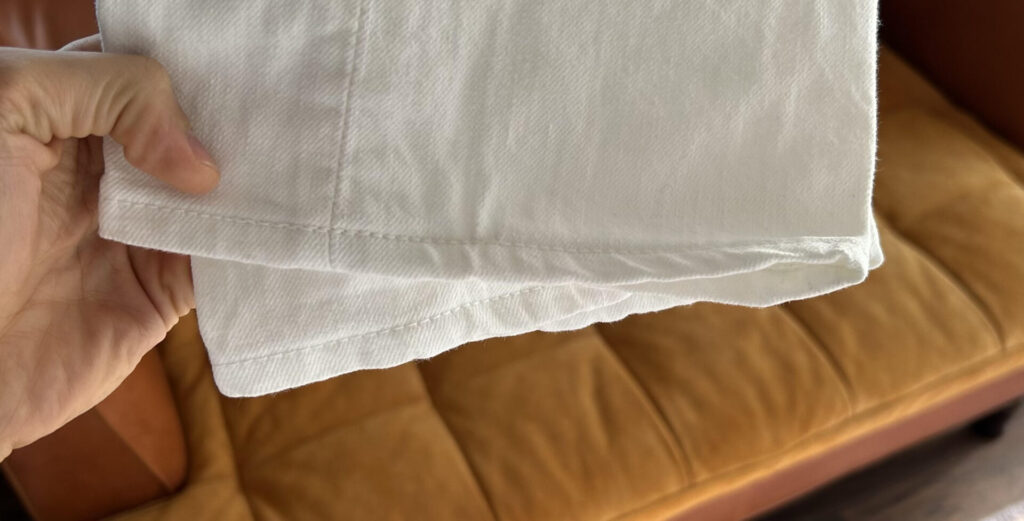
Once a day seemed far too slow, so on weekdays I washed the hem once in the morning before leaving the house and again at night before going to bed. On weekends, I could let it dry quickly in the sun, so I washed it in the morning, afternoon, and evening. I repeated this dozens of times, continually washing only the hem.
Simply using water started to cause a strong damp smell, so about once every three washes, I briefly dipped the hem into the washing machine while it was running—rather like dipping something into a cheese fondue—and then rinsed it thoroughly afterward. That eliminated the smell.

Using warm water instead of cold water might actually be a better option, both for preventing unpleasant odors and for accelerating the development of wear at the hem.
I kept this up for about three weeks. I think I washed the hem more than 50 times in total.
Finally, the fading and wear started to become noticeable.
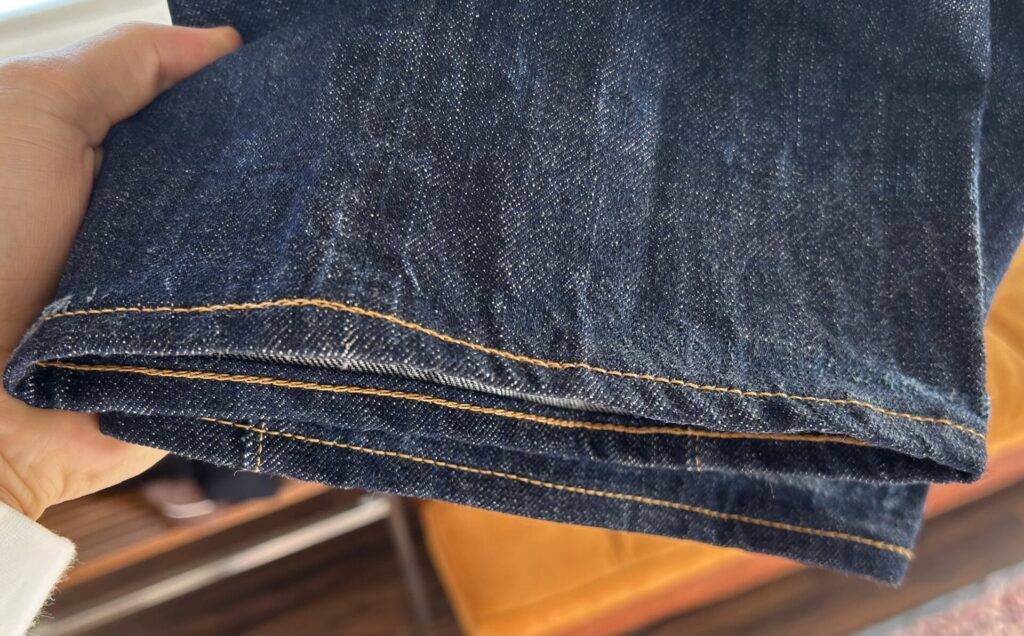
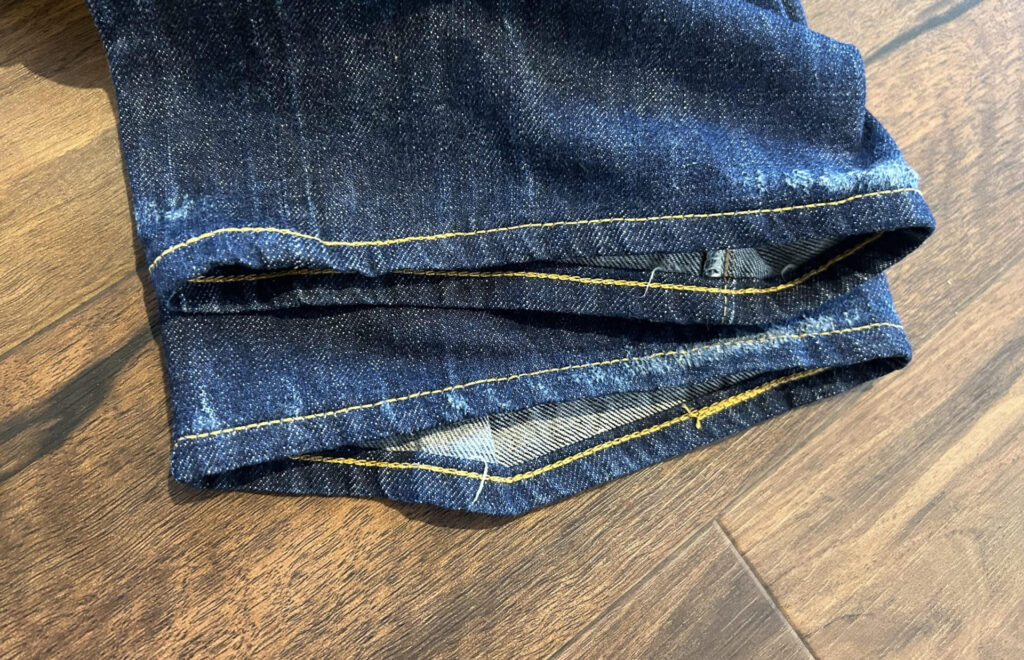
Each wash takes only about a minute, so it isn’t physically demanding. It is, however, rather tedious, and I’m ready to stop soon. But the hem still has a long way to go, so it looks like I’ll have to keep going for another 50 washes or so.
If you know any tricks for developing authentic fading and wear at the hem more quickly, I’d love to hear them.
That’s all for today.
Thank you for reading.


コメント