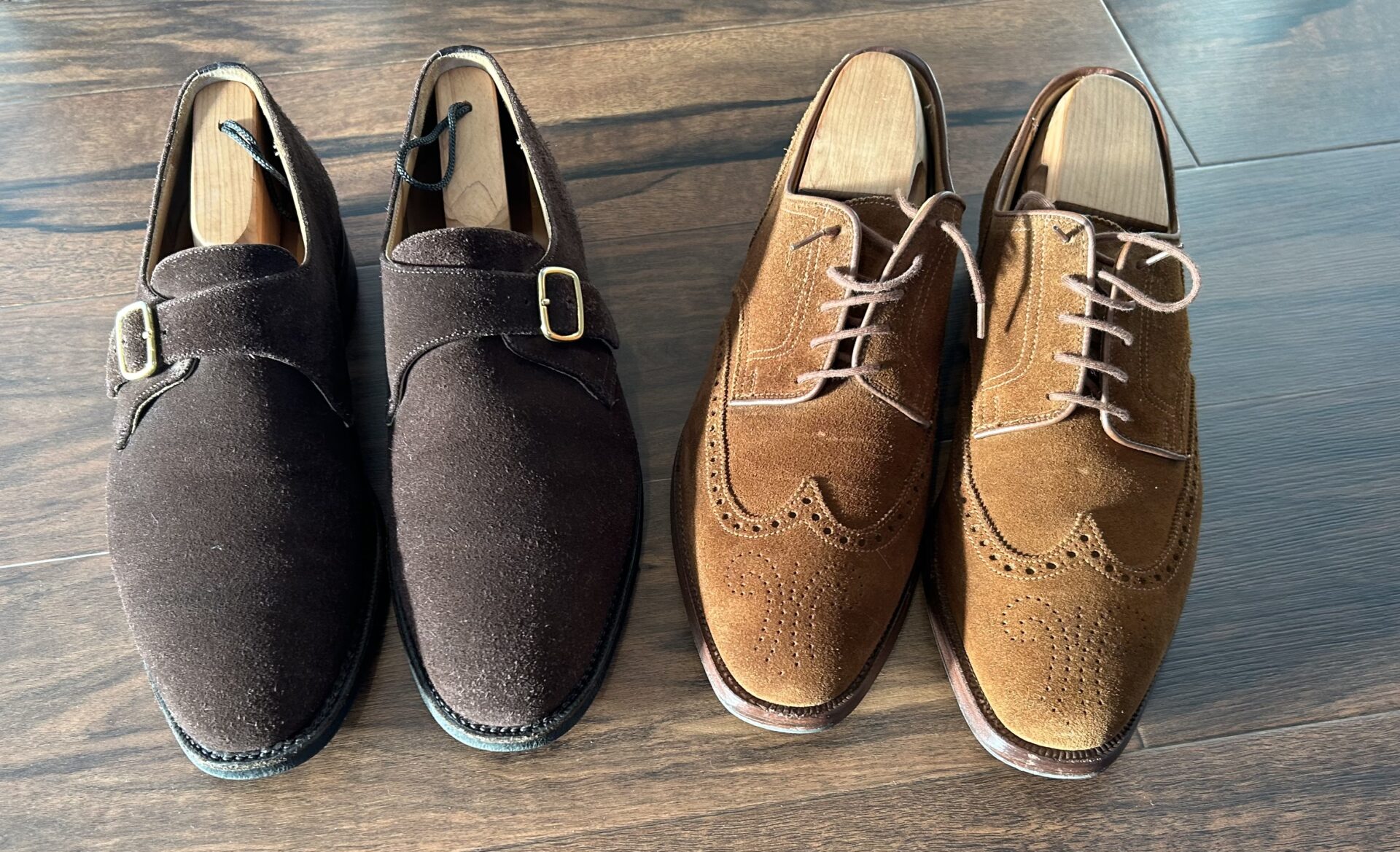
Hello, this is Mr. Linen.
Let me start with a simple statement: suede shoes are fantastic.
Compared to smooth leather, suede has much more texture and character. It pairs beautifully with fabrics I personally love—such as linen and tweed—and is versatile enough to work with everything from tailored clothing to denim and chinos.
Perhaps best of all, suede is easy to maintain. There’s no need for regular shoe polishing—in fact, polishing suede is generally not recommended.
When people think of suede shoes, black and beige are cool, but brown is undoubtedly the classic choice.
The naturally rustic and country-inspired character of suede is expressed most strongly in shades of brown, which explains why the combination feels so natural.
That said, “brown” covers a wide range of tones. Dark brown and light brown suede shoes create very different impressions.
Have you ever wondered which shade of brown suede would work best with your wardrobe?
In this article, I’ll share my thoughts on when to choose dark brown versus light brown suede shoes, how to use each effectively, and which one offers greater versatility if you can only buy a single pair.
What Counts as Light Brown?
Before comparing dark brown and light brown suede, we need to define what those terms mean. Color perception varies from person to person, so the distinction can be somewhat subjective.
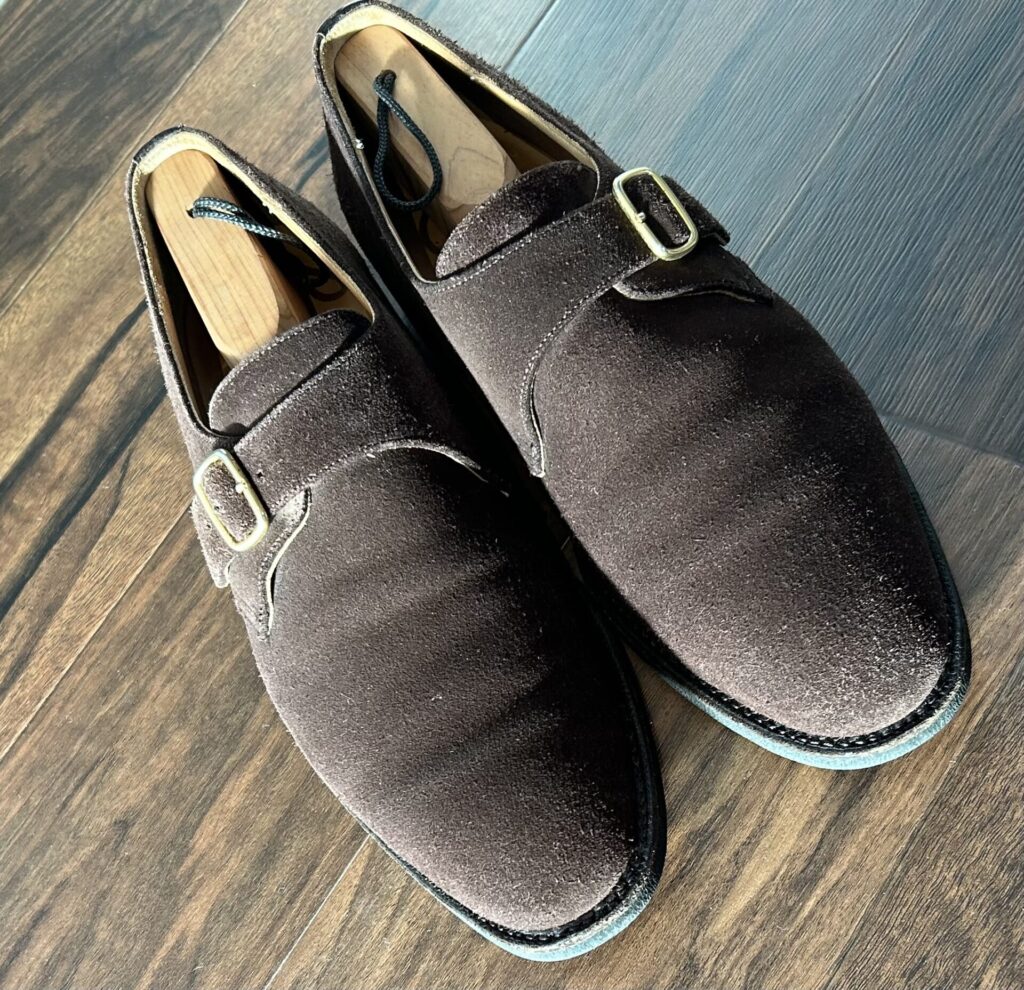
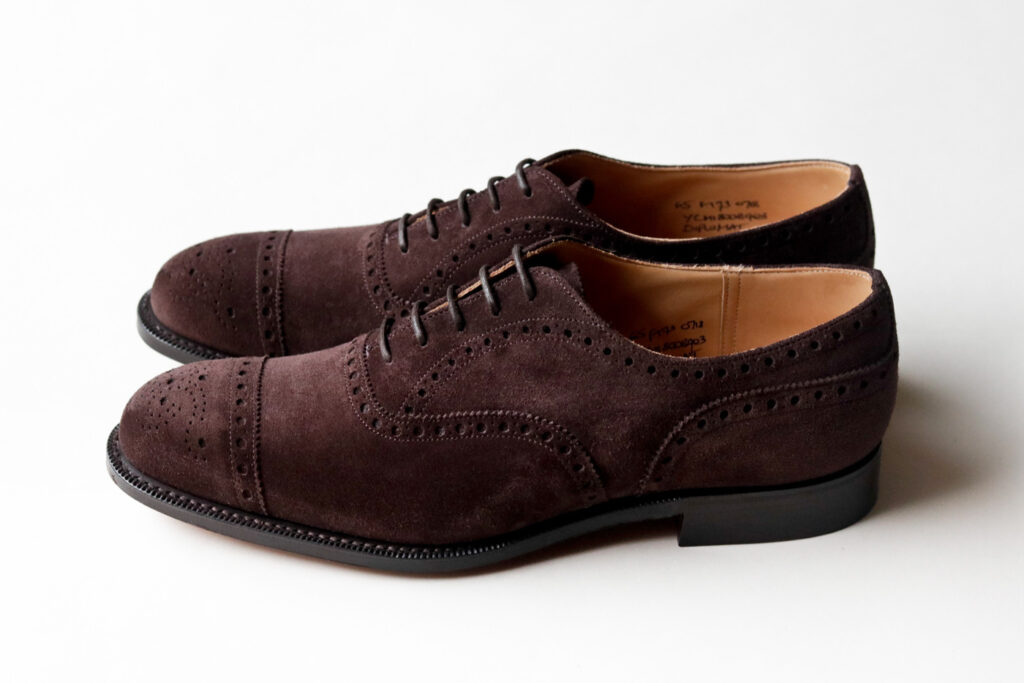
For the purpose of this article, I’ll use the following shade as my reference point for dark brown suede.
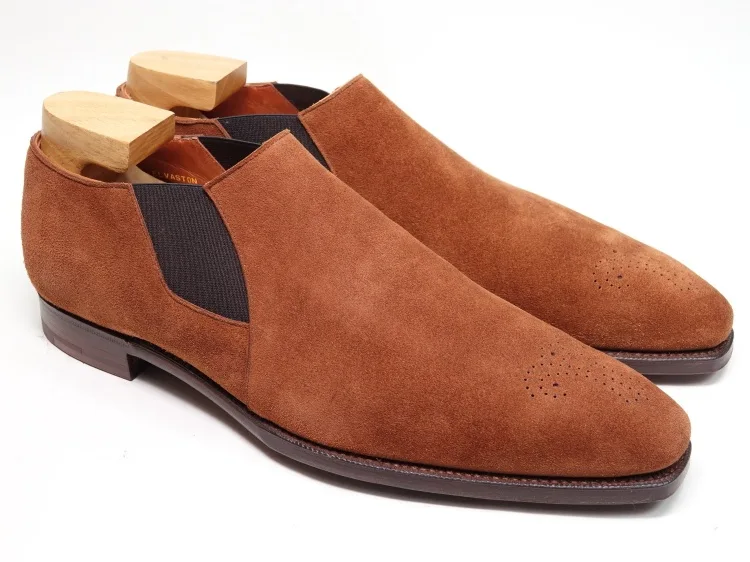
As for light brown, the color below is clearly on the lighter end of the spectrum—perhaps what some brands might even call an orange-brown suede.
However, when you get to the shade shown below, some people may reasonably wonder whether it should still be considered light brown rather than dark brown.
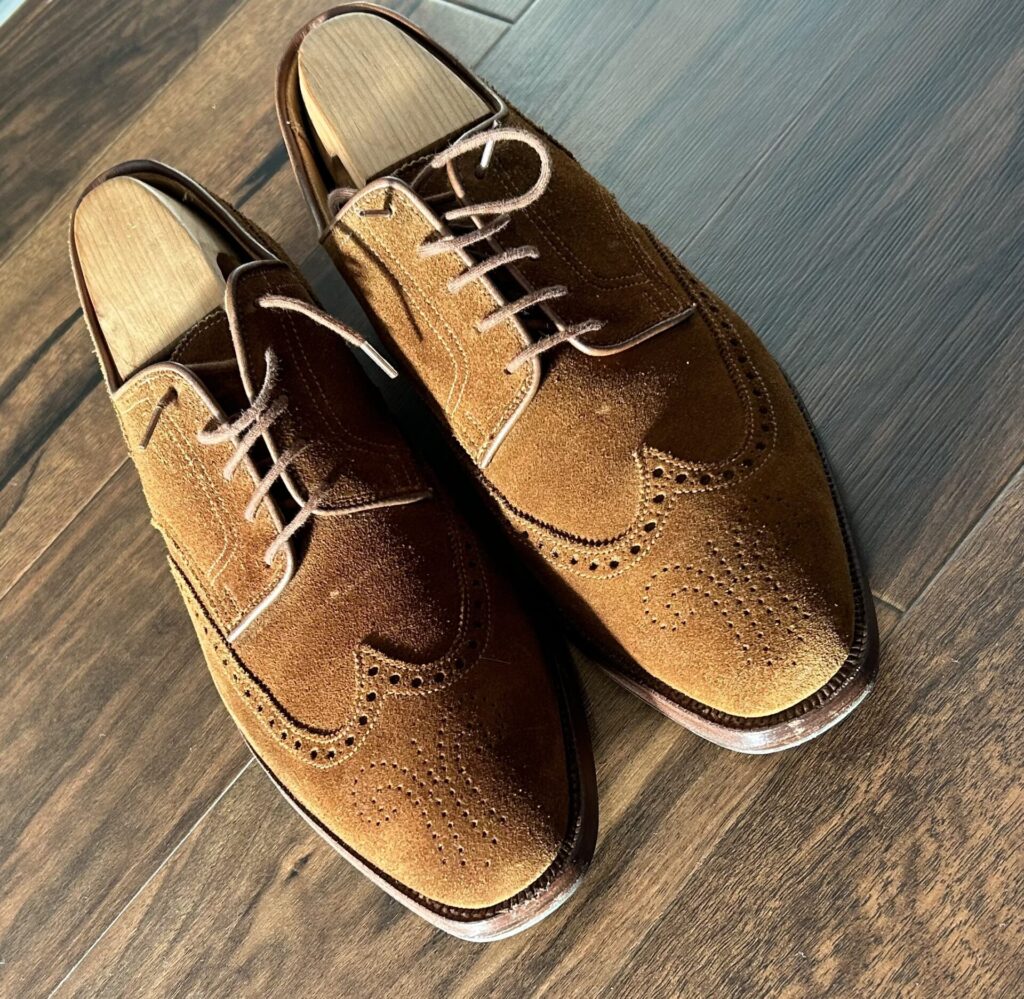
For this article, I’ll classify this shade—and anything lighter—as light brown suede.
Darker Colors Are Dressier—and More Versatile
As a general rule, darker shades of brown are considered dressier than lighter shades.
If you plan to wear suede shoes only with casual trousers such as denim or chinos, light brown is an excellent choice. However, if you also want to wear them with suits or tailored jacket-and-trouser combinations, dark brown will give you a much wider range of options.
(Of course, many other factors influence formality—whether the shoe is a lace-up or loafer, whether it features closed or open lacing, the shape of the toe, and so on. For this discussion, however, I’ll focus solely on color.)
For example, in the outfit below, I’m wearing light brown suede shoes.

A tweed jacket paired with denim creates a distinctly casual, country-inspired look, so I think the light brown suede works particularly well here.
If I wore dark brown suede shoes of the same style, the outfit certainly wouldn’t look bad. However, I feel that light brown is the more harmonious choice.
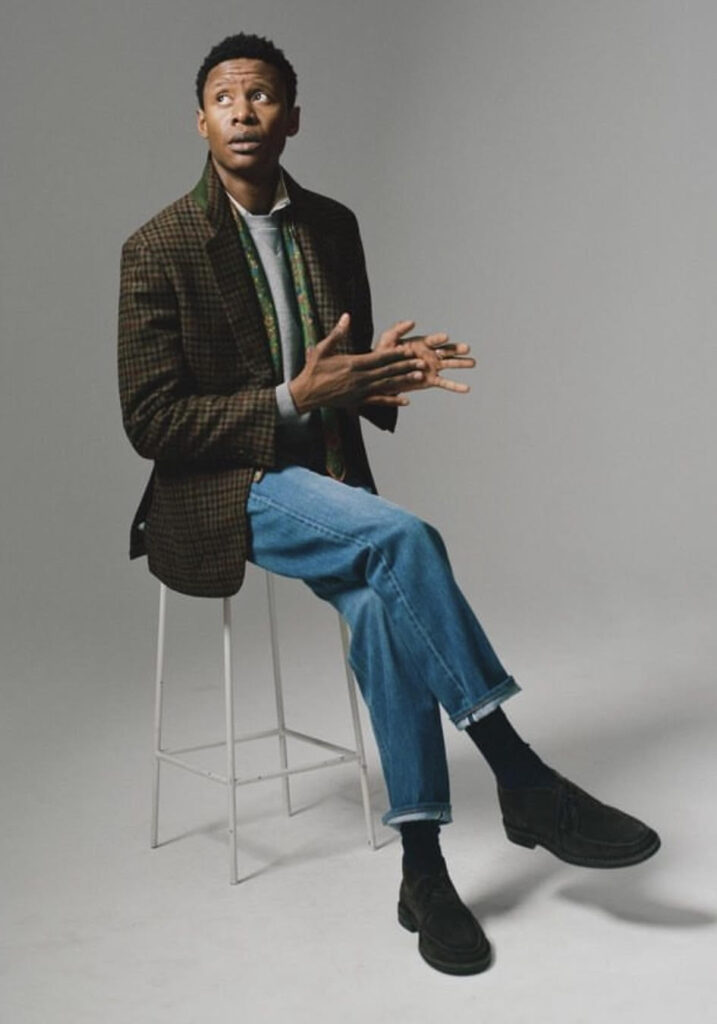
On the other hand, if the tweed jacket were navy, dark brown, or another deeper shade, the overall outfit would feel more refined. In that case, dark brown suede shoes might be the better option.
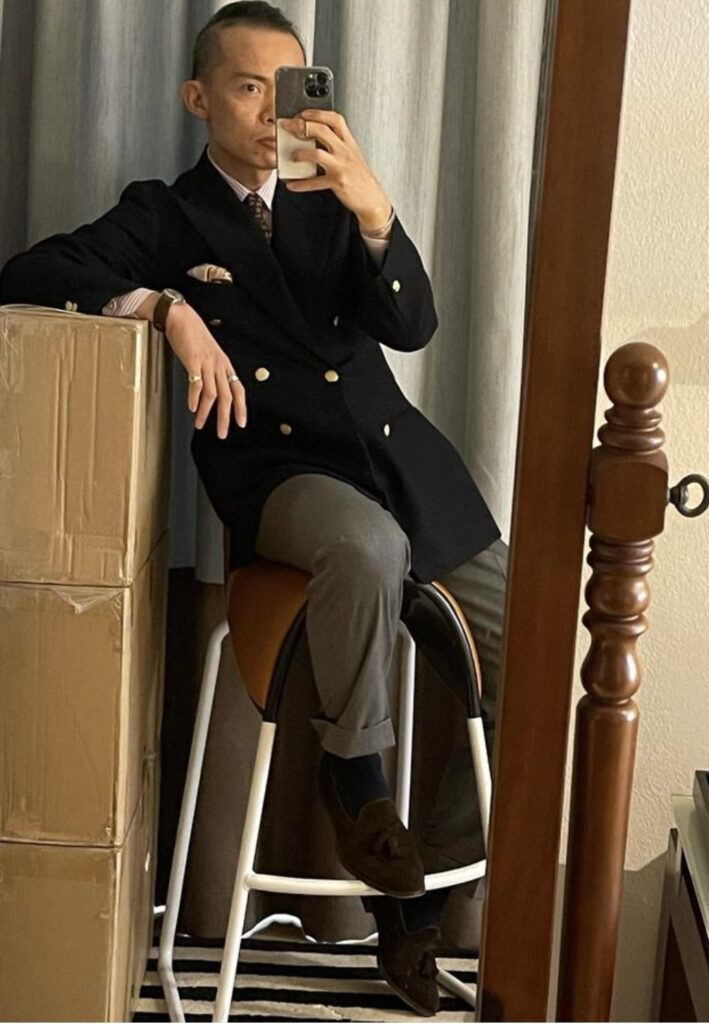
If we replace the denim with grey dress trousers and add a navy blazer, shirt, and tie, the outfit becomes significantly dressier. In that scenario, I would definitely lean toward dark brown suede shoes.
The Rule: Shoes Should Be Slightly Darker Than Your Trousers
Based on the examples we’ve looked at so far, a general pattern emerges.
Dark brown suede shoes tend to work best with darker, more refined outfits and with ensembles that include a tie.
Light brown suede shoes tend to shine when paired with outfits that have stronger casual or country-inspired elements.
That seems to be the overall trend.
But what about a beige suit worn with a tie?
A beige suit is inherently more casual from a color standpoint, yet the addition of a tie gives it a respectable level of formality.
It combines both casual and dressy elements, making it difficult to decide whether dark brown or light brown suede shoes would be the better choice.
I believe there is a useful guideline that can help.
I honestly can’t remember where I first encountered it, but I believe I read it in a book by the late Japanese menswear writer Masakatsu Ochiai.
“As a general rule, your leather shoes should be slightly darker than your suit.”
The word “slightly” is important. Your shoes should not be dramatically darker than the suit.
I have found this principle to be remarkably reliable.
For a moment, let’s put suede aside and discuss leather shoes in general.
Black shoes pair effortlessly with medium grey, charcoal grey, and navy suits.
If you choose brown shoes, dark brown works comfortably with all of those suit colors. Light brown shoes, however, become more difficult to wear with charcoal grey and darker shades of navy.
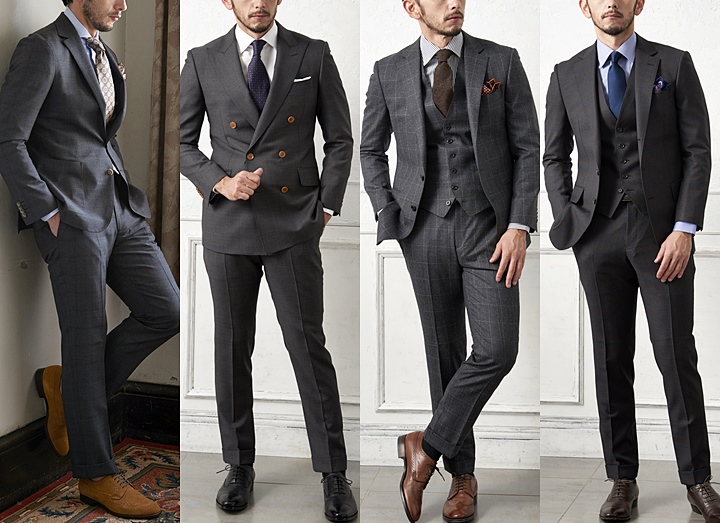
Conversely, when the suit is light grey, light navy, or beige, light brown shoes tend to look exceptionally good.
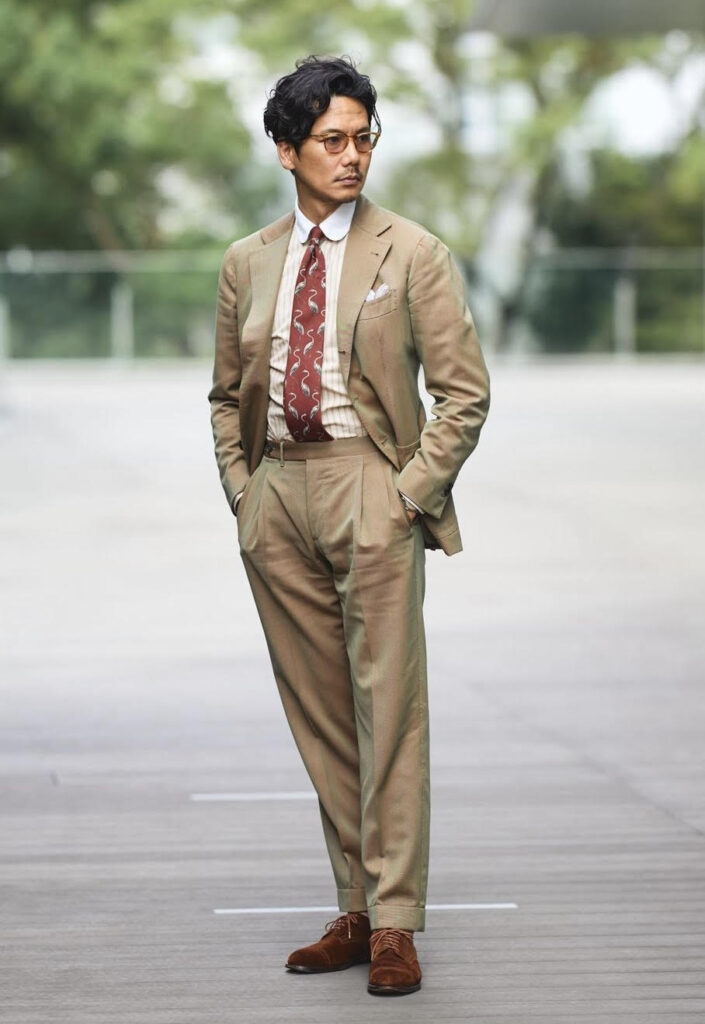
Dark brown or black shoes will still work with light grey, light navy, and beige suits because they are highly versatile. However, I personally feel that slightly lighter-colored shoes often create a more attractive overall balance.
What we can learn from these examples is that outfits generally look best when there is not a strong contrast between the color of the suit and the color of the shoes.
In other words, shoes and clothing tend to pair more naturally when their depth of color is relatively close.
At the same time, it is usually easier to achieve balance when the shoes are slightly darker than the suit or trousers.
After all, darker-colored shoes have traditionally been considered more formal.
Lighter-colored shoes naturally create a more casual impression, which can be challenging to style successfully unless you are particularly confident with color coordination.
If you’re ever unsure, simply remember this rule:
“Choose leather shoes that are slightly darker than your suit.”
(For sport coat and trouser combinations, use the trousers as your reference point.)
Earlier, I asked what color shoes should be worn with a beige suit and tie.
My answer is light brown shoes—provided they are darker than the beige suit itself. Based on everything we’ve discussed, that seems to create the most harmonious result. Mr. Shuhei Nishiguchi’s outfit above is an excellent example.
As a side note, denim is the exception. It works with virtually any shade of shoe.
Be Careful Not to Make Light Brown Suede Too Country-Looking
Returning specifically to suede shoes, we’ve seen that both dark brown and light brown have their own distinct roles.
If your wardrobe consists mainly of dark suits and darker tailored combinations, dark brown suede shoes may be all you ever need.
However, if you also wear beige suits and lighter earth-toned jacket-and-trouser combinations, I believe light brown suede shoes become almost essential.
Personally, I’m tempted to say: beige items shoud be worn with light brown suede.
To use a personal example, here is a jacket cloth I commissioned from Atelier Berun.
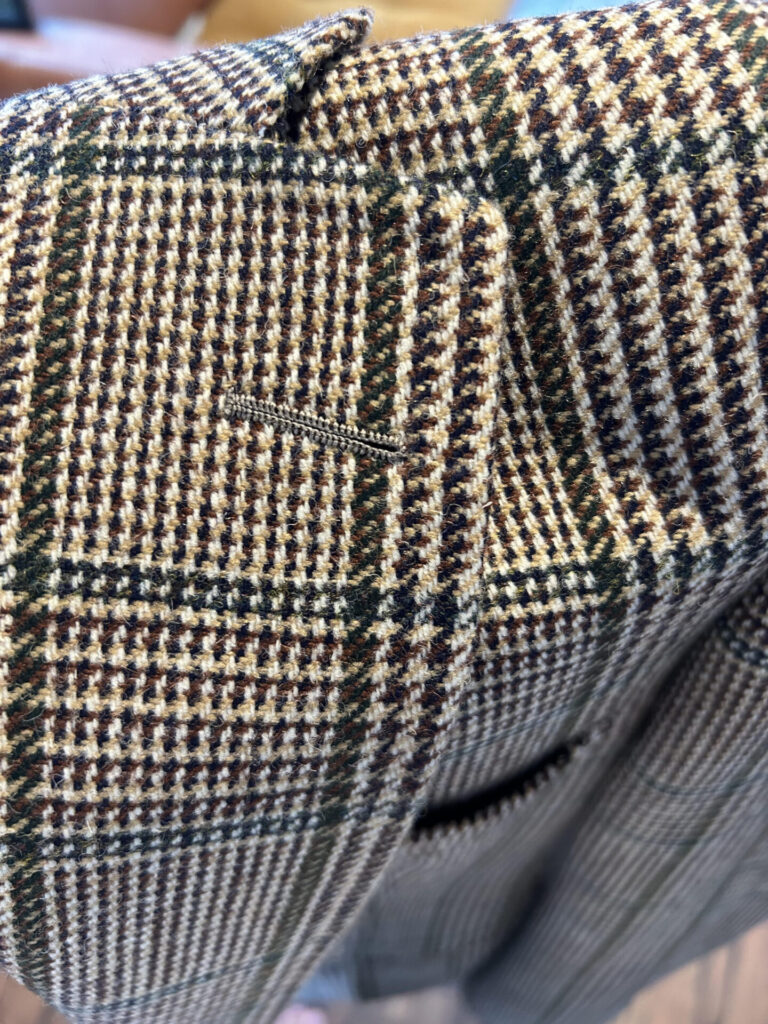
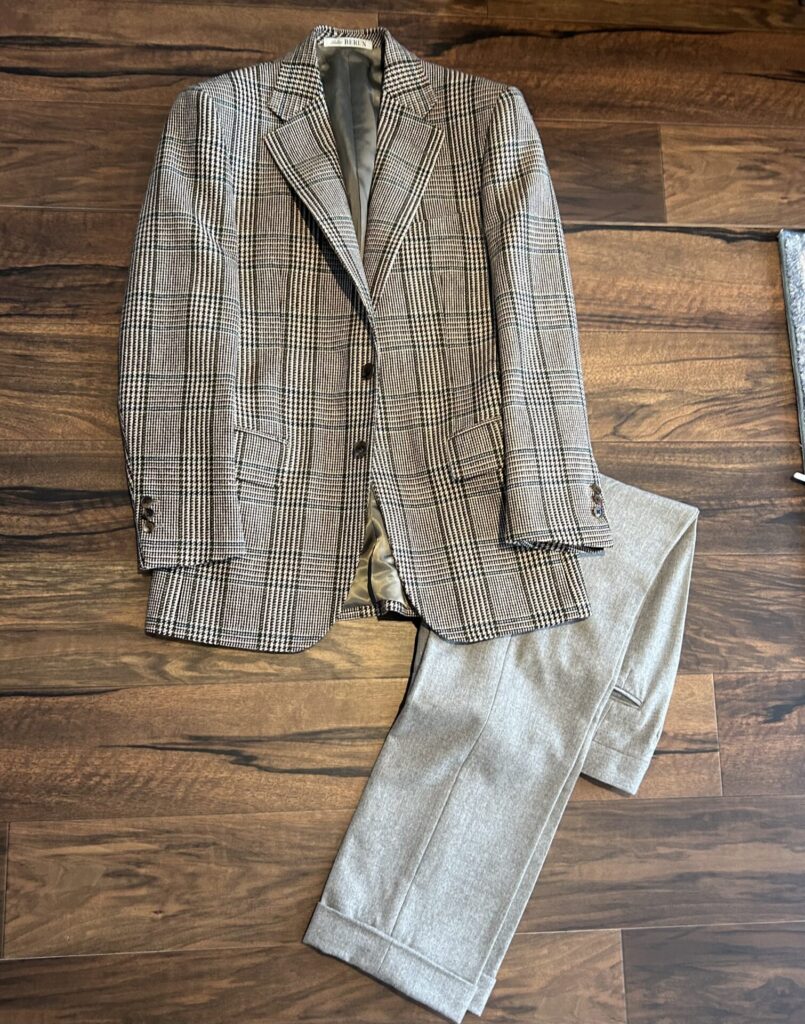
When worn with denim, this jacket pairs beautifully with light brown suede shoes.

Even if I switched the denim for greige flannel trousers, I think the combination would still work perfectly well.
However, things become more difficult when the trousers are corduroy in the color shown below.
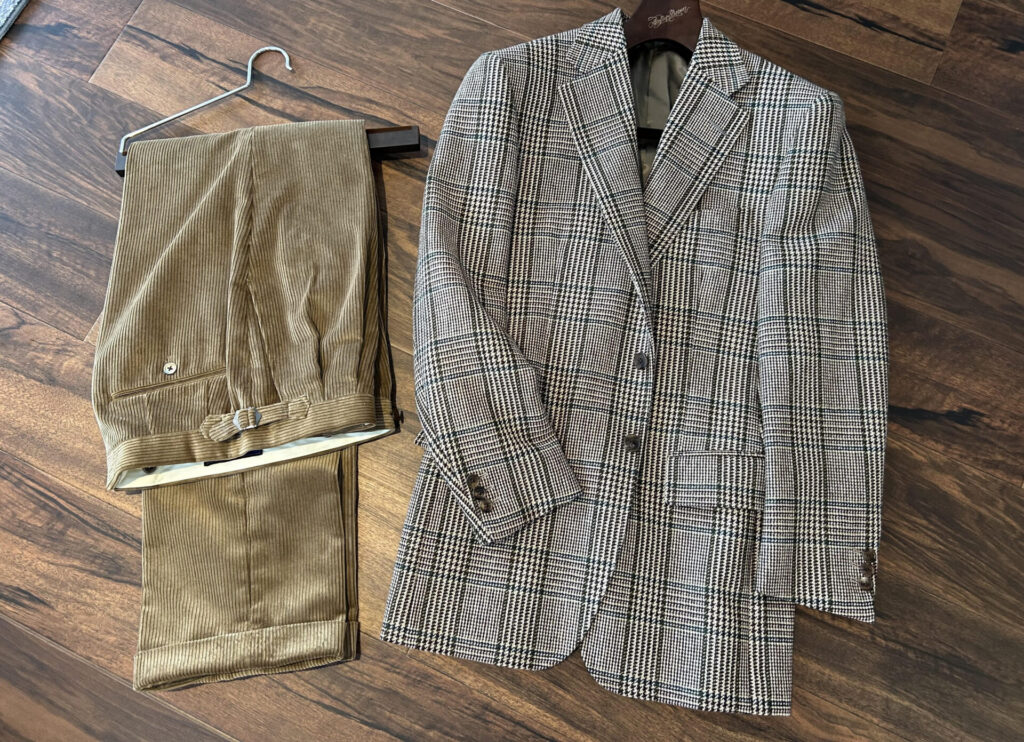
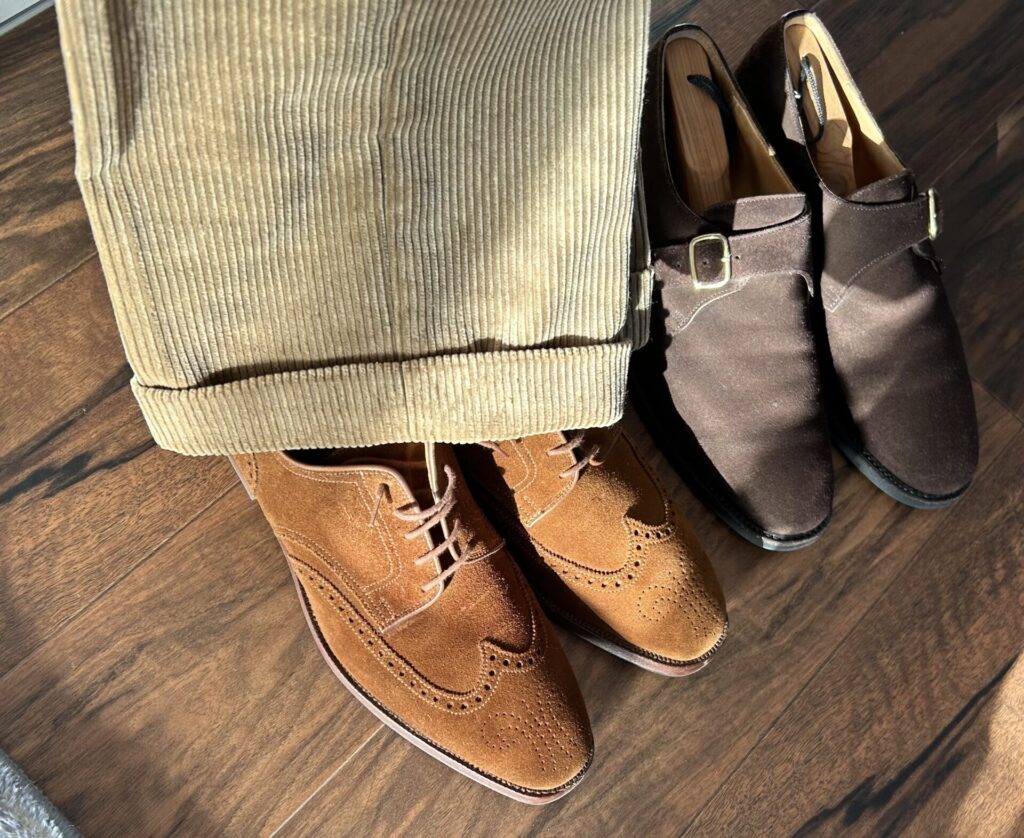
The jacket and trousers already create a very strong country-inspired aesthetic. If I added light brown suede shoes, I feel the outfit might start looking more appropriate for a walk through the English countryside than for everyday city life.
To be clear, that’s not necessarily a bad thing. In fact, it’s a wonderful style in the right setting.
Personally, though, I would feel slightly self-conscious wearing such a strongly rustic outfit in an urban environment.
In situations like this, dark brown suede shoes can add a touch of sophistication and urban refinement, making the outfit easier to wear in the city.
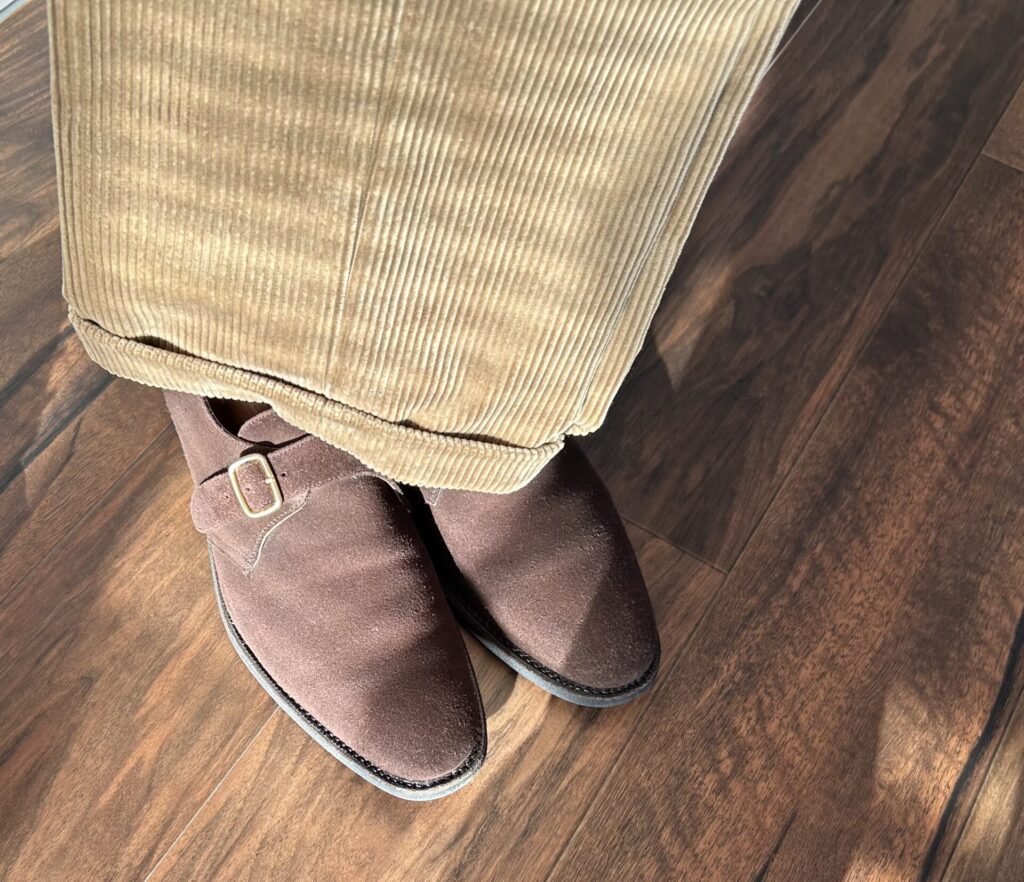
This also aligns with the rule we discussed earlier: shoes should be slightly darker than the suit or trousers.
With light brown shoes, the color depth is almost identical to the corduroy trousers. A dark brown pair creates a subtle but useful contrast, making the combination feel more balanced overall.
Conclusion
These are my thoughts on how to use dark brown and light brown suede shoes effectively.
If I had to summarize everything in one sentence, it would be this:
Choose shoes that are darker than your trousers, but not dramatically different in color.
If you can only buy one pair, I believe dark brown suede shoes are the more versatile option.
By the way, the shade I’ve repeatedly referred to as “light brown suede” is sometimes called “tobacco suede” by certain brands and makers.
Whether it’s eyewear, shoes, or other accessories, brands often use names such as Tobacco, Whisky, or Cigar to describe brown tones.
Am I the only one who finds those names far more appealing than simply calling something “brown”?
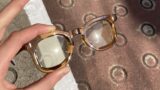
As an example, I bought the glasses below partly because I was told the frame color was called “Whisky.” Completely unrelated to suede shoes, I know—but I couldn’t resist mentioning it.

That’s all for today.
Thank you for reading.
Related Article



コメント