What kind of leather shoes do you usually wear with a suit?
It goes without saying that for formal occasions, cap-toe Oxford shoes are considered the best choice. For business settings, shoes with some broguing are generally acceptable as well.
Loafers have become more common in modern times, but if you want to pursue true classic style, lace-up shoes are still the standard.
The late Masakatsu Ochiai, a respected authority on classic menswear, once wrote that the act of tying shoelaces—taking the time and effort—represents respect for others.
For the same reason, he also emphasized that wearing a tie is essential in a classic suit style.
Even knowing all this, I rarely wear lace-up shoes.
This is despite wanting to understand and embody classic style.
Maybe I’m just breaking the rules for no good reason—but I do have my own justification.
This is quite a personal topic, but I’d like to explain my reasoning and share a practical solution.
Shoelaces Are Full of Bacteria
I mentioned having my own reason—that reason is germophobia.
I simply cannot bring myself to touch shoelaces because they feel dirty to me.
Shoes are the closest thing to the ground, constantly exposed to dust, rain, and all kinds of street grime.
That alone isn’t the real issue—the real problem is urine.
Apologies for the unpleasant topic.
But if you’re a man, you probably understand—using a public urinal inevitably leads to splashback.

It’s harder to notice when wearing long pants, but with shorts, it becomes very obvious.
If you have leg hair, you can actually feel tiny droplets landing on each strand.
Which means, naturally, your shoes are getting hit too.
The splashes aren’t large enough to leave visible stains, but they are definitely absorbed into the leather—and the laces.
You Touch Shoelaces More Often Than You Think
Even gentlemen who enjoy shoe care probably don’t clean their laces every single time they wear their shoes.
In the morning, you tie your laces, then go about your day without washing your hands—touching your face, rubbing your eyes. I simply can’t tolerate that.
I’ve tried several solutions.
Keeping disinfectant wipes by the entrance and cleaning my hands after tying my shoes.
Walking in shoes to the sink near the entrance to wash my hands.
Then cleaning the floor afterward.
The wipes solution works reasonably well—but the real problem is when you need to take your shoes off outside.
In many situations—visiting someone’s home, certain restaurants, or trying on shoes—you’ll need to remove them.
Carrying wipes everywhere is inconvenient.
And when your germophobia escalates, wipes don’t feel sufficient—you end up needing to wash your hands with soap before touching your phone or face. You even avoid touching your bag properly.
Maybe I’m just extreme—but lace-up shoes simply don’t work for me.
Long Live Loafers
So naturally, I rely on loafers.
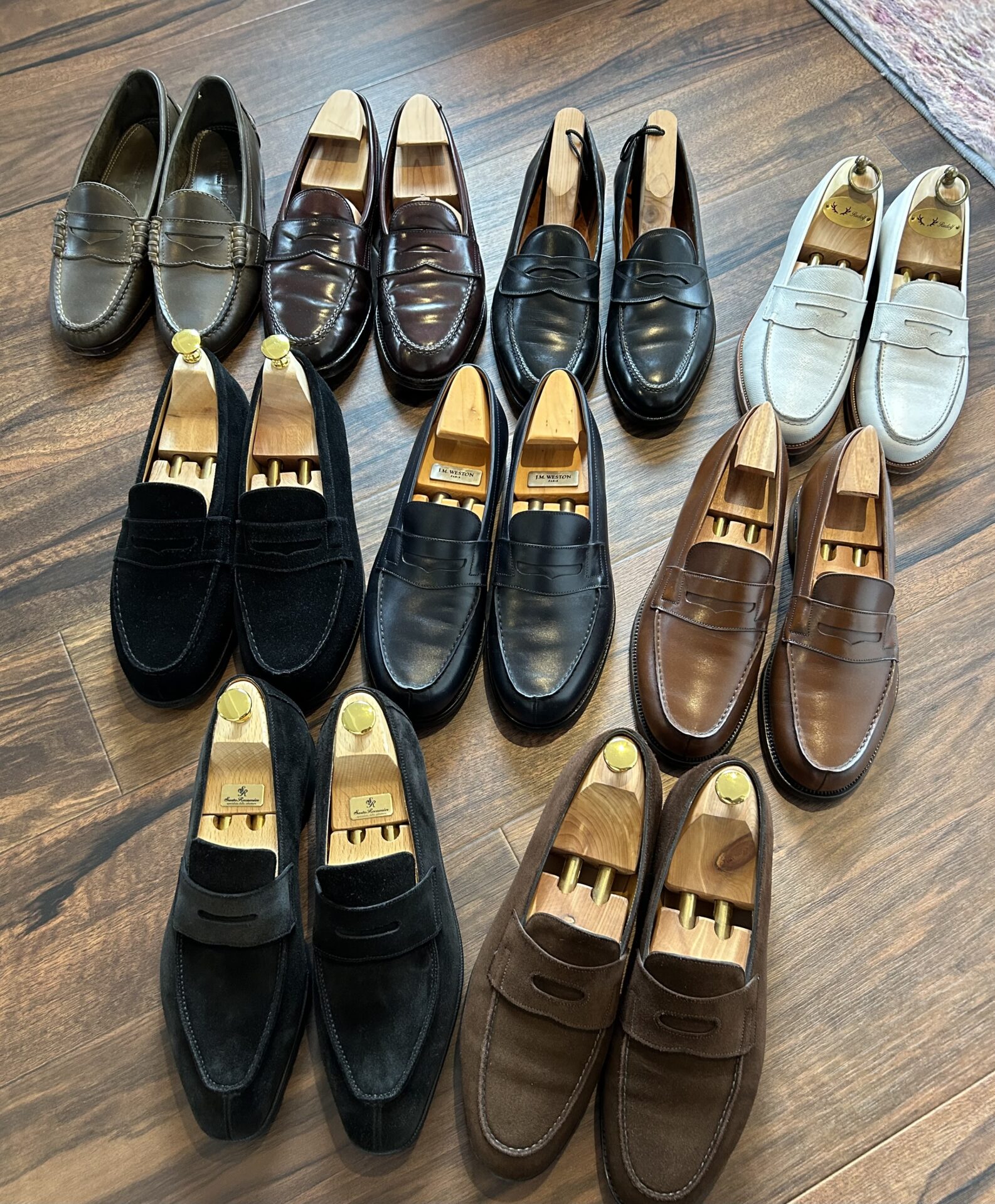

They solve all of these problems.
While using a shoehorn is ideal, well-broken-in loafers can be slipped on without using your hands.
When taking them off, you only need to touch them with one finger.
They work perfectly with casual outfits or smart casual tailoring.
From a classic perspective, they are still acceptable.
(Though whether smart casual truly counts as “classic” is another discussion.)
What About With a Suit?
The real issue arises when wearing a suit.
Loafers with suits are becoming more accepted today, but some still consider them inappropriate.
I don’t mind if individuals disapprove.
But if it violates classic menswear rules, I start to hesitate.
Some argue that tassel loafers—with decorative laces—are acceptable with suits.
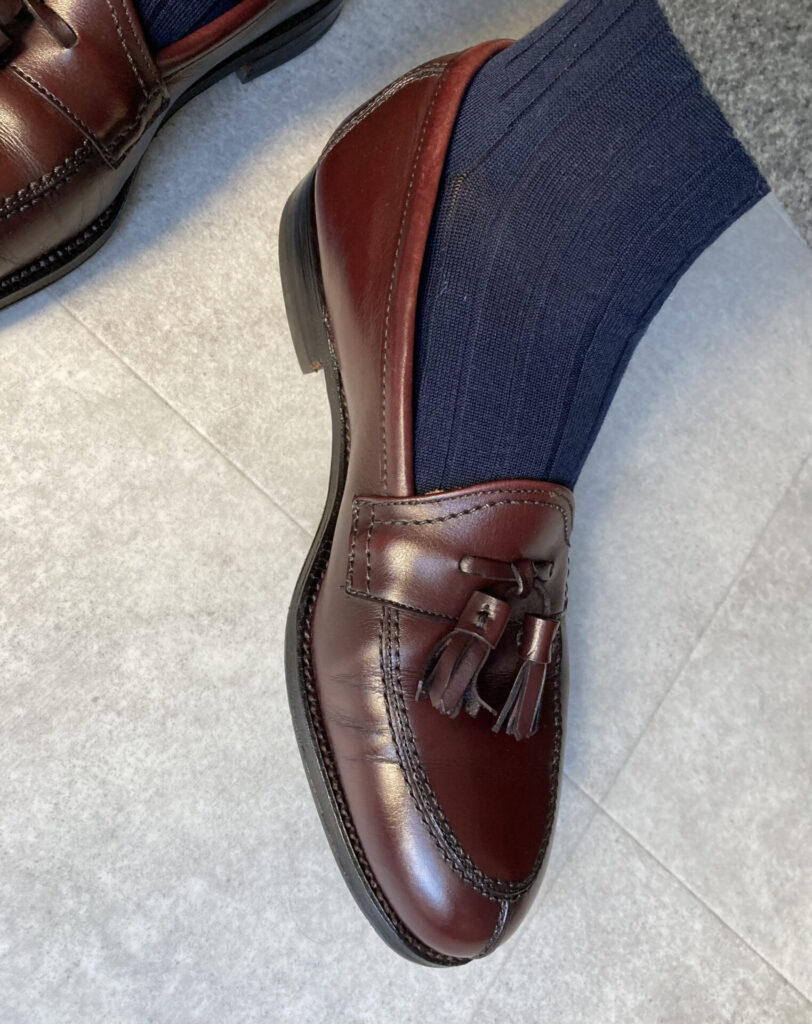
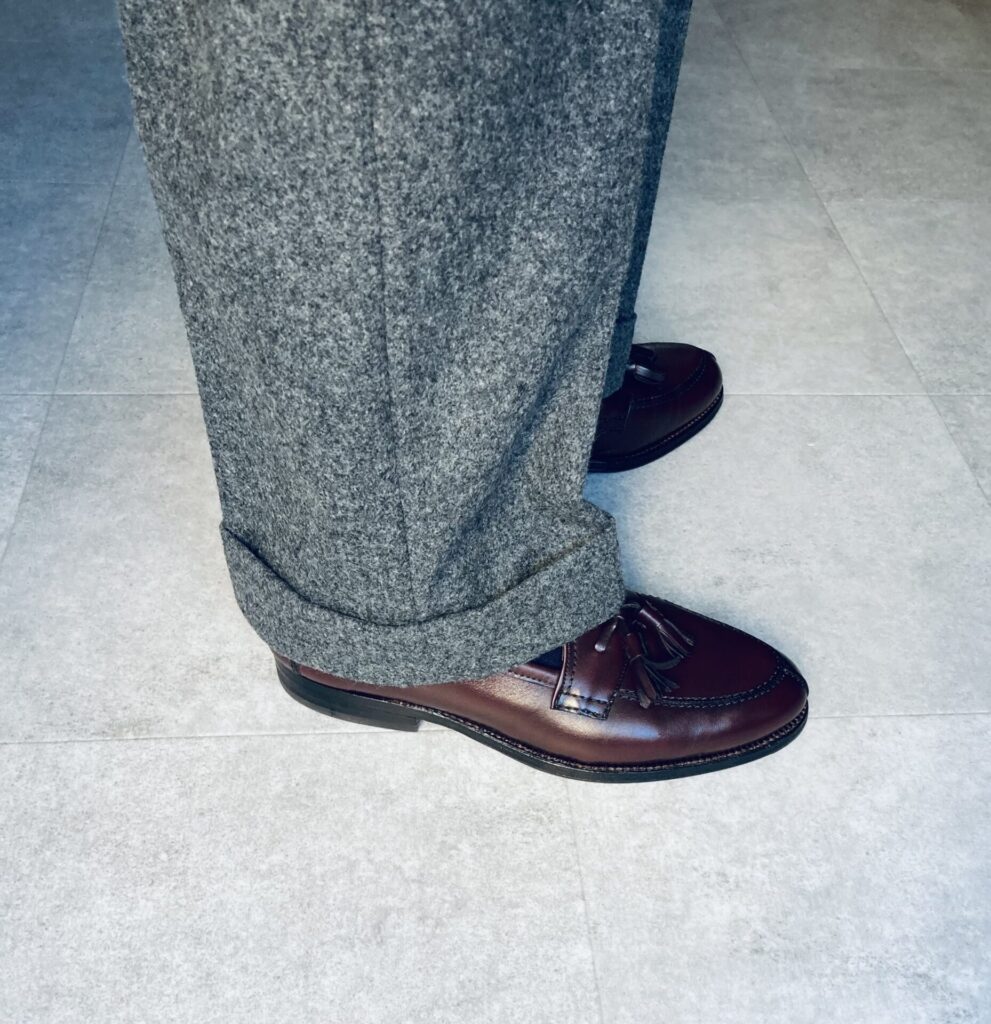
I agree with that view.
However, for more formal occasions—like parties or events—I still don’t feel comfortable wearing loafers, even tassel ones.
This is where monk strap shoes come in.
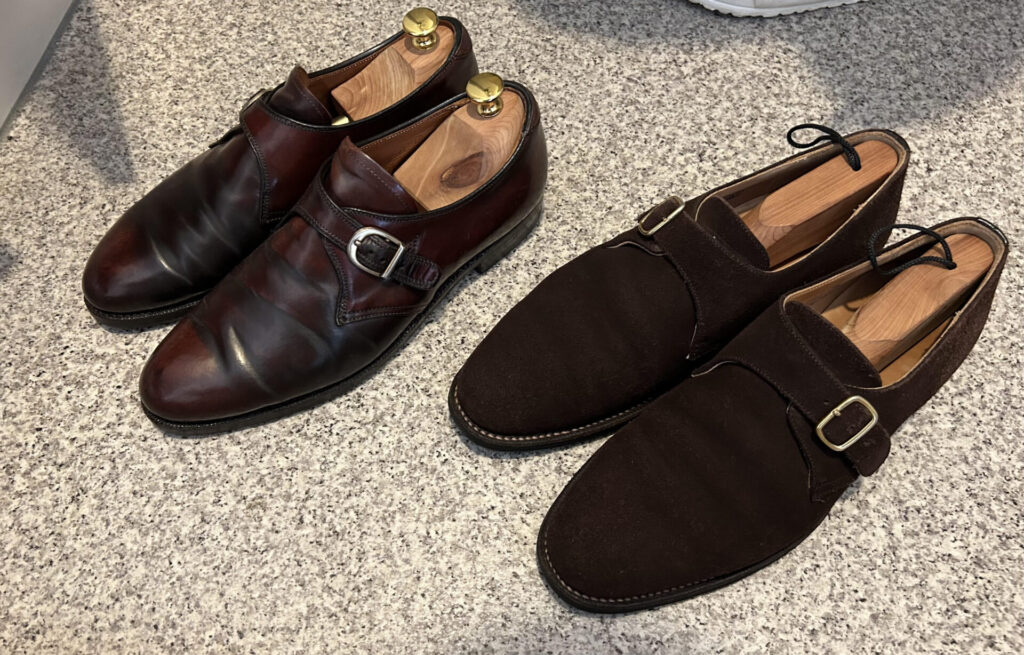
Monk strap shoes use a buckle instead of laces.
You might think: “Don’t you still have to touch them?”
And you’d be right.
However, many monk strap shoes have elastic hidden under the strap, allowing you to slip them on without unfastening the buckle.
You can put them on and take them off using just one or two fingers.
They are slightly less formal than cap-toe Oxfords, but still perfectly acceptable with classic suits.
They wouldn’t work with a tuxedo, but with a three-piece suit, they are generally fine.
Masakatsu Ochiai also noted:
“The only exception to wearing laceless shoes in classic style is the monk strap.”
Presumably because fastening the strap still involves an intentional action, similar to tying laces.
So technically, elastic monk straps might not be fully “classic”—but I choose not to think too hard about it.
Are Double Monk Straps Acceptable?
Monk straps come in two types: single and double.
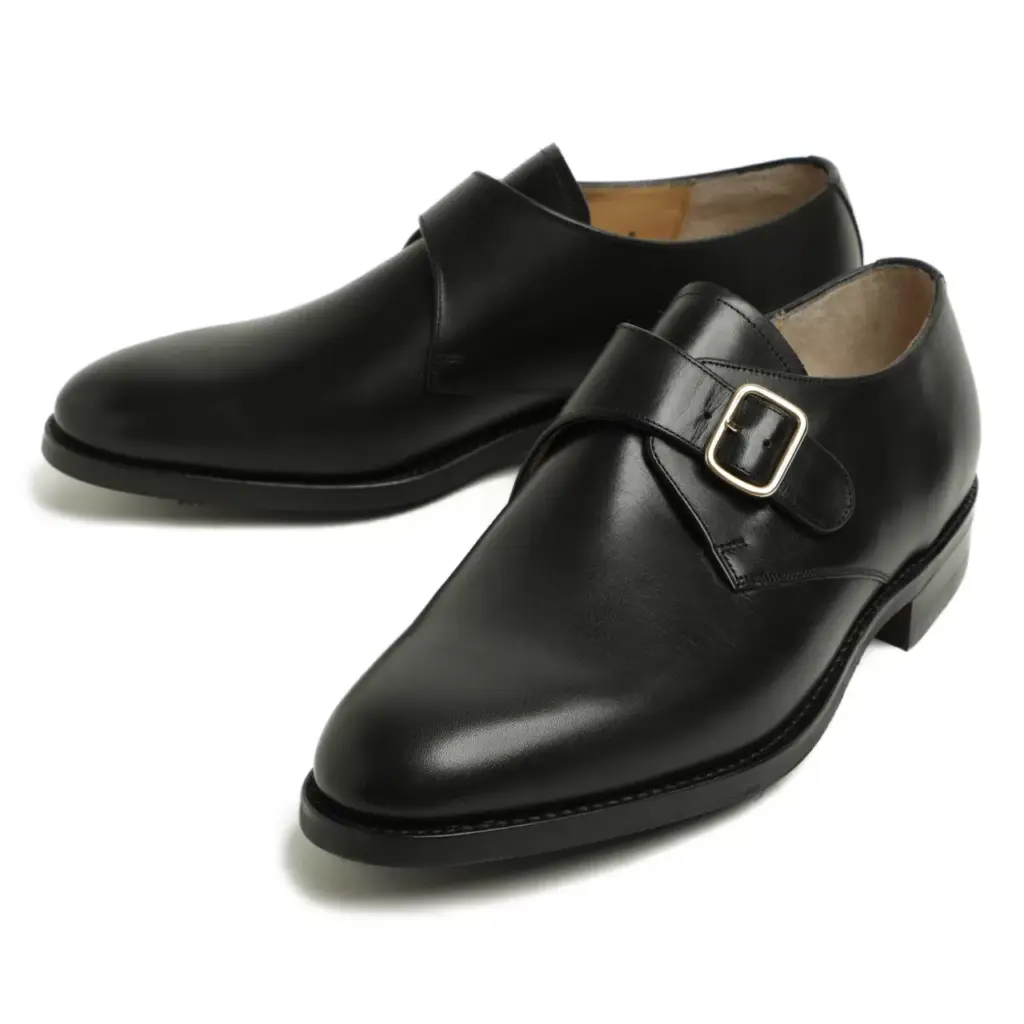
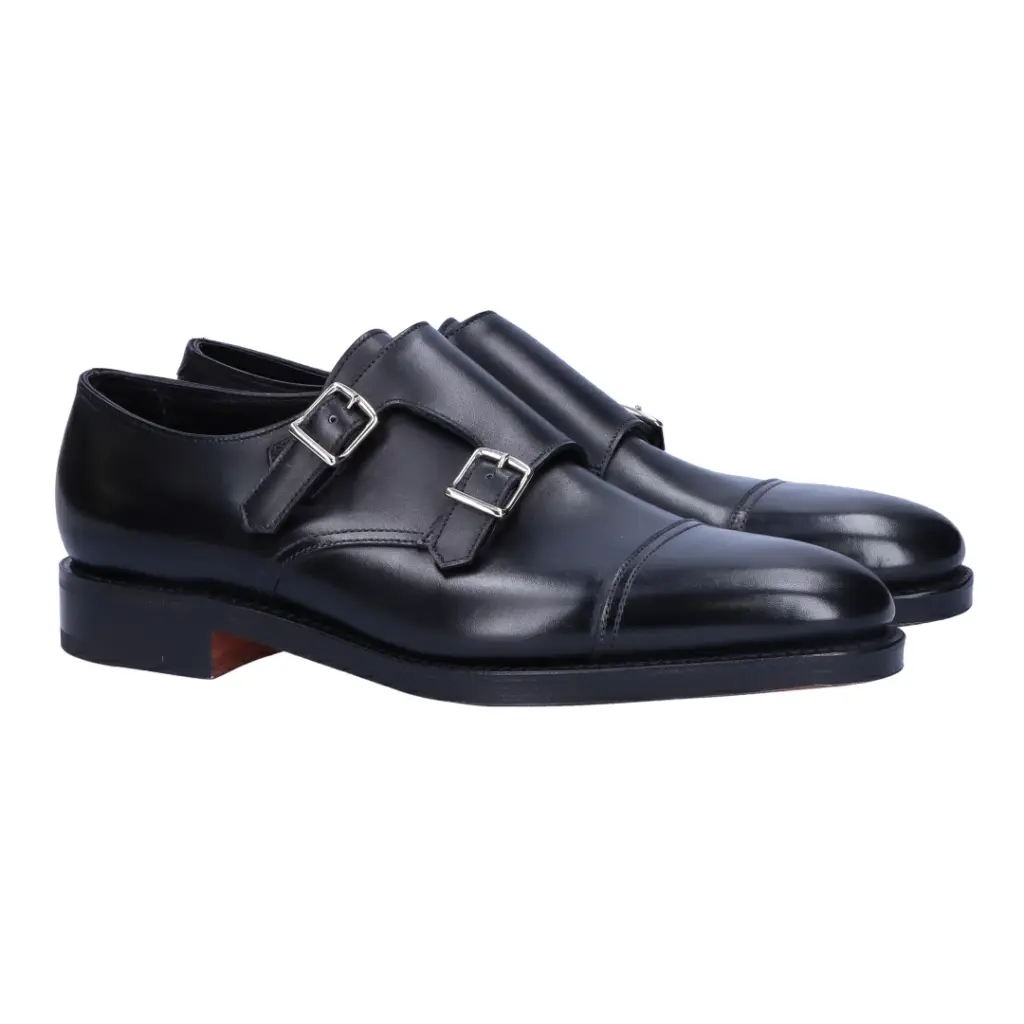
Both are considered formal, but some traditionalists dislike double monks.
My Monk Strap Shoes
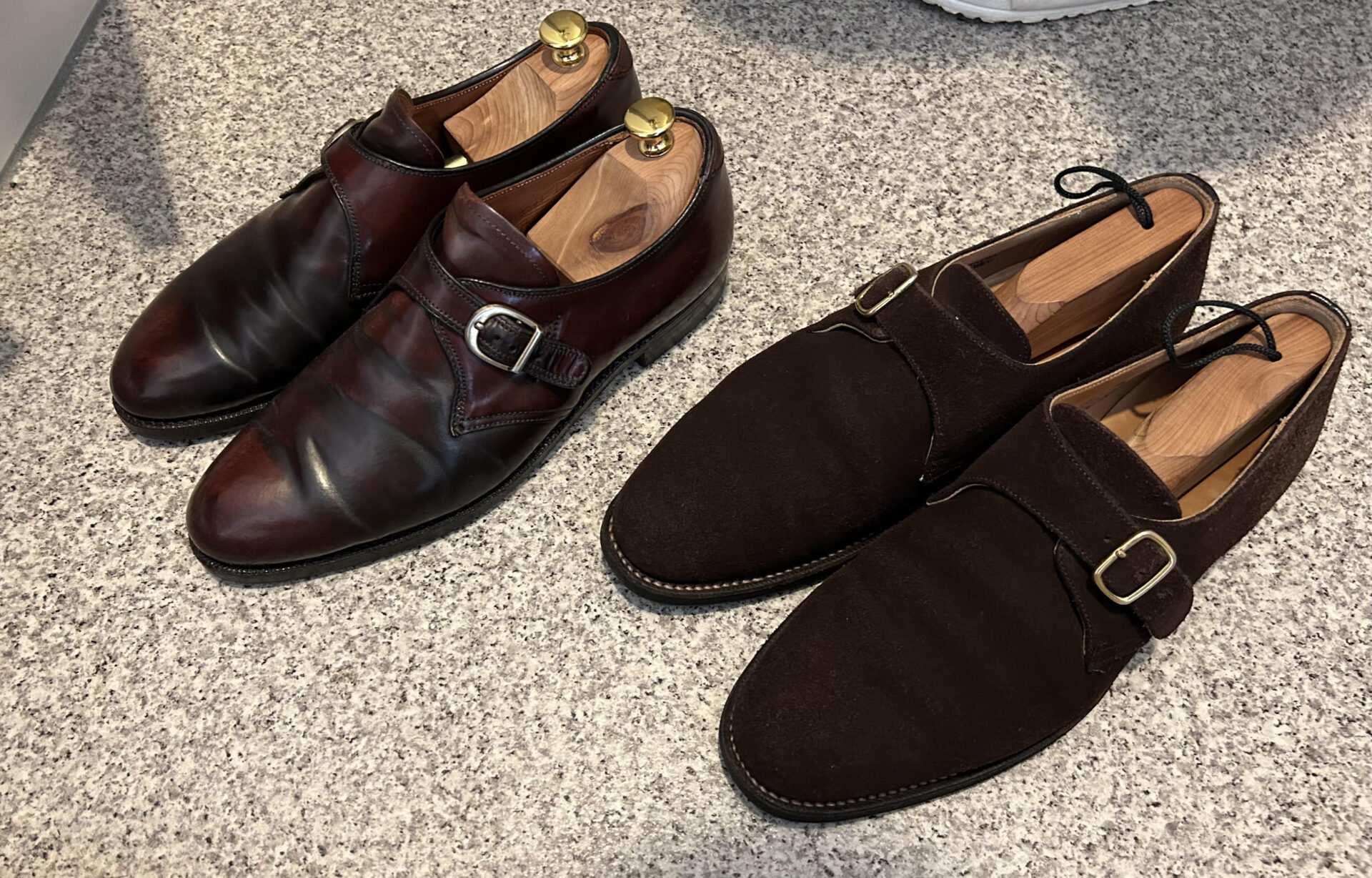
These are the only two pairs I own.
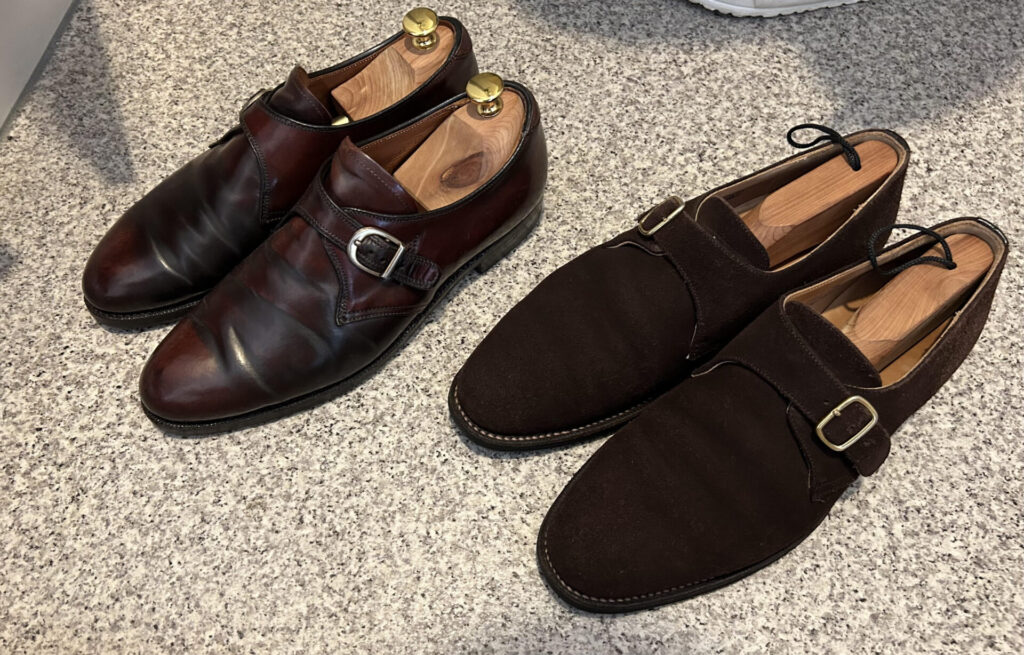
(Left) Alden cordovan leather in burgundy (which has darkened to almost brown).
(Right) Church’s suede in dark brown.
Neither are smooth calf leather, and neither are black, so they’re not suitable for formal ceremonies.
But for my lifestyle, they’re more than enough.
I mostly wear linen suits from spring to autumn, and flannel suits in winter.
I rarely wear sleek worsted wool suits, so cordovan and suede work perfectly.
I’d like to buy black monk straps someday—but haven’t yet.
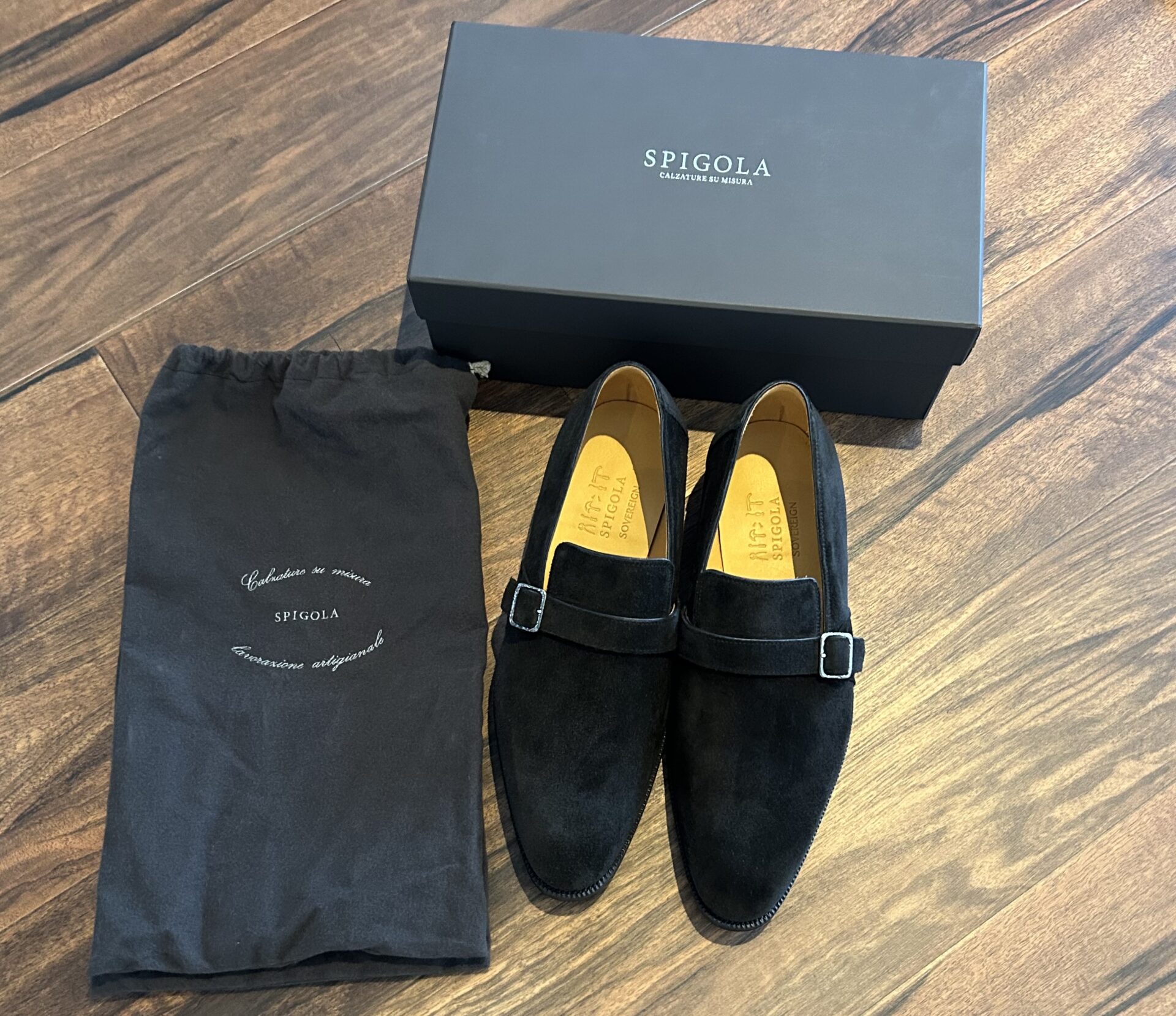
Update: I later purchased a pair in black suede by Spigola.
Summary
To summarize:
Shoelaces can accumulate various forms of dirt—including urine.
Loafers are extremely convenient, but less formal.
Monk straps offer a practical alternative.
They work well in most situations short of black-tie formality.
Even if you’re not as germ-conscious as I am, monk straps can free you from the hassle of shoelaces—I highly recommend them.



コメント