Hello, my name is Mr. Linen.
You might have heard comments such as: “This jacket’s collar hugs the neck nicely, which makes it very comfortable to wear.”
You also frequently hear expressions like “the collar rises well.”
For beginners, these phrases sound vaguely understandable—but also a bit confusing.
What does it mean for a collar to “hug the neck”?
What does it mean for a collar to “rise”? Does it simply mean the collar is tall?
And what exactly is considered the classic collar height for a tailored jacket?
In this article, I will explore jacket collars from several different perspectives.
When a Collar “Hugs the Neck”
A collar that hugs the neck?
Why would that affect comfort?
I have never made a jacket myself, so I cannot speak as a tailor. However, when people say that a jacket collar “hugs the neck,” they generally mean that there is no gap between the neck and the collar—the collar sits closely against the neck.

If the collar does not hug the neck properly, the jacket appears to float away from the back of the neck.

The weight of a jacket is supported mainly by the neck and shoulders.
If the collar floats away from the neck, the shoulders alone must support the entire weight of the jacket.
But when the collar sits properly against the neck, the jacket’s weight is supported not only by the shoulders but also around the neck area.
This distributes the weight more evenly rather than concentrating it entirely on the shoulders.
The more evenly the weight is distributed, the lighter and more comfortable the jacket feels.
Think of it like a backpack. If the shoulder straps were as thin as shoelaces, they would dig painfully into your shoulders.
But if the straps were as wide as a car seatbelt, the load would feel much more comfortable.
The principle is similar.
Which Part Is “Collar Height”?
For a collar to hug the neck, the collar needs a certain amount of height.
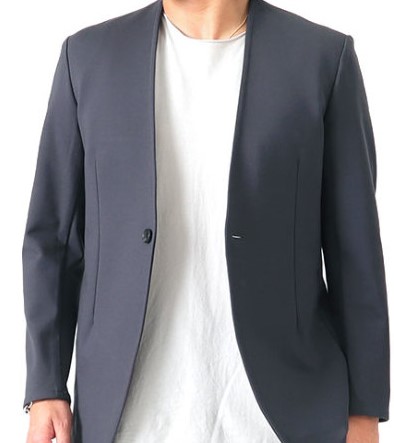
For example, a collarless jacket leaves the neck completely exposed. In that case, the shoulders alone support the jacket’s weight.
On the other hand, imagine if the collar were extremely tall—high enough to reach your chin.
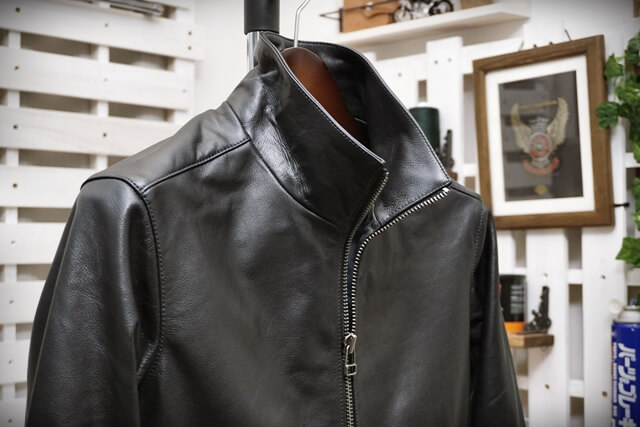
The area above the Adam’s apple would simply cover the neck without actually helping to support the jacket’s weight.
In other words, for a jacket collar to properly hug the neck, a moderate height is ideal.
But which part exactly is referred to as the collar height?
It refers to this part. The example below shows a shirt collar, but the concept is the same for jackets.
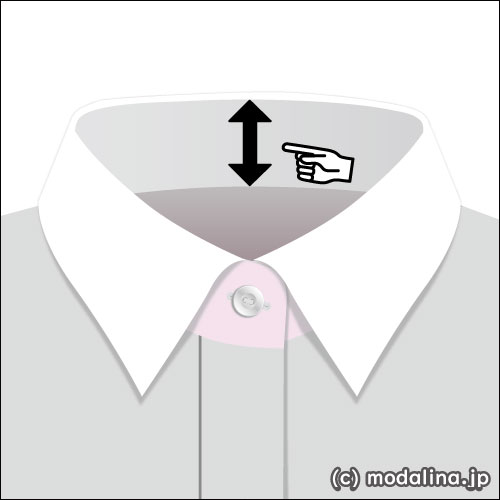
This section is sometimes called the collar stand.
If you raise the collar of a jacket, you can notice something interesting.
Near the center of the underside of the collar, you will see two rows of stitching.
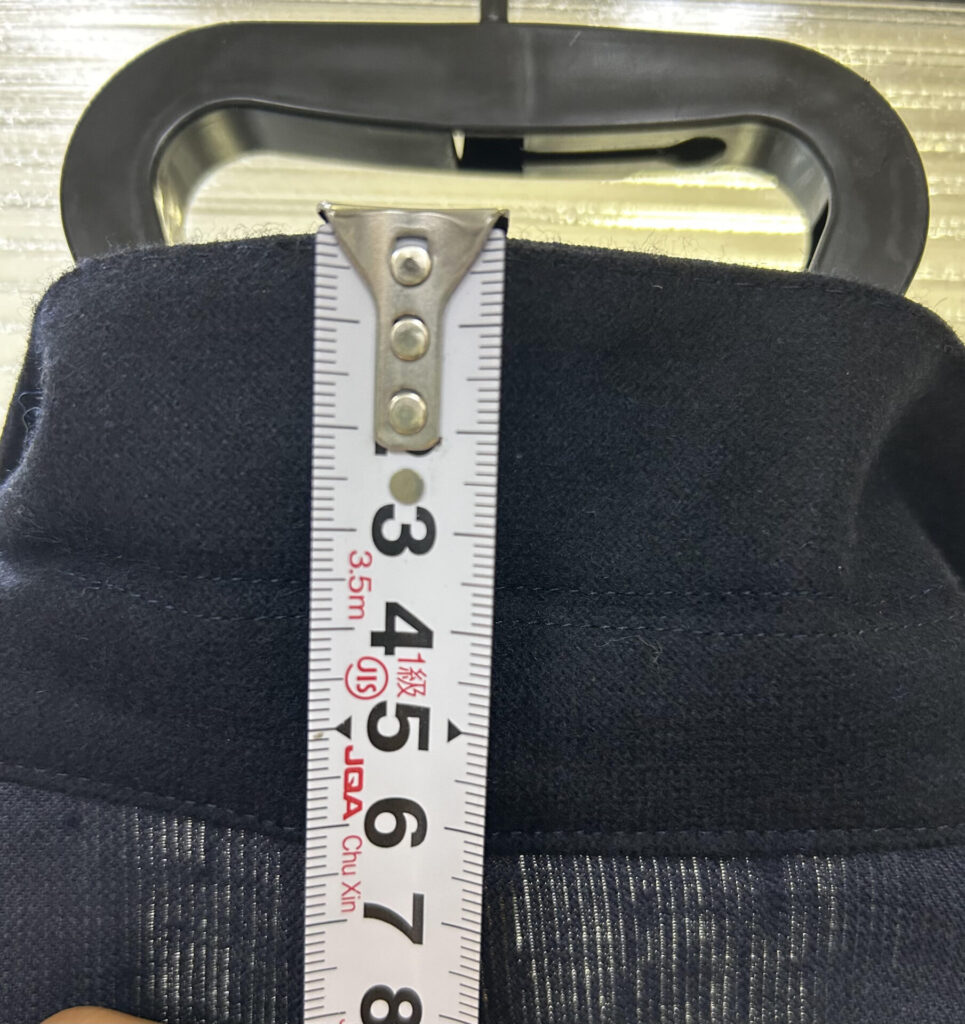
When the collar is folded down, the fold occurs roughly between these two lines.
The upper side measures about 3.7 cm (1.46 in).
The lower side measures about 2.7 cm (1.06 in).
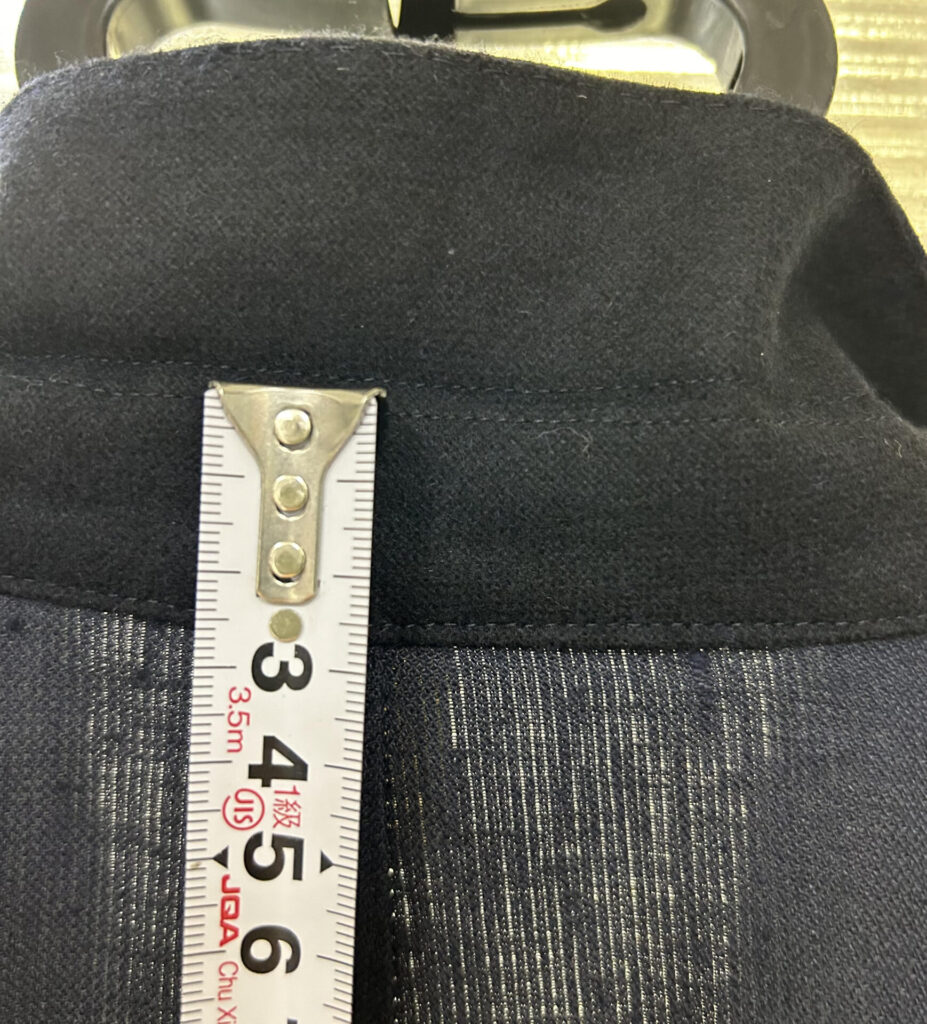
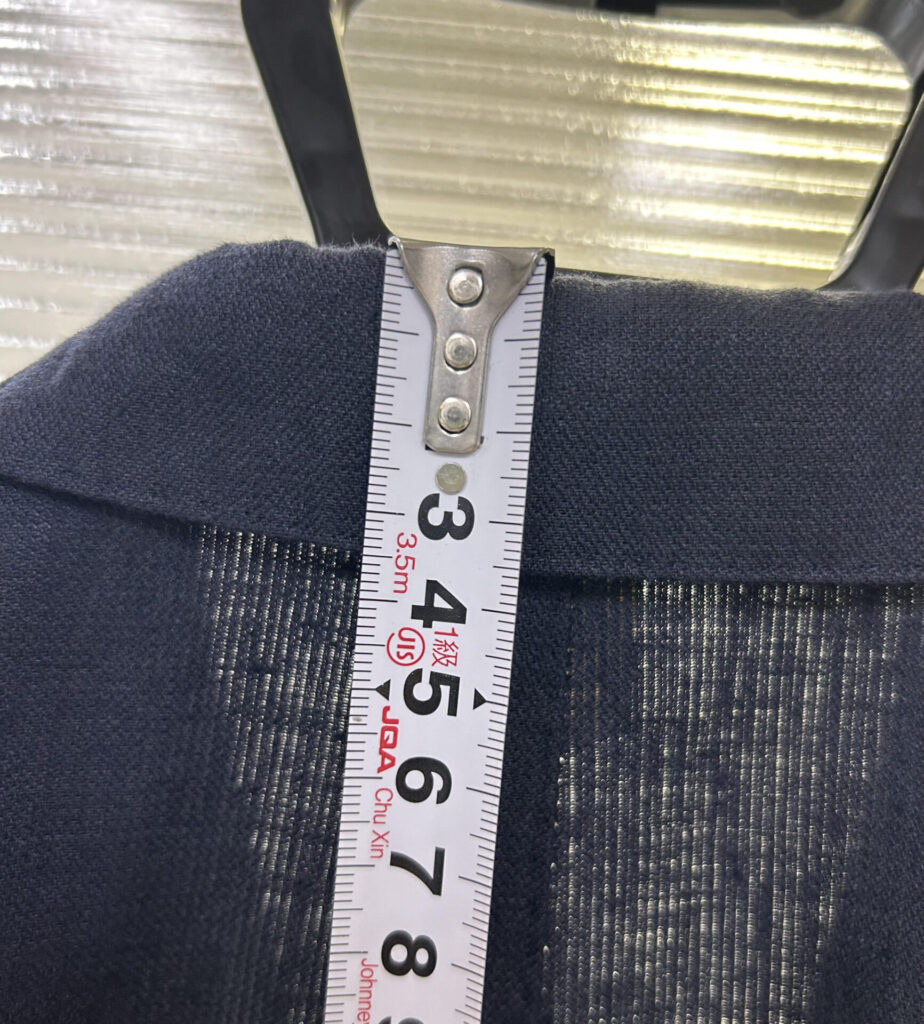
The actual collar height when worn is the lower measurement: 2.7 cm (1.06 in).
The difference of about 1 cm (0.39 in) folds under the seam where the collar attaches to the jacket body, so it does not count as visible collar height.
Collar Height and Comfort
Technically, collar height is a design choice. It could be 1 cm (0.39 in) or even 10 cm (3.94 in).
If it is 0 cm, the jacket simply has no collar. If it is 10 cm, the garment becomes quite unconventional.
So what collar height provides the best comfort?
Following the backpack strap analogy, a higher collar distributes weight better and should theoretically feel more comfortable.
If comfort alone were the goal, the collar should be as high as possible—within reason.
However, excessively high collars have disadvantages.
The biggest issue is the relationship with the shirt collar.
If the jacket collar is too high, it may become taller than the shirt collar.
Traditionally, about 1.5 cm (0.6 in) of the shirt collar should be visible above the jacket collar.
This not only looks elegant but also helps protect the jacket collar from skin oils.
If you always wear the same brand of shirt and jacket, compatibility might not be an issue. But most people mix different brands, so collar height compatibility becomes important.
Of course, if you commission everything bespoke, you could design the shirt collar about 1.5 cm (0.6 in) higher than the jacket collar—but that would be impractical for most wardrobes.
Does a Higher Collar Mean Better Craftsmanship?
It is often said that a jacket with a collar that hugs the neck well is a sign of high-quality construction.
This makes sense because such a collar distributes weight better, improving comfort.
I have heard that achieving this close neck fit is technically difficult and requires skilled tailoring.
As a non-tailor, it is hard to imagine exactly how difficult it is. But one analogy helped me understand it.
Imagine draping toilet paper behind your neck like a scarf, letting it hang down the front of your body. Now imagine doing the same with a sheet of kitchen paper towel.
Toilet paper would probably follow the curve of your neck fairly easily. But a wider sheet like kitchen paper would crumple and fail to sit neatly along the neck.
If you tried the same with a single thread, it would conform to the neck perfectly.
Jacket fabric behaves similarly. To make a flat piece of cloth follow the curved shape of the neck requires careful cutting, shaping with an iron, and precise stitching.
A taller collar uses a wider piece of cloth, so it may require even greater technical skill to shape properly.
Differences Between Countries
If we look at tailoring traditions by country, Italian jackets tend to have (not always) slightly higher collars compared with British ones.
Italian tailoring often favors soft, natural shoulders—creating a smooth slope from neck to shoulder.
A higher collar may visually emphasize this slope, making the shoulder line appear softer.
Italian brands also tend to highlight craftsmanship features more visibly.
Examples include higher collars, the spalla camicia (shirt-style sleeve attachment), and visible hand stitching.
In contrast, British tailoring traditionally values understatement. Even if the technical skill exists, it is often expressed more subtly.
These are simply different cultural approaches—neither is inherently better or worse.
What Is the Classic Collar Height?
So what collar height is considered classic?
Looking from a traditional perspective, the Japanese menswear writer Masakatsu Ochiai once wrote that the classic height is about 3.0 cm (1.18 in).
He explained the relationship between shirt and jacket collars as follows:
“A shirt collar should be about 4–4.5 cm (1.57–1.77 in) high. About 1.5 cm (0.6 in) of the shirt collar should be visible above the back of the suit collar. Since a classic suit collar is about 3 cm (1.18 in) inside (4 cm outside), a 4.5 cm shirt collar will show about 1.5 cm.”
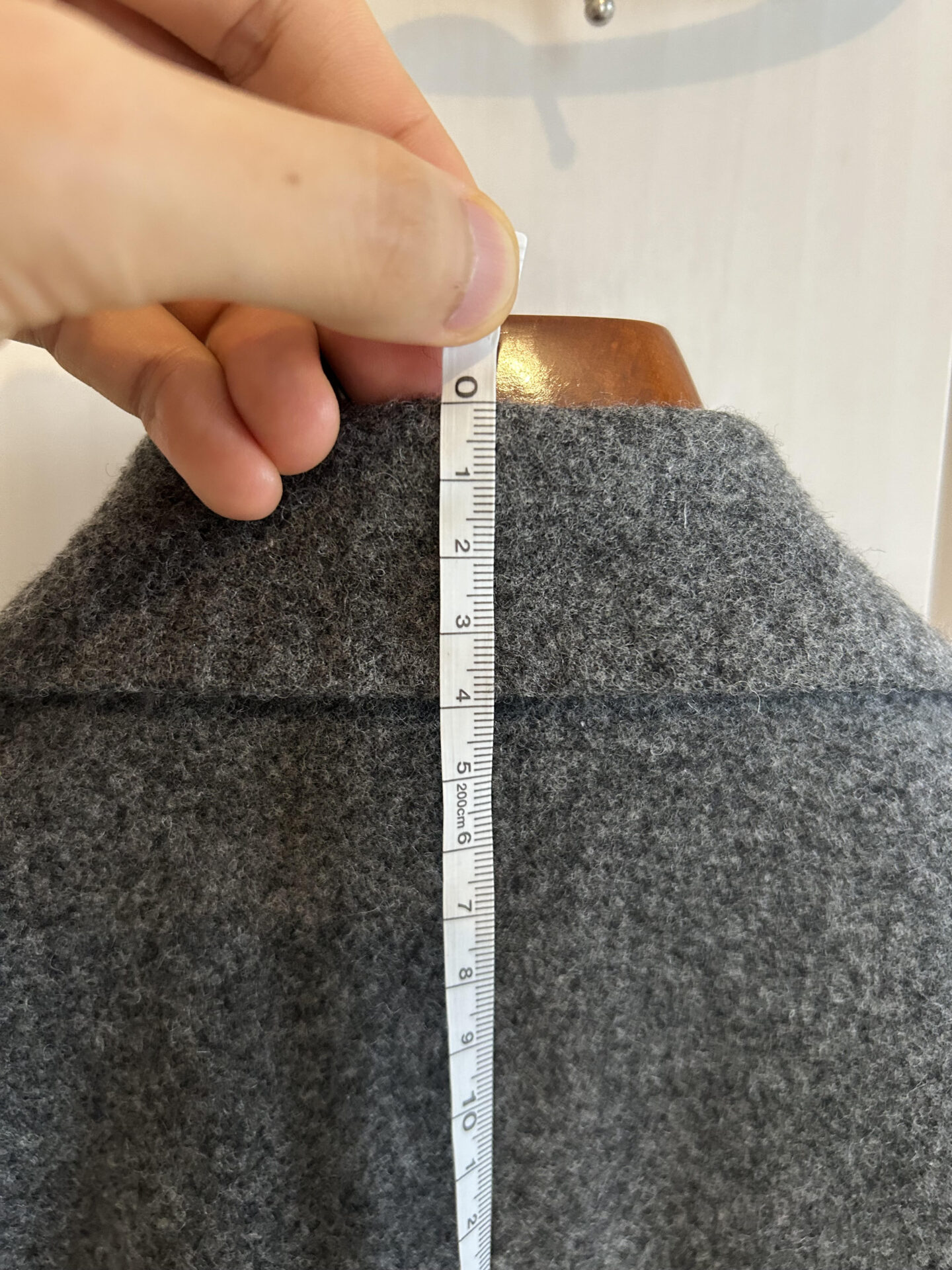
I also looked at jackets in my own wardrobe. Please note that the measurements in the photos show the outside length; the actual collar height (inside) is about 1 cm (0.39 in) shorter.
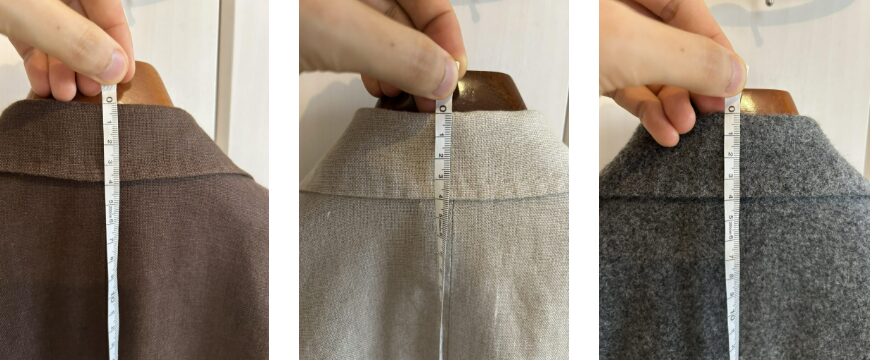
The outside measurements are around 3.8–4.0 cm (1.50–1.57 in), meaning the actual collar height inside is about 2.8–3.0 cm (1.10–1.18 in).
These jackets were all made by Neapolitan tailors, so they may represent a slightly higher Italian style.
When I ordered them, I never specified collar height, so perhaps this is simply the Neapolitan classic standard.
This jacket from the American brand Paul Stuart measures 3.5 cm outside, meaning about 2.5 cm (0.98 in) actual height.
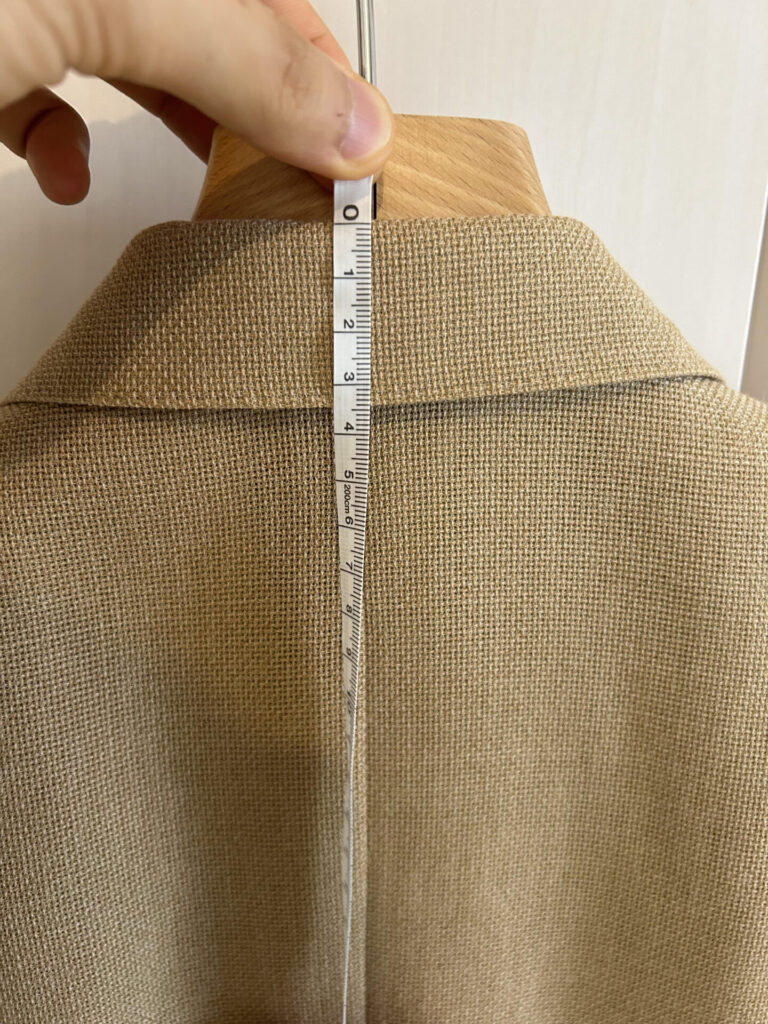
From these observations alone we cannot define a single universal number, but across Italian, British, and American traditions, roughly 2.5–3.0 cm (0.98–1.18 in) seems to fall comfortably within the classic range.
Checking Shirt Collar Height
For reference, I also checked some shirt collar heights.
A ready-to-wear shirt from Kamakura Shirts measured 4.0 cm (1.57 in). For shirts, the inner and outer measurements are usually the same, so I measured the inside.
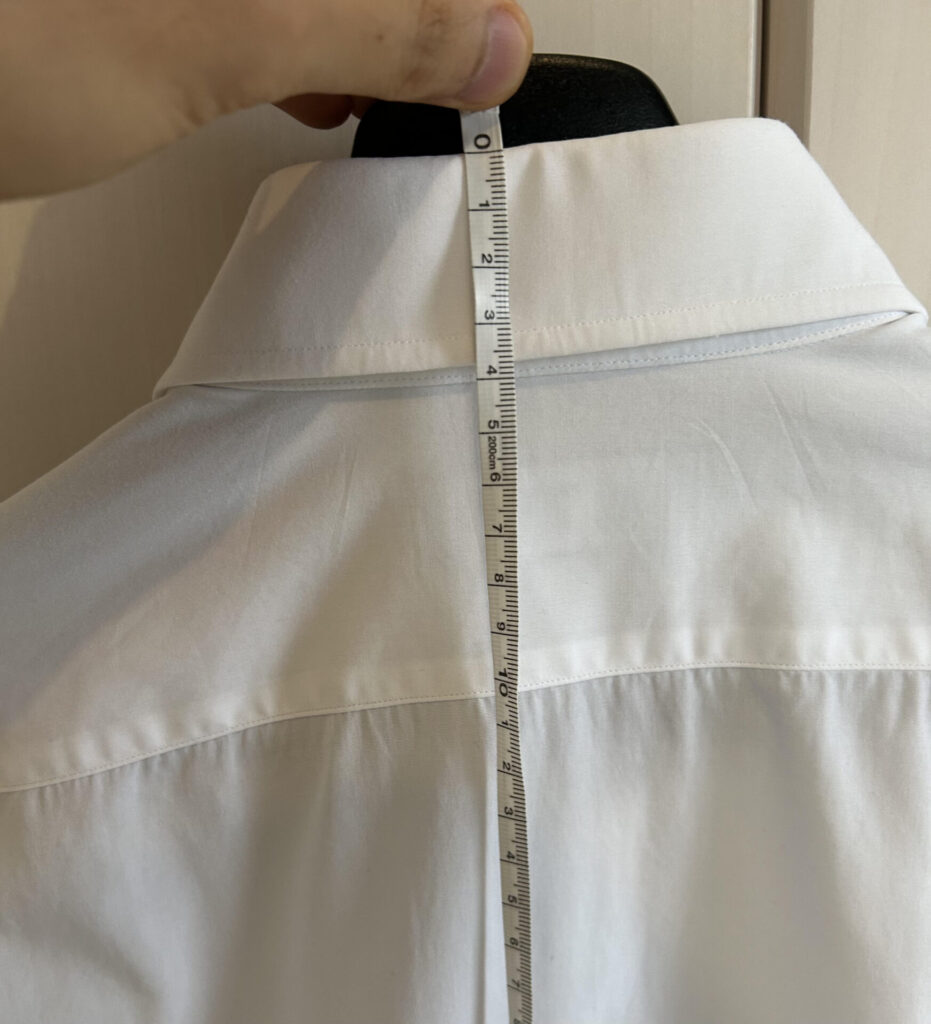
A shirt from the Italian brand Franco Prinzivalli measured 4.8 cm (1.89 in).
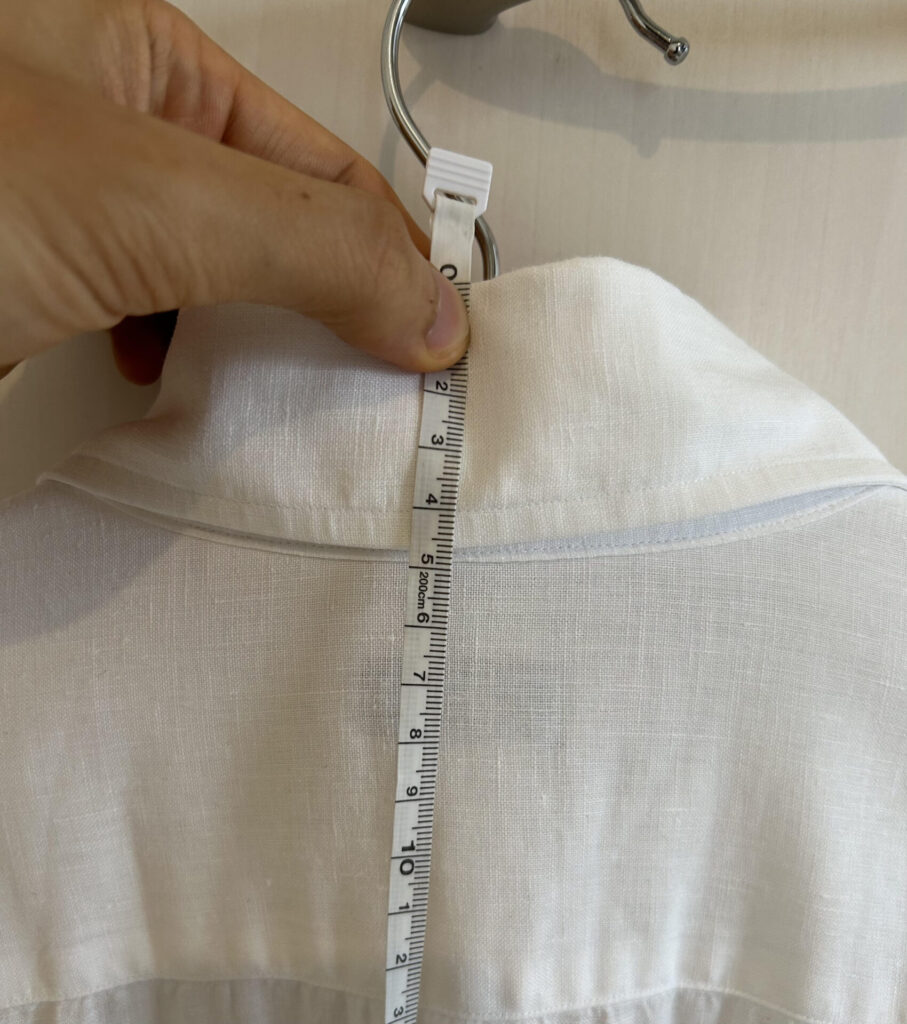
When paired with a slightly higher Italian jacket collar of around 3.0 cm (1.18 in), about 1.8 cm (0.71 in) of shirt collar shows—a little bit too high shirt collar, but not a bad balance.
If paired with the 4.0 cm shirt, only about 1.0 cm (0.39 in) would show, which might look slightly insufficient. However, it pairs perfectly with the Paul Stuart jacket with a 2.5 cm collar.
Conclusion
Looking closely at jacket collar height turned out to be surprisingly deep and interesting.
A collar that is too low does not hug the neck well, may feel less comfortable, and could be perceived as lower-quality construction.
A collar that is too high may hug the neck well and feel comfortable, but it becomes harder to match with shirt collars.
If you want to stay within classic proportions, keeping the collar height around 2.5–3.0 cm (0.98–1.18 in) inside (3.5–4.0 cm / 1.38–1.57 in outside) is a safe guideline.
That will be my conclusion for this article.
Postscript:
I later realized that the position of the collar against the neck is not determined by collar height alone.
The angle of the slope from the neck to the shoulder also plays a major role.
I wrote another article about that topic here (in Japanese):
Shoulder Slope and Collar Height: Why People with Square Shoulders May Struggle



コメント