Hello.
I’m Mr. Linen.
The other day, I bought a new pair of JM Weston Signature Loafers #180. The color is navy.
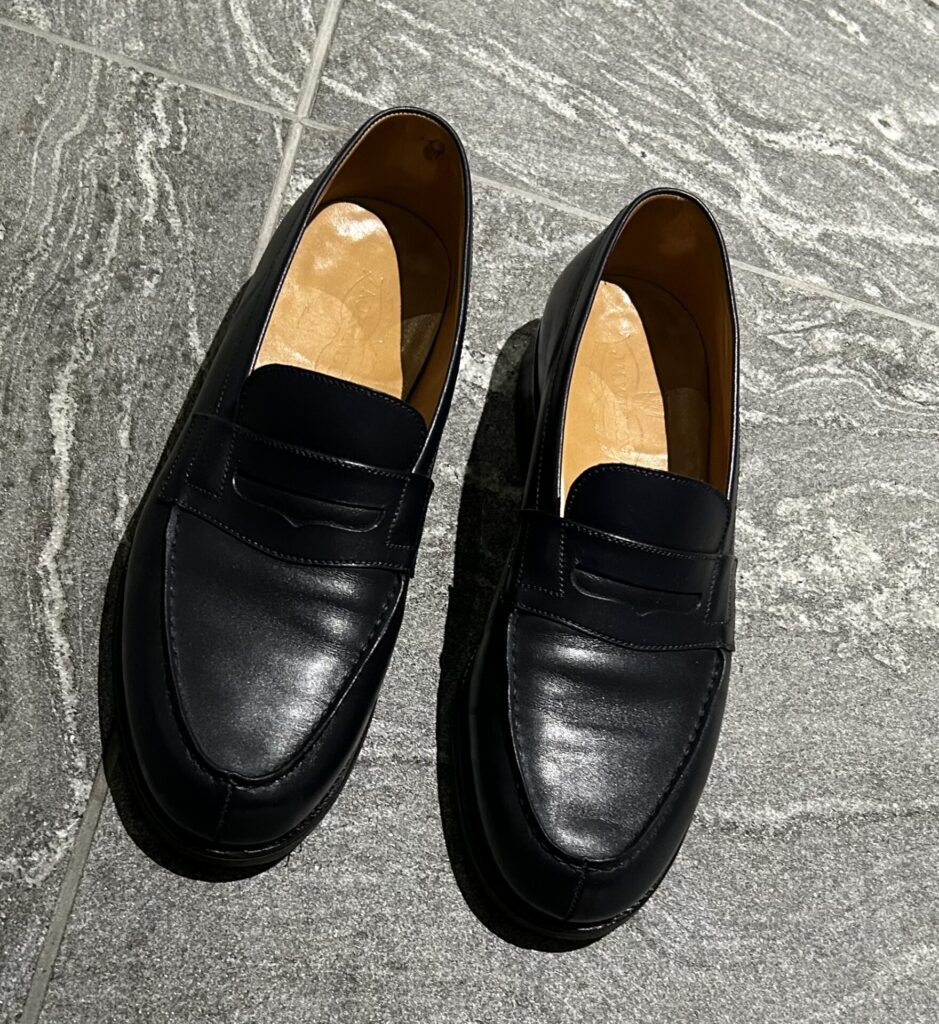
Until now, I had always worn my loafers with leather soles protected by a half rubber sole. This time, however, I bought a pair that came with a full rubber sole from the beginning.
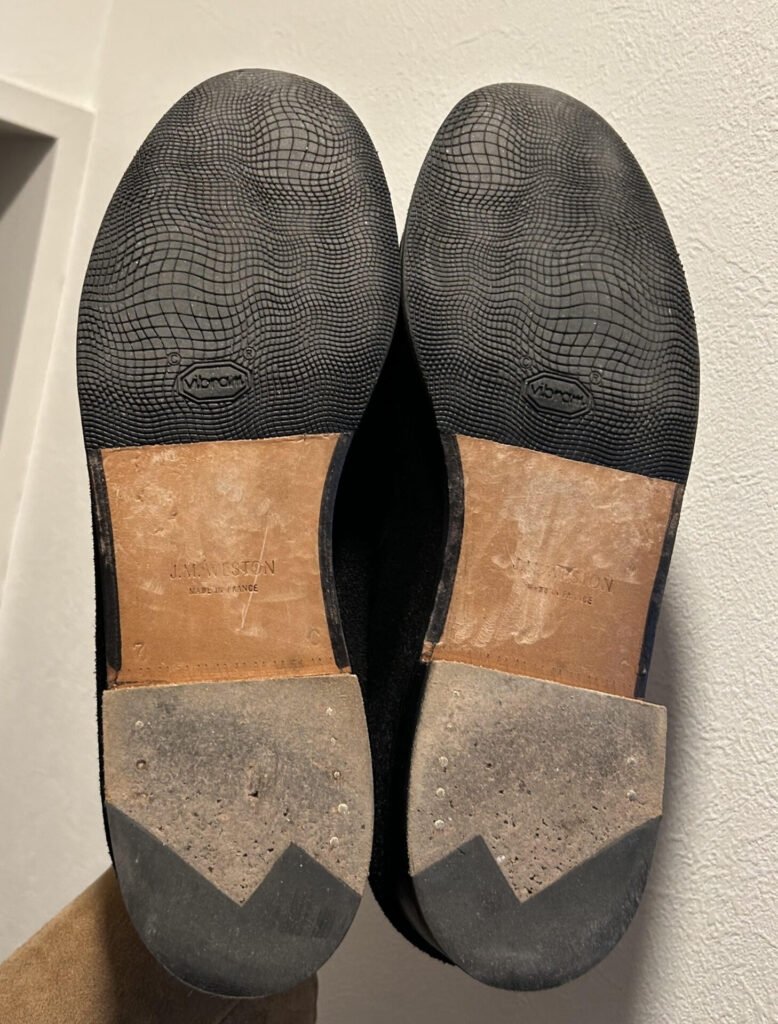
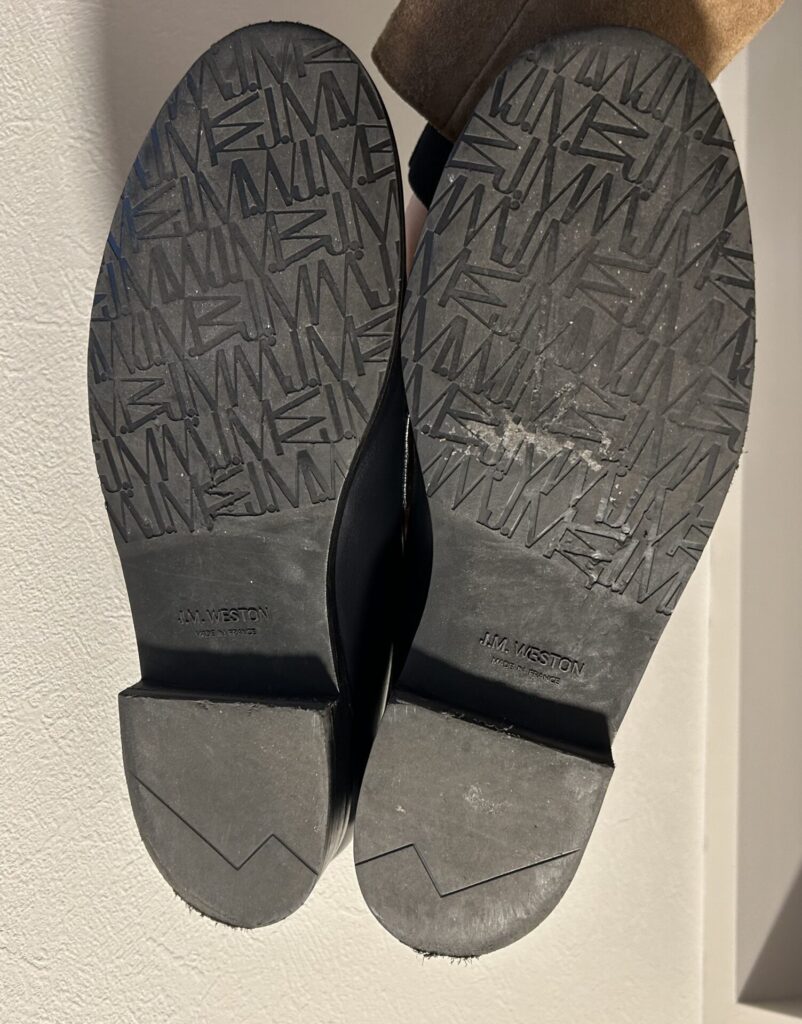
From here on, I will refer to this as the “original rubber sole.”
In this article, I would like to share my thoughts on the original rubber sole available on JM Weston loafers, including its advantages, disadvantages, and my personal experience.
My conclusion is simple: I prefer the leather sole.
The Good Points
I won’t get involved in the never-ending debate over leather soles versus rubber soles this time. However, I personally feel uncomfortable wearing leather soles directly on the floor of public restrooms or stepping into dirty puddles on city streets. For that reason, wearing a completely unprotected leather sole is simply not an option for me.
I hope you will keep that perspective in mind as you read the rest of this article.
Saving the Cost of Adding a Half Rubber Sole
The first advantage of the original rubber sole on JM Weston loafers is that you don’t have to pay the additional cost of having a half rubber sole applied over the leather sole. Depending on the repair shop, that can easily be around $20–$30.
Once the original rubber sole begins to wear down, it seems that you may eventually need to have another half rubber sole added over it. However, unless you wear the shoes extremely hard, I get the feeling that the original rubber sole should last around five years.
The heel is a different story. It wears down normally, so it will need to be replaced periodically.
It Doesn’t Look Bulky or Unattractive
The original rubber sole on JM Weston loafers is not particularly chunky, so even when a little of it is visible from the side, it doesn’t give the shoes an overly sporty appearance.
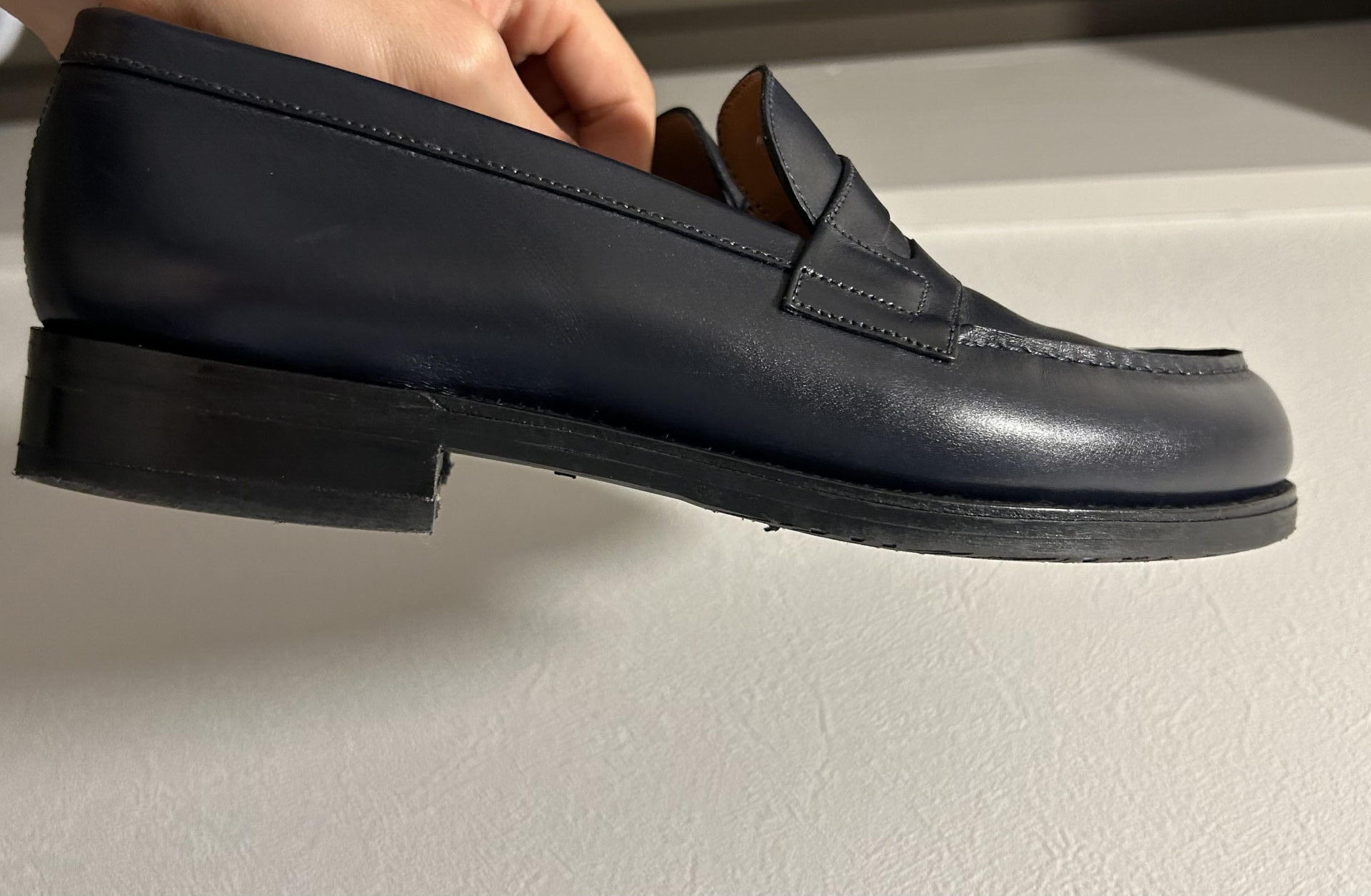
With something like a Dainite sole, the sole tends to have a very obvious “built for function” appearance, which can take away from the elegance of a dress shoe. With the JM Weston original rubber sole, you can keep an appearance relatively close to that of a leather sole, which I consider a major advantage.
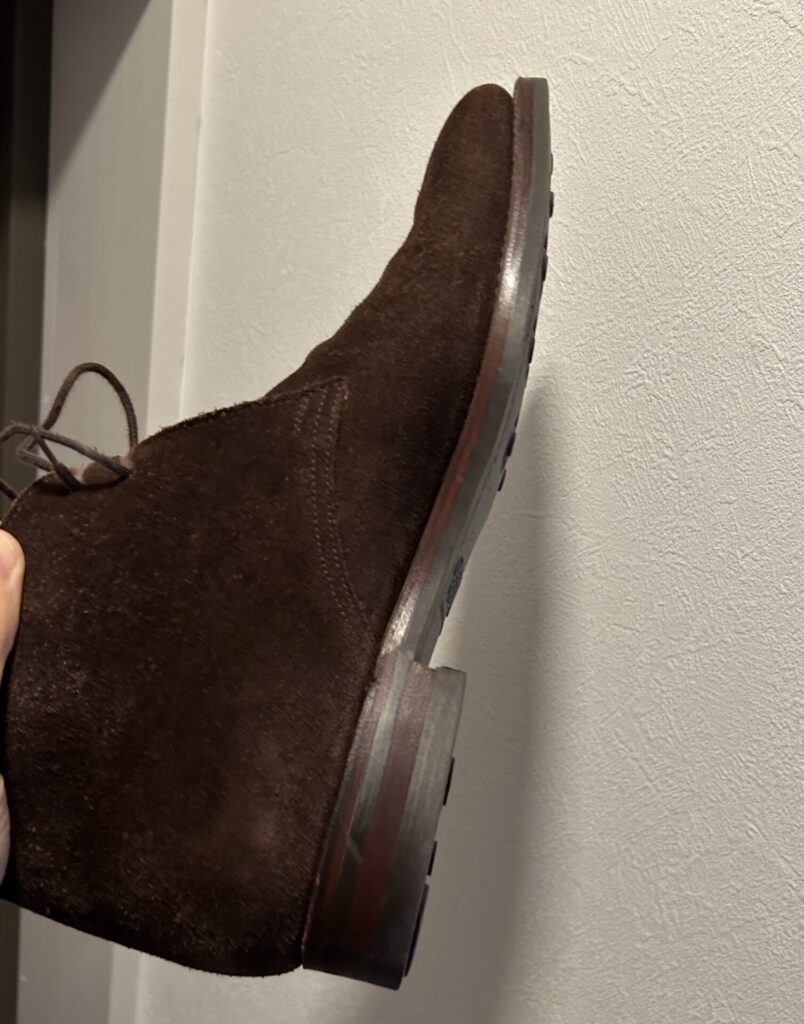
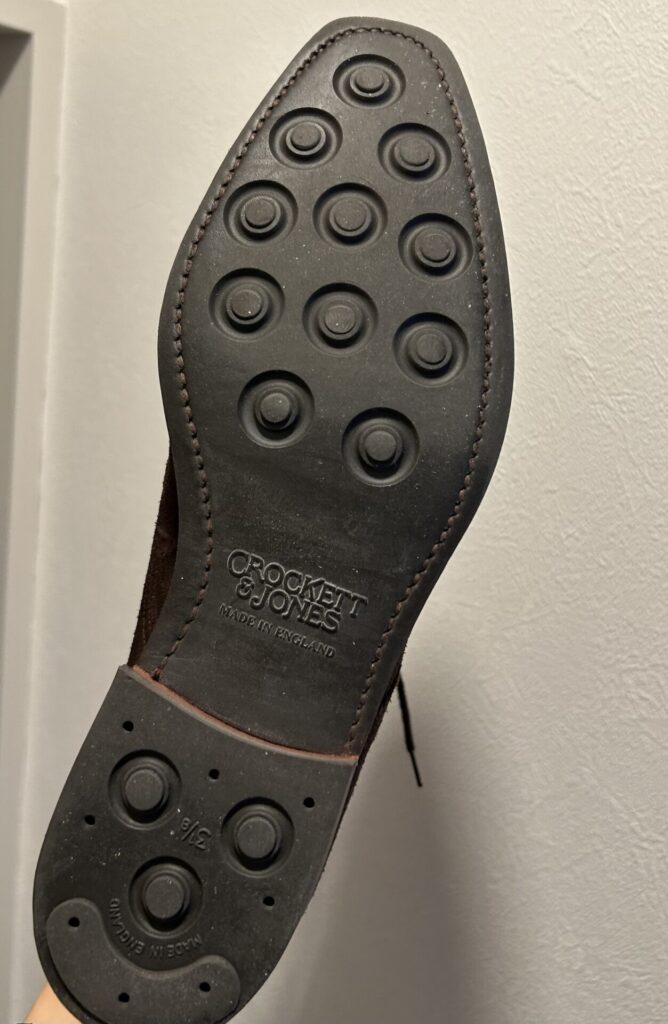
The rubber itself also provides plenty of grip, so you get better traction while still retaining a relatively elegant appearance. In other words, you get the best of both worlds.
Complete Protection from Water
With a leather sole plus a half rubber sole, the area around the waist of the shoe remains leather. This means that if you accidentally step into a deep puddle, water can still find its way into the sole.
The original rubber sole covers the entire bottom of the shoe with rubber, providing complete protection from water.
If the loafers have suede uppers, pairing them with the original rubber sole means you can wear them on rainy days without worrying quite so much about the conditions.
The Flexibility Is Pretty Good
The way a sole bends as you walk is sometimes described as how well the heel “follows” your foot. In terms of flexibility and this feeling while walking, I don’t think there is a major difference between the leather sole and the rubber sole.
A leather sole is initially quite stiff, but after considerable wear, it becomes remarkably soft.
My impression of the original rubber sole is that it starts out reasonably soft and remains reasonably soft even after being broken in.
I find both equally comfortable to walk in.
The Bad Points
Now let’s look at the disadvantages.
It Is Slightly Less Elegant
I just said that the original rubber sole looks almost as elegant as a leather sole, but that was only half the truth.
Compared with something like a Dainite sole, it is certainly elegant. However, compared with a leather sole plus a half rubber sole, you can see that it has a little more volume and looks somewhat thicker.
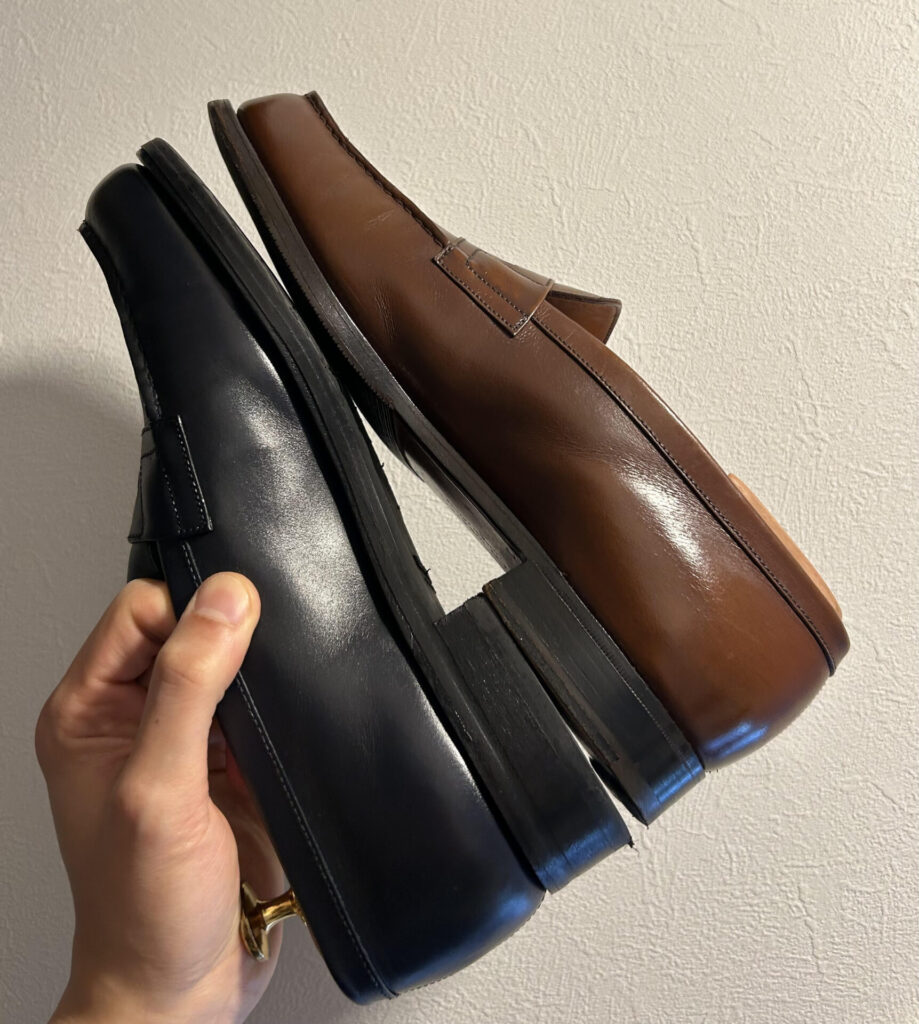
That said, it is really only noticeable when you compare the two side by side. When you look at the rubber-soled pair on its own, I don’t think the sole looks particularly thick.
The Rubber Becomes Slightly Fuzzy as It Wears
There is one more thing I noticed about the appearance.
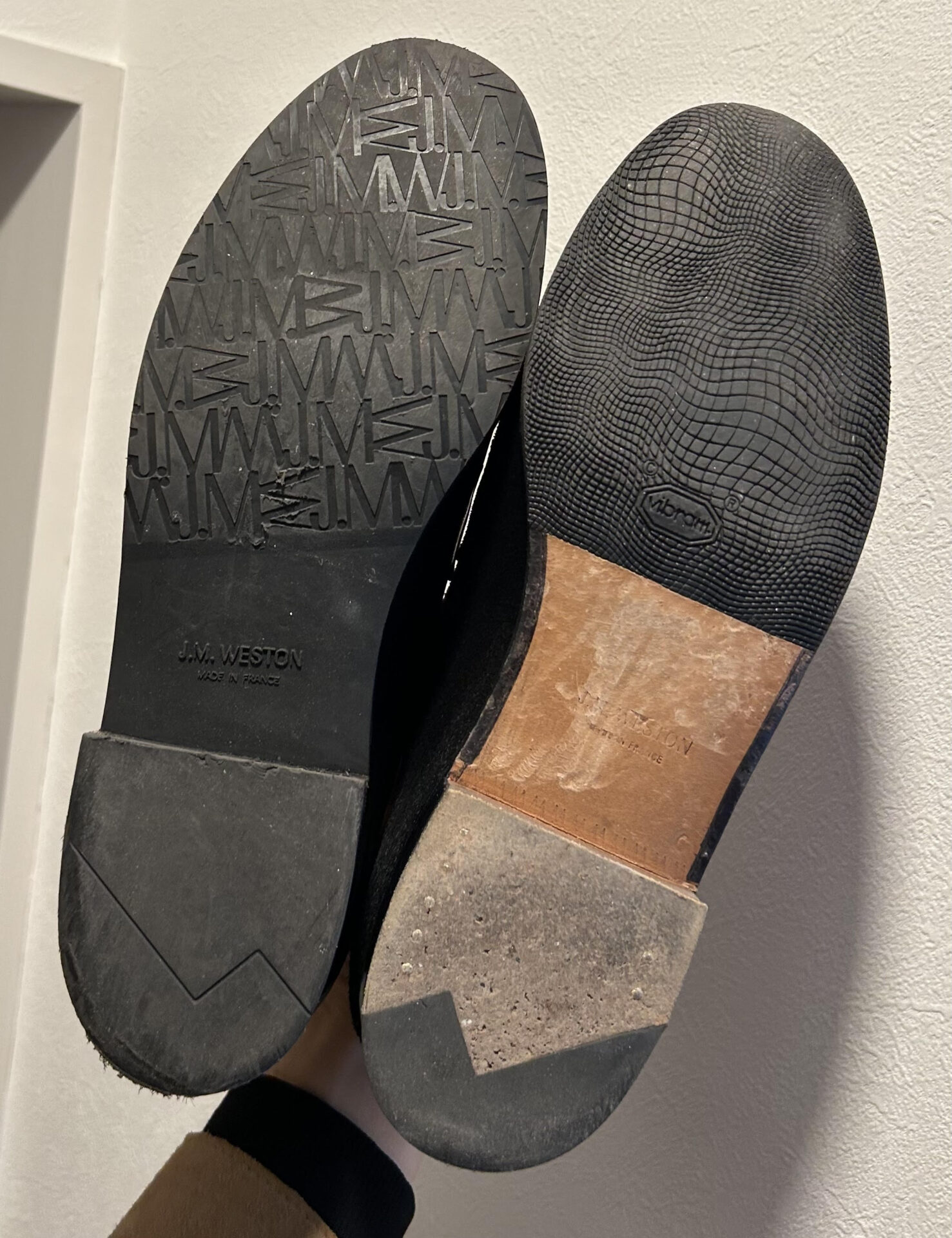
The rubber wears down and starts to develop a slightly fuzzy, frayed-looking surface.
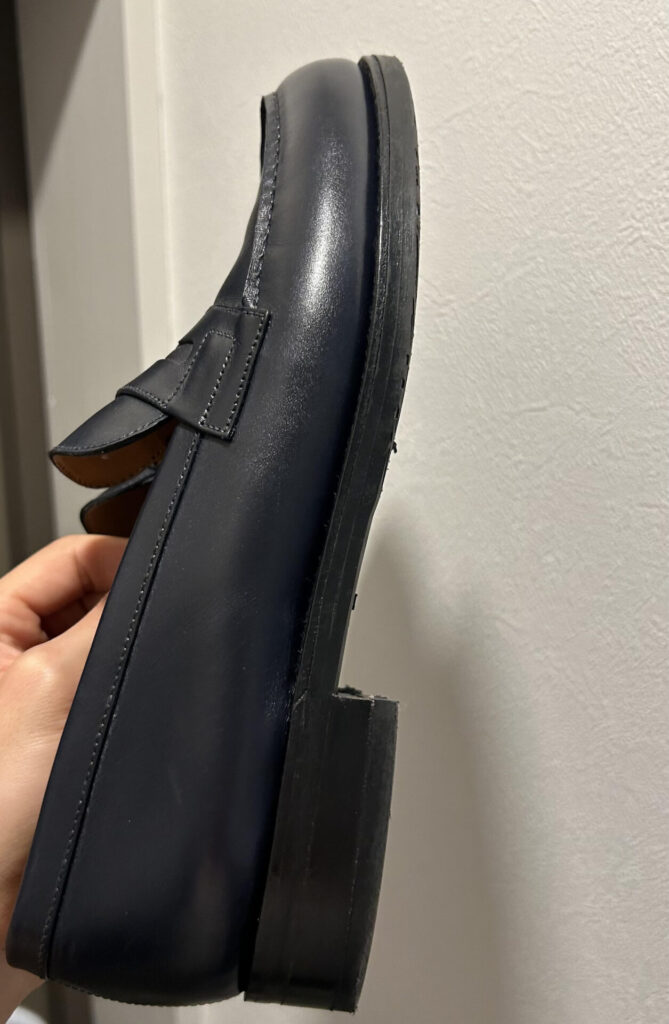
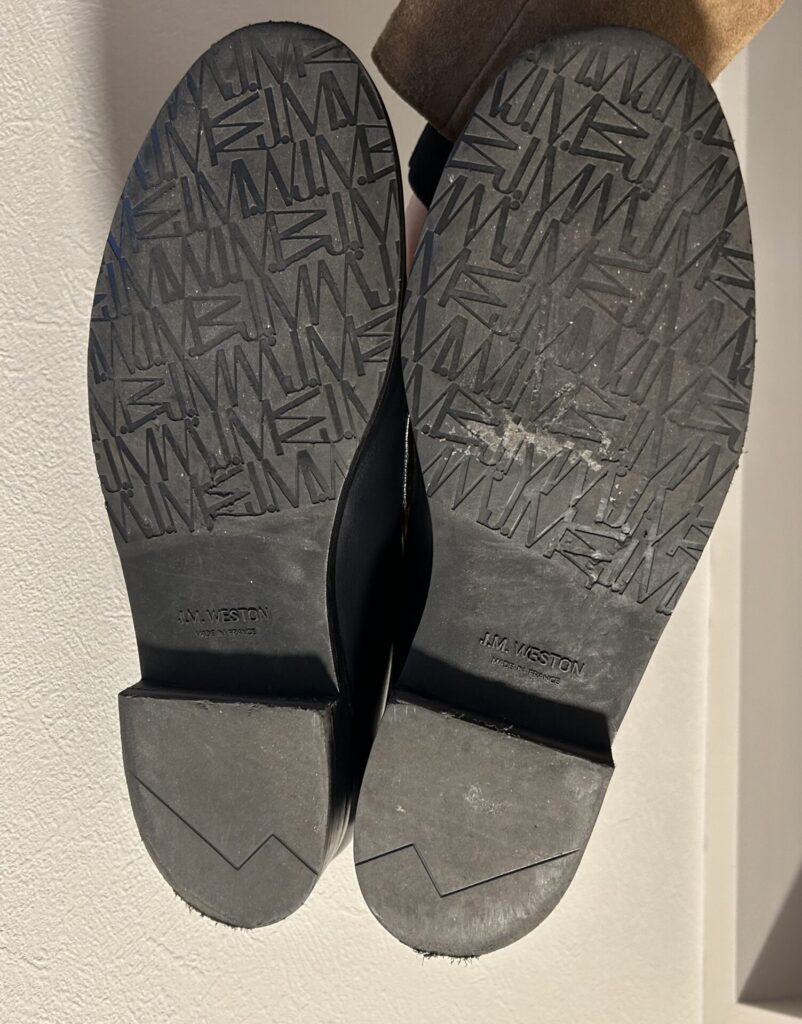
Can you see what I mean in the photos?
As far as I know, this kind of fuzziness does not occur with Dainite soles or with half rubber soles. So perhaps the original rubber used by JM Weston is somewhat more prone to developing this texture as it wears.
If I want to remove the fuzziness, the only real option seems to be to shave or sand it down. But I hesitate to do that because it would also mean removing some of the sole itself.
For now, all I can do is keep wearing them and hope that the fuzziness eventually disappears as the sole wears further.
Slightly Less Breathable
Are there people who avoid putting a half rubber sole on leather soles, or even avoid fully rubber-soled shoes altogether, because they believe the rubber reduces breathability?
Personally, I cannot wear leather soles without a half rubber sole, so my comparison is really between a leather sole plus a half rubber sole and a fully rubber sole.
I have never experienced the true value of wearing a completely unprotected leather sole.
When comparing a leather sole plus a half rubber sole with a fully rubber sole, I personally feel there is essentially no difference in breathability.
If you wear the shoes all day, I think your feet will sweat and feel warm and humid whether you have a half rubber sole or a full rubber sole.
Since these are loafers and are easy to take on and off, I sometimes take them off while eating to give my feet a chance to breathe. It may not be the most refined thing to do, but it works.
They May Crack If Left Unworn for Too Long
One problem you occasionally encounter with rubber soles is that the rubber can harden and crack when the shoes have been left unworn for a long period of time.
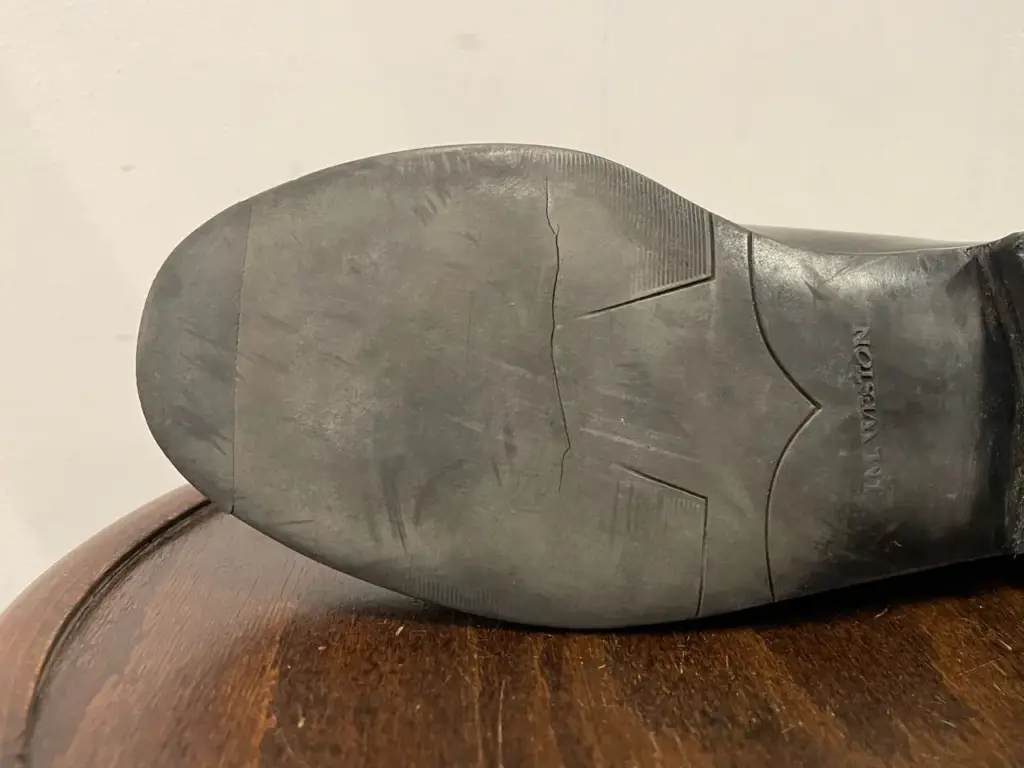
This can apparently happen with JM Weston’s original rubber soles as well, so I think it is best to avoid leaving them unused for long periods. At the very least, I would recommend wearing them two or three times a month.
Conclusion
After actually wearing JM Weston loafers with the original rubber sole for the first time, which would I choose if I were to buy the same loafers again: the leather sole or the original rubber sole?
My answer is the leather sole (plus a half rubber sole).
The reason is that compared with the leather sole, I feel the original rubber sole makes the shoes just slightly less elegant because of its additional thickness and the way the rubber can become fuzzy as it wears.
That is my conclusion based purely on appearance.
If I were looking for a pair of shoes specifically to wear on rainy days, I would feel more comfortable choosing the original rubber sole because the entire bottom is protected. However, JM Weston loafers are not shoes I personally regard as dedicated rain shoes. They are shoes that I would generally prefer to keep dry, so for me, a half rubber sole is sufficient.
That said, if you specifically want a pair of JM Weston loafers with suede uppers and rubber soles for wearing on rainy days, I think the original rubber sole would be the better choice.
That’s all for today.
Thank you very much for reading all the way to the end.



コメント