Hello.
I’m Mr. Linen.
Among menswear enthusiasts, is it considered common knowledge that a jacket’s gorge line (the seam where the upper collar meets the lapel) looks more balanced when its angle matches the angle of the shirt collar?
But should the angle of the gorge line and the shirt collar actually match in the first place?
And if they should match, what should we use as the basis for determining the angle of each?
That is what I’ll consider in this article.
It’s Hard Not to Notice When the Angles Don’t Match
To begin with, I honestly don’t know whether, according to the rules of classic menswear, the angle of a jacket’s gorge line and the angle of the shirt collar are actually supposed to match.
I suspect this is not really a formal rule in the same sense as, for example, the traditional expectation of wearing lace-up shoes with formal attire in Japan. Rather, it may be more like the preference for a higher-rise pair of trousers being considered more elegant—a matter of taste rather than a strict rule.
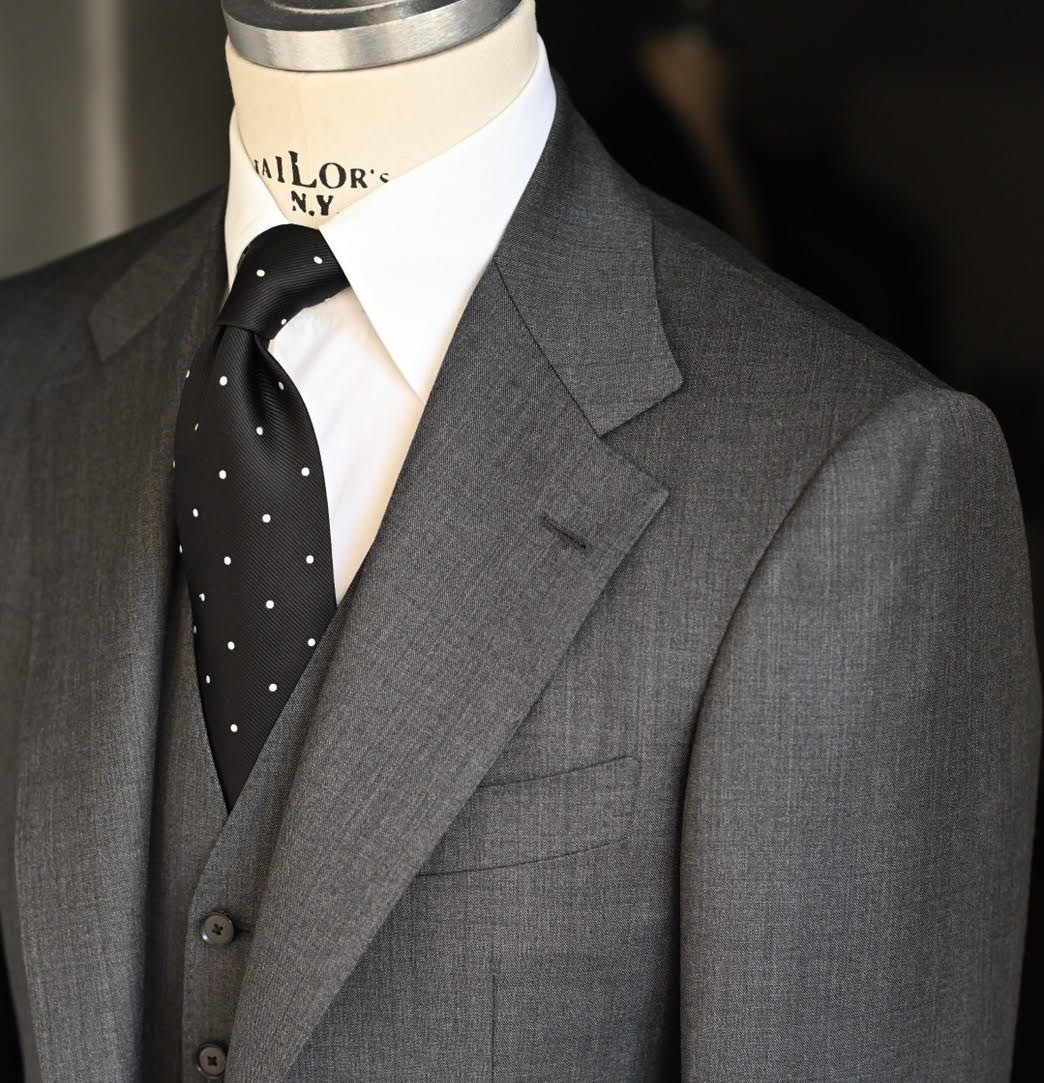
The other day, a three-piece suit I had ordered from DORSO was finally completed. When I tried it on, I noticed that the angle of the jacket’s gorge line was slightly different from that of the shirt I was wearing—a ready-to-wear dress shirt from Kamakura Shirts.
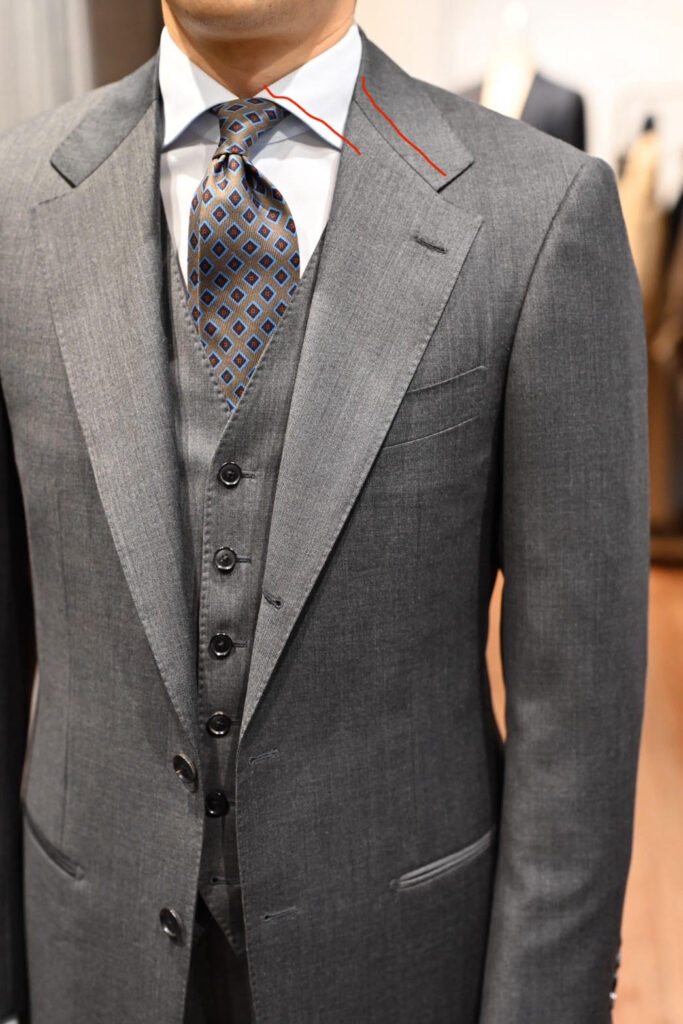
Take a look at the two red lines in the photograph. Their angles are slightly different: the gorge line is steeper, while the shirt collar opens at a gentler angle.
This is simply a matter of how well the jacket and shirt work together. It is not a question of one angle being correct and the other being wrong.
I had never really paid attention to the angle of the gorge line and shirt collar before. Or rather, I was able to ignore it because, by coincidence, the gorge lines on the jackets I had bought and the collars on my shirts happened to have roughly the same angle.
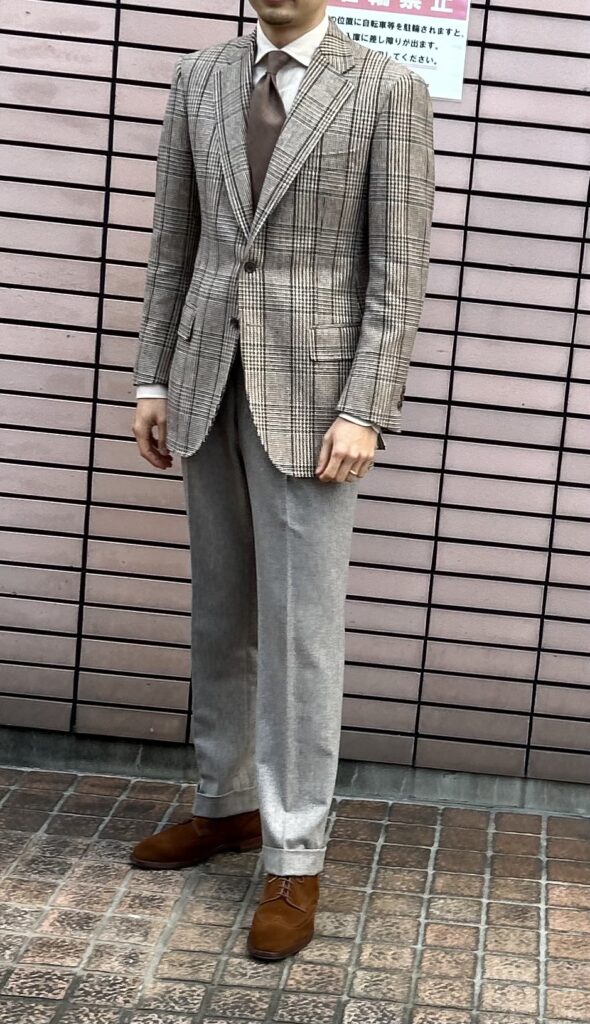
I mainly wear ready-to-wear dress shirts from Kamakura Shirts, occasionally mixed with ready-to-wear dress shirts from overseas brands. Most of them have either wide-spread or semi-wide-spread collars.
The jackets I had owned until then tended to have relatively open gorge lines, so they worked well with the spread collars from Kamakura Shirts, both wide and semi-wide.
The gorge line on my DORSO jacket is slightly more closed in comparison.
That is why the two angles did not match.
Looking at DORSO’s Instagram, I noticed that they pair their jackets with shirts whose collar angles are almost exactly the same as the gorge lines, and the overall balance looks very good.
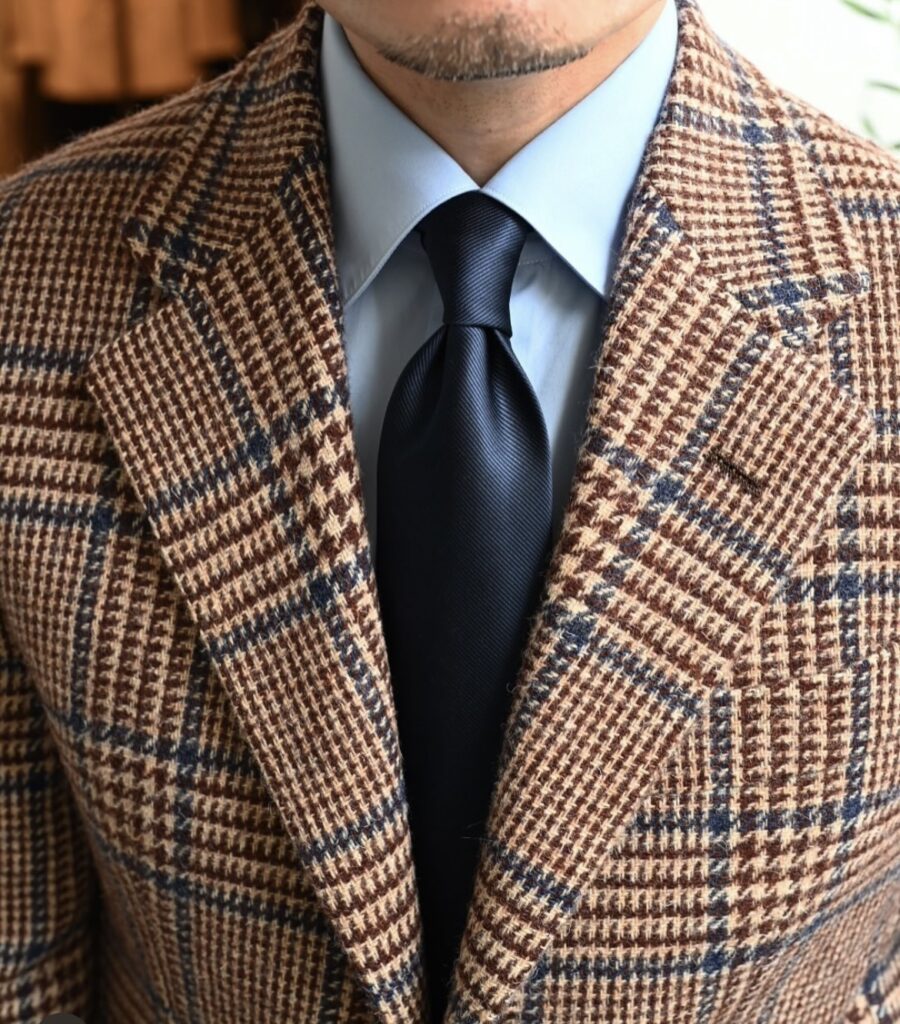
In fact, in the following photograph of my suit worn with one of DORSO’s original shirts, the two angles match perfectly.
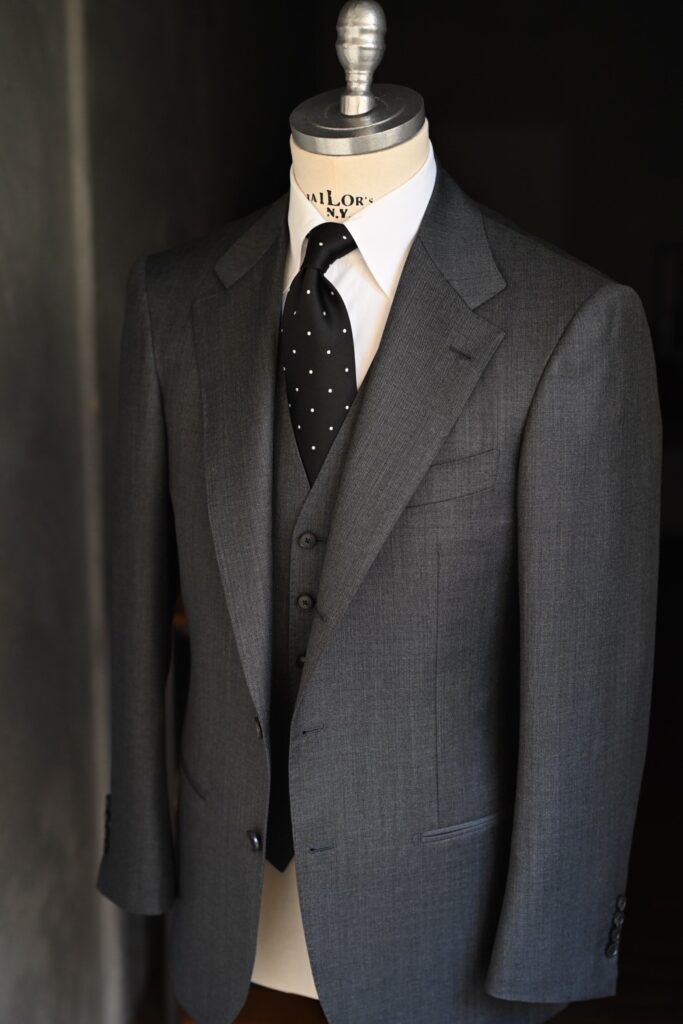
I’m sure nobody other than me would care if the angle of the jacket’s gorge line and the shirt collar were different. But now that I’ve noticed it, I can’t help noticing it, so I need to think about what to do.
Choose the Jacket or Choose the Shirt
Probably the ideal solution would be to own different shirts specifically chosen to work with each jacket.
In my case, that means buying new shirts specifically for my DORSO suits.
That solves the problem with this particular suit. But if I continue ordering jackets with the same gorge-line angle in the future, the shirts I already own—mainly ready-to-wear shirts from Kamakura Shirts—will gradually become less useful with them.
On the other hand, asking a tailor to change the angle of the gorge line simply so that it works with my existing shirts feels a little like imposing my own preferences on the tailor’s house style, which I’m reluctant to do.
Besides, I actually like the slightly lower, more closed-in gorge line that DORSO uses, so I don’t want to ask them to change it.
Thinking about it this way, if I continue ordering from DORSO, the spread-collar shirts from Kamakura Shirts—both wide and semi-wide—will probably get less wear, although their other collar styles may still work.
In other words, I have to choose between the jacket and the shirts.
I intend to continue ordering from DORSO, so I’m choosing the jackets.
I suppose I’ll have to give up on Kamakura Shirts for these particular combinations and start ordering shirts instead. They will cost more, of course, but I don’t know of any ready-to-wear brand that offers a collar angle compatible with the DORSO gorge line while also providing the kind of extensive size range that Kamakura Shirts does.
Ideally, You Would Stick to One Brand
The ideal situation would be for all the jackets and shirts in your wardrobe to come from the same brand, with the gorge lines and shirt collars all having matching angles.
But unless you own your own clothing store, that is obviously not something most people can realistically do.
As far as tailors are concerned, I’ve decided that I don’t want to keep going to different ones anymore. However, I don’t have the financial freedom to buy nothing but made-to-measure clothing all the time, so I may still search the vintage market for jackets and shirts.
When buying vintage, it would be ideal if the angle of the jacket’s gorge line or the shirt collar matched the angles of the pieces I already own, but realistically, that is not always going to happen.
As someone who loves clothes, I’m always tempted by the idea of buying something new. But when you buy different pieces from many different brands, you often end up needing another item specifically to work with each new piece. Before you know it, your wardrobe keeps growing for no particularly good reason, and it starts to feel rather absurd.
In my case, I think I’m going to stop hunting through the vintage market simply because it allows me to buy inexpensive new-to-me pieces—at least when it comes to jackets and shirts—and gradually focus on made-to-measure clothing instead.
Could a Mismatched Gorge Line and Shirt Collar Actually Be Classic?
Finally, let me tell you something that may completely overturn everything I have discussed in this article.
Take a look at these photographs.
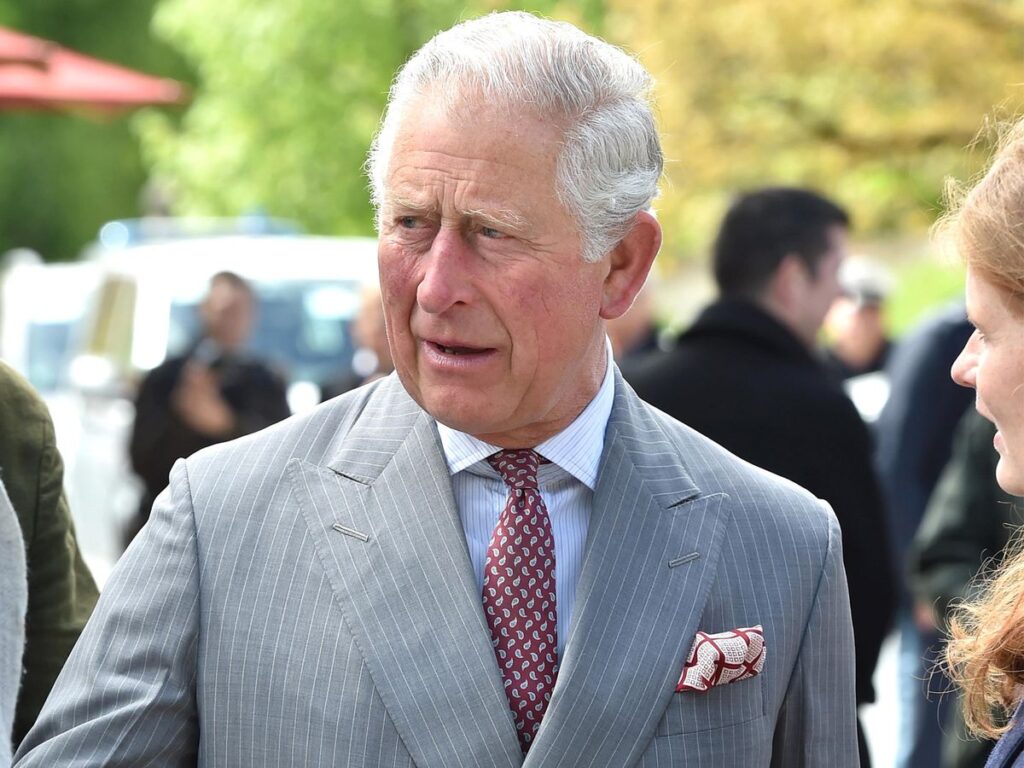
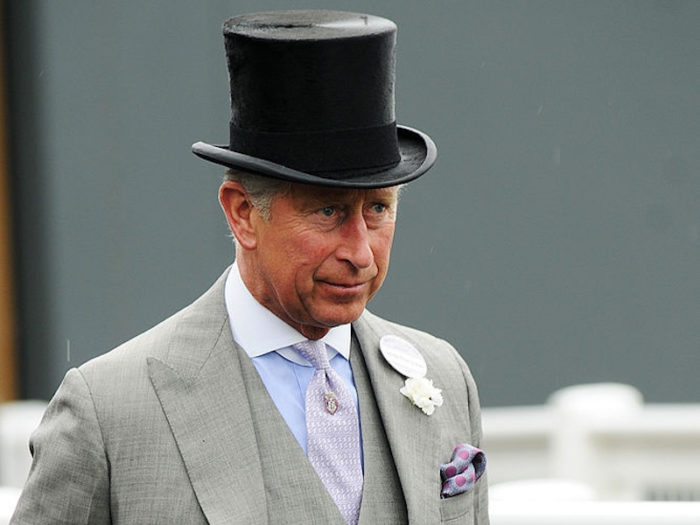
These are photographs of King Charles III. The shirt collar opens at a wider angle than the gorge line of the jacket.
In particular, in the photograph where he is wearing a hat, the two angles are completely different.
I initially wondered whether this might be because he was wearing a peak lapel, where the lapel points upward. But even with a notch lapel, where the lapel does not form an upward-pointing peak, the angles are still slightly different.
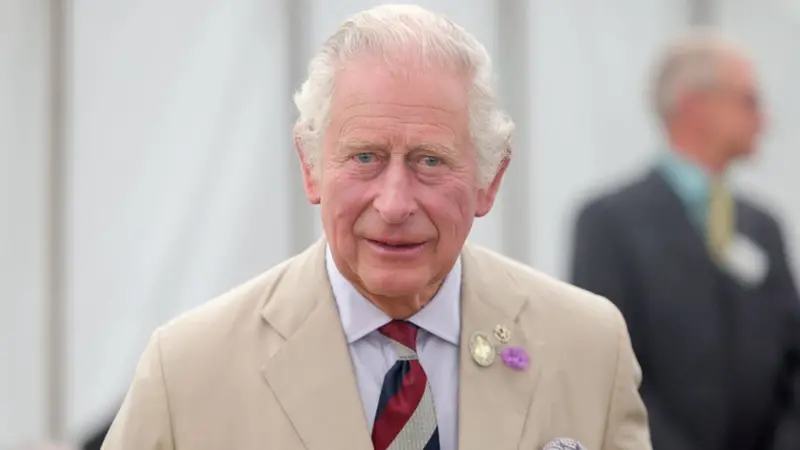
For me, who had assumed that matching the angles would make an outfit more classically correct, this was somewhat shocking.
If this kind of combination is being worn by a member of the British Royal Family—arguably one of the most closely scrutinized institutions in traditional menswear—then perhaps the classic rules never actually required the angle of the jacket’s gorge line and the shirt collar to match in the first place.
Of course, it would be too simplistic to reach that conclusion based on just a few photographs, so if anyone with more expertise on classic menswear knows the answer, I would be very grateful if you could share your thoughts in the comments.
That’s all for today.
Thank you very much for reading.




コメント