Hello, this is Mr. Linen.
Today I want to talk about a summer item: Gurkha sandals.
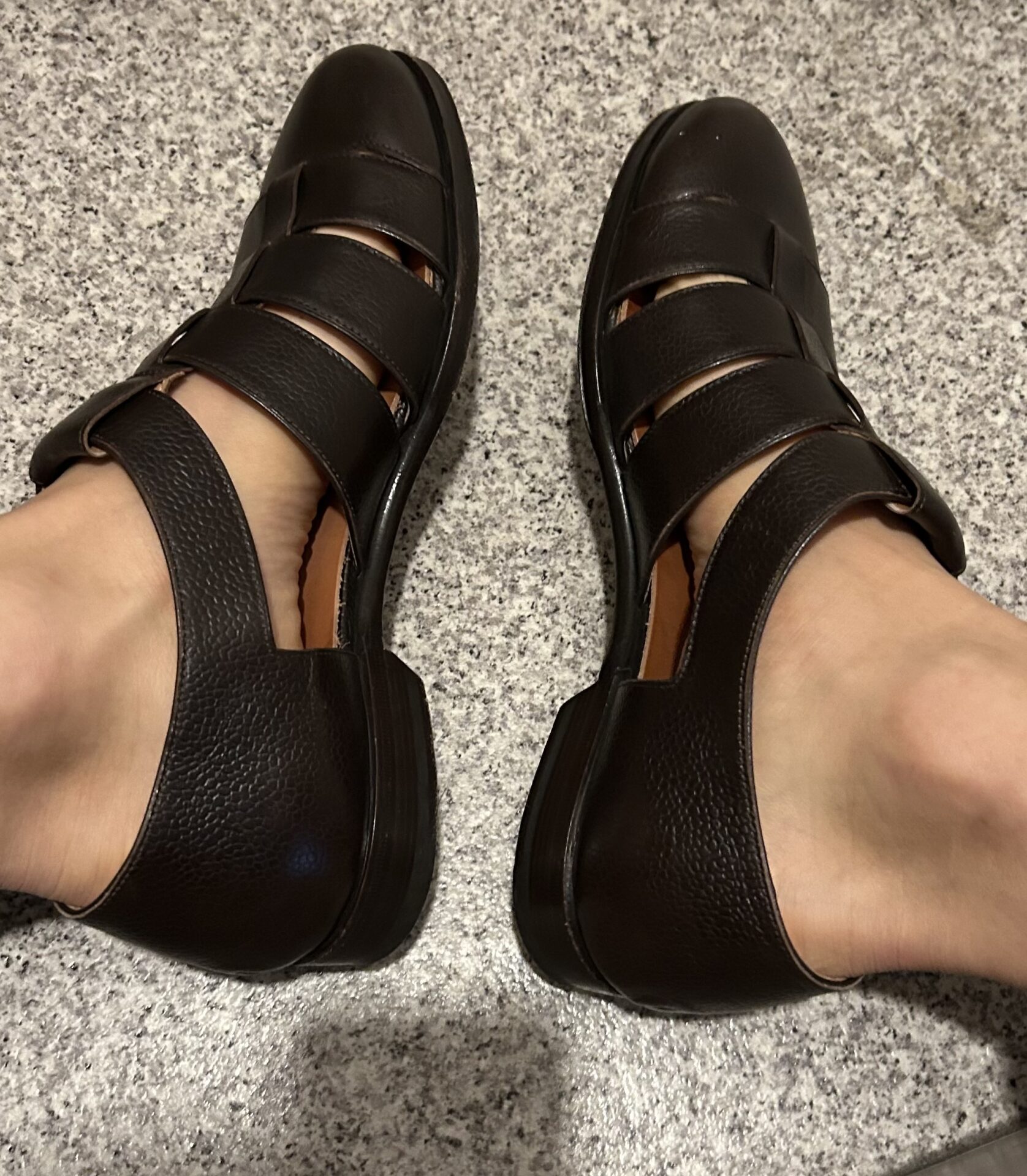
As a personal note, I recently bought my first pair of Gurkha sandals.
When it comes to a more dressy style of Gurkha sandal, one of the classic choices is F.LLI Giacometti’s dark brown embossed calf leather model.
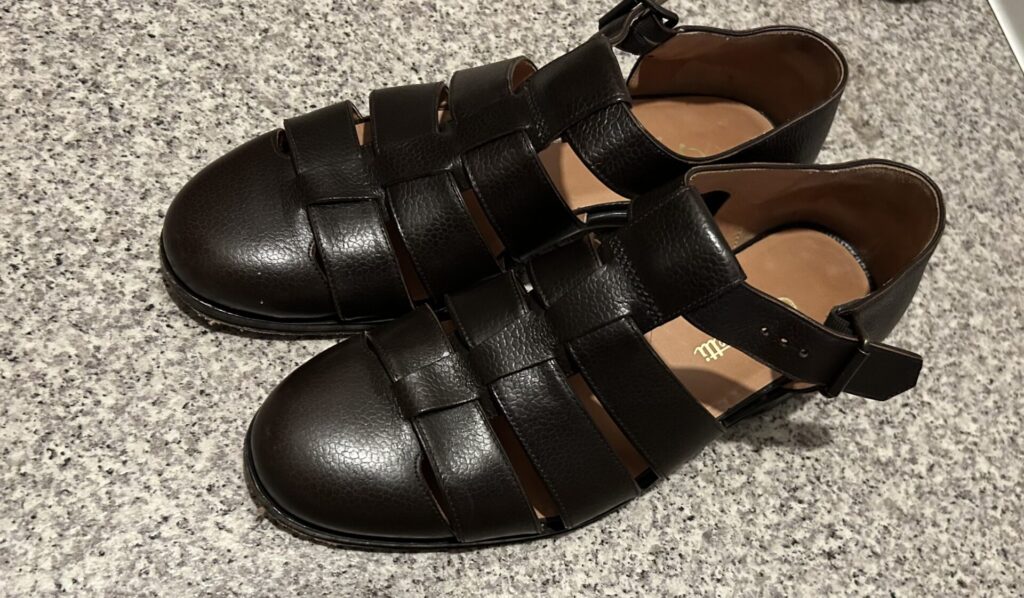
Gurkha sandals look great with socks, but in the middle of summer, I want to enjoy wearing them barefoot for a cooler and more comfortable feel.
However, when you wear them barefoot, doesn’t it bother you that sweat can soak directly into the leather insole?
I am probably more particular about cleanliness than most people, so this has always bothered me.
I don’t know how many other people have the same concern, but I found a solution that works for me, so I would like to share it with you.
What Happens When Sweat Soaks Into the Insole?
Not only with sandals, but with any shoes that have a leather insole, wearing them barefoot means that sweat comes directly into contact with and soaks into the leather.
I have actually worn this pair of sandals barefoot for several years. As you can see, the leather has become noticeably darker, which shows how much sweat it has absorbed. Originally, the leather was a light natural-tanned color.
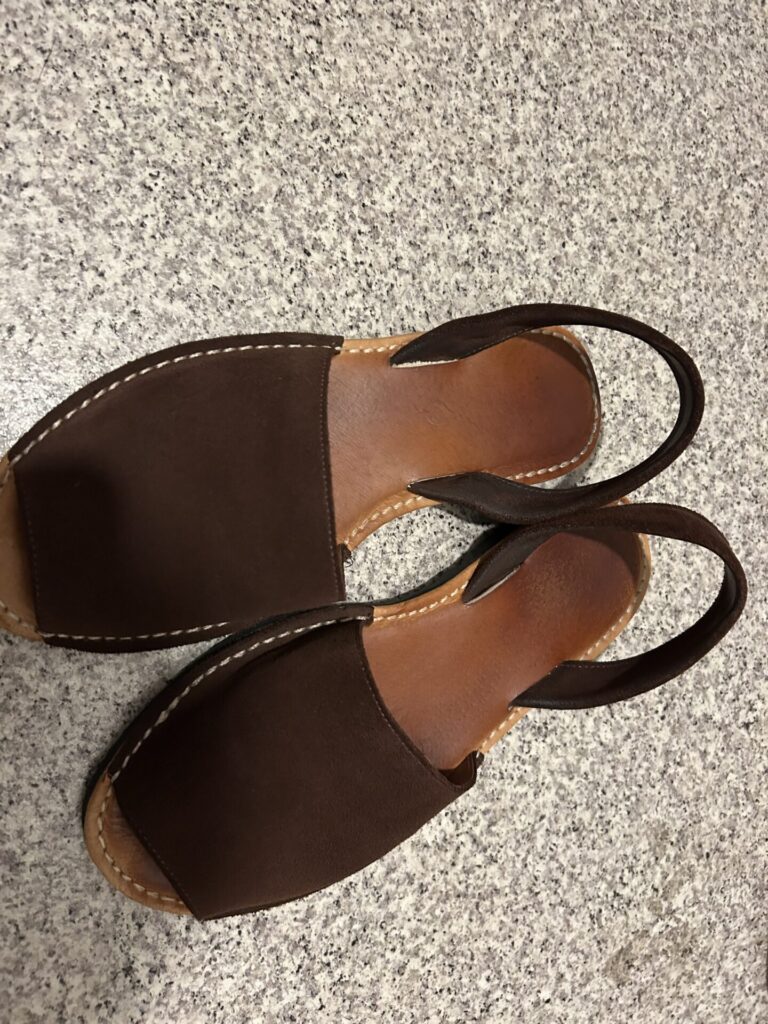
I am quite particular about cleanliness, so after every wear I wipe the insole with a wet wipe and do my best to keep it as clean as possible.
Of course, I cannot remove sweat that has already penetrated deep into the leather, but I assume that this still helps keep the surface reasonably clean.
Perhaps because of this routine, I have not experienced mold or unpleasant odors so far.
That said, wearing socks does not completely solve the problem. Even when you wear socks, sweat can pass through the fabric and eventually reach the insole.
At least wearing socks should help keep the insole somewhat cleaner than having bare skin directly against it, although in reality, the difference may not be as significant as we might imagine.
Sweat getting into a shoe’s insole is probably simply an unavoidable part of wearing footwear, and perhaps it is not something we need to worry about too much.
But for people who are particular about cleanliness, it can still be a surprisingly important issue.
How to Protect the Insole of Gurkha Sandals
Now, let’s get to the main point.
How can you wear Gurkha sandals barefoot while protecting the insole from foot sweat?
The obvious options are either wearing invisible socks or adding a separate insole.
As for invisible socks, the construction of Gurkha sandals makes them almost impossible to hide. They will almost certainly become visible through one of the openings.
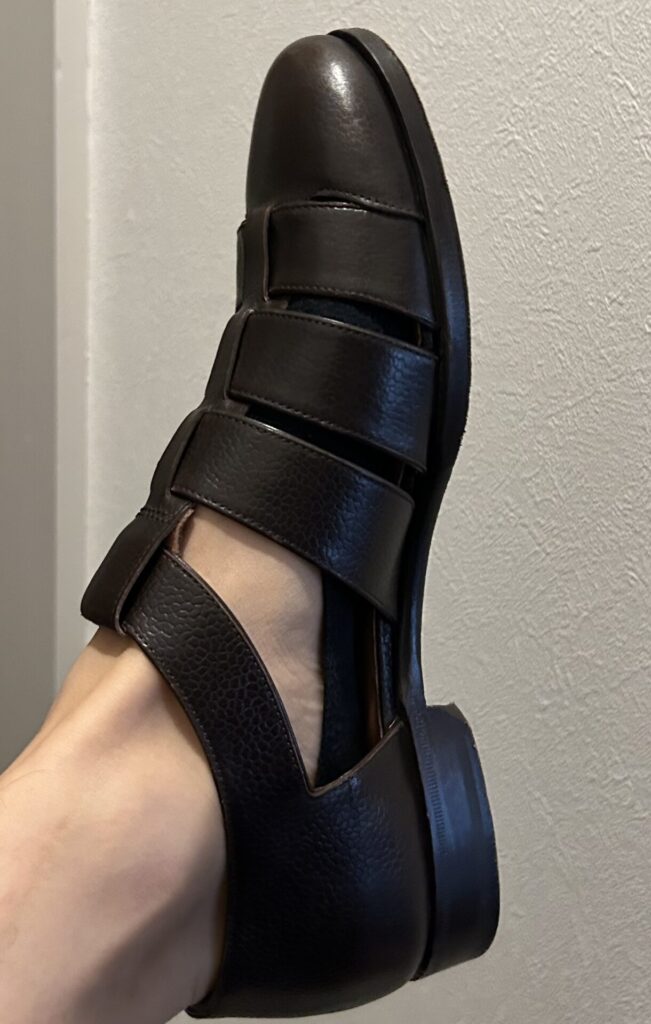
If you don’t mind the look, there is nothing wrong with this approach. However, for people who care about classic menswear and choose Gurkha sandals specifically for their refined appearance, I don’t think it is the ideal solution.
That leads us to another idea: adding a separate insole.
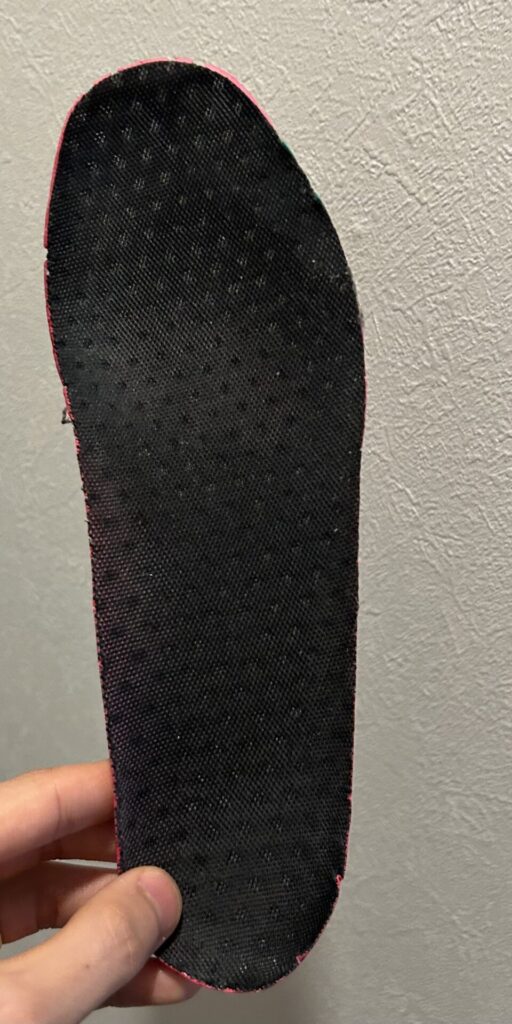
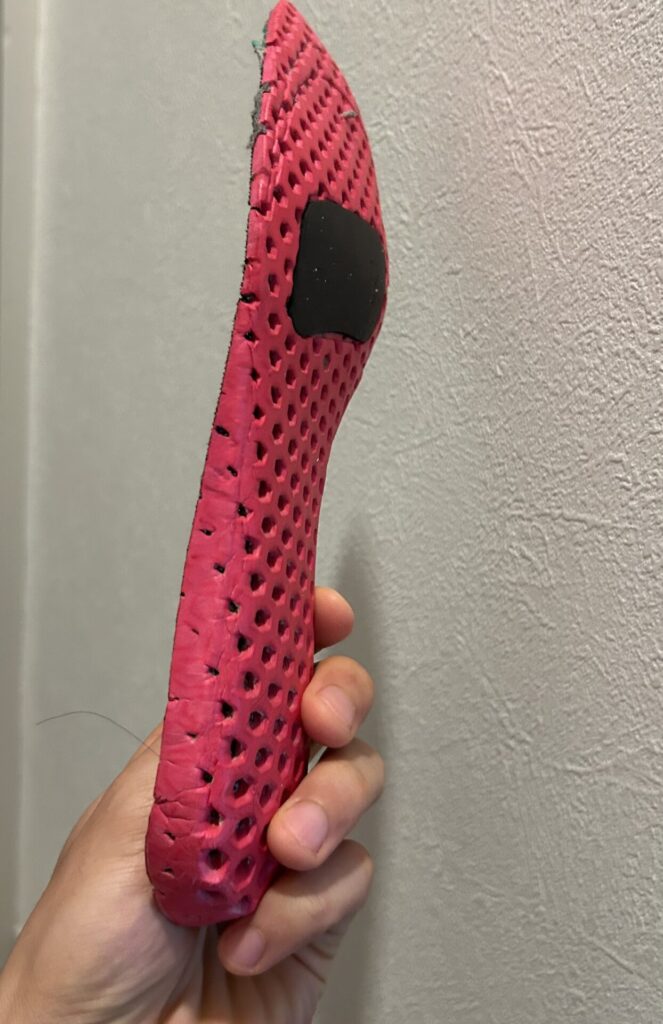
At first glance, this seems like a good solution, but there is a catch.
The additional insole can be seen from the outside. In particular, if you can see a sporty-looking red sole like the one in the photos below, it completely ruins the elegant appearance of a dressier pair of Gurkha sandals.
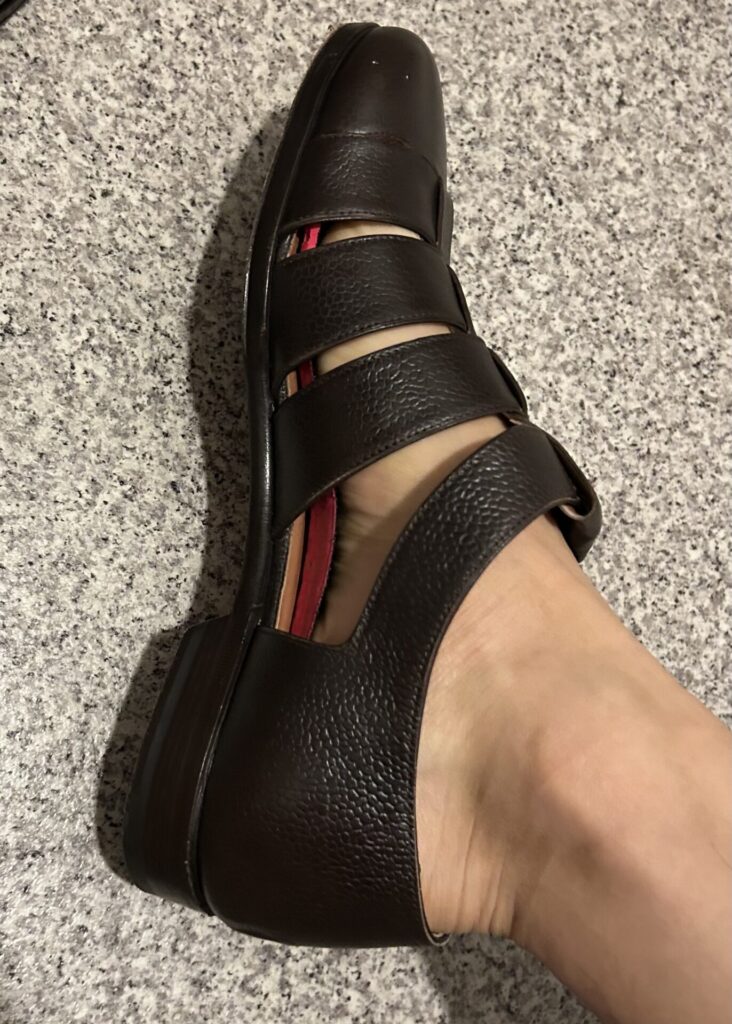
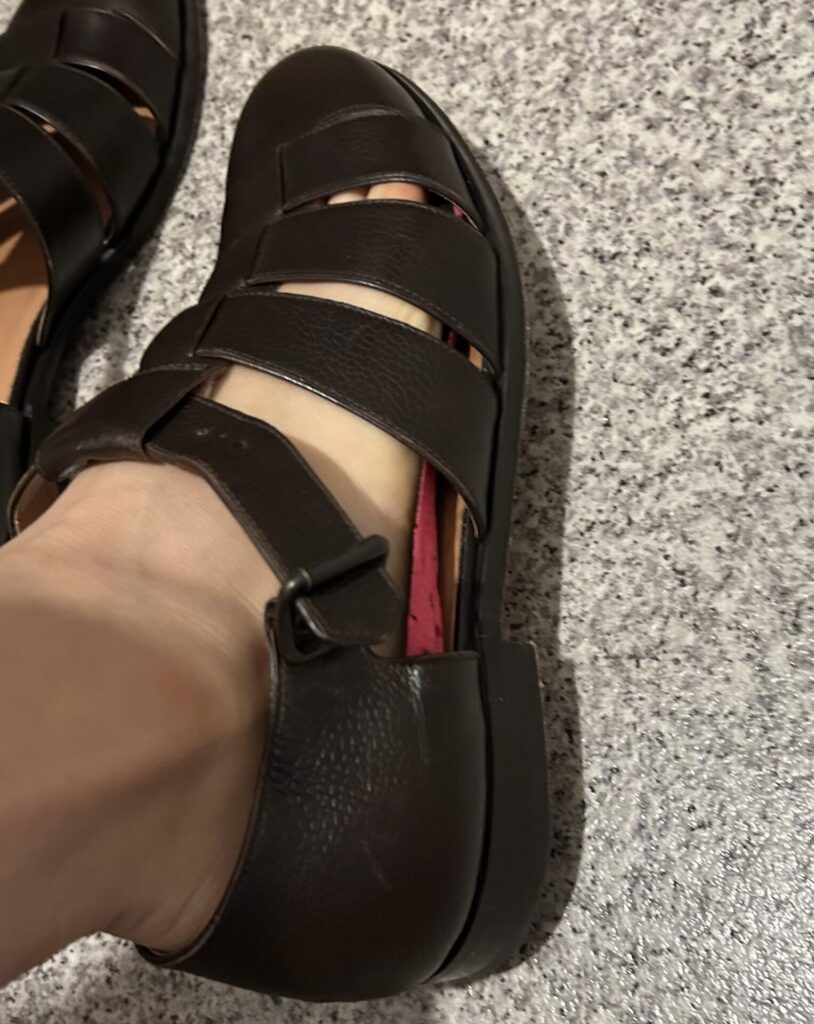
Depending on the design of the Gurkha sandal, this may still work if the sandal only has openings on the top and no openings along the sides.
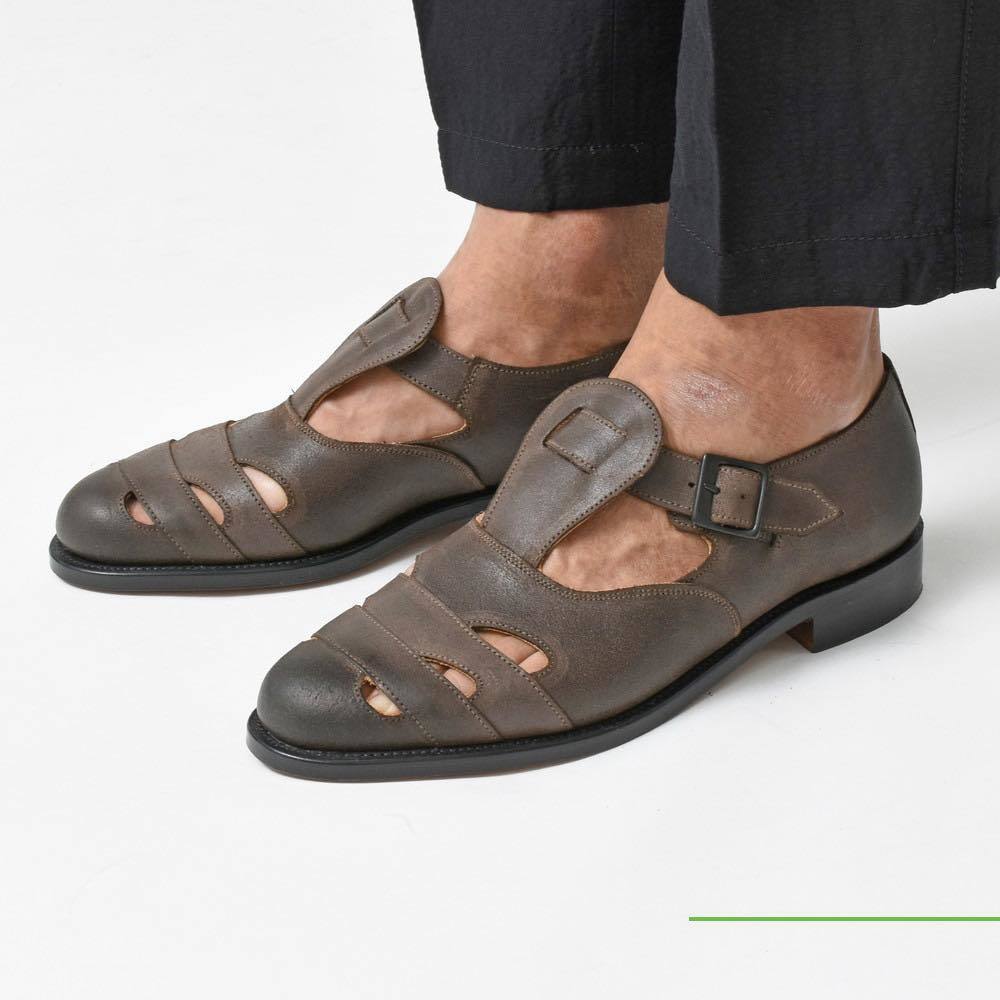
However, if there are no openings along the sides, you lose some of the airflow that makes Gurkha sandals so appealing in the first place. In other words, part of the charm of the Gurkha sandal is lost.
This Is the Insole I Recommend
Sorry for the long buildup, but here is my conclusion.
Use an additional leather insole.
The advantage is that, although the additional insole will still technically be visible from the outside, it looks as though it is simply the original insole that came with the sandal.
The key is that the additional insole needs to be made from the same type of material and have a similar color to the original insole.
In the case of Giacometti’s Gurkha sandals, most models use natural-tanned leather for the original insole.
So I bought this natural leather insole, which closely matches the original.
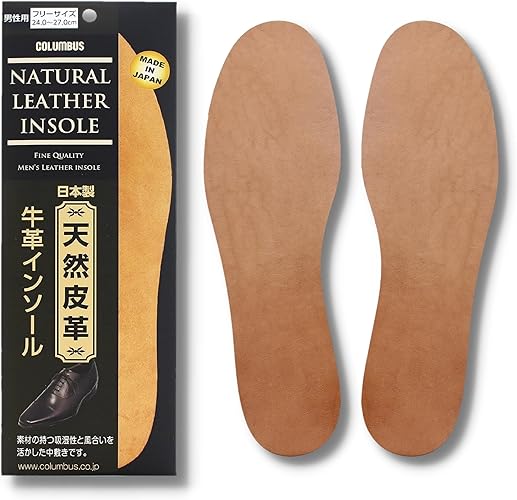
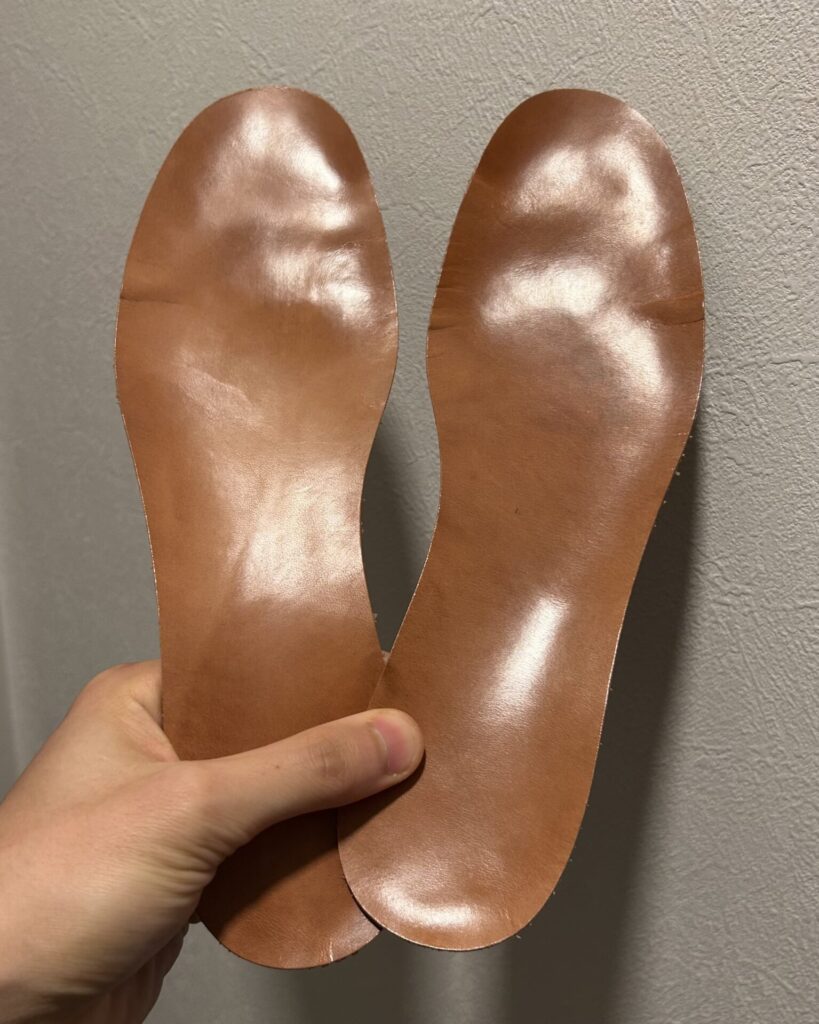
Amazon | COLUMBUS Leather Insole – Tochigi Leather, Beige, Free Size
There are also models like this with ventilation holes and rubber anti-slip sections, but I prefer to keep things simple. When you look through the openings of the sandal from the side, a more complicated insole can make it obvious that you have added something.
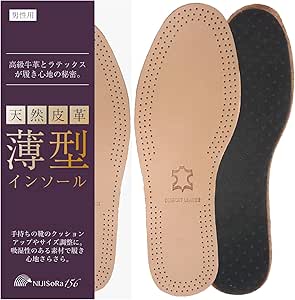
Amazon.co.jp | NIJISoRa Thin Genuine Leather Insole, Natural-Tanned Leather
The COLUMBUS insole I bought is highly recommended. It was relatively inexpensive at around ¥1,600 (approximately US$11 at the exchange rate used for this article), has no unnecessary decoration, and matched my Giacometti Gurkha sandals almost perfectly.
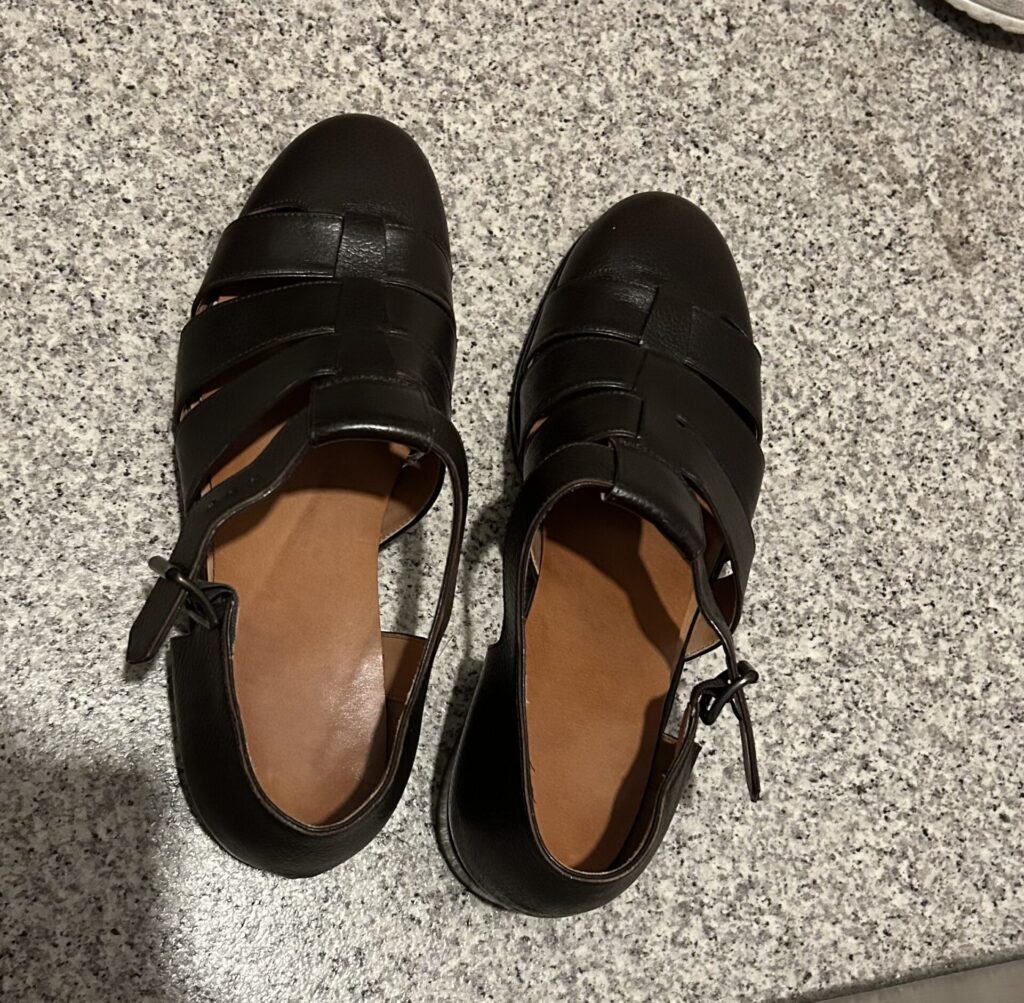
Even after putting it on and wearing the sandals, you can technically see the additional insole from the side, but it is very difficult to tell that anything has been added.
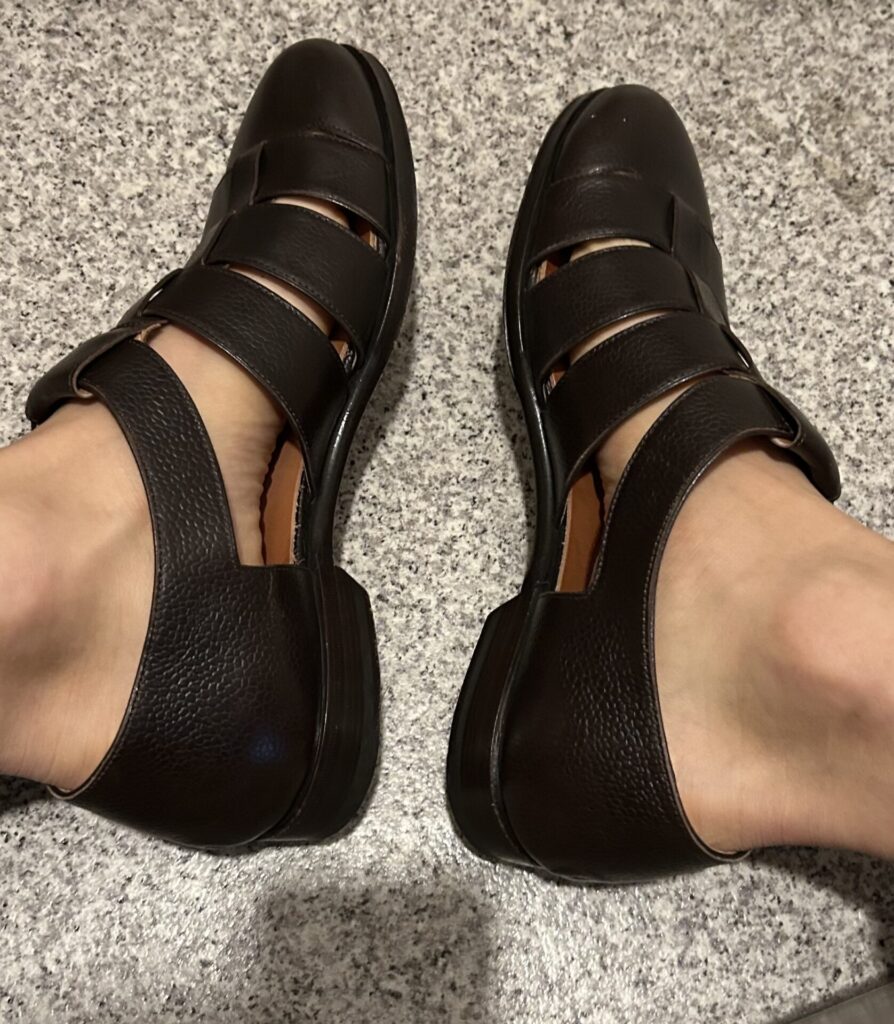
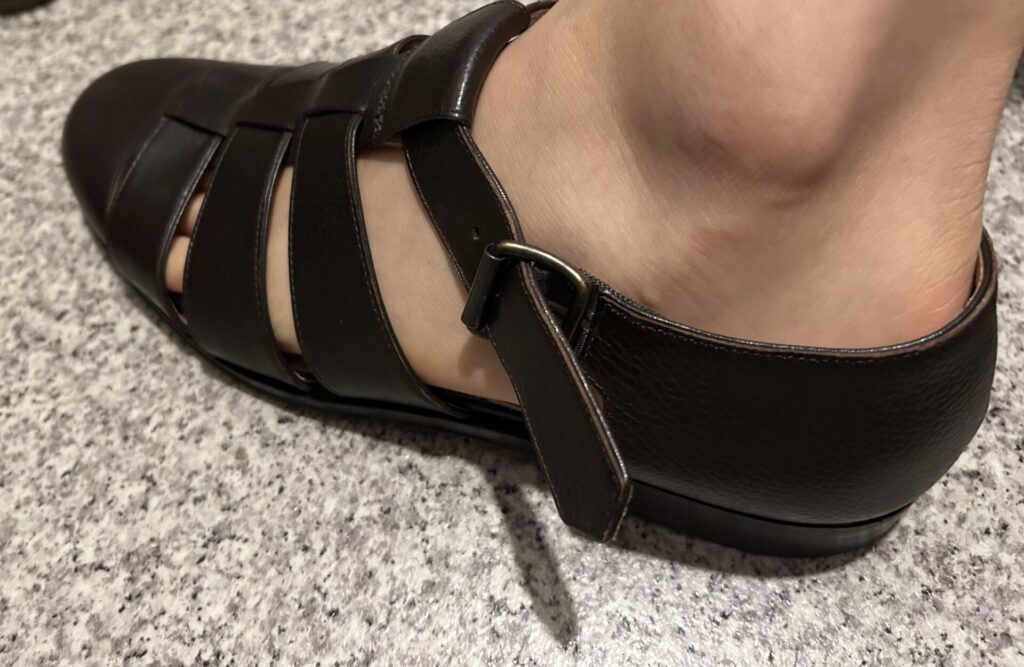
This insole can also be used with regular leather shoes, not just sandals.
I tried it in a pair of leather shoes that were slightly too large. When wearing socks, it can feel a little slippery until the leather settles in, but because it is made from natural leather, it does not feel overly hot or humid and is quite comfortable.
When wearing it barefoot, there is even less reason to worry about slipping because moisture from your feet actually provides some grip.
Can You Wash It?
With this solution, the original insole of your sandals can stay protected from sweat and remain clean for a very long time. However, of course, the additional insole will be the part that absorbs all that sweat.
At around ¥1,600 (approximately US$11) per insole, it is not exactly something you want to throw away after every use.
Insoles like the inexpensive ones sold at discount stores are easy to wash thoroughly, so the fact that leather insoles are more difficult to wash could be considered one of their disadvantages.
However, you can simply wipe the insole with a wet wipe after each use. If it becomes noticeably dirty, I think you could also carefully rinse it with water.
Applying a little leather oil should help prevent the leather from becoming excessively dry and stiff. And if it eventually becomes unusable, you can simply buy a replacement.
Be Careful When Choosing Your Gurkha Sandal Size
There is one thing in particular that I think you should pay attention to: choosing the right size for your Gurkha sandals.
Once you start using an additional insole, you will probably rarely wear the sandals without one. Therefore, I think it is best to choose a size around half a size to one full size larger than you normally would, taking the extra insole into account.
If you also plan to wear the sandals with socks, you could go another half size up. However, my recommendation is to use the additional insole when wearing the sandals barefoot, and remove it when wearing socks.
If you wear both the additional insole and socks, you may need to buy a significantly larger size. Then you could end up with sandals that feel too large when you wear them barefoot.
Barefoot → additional leather insole
Socks → no additional insole
I think this is the ideal combination.
Incidentally, I have heard that Gurkha sandals are generally better when they fit slightly loosely.
If you buy them with the same close fit you would expect from a pair of leather dress shoes, you are more likely to experience rubbing or blisters. A tighter fit also reduces the space available for air to circulate, which takes away some of the cool, breathable feeling that makes sandals so appealing.
My foot measures approximately 26 cm (10.2 inches), and I normally wear around a UK size 7.5. However, I bought size 41.5 in the Giacometti sandals.
If I wanted a close, standard fit, around size 41.0 would probably have been appropriate. But taking the additional insole and my preference for a slightly relaxed fit into consideration, I chose size 41.5.
When buying your sandals, I highly recommend buying the additional insole first and taking it with you to the shoe store.
Once you explain the reason to the salesperson, I think they will understand. In fact, they may even appreciate it more than having you try the sandals on completely barefoot.
That’s all for today. I hope this helps if you are considering buying or wearing Gurkha sandals barefoot.

コメント