Hello, my name is Mr. Linen.
When ordering a suit, you inevitably face the question of what to do with the lining.
Color, pattern, and material all matter, of course—but before that, there is an even more fundamental choice: where to place the lining.
For jackets, there are several options depending on how much lining you use: fully lined, half-lined, or unlined.
But what about trousers?
Even with bespoke tailoring, if you are not asked, you may often end up leaving the decision entirely to the tailor.
Personally, I believe that trousers are best with a full lining.
Let me explain my reasons in detail.
The Role of Lining
First of all, what purpose does lining serve?
1. Protection of the outer fabric
It prevents sweat, sebum, and other unpleasant fluids produced by the human body from directly contacting the outer fabric.
2. Preventing transparency and loss of shape
With thin fabrics, trousers without lining may reveal underwear or skin. Apparently, a gentleman should not show skin anywhere other than the hands and above the neck.
Lining also adds a bit of thickness, helping to reduce wrinkling and loss of shape.
3. Smoothness when wearing
Especially when putting your arms through jacket sleeves, a lack of lining makes things noticeably less smooth.
4. Warmth
No matter how thin it is, lining is still an extra layer of fabric—so it is warmer than having none.
On the other hand, lining makes garments hotter in summer.
Is Lining Necessary All Year Round?
Of the four roles mentioned above, points 1 through 3 are beneficial regardless of the season.
Only point 4 becomes a disadvantage in summer.
This means that for suits worn outside of summer, lining—preferably full lining—is generally better. For summer suits, whether to include lining should be decided after weighing the pros and cons.
Removing lining for the sake of coolness can lead to faster fabric damage, transparency, and reduced comfort due to poor slip.
You then have to decide whether improved breathability outweighs these drawbacks.
The answer also depends on the specific fabric.
Linen or cotton, for example, can be relatively easy to wash with water, so unlined trousers may be acceptable.
For fabrics that are difficult to wash, such as silk, going without lining may significantly shorten the life of the garment.
In summer, whether to go unlined, partially lined, or fully lined ultimately depends on personal preference.
Lining in Trousers
So far, I have been discussing lining in general.
I have not distinguished between jackets and trousers.
What I want to focus on in this article is trouser lining.
Please note that I will not be discussing jackets here.
For trousers, should you go without lining, add partial lining, or use full lining?
As mentioned earlier, I believe lining is essential outside of summer, while summer trousers depend on personal judgment.
When ordering, even if you are asked about jacket lining, you may not be asked anything about trouser lining.
This is only based on my own experience, but in many cases, lining is added only from the front thigh down to just below the knee.
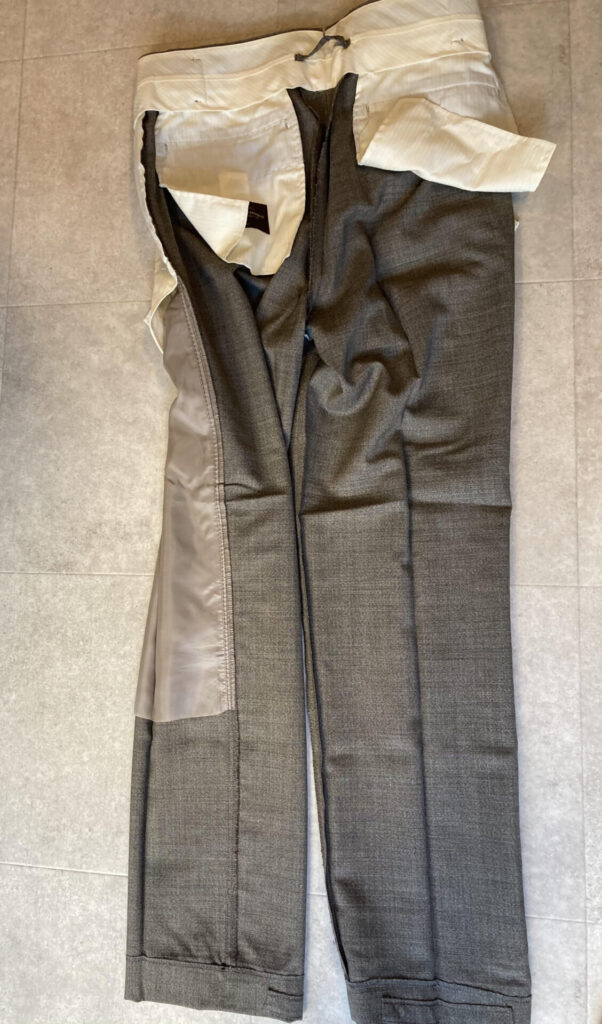
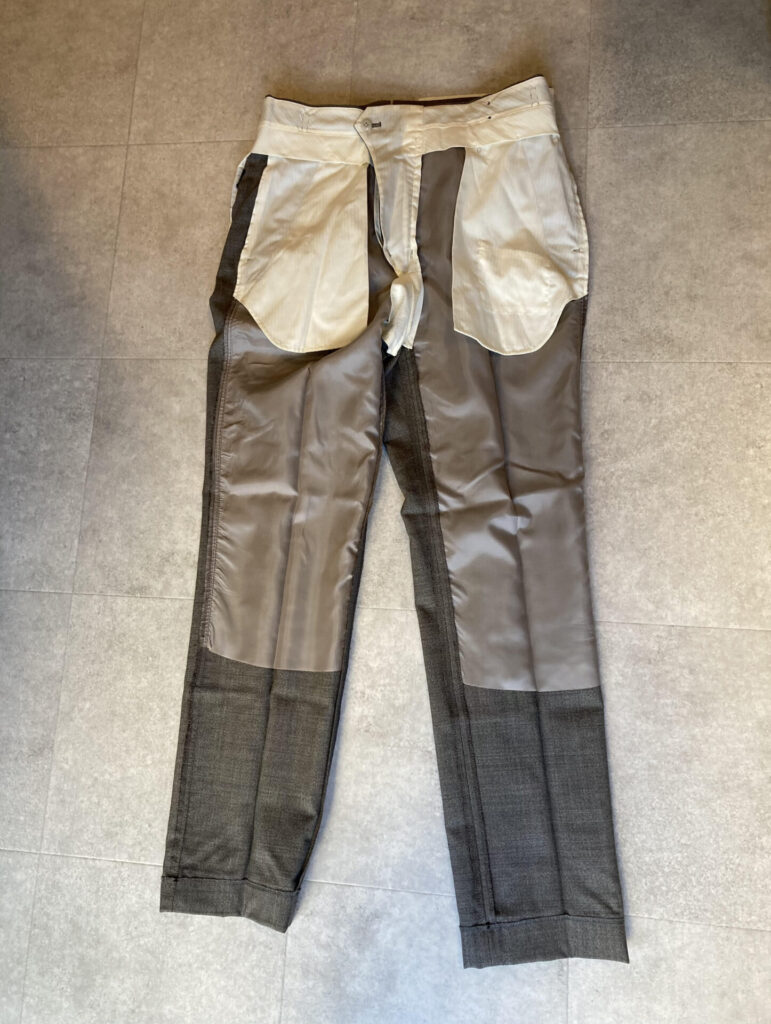
I feel that ready-made trousers often only have lining in the front thigh area.
This makes sense: lining from the front thigh to below the knee improves ease of wear and protects the area that experiences the most friction.
Benefit of Fully Lined Trousers (1)
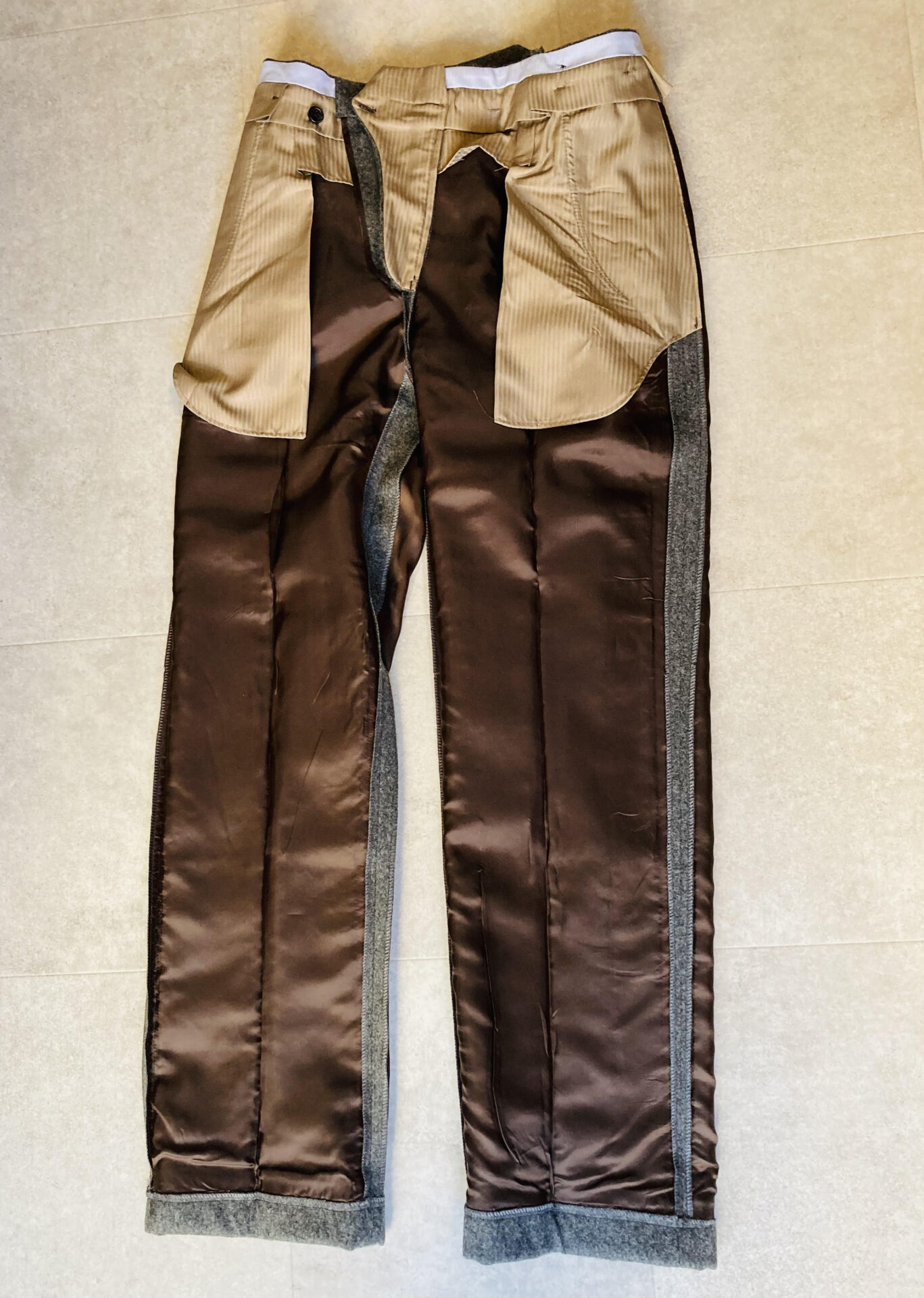
However, I would like to recommend full lining—meaning lining throughout, front and back, from the waist all the way to the ankles.
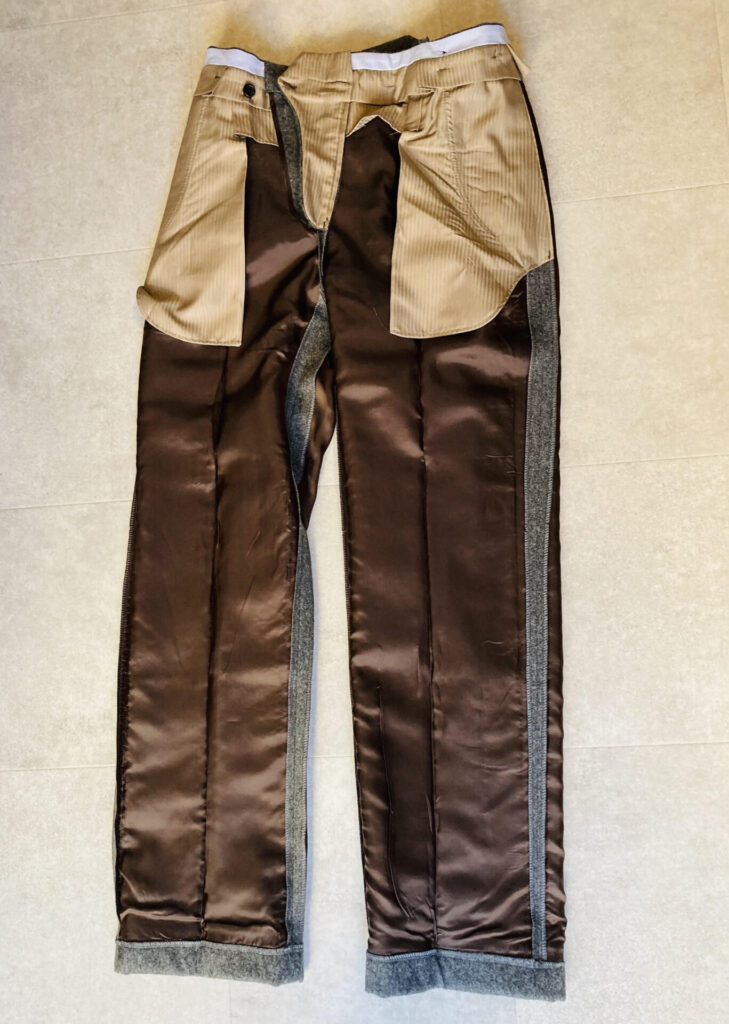
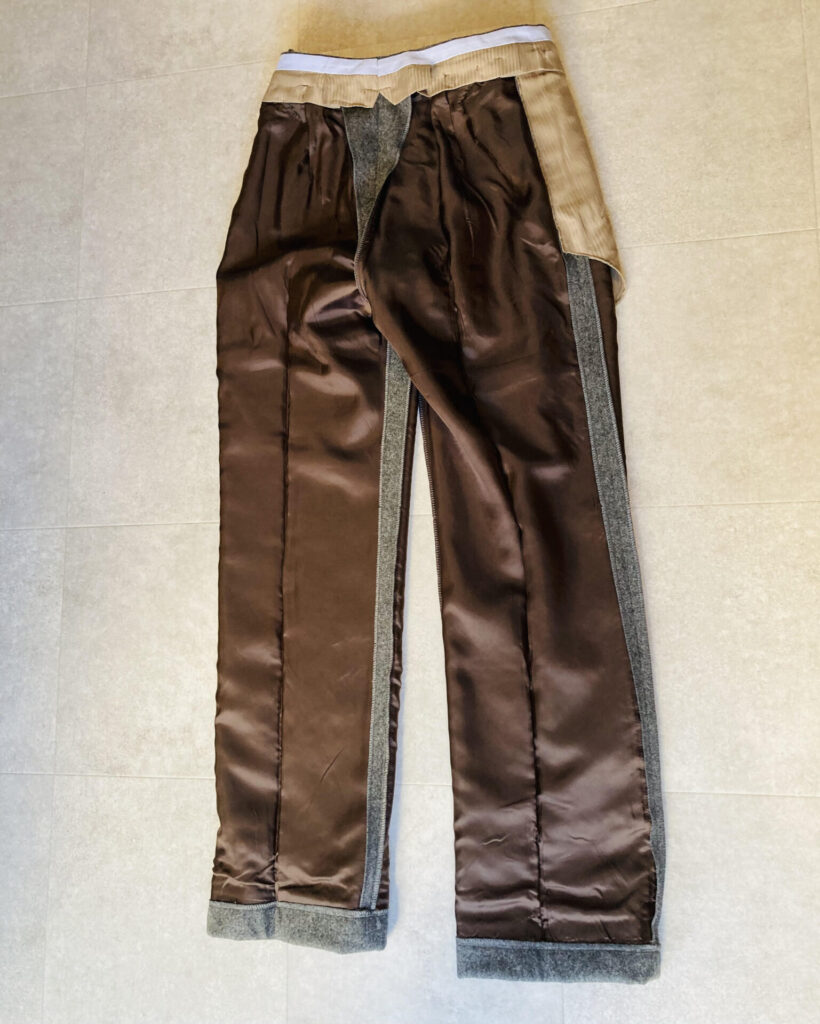
There are two reasons. The first is protection of the outer fabric.
This is slightly off-topic, but when wearing trousers, using long under-shorts that reach below the knee, combined with knee-high socks (hose), prevents bare skin from touching the trousers and is more hygienic.
Just as a long-sleeved shirt protects a jacket from skin contact, trousers also need protection.
This setup protects trousers to a large extent—but there is one dangerous enemy: post-urination dribble.
Apologies for the unpleasant topic, but since my early twenties I have suffered from this problem. Sometimes, after finishing and closing my trousers, an alarming amount still comes out.
If it only runs down the thigh, that is one thing—but I worry that it may soak through the under-shorts and reach the trousers themselves.
Even without that issue, on days when I sweat heavily, under-shorts absorb most of it, but some moisture still reaches the trousers.
Sweating tends to occur more on the back of the thighs and behind the knees rather than the front.
Having lining only on the front thighs is simply not enough.
To protect trousers no matter what happens, full lining is necessary.
Benefit of Fully Lined Trousers (2)
Have you ever experienced this problem when wearing trousers?
After standing up from a seated position, the hem catches on your calves or shins and looks untidy.
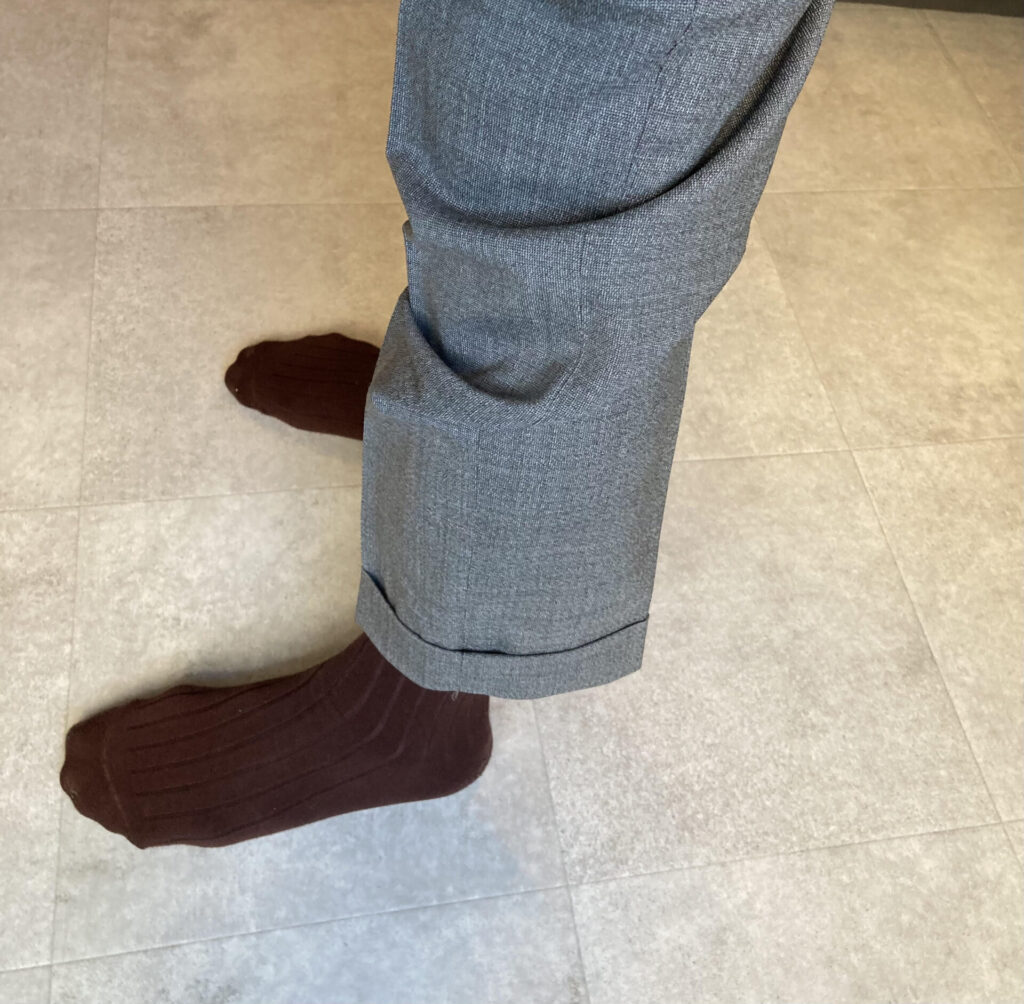
You wear knee-high socks to avoid showing leg hair like a proper gentleman—only for that to backfire, as friction between the socks and the trousers prevents the hem from falling cleanly.
Shorter socks are not really an option.
In such cases, lining below the knee allows the trousers to fall cleanly back into place.
This issue also depends on hem width.
If the hem is wide enough (around 21 cm or more), trousers may fall properly even without lining around the calves.
For anything slimmer than that, I believe lining is essential.
Additional Benefits of Fully Lined Trousers
There are other benefits as well.
As with jackets, lining helps prevent transparency in thin fabrics and adds a small amount of warmth.
As for shape retention, it may exist, but personally I do not feel it strongly in trousers.
Drawbacks of Fully Lined Trousers
I have focused on the advantages so far, but of course there are drawbacks.
Just like with jackets, the main disadvantage is heat.
Fully lined linen trousers completely defeat the purpose of linen’s breathability.
Personally, for trousers I want to wear in summer, I prefer no lining at all.
I have tried partial lining from the front thigh to below the knee, but in hindsight, I feel it was unnecessary.
Sweat and post-urination issues cannot be fully prevented, but that is something I accept.
I protect the trousers as much as possible with under-shorts and hose, but it is never perfect.
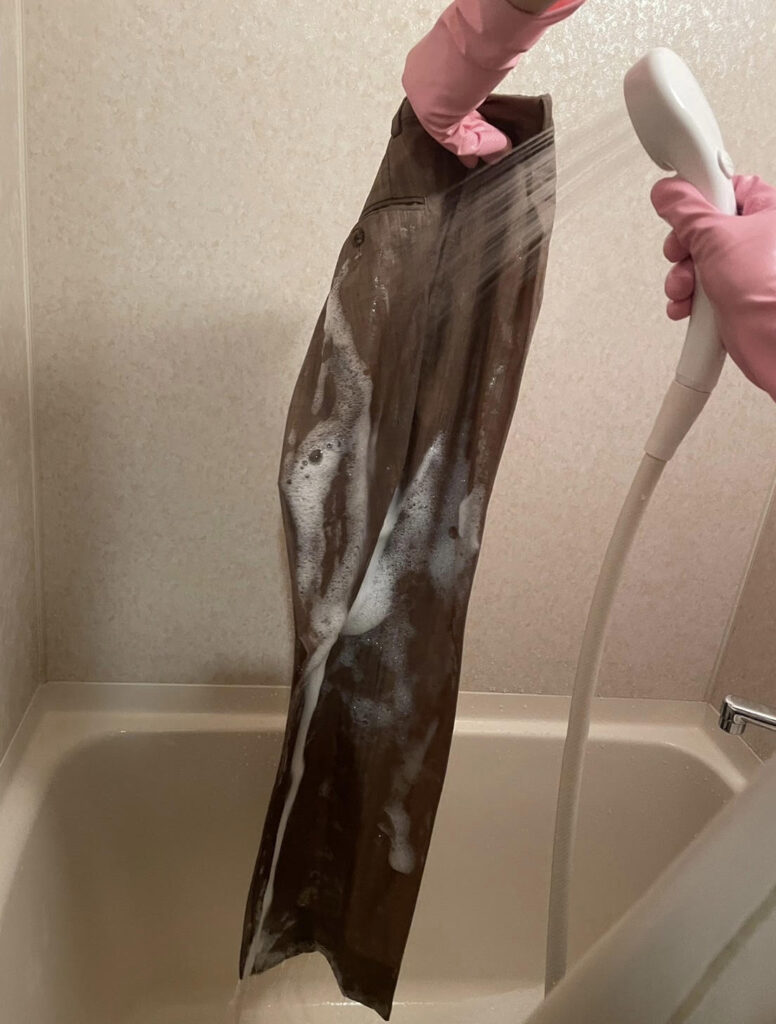
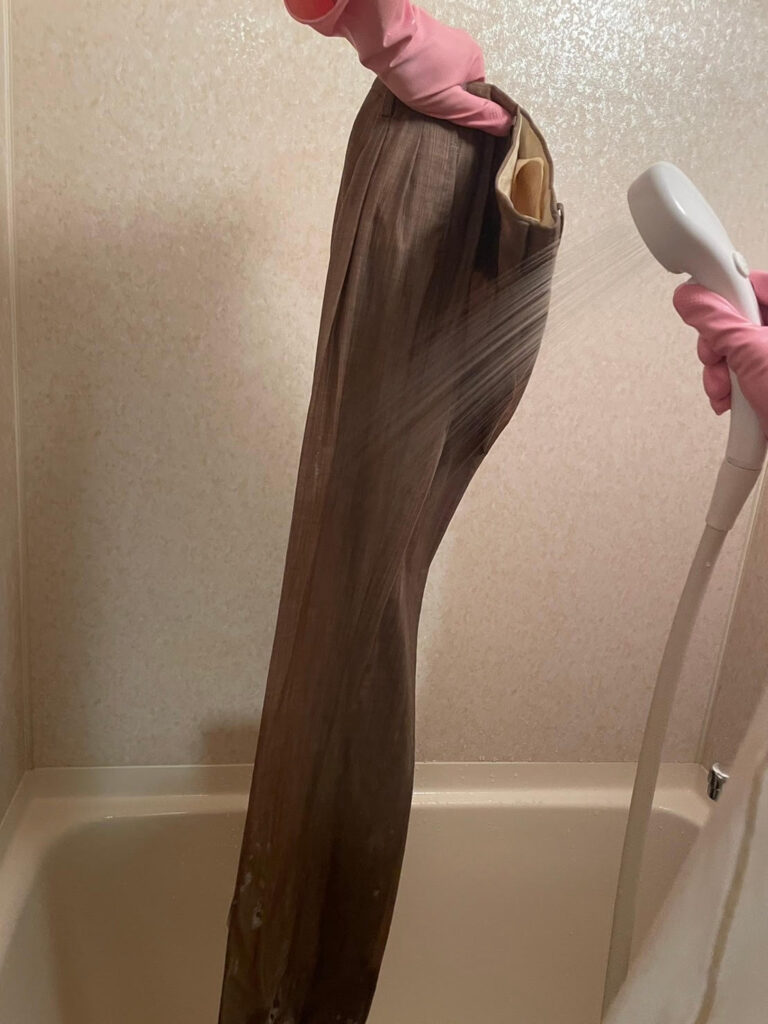
Summer trousers are generally made of thin fabrics that dry quickly, so I believe it is fine to simply wash them with water when they get dirty.
It is also said that dry cleaning does not effectively remove water-based stains such as sweat or urine.
I am also concerned about fabric damage caused by petroleum-based solvents.
For these reasons, I try to avoid dry cleaning as much as possible.
Not only linen and cotton, but even wool trousers can be washed with water at home. It is surprisingly easy and inexpensive, so I highly recommend it.
Conclusion
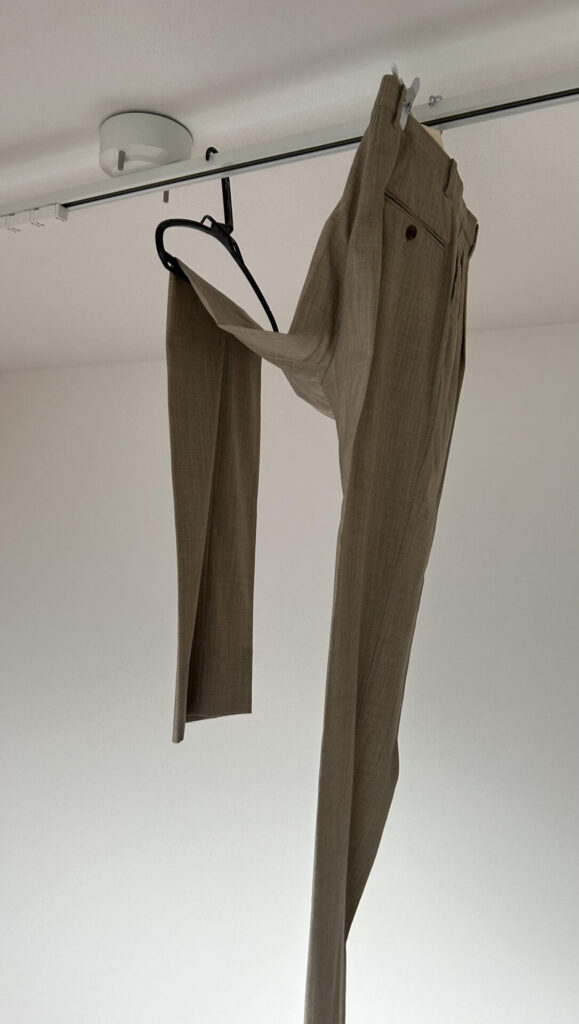
The main reasons I believe fully lined trousers are better are protection from sweat and urine, and preventing the hems from catching on calves and shins.
However, the significant drawback of heat makes it difficult to say that full lining is always the best choice.
For people other than heavy sweaters with post-urination issues like myself, full lining may not be necessary—but if you are curious, I encourage you to give it a try.
And if you decide you absolutely hate it, you can always turn the trousers inside out and cut away the lining except at the seams.
That’s all. Thank you for reading.


コメント
This is very insightful Mr. Linen.