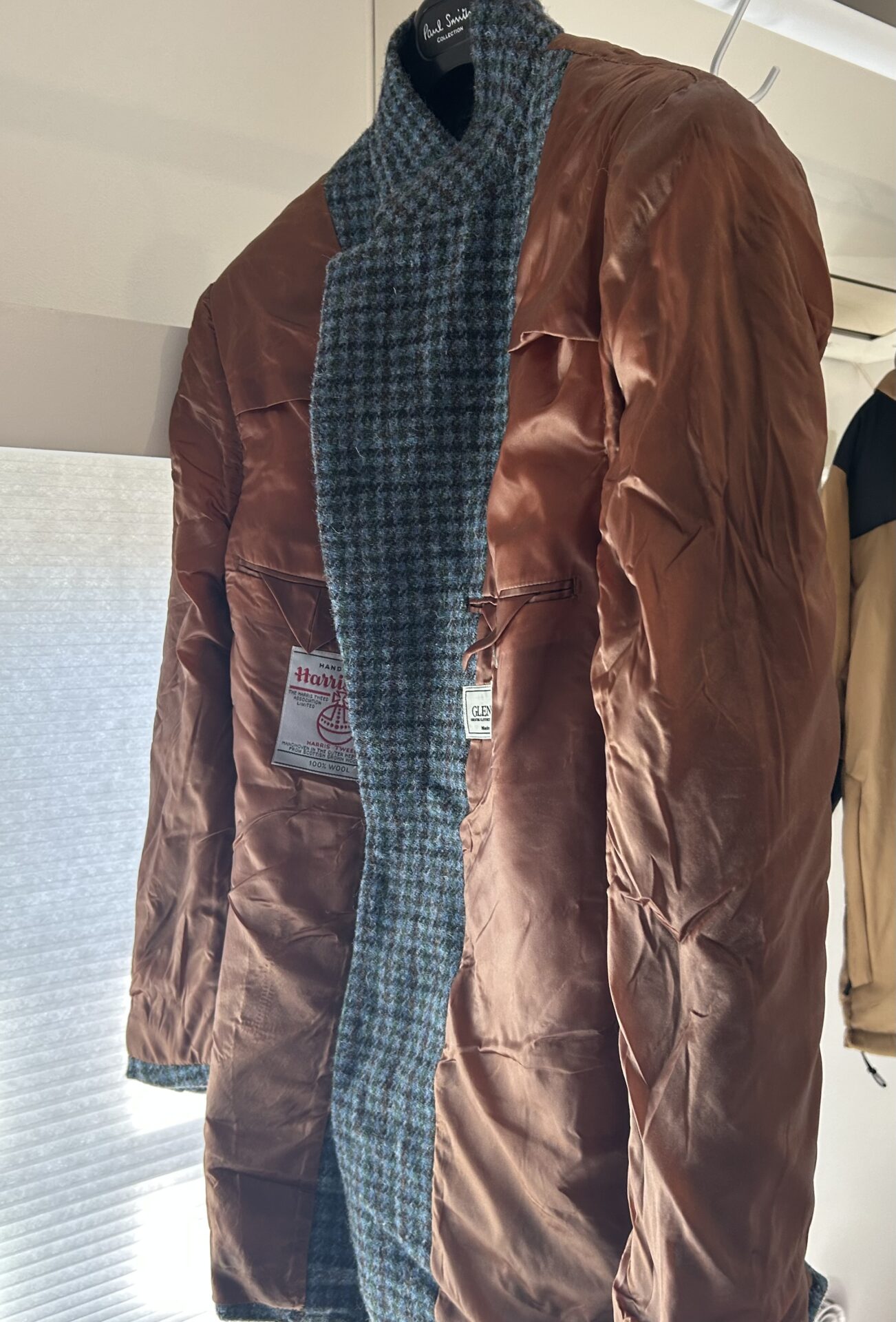
Hello.
I’m Mr. Linen.
Today, I’d like to talk about how to care for tailored jackets.
I Wash My Jackets Once Every Few Years
How do you keep the suits and jackets you wear regularly clean?
There are three options:
・Take them to a professional cleaner (either dry cleaning or premium wet cleaning)
・Wash them with water at home
・Never wash them at all
Dry cleaning is probably the most common choice, but personally, I’m not entirely comfortable with it.
I sometimes worry that cleaning natural-fiber suits with petroleum-based solvents might damage the fabric.
Also, much of the dirt that accumulates in suits comes from sweat and, in some cases, urine. These are water-soluble contaminants, and I’ve heard that dry cleaning does not remove them effectively.
With that in mind, premium wet cleaning, such as the service offered by Natural Clean, seems like the best option. However, it can cost over ¥15,000 (approximately US$100) per garment.
My approach is to avoid washing my jackets as long as possible by using a garment steamer or a damp towel, then give them a water wash roughly once every two or three years.



How to Wash a Tailored Jacket with Water
A suit consists of a jacket and trousers, but today I’ll focus on the jacket.
Trousers, incidentally, are much easier to wash at home.
They can accumulate more dirt than jackets because they are more likely to come into contact with urine. For that reason, I think washing them about once a year is a good idea.


I recently discovered that washing a tailored jacket at home with water can be surprisingly straightforward.
There are two main approaches: hand-washing in a bucket or bathtub, or using the delicate or hand-wash cycle on a washing machine.
Many people would probably recommend hand-washing, but I believe the washing machine’s delicate cycle can also work perfectly well.
The process is simple: turn the jacket inside out, including the sleeves, fold it neatly, place it in a large laundry mesh bag if possible, and run the washing machine on a delicate cycle.
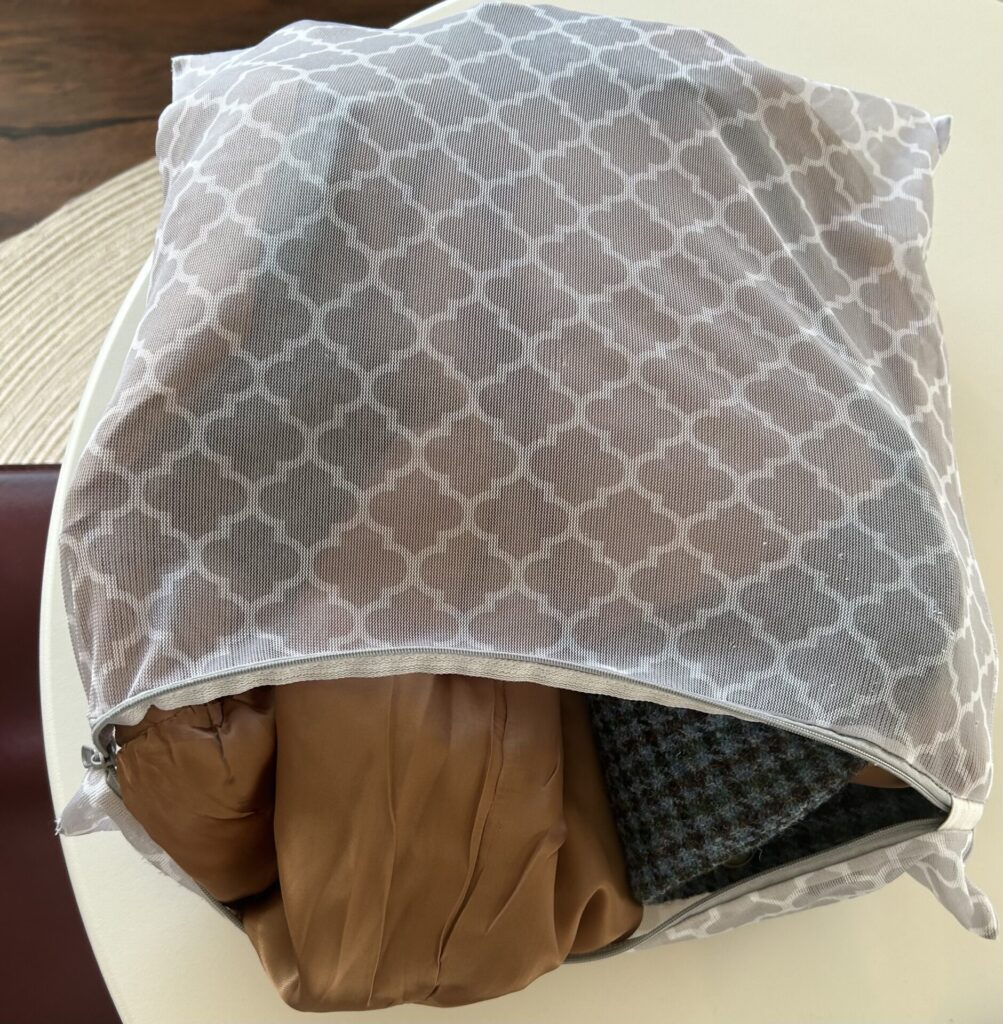
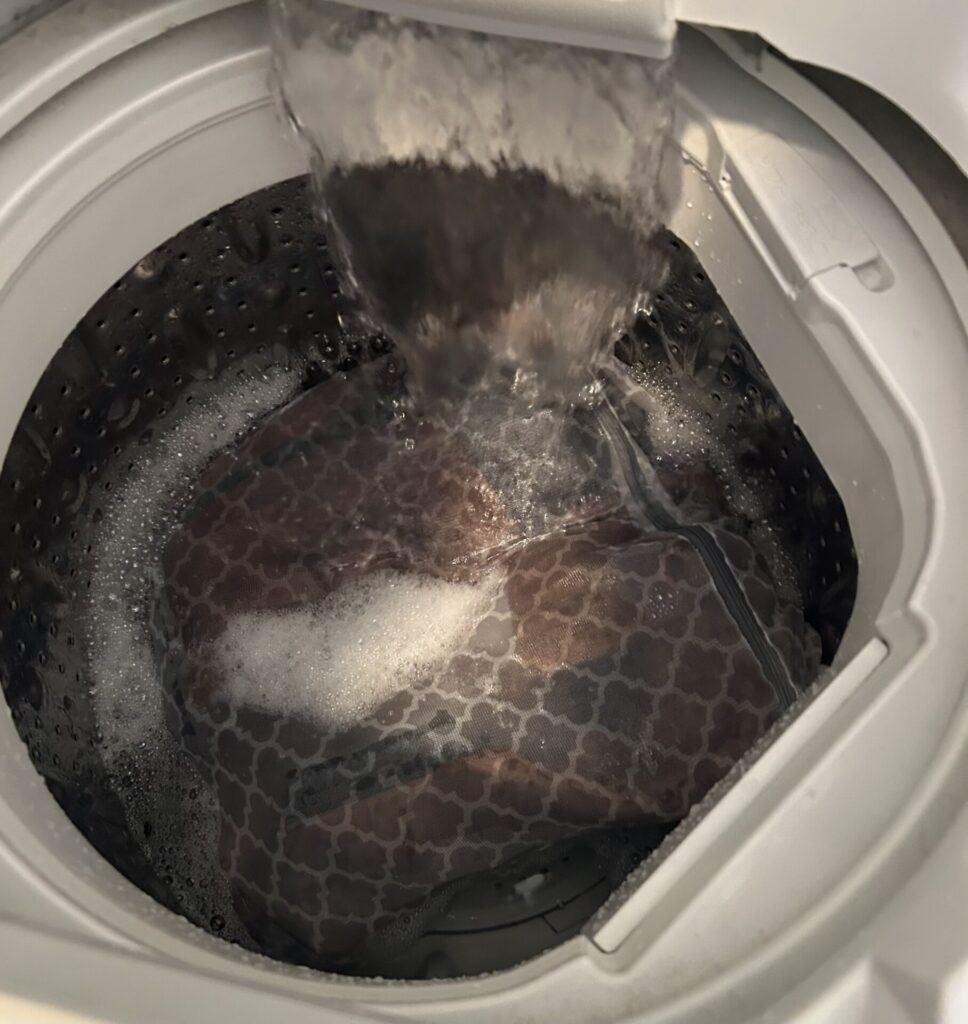
That’s all there is to it. Nothing complicated.
The spin cycle is the key point. The spin duration on a delicate cycle varies depending on your washing machine, but I recommend limiting it to about one minute at most.
Any longer, and the jacket may come out extremely wrinkled.
If you’re worried, you can time the spin cycle yourself, pause the machine after one minute, and take the jacket out.
Once the wash is finished, turn the jacket right side out again, including the sleeves. Hang it on a sturdy, broad-shouldered hanger and gently smooth and stretch the fabric back into shape with your hands.
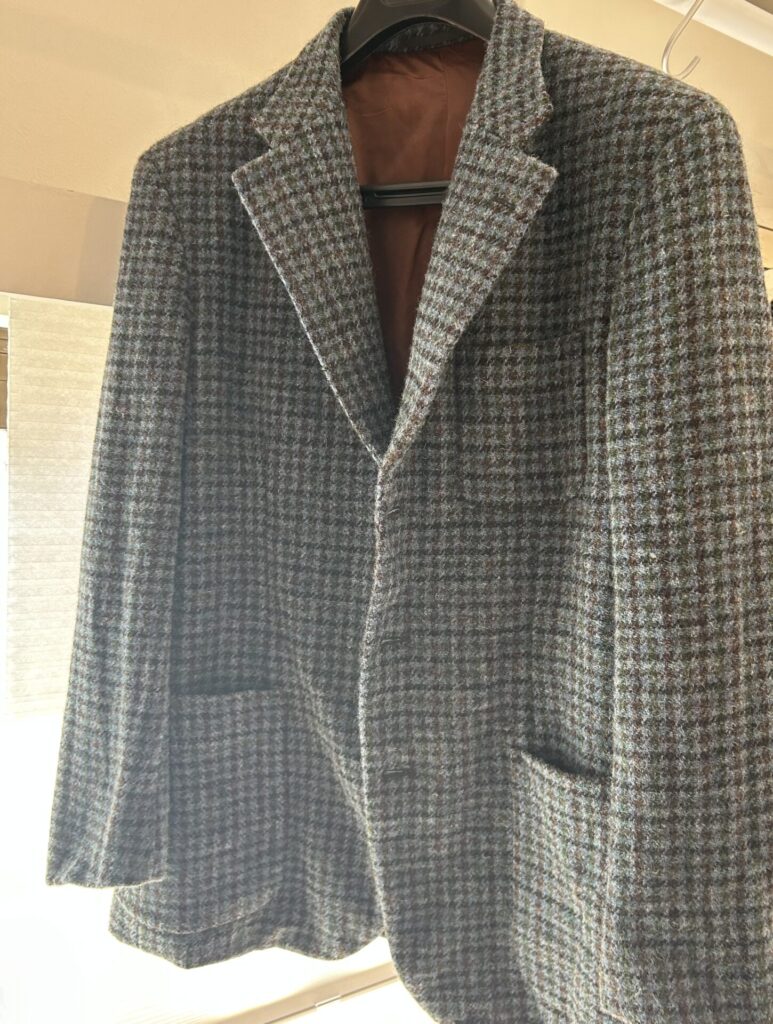
Immediately after the spin cycle. The wrinkles are quite noticeable.
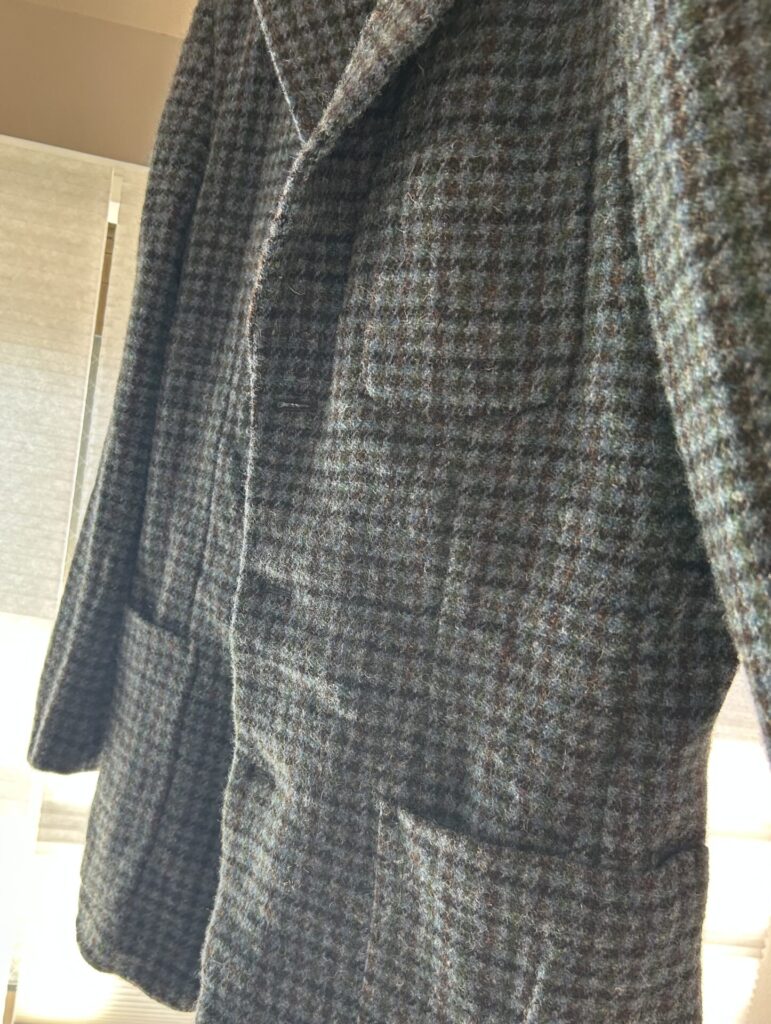
The wrinkles won’t disappear completely on their own, so once the jacket is about 50% dry, you may want to use a garment steamer to relax the remaining creases.
If you wait until the jacket is completely dry, the wrinkles may become more difficult to remove.
Interestingly, I didn’t use a garment steamer on this tweed jacket. I simply smoothed the fabric by hand, and all the wrinkles had disappeared by the time it was dry.
I don’t recommend drying the jacket in direct sunlight.
Sunlight may cause discoloration, and the heat could potentially cause the fabric to shrink.
Ideally, you have two options: hang it in a bathroom with a built-in drying system, or use a fan to circulate air around it.
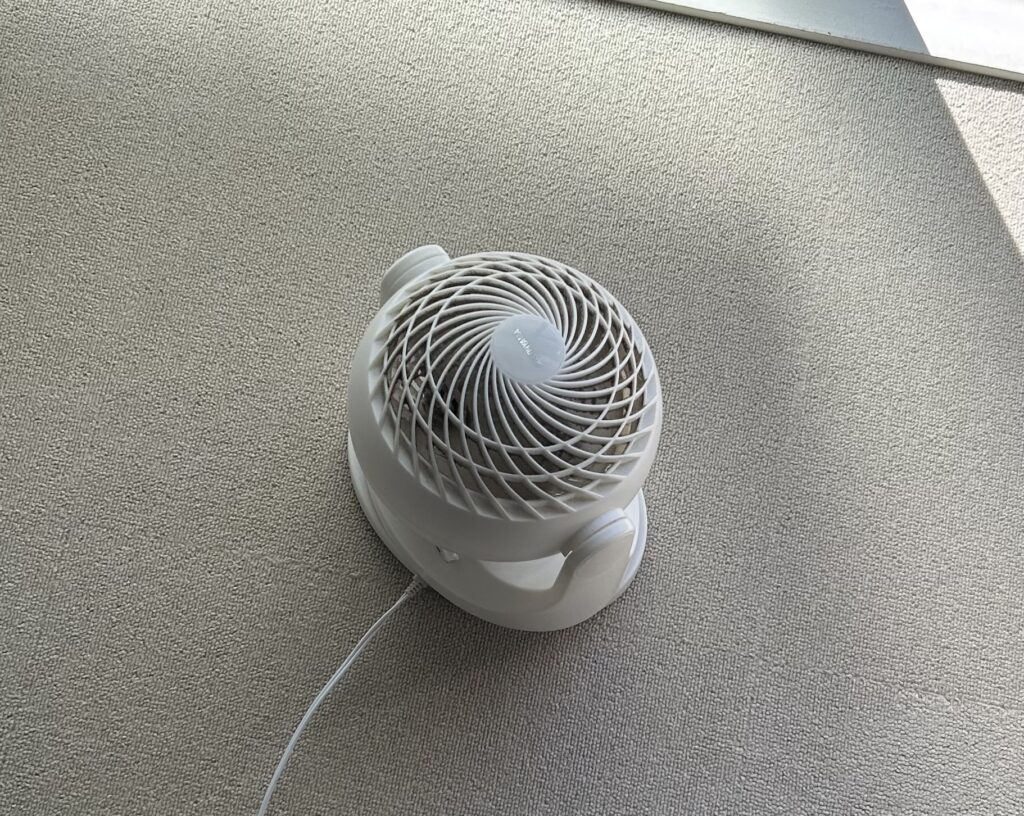
I’ve had an experience where I simply hung a jacket indoors without directing any air at it. It took too long to dry, and water marks remained on the fabric. For that reason, I don’t recommend leaving it to dry in still air.
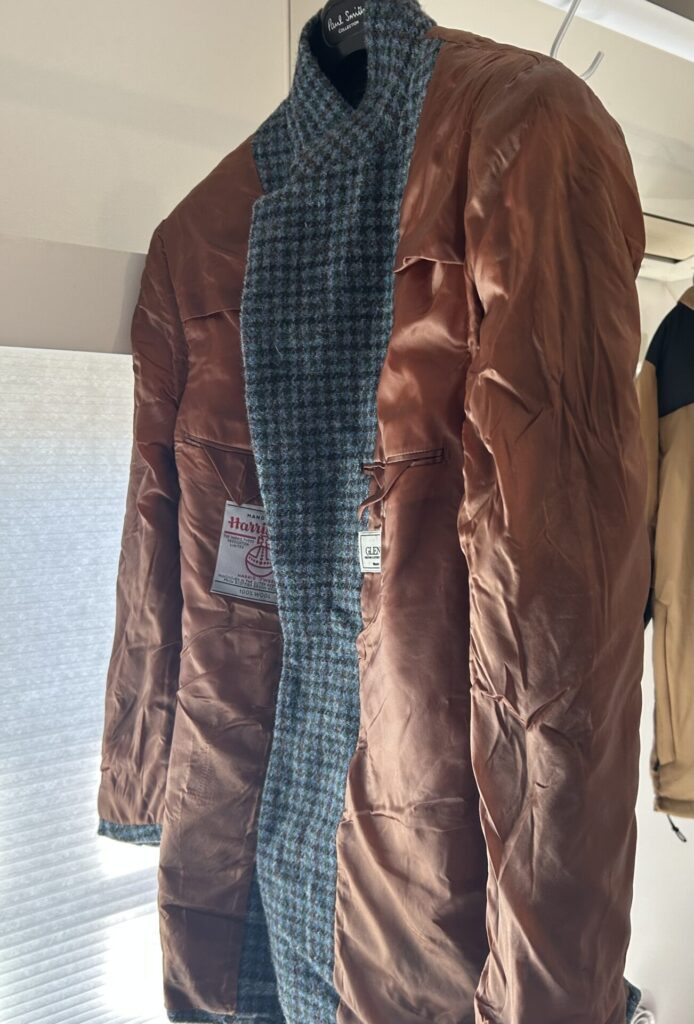
One more thing: after washing this tweed jacket, I turned up the lapels and left them in that position while it dried.
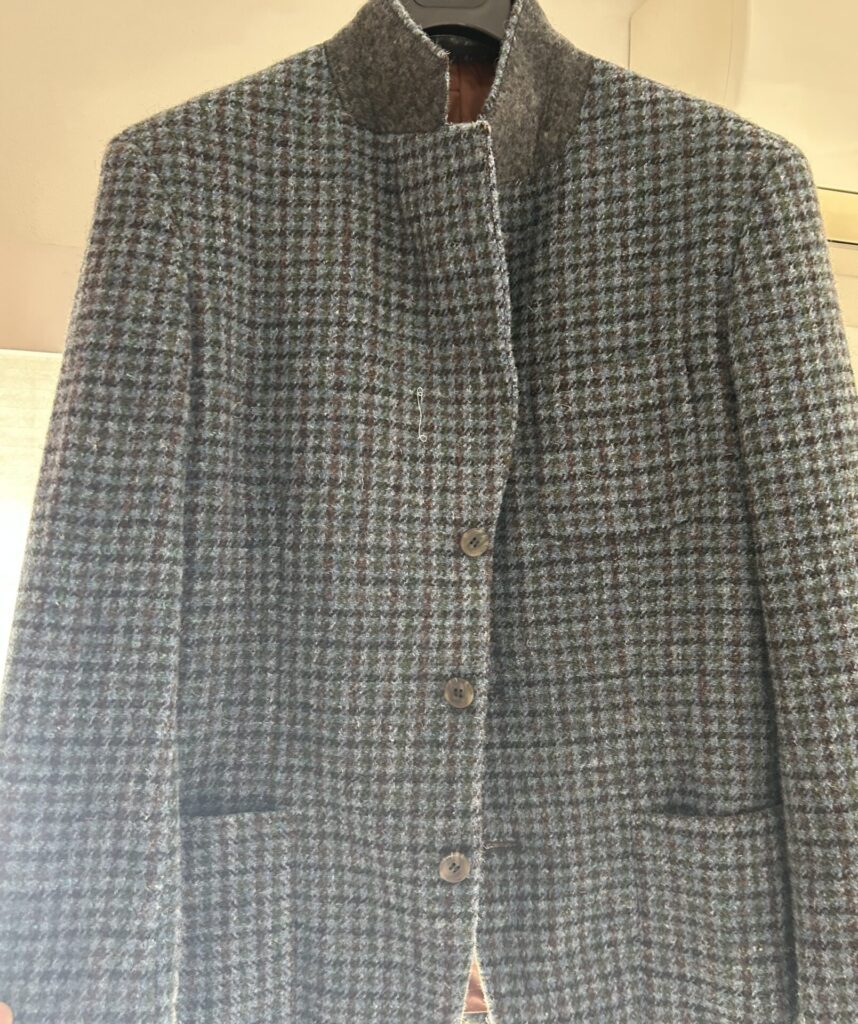
The jacket originally had a three-button front designed to be fastened at the top two buttons. However, I wanted to change it to a classic three-roll-two configuration, where the lapel rolls over the top button and only the middle button is normally fastened.
My idea was to take advantage of the moment when washing had relaxed the lapel’s original crease, then reshape it into the three-roll-two position while the jacket dried.

Using the method described above, I washed both a tweed jacket and a cotton corduroy jacket. Both came out beautifully, without any problems.
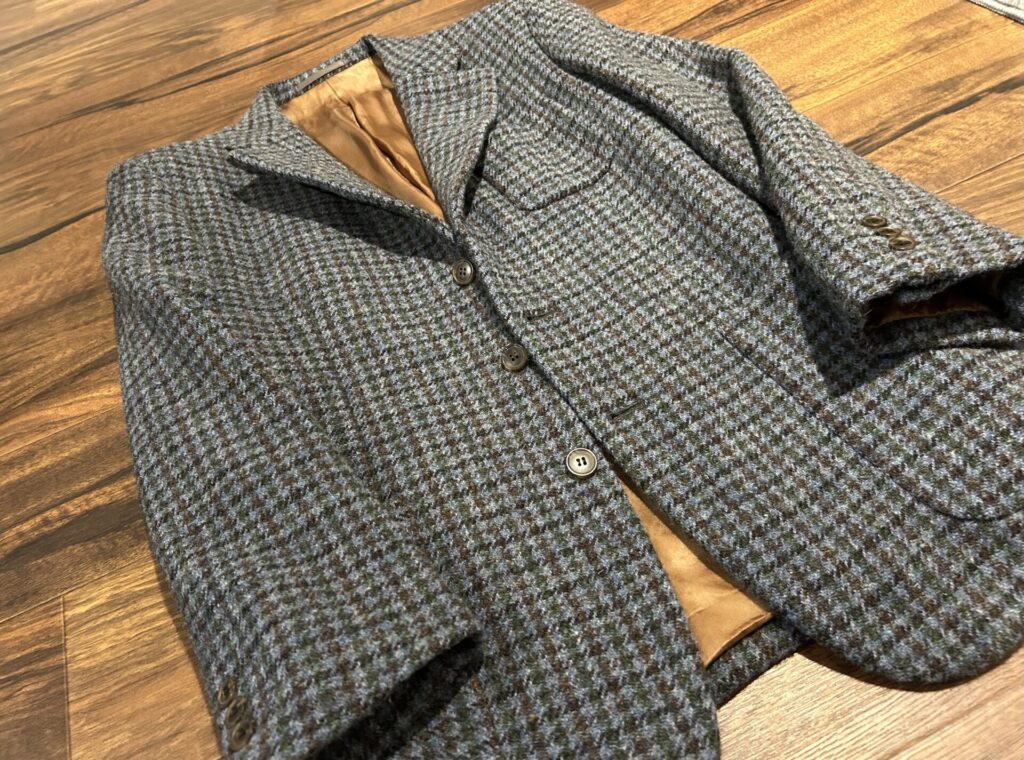
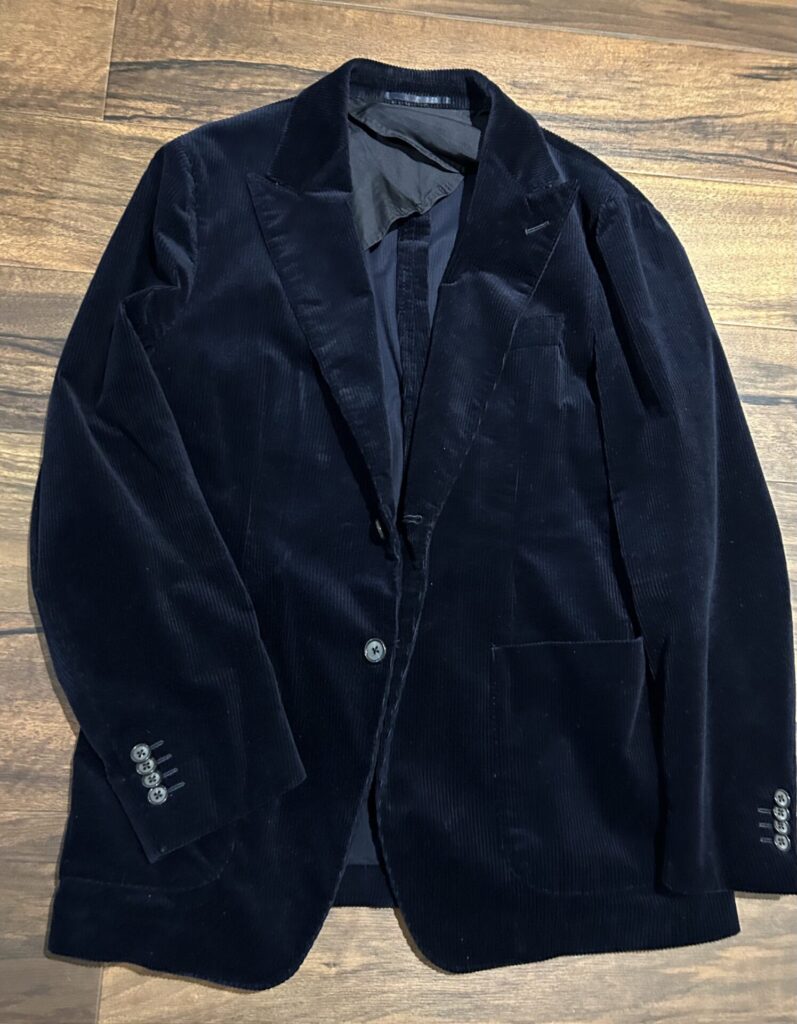
I bought the tweed jacket secondhand, and it was already quite old. Knowing that the previous owner’s sweat and other accumulated grime have likely been washed away makes me feel much better about wearing it.
Which Fabrics Can Be Washed?
Of course, not every jacket can be washed using this method.
I haven’t tried washing silk, cashmere, or delicate wool fabrics this way, and I would avoid doing so.
I’ve personally tried this method on linen, cotton, and tweed, and they all came out fine.
Will the Jacket Shrink?
Shrinkage is a concern, of course. However, in my experience, shrinkage has been negligible when I wash the jacket in cold water, carefully stretch the fabric back into shape before drying, and let it dry indoors.
I measured the tweed jacket before and after washing it, and the measurements were identical down to the millimeter.
(Added later: One linen jacket did not shrink at all when washed, while another shrank by about 4 cm (1.6 inches). This shows the importance of carefully assessing the fabric before washing.)
I’ve seen cases where the outer fabric shrinks but the lining, often made of cupro or a similar material, does not. This can leave the lining loose, wavy, and hanging awkwardly inside the jacket. Fortunately, that didn’t happen here, as you can see in the photo.
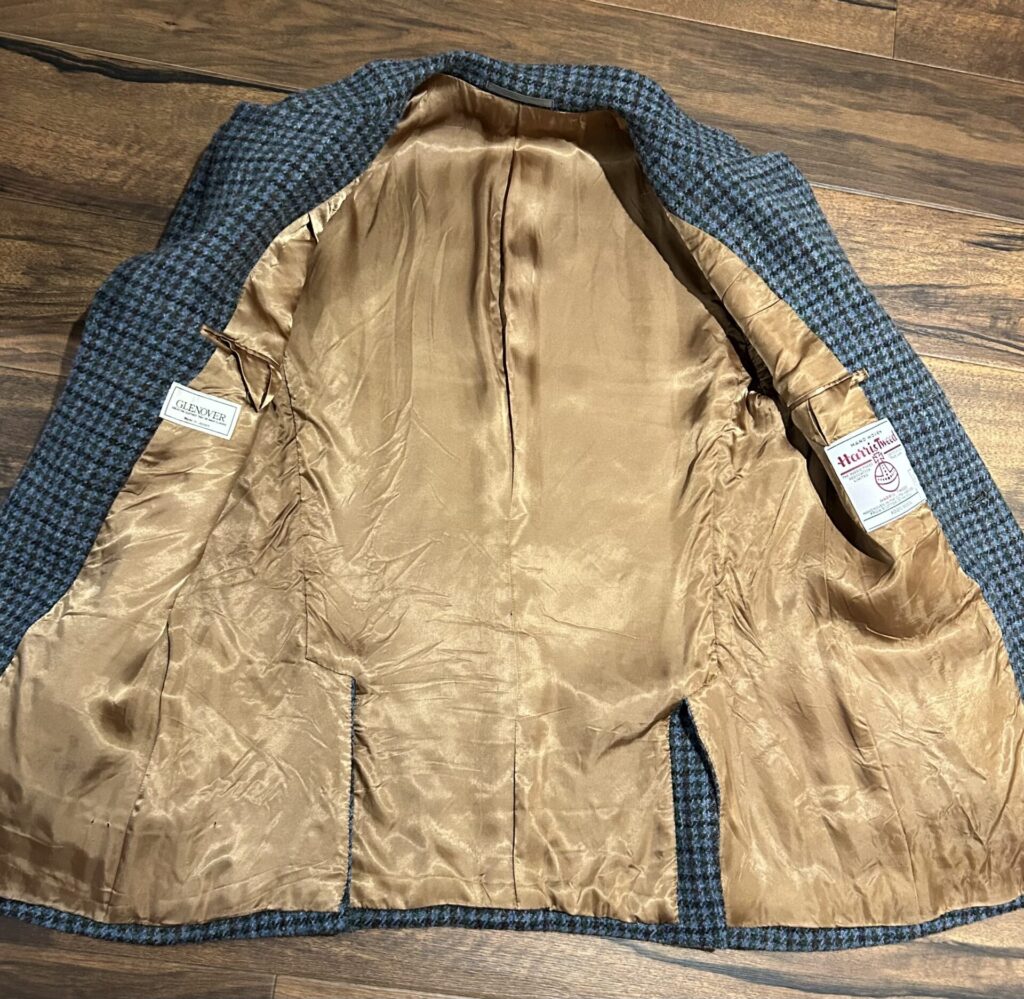
There are a few wrinkles in the lining, but they don’t bother me at all. The jacket was fairly wrinkled immediately after washing, but the wrinkles relaxed to a reasonable degree as it dried naturally.
Which Detergent Should You Use?
I think an ordinary detergent designed for delicate garments, such as Emal, works perfectly well.
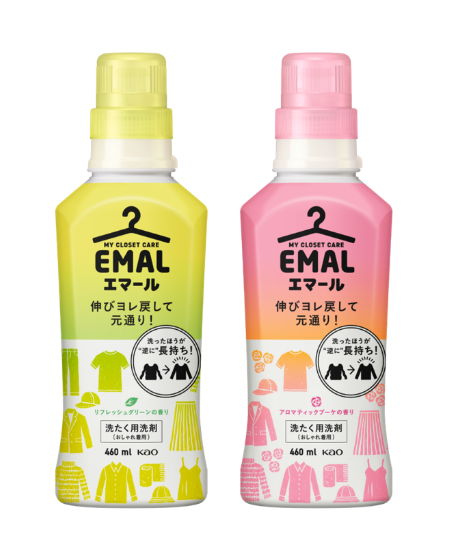
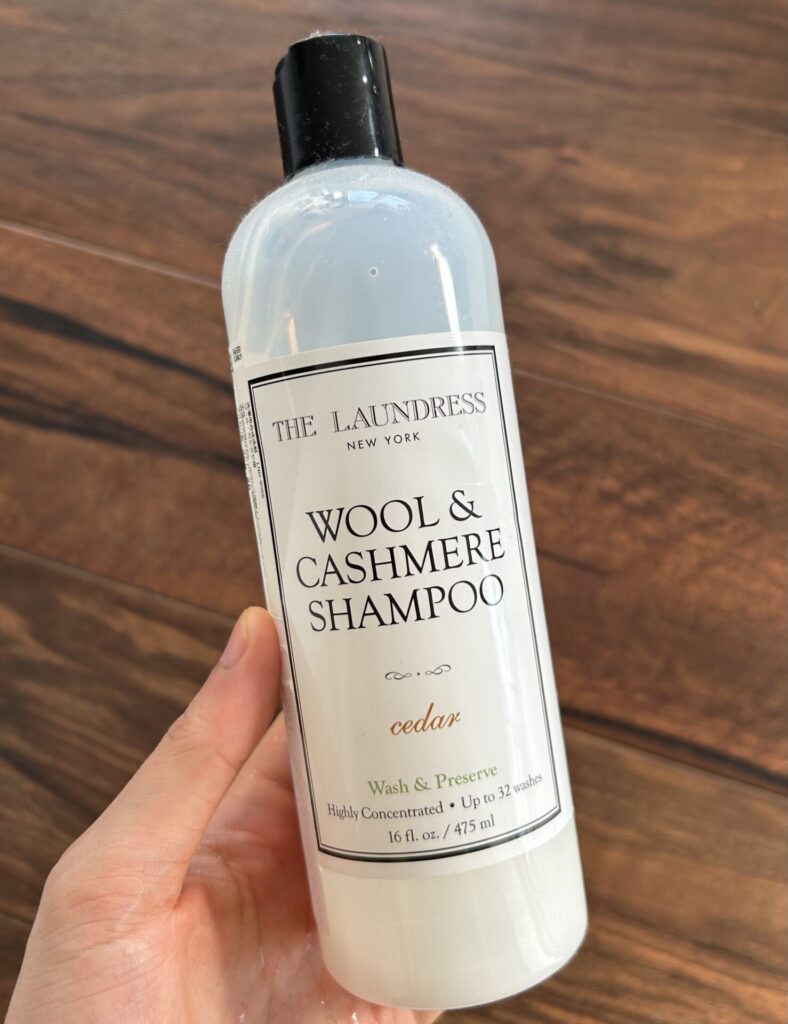
I tried Emal as well as the slightly more expensive cashmere detergent shown below, but the results were no different. For me, Emal alone is more than sufficient.
Conclusion
I’ve shown you how a tailored jacket can be washed at home, even in an ordinary washing machine.
I’m a bit of a clean freak and also rather frugal, so ideally, I only want to wear clothes that I can wash at home.
That’s one reason I love durable fabrics such as linen, tweed, and denim.
If you’re interested, why not give it a try?
That’s all for today.
Thank you for reading!


コメント