Hello, I’m Mr. Linen.
The Cartier Must Tank series has been gaining more and more popularity recently.
There are modern versions as well, but since I’m only familiar with vintage pieces, I’ll focus exclusively on vintage models.
This article is especially for those who are considering buying a Must Tank.
目次
What Is the Must Tank?
First, let me briefly explain what the Must Tank is.
Cartier has an iconic watch called the Tank.
“Tank” refers to a military tank—the rectangular design is inspired by the shape of a tank viewed from above.
There are several variations of the Tank, such as Tank Louis, Tank Normale, Tank Chinoise, and Tank Solo. Among them, the most representative is the Tank Louis.
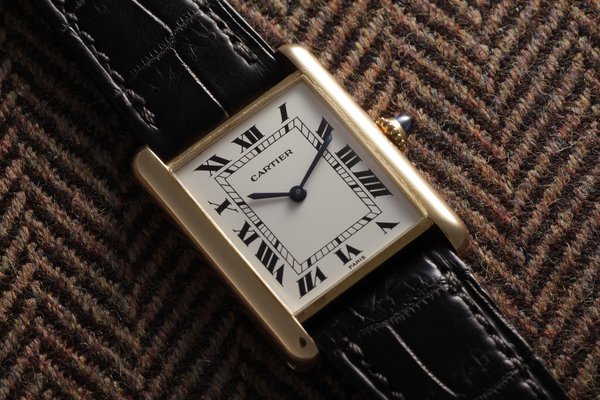
Many of you have probably seen this shape before.
The Tank Louis is said to have been created around 1917–1922.
Since its birth, it has been made from precious metals like 18k gold and platinum, making it a luxury watch.
It was also worn by famous figures such as Princess Diana, Yves Saint Laurent, and President John F. Kennedy.
Decades later, in the 1970s, Cartier introduced a series aimed at making the Tank more accessible—the Must Tank. The name comes from the English word “Must,” implying something you must own.
In short, it was designed to be more affordable.
One reason for the lower price is the material. Instead of solid gold or platinum, the case is made from sterling silver (925).
The silver is then coated with 18k yellow gold, giving it the appearance of gold.
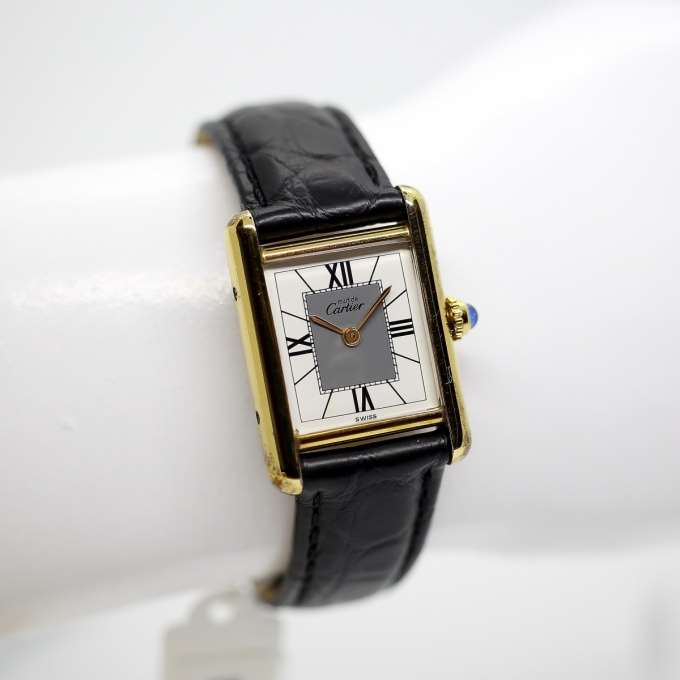
If rhodium is used instead of yellow gold, the finish becomes silver-toned, resembling white gold.
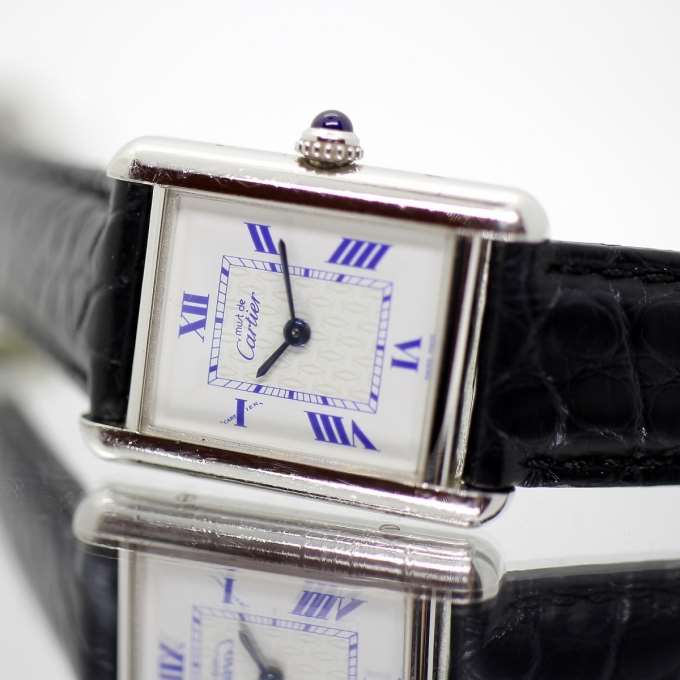
In simple terms, it is gold-plated. However, the Must Tank uses a thicker plating technique called “vermeil,” which is said to be more durable than standard plating.
To summarize: Tank Louis = solid gold, Must Tank = gold-plated.
Wide Variety of Designs
The Tank Louis typically features a very dressy dial: white background, Roman numerals, and blue hands.
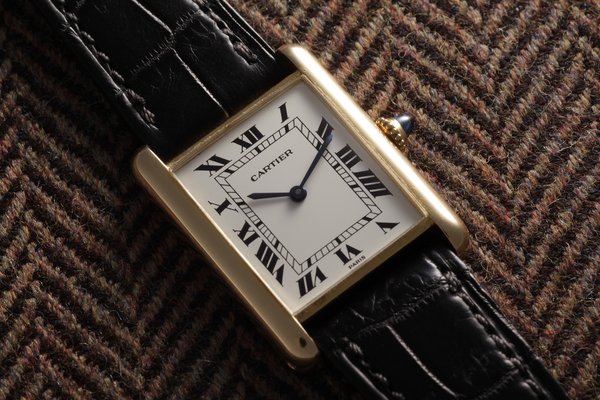
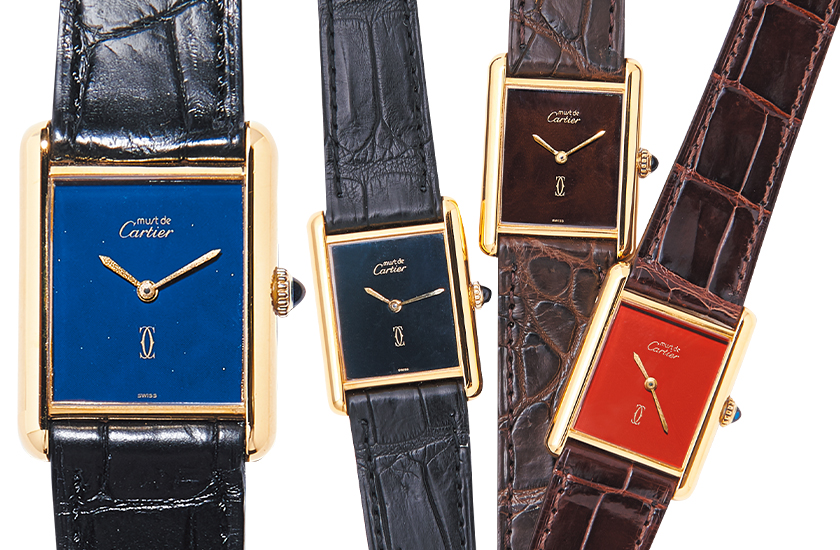
In contrast, the Must Tank comes in a huge variety of dial designs.
There are minimalist designs in solid colors—blue, black, brown, or red—with no numerals at all.
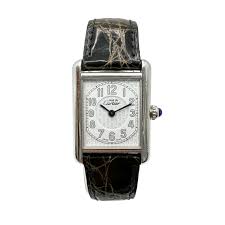
Some feature Arabic numerals instead of Roman ones, giving a slightly more playful look.
The variety is almost endless.
There is also a Must Tank that closely resembles the Tank Louis design: white-style dial, Roman numerals, and blue hands.
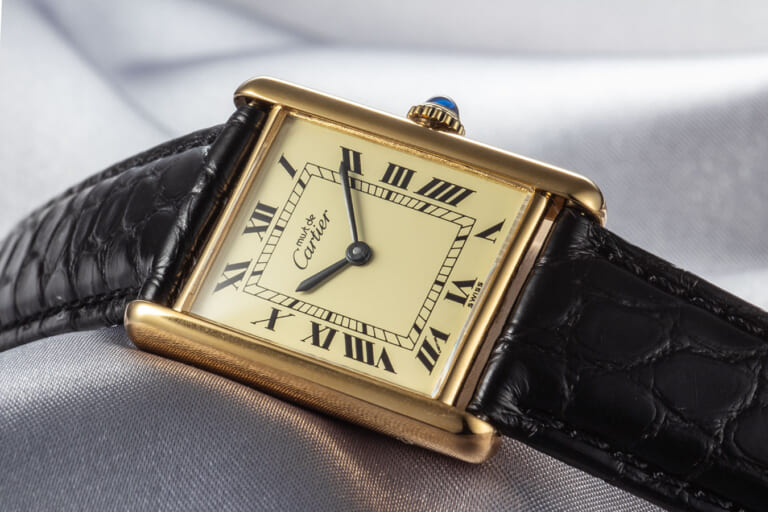
However, the dial is not pure white—it has a slightly yellowish, beige tone.
This is not discoloration; it was originally made that way.
This color is one way to distinguish a Must Tank from a Tank Louis.
Another key detail is the dial text—Must Tanks are marked “must de Cartier.”
Is the Must Tank Just a Cheaper Tank Louis?
Compared to the Tank Louis, the Must Tank uses less luxurious materials.
Gold plating vs solid gold—it’s obvious which is more expensive.
So is the Must Tank simply a cheaper version?
That’s one way to look at it, but it’s still an official Cartier product and a beautifully made watch.
In terms of movement, there is little difference (at least for vintage models).
Both models often use the hand-wound Caliber 78-1.
Some newer Tank Louis models may have higher-grade movements, though.
Both models also exist in quartz (battery-powered) versions.
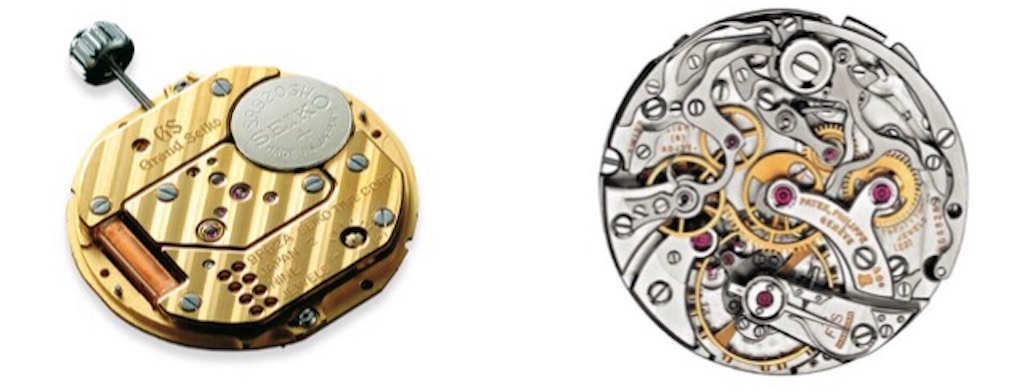
Mechanical watches are generally considered more prestigious, but the difference here isn’t huge.
In summary: the Must Tank is cheaper in material, but not significantly different internally.
Mechanical vs Quartz
As mentioned, Must Tank comes in both mechanical and quartz versions.
Sometimes the same dial design exists in both options, which can make choosing difficult.
Mechanical models are usually more expensive—often by about ¥50,000–¥100,000 ($350–$700).
This makes sense, as they are more complex to produce.
Mechanical Must Tanks are hand-wound, meaning you need to wind them daily.
It only takes about a minute, but it can feel like a hassle at first.
They also require an overhaul (full maintenance) every 3–5 years.
Think of it like servicing a car.
One overhaul costs about ¥30,000 (~$200).
What about quartz?
Quartz watches don’t need winding, and can often go 10 years without servicing.
The battery lasts about 2 years, and replacement costs around ¥2,000 (~$15).
Sounds like quartz is the better deal, right?
However, quartz has a major downside: it will eventually fail completely.
Unlike mechanical watches, quartz movements are electronic devices with a limited lifespan—similar to TVs or refrigerators.
If you get 20 years out of one, that’s considered good.
Once it dies, it cannot be revived with a standard service.
The only solution is replacing the movement, which usually requires going to Cartier.
This likely costs around ¥50,000–¥100,000 ($350–$700), though prices may rise in the future.
Summary:
Mechanical = ¥30,000 (~$200) every 5 years
Quartz = ¥2,000 (~$15) every 2 years + ¥100,000 (~$700) every 20 years
Over 50 years: Mechanical ~$2,000 total, Quartz ~$1,750 total
Quartz is cheaper overall, but mechanical watches hold higher resale value.
If you might sell it someday, mechanical is the better choice.
The Biggest Drawback
Thanks for sticking with me—just a bit more.
Unless you insist on solid gold, the Must Tank is a great option—but it has one major drawback.
That is plating wear and discoloration.
Even thick plating is still plating—it will deteriorate over time.
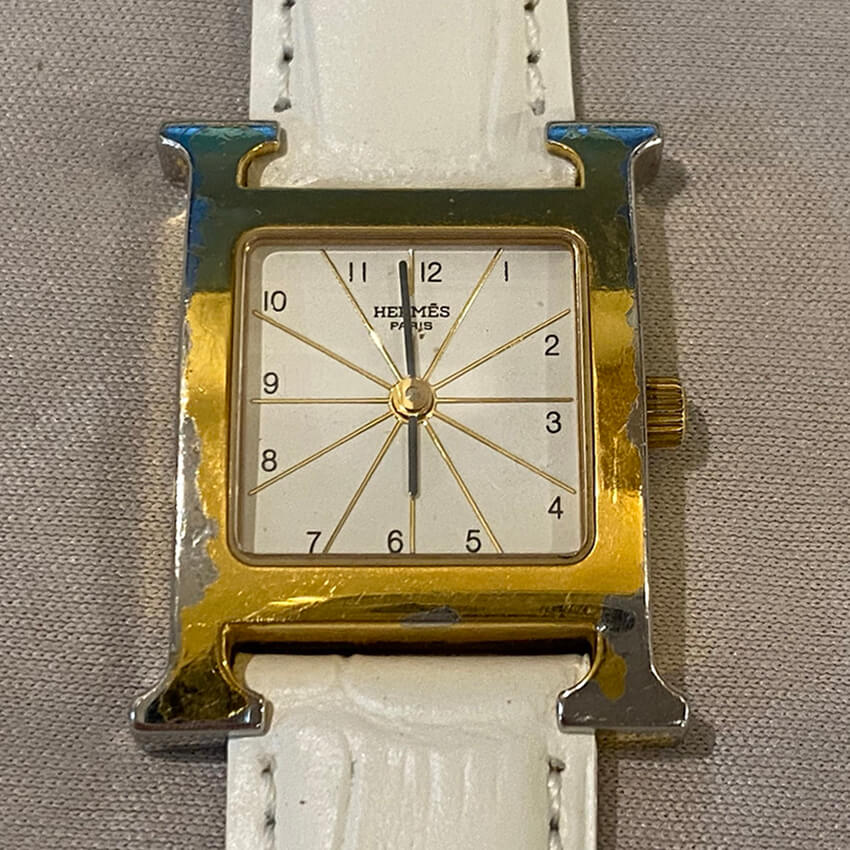
Scratches or impacts can cause peeling.
More troublesome is discoloration.
Take a look at my own Must Tank.
It’s less than 2 years old, yet already shows slight discoloration.
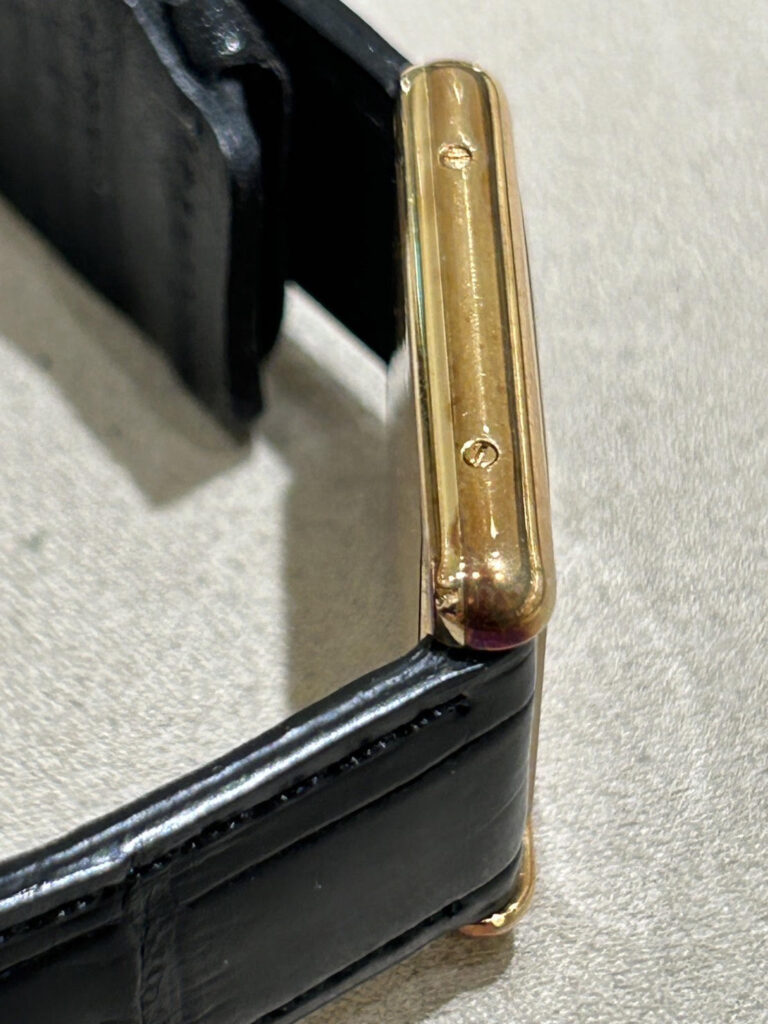
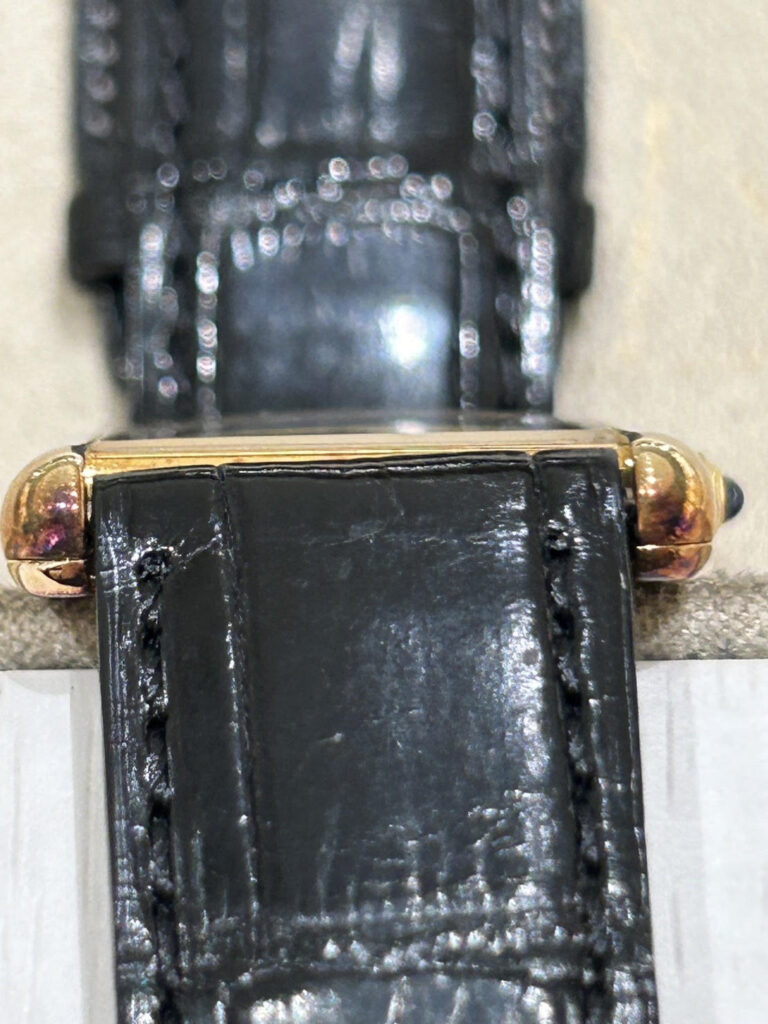
This happens because the base material is silver 925, which tarnishes easily.
Sweat and air exposure accelerate this process.
Even with careful maintenance, it’s hard to avoid completely.
The solution is re-plating.
This involves stripping the old plating and applying new plating.
It can be done at many watch repair shops for around ¥20,000–¥30,000 ($140–$210).
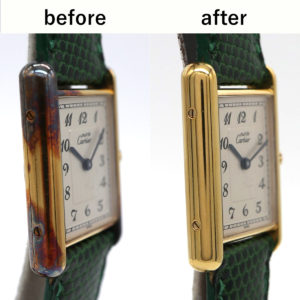
Still, considering the watch itself costs around $2,000–$3,000, this isn’t a trivial expense.
Bonus: My Must Tank
Finally, let me briefly introduce my own Must Tank.
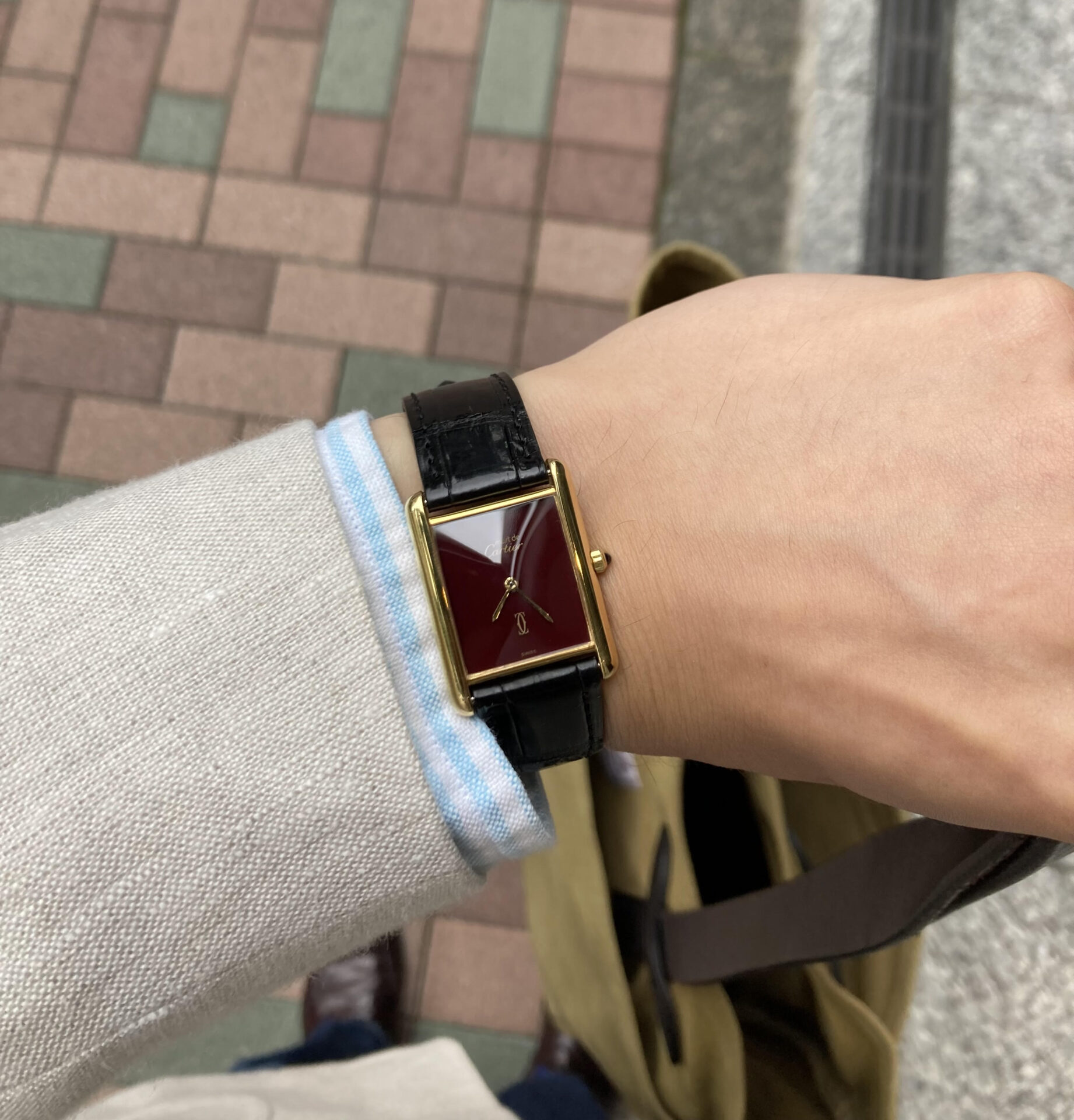
As you can see, it’s a bold, solid burgundy dial.
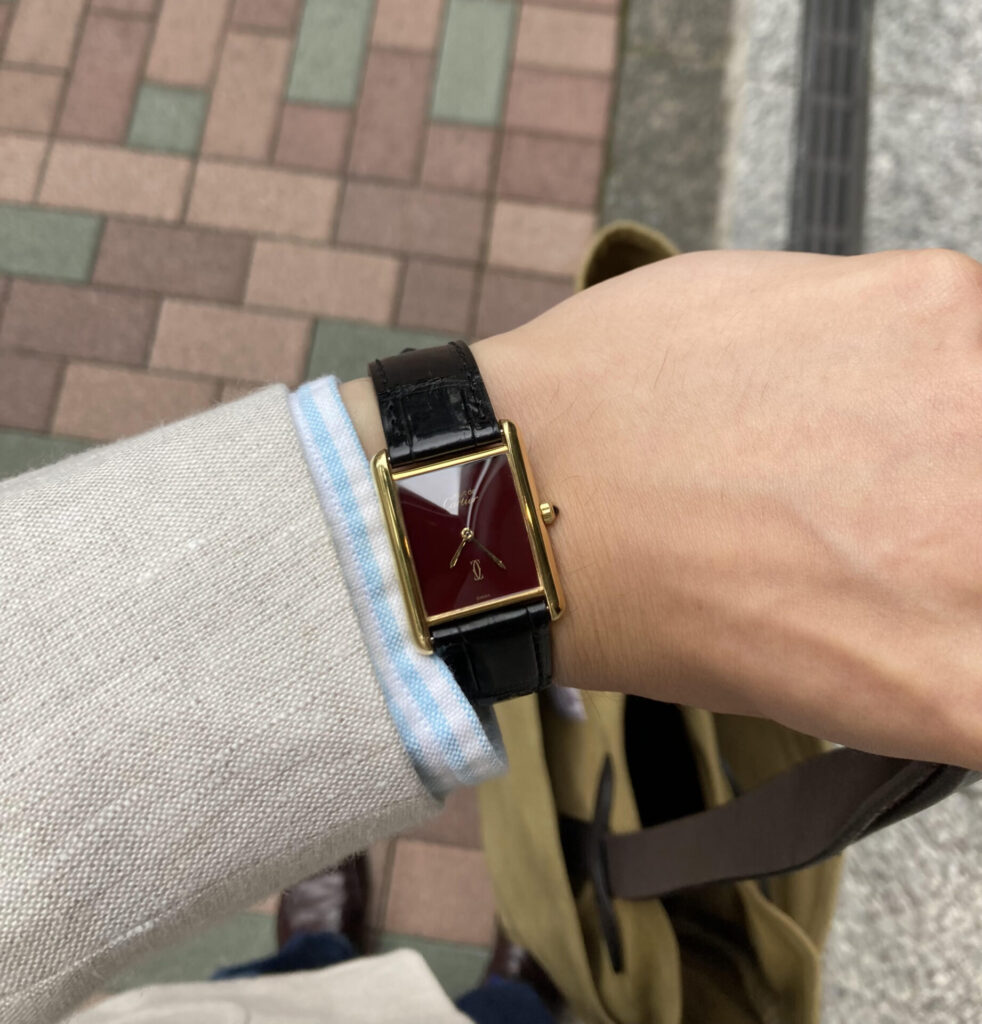
I’ve always loved red dials, so I bought it several year ago.
Gold case, red dial, and a blue cabochon on the crown.
The combination of gold, red, and blue works beautifully, while the black crocodile strap keeps it from looking too feminine.
I really like this balance.
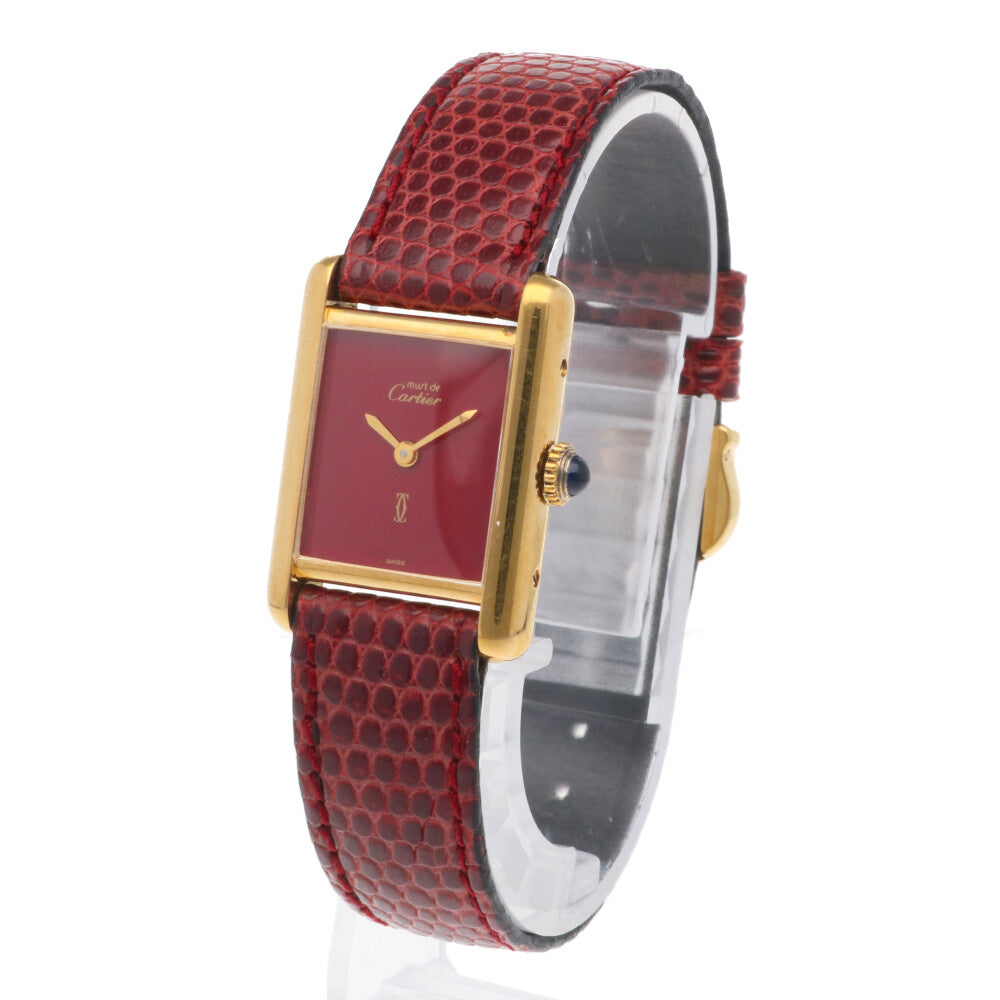
By the way, mine is quartz.
I chose it for simplicity and price at the time.
If I were buying now, I’d go mechanical—but I don’t regret quartz.
The only thing I truly dislike is the plating wear.
Conclusion
I hope this helped if you’re considering a Must Tank.
Aside from plating issues, it’s undeniably a wonderful watch.
From my experience, silver-based plating tends to discolor more than stainless steel-based plating.
In fact, another steel-based gold-plated watch I own—even ones that are over 60 years old—show almost no discoloration (though some plating wear is present).
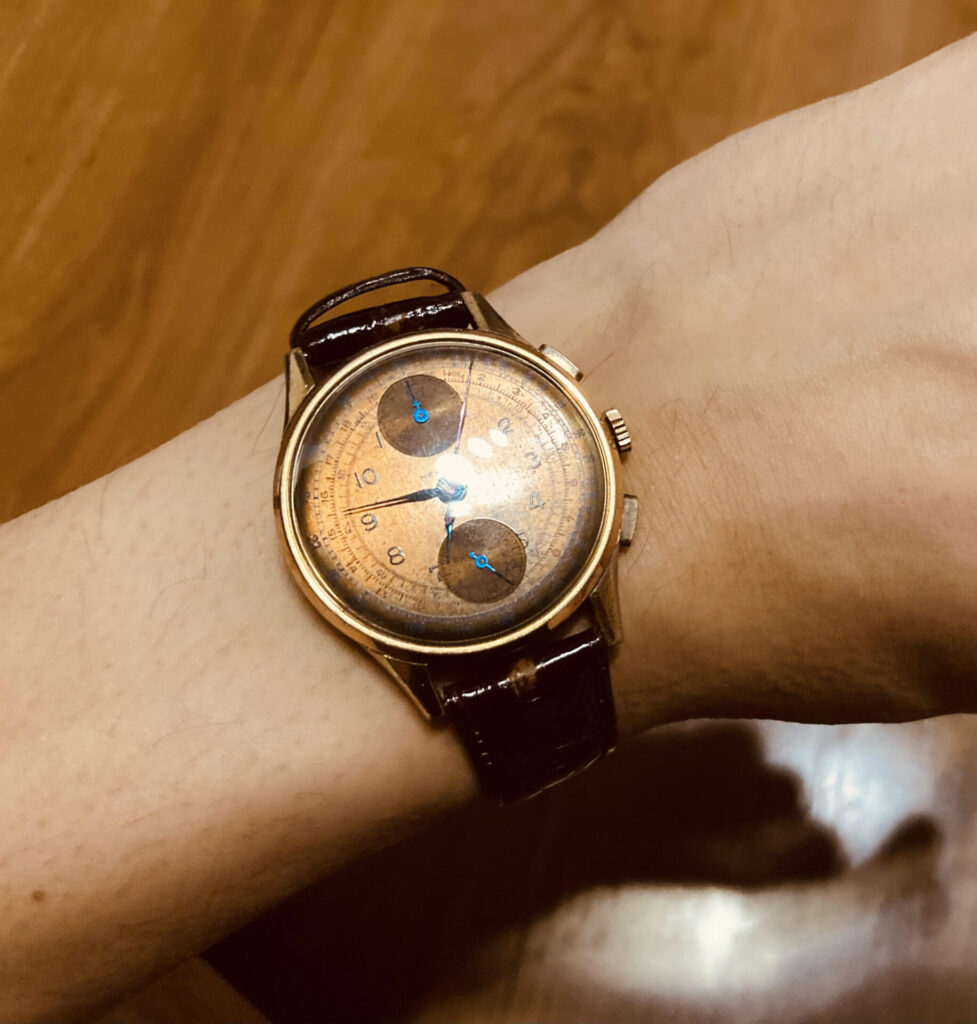
Of course, solid gold is better—but much more expensive.
A vintage solid gold Tank Louis costs around ¥2,000,000 (~$13,000) for mechanical, or ¥1,000,000 (~$6,500) for quartz.
I recommend the Must Tank if you love a specific dial design or don’t mind occasional re-plating costs.
That’s all. Thank you for reading.






コメント