Hello, I’m Mr. Linen.
I love vintage watches.
There are many wonderful modern watches available today, but I personally prefer vintage pieces for their unique character, discontinued designs, smaller sizing, and relative accessibility.
Some time ago, I purchased a vintage Cartier watch.
However, the dial had noticeable damage.
I brought it to a Cartier boutique in Japan and had the dial replaced. In this article, I’ll walk you through the process, the cost involved, and some unexpected pitfalls of dial replacement.
I hope this will be helpful for those considering the same.
目次
The Watch I Purchased
This is the watch I purchased.
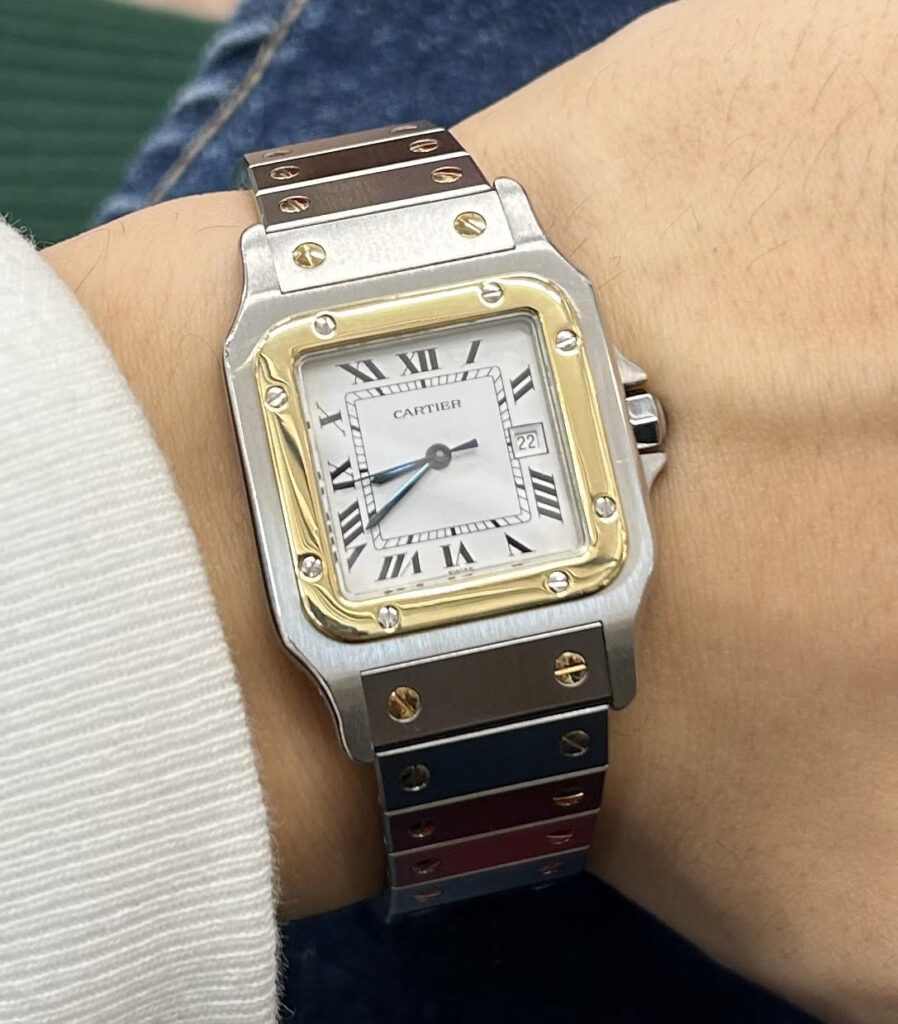
The official name is Santos Carrée, meaning square in French.
There are modern equivalents still available today, but they have a more rounded overall design.

Both the bracelet and case are curved to fit the wrist.
In contrast, the vintage Santos Carrée has a more angular, flat appearance.
The modern version is more ergonomic and comfortable, but I personally prefer the sharper, more geometric feel of the vintage model.
A good comparison would be the Land Rover Defender. Vintage models have a rugged, boxy design, while modern versions are more rounded and refined.


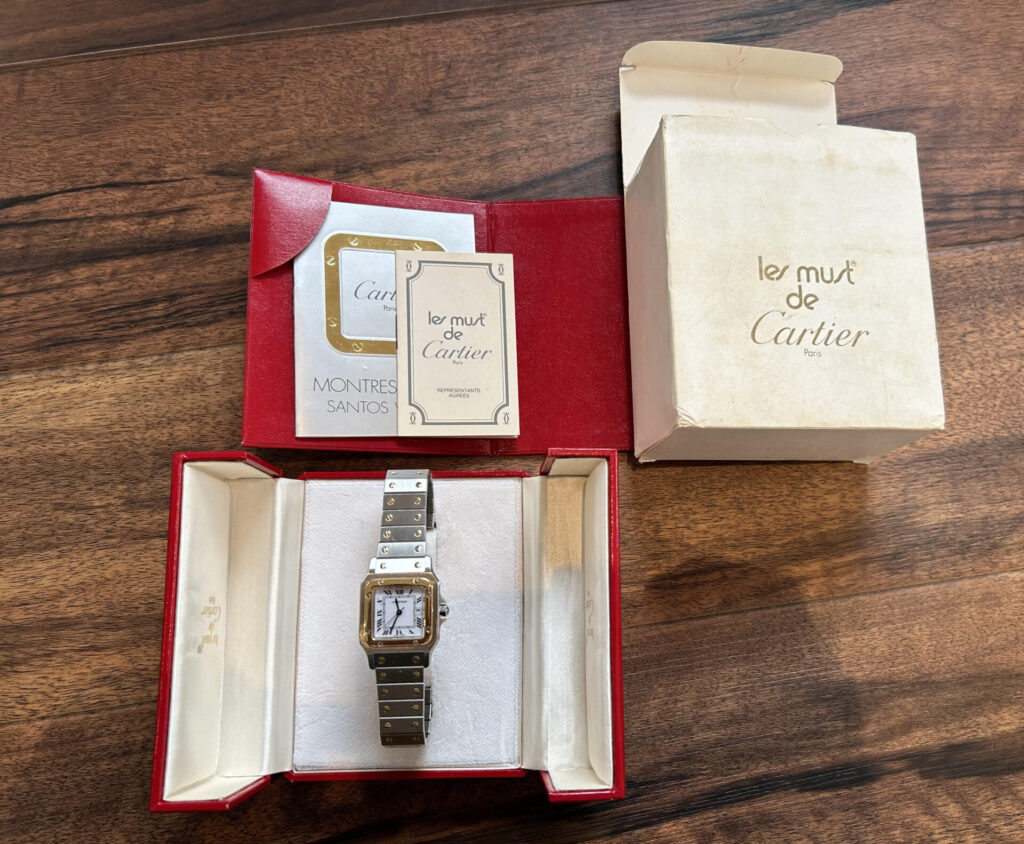
I purchased this Santos from a pawn shop.
It came as a full set with the original box and papers, clearly a piece that had been well cared for by its previous owner.
Dial Damage
I generally don’t mind aging on vintage dials—in fact, I often appreciate patina and small imperfections. However, this one was quite severe.
The dial had cracks along with noticeable spotting.
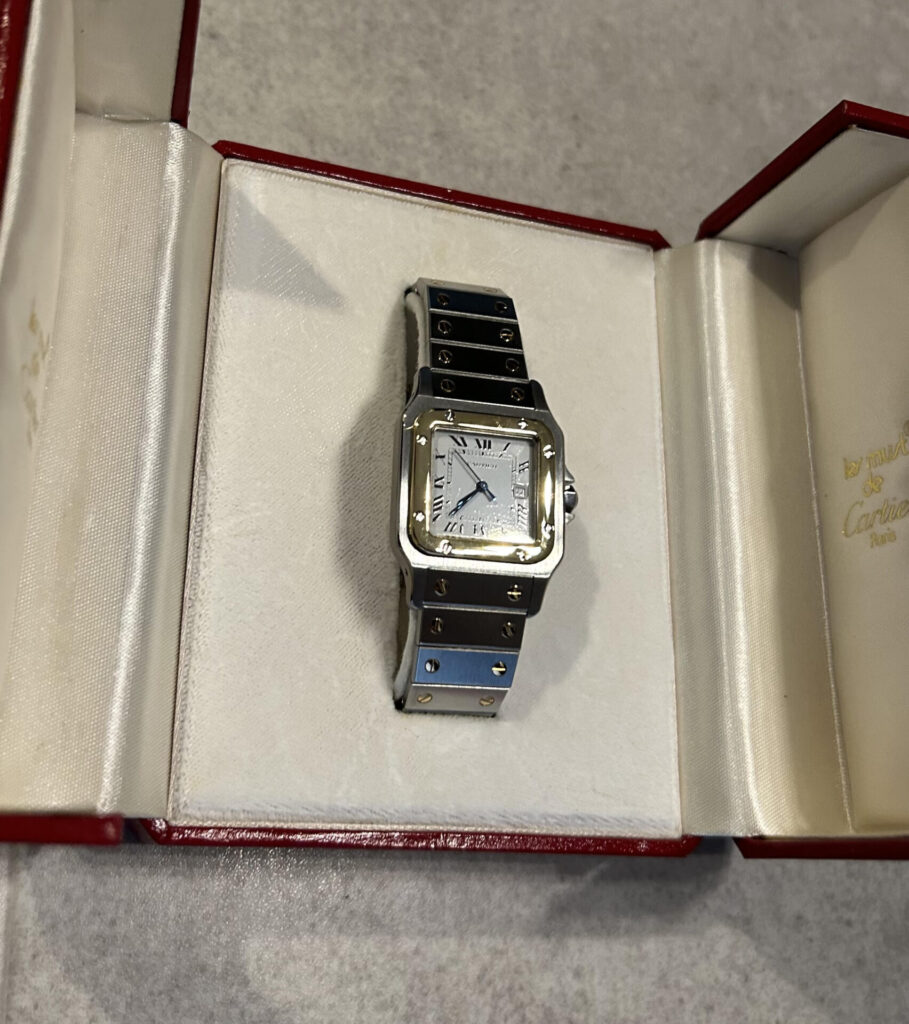
With Cartier vintage watches in particular, cracked dials are extremely common.
I work part-time at a vintage watch shop in Tokyo on weekends and have seen many examples firsthand—it’s not an exaggeration to say that nearly half have some form of cracking.
Cracks (often referred to as “spidering”) are almost unavoidable.
Compared to modern watches, vintage dial manufacturing techniques were less durable, making them more susceptible to even minor impacts.
In addition to cracks, there were also small spots across the dial.
The exact cause is unclear, but it’s likely due to moisture entering the case at some point.
To Repair or Not
Since I bought it from a pawn shop, the movement hadn’t been serviced, so I needed to get an maintenance done anyway.
A local watchmaker told me they could service the movement, but couldn’t do anything about the dial. They suggested going to a Cartier boutique, where a full dial replacement would be possible.
Interestingly, Cartier can still replace parts on vintage watches—including dials, hands, and other components.
However, there is one important catch: they will not replace the dial on its own.
Dial replacement is only offered as an option when you order a “Complete Service,” which includes a full maintenance.
Since official service is more expensive than independent watchmakers, I initially wanted only the dial replaced—but that wasn’t an option.
The total cost for the Complete Service plus dial replacement was estimated to exceed $700 USD (as of 2024), which made me hesitate.
If I ignored the dial, I could simply service the movement locally and still use the watch normally.
This may sound trivial, but I have trypophobia (a fear of clustered patterns), so the spotting really bothered me. If it were just cracks, I might have left it as-is—but I decided to proceed with the boutique service.
What’s Included in the Complete Service
I visited one of the largest Cartier boutiques in Japan—the Cartier Ginza flagship.
I was guided to a dedicated service floor (not a private room), offered bottled water, and consulted with a staff member—trying to act composed, but admittedly a bit nervous.
As expected, dial replacement was only available together with the Complete Service.
Since the Ginza boutique has an in-house workshop, they provided a same-day estimate. Other locations may take several days due to shipping.
The total came to approximately 110,000 JPY (about $750 USD). Expensive, but I decided to go ahead.
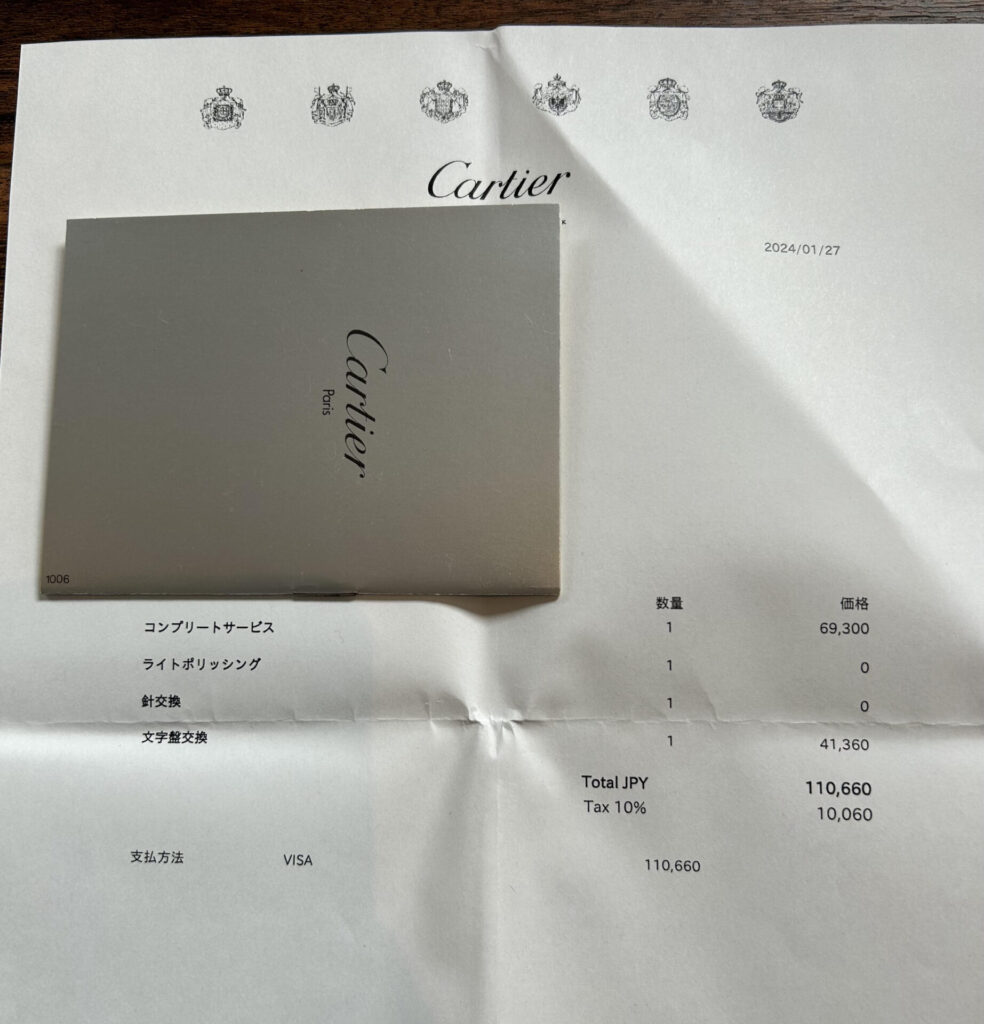
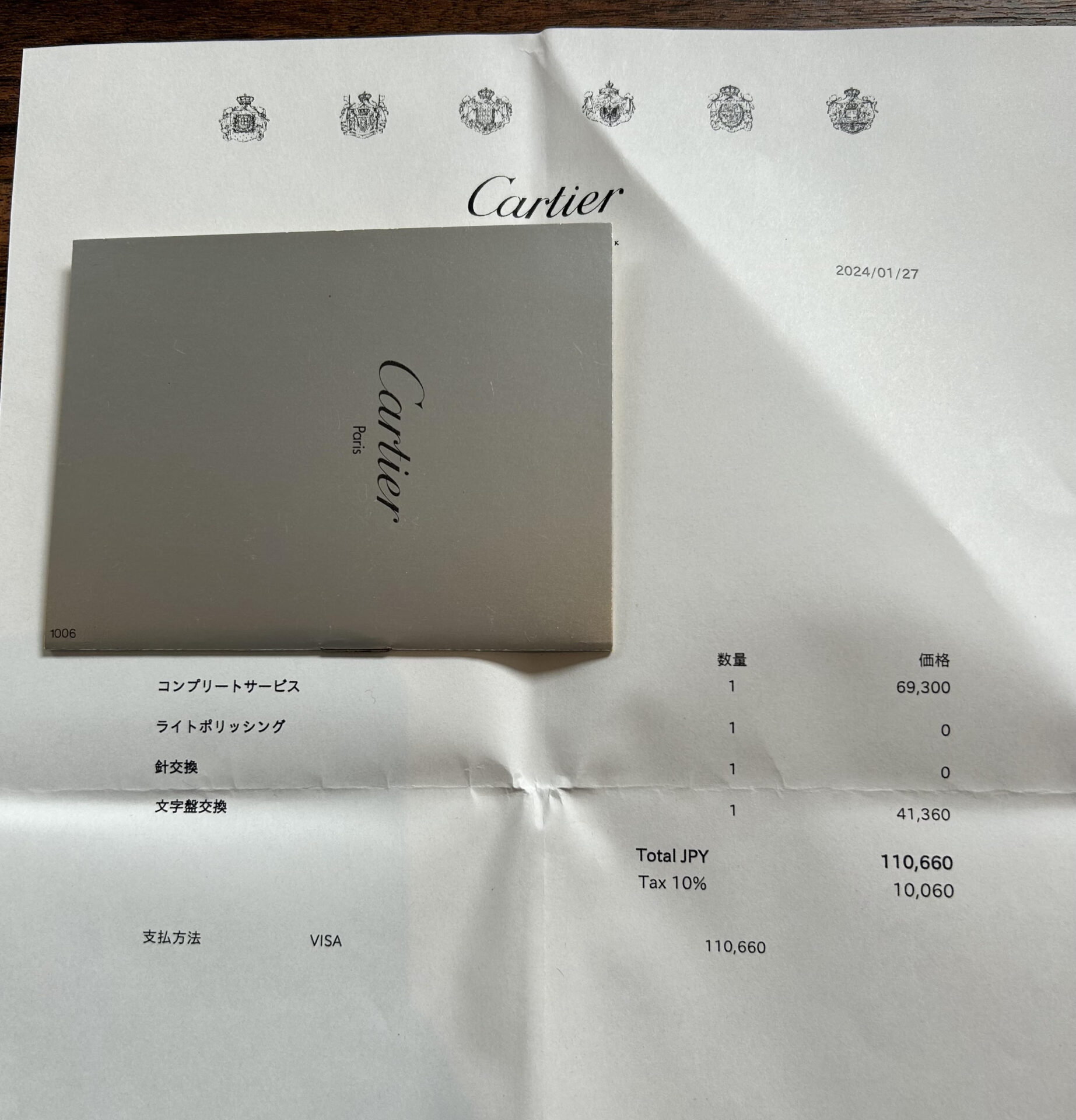
As you can see, dial replacement is an additional cost (41,360 JPY), while hand replacement is included in the Complete Service.
Regret
About a month later, I went to pick up the watch.
The dial came back looking brand new.
And I wish I could say I was completely satisfied.
But to be honest, I have some regrets.
Here’s a before & after comparison.
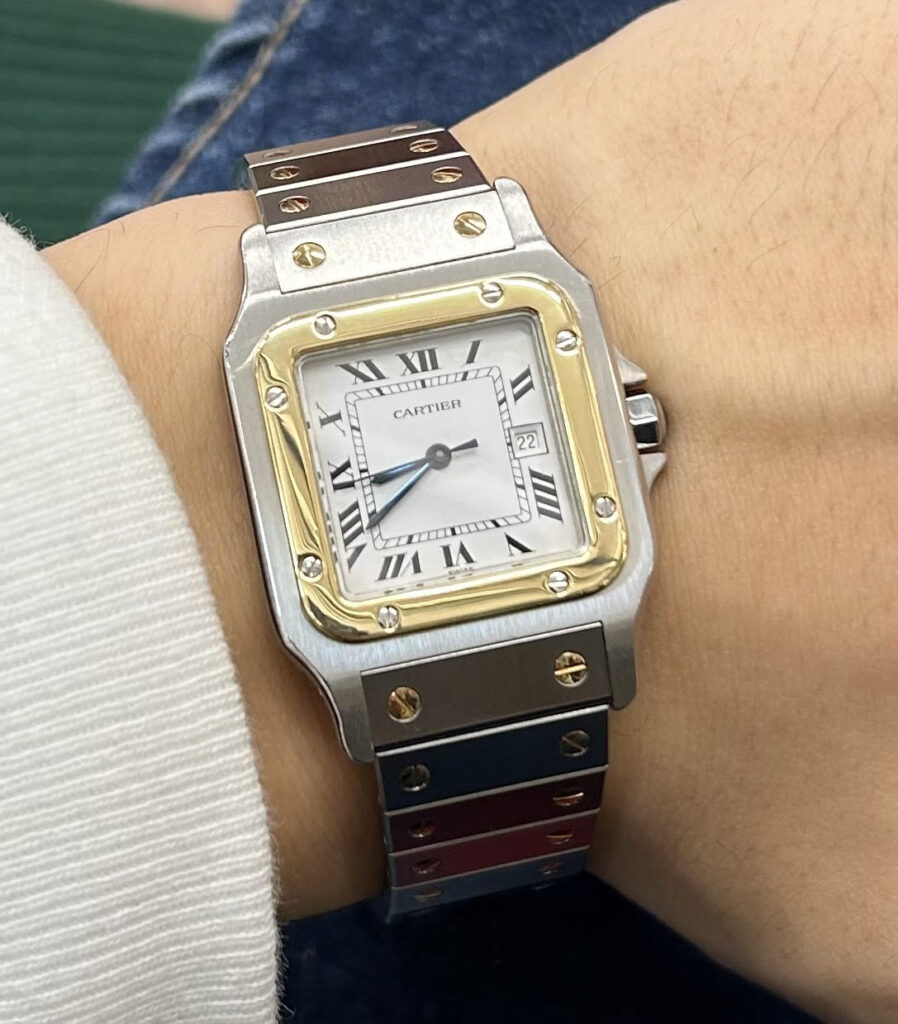
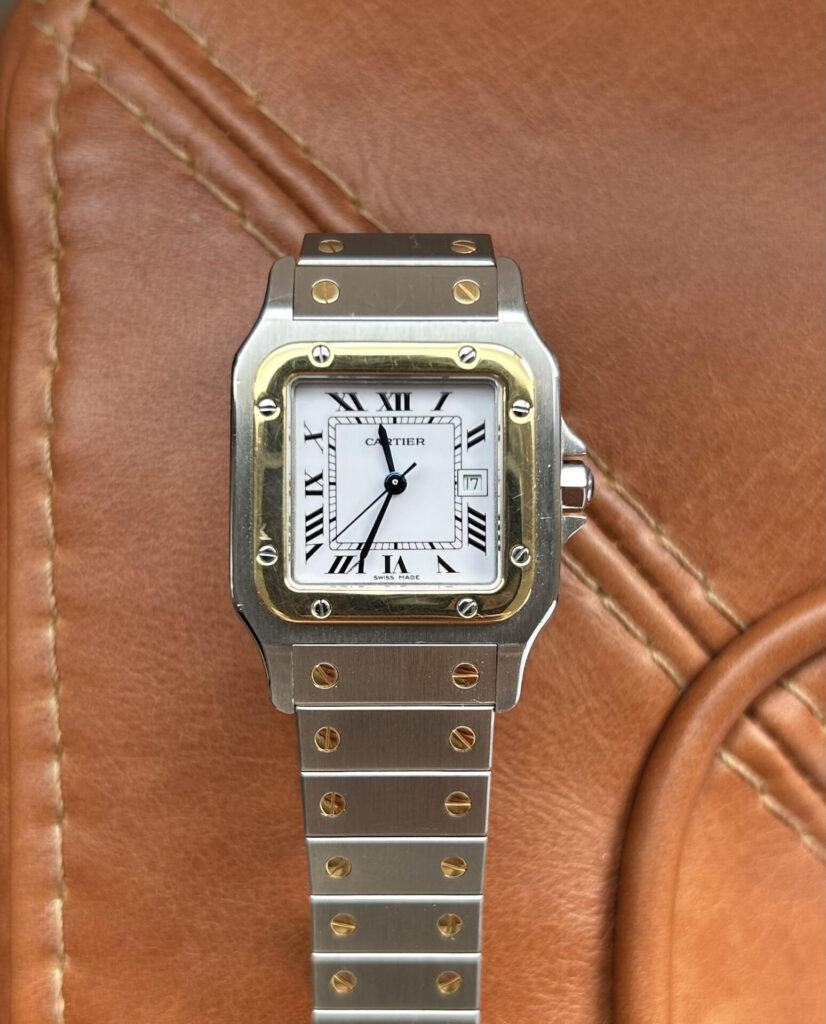
The overall design remains the same.
However, the text below 6 o’clock changed from “SWISS” to “SWISS MADE.”
Cartier transitioned to “SWISS MADE” in the late 1990s to early 2000s.
This means the replacement dial is not a period-correct original, but a newly manufactured one designed to match the vintage style.
On the plus side, modern dials are more durable and less prone to cracking.
Personally, I didn’t mind the text change much, though purists might see it as a drawback.
The bigger issue for me was the color.
It’s hard to convey in photos, but the white changed from a matte tone to a glossy, porcelain-like finish.
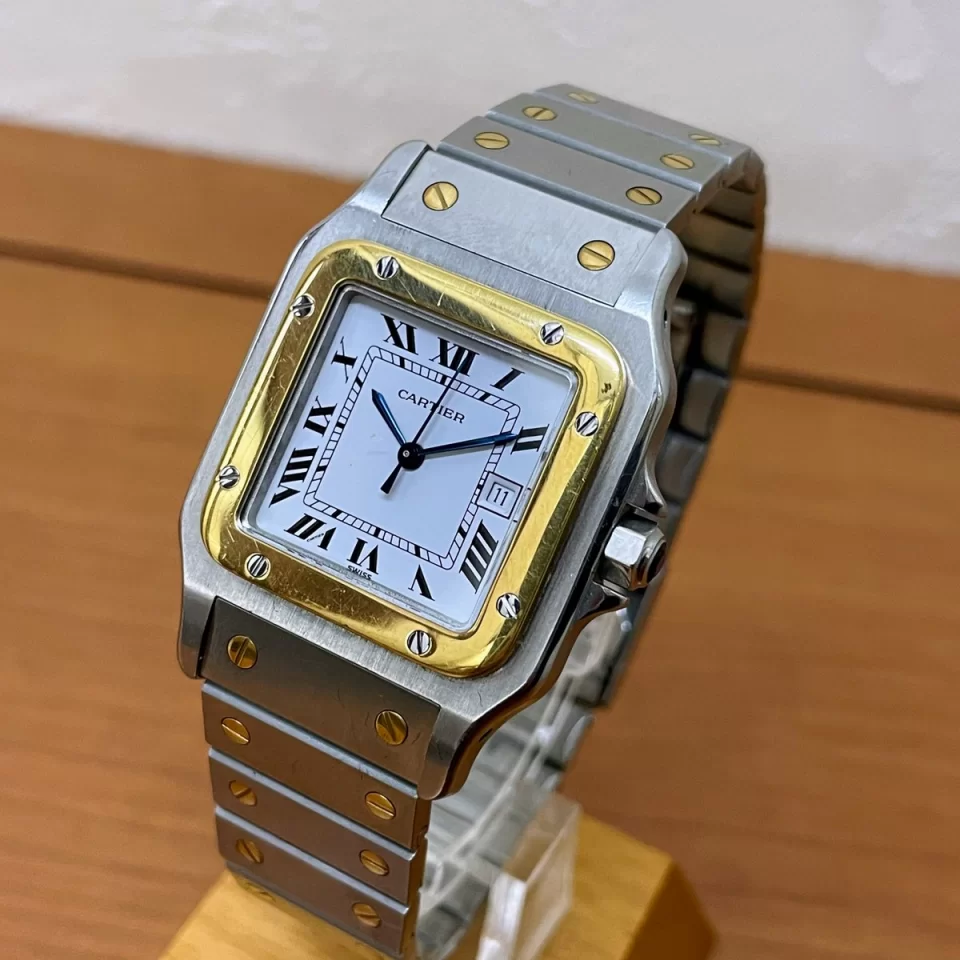
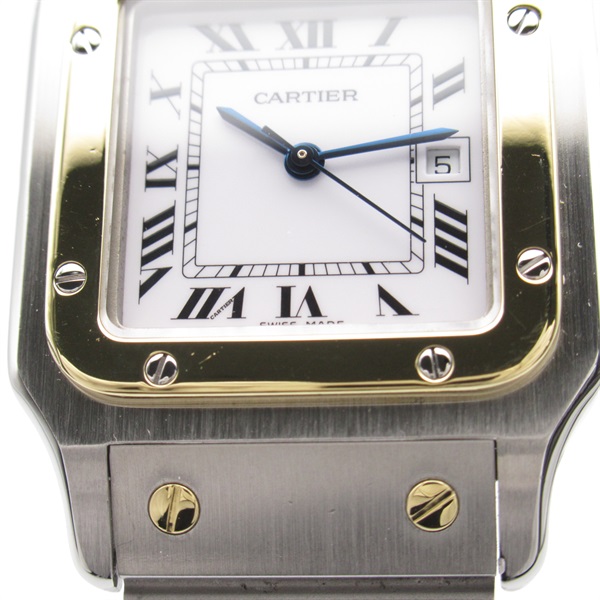
If I had to describe it, it’s like placing a thin layer of glass over a white surface.
While it’s objectively beautiful, to me it feels too perfect.
The dial almost looks disconnected from the vintage case—like a brand-new component in an aged watch.
I never expected this kind of trade-off from a dial replacement.
For Those Considering It
If you own—or are considering buying—a vintage Cartier and are concerned about dial condition:
If even minor imperfections bother you, dial replacement can be a good option.
However, if you’re seeking perfection, you might be better off with a modern watch rather than a vintage one.
The charm of vintage watches lies in their imperfections.
If I could go back in time, I wouldn’t replace the dial.
That’s the honest conclusion I’ve reached.
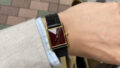
For reference, this was a white dial, but Cartier offers various colors such as red, blue, and grey—and they can replace those as well.
I’ve seen a red dial replacement before, and it looked almost identical to the vintage original aside from the “SWISS MADE” marking.
So perhaps this issue is specific to white dials.





コメント