Hello.
My name is Mr. Linen — a man devoted to exploring linen beyond its usual boundaries.
I have spent years wearing, ordering, and living with linen jackets, not only in summer, but across seasons.
For me, linen is not merely a seasonal fabric; it is a material with depth, character, and unexpected versatility.
On this blog, I share encounters with exceptional linen and the stories behind them.
For those who love tailored clothing, there is a fabric brand that is already well known: Maison Hellard.
Among all the linen fabrics I have encountered so far, none has struck me as strongly as this one—speaking as a devoted linen enthusiast who goes by the name Mr. Linen.
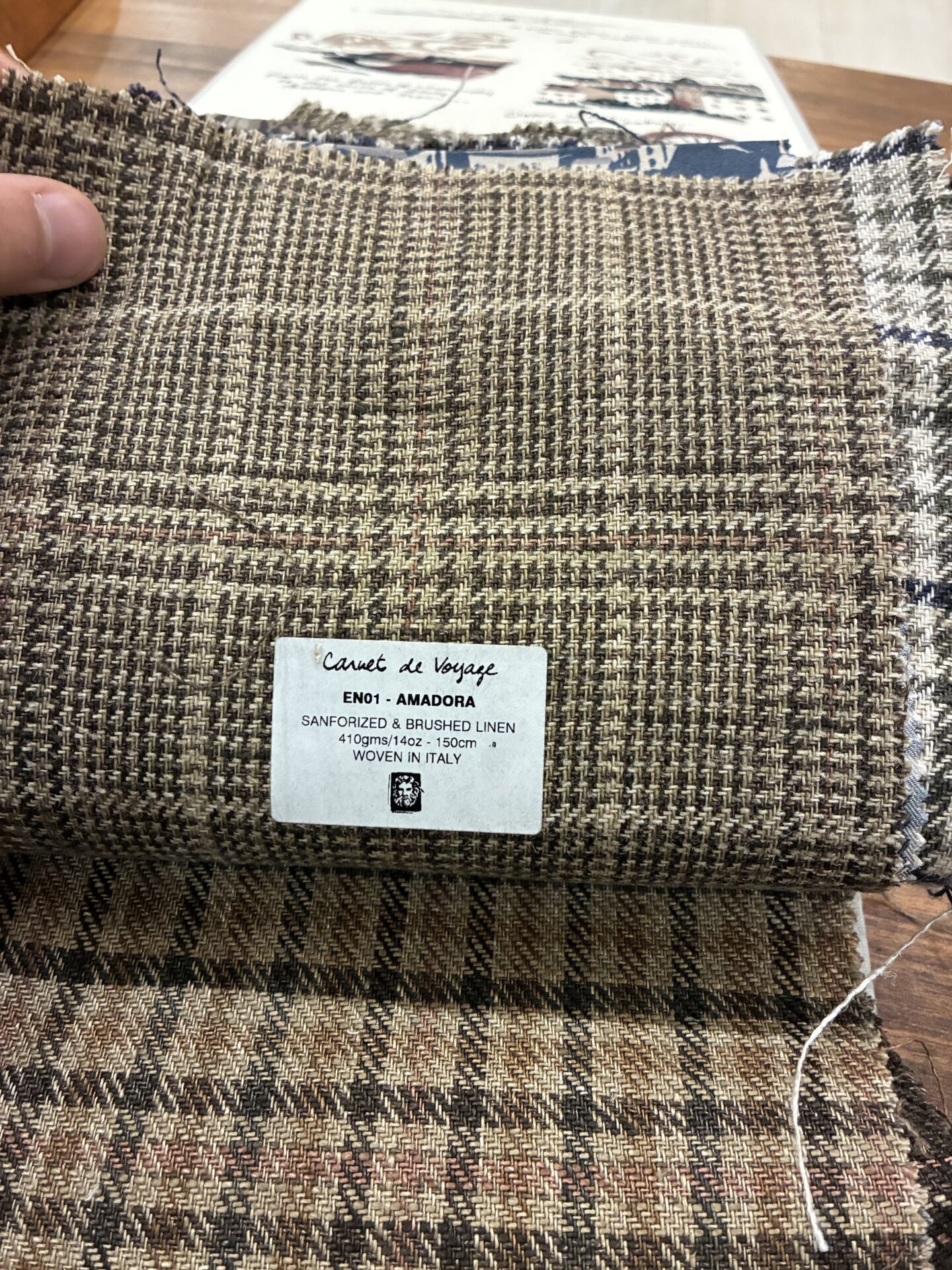
That fabric belongs to a collection called Carnet De Voyage.

I have personally decided to order a jacket using this fabric.
Please allow me to share its appeal from my own perspective.
Characteristics of Maison Hellard
Maison Hellard has already been introduced on many tailors’ blogs, so I will keep this brief.
It is a relatively new French fabric brand founded in 2020, with linen as its main focus.
When it comes to linen fabrics in the world of suits, Spence Bryson—famous for Irish linen—is probably the best-known name.

Irish linen is firm, durable, and can feel stiff at first, but it gradually molds to the body as it is worn.
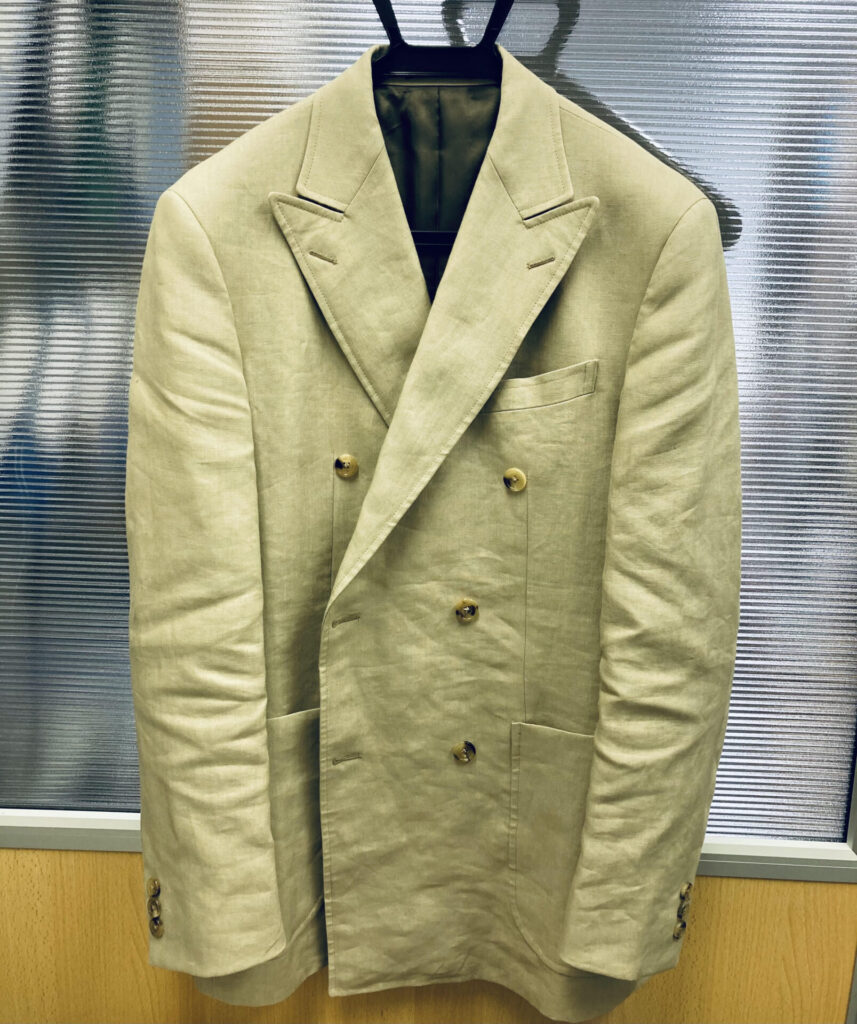
In contrast, Maison Hellard excels—very much in a French way—at linen fabrics made from French linen that are relatively soft from the very beginning.
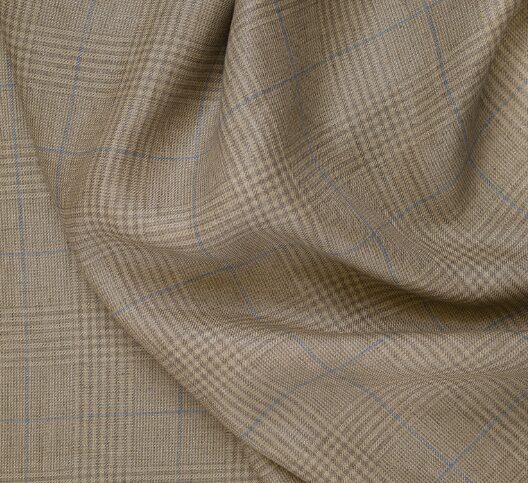
While the raw material is French linen, most of the fabrics are woven in Italy.
Because of their softness, these fabrics are not ideal for trousers and are most often used for jackets.
That said, a closer look reveals that Maison Hellard uses not only French linen but also Irish linen, and that their fabrics are woven not only in Italy but also in Japan and Ireland.
Among Japanese tailors, the most frequently used collection is probably Heures Bleues.
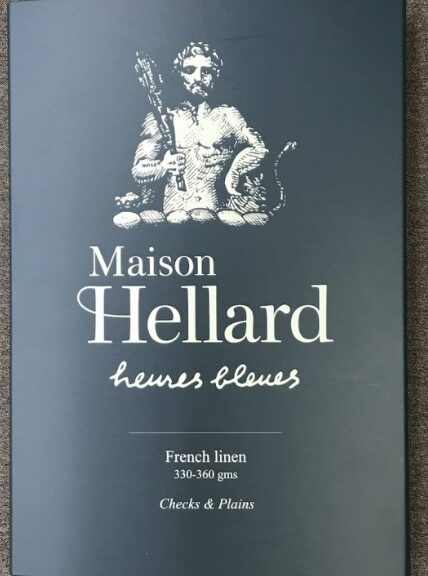
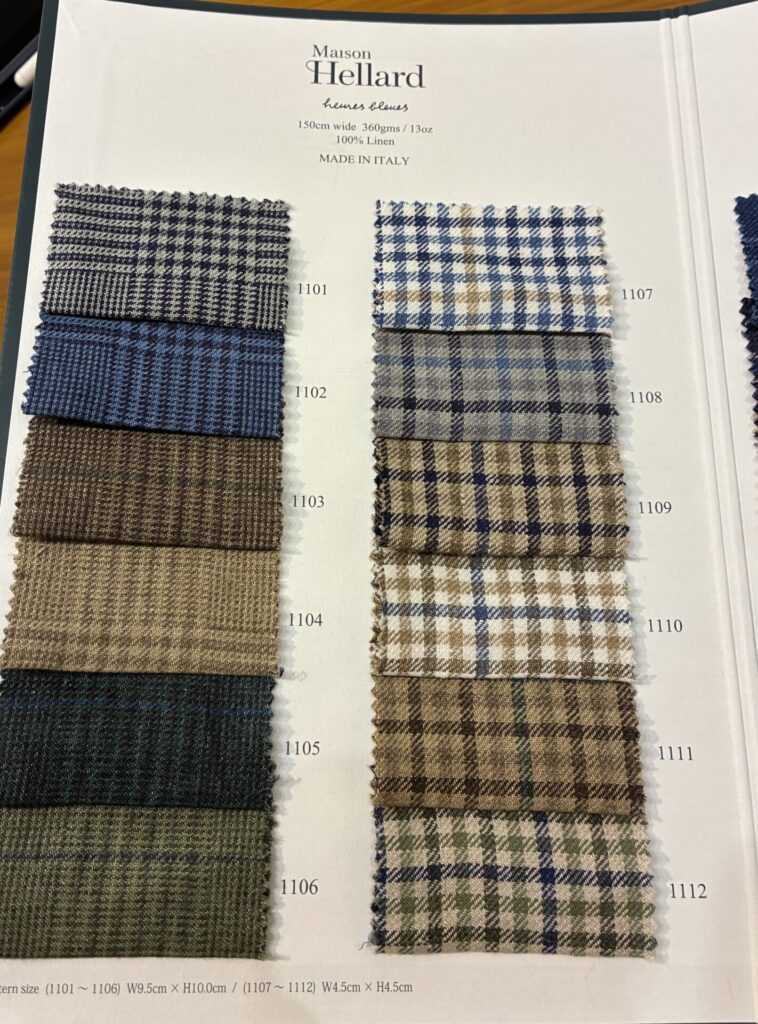
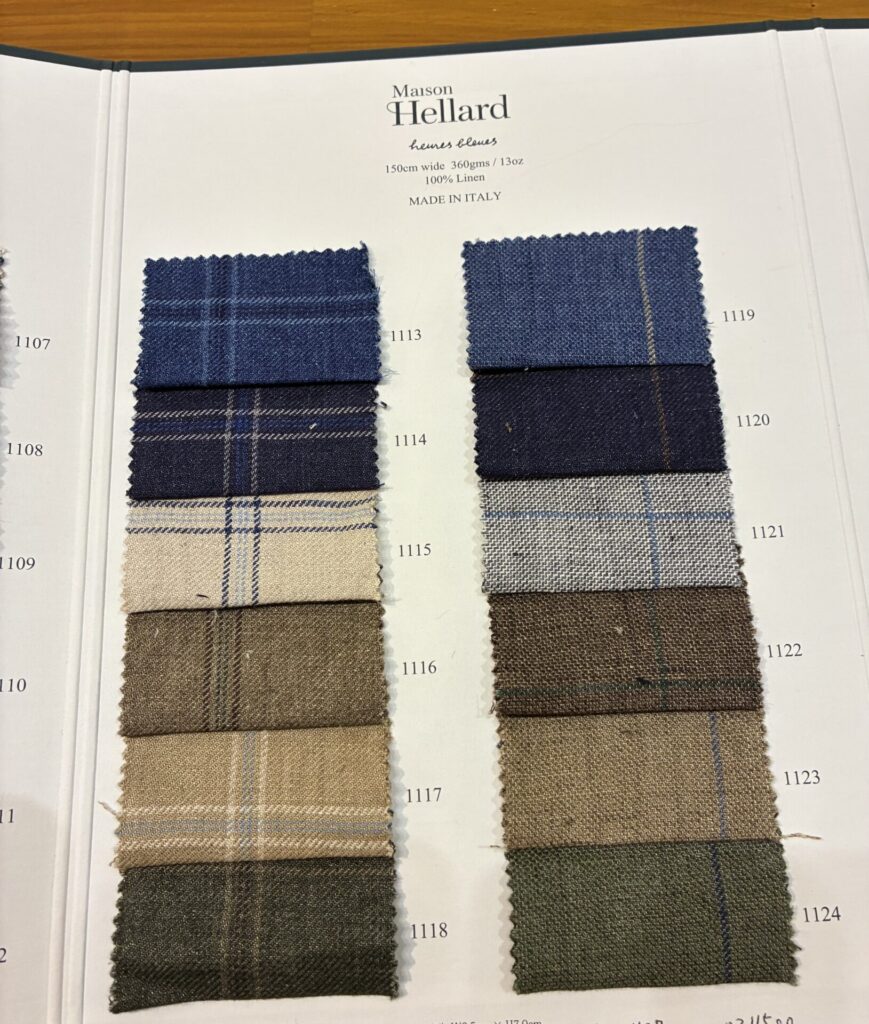
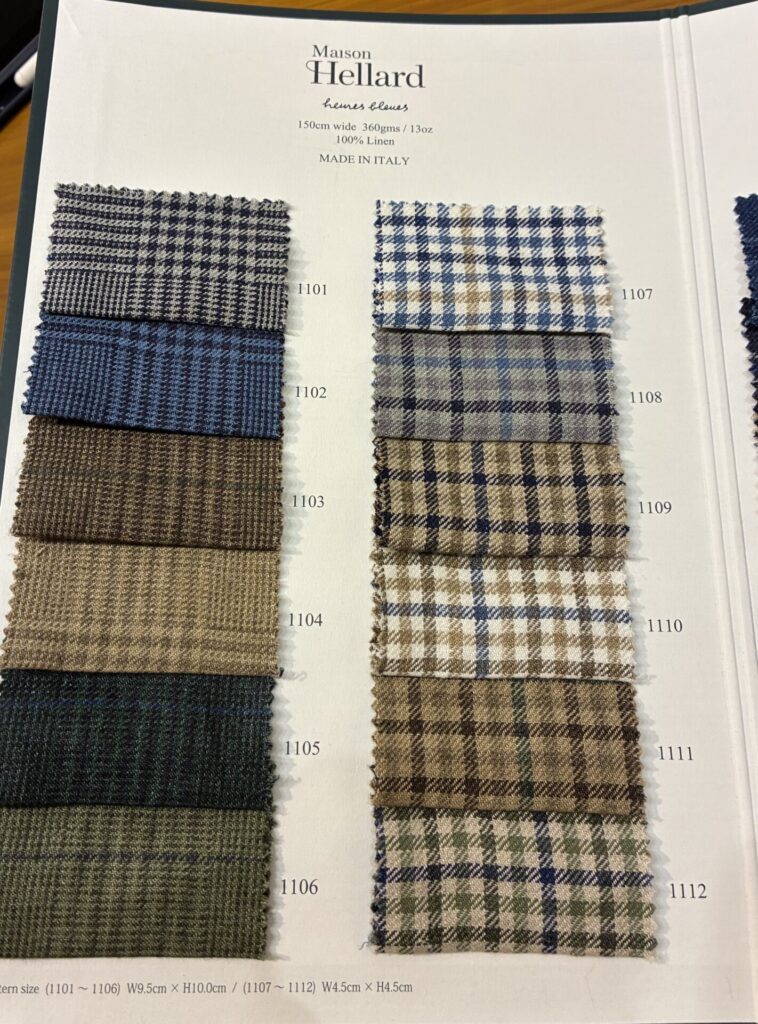
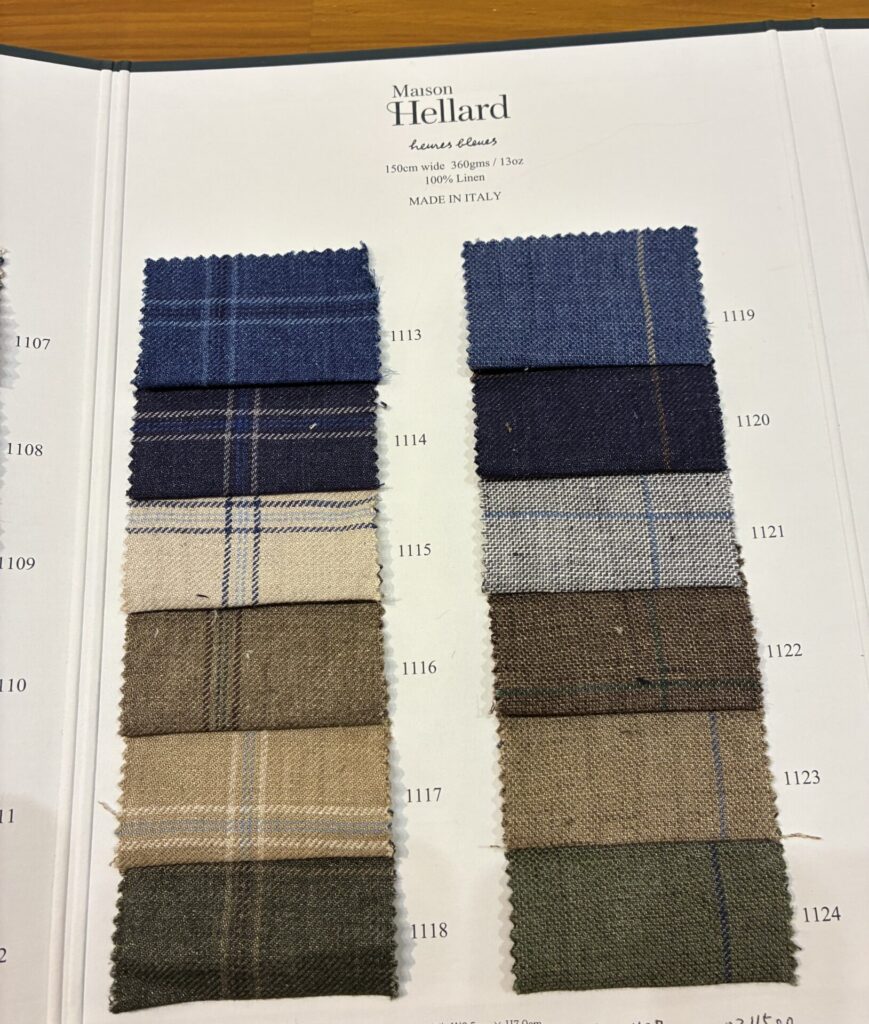
The patterned fabrics weigh 360g and are woven in twill, with a diagonal weave structure.
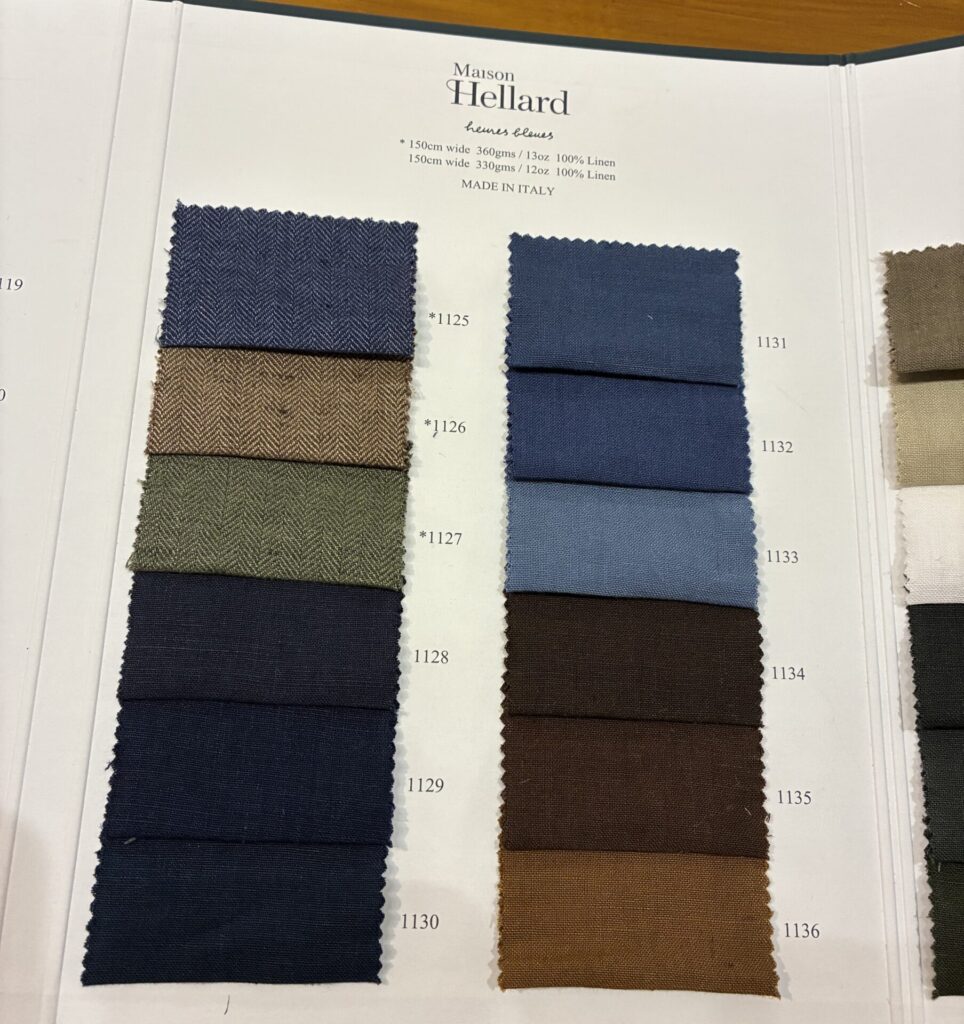
The plain fabrics weigh 330g and are woven in a plain weave.
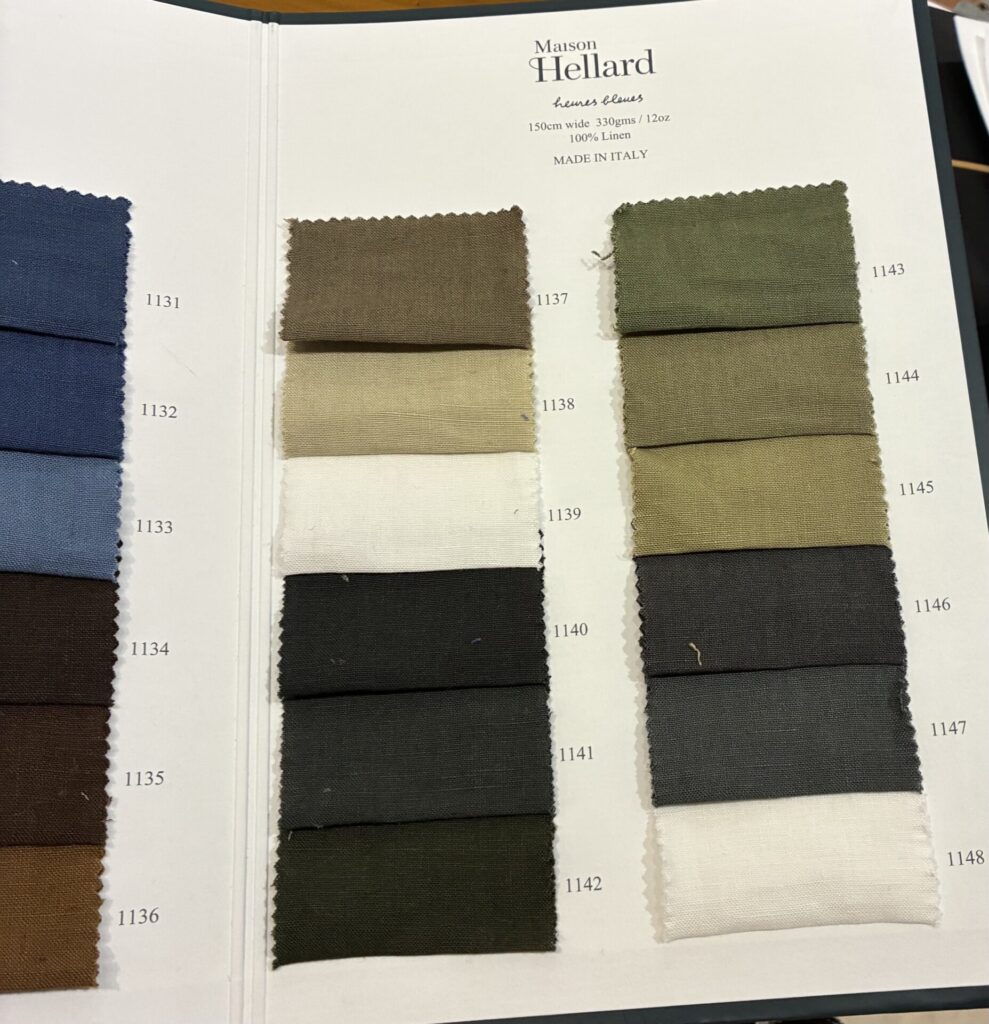
Twill weaves are denser than plain weaves and therefore less breathable; in that sense, plain weave fabrics are generally cooler.
The name Heures Bleues translates roughly to “the blue hour”—the time just after sunset, before night falls, when the sky turns a deep blue.
Indeed, most of the patterned fabrics in this collection contain elements of blue.
When I first saw this collection a few years ago, I thought it looked nice, but it did not quite compel me to place an order.
I mistakenly believed that Maison Hellard only offered this collection, and did not look further into the brand.
(In reality, they offer seven collections as of 2026 February.)
Characteristics of Carnet De Voyage
Since I started working at an alteration atelier Sarto in Tokyo, I frequently look through the fabric bunches on display, and that is when I discovered Maison Hellard’s Carnet De Voyage collection.
When I saw it, I was shocked.
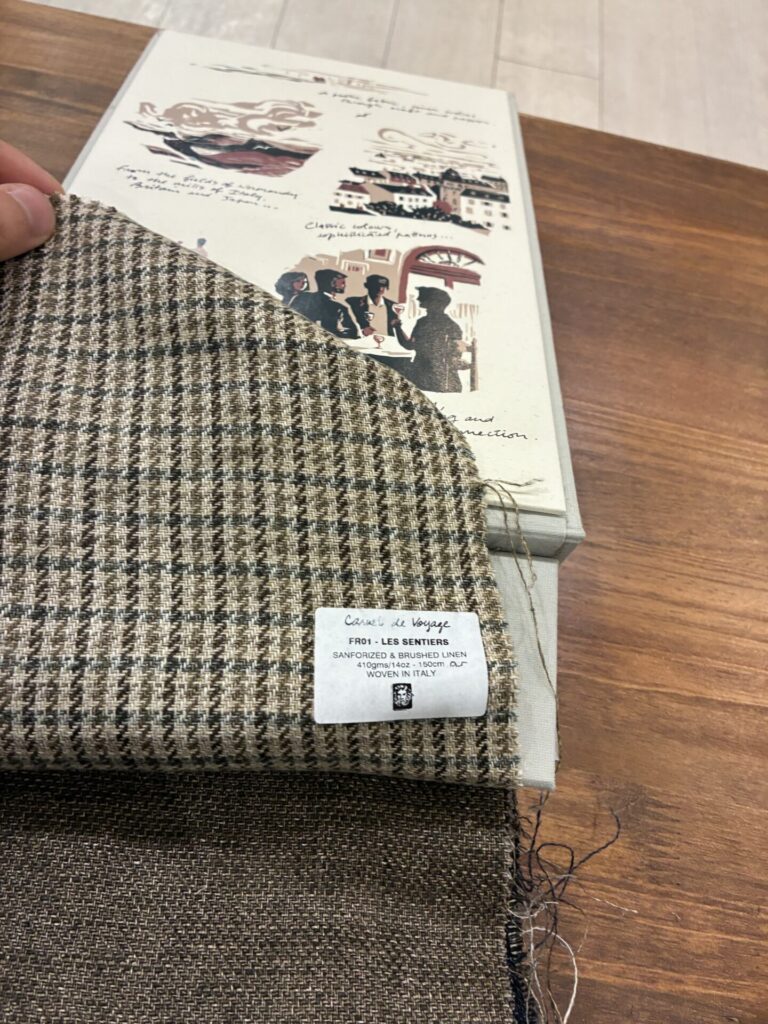
If I had to describe it in one phrase, it would be “tweed-like linen.”
I love tweed jackets with patterns, but tweed can only be worn for a short season in Japan, and its warmth is unnecessary indoors where heating is everywhere.
I had long been searching for a fabric that could be worn more comfortably and coolly, yet still possessed the rich, substantial presence of tweed.
One possible solution is summer tweed, but it tends to be less durable. For someone like me who wants to wear a jacket hard and occasionally wash it with water, it is not the ideal answer.
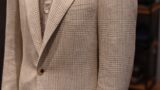
This collection, which I encountered at just the right moment, felt like the perfect fabric.
Linen fabrics for suits are rarely brushed; most have a smooth surface and sometimes even a slight sheen.
Spence Bryson’s classic Tropical is a perfect example.
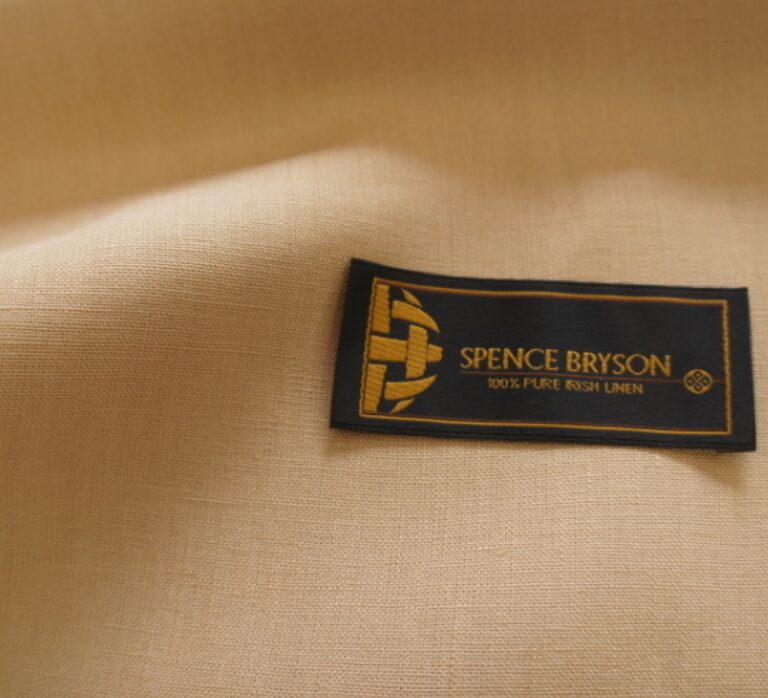
Linen wrinkles easily and naturally gives a casual impression, so I believe it is better for the fabric itself to look smooth and refined in order to balance out those casual wrinkles.
On the other hand, if you make a suit from rough, brushed linen—resembling coffee bean sacks—and add wrinkles, the result is rugged and charming, but not exactly refined.
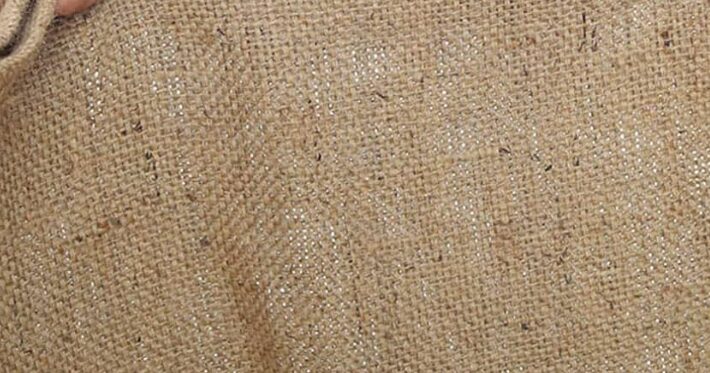
That look is appealing in its own way, but it tends to work better with casual styling than with a tie.
So does that mean brushed linen is unsuitable for suits or jackets? Not at all. Brushed linen shows its true strength when used in patterned fabrics.
Patterned fabrics without any nap tend to show their patterns too clearly, which can make them look loud.
With brushing, however, the pattern becomes softer and more subdued.
Flannel and tweed are perfect examples.
Comparing striped worsted wool with striped flannel makes this easy to understand.
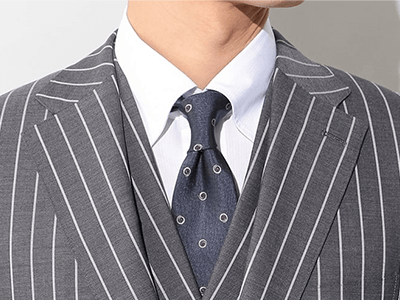
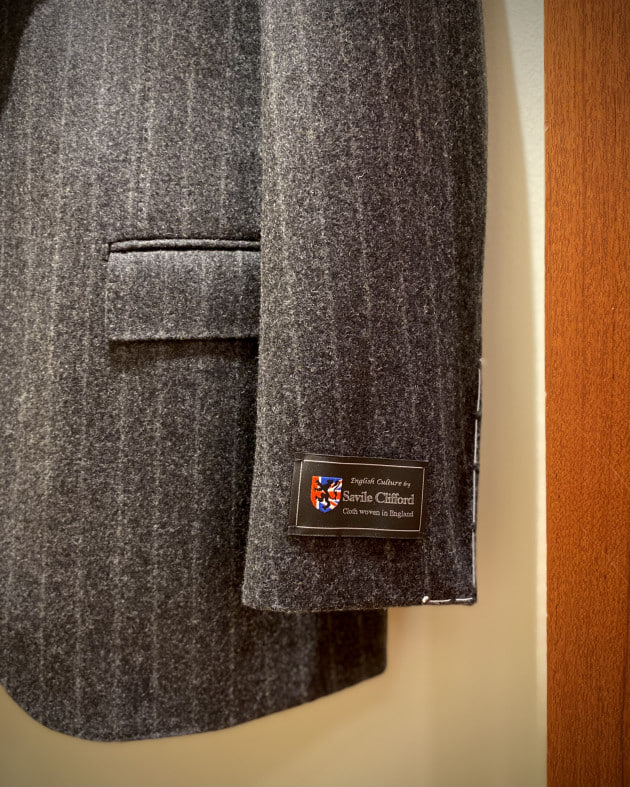
Tweeds in particular often feature bold patterns, but because the surface is brushed, the patterns appear softened and are surprisingly easy to wear. If the surface were completely smooth instead, the styling difficulty would increase dramatically.
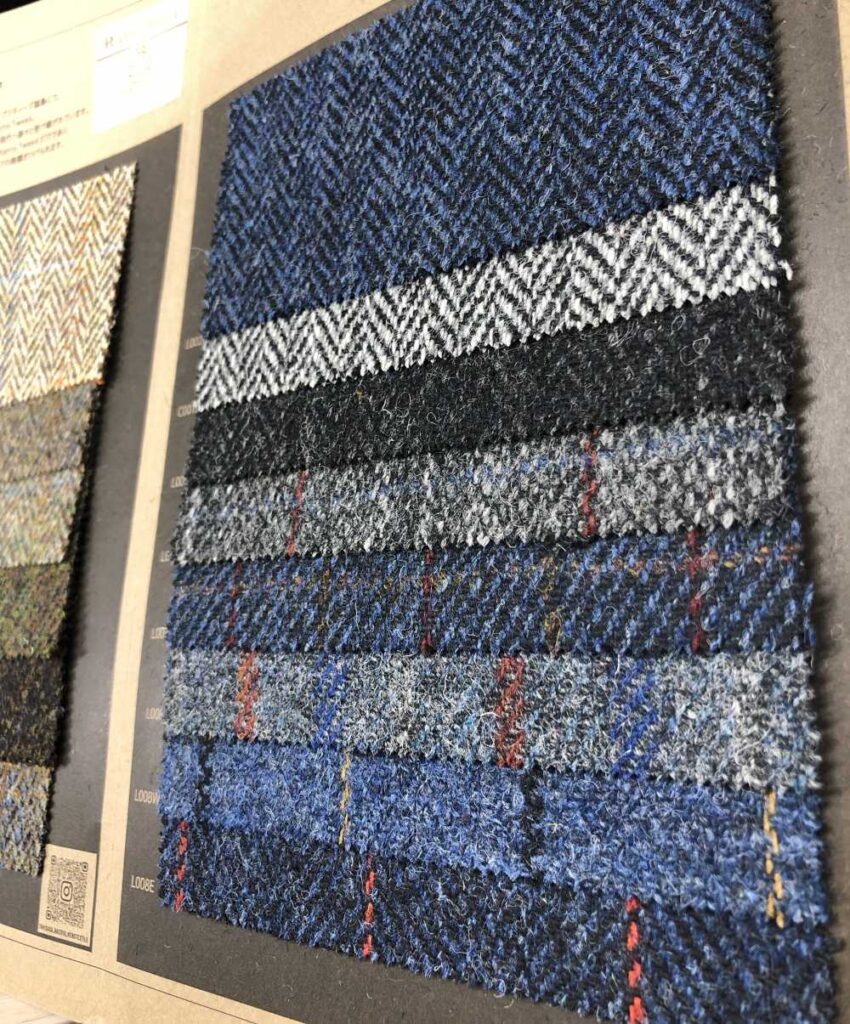
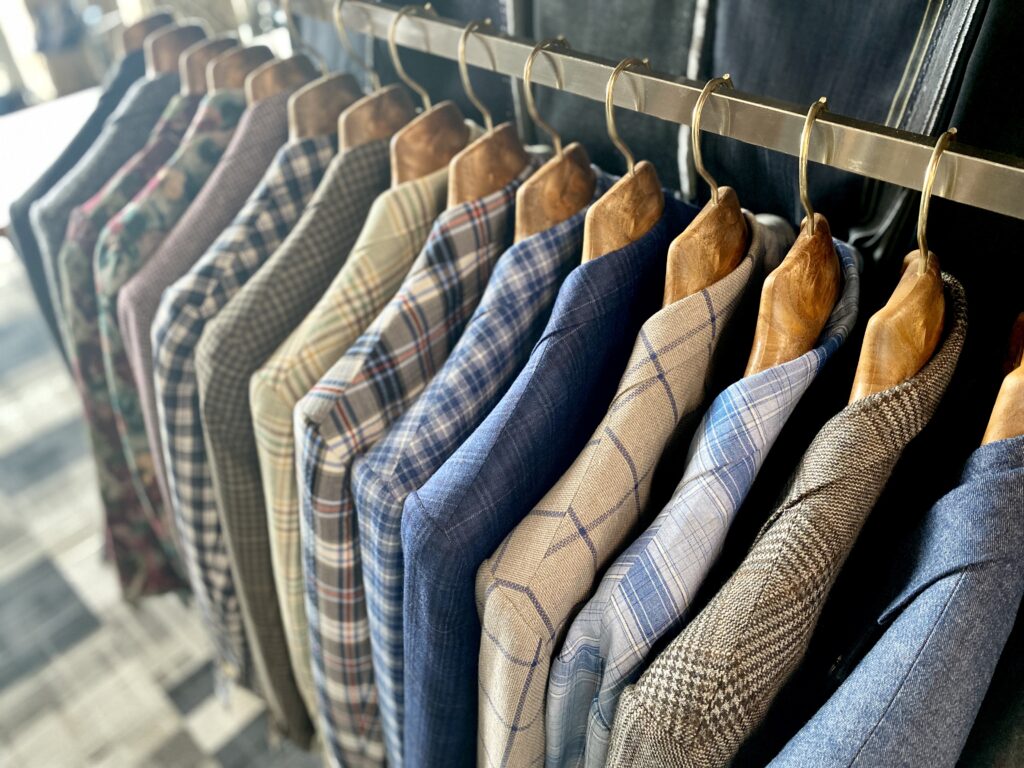
Even at Maison Hellard, within their relatively extensive Heures Bleues collection, the patterned fabrics are not exactly smooth and do have a slight brushed feel—but honestly, I prefer more brushed texture.
After all that buildup, let me finally introduce the fabrics from the Carnet De Voyage collection.
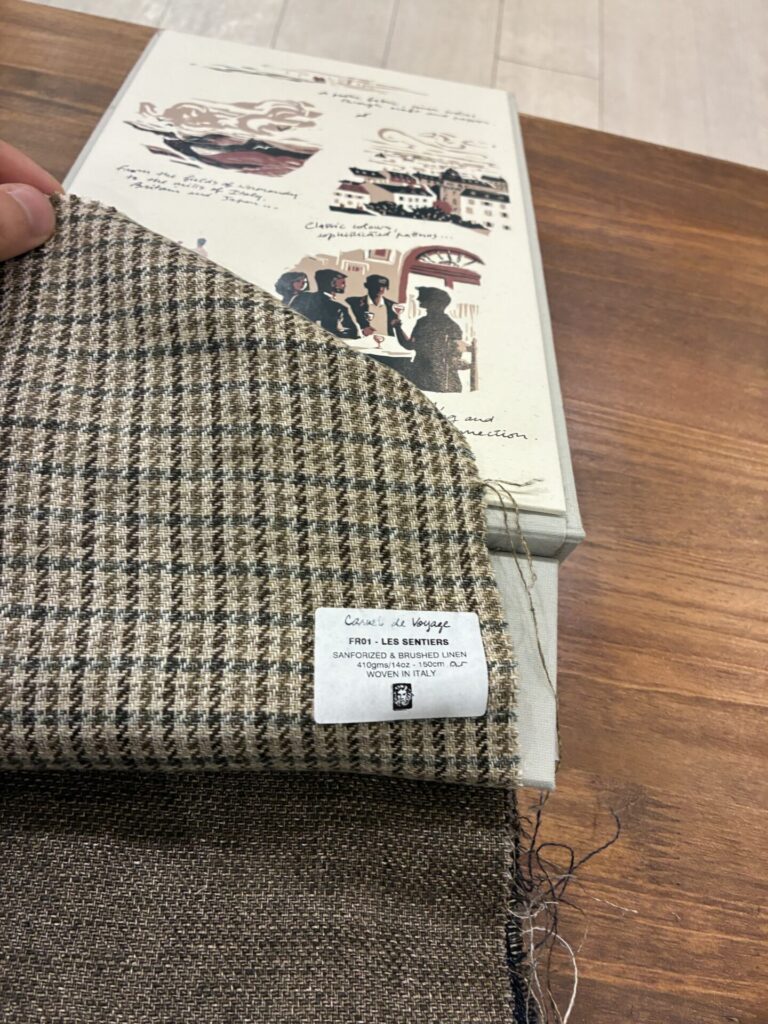
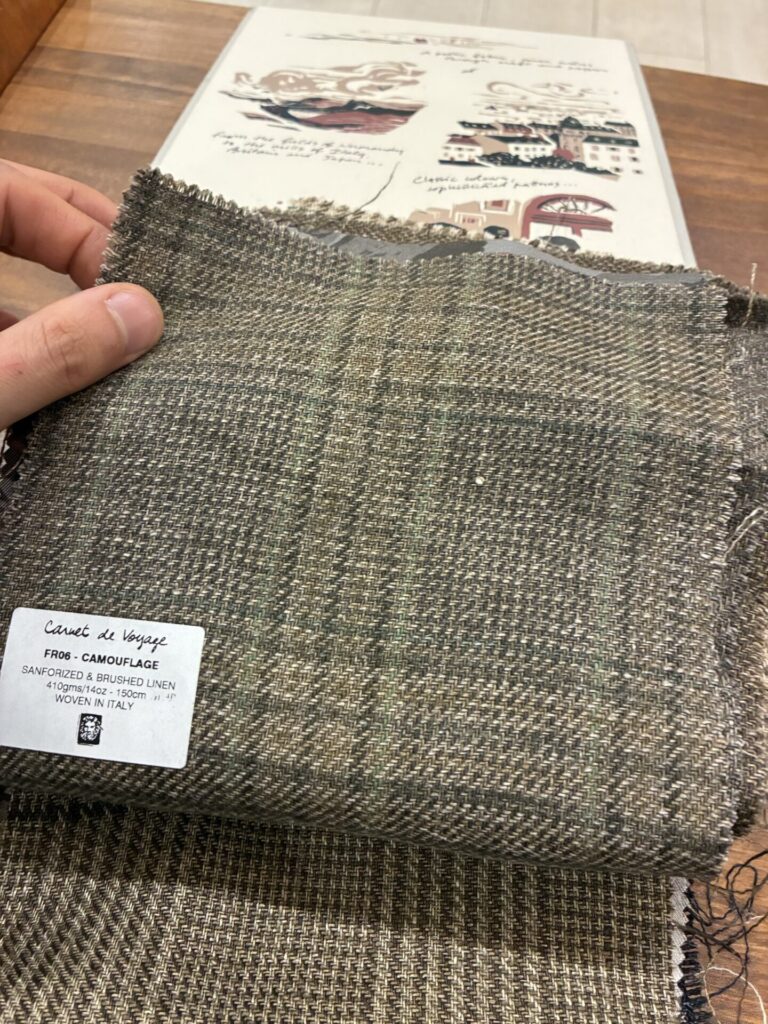
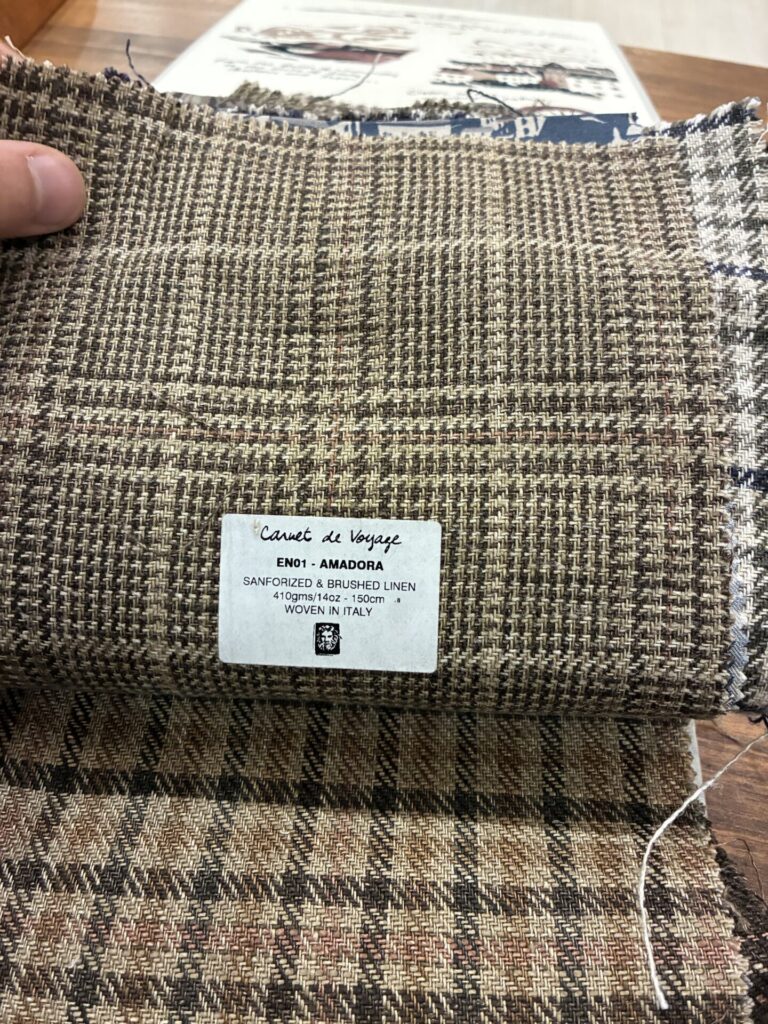
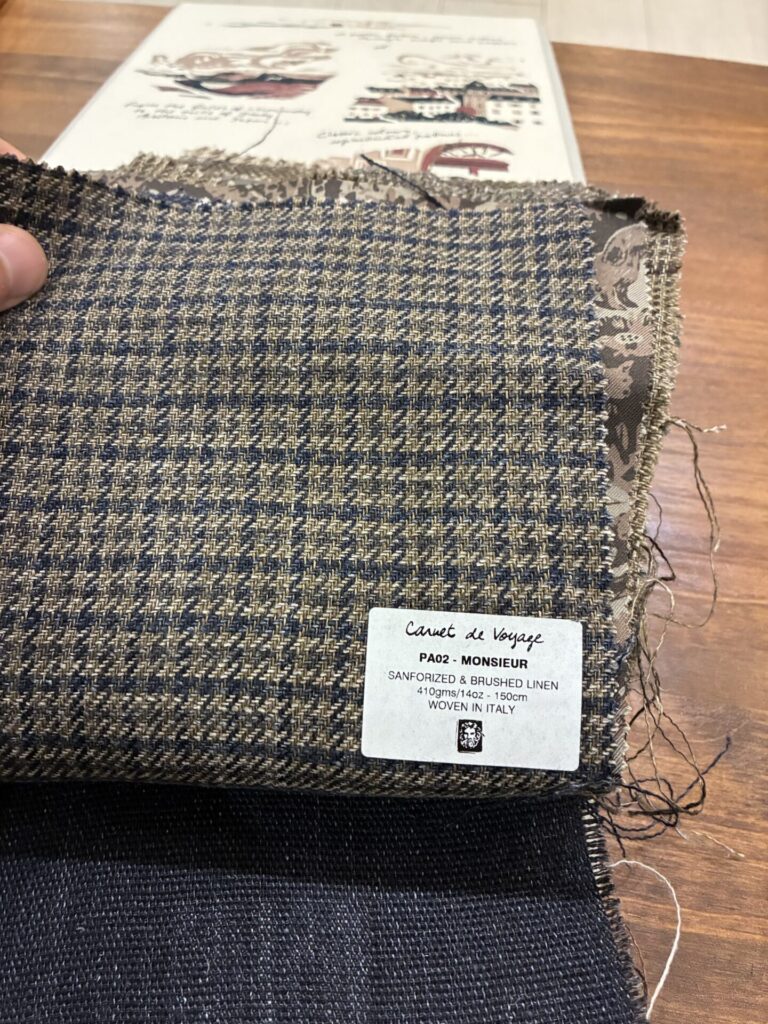
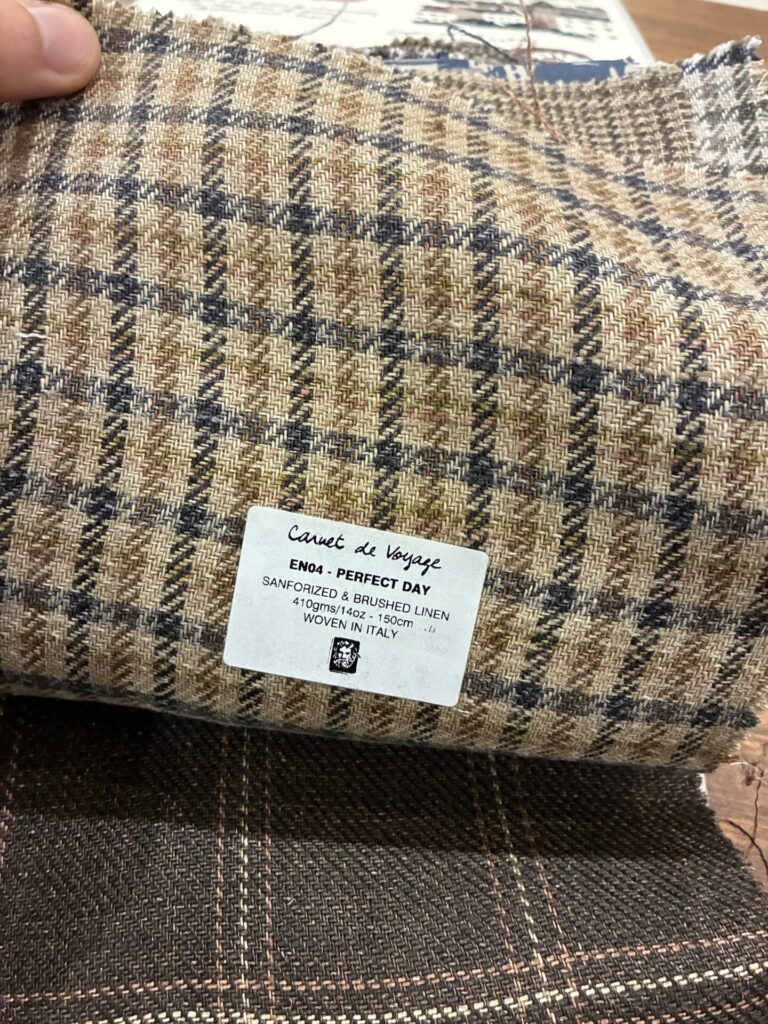
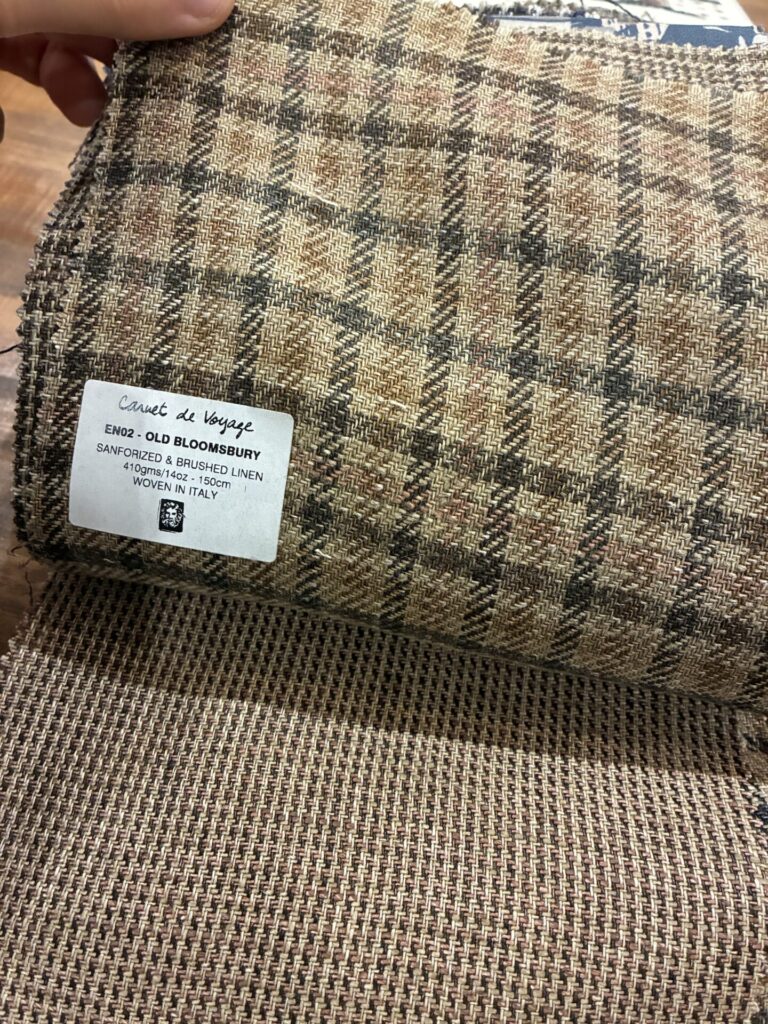
What do you think?
It doesn’t have quite as much nap as tweed, but don’t you feel that it has a similar presence—something almost tweed-like—that traditional linen has never had?
The image quality may not be ideal, so I’ll borrow and share some photos from the manufacturer’s website.
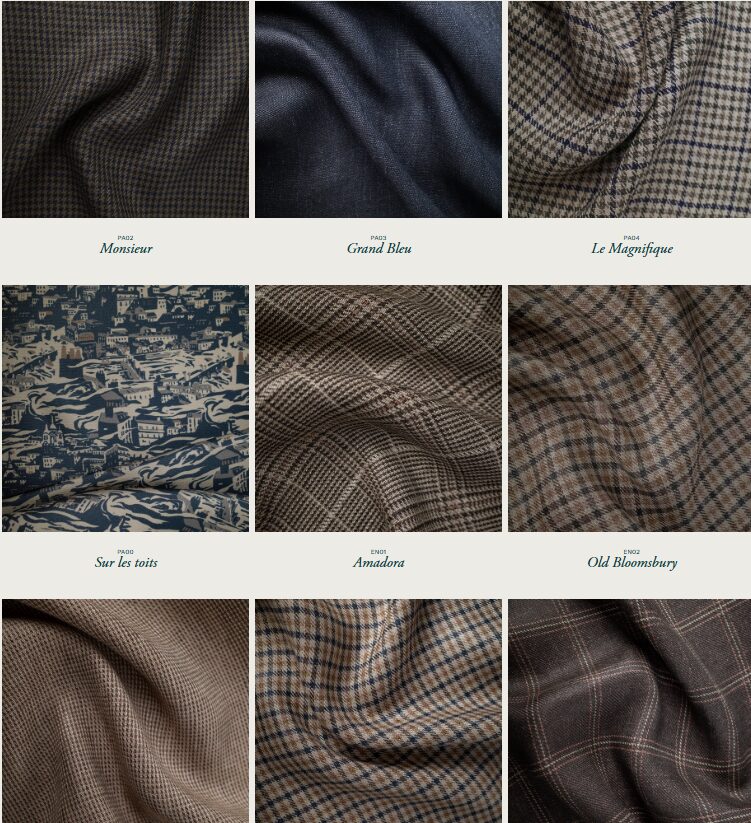
Looking at the fabric description, it is listed as “Sanforised and Brushed Linen,” which suggests that the surface has been deliberately raised to create a subtle fuzz.
All of these are patterned fabrics, some using a surprisingly wide range of colors, yet none of them feel overly loud.
In that sense, they share exactly the same characteristics as tweed.
Looking a bit more closely, the yarns are thick, the weave is coarse, and the structure doesn’t feel particularly dense.
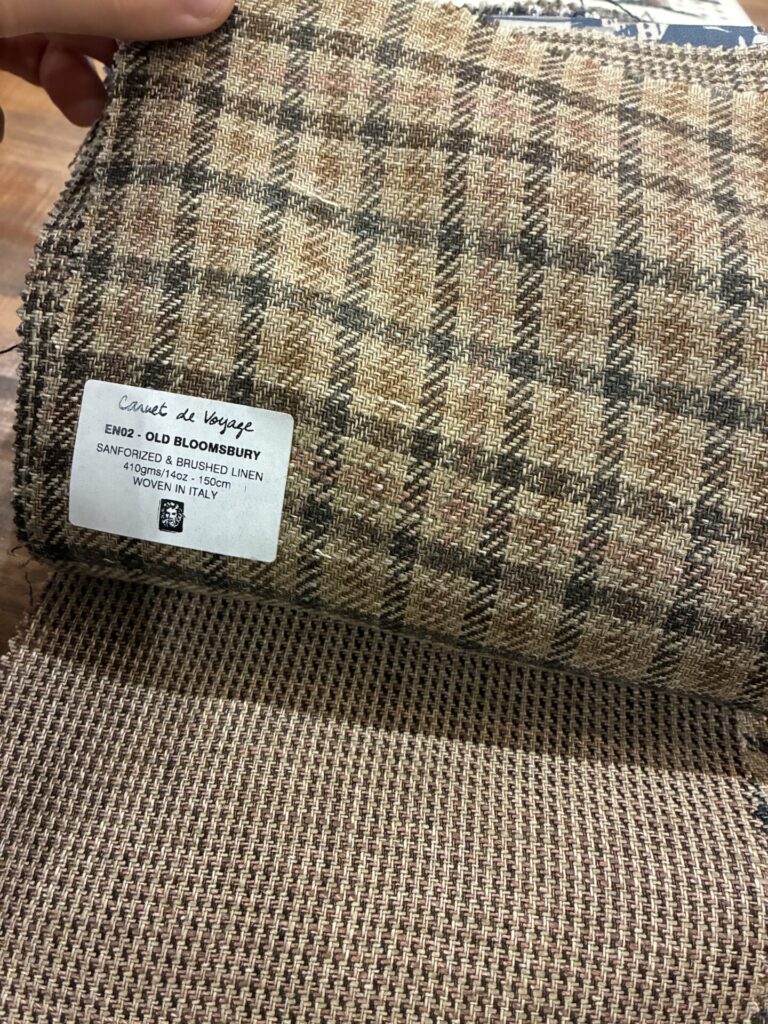
Even within Spence Bryson’s range, their Tropical linens use relatively fine yarns with a tight weave, whereas the Tyrone series uses thicker yarns and a much more open, rugged weave.
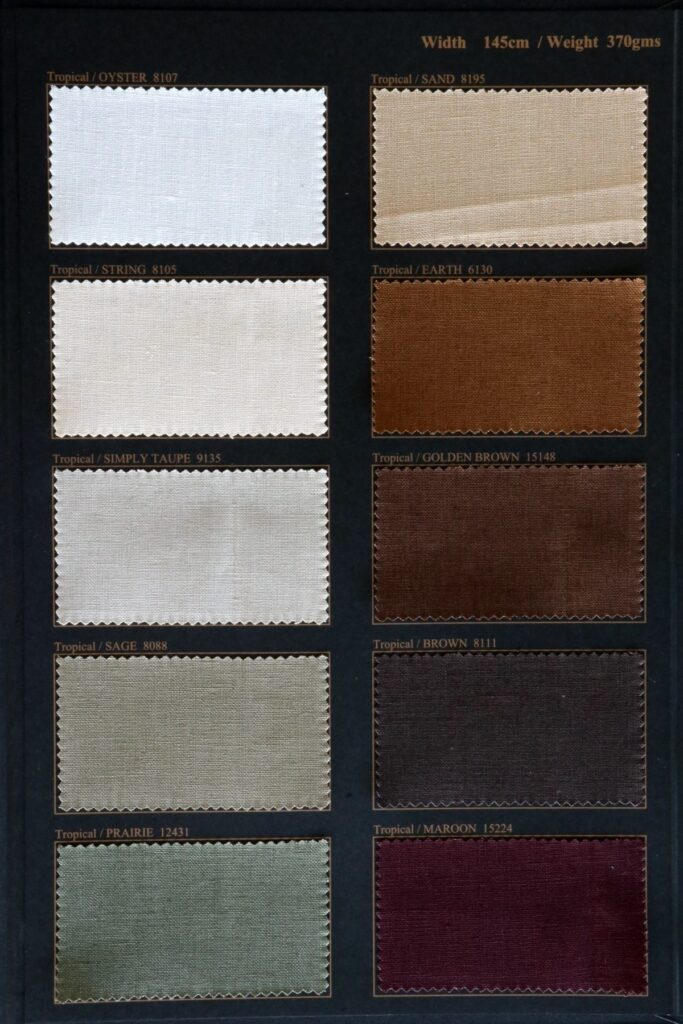
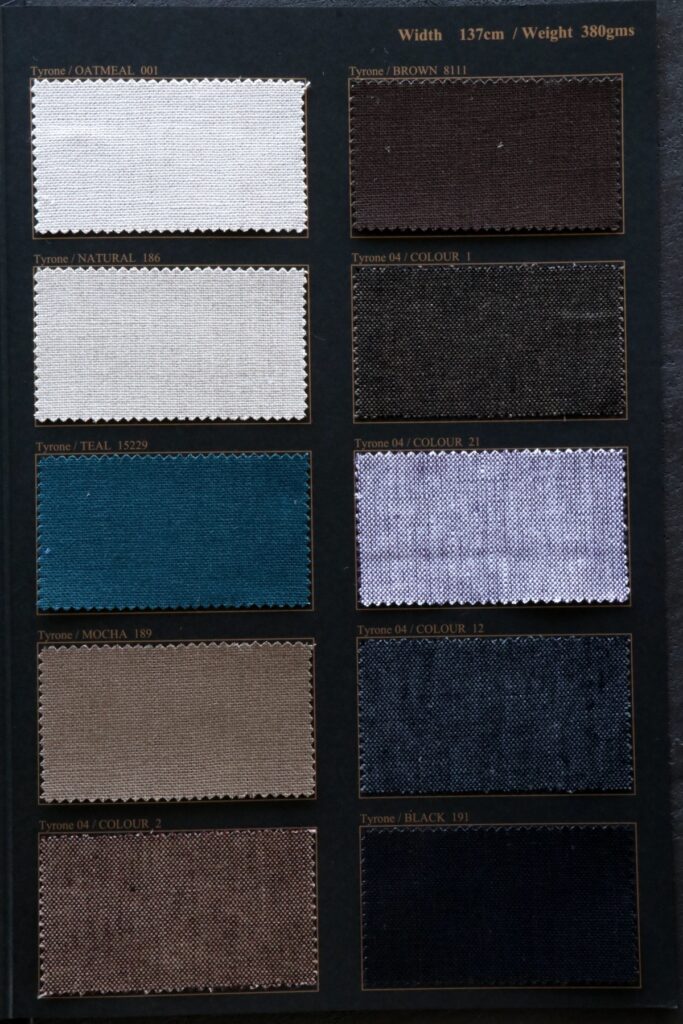
Maison Hellard’s Carnet De Voyage weighs in at 410g, making it heavier than Spence Bryson and closer to the Tyrone (380g) in terms of its bold, open texture.
Incidentally, the weave is twill. Twill fabrics are usually more tightly woven, so it feels rather unusual to encounter such an open texture in a twill structure.
As one of the heaviest linens available, it would be completely impractical for the Japanese summer.
That said, I think it would be ideal for spring and autumn, and even quite comfortable indoors during winter.
In Japan, it feels wearable in every month except June through September.
Because of its weight and presence, I personally feel that even January or February wouldn’t look particularly out of season—at least, I want to believe that.
As someone who calls himself Mr. Linen, I want to continue, in my own small way, to promote the idea that wearing substantial, heavyweight linen in autumn and winter can become more widely accepted.
For me, having a “sense of season” means being functionally comfortable in reality.
Rather than assuming that linen is only a spring-and-summer fabric, there may be linens whose color, weight, and surface finish make them perfectly appropriate even for autumn and winter.
Of course, seeing someone wearing nothing but a linen shirt in the depths of winter would clearly feel out of season.
However, styling a heavyweight linen jacket with a cashmere turtleneck underneath and a cashmere coat on top, worn in midwinter Tokyo, is—given our modern, well-heated environment—something I would argue is a perfectly valid answer.
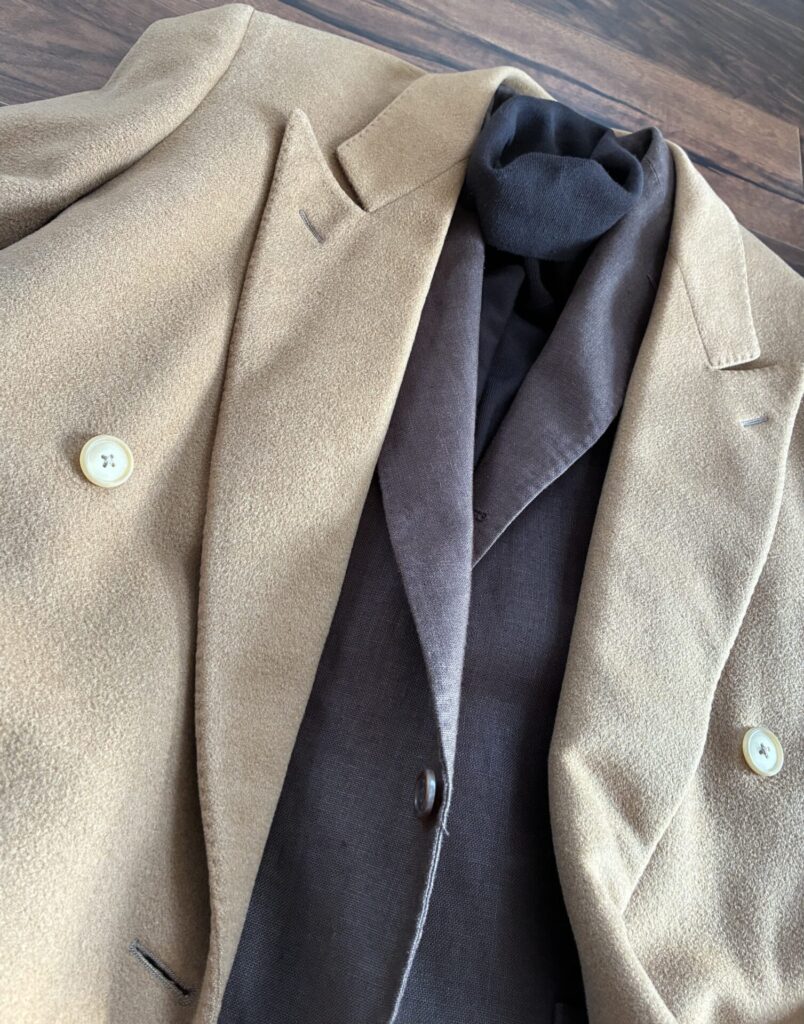
Outdoors, the coat keeps you warm, and indoors, where heating is strong, you don’t overheat even without taking the jacket off.
Linen traps air and provides insulation, so when paired with a windproof coat, it can be surprisingly warm.
Even if you start to sweat from the warmth, linen releases moisture rather than trapping it, offering a natural temperature-regulating function. Linen really is an exceptional material.
I’ve drifted a bit away from the Carnet De Voyage collection, so let me return to it.
Looking up the meaning of “Carnet De Voyage,” it translates roughly as a travel journal.
I initially wondered what the “travel” referred to, but on closer inspection, the collection also includes solid fabrics, some woven in Ireland and others in Japan.
(The patterned fabrics shown above are woven in Italy.)
That makes sense: a collection produced in various places around the world, united under the theme of travel.
Interestingly, there were also fabrics woven in Japan, including Sumi-iro denim, Natural denim, and Milky-white denim.
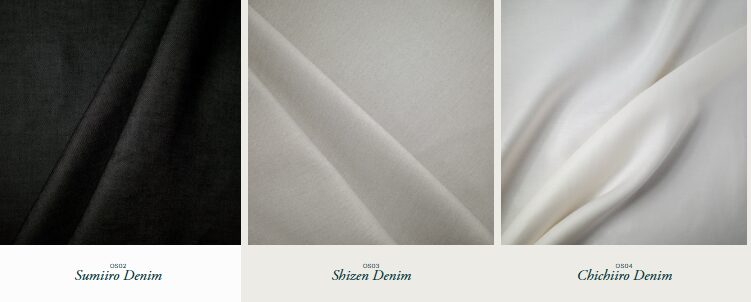
All of them were lovely, but none felt entirely unfamiliar, and only the patterned ones truly evoked a tweed-like character. So this time, I decided to focus solely on the patterned fabrics.
Which fabric to choose
Honestly, I would love to own every patterned fabric in this collection, but that is obviously unrealistic. I had to narrow it down to just one.
This is purely my personal preference, but these three were my main candidates.
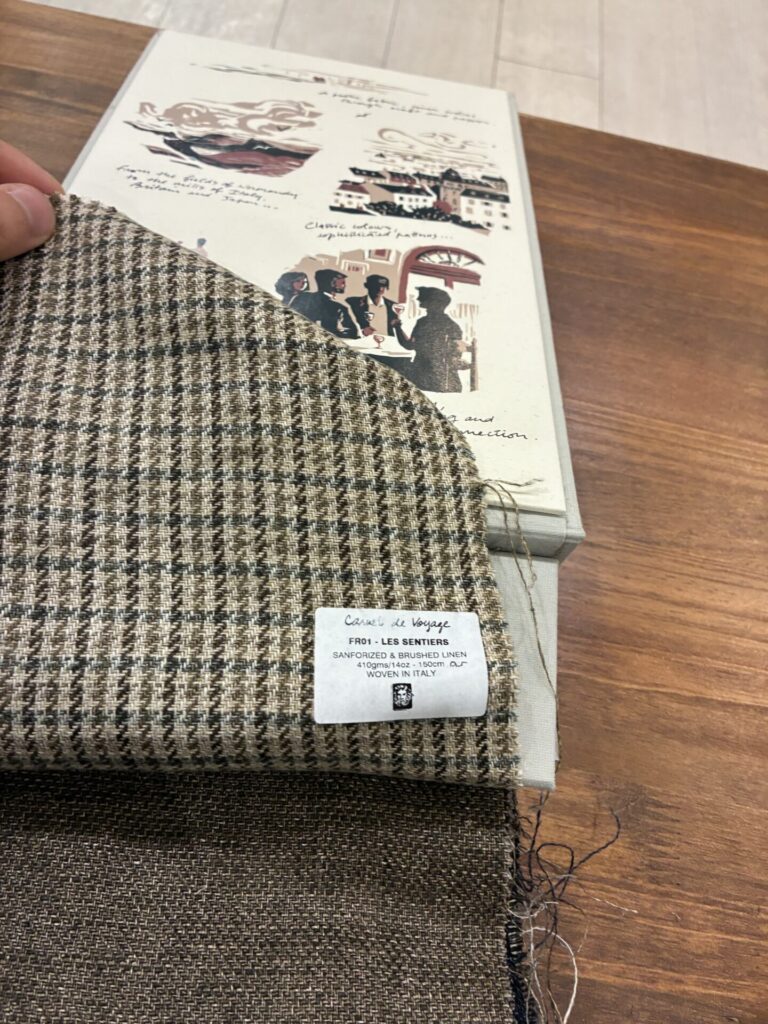
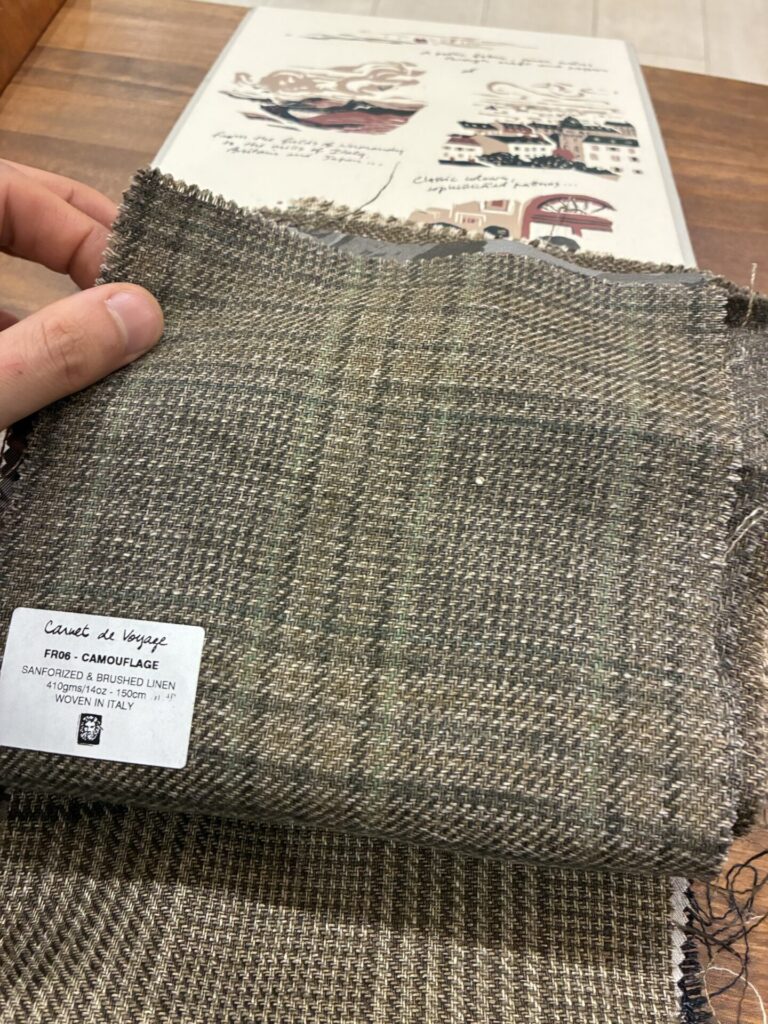
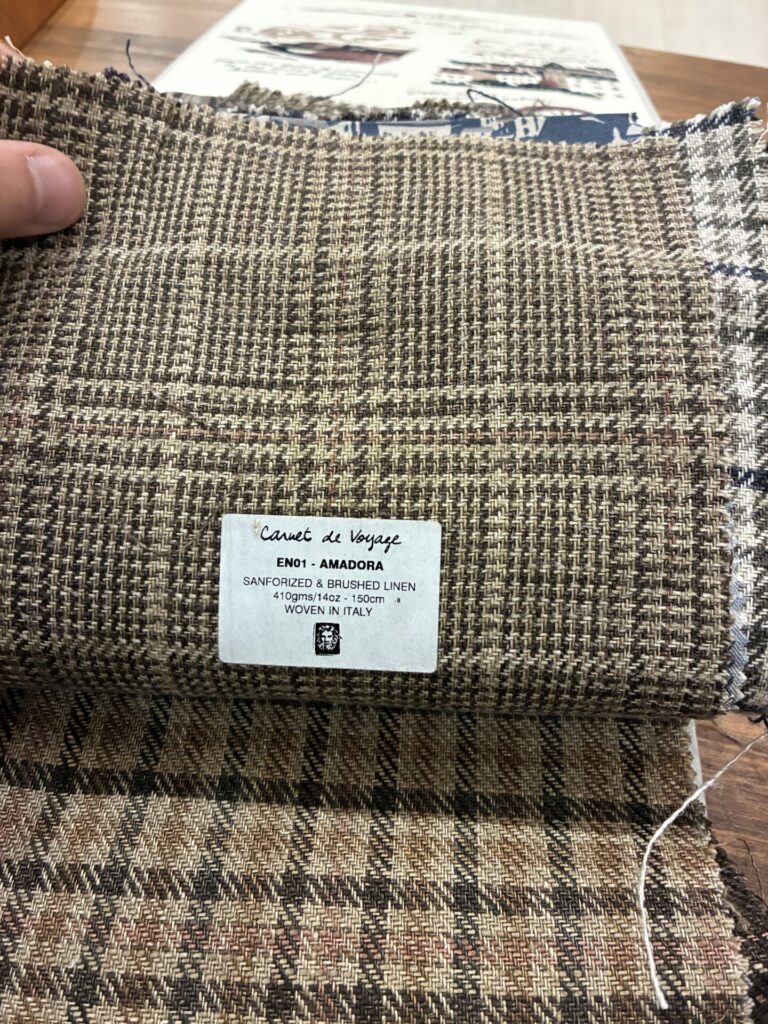
Each of them uses three or more colors, so they are certainly colorful.
Thanks to this variety of colors, it’s easy to coordinate inner layers or trousers by picking a shade close to one of the colors in the fabric.
That said, none of them feel flashy at all, and they seem extremely versatile.
It was hard to imagine how they would look just from the bunch, so I searched Instagram for real-life examples and managed to find a few.
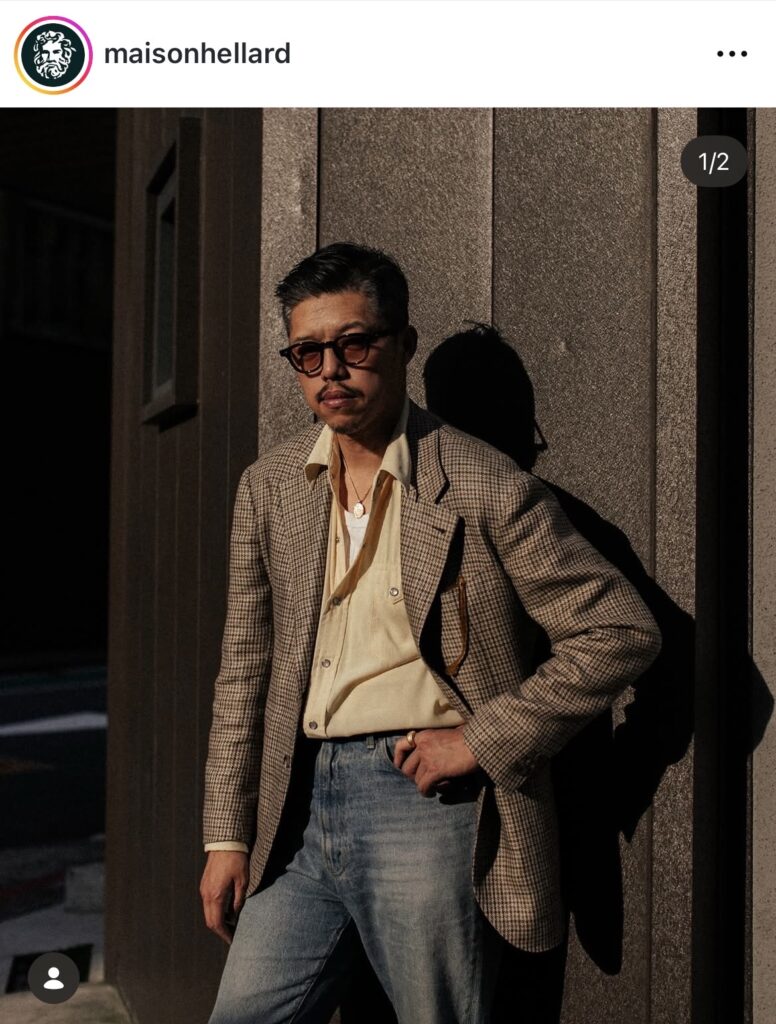
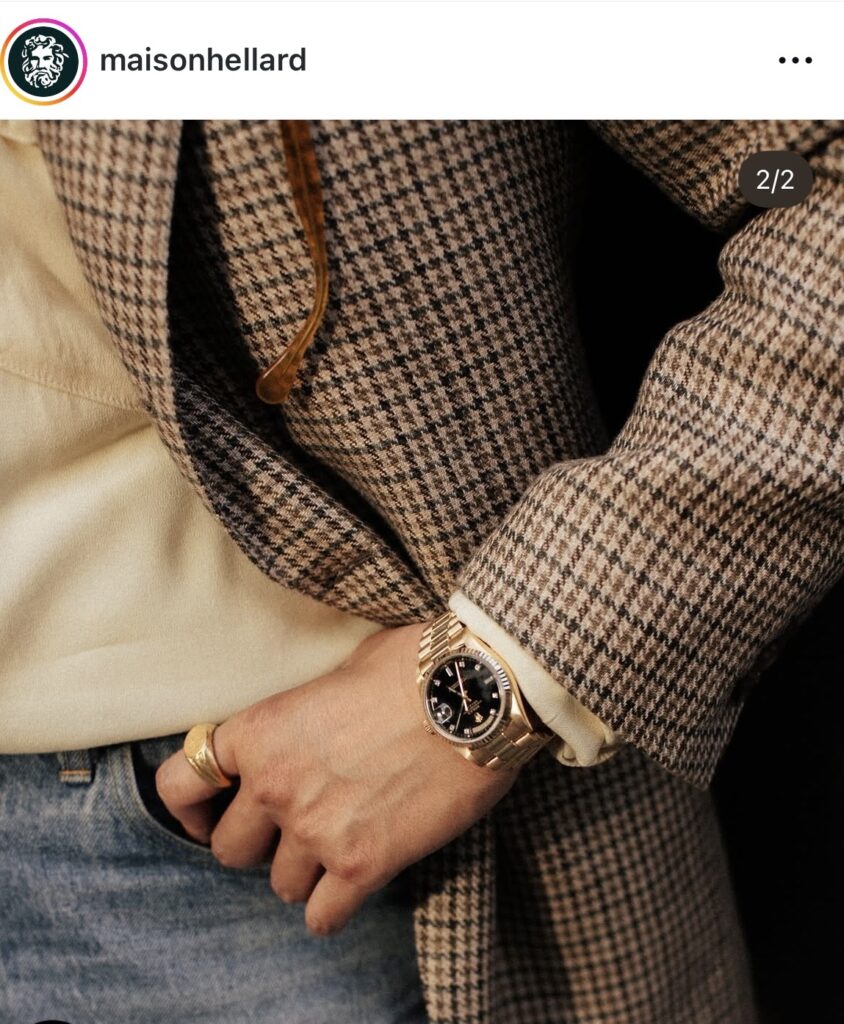
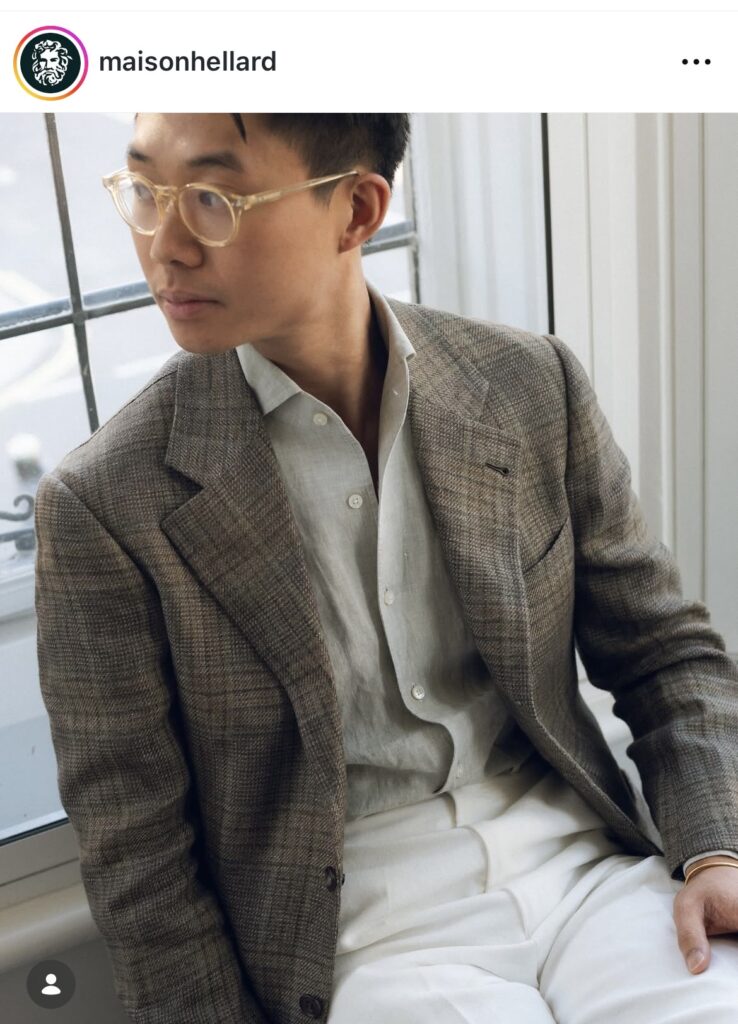
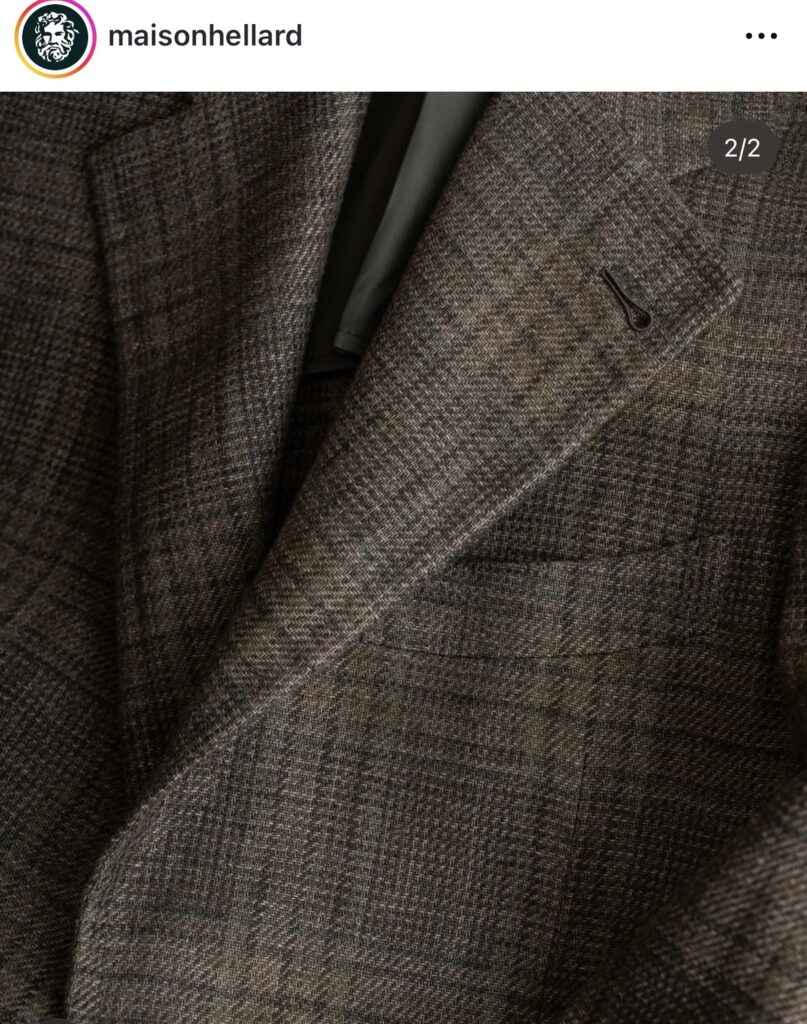
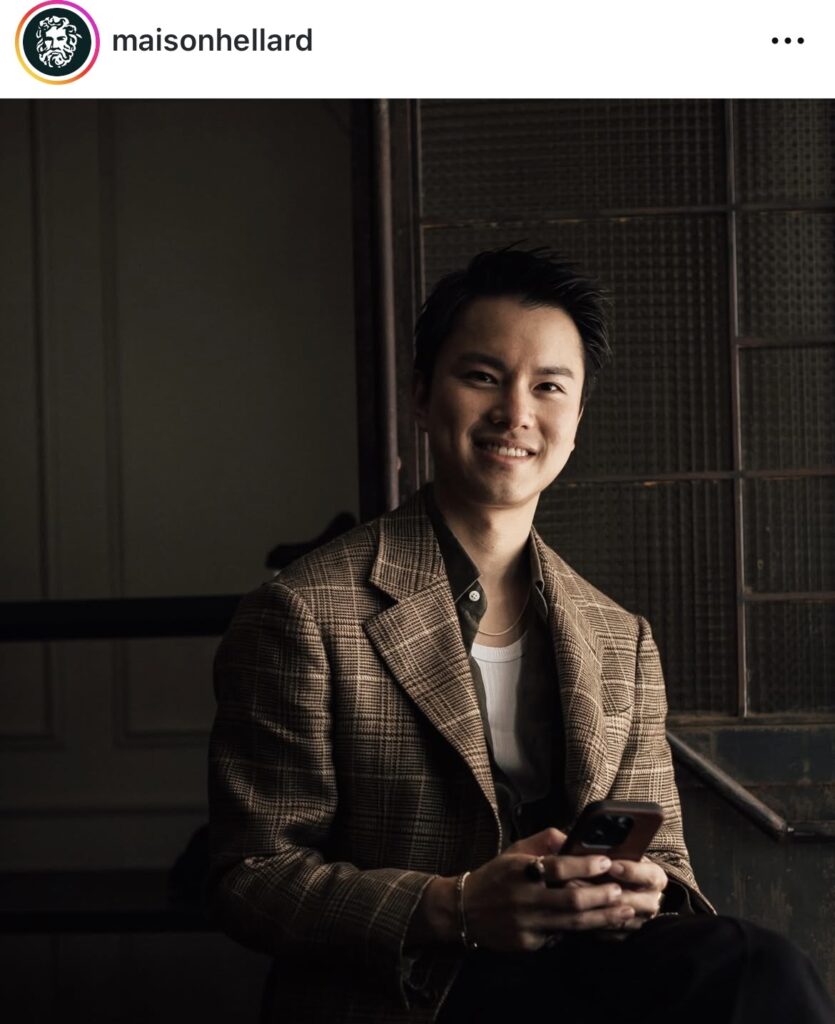
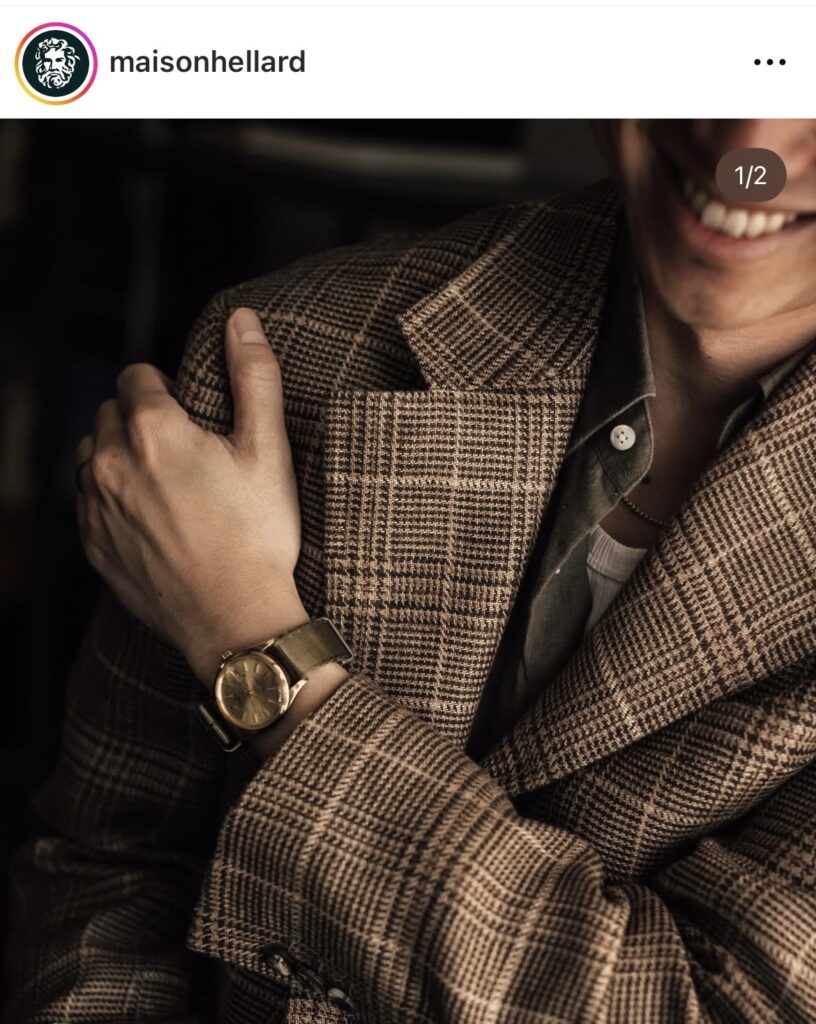
Honestly, all three look so good that I can’t bring myself to rank them.
Unfortunately, this one seemed to be sold out, so I had to give up on it.
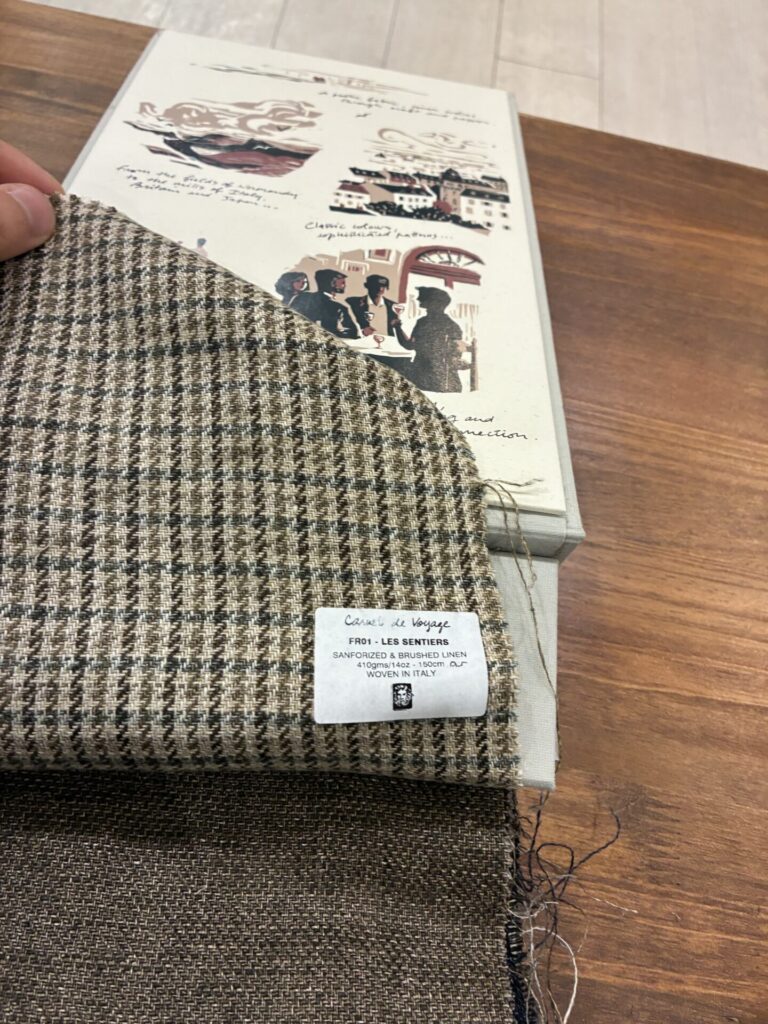
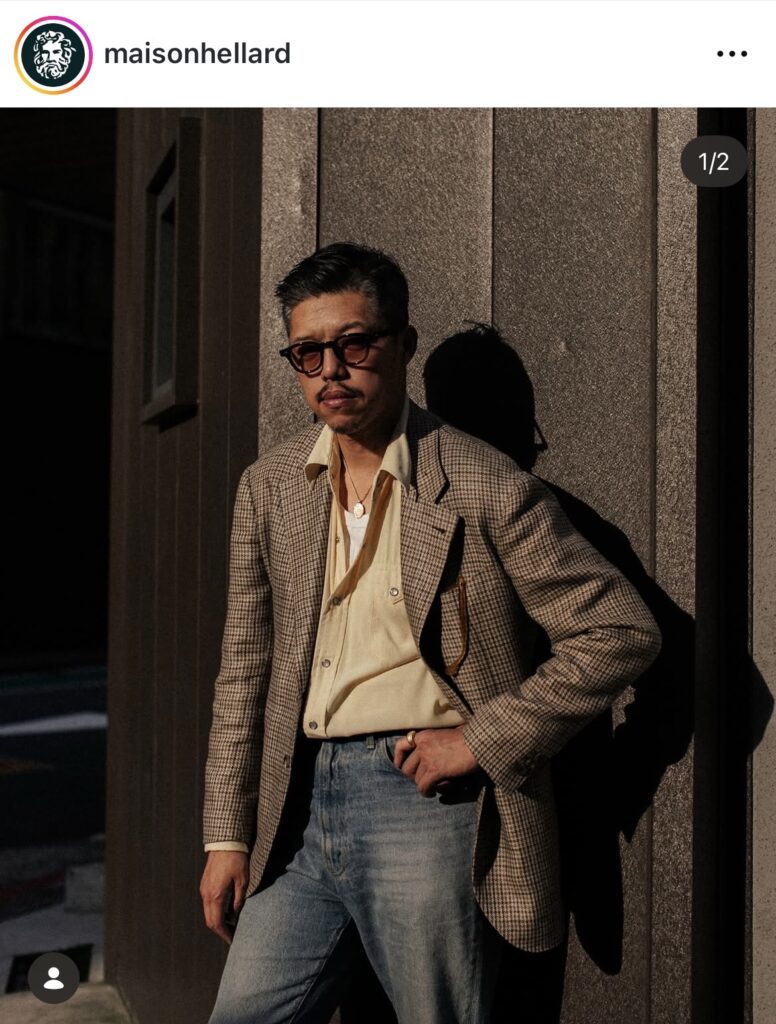
That left me choosing between the remaining two.
After much deliberation, I decided to go with the one featuring the pink line.
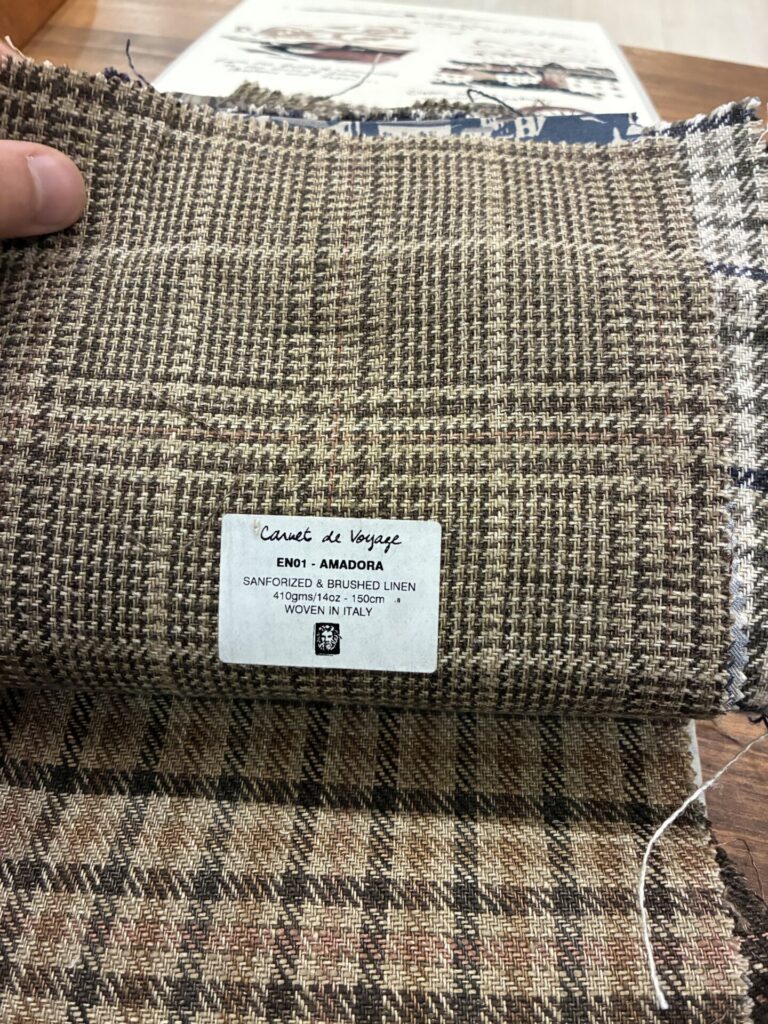
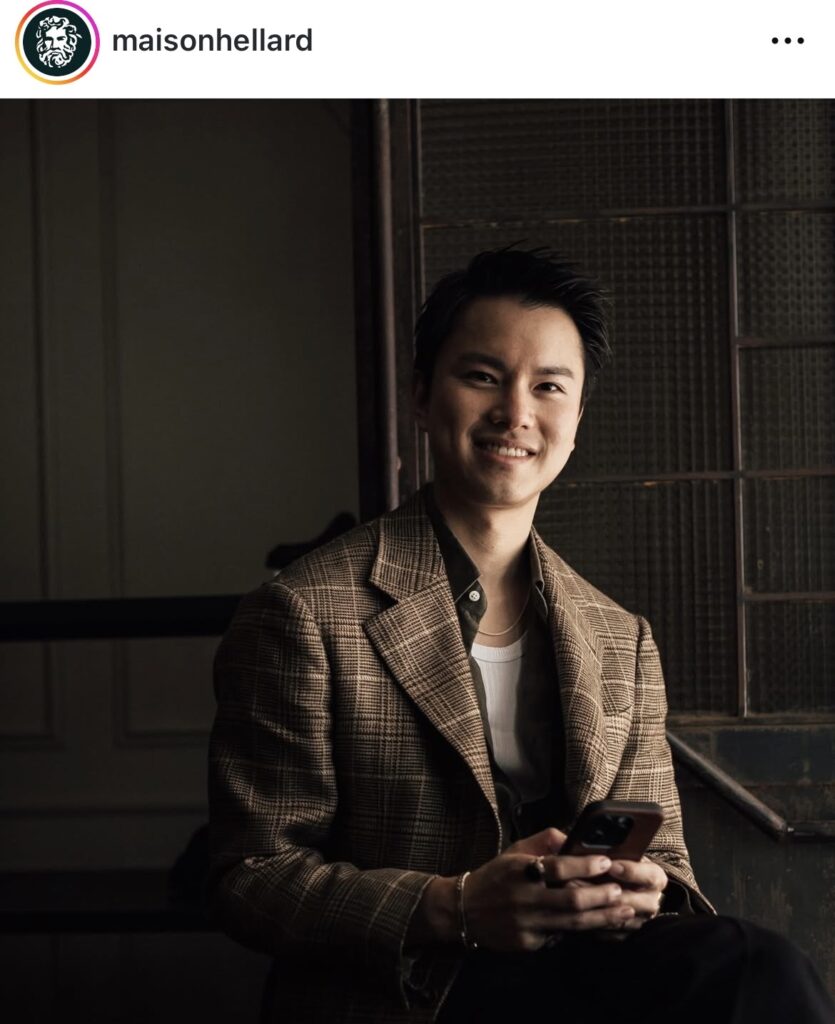
There wasn’t any particular reason why the one with the green line lost out.
I might end up buying that one as well in the near future.
Ordering at Sarto
I decided to place the order at Sarto.
If you want to truly understand the suits made at the place you work, there’s no better way than buying one yourself and actually wearing it.
At Sarto, there is bespoke tailoring where garments are made entirely from scratch by artisans, but I chose their standard pattern order service.
A senior staff member with extensive alteration experience handled my measurements and fitting, teaching me about physical characteristics I had never been aware of before, as well as key points to improve the fit.
With pattern ordering, you start by trying on a base fitting sample and then decide where to add or reduce length or width, or whether to raise or lower certain points. However, simply saying “add to this measurement” is meaningless unless you understand what kind of actual work that adjustment entails.
For example, even something as simple as “adding width to the back” can mean very different things: opening the center back seam, adding width near the armholes, adjusting only around the shoulder blades, or extending it further down toward the waist.
I hadn’t realized that such detailed considerations were necessary.
I’ve had experiences where pattern-ordered garments felt uncomfortable, and others where I felt pattern order was more comfortable than bespoke. Reflecting on all of this, I was reminded that I still have a lot more to learn.
This article has already become quite long, so I’ll save the details about the final design and specifications for another occasion.
In conclusion
In any case, I’ve come across an absolutely outstanding linen.
It feels like I’ve opened the door to a whole new world of patterned linen.
Until now, I had a vague goal of someday becoming someone who could help spread the appeal of linen, but I may have discovered something even further away than a goal—a dream.
That dream is to create my own ideal linen fabric.
This Maison Hellard collection featured strikingly beautiful colors and patterns with a strong sense of weight, but heavy patterned linen fabrics over 400g are quite rare.
(It’s possible that I’m simply unaware of them, so if you know of any, please do let me know.)
In contrast, tweed offers countless fabrics with rich characterful colors and patterns.
There are also plenty of vintage fabrics.
If my ideal linen doesn’t exist, then I want to create it myself.
Perhaps developing fabric on my own is an unrealistic dream.
I’d be happy if I could make it happen someday, even if it takes a lifetime.
That’s all for now.
Thank you for reading.



コメント