Hello, my name is Mr. Linen.
When purchasing or ordering a jacket, one of the most important elements to consider is the jacket length.
Even if we all agree that the extremely short jacket lengths of the past—where the seat was completely exposed—are clearly wrong, there are still many expressions such as “long enough to fully cover the seat” or “long enough to grab the hem with the first joint of your fingers when your arms are down.” I imagine that not a few people feel confused by these various explanations.
At least for someone like me, who is still studying classic style, I honestly don’t know what the definitive answer is.
However, because I have a somewhat troublesome, perfectionist personality, I want to wear my jackets at the correct length not just to the nearest centimeter, but even down to 5-millimeter increments.
Based on what I’ve learned from tailors who have helped me over the years, as well as from books and other people’s blogs, I would like to explore a classic jacket length that is unquestionably correct and not influenced by trends.
“In the end, it’s all about overall balance”—even if you’re told that
There are many factors involved when deciding on the length of a jacket.
Factors related to the wearer’s body, such as height, body shape, and the relative length of the torso, legs, and arms.
Factors related to the jacket itself, such as whether it is a two-piece or three-piece suit, a jacket-and-trousers combination, the jacket design, shoulder width, whether the cut is slim or fuller, and the presence or absence of vents.
In addition, the silhouette of the trousers—slacks—of course also plays a role.
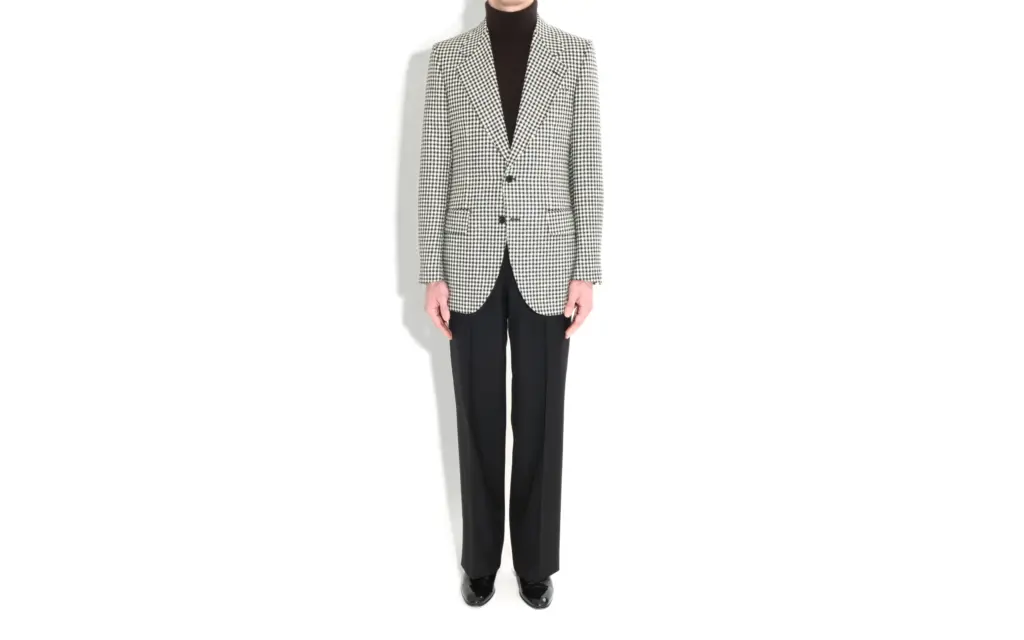
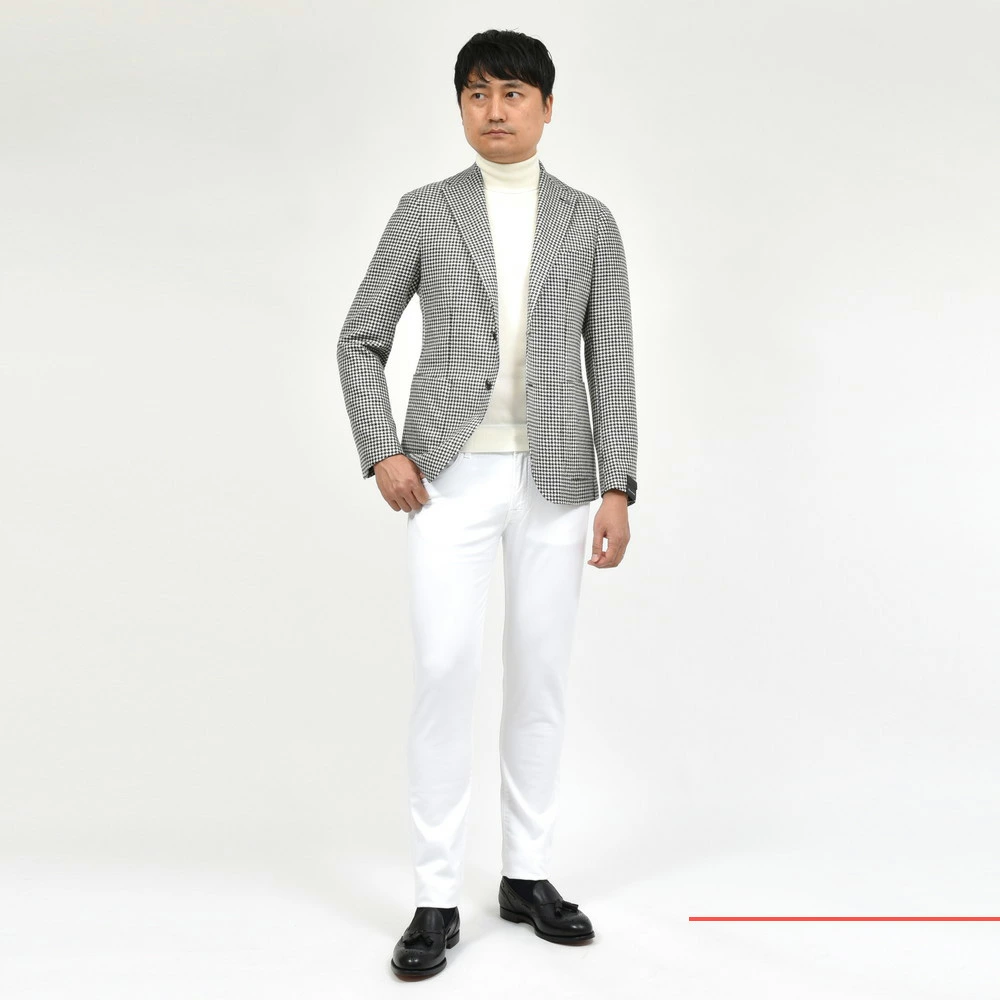
This is something I heard from a tailor: jackets with smaller shoulders (thin or minimal shoulder padding) tend to work better with a shorter jacket length compared to jackets with broader, more structured shoulders.
https://guji-online.com/fs/guji/tagliatore/17042026054
Both jackets are size 48.
Husbands jacket: jacket length 76 cm (approximately 29.9 inches), model height 183 cm (approximately 72.0 inches).
Tagliatore jacket: jacket length 71.5 cm (approximately 28.1 inches), model height 182 cm (approximately 71.7 inches).
The Husbands jacket has relatively substantial shoulder padding and gives an impression of broader shoulders. The Tagliatore jacket appears to have very thin shoulder padding—or perhaps none at all—and has a rounded shape that gives the impression of smaller shoulders. Preferences will vary, of course, but both jackets seem well-balanced and well-designed as jackets.
To summarize—although this may end up being an answer that’s not very helpful—jacket length cannot be reduced to a single numerical measurement. Ultimately, the optimal length is determined by considering various factors and judging the overall balance.
A guideline: total height (from the base of the neck to the heels) ÷ 2
Of course, I am not satisfied with the vague answer above.
The reason is that when buying or ordering a jacket, I cannot choose the jacket length based solely on my own knowledge.
When ordering, it is obviously better to leave the decision to a trustworthy tailor. Still, I want to understand why that particular length is considered correct.
Many tailors, as well as SARTO GINZA (the alteration-and-made-to-measure suit shop in Tokyo where I work) use the following measurements as a standard.
“The basic rule is total height (from the base of the neck to the heels) ÷ 2.”
This is very concrete and extremely helpful information.
If we temporarily set aside the unsatisfying answer of “it depends on balance,” using total height ÷ 2 as an orthodox is an easy-to-understand and very useful guideline.
Measuring the jackets I already own
Out of curiosity, I measured the jacket lengths of some jackets I own, and they ranged from 73 cm to 78 cm (approximately 28.7 to 30.7 inches).
For reference, my ideal jacket length (total height ÷ 2) is 76 cm (29.9 inches).
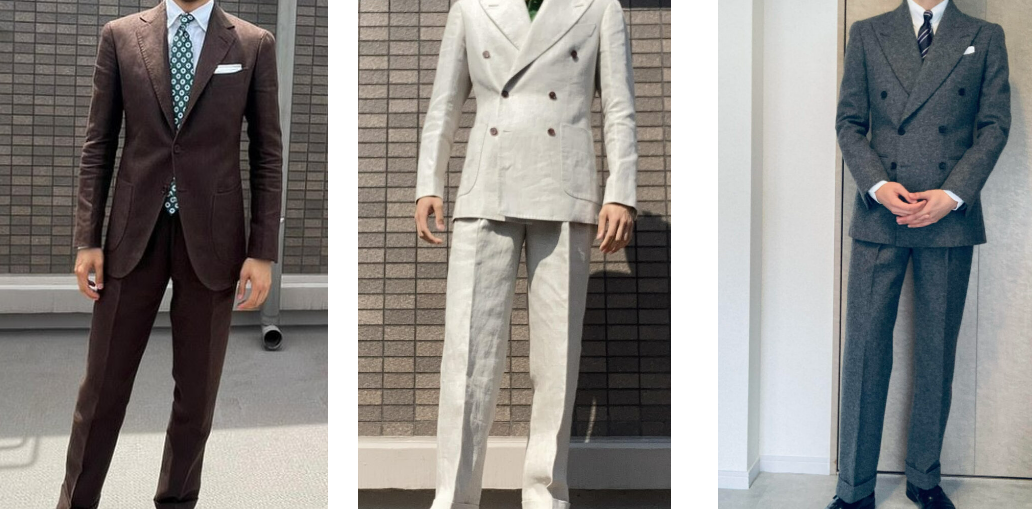
I own three jackets made by a Japanese tailor called MICHELE & shin, who has a workshop near Naples, Italy. All three measure either 74 cm or 75 cm (approximately 29.1 to 29.5 inches).
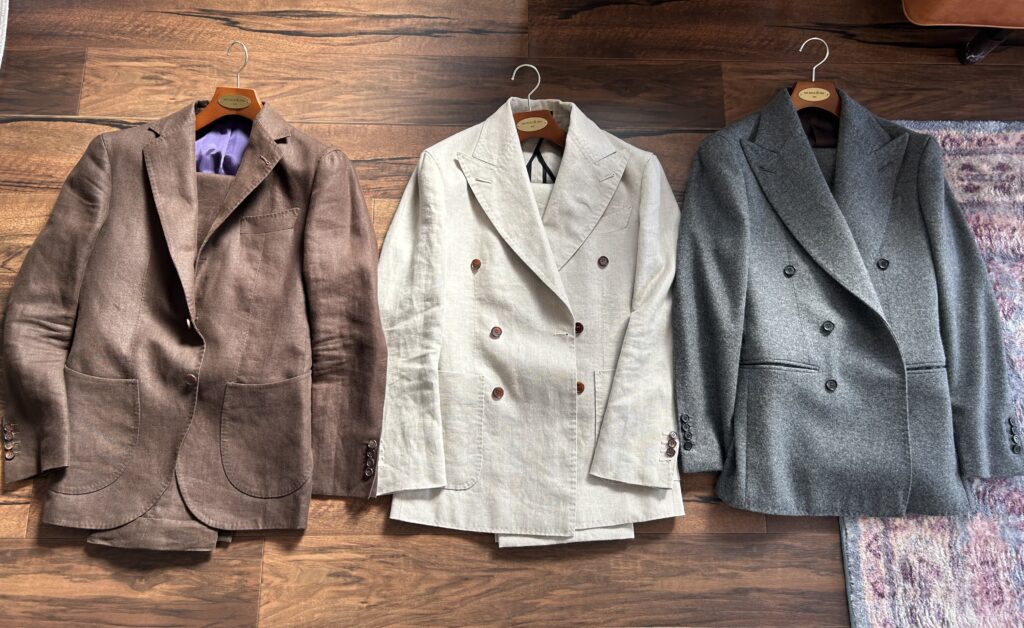
These jackets are 1–2 cm (approximately 0.4–0.8 inches) shorter than 76 cm, but because they feature thin shoulder padding and relatively small shoulders in a Neapolitan style, I believe this slightly shorter length is not unnatural and still falls within the realm of classic proportions.
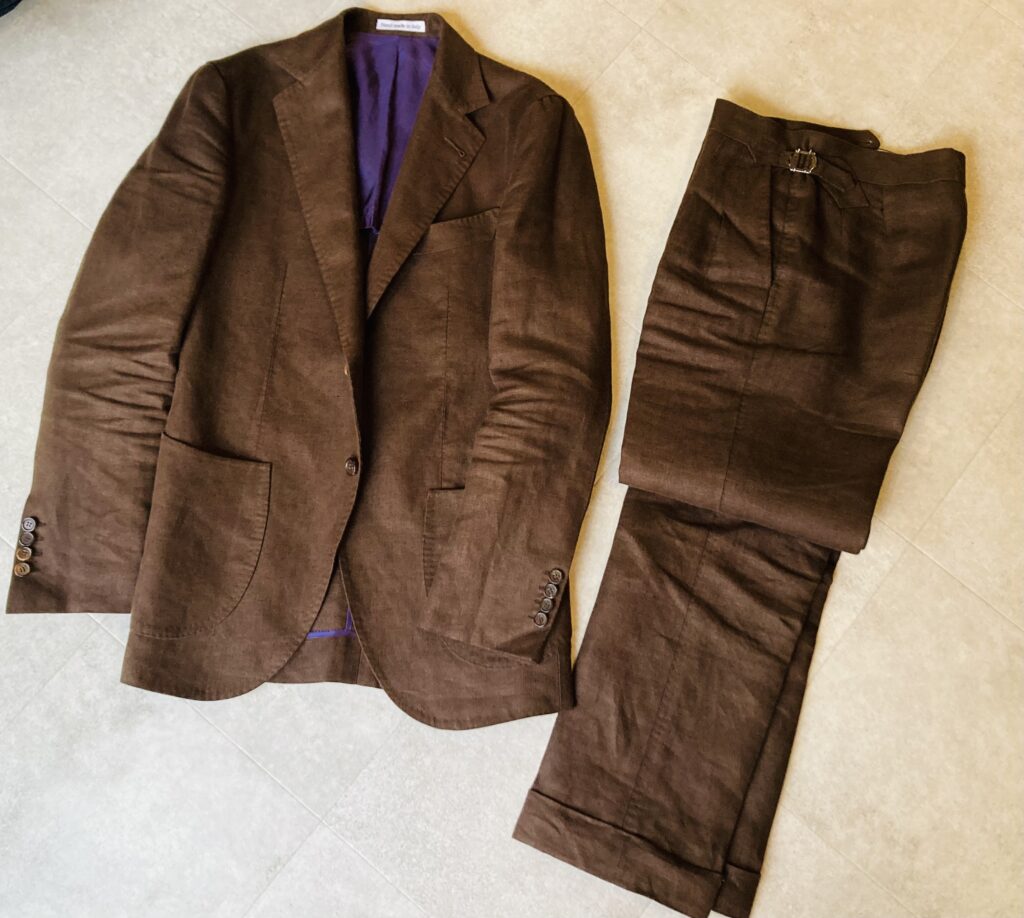
As an aside, I trust and genuinely love Michele & Shin as tailors. The brown linen suit shown below, which I frequently feature in other articles, was also ordered from Michele.
I also own two ready-made jackets, purchased secondhand, both measuring 78 cm (approximately 30.7 inches). They have relatively substantial shoulder padding, but even when viewed as a whole, they do not feel excessively long.
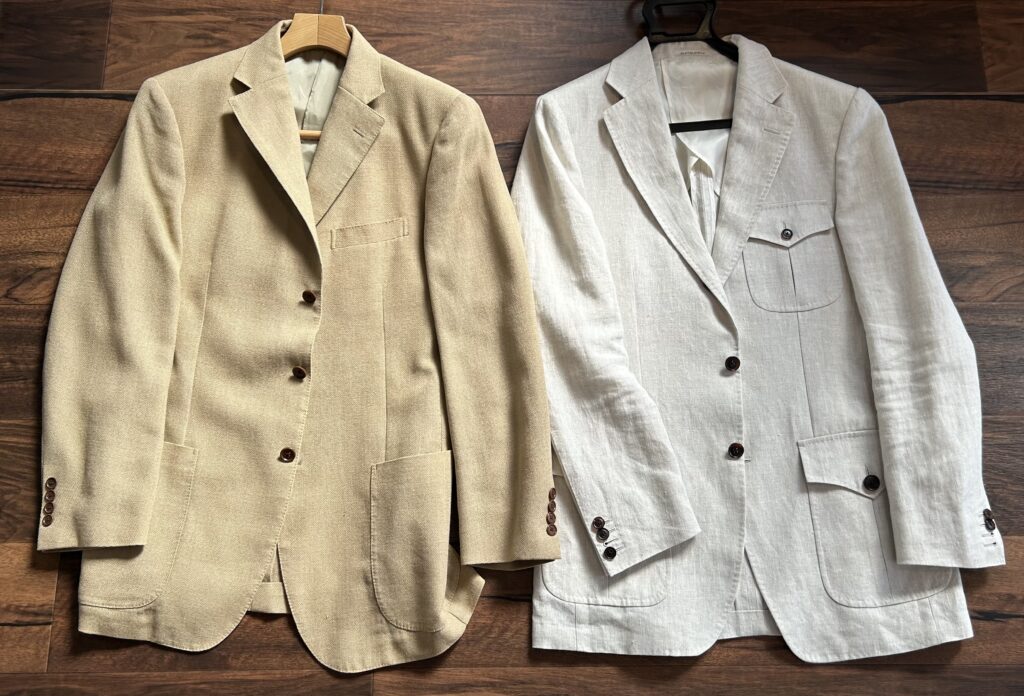
Both are ready-made garments, but since they were bought vintage, they were likely made in a period when longer jacket lengths were in fashion compared to today.
There was one jacket that felt slightly too short when considering the overall impression.
This sense of “too short” is purely my personal intuition, but when I measured it, the length was 73 cm (approximately 28.7 inches).
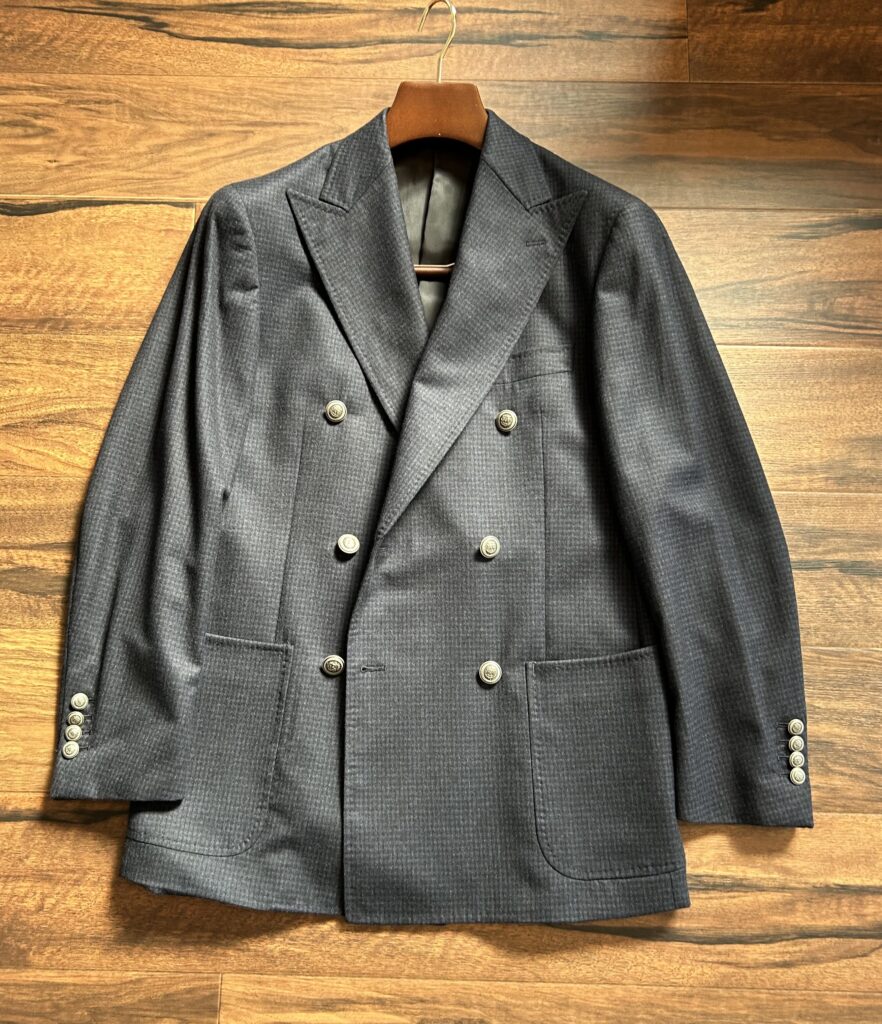
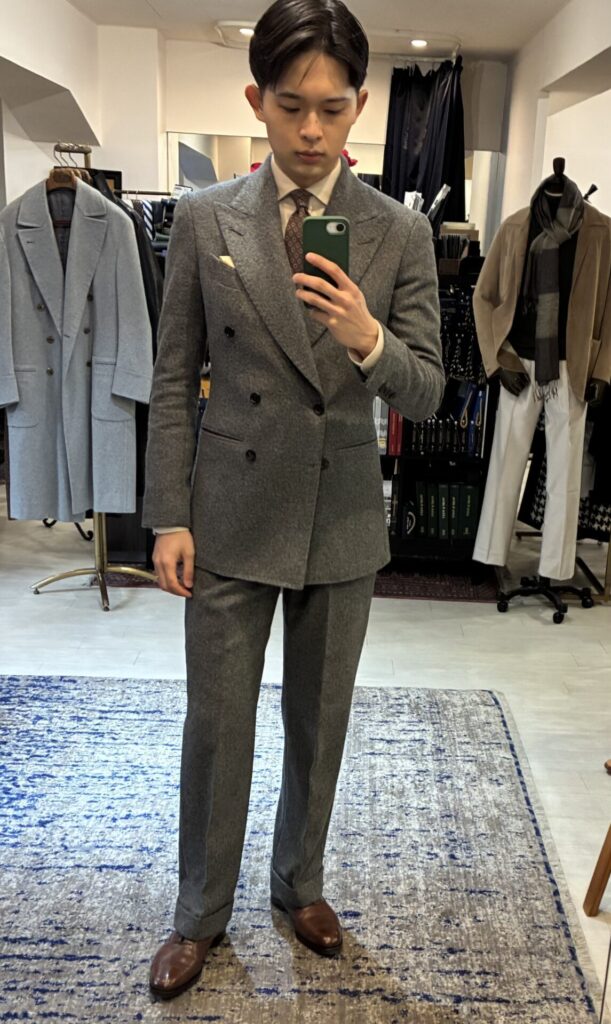
Although the shoulder padding is thin and the construction is light, it is a double-breasted jacket made of flannel—a design with a certain sense of weight. With such a design, a short jacket length does not look attractive. At the time I bought it, I was not as conscious of jacket length as I am now, so I didn’t feel any strong discomfort when trying it on.
Based on this limited sample size and my judgment, I will loosely conclude that a range of ±2 cm (approximately ±0.8 inches) from total height ÷ 2 is acceptable.
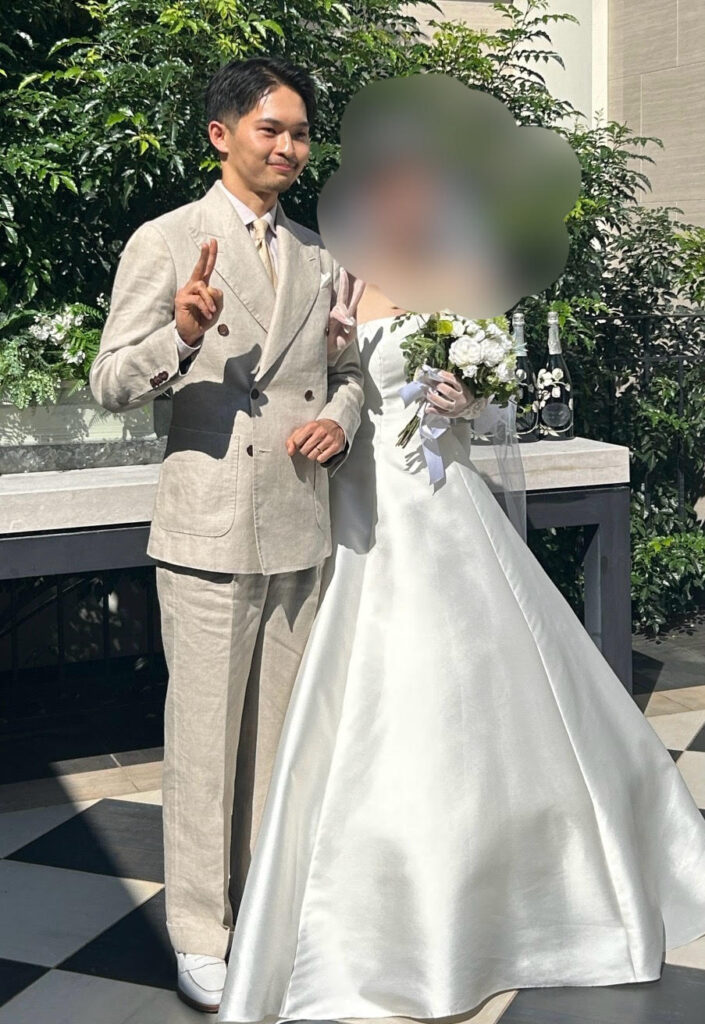
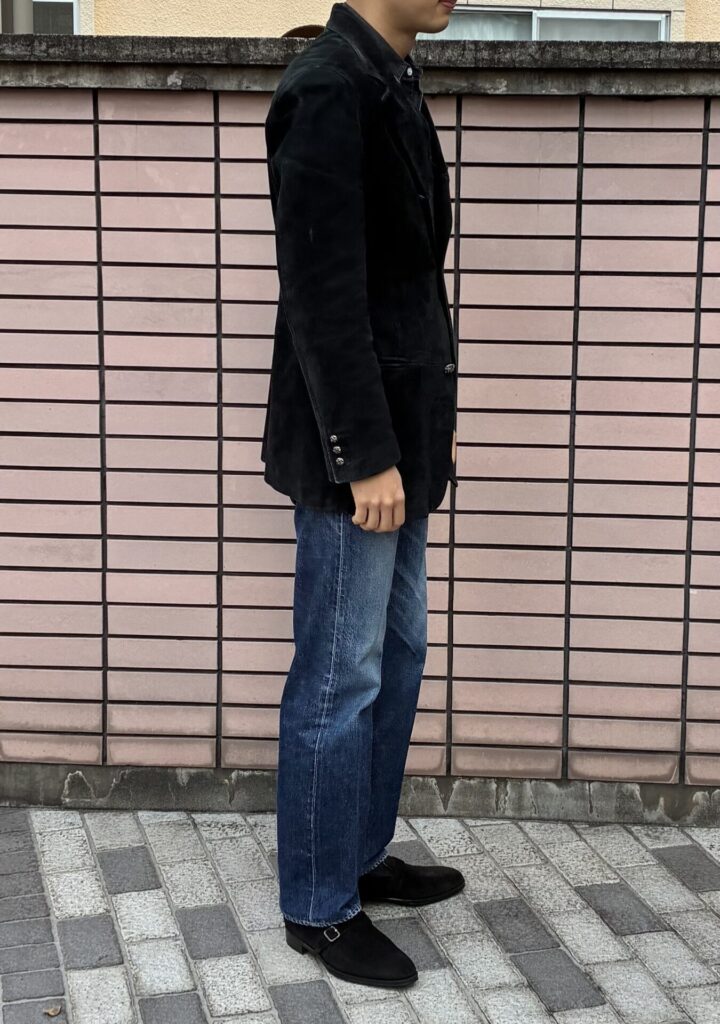
That ±2 cm tolerance may be exactly the range within which adjustments can be made depending on overall balance—while still remaining within the boundaries of classic style.
A jacket length more than 2 cm (approximately 0.8 inches) shorter than the total height ÷ 2 standard will likely expose too much of the seat and fail to look attractive, regardless of overall balance.
Conversely, a jacket length more than 2 cm longer than the standard may, depending on overall balance, still appear classic and elegant.
Since I don’t own any jackets longer than 78 cm (approximately 30.7 inches), this is purely speculation.
Do not collapse the hourglass
Up to this point, I have tried to determine the optimal jacket length as concretely and numerically as possible, rather than relying on vague intuition.
When buying ready-made jackets, I don’t think there is anything wrong with bringing a measuring tape and checking the jacket length as a consumer—but it does feel a little embarrassing.
So here is a quick way to check whether a jacket has a classic and correct length without using a measuring tape.
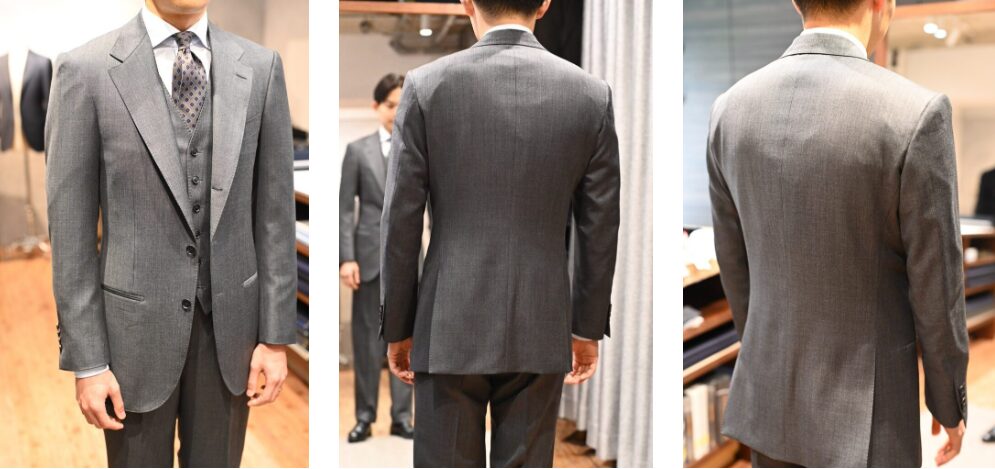
Simply check whether the jacket forms a clean hourglass shape.
The closer the distance from the most suppressed point of the waist to the shoulders and to the hem are to being equal, the more beautiful the hourglass shape.
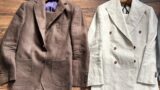
Even when I check my own examples, I feel that the hourglass shape is preserved even when the length deviates by ±2 cm from the total height ÷ 2 standard. Because the photos were taken from a low angle, the beige suit in the middle may appear slightly shorter below the waist.
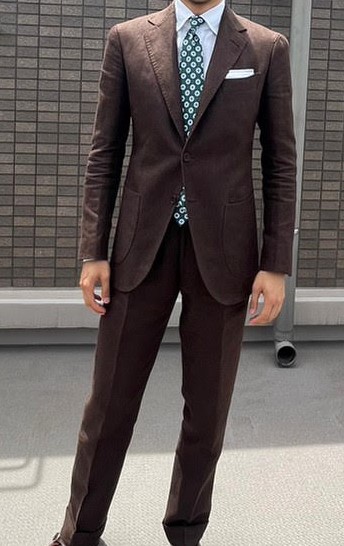
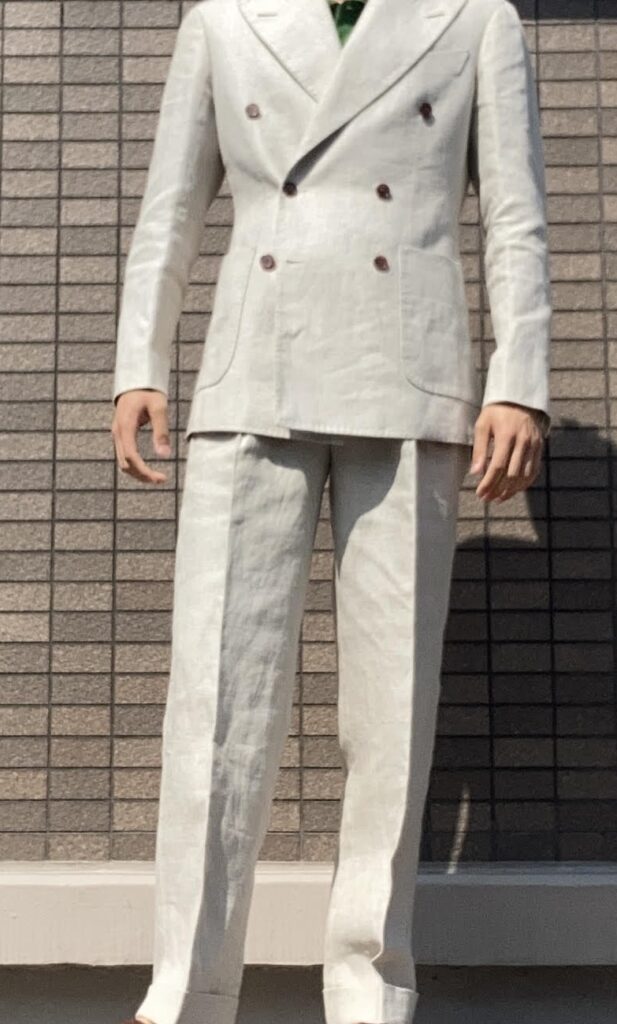
I don’t believe my jacket lengths are perfect. Even though the hourglass shape is not broken in any of the three jackets above, I sometimes think that an additional 1–2 cm (approximately 0.4–0.8 inches) of length might also work. Considering that these jackets were made by a tailor with a workshop in Naples, known for Neapolitan style—thin shoulder padding and small shoulders—I think the current lengths are at least not wrong.
If you feel that a jacket you own somehow looks a bit short overall, it is highly likely that you are sensing a breakdown in the hourglass shape. This may be a useful reference point when trying on jackets.
Being told to judge overall balance while considering shoulder width, jacket design, and trouser silhouette is difficult unless you’re a professional. However, checking whether the hourglass shape is clean is not difficult and can be done by anyone.
Conclusion
In my view,
Using total height (from the base of the neck to the heels) ÷ 2 as a standard, a jacket length within ±2 cm (approximately ±0.8 inches) can be considered a classic jacket length that is not influenced by trends.
Within that range, the optimal jacket length is determined by evaluating the overall balance.
Overall balance is often difficult for non-professionals to judge, but if you are judging for yourself, using the presence of a clean hourglass shape as a criterion is a good approach.
That’s all.
Thank you for reading.






コメント