Hello.
My name is Mr. Linen.
When asked which mill (or fabric brand) is best suited for linen suits, many people would answer Spence Bryson, the Irish mill famous for Irish linen.
What is good about Spence Bryson linen, and what is not so good?
Is it suitable for high-temperature, high-humidity Asian climates?
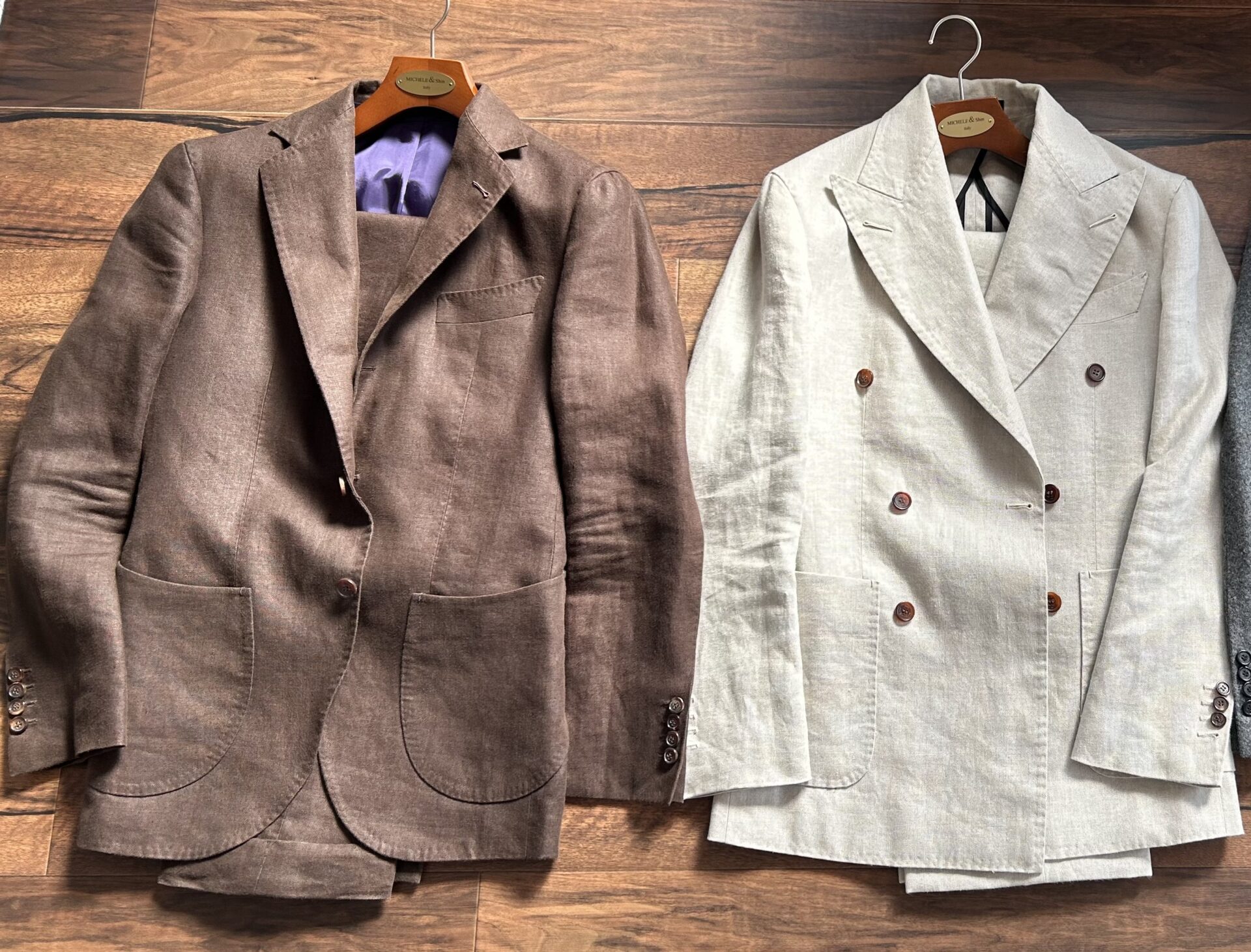
I have purchased four suits and jackets made from Spence Bryson linen and have worn them for several years in such climates, so I would like to share my personal impressions.
Spence Bryson Offers Several Types of Linen Fabrics
Although people often refer to “Spence Bryson” as a single entity, they actually offer several different types of linen fabrics. Most are solid colors, but they differ significantly in weight (thickness), broadly divided into lighter and heavier options.
The most classic and widely known fabric is called “TROPICAL.” It weighs 370g, which is relatively heavy (thick) for a suiting fabric.
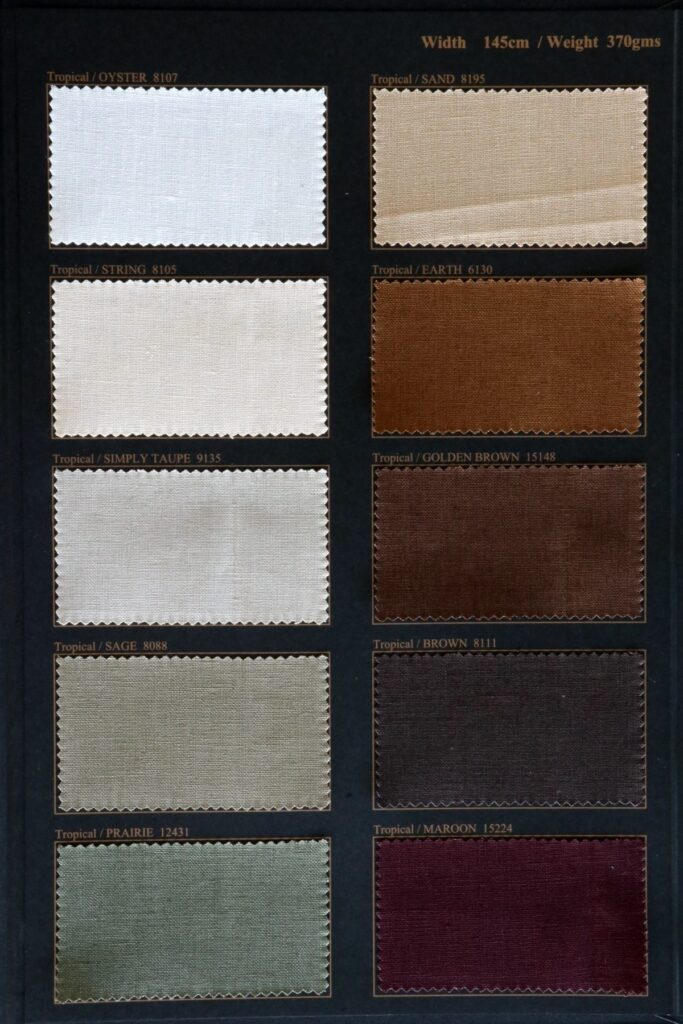
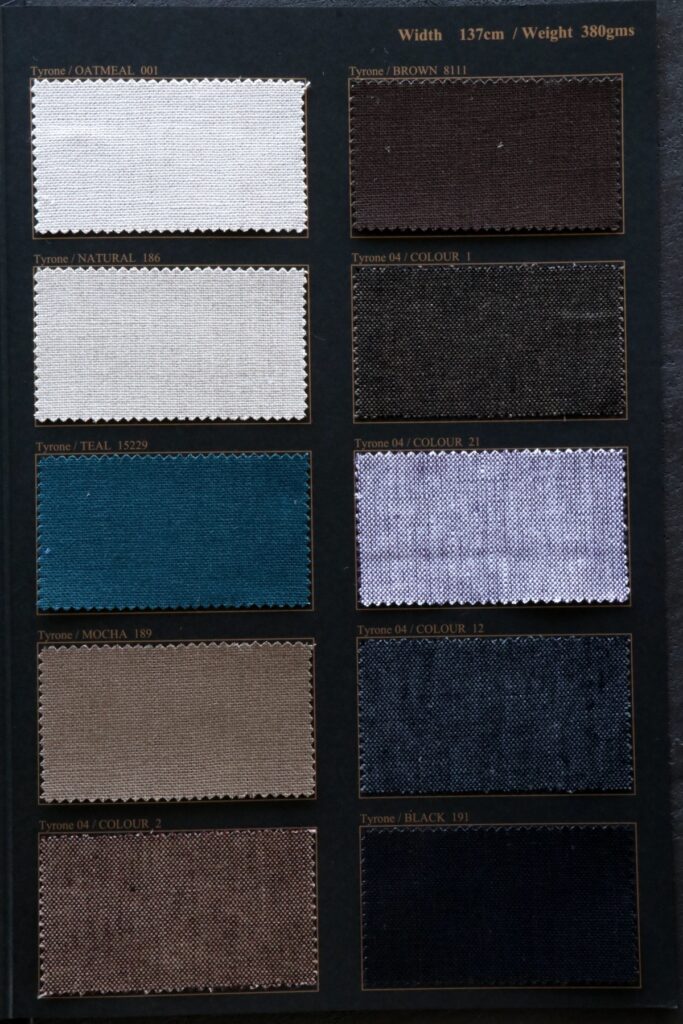
A relatively newer fabric called “TYRONE” weighs 380g. Although the difference is only 10g, the yarns are thicker and give the fabric a much rougher, more rugged appearance.
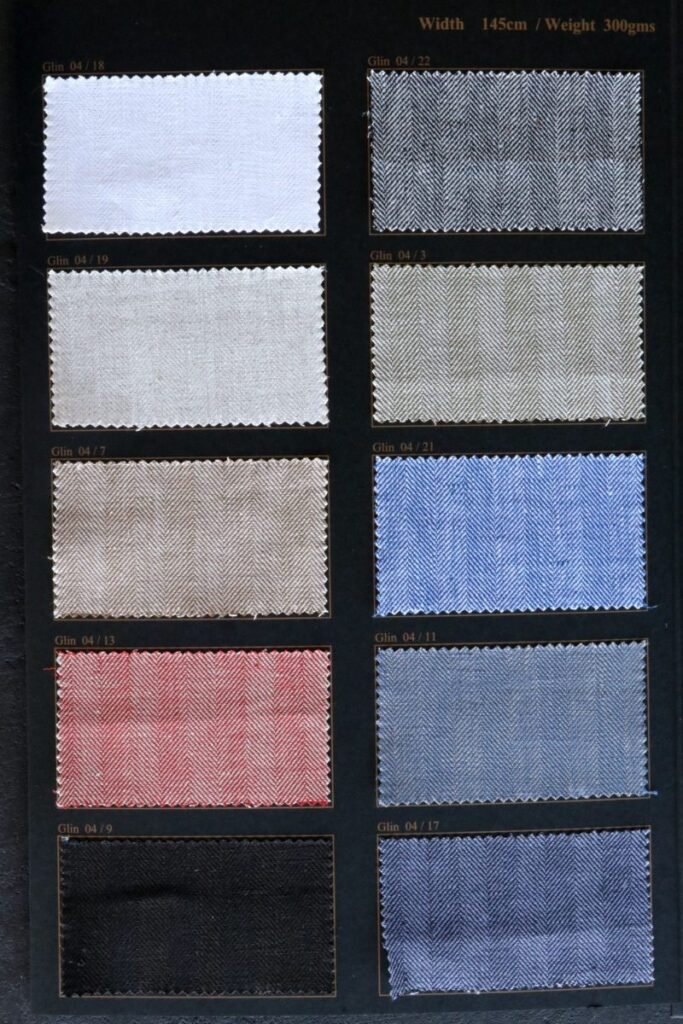
There is also a relatively lighter fabric called “GLIN,” weighing 300g. However, this is too thin for trousers and seems intended mainly for standalone jackets. If you are making a linen suit, the realistic choices are either “TROPICAL” or “TYRONE.”
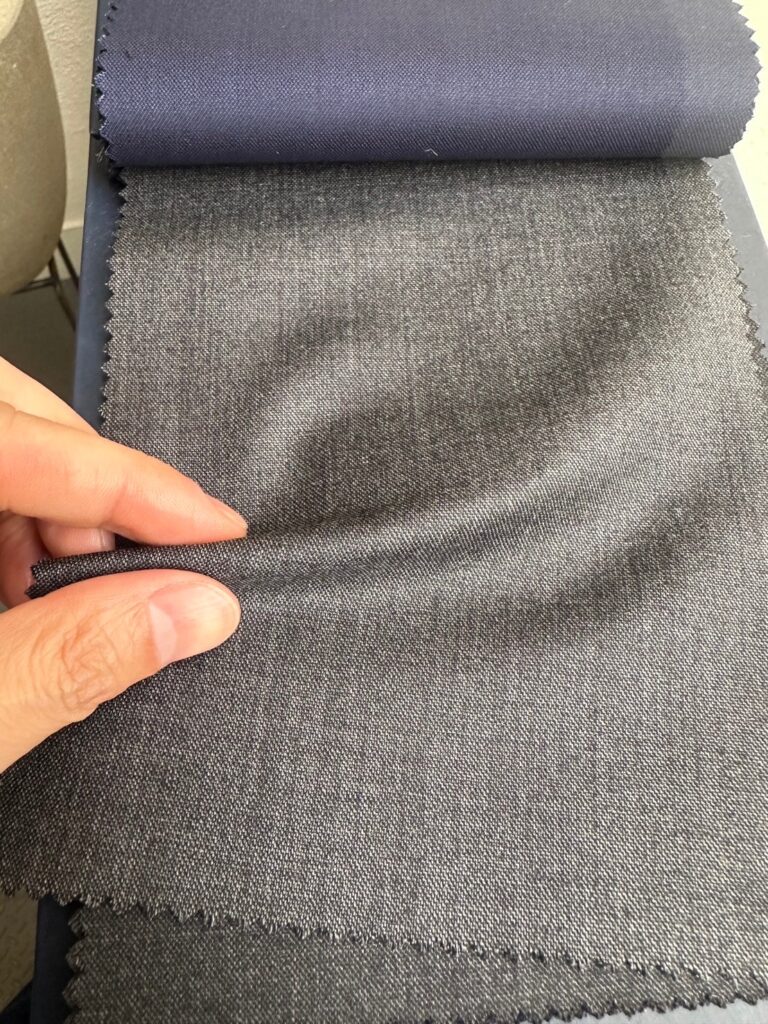
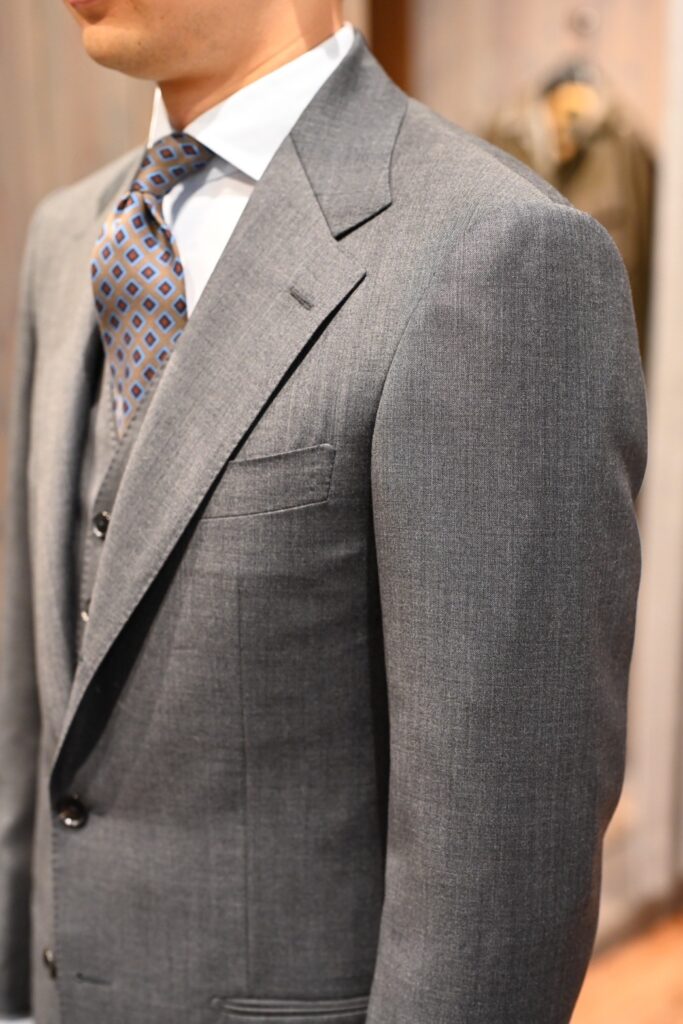
For reference, the all-season suit fabric shown below weighs 250g.
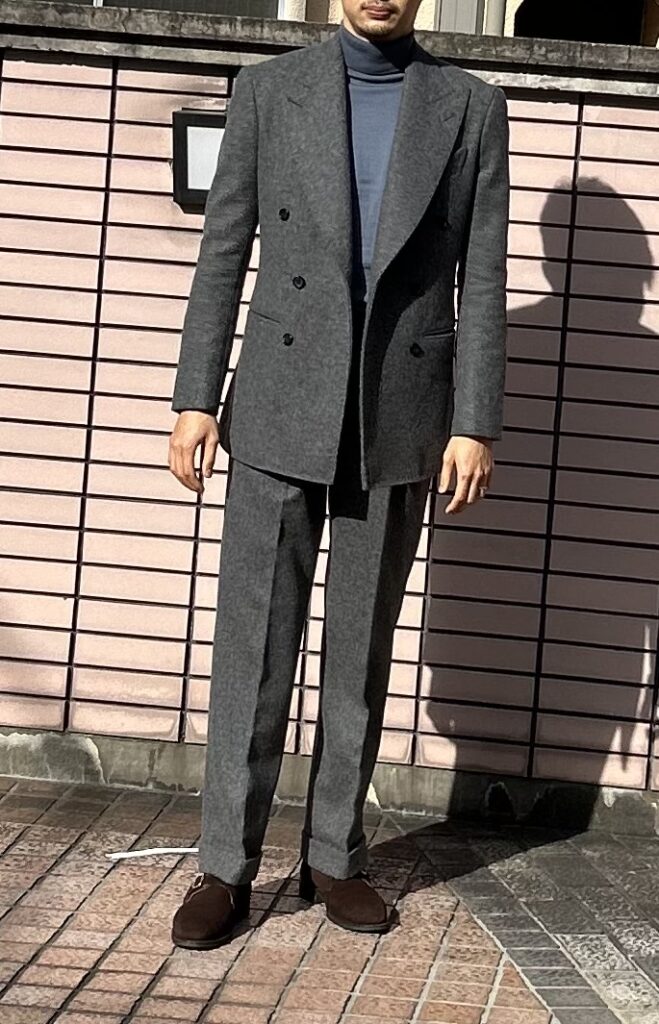
This heavy flannel suit, ideal for mid-winter, weighs in the high 400g range.
Spence Bryson linens in the high 300g range are far heavier (thicker) than typical all-season fabrics, so purely in terms of thickness, they could almost be considered autumn/winter fabrics.
However, despite their thickness, linen has natural gaps between the fibers, allowing airflow and a visually cool appearance. For this reason, they are generally categorized as spring/summer fabrics.
Drawbacks
Among my Spence Bryson garments, I own two made from “TYRONE,” one from “TROPICAL,” and one whose exact type I am unsure of.
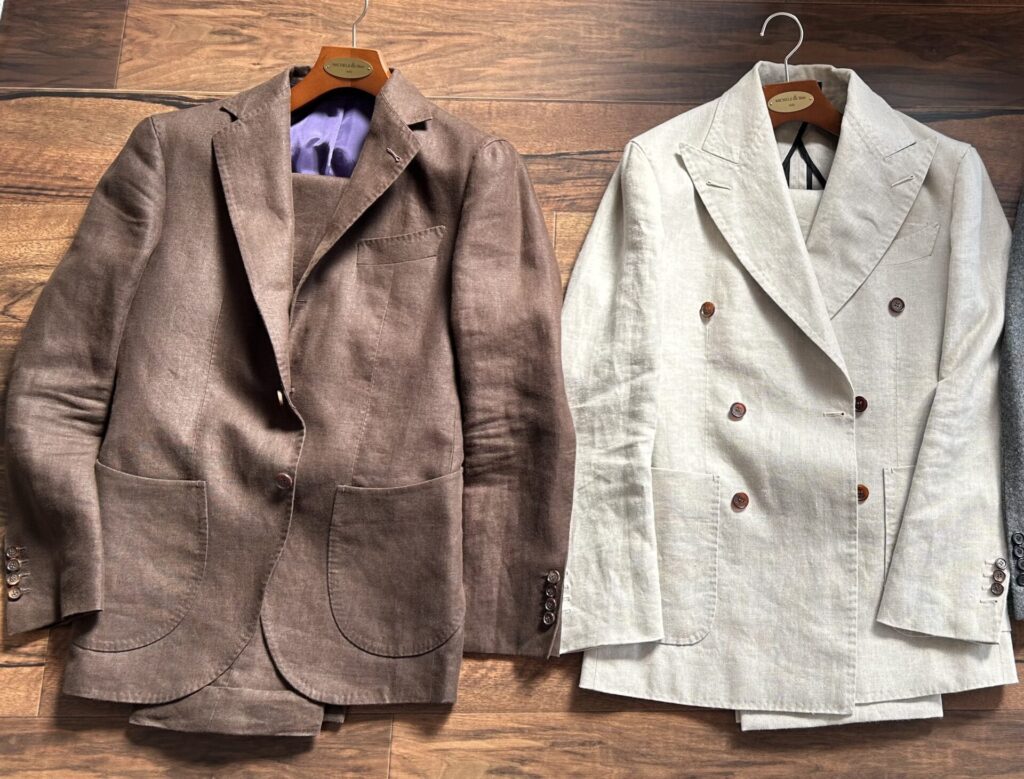
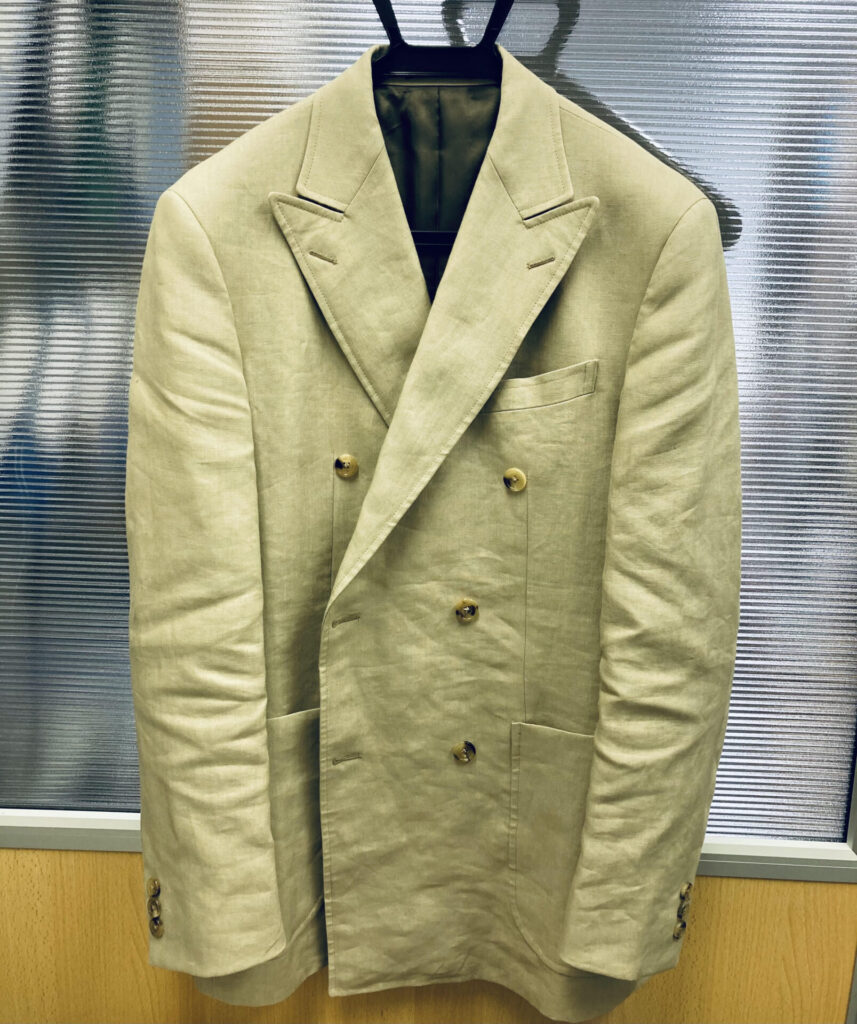
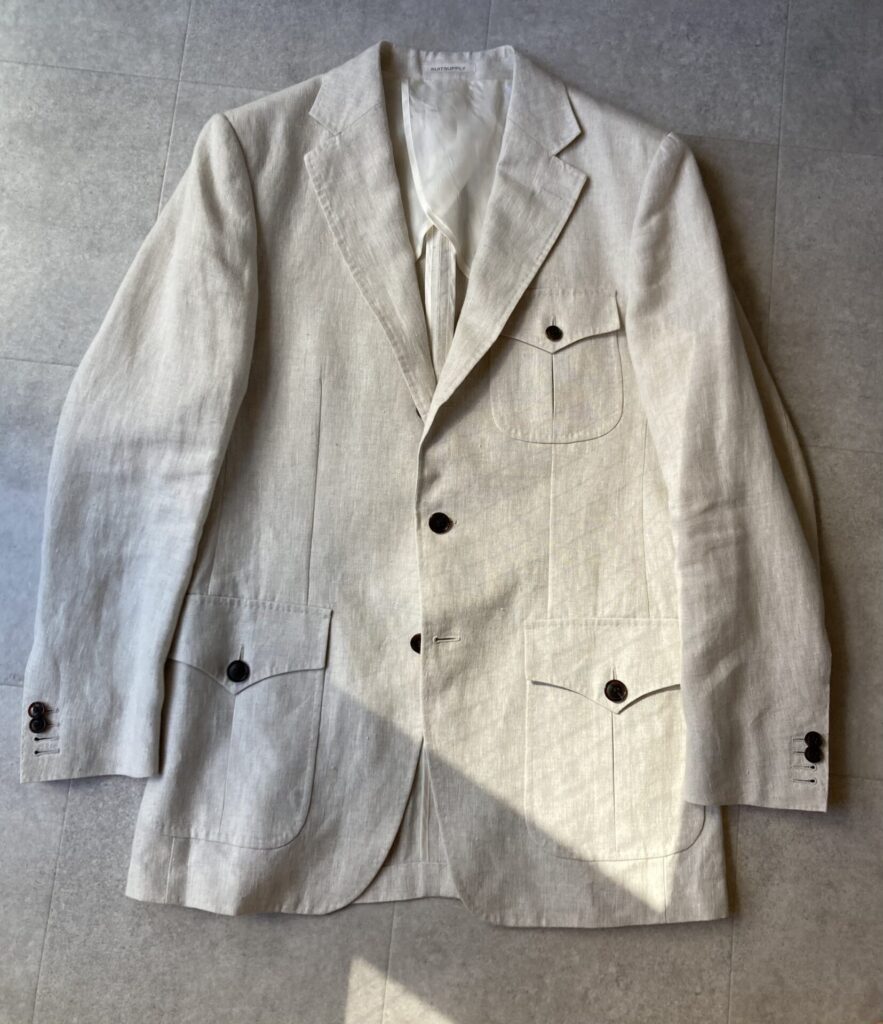
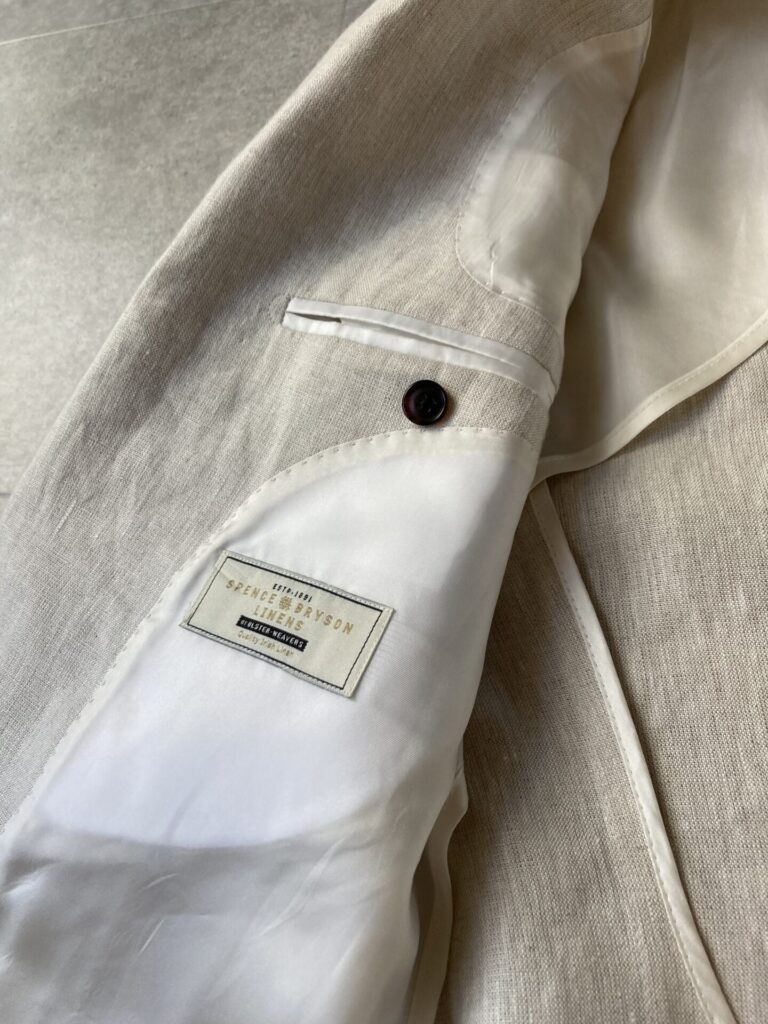
I would like to share what I have noticed after actually wearing them for several years.
I will start with the drawbacks.
Hot
Unfortunately, despite being linen, they are not cool at all.
No matter how breathable the fabric is, it is simply too thick, which makes it hot.
According to tailors, lightweight wool fabrics such as fresco are actually much cooler than linen.
In high-temperature, high-humidity Asian climates, wearing these outdoors in summer is almost impossible. Realistically, they can only be worn for a limited time.
In terms of temperature alone, they could probably be worn even in autumn or winter, but visually they can give a seasonally inappropriate impression. If you want to avoid looking out of season, it is better not to wear them.
Possible Solutions
Although they are hot, there are some measures you can take.
The key is the lining.
Jacket linings come in several types—full lining, half lining, unlined, and so on. Naturally, the less lining there is, the cooler the jacket will feel.
To take advantage of linen’s breathability, it is better to minimize or eliminate lining.
My jacket uses a half-lined construction. While it is better than a full lining, it is still not cool in summer.
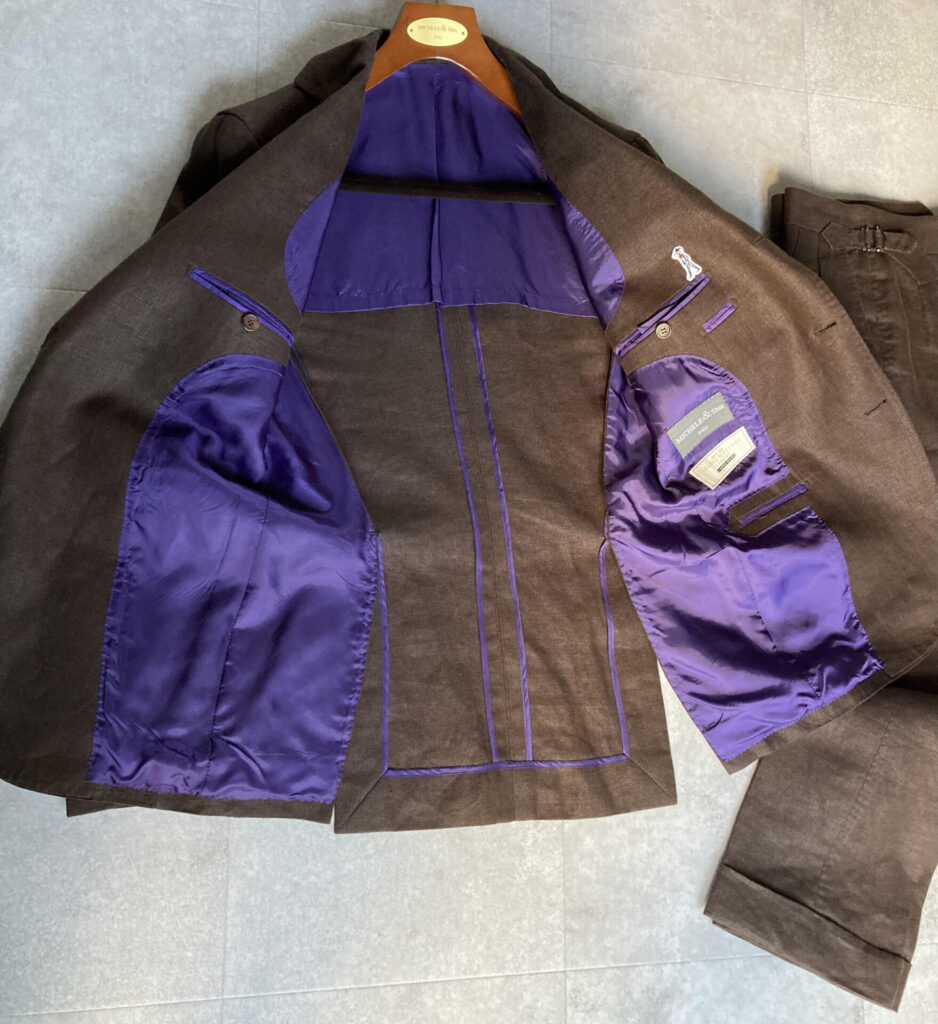
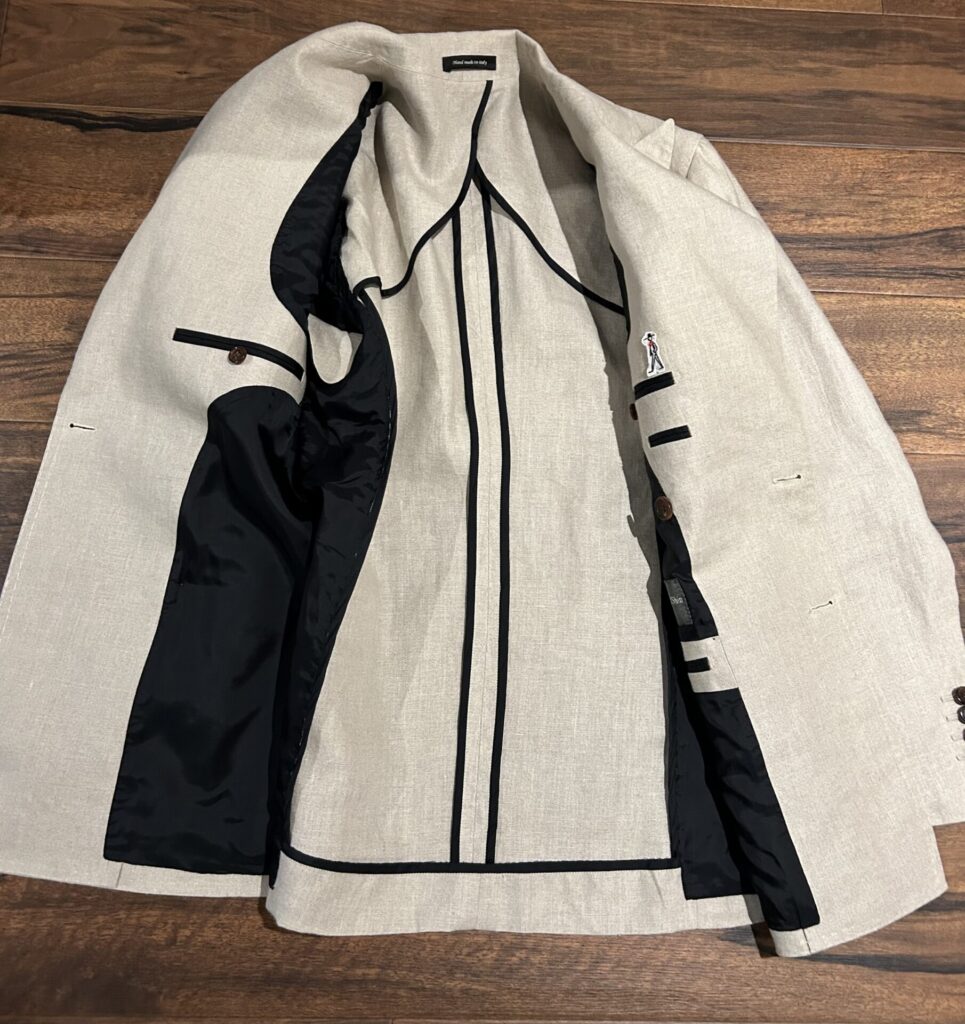
Even the sleeve lining could potentially be removed entirely.
(I have never ordered a jacket without sleeve lining, but I am considering it for my next order.)
Since sleeves are in closer contact with the body than the torso, the presence or absence of sleeve lining makes a noticeable difference in perceived temperature.
There are downsides, such as difficulty putting your arms through the sleeves and sweat transferring directly to the outer fabric.
However, difficulty with sleeves can be mitigated by making them slightly wider,
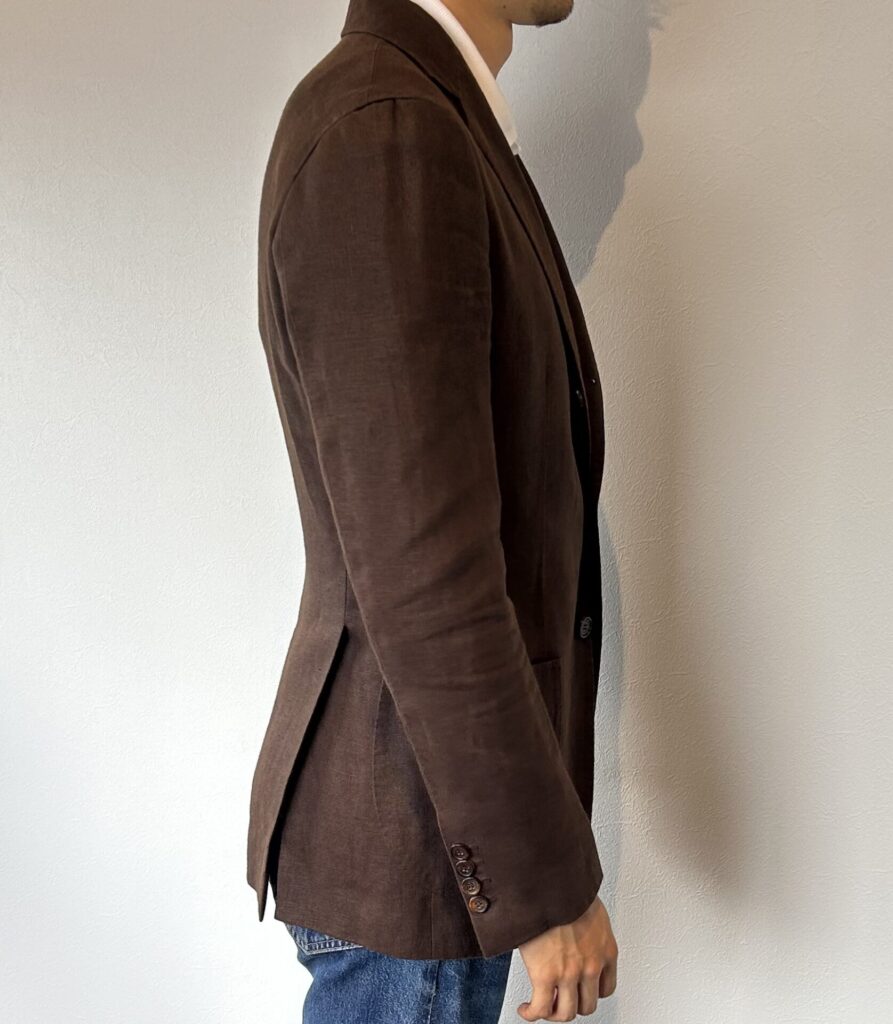
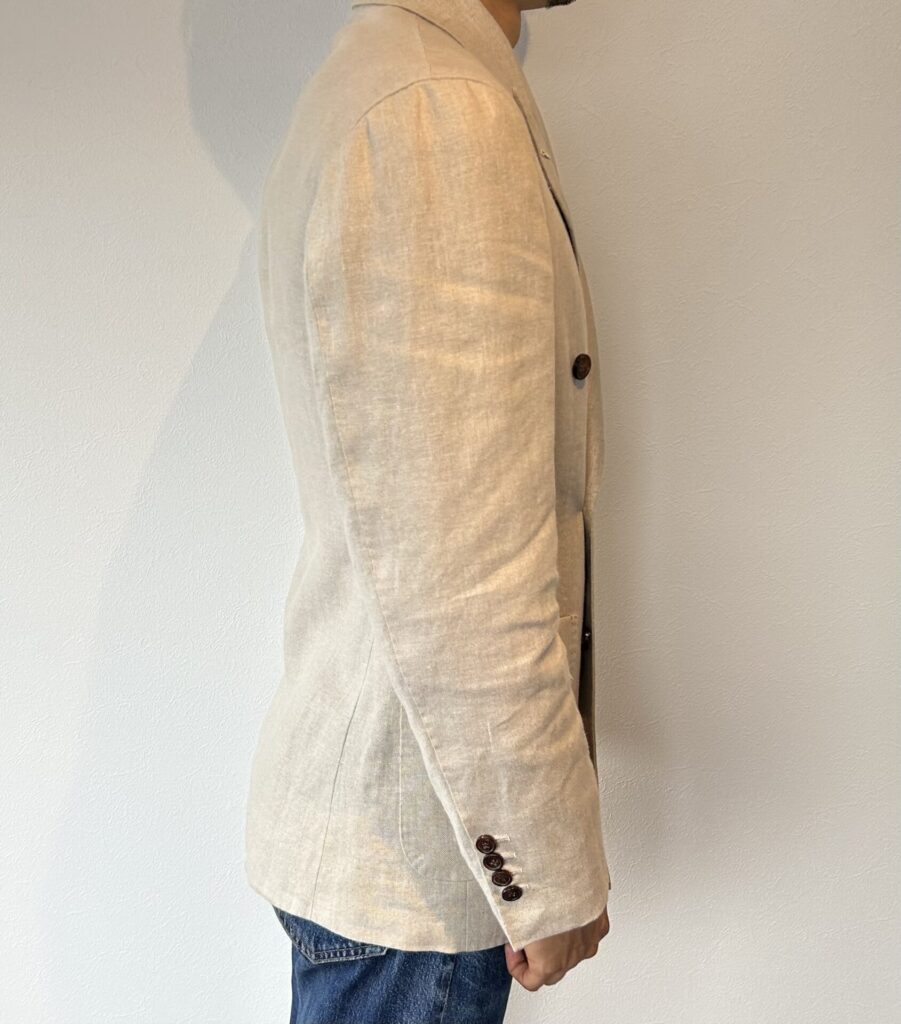
As for sweat reaching the outer fabric, linen is relatively easy to wash, so even if it gets sweaty, washing it is an option. This reduces the severity of the drawback.
Additionally, without sleeve lining, even short-sleeve innerwear such as polo shirts feels more comfortable, as the lining does not cling to the skin.
That said, no matter how much lining you remove, the fabric itself is thick, so the overall perceived temperature will not change dramatically.
If you want to wear a linen jacket in mid summer, it is better to choose the 300g “GLIN” or a thinner linen fabric from another brand.
Advantages
Despite the major drawback of heat, Spence Bryson linen has many outstanding qualities.
Wrinkles Become Bold and Attractive
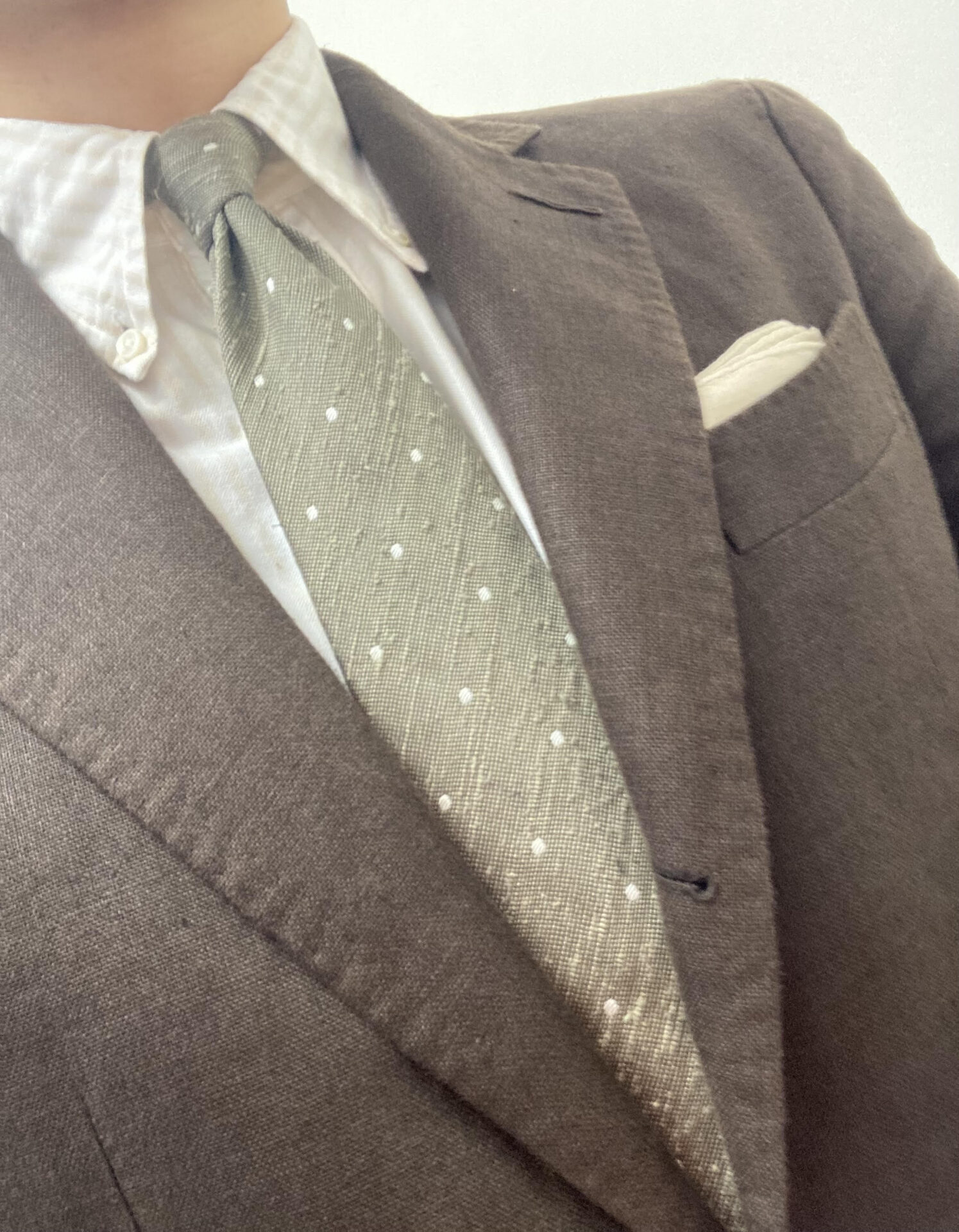
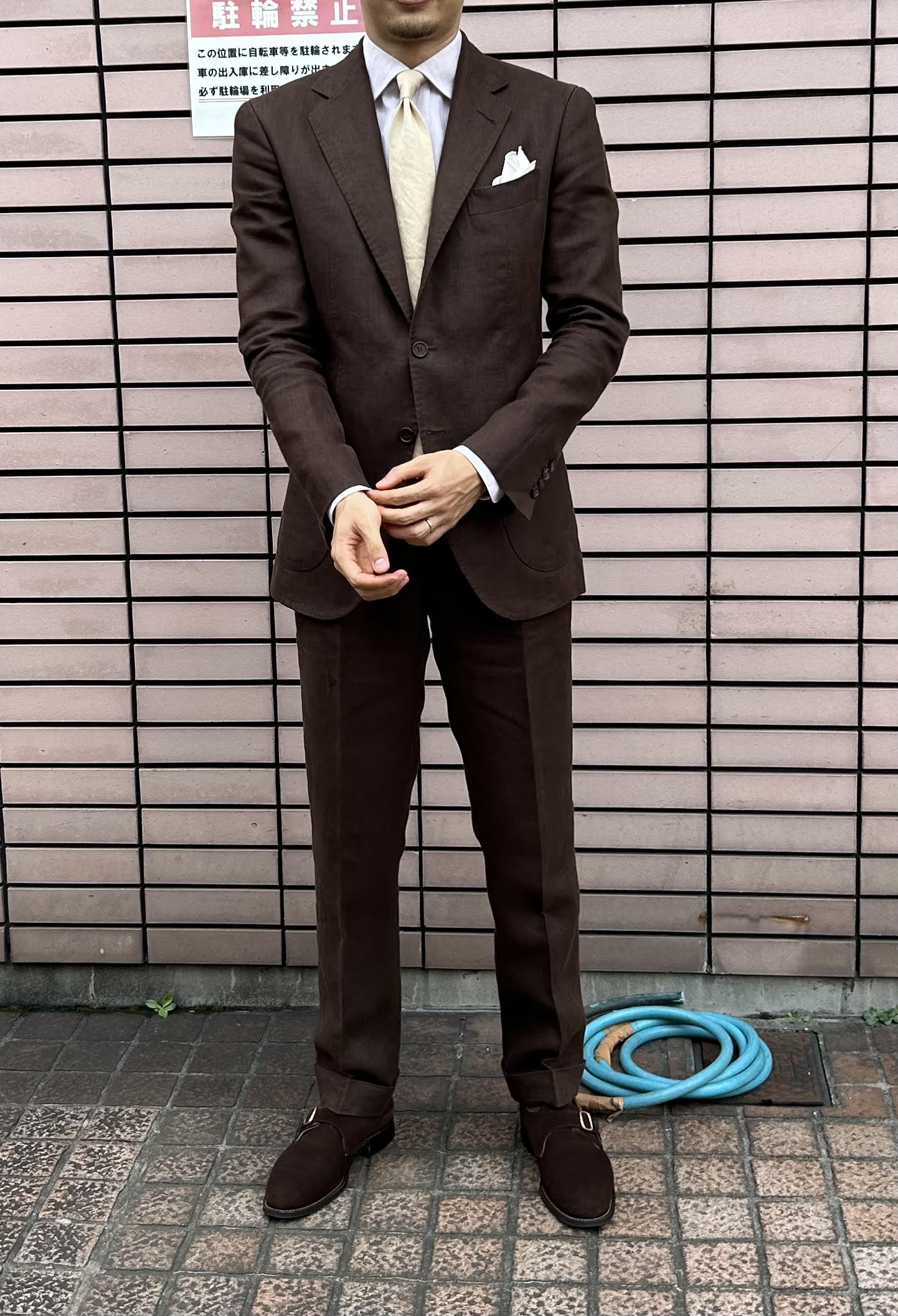
It is well known that linen wrinkles easily. However, thinner linen produces fine wrinkles, while thicker linen produces larger, bolder wrinkles.
Please compare the fine wrinkles on thin linen (a linen shirt) with the bold wrinkles on thick Spence Bryson linen (a linen suit) in the photos below.
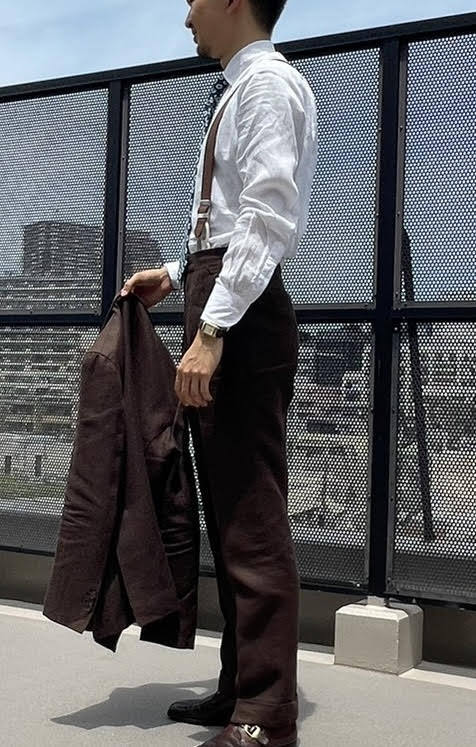
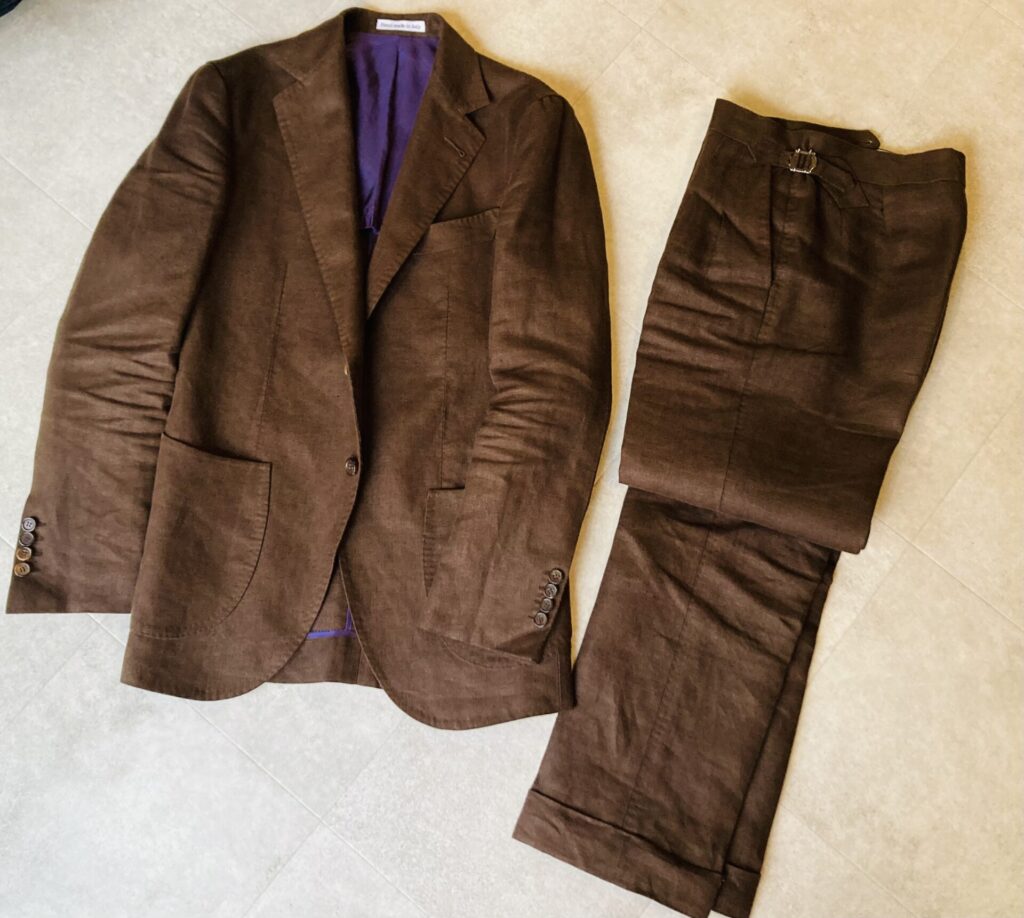
Don’t the wrinkles on the Spence Bryson suit look elegant?
At least, they look elegant to my eyes.
People often say linen is unsuitable for business wear because wrinkles stand out, but even with wrinkles, a linen suit does not look sloppy, in my opinion. What do you think?
Stiff Fabric
The thick Irish linen from Spence Bryson is very stiff at first.
It is said to soften and mold to the body after many years of wear, but even after more than three years, my suits are still quite stiff. (They have never been cleaned or washed.)
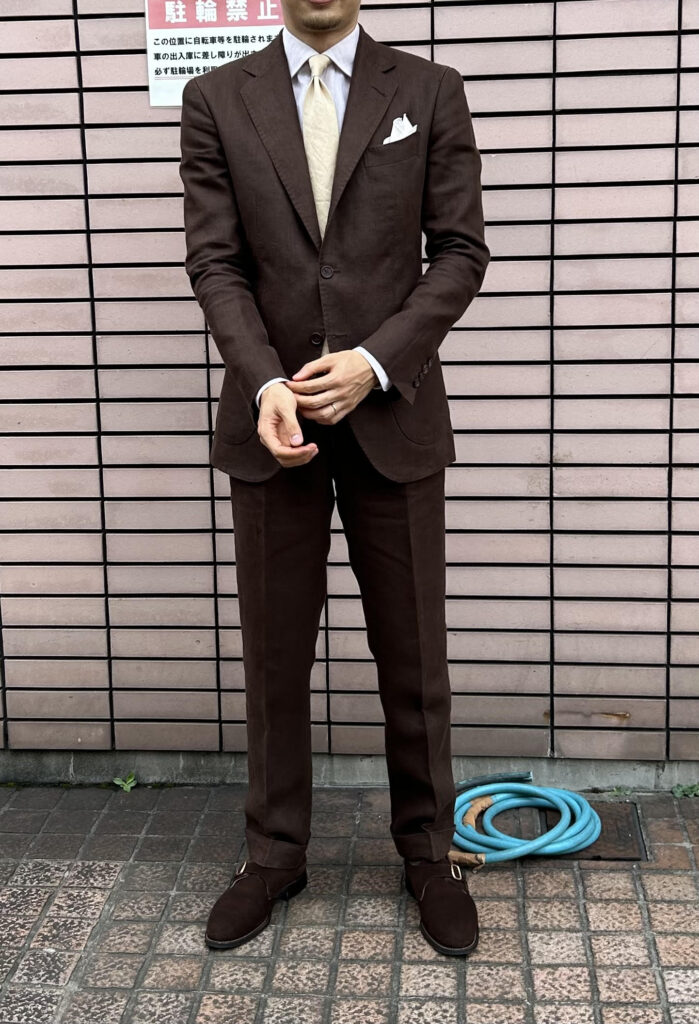
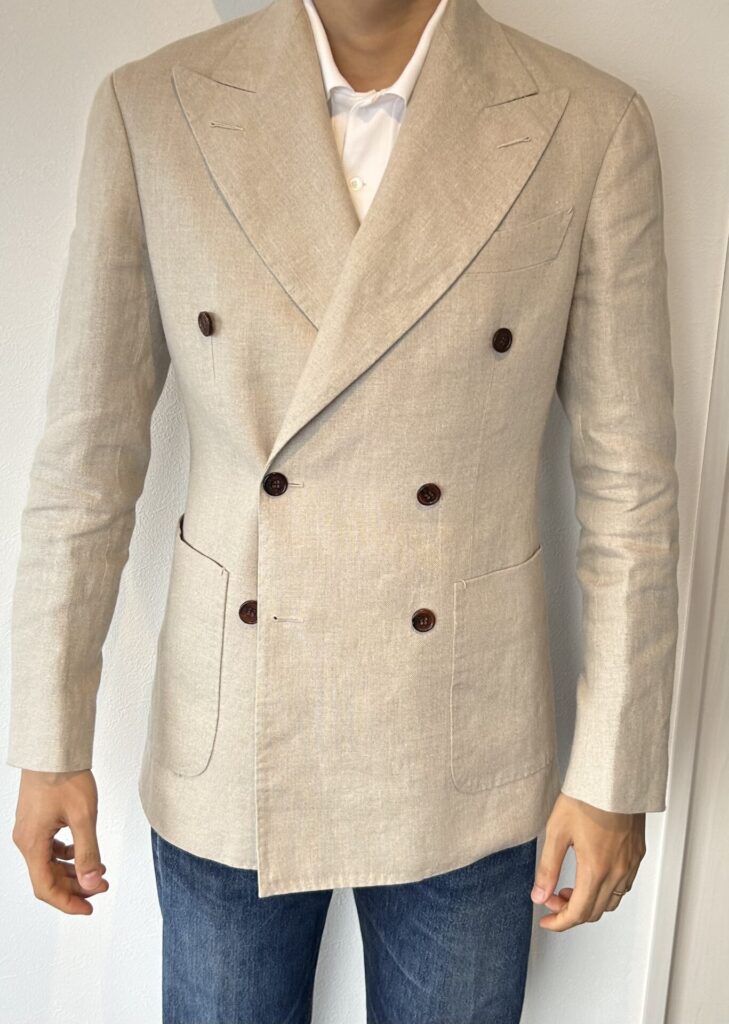
However, personally, the stiffness causes me no inconvenience at all. It is not restrictive or uncomfortable.
On the contrary, because it is stiff, the suit looks structured and sharp, offering a charm that thin, soft linen fabrics cannot achieve.
Rough Surface Texture
The classic “TROPICAL” fabric has relatively uniform yarn thickness and gives a refined impression. In contrast, “TYRONE,” which I wear, intentionally uses uneven yarn thickness, creating a rugged and rustic character in a good way.
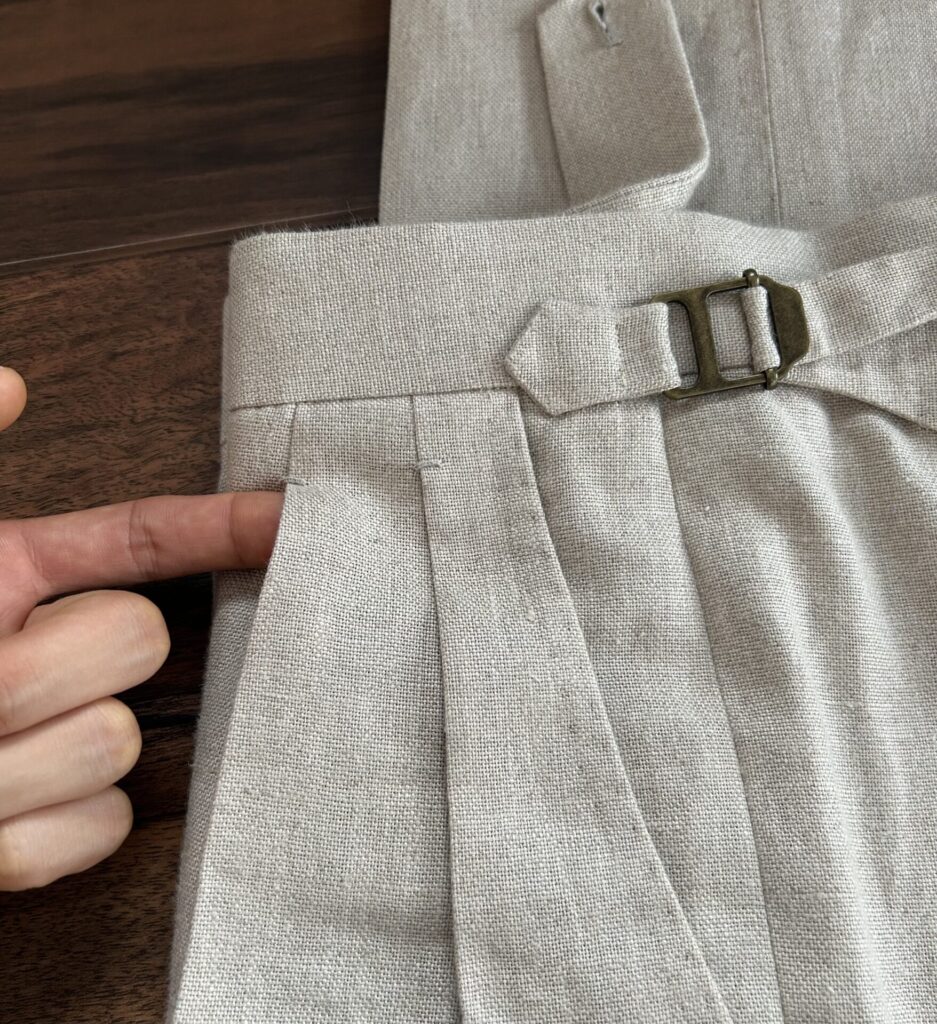
Both work well as suits or as standalone jackets, but TYRONE is more casual and better suited for relaxed styling, such as pairing with denim.
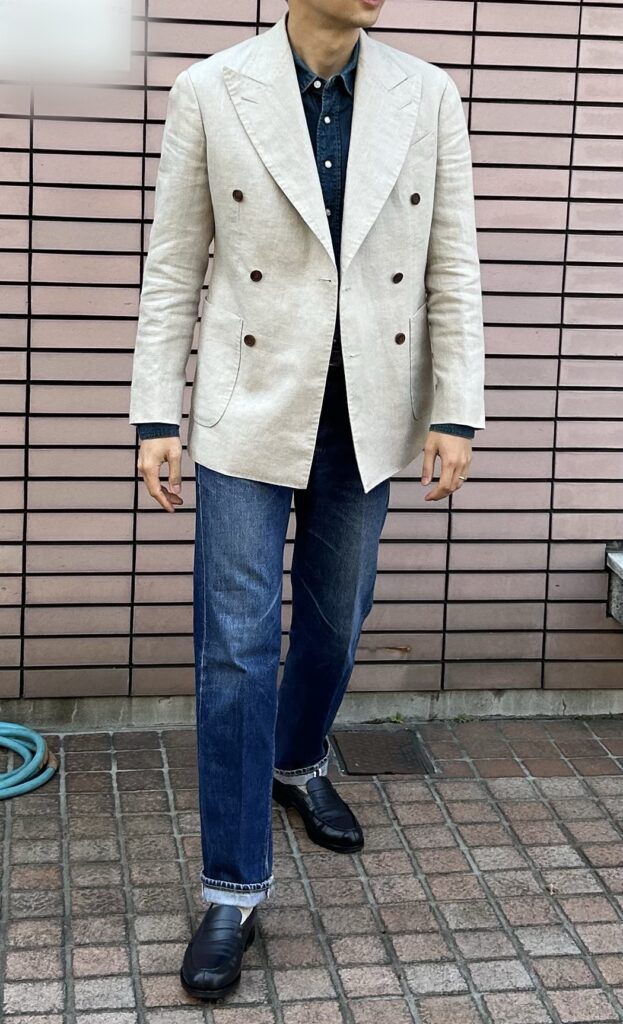
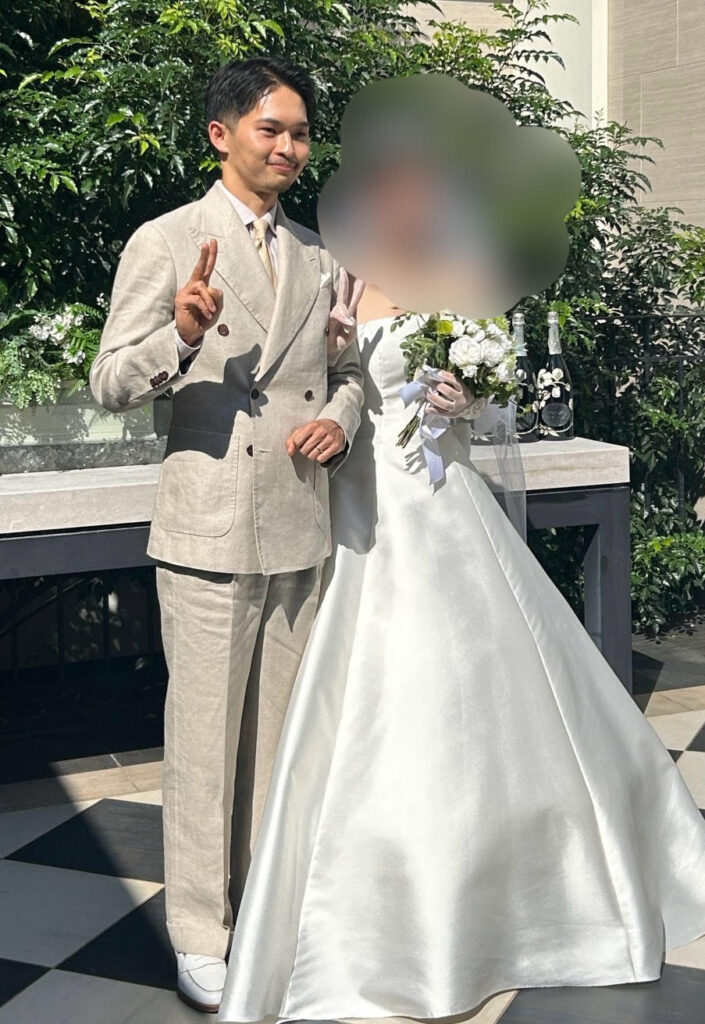
That said, I even wore mine to a wedding. When worn as a full suit, it can still look sufficiently dressy.
Built to Be Worn Hard
Thick Spence Bryson linen is extremely durable.
No matter how much you rub your elbows on a desk, it will not develop holes, and even if you neglect brushing, the fabric does not easily deteriorate.
It can even be washed with water, so if you spill food or drinks, washing is an option.
Linen wrinkles easily, but whether you sit on a chair wearing the jacket or fold your arms, wrinkles appear everywhere, so no single wrinkle stands out.
With wool, wrinkles caused by driving—such as on the back or where the seatbelt rubs—can be very noticeable. With linen, any wrinkle simply blends in as one among many, making it far less concerning.
I love suits, but I dislike the feeling that they require constant care and wear out the more you use them. Spence Bryson linen, which becomes better-looking the more you wear it—much like denim—feels robust and easy to live with.
Conclusion
I have shared both the strengths and weaknesses of Spence Bryson linen suits.
In summary:
Pros: Stylish, extremely durable
Cons: Hot
Unfortunately, they are not well suited to high-temperature, high-humidity Asian climates.
This is not a fabric that appeals to everyone; it firmly belongs to the realm of personal taste.
That’s all.
Thank you for reading.
(below: articles in Japanese.)



コメント