Hello. My name is Mr. Linen.
Lately, I’ve been thinking a lot about jackets with no vents.
How does a no-vent jacket fit into the idea of “classic” style? How does it work in the modern world? And what about functionality?
Rather than just researching, I want to study this by actually wearing them.
目次
Types of Jacket Vents (Feel Free to Skip if You Already Know)
Are you familiar with jacket “vents”?
If you enjoy suits, this probably needs no explanation, but just in case.
A vent is the slit at the back hem of a jacket.
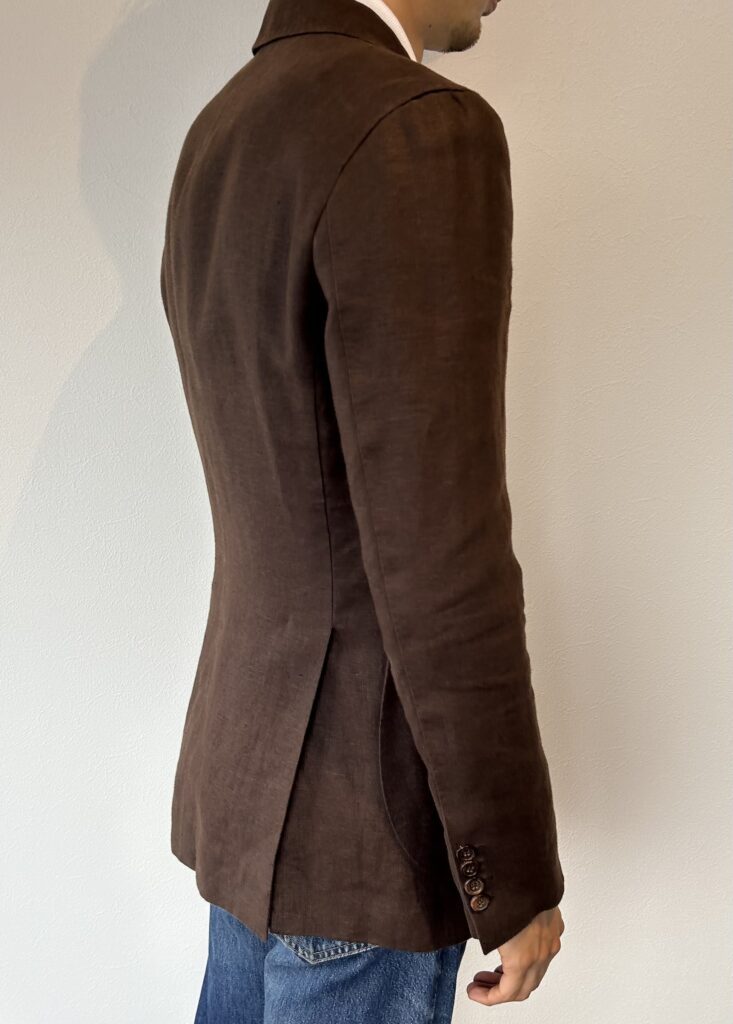
Originally, vents were introduced to make it easier to ride horses or wear a sword at the waist.
Formal jackets such as tuxedos do not have vents. In formal situations, you mainly stand, sit, walk, or perhaps get in and out of a car—so vents simply aren’t necessary.
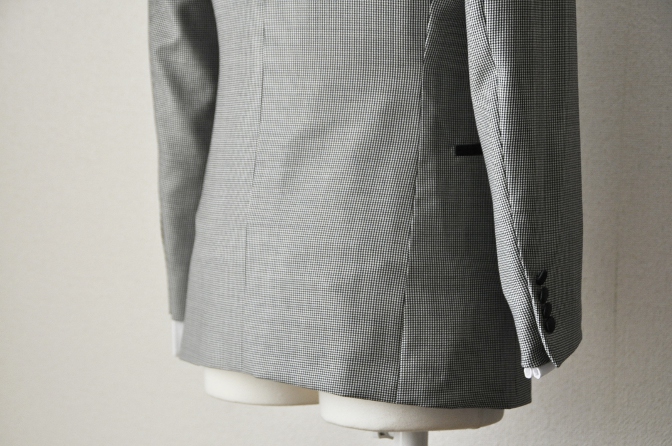
In modern jackets, however, vents are almost always present.
Over time, vents became established not just as a functional detail, but as a design convention.
There are several types of vents.
The three main ones are the center vent, side vents, and the hook vent.
A center vent is a single slit in the middle.
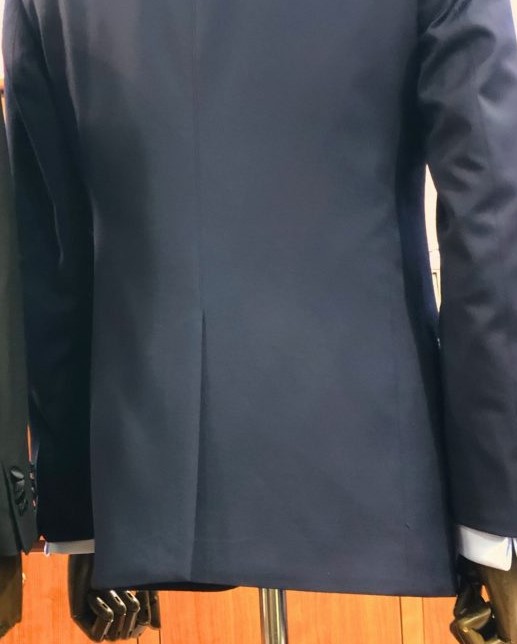
Side vents have two slits, one on each side.
A hook vent also has a single slit in the center, but the opening starts in a hook-like shape.
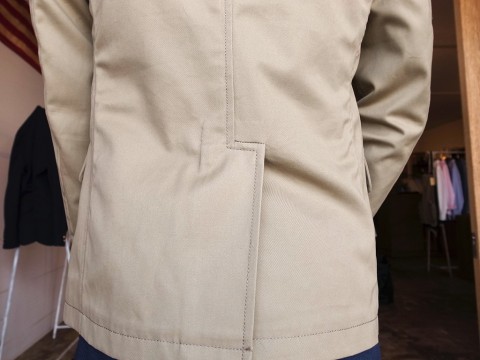
This is commonly seen on American navy blazers from brands like Brooks Brothers, but it’s rarely used in jackets from other countries.
Among these three, side vents are overwhelmingly the most popular. Not in a trend-driven sense, but because people who appreciate classic tailoring have consistently chosen them. Even today, most ready-to-wear suits use side vents.
Can You Wear a No-Vent Jacket Normally?
The main topic this time is the no-vent jacket—simply put, a jacket with no vents.
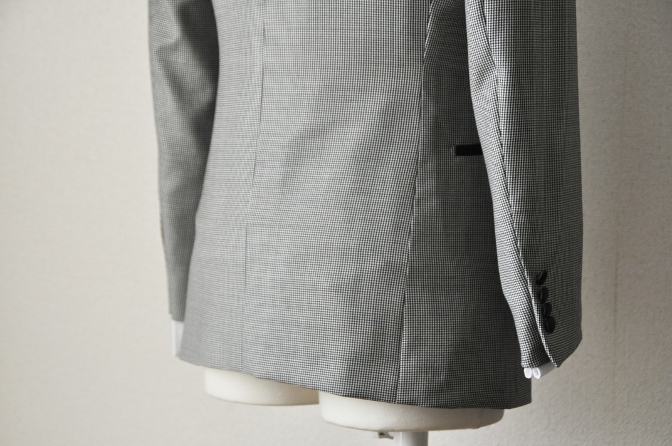
In formal situations, no vents are the standard. What I want to consider here is whether choosing a no-vent jacket for everyday, non-formal situations makes sense.
First, from a classic tailoring perspective: is it acceptable to wear a no-vent jacket outside of formal settings?
The answer is yes.
Wearing something underdressed for a formal occasion is not acceptable, but the opposite is generally fine. For example, even in a casual office environment where many people dress down, wearing a jacket and tie is never a problem.
Of course, wearing a tuxedo or a bow tie to a normal office would be strange rather than “too classic.” But wearing a no-vent jacket will never feel excessive. In fact, most people probably won’t even notice.
Advantages of a No-Vent Jacket
Even if a no-vent jacket can be worn daily, is there any real advantage to choosing one?
The biggest advantage, in my opinion, is that it creates an elegant impression.
Considering the origins of vents, they are fundamentally sporty and functional. Removing them does the opposite—it creates a dressier, more refined look.
As an aside, the late Masakatsu Ochiai, a respected authority on classic menswear in Japan, often said that “functionality stands in opposition to classic style.” A chest pocket on a dress shirt is a good example.
By that logic, a no-vent jacket is extremely classic.
Another advantage relates to the wrinkles that appear when you put your hands into your trouser pockets.
With a no-vent jacket, putting your hands in your pockets causes the jacket to catch slightly, creating wrinkles. Some people find these wrinkles elegant and appealing.
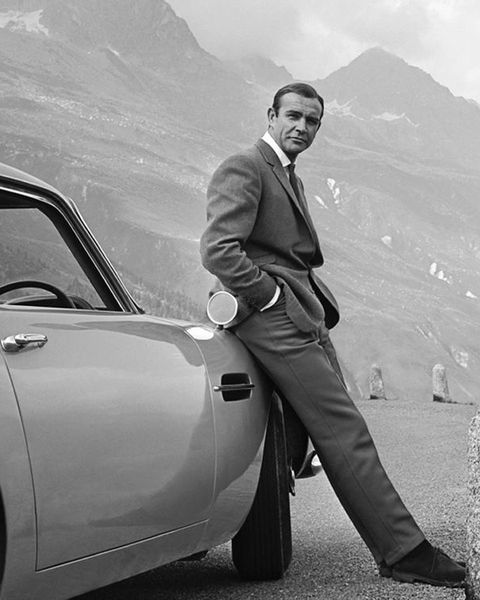
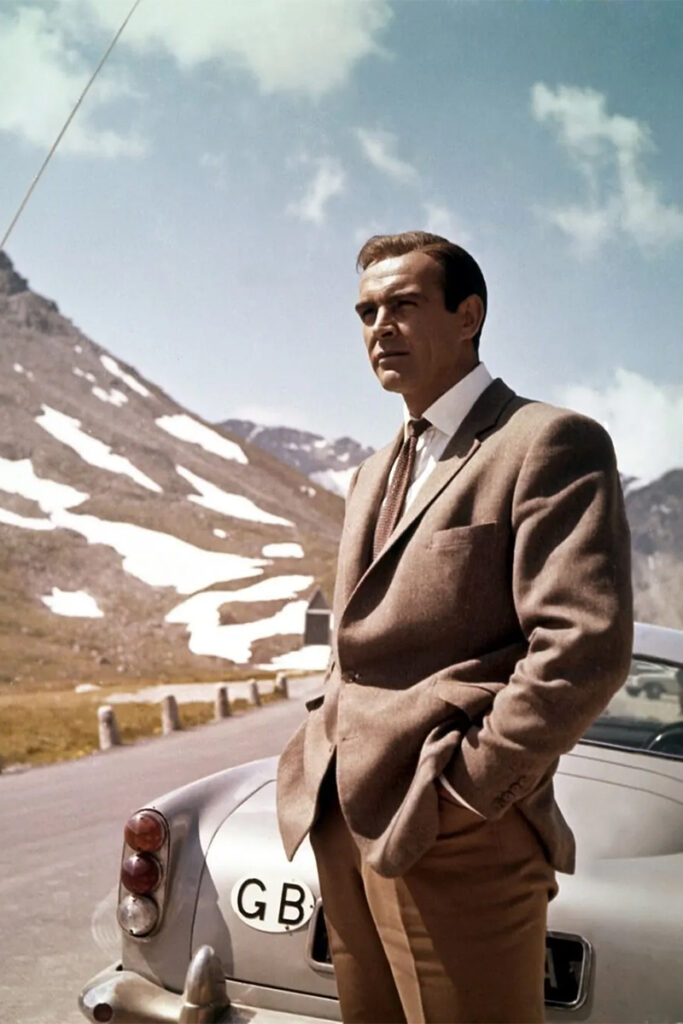
To me, it’s not the wrinkles themselves that are elegant. Rather, it’s the contrast: wearing a highly formal garment like a no-vent jacket, while casually putting your hands in your pockets. That relaxed attitude is what creates the appeal.
So it’s slightly different from saying the wrinkles themselves are beautiful.
Advantage number three of a no-vent jacket.
The fabric at the seat doesn’t flare up.
With both center vents and side vents, the back of the jacket can sometimes flutter in the wind.
It can also catch on the back of a chair when sitting down.
In the worst cases, you even see people coming out of the restroom with the vent tucked inside their trousers.
None of that happens with a no-vent jacket.
In other words, it helps you protect what men’s tailoring traditionally says should never be emphasized: the seat.
Disadvantages of a No-Vent Jacket
No-vent jackets sound great, but of course, they have drawbacks.
One is that when you sit down, you’re more likely to sit on the fabric.
With vents, you can let the fabric fall outside the chair, but with no vents, you can’t.
More specifically, with a single-breasted jacket, you can usually unbutton it when sitting. But with a double-breasted jacket, which stays buttoned even when seated, the risk of sitting on the fabric is higher.
Jacket length also plays a role.
A shorter jacket reduces the risk, but classic proportions call for a length that covers the seat. That means the hem often reaches the chair when sitting.
Another disadvantage is that the seat area can feel restrictive.
This depends on personal preference, but compared to vented jackets, a no-vent jacket does press against the body more. As long as the fit isn’t overly tight, it shouldn’t feel uncomfortable.
Are Linen Suits Better with No Vents?
When it comes to linen suits, especially among classic menswear enthusiasts, many people associate them with no vents.
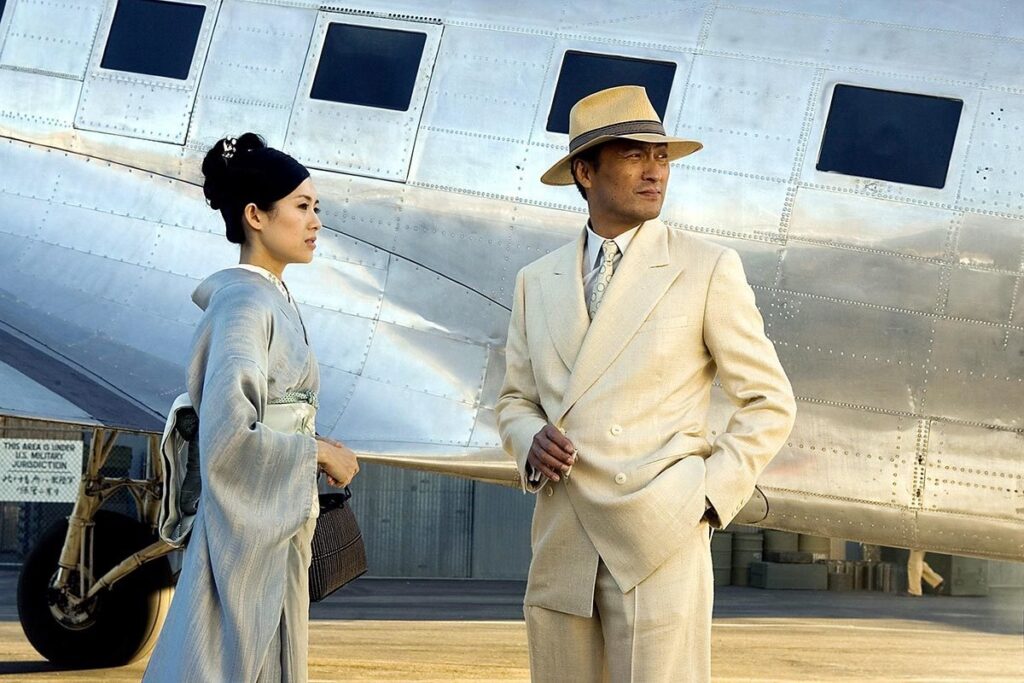
This is a linen suit worn by Ken Watanabe in the Hollywood film Memoirs of a Geisha (2005), set in Kyoto in 1929. It looks incredible.
Here again, he is (most likely) wearing a no-vent jacket with his hands in his pockets.
In many films, you often see linen suits—especially white ones—worn without vents.
Why is that?
One explanation I’ve heard is that linen wrinkles very easily. If the vent flips up when sitting, the crease can set permanently, leaving the jacket distorted even after standing up.
That explanation makes sense to me.
If anyone knows other reasons, I’d love to hear them.
I Actually Had a No-Vent Suit Made
I personally ordered a no-vent suit made from linen.
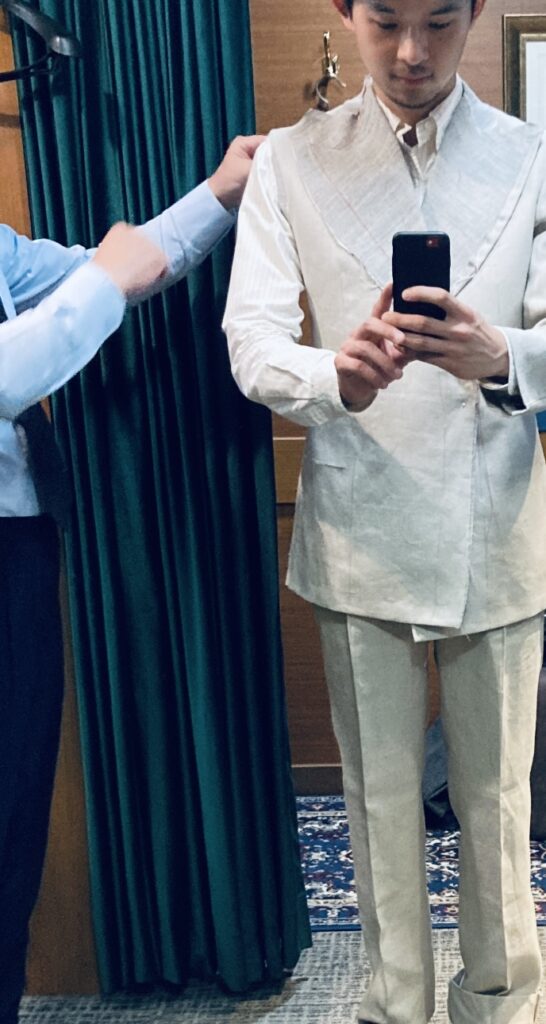
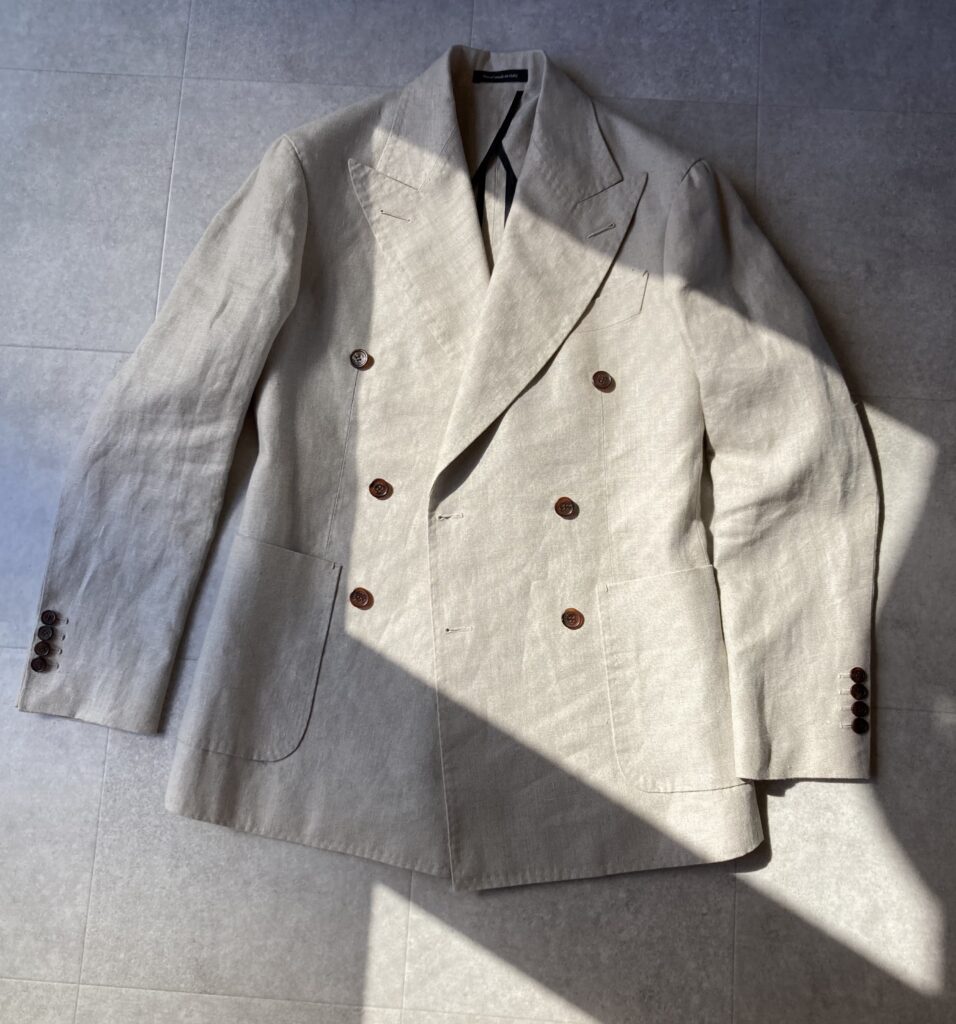
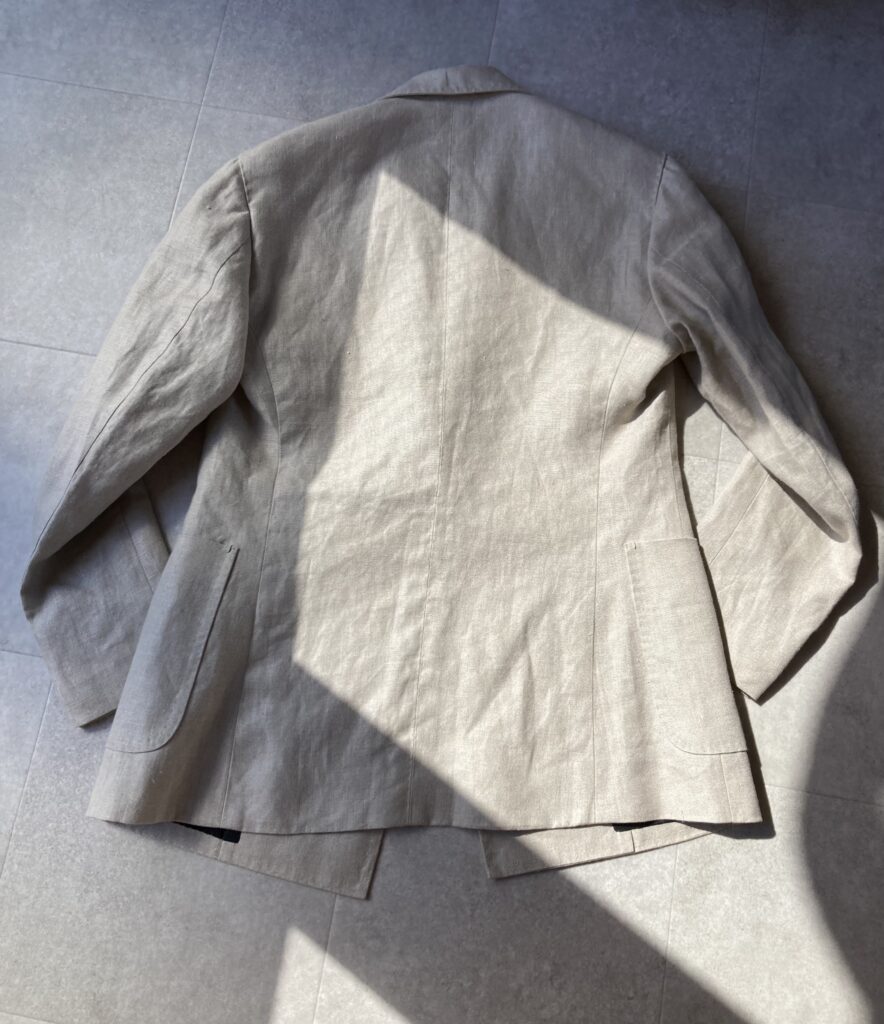
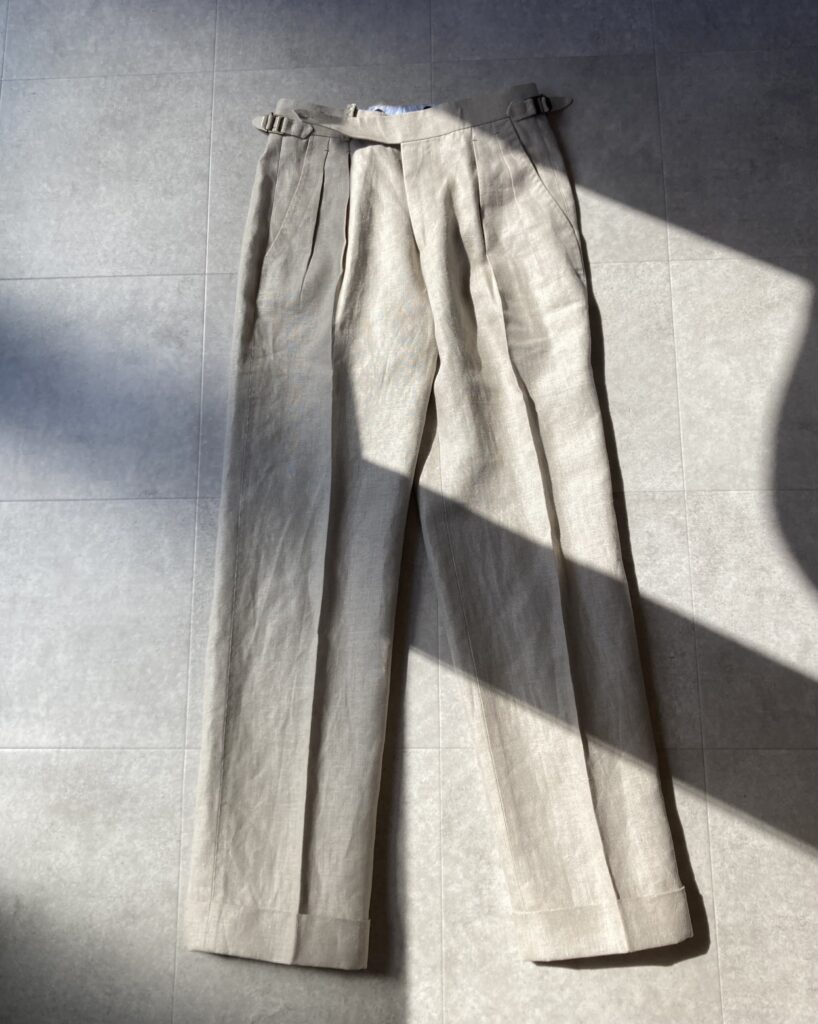
I noticed a few things worth sharing.
Heavy Linen Makes Trouser Pockets Hard to Use
This suit uses very heavy linen at 380g (approximately 13.4 oz). When new, the fabric is quite stiff. Putting my hands in my pockets doesn’t create elegant wrinkles so much as stiff, crumpled folds. This should improve as the fabric softens with wear.
The Back and Side View Look Great
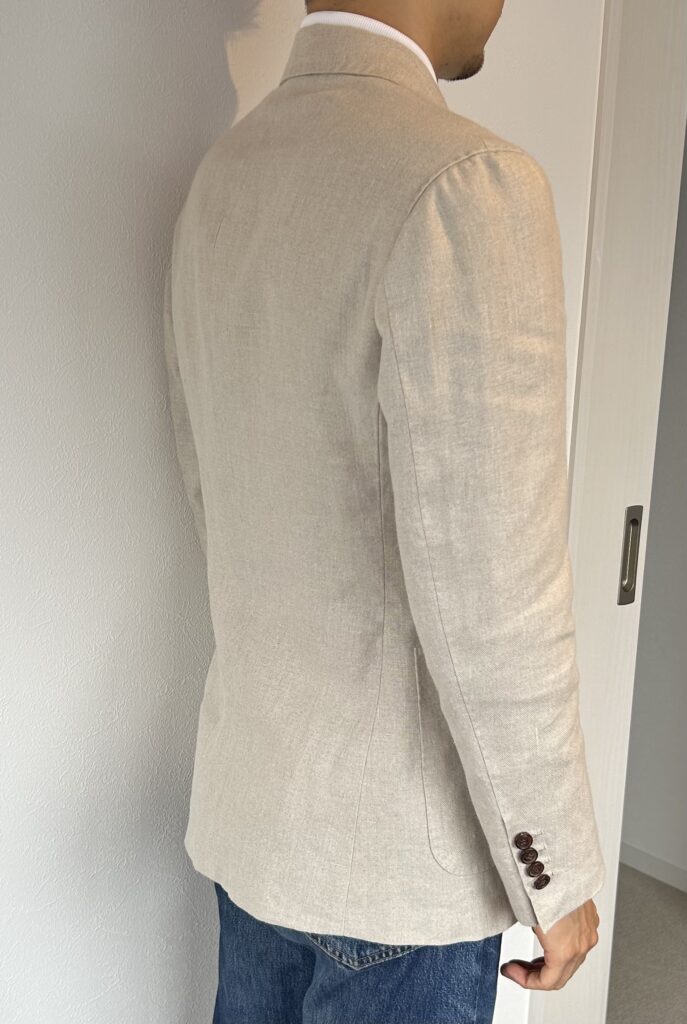
This may be pure self-satisfaction, but I find no-vent jackets elegant.
To be clear, this is entirely my own opinion. No one has ever told me it looks elegant. In fact, I doubt anyone has even noticed that it has no vents.
Slightly Harder to Sit Down
As mentioned earlier, it’s easier to sit on the fabric when seated.
This jacket has a length of 74 cm (about 29.1 inches), which is 2 cm shorter than my ideal length of 76 cm (about 29.9 inches). With good posture, the hem just avoids touching the chair, but if I relax and slouch, it does touch.
You could even see this as a benefit—it encourages better posture.
Conclusion
There is no problem at all with choosing a no-vent jacket for everyday wear.
The main advantage of a no-vent jacket is its elegant impression—meaning it is extremely classic.
The main drawback is the risk of sitting on the hem when seated.
Linen suits seem to work especially well without vents.
That’s my summary.
I truly believe that light-colored linen suits are unbelievably stylish.
A white suit in wool can feel overly flashy, but white linen—if you muster a bit of courage—can work even in the city. Mine is actually off-white.
That said, I’m still not fully comfortable wearing it outside.
It’s the height of summer now (early August), so I plan to break it in by wearing it around the house.



コメント