Hello, my name is Mr. Linen.
If you are having a suit made to order, it goes without saying that it should fit your body properly.
However, “proper fit” does not mean that the garment should cling tightly to every contour of your body.
If that were the case, extremely tight suits would be ideal. But a classic and elegant suit should have a certain amount of ease. It should not be baggy, yet it should enhance the male physique in a refined and dignified way.
Most people have a waist that is narrower than their shoulders. So how much should the waist of a jacket actually be suppressed?
“Tight enough that no wrinkles appear when the jacket is buttoned.”
“Loose enough to fit a fist (or a flat hand) between the jacket and the shirt.”
There seem to be many different rules of thumb and ways of thinking.
So what is a truly classic waist suppression—one that is not influenced by trends?
In this article, I would like to explore that question.
目次
Differences by Country
First, let’s look at general tendencies by country. I will focus on the United Kingdom, Italy, and the United States.
Please note that these are only general tendencies; not every tailor or brand within each country follows the same approach.
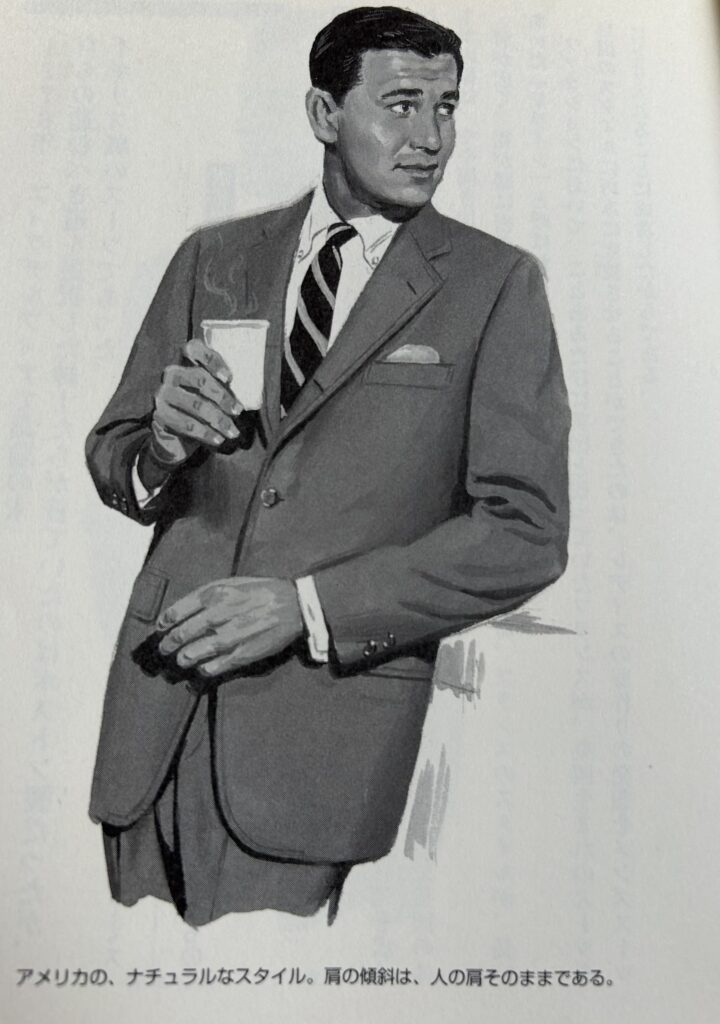
Britain, the birthplace of the modern suit, tends to have the strongest waist suppression among the three.
Structured shoulders with padding, combined with a firmly shaped waist, create a powerful and authoritative appearance.
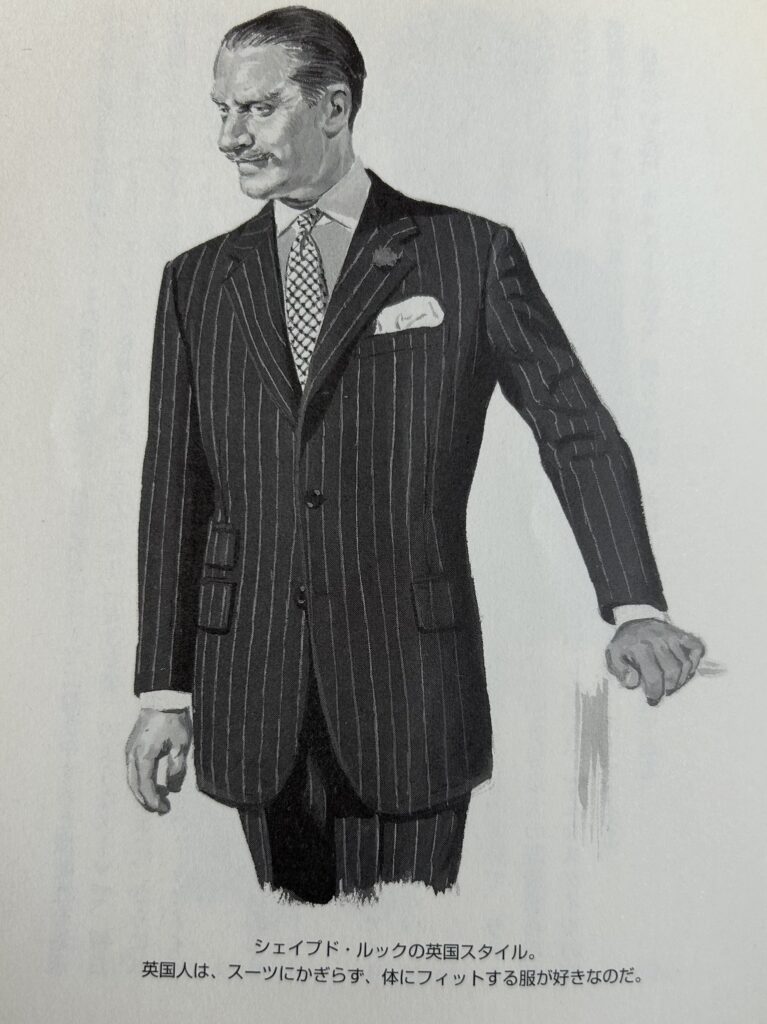
Italy, by contrast, is known for more natural but wider shoulders. Waist suppression is generally gentler than in Britain, creating a relaxed and effortless impression.
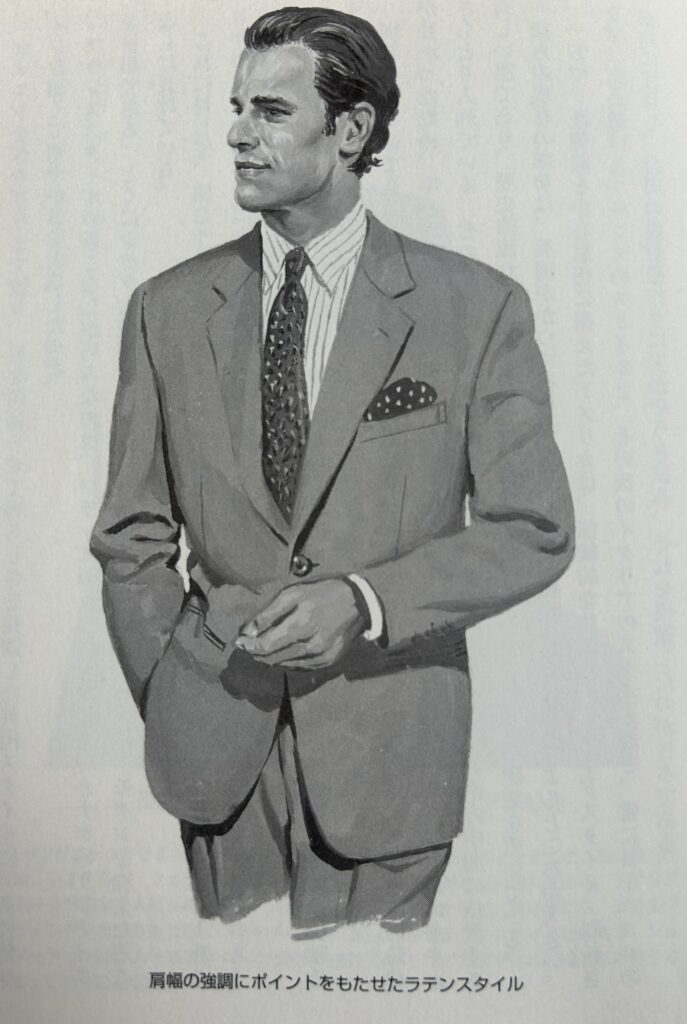
America can be summed up in one phrase: the boxy silhouette.
Personal Preference
Of course, it is not wrong to choose a certain style simply because of your nationality.
You should choose based on the style you personally like. That said, I believe it is important not to stray too far outside the boundaries of what can be called “classic.”
That vague boundary of “classic,” however, is difficult to define. At least, I find it difficult.
Fits like the ones shown below clearly fall outside the classic range.
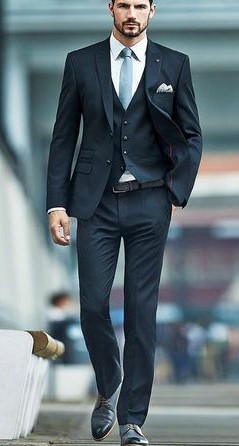
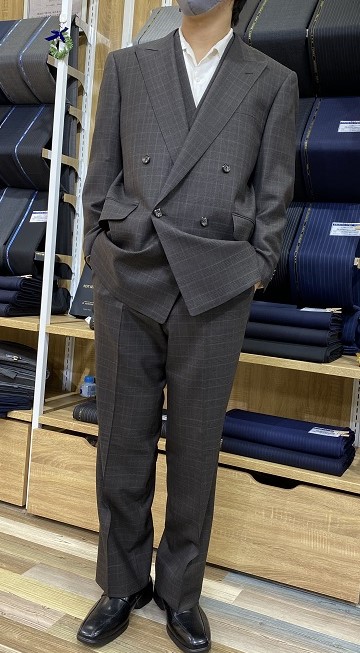
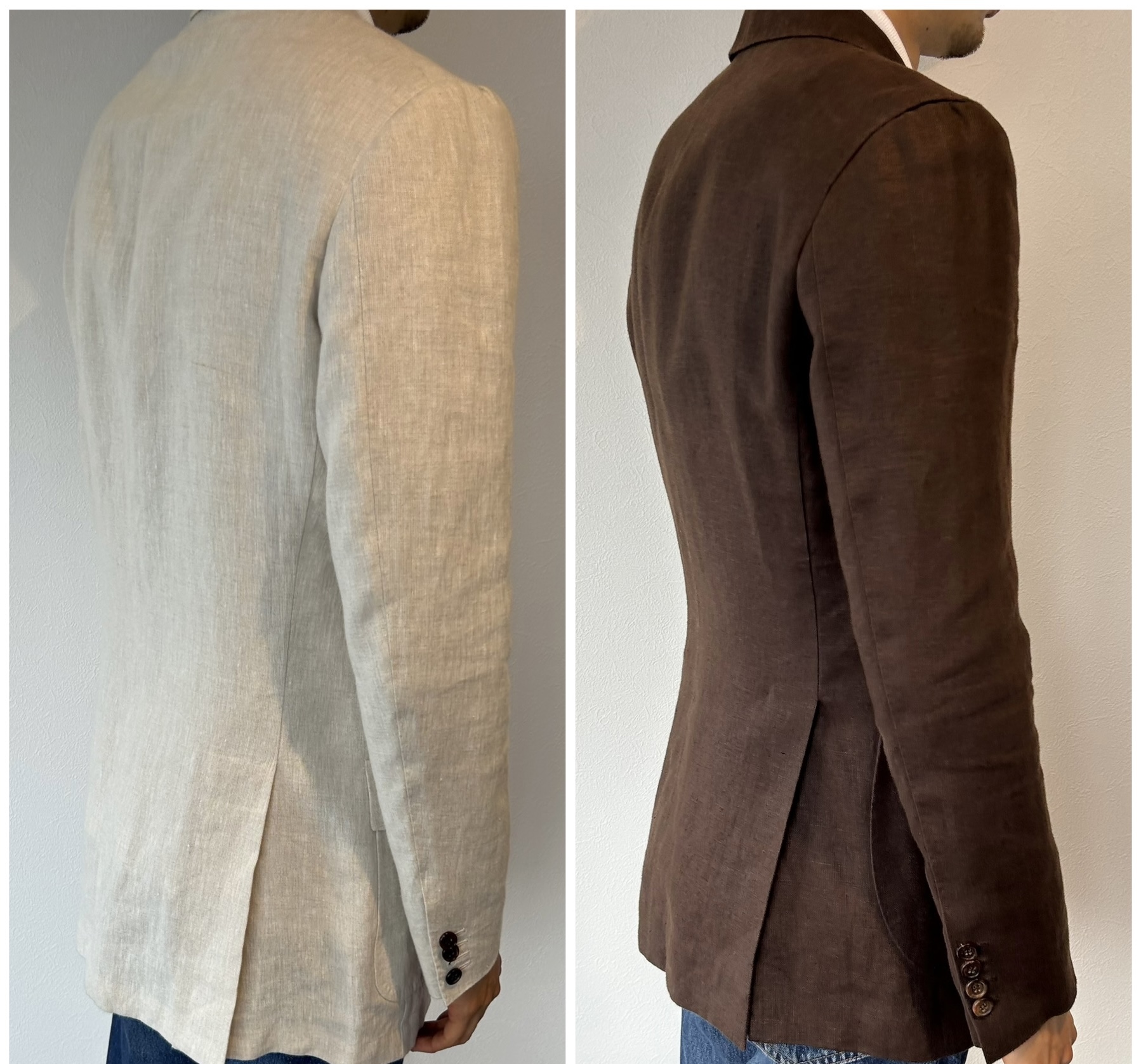
So how about the following photos? These are of me.
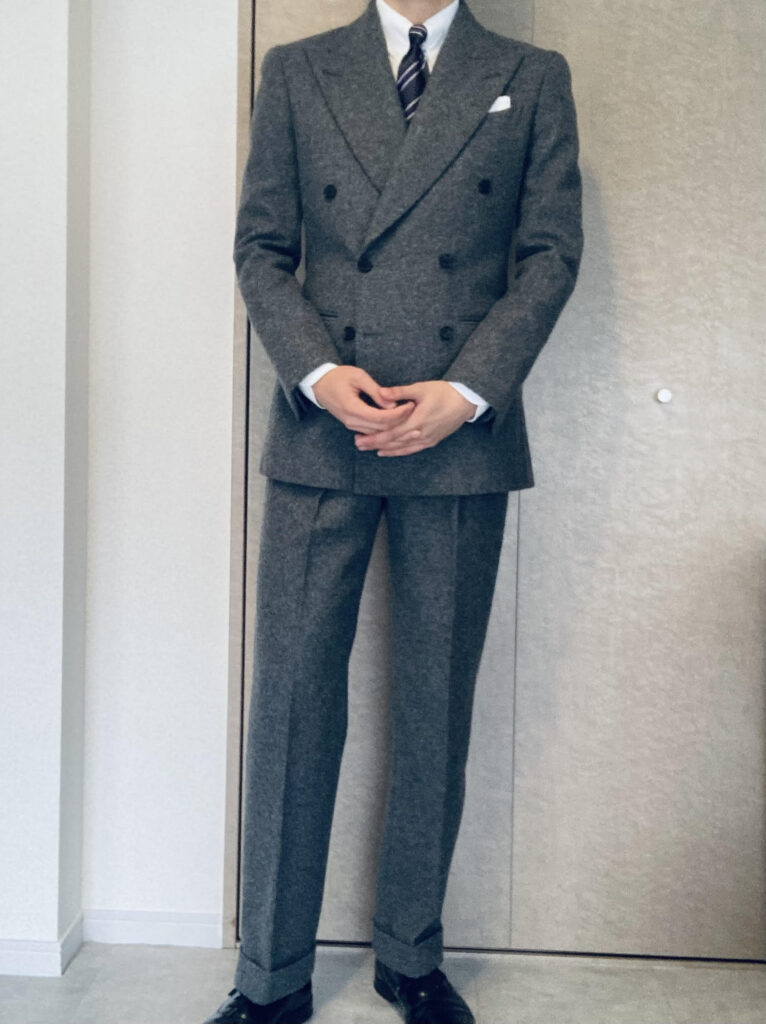
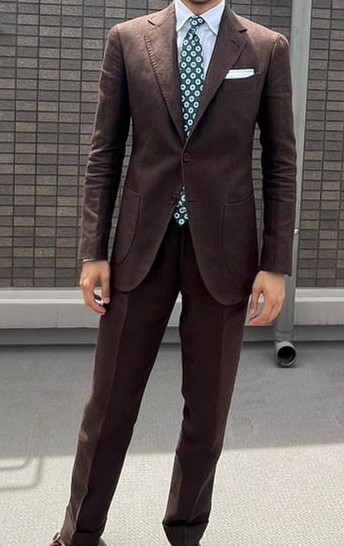
I would say these are fairly slim fits. I liked this fit once, but now I prefer looser and relaxed one.
They do not feel tight at all when worn, but there is little ease. A fist would not fit, but a flat hand would.
My body type has relatively narrow waist compared to my shoulders and chest. My ideal waist measurement is 76 cm (29.9 inches), or about 30-inch jeans. Because of this, excessive suppression easily throws off the balance.
Both jackets are on the slim side, but I believe they still fall within the classic range.
Both were made by Michele & Shin, a tailor based in Naples, Italy. Earlier I mentioned that Italian jackets tend to have gentler waist suppression than British ones, but these days, many Italian tailors also favor a fairly shaped waist.
How about this next example?
This is a ready-made jacket I found secondhand. There is enough room at the waist to fit one fist inside, yet it still has a gentle hourglass shape.
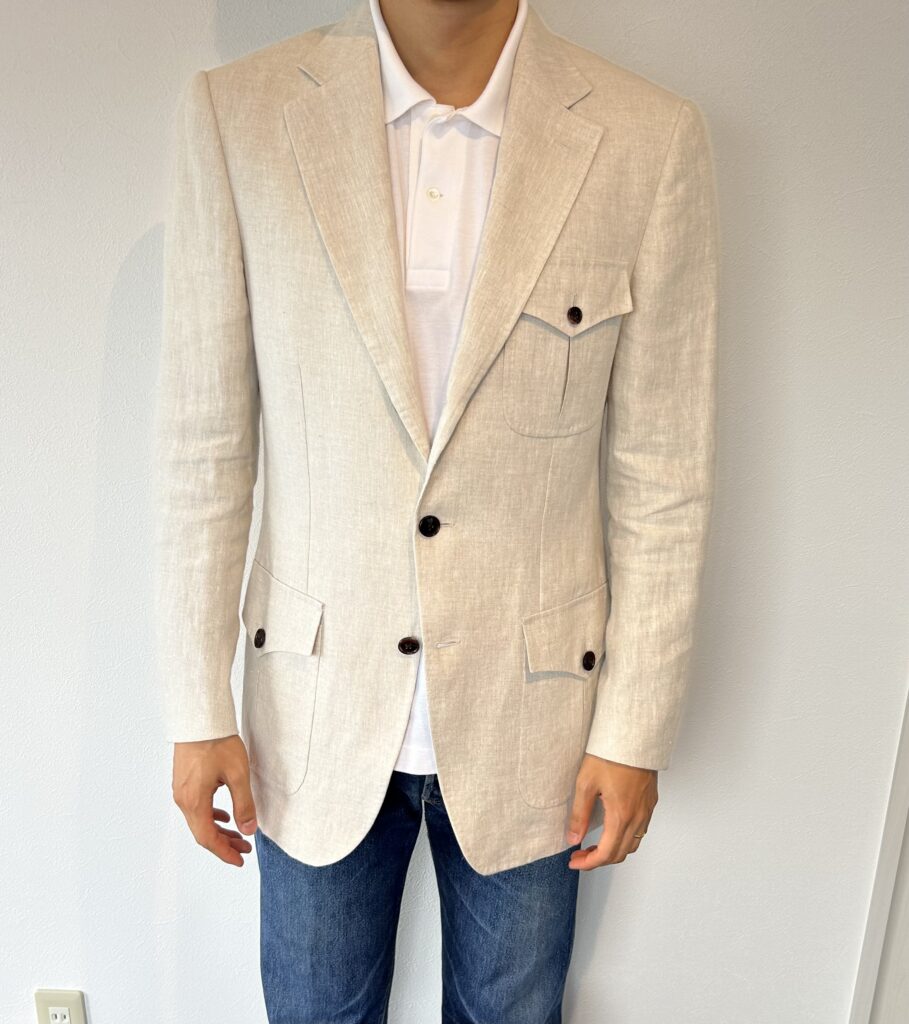
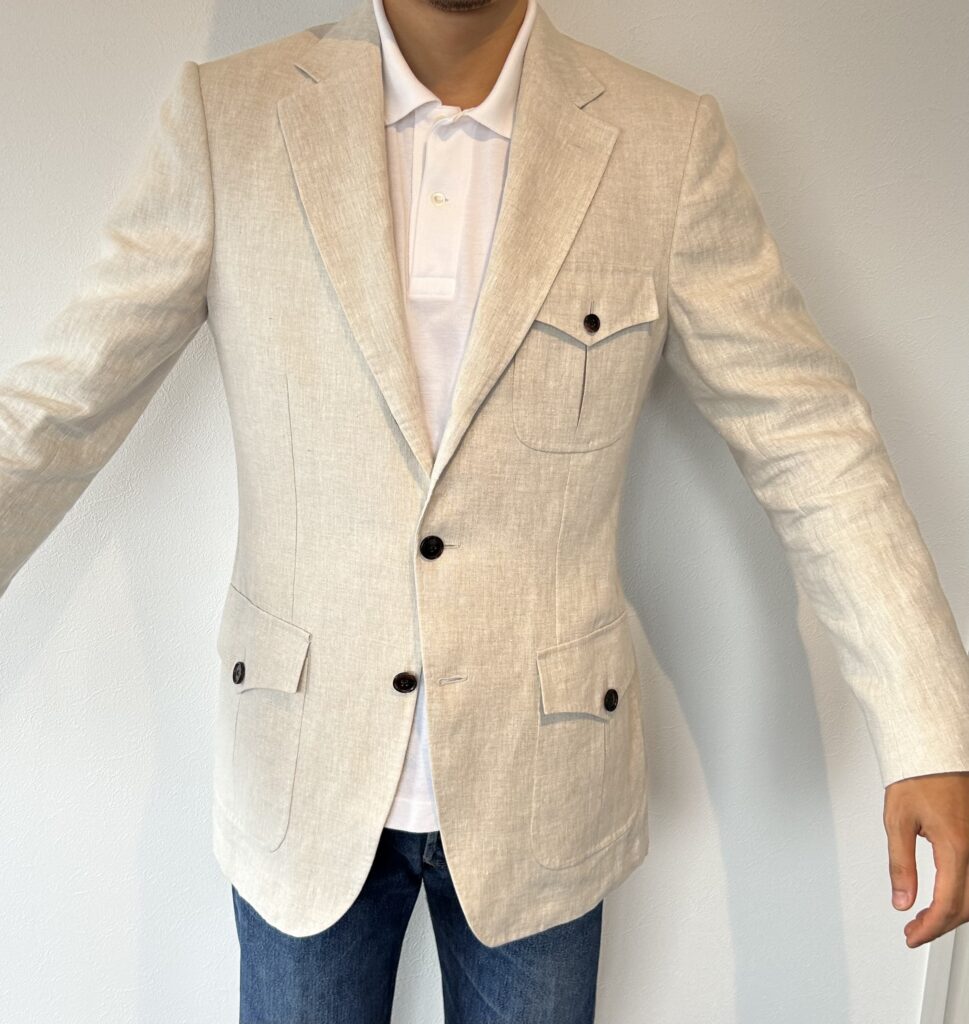
I would like to believe this also falls within the classic range.
Even so, it is still slimmer than the illustrated Italian example shown earlier. This suggests that the acceptable “classic” range for waist suppression is actually quite wide.
Silhouette from the Back and Side
It is hard to check on your own, but it may be useful to pay attention not only to the front view, but also to the silhouette from the back and from the side.
The back view usually resembles the front, but the side view changes significantly depending on how much the waist is suppressed.
With stronger waist suppression, the shoulder blades protrude while the waist curves inward, creating an S-shaped profile (especially on slimmer bodies).
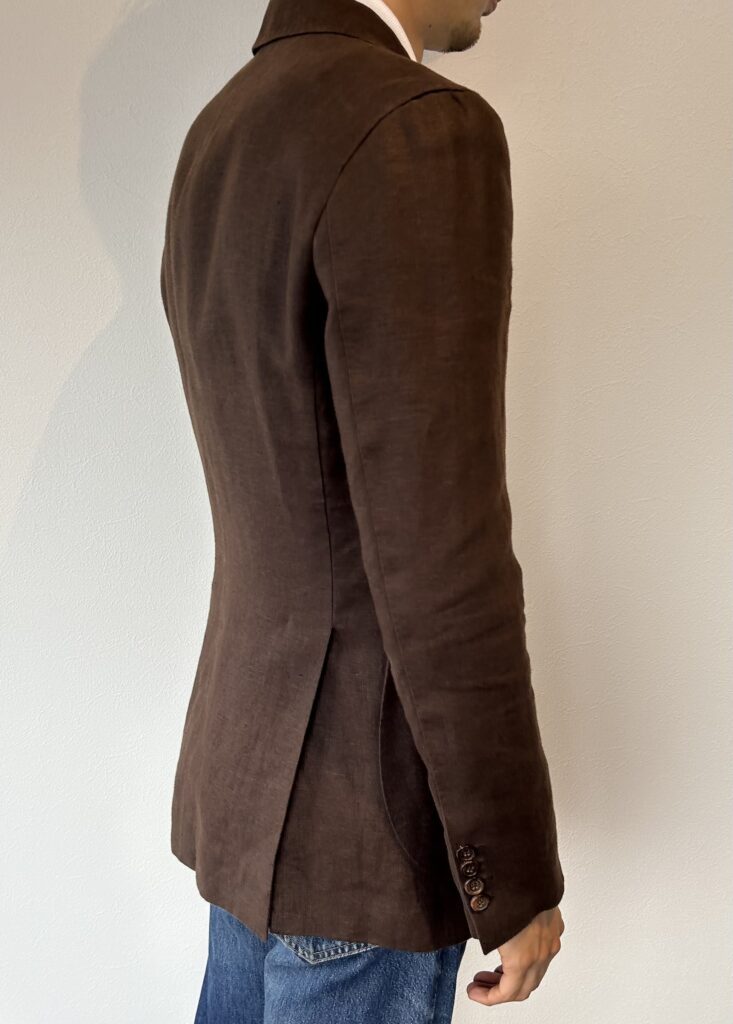
Whether this S-shape is desirable or not is hard to say.
If the body line is emphasized too strongly, it can look inelegant and fall outside the classic range. So even if an S-curve appears, moderation is key.
In my case, since I am not particularly muscular, I believe the S-curve is moderate. What do you think?
The slightly roomier white linen jacket shown earlier has less sharp S-curve.
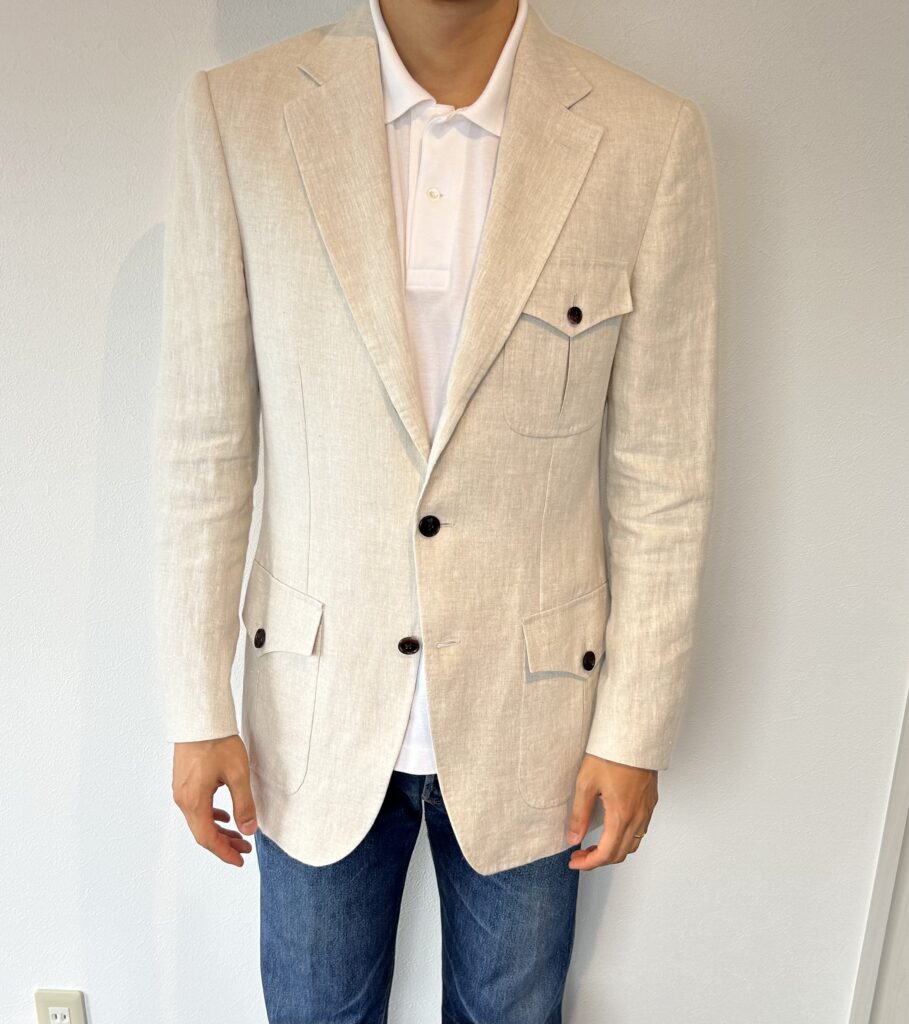
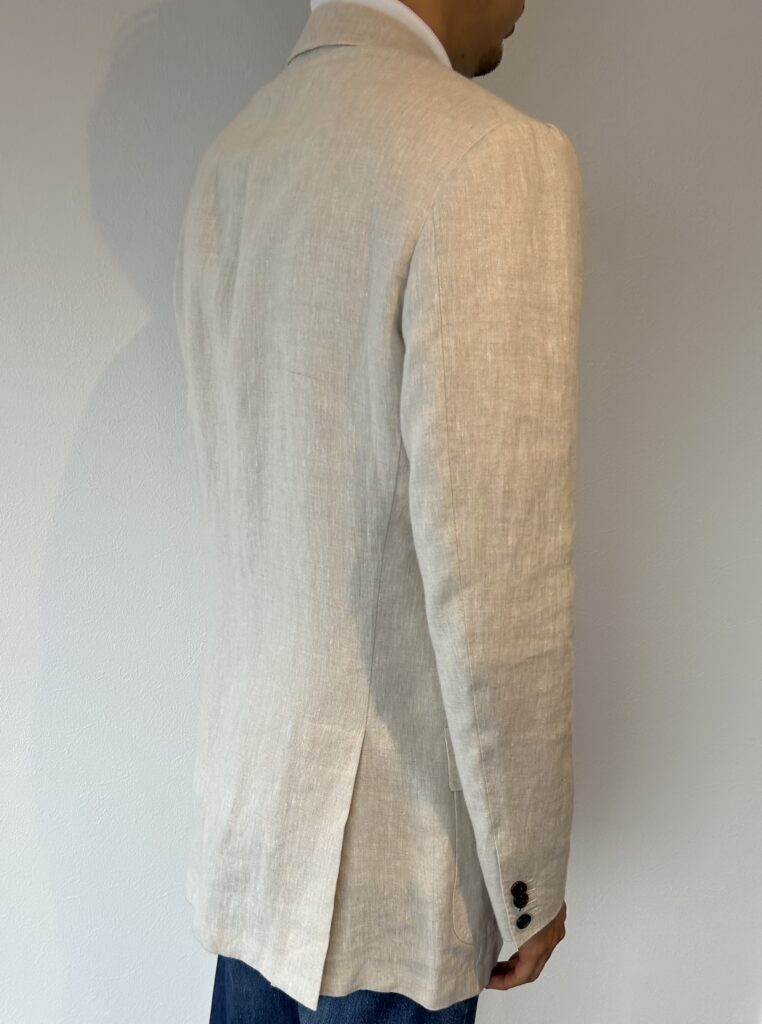
This does not look wrong at all and still feels classic. Personally, however, I think a slightly more defined waist would suit the wearer better.
Alterations
If you already own a jacket where the shoulders and chest fit perfectly, but the waist feels slightly loose or tight, alterations are possible.
That said, adjusting the waist affects the entire jacket, so caution is required.
If the waist is taken in without considering overall balance, diagonal stress wrinkles may appear around the shoulder blades, creating new problems elsewhere.
To be honest, I have never done alterations myself. This is something I learned from a trusted local alterations specialist.
A skilled tailor who understands suit construction well should be able to advise how many centimeters (and inches) can be adjusted without causing issues. It is best to stay within that safe range.
Conclusion
This article did not arrive at a clear-cut answer.
If I had to force a conclusion, it would be this: “A jacket should have a clearly defined waist, but not so much that it exposes the body line excessively or looks vulgar.”
The “one fist of space” rule also seems like a reasonable guideline.
Ultimately, the only answer is to find a silhouette you like, somewhere between too loose and too tight, while staying within the classic range.
That’s all.
Thank you for reading.






コメント