Hello, this is Mr. Linen.
Today, I’d like to talk about suit care.
Many suit enthusiasts already know that dry cleaning uses petroleum-based solvents that inevitably damage the fabric, so it’s best to avoid dry cleaning as much as possible.
However, simply avoiding dry cleaning and letting sweat, urine, or food stains accumulate will cause even more damage to the fabric.
The only method that truly solves everything is washing your suit with water.
But washing a suit at home is extremely difficult—especially pressing (ironing) the jacket properly.
This is where professional wet-cleaning services come in. They can perfectly wash even delicate materials like cashmere without causing shrinkage or damage.
The downside? It costs 15,000 JPY (around 100 USD) or more per suit, which makes regular use unrealistic.
I’m a clean freak, strongly opposed to dry cleaning, and I also can’t afford frequent professional wet cleaning. So I’ve essentially dedicated my life to figuring out how to keep suits clean without spending much money.
Here, I’ll share the methods I use.
目次
Types of Stains and How to Remove Them
Stains on suits fall into two categories: oil-based and water-based.
Oil-based stains: mainly food-related.
Water-based stains: sweat, urine, rain, beverages, etc.
No matter how hard you try, oil-based stains won’t come out with water. Unfortunately, the only solution is dry cleaning.
This is why avoiding oil-based stains is crucial.
At restaurants:Wear a disposable paper apron, avoid resting your elbows on oily tables, eating noodles when possible etc.
But restricting your meals takes the fun out of dining, so the best option is simply taking off your jacket while eating.
Water-based stains, on the other hand, are unavoidable.
Everyone sweats.
You get caught in the rain.
And for men, a small amount of urine inevitably finds its way onto the inside or even the outside of trousers.
Fortunately, water-based stains come off with water washing.
Jackets, however, are extremely difficult to wash at home and realistically require a professional wet-cleaning service.
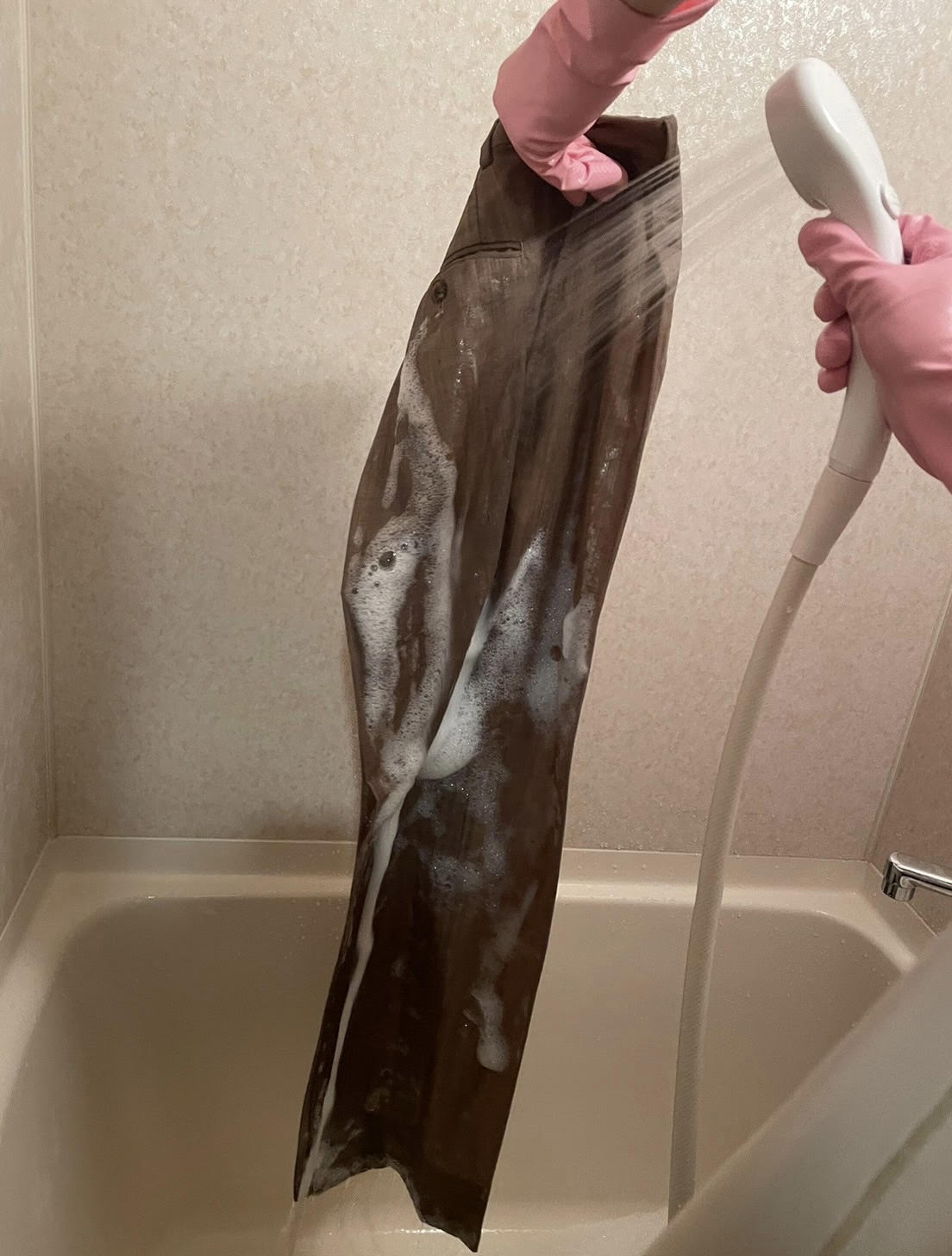
Trousers, on the other hand, are relatively easy to wash at home.
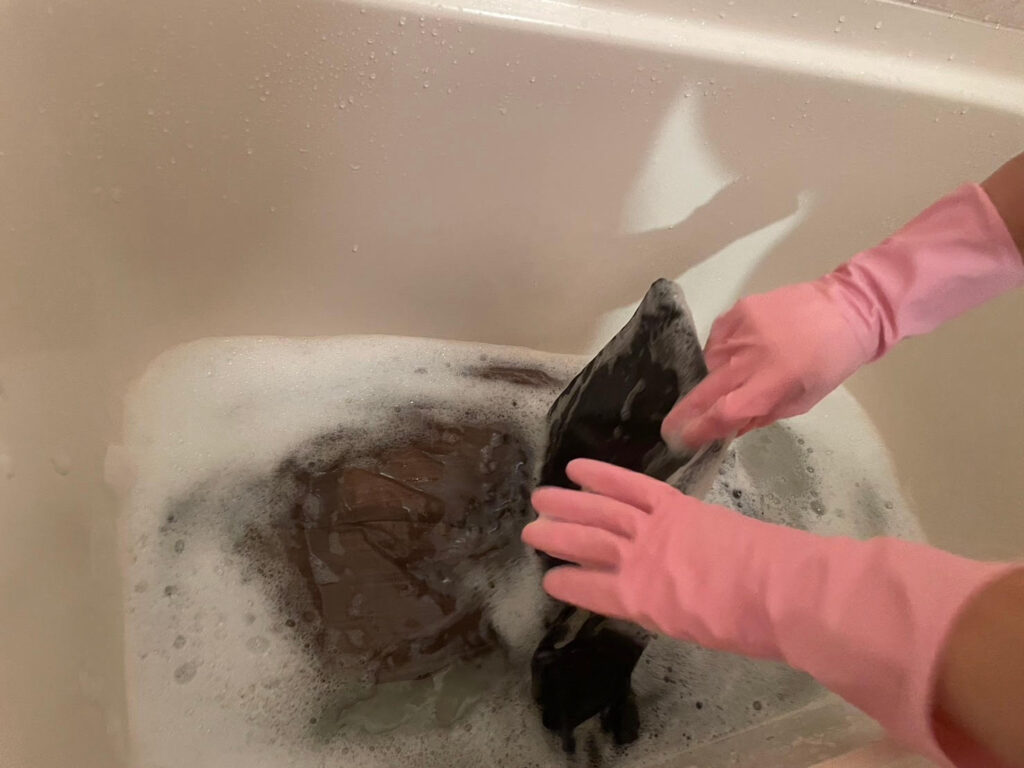
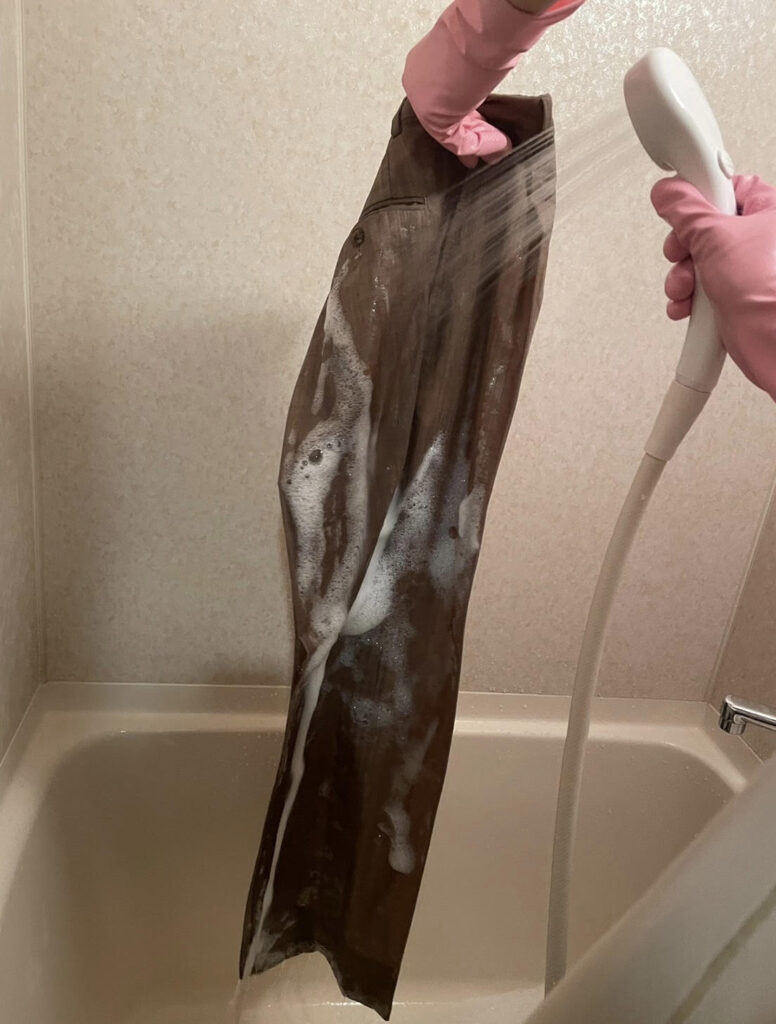
Reference article: How to Wash Wool Trousers at Home (in japanese.)

How to Prevent Water-Based Stains
Oil-based stains can only be avoided. Water-based stains, however, can be reduced with some planning.
The main water-based stains are sweat and urine.
Let’s divide the strategies for jackets and trousers.
Jacket (Sweat Only)
To reduce sweat staining, you can wear a T-shirt under your dress shirt.
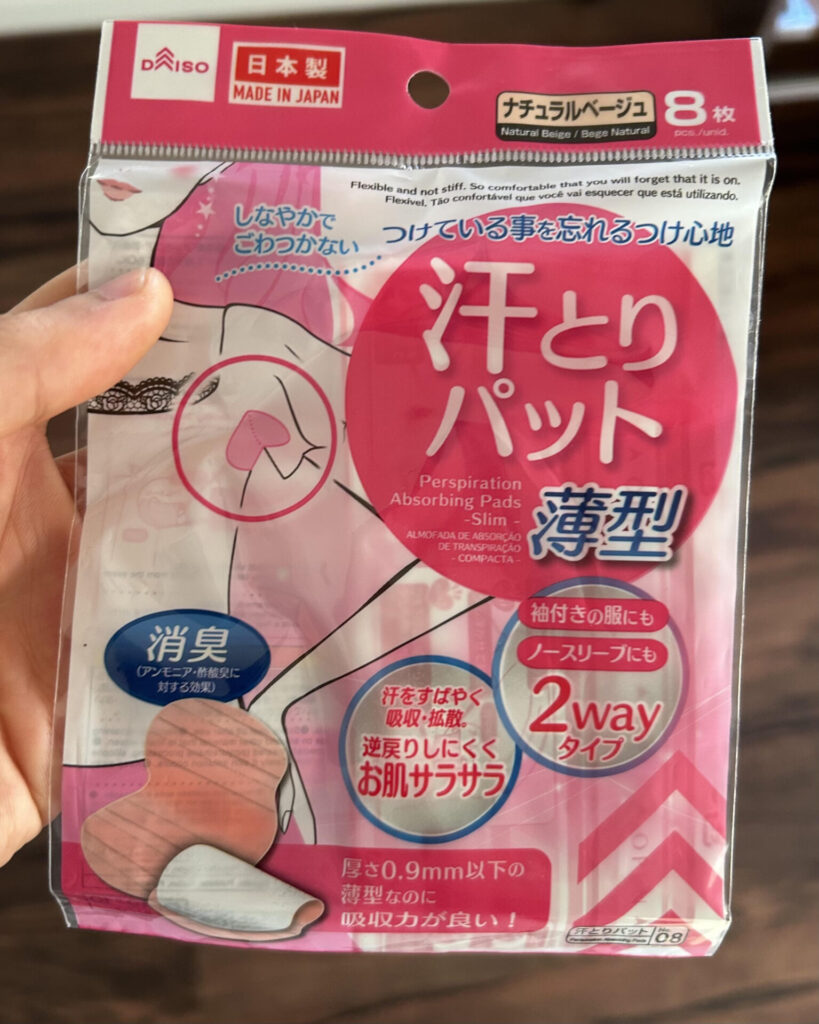
Use disposable underarm sweat pads (though they may show through)
Another option—available only with made-to-measure jackets—is to add sewn-in underarm pads.
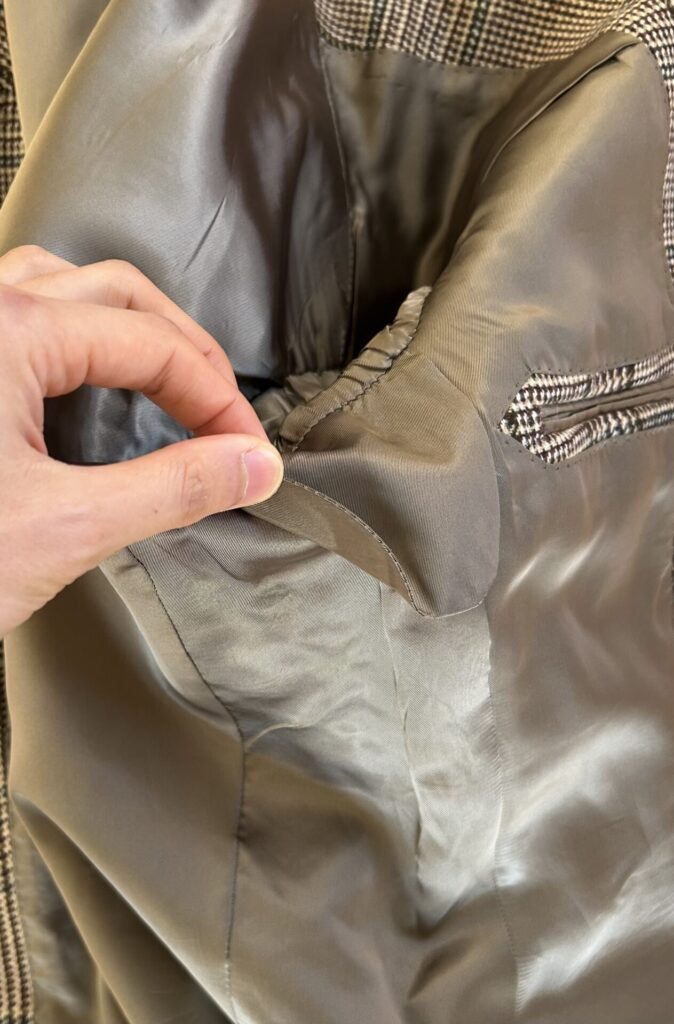
These prevent sweat from reaching the outer fabric, and you can wipe the pads clean with a wet cloth.
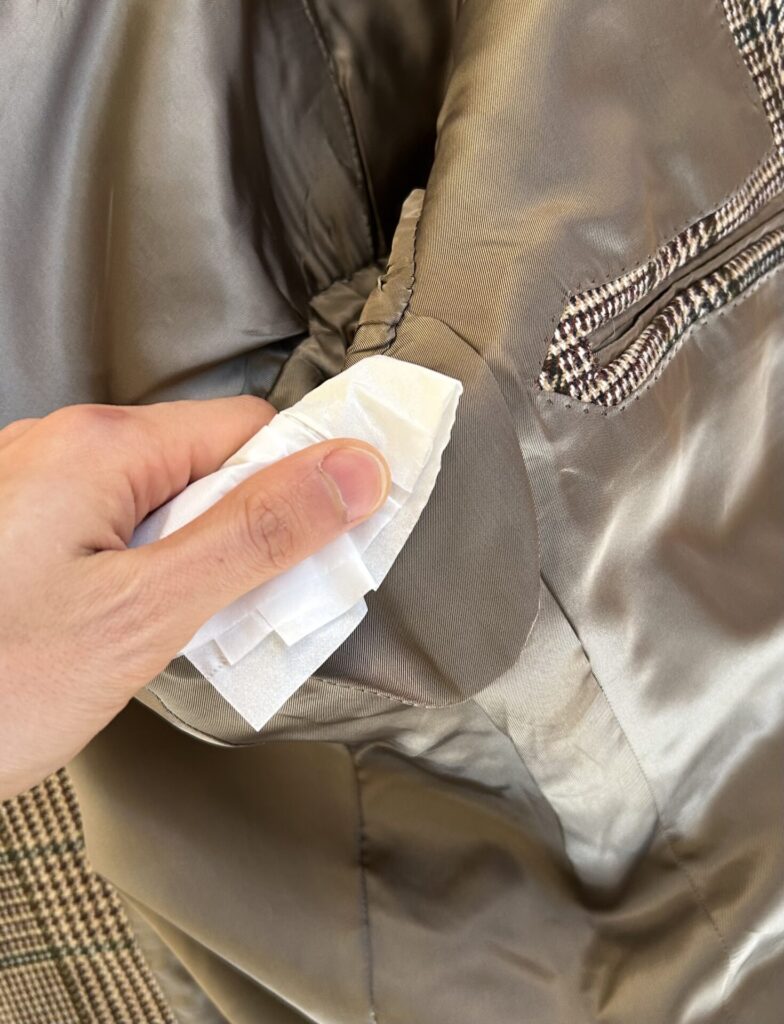
Many tailors include these by default, and others can add them for a small extra fee.
Trousers (Sweat + Urine)
The key is to add more layers of fabric between your skin and the trousers.
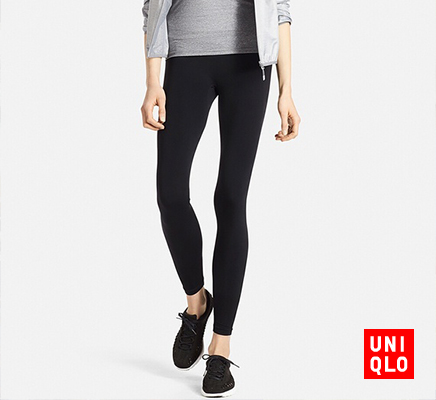
Options include: Wearing leggings (only if your trousers are not too slim).
Using sports leggings, which are smooth and won’t cling to the trousers.
In summer, pairing steteco (light undershorts) with knee-high socks is more breathable.
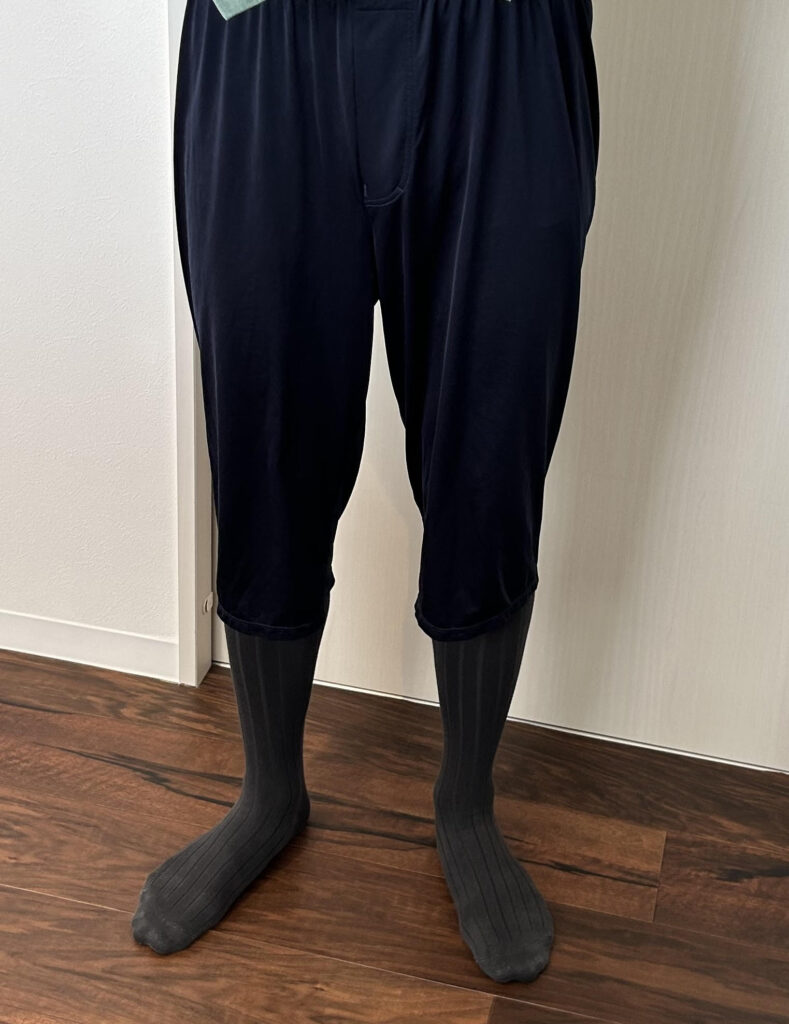
Another option is choosing fully lined trousers.
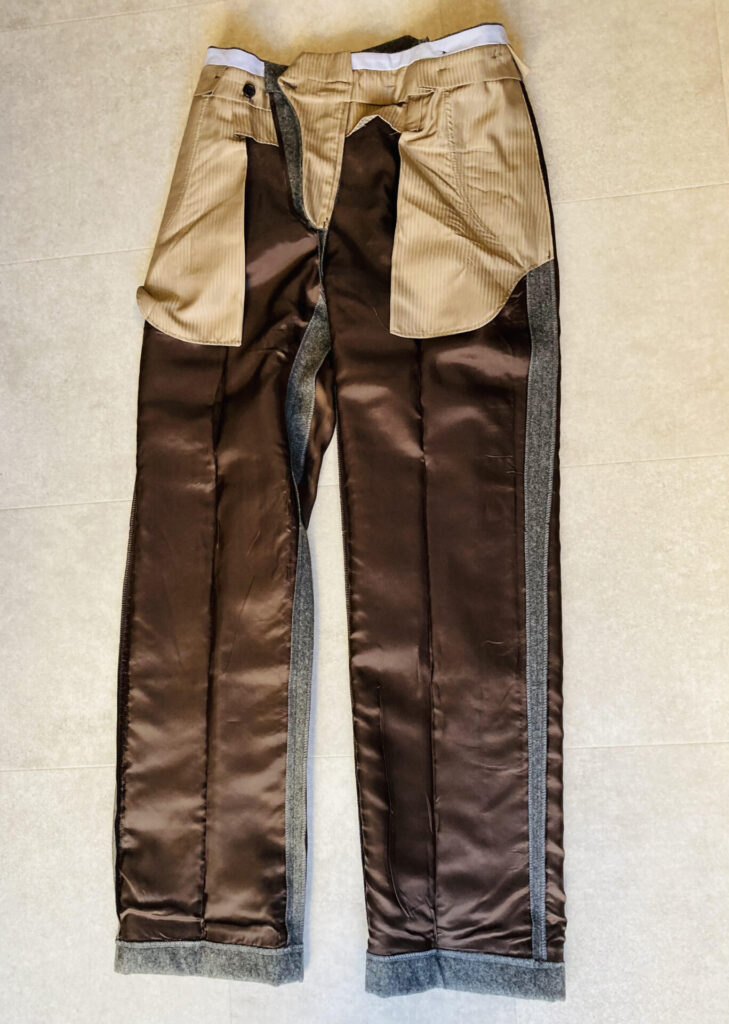
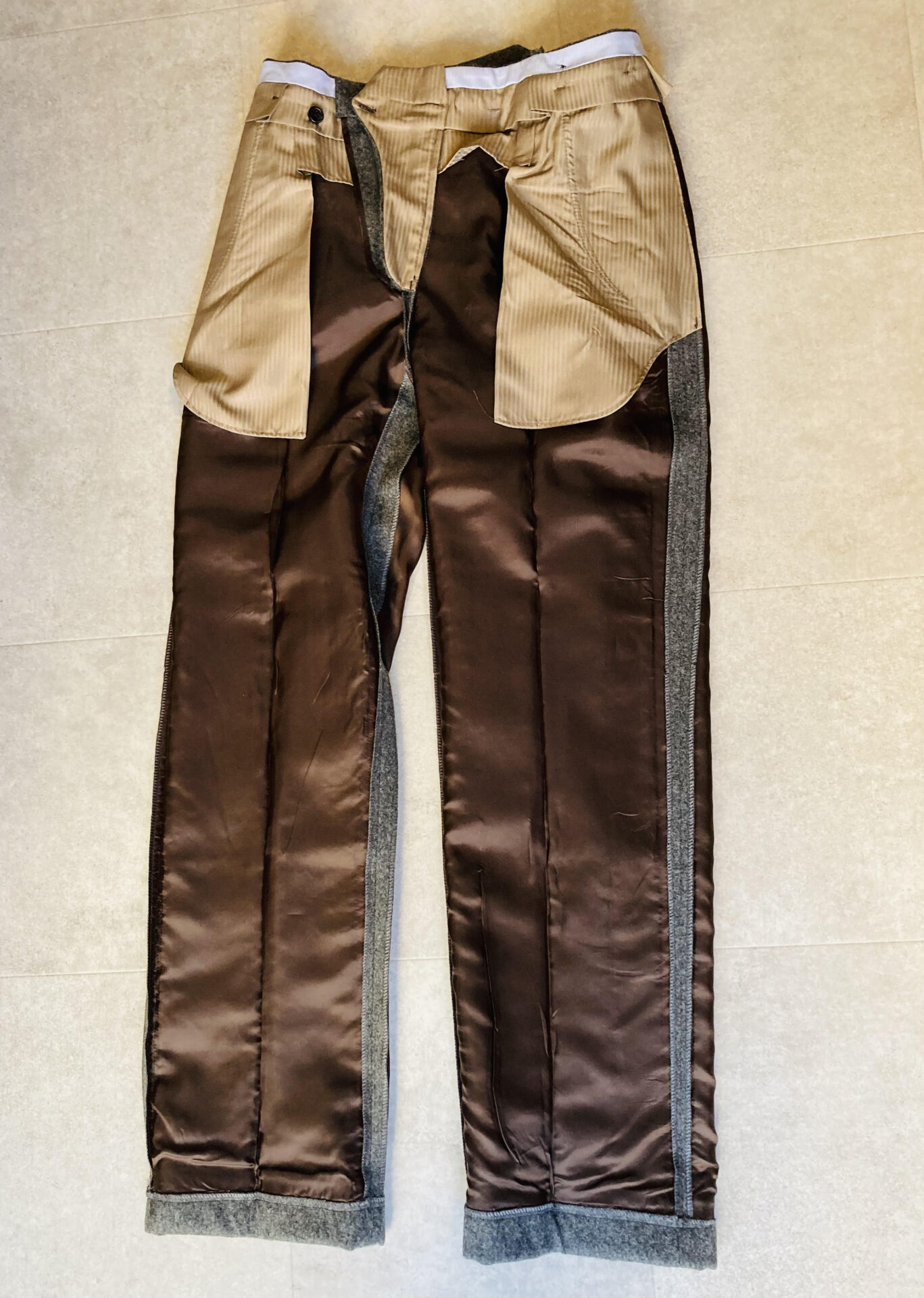
I personally fully line all my autumn/winter trousers.
For spring/summer materials, the reduced breathability makes them too hot, so I avoid lining them.
(Reference article: Why You Should Fully Line Your Trousers. In japanese.)
Urine Countermeasures
Urine can reach trousers from the inside as well as the outside.
Let’s begin with the inside.
This is unpleasant to discuss, but urine can penetrate underwear and reach the trousers.
In my case, I’ve had urinary leakage since my twenties due to a common male issue, an enlarged prostate. Even after zipping up, a capful of urine may leak out involuntarily, sometimes reaching my thighs or even calves.
To reduce staining, you can wear leggings over underwear, or choose boxer briefs instead of loose boxers so urine doesn’t escape down the leg.
Next, the matter from the Outside.
This can be significantly reduced with care.
First: avoid peeing while standing.
Anyone who has ever urinated outdoors while wearing shorts and sandals knows how much unseen splash-back occurs.
If you must urinate standing, spreading your legs widely helps reduce splash-back onto the trousers.
(Reference article: Can You Touch Shoelaces That Got Urine On Them? In Japanese)

Another method: spray the trouser hems with a water-repellent spray.
Many people use waterproof spray for suede shoes—just extend the spray to your trouser hems.
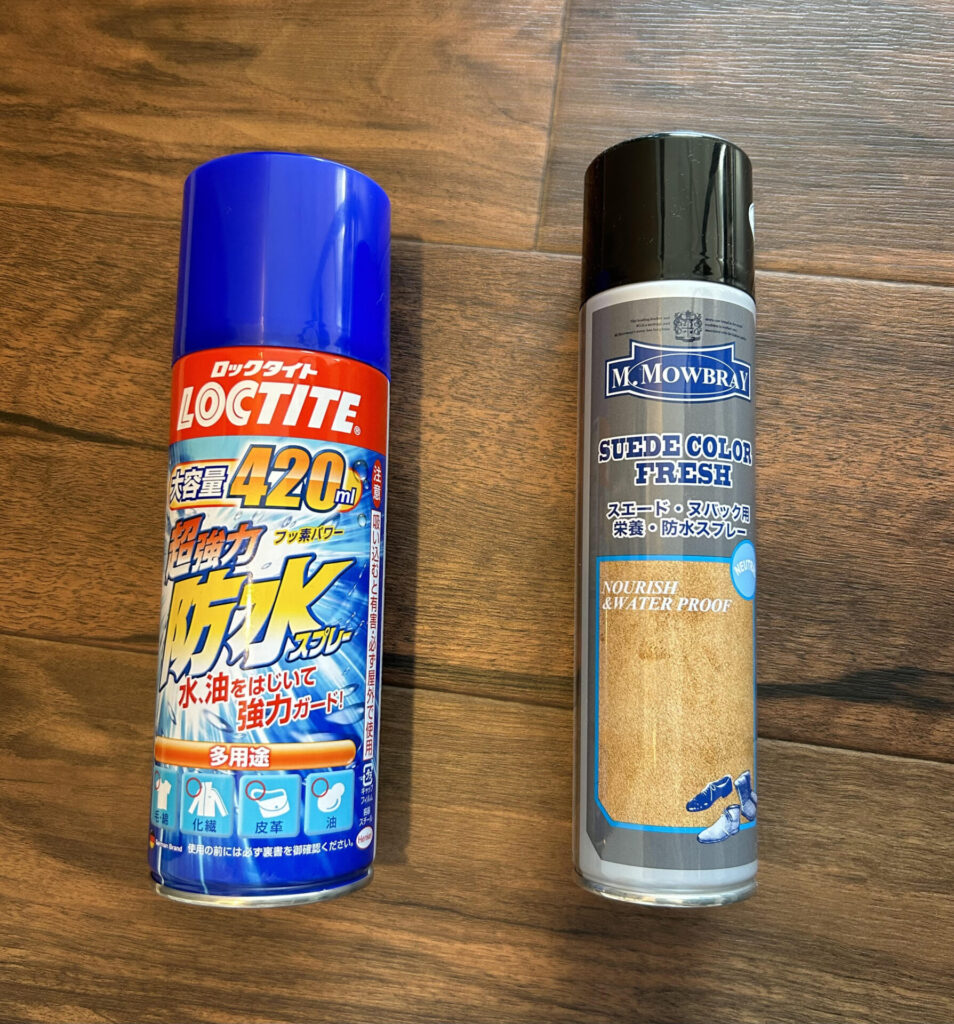
I always spray my trouser hems when wearing anything that can’t be easily washed.
When wearing leather (not suede) shoes, spray the trousers before putting the shoes on to avoid staining the leather.
Maybe this doesn’t completely prevent splash-back—but psychologically, it helps.
How to Remove Water-Based Stains Without Washing the Whole Suit
Even with precautions, sweat and urine will still get on your suit.
Here are methods for removing them without fully washing the suit, suitable for daily care.
Two Approaches:
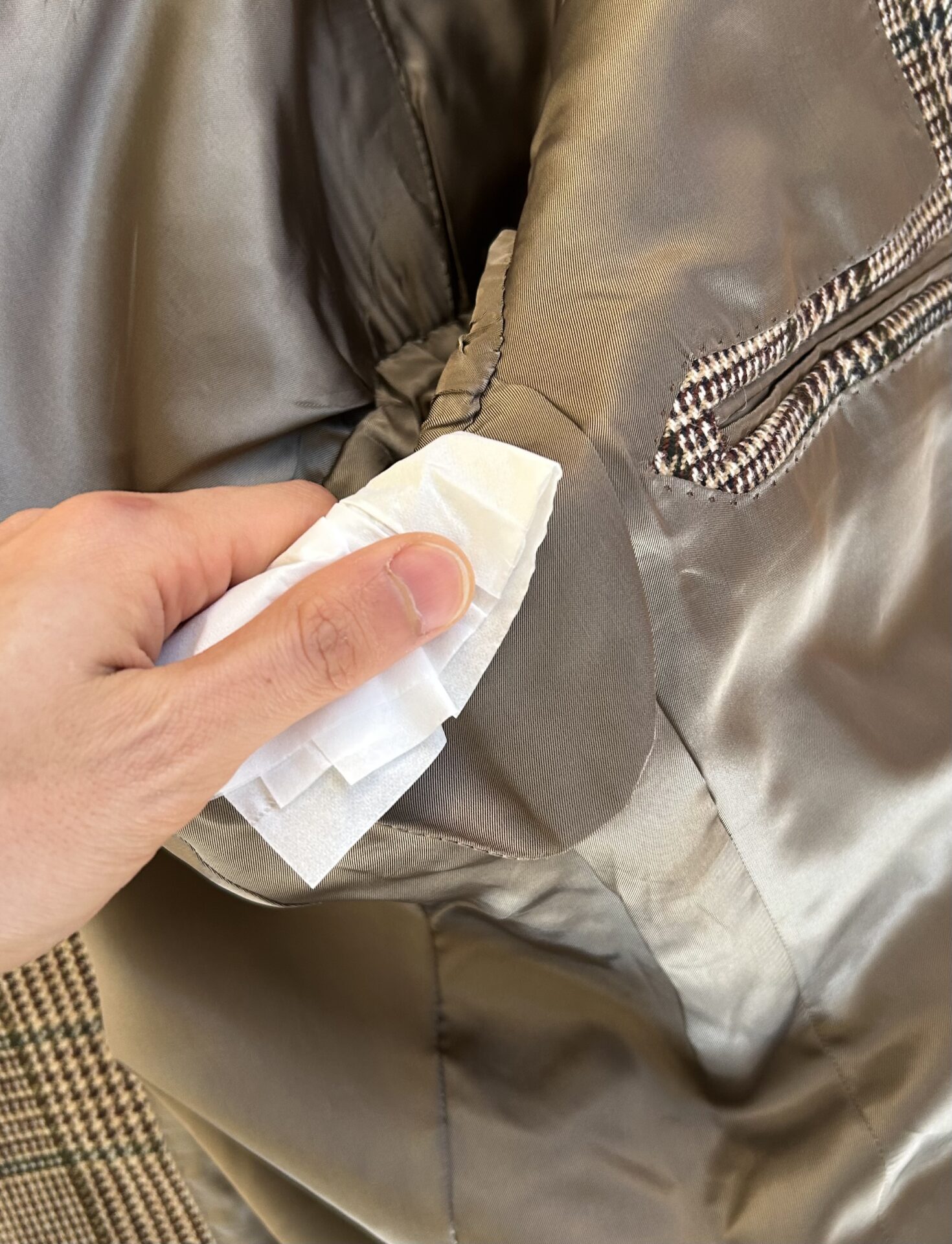
Absorb sweat with a damp cloth.
Press a tightly wrung clean cloth—or an alcohol-based wet wipe—from the inside of the jacket’s armpit. This draws sweat out of the fabric.
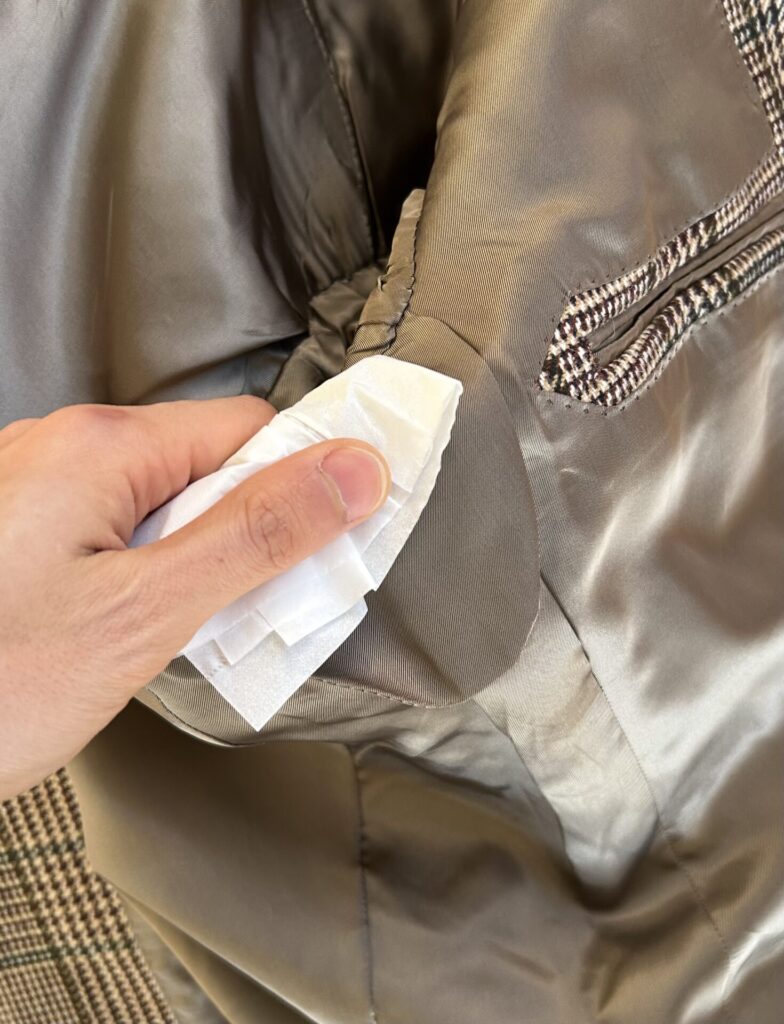
This method is helpful when you cannot use a steamer (e.g., when traveling).
Sanitize with a Steam Steamer
Use a steamer on both the outside and the inside of jackets and trousers.
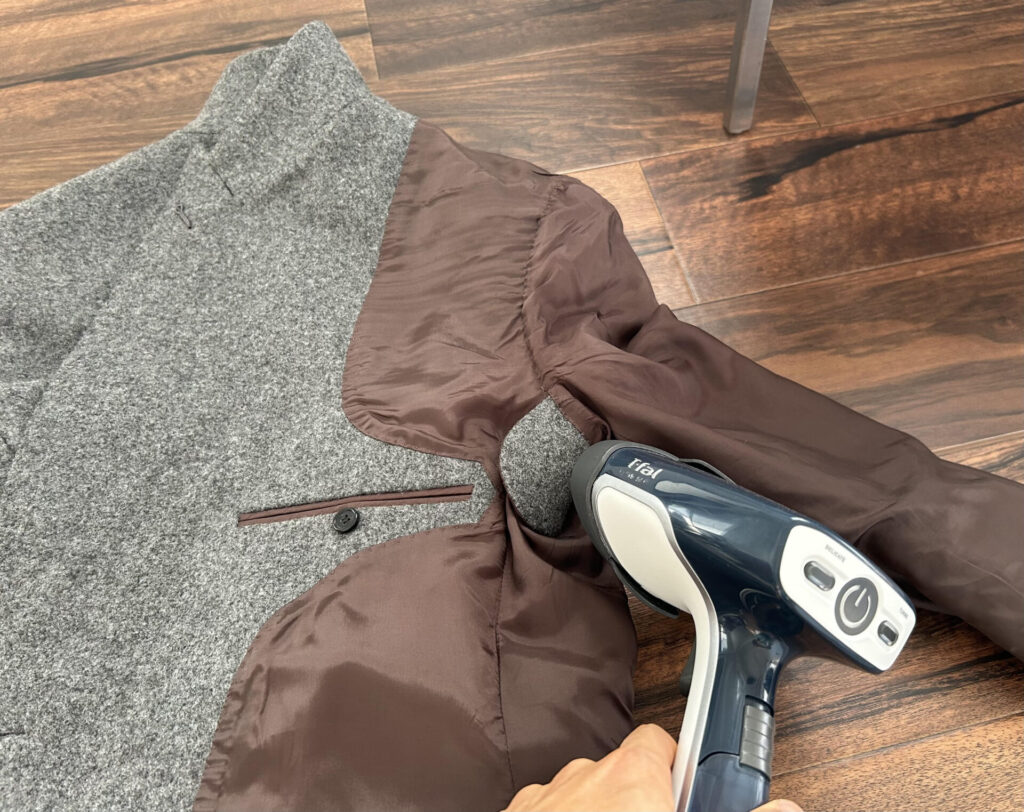
Hang the garment and steam thoroughly, then turn it inside out and repeat.
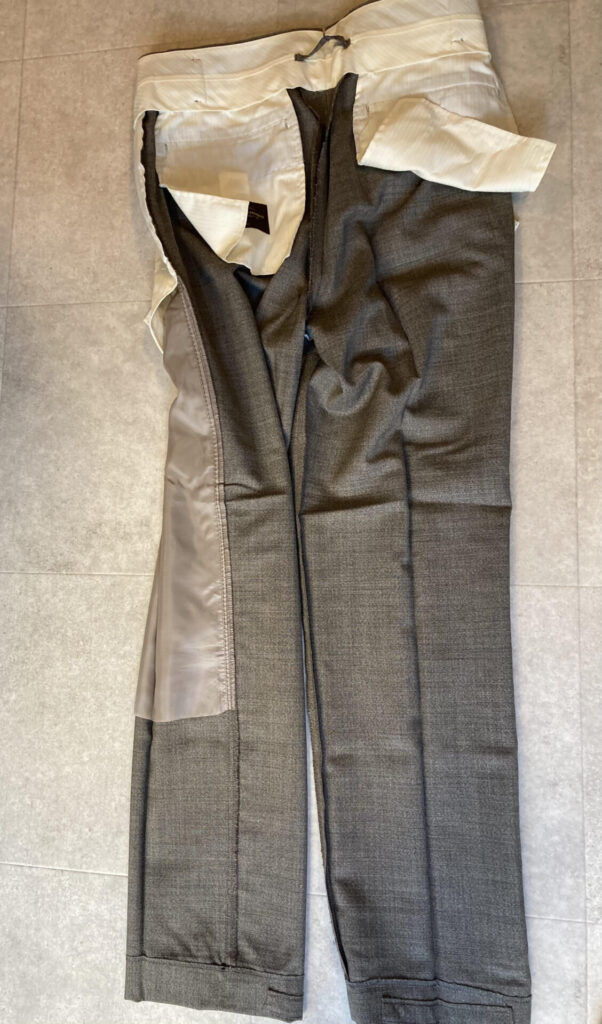
Sweat and urine are always on the inside, while the outside may still carry smells and bacteria.
Steaming removes bacteria, odors, and wrinkles—a triple benefit.
If you iron trousers immediately after coming home, you may not need to use a steamer separately, but be sure to iron both the outside and the inside, or the sweat and urine will remain.
Conclusion
Avoid dry cleaning when possible.
Oil-based stains require dry cleaning.
Water-based stains wash out with water.
But it’s better to prevent them in the first place.
Key methods:
Add extra layers between your skin and the suit.
Use water-repellent spray.
Absorb sweat with a damp cloth.
Sanitize with a steam steamer.
If you follow these consistently, you’ll only need professional wet cleaning once every five years or so.
I wash my trousers at home about once a year, but I’ve never taken a jacket to cleaning—and there’s no smell at all… at least as far as I can tell!
Maybe I’m overly sensitive because of my extreme cleanliness, but I hope some of these tips are helpful.
That’s all. Thank you for reading.



コメント