Hello, this is Mr. Linen.
If you enjoy classic suits, what kind of wristwatch do you wear?
Some prefer modern watches, some prefer vintage pieces, and many appreciate both.
As for me, I am firmly in the vintage camp.
The main reason is size. For round watches, I prefer a diameter of 34mm (1.34 inches) or smaller, which naturally leads me toward vintage models.
I also love dials that have slightly faded or developed a gentle patina over time. Modern watch dials are extremely durable, so you can rarely expect visible aging even after many years.
Another advantage is that vintage watches are often more affordable than current production models.
Vintage watches are full of charm, but compared to modern watches, they require more care.
In particular, it is safest to assume that their water resistance is practically zero.
When pairing a vintage watch on a leather strap with a classic suit—especially in summer—sweat becomes a real concern.
A leather strap will deteriorate from sweat, but that can be solved by replacing it.
The watch head itself, however, is a different story. If sweat seeps inside, the consequences can be serious.
Today, I would like to introduce a simple way to protect your vintage watch from sweat.
目次
The Watch Pad (Bund Pad)
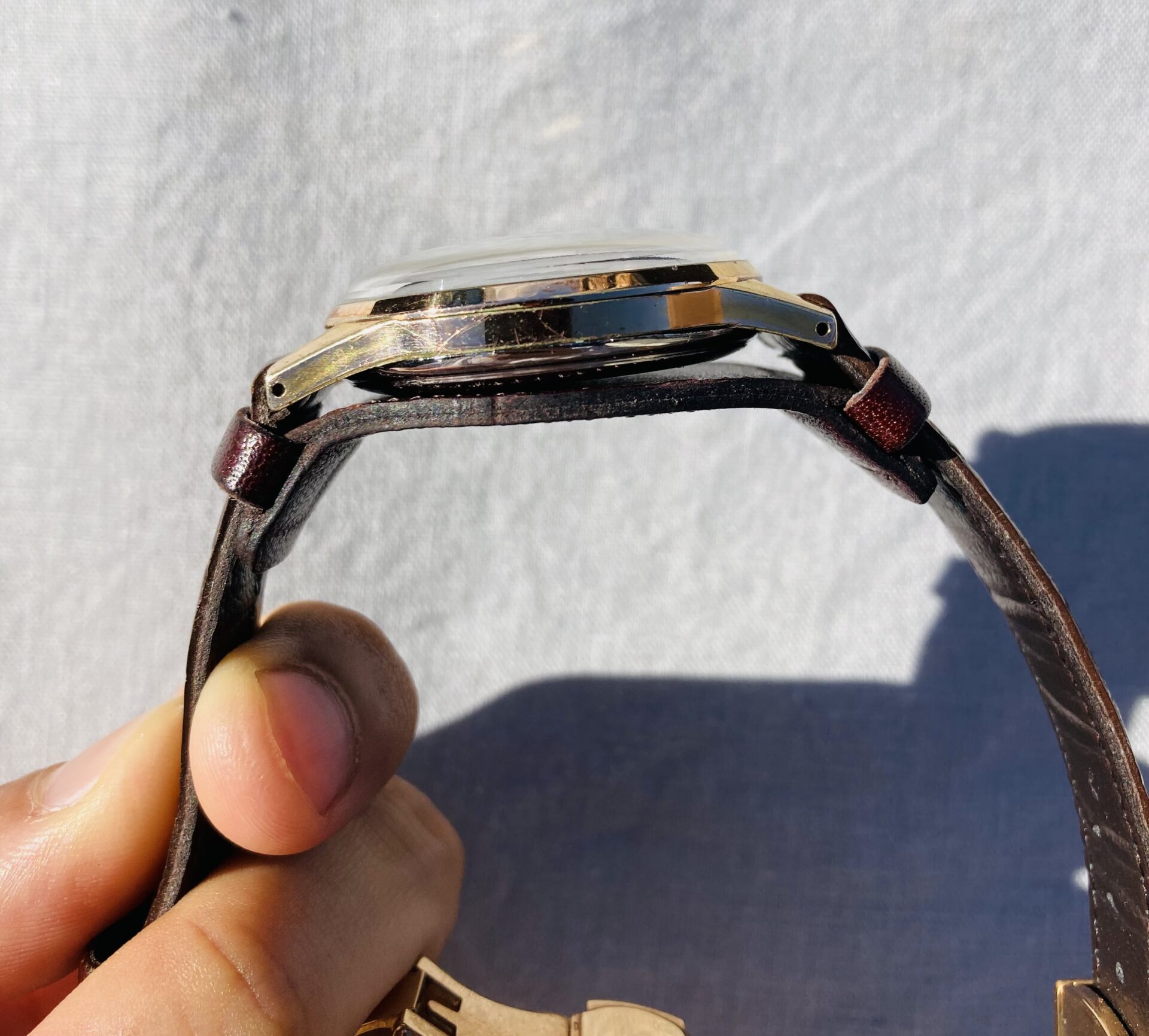
The method is nothing special. You simply insert a thin piece of leather—often called a watch pad or bund pad—between the watch and your wrist.
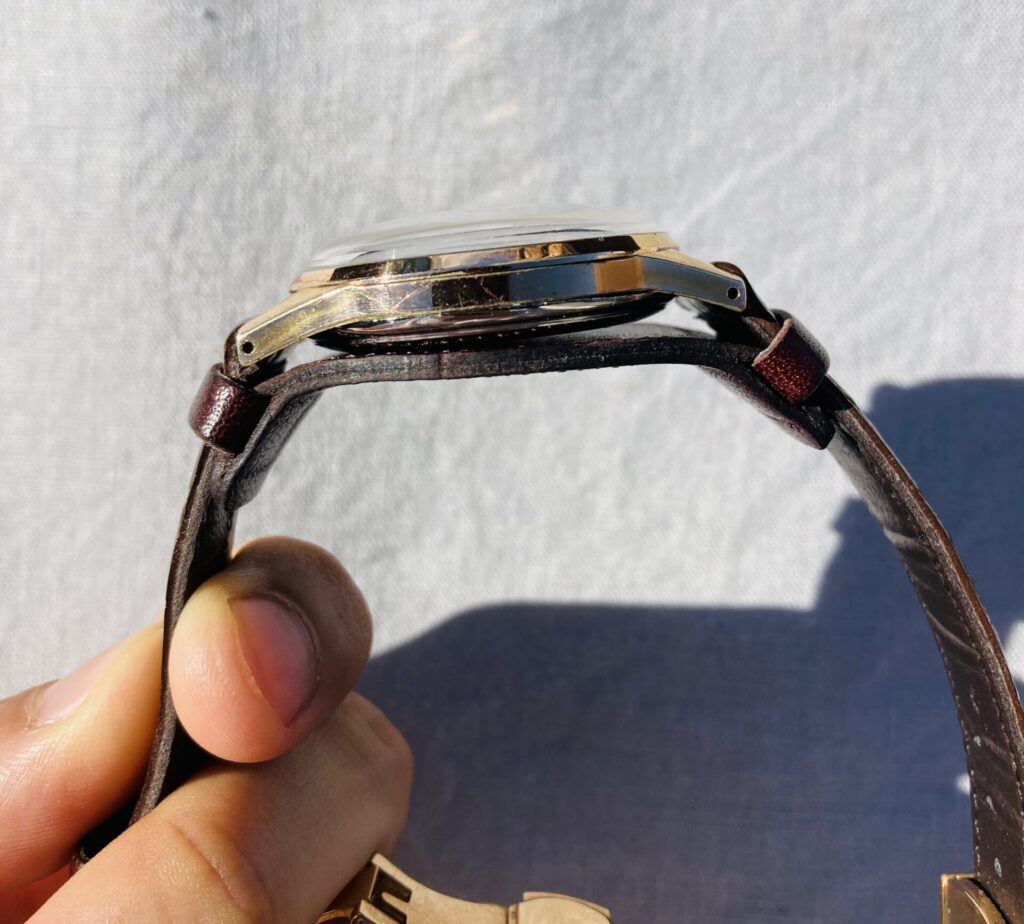
A watch pad is commonly seen on military watches. It acts like a small leather cushion that sits beneath the watch case.
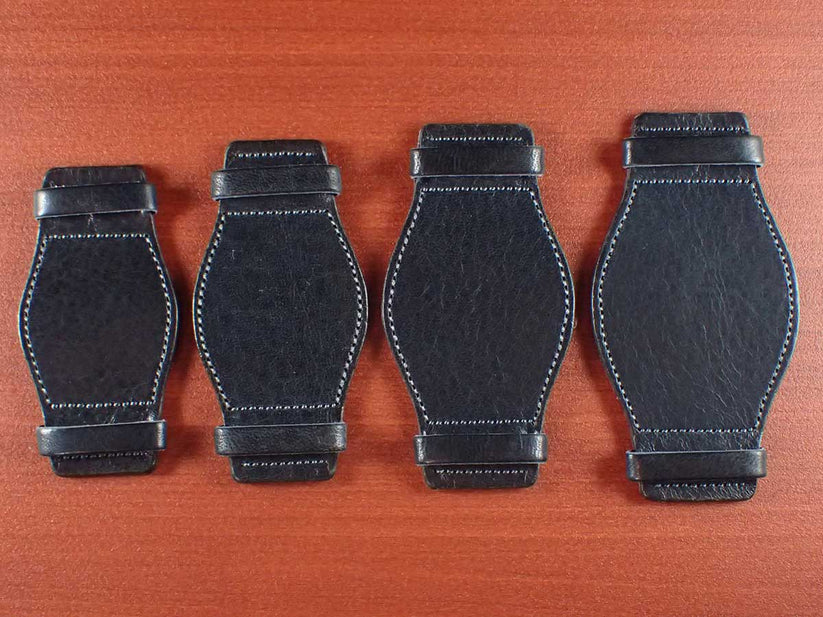
Originally, this is a functional military detail. From a strict classic menswear perspective, using such a feature on a dress watch might be considered questionable.
The late Japanese menswear writer Masakatsu Ochiai once wrote that “a detail born purely from function cannot be called classic.”
That may be true. However, when practicing European-born classic style in a humid climate like Japan—or many other parts of the world—practical adjustments sometimes become necessary.
Key Points When Adding a Watch Pad to a Dress Watch
The most important point is to choose a pad that is slightly smaller than your watch case diameter.
By doing so, the pad will not protrude beyond the case, and from a top-down view, it will be barely noticeable.
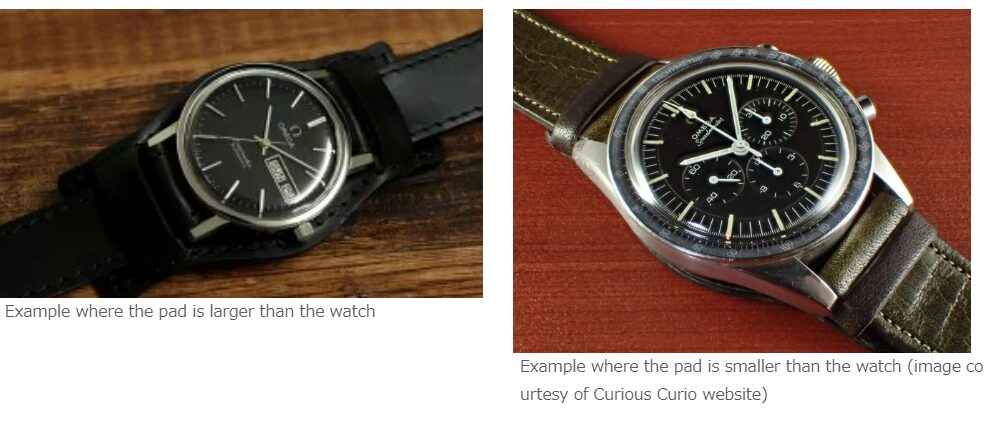
You might worry that if the pad is smaller, sweat could still reach the watch. There is no need for concern.
The pad itself is several millimeters thick (a few tenths of an inch), so the watch case will not directly touch your wrist.
It Is Impossible to Hide the Pad Completely
Even with a smaller pad, I mentioned that it would be hard to notice from above—but in reality, it can still be detected.
This is because a horizontal leather strip, necessary to secure the pad to the strap, becomes visible across the strap.
There is no perfect solution to this.
However, there is one recommendation I can offer.
Choose a pad made from the same type of leather as your watch strap.
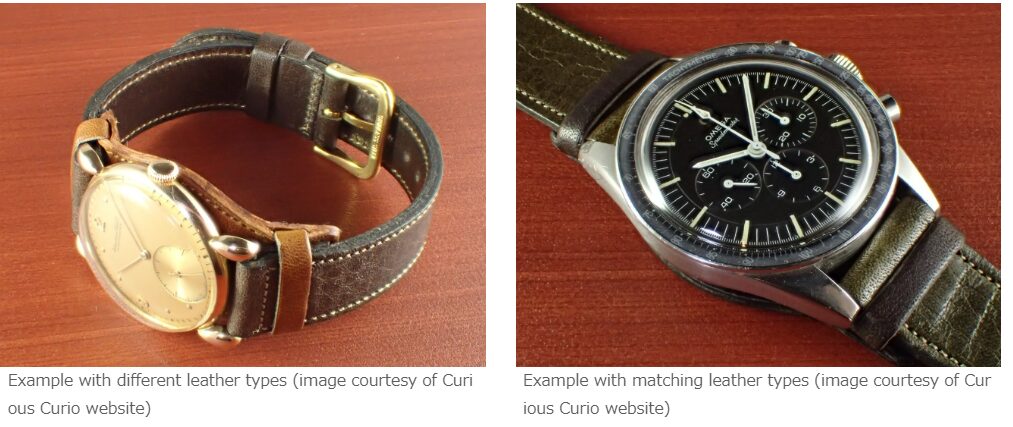
You could intentionally choose a contrasting leather to make it stand out. However, if you prefer subtlety—especially with a dress watch—matching the leather is the safer choice in my opinion.
Square Versions Also Exist
Fortunately, watch pads are not limited to round watches. Square versions also exist.
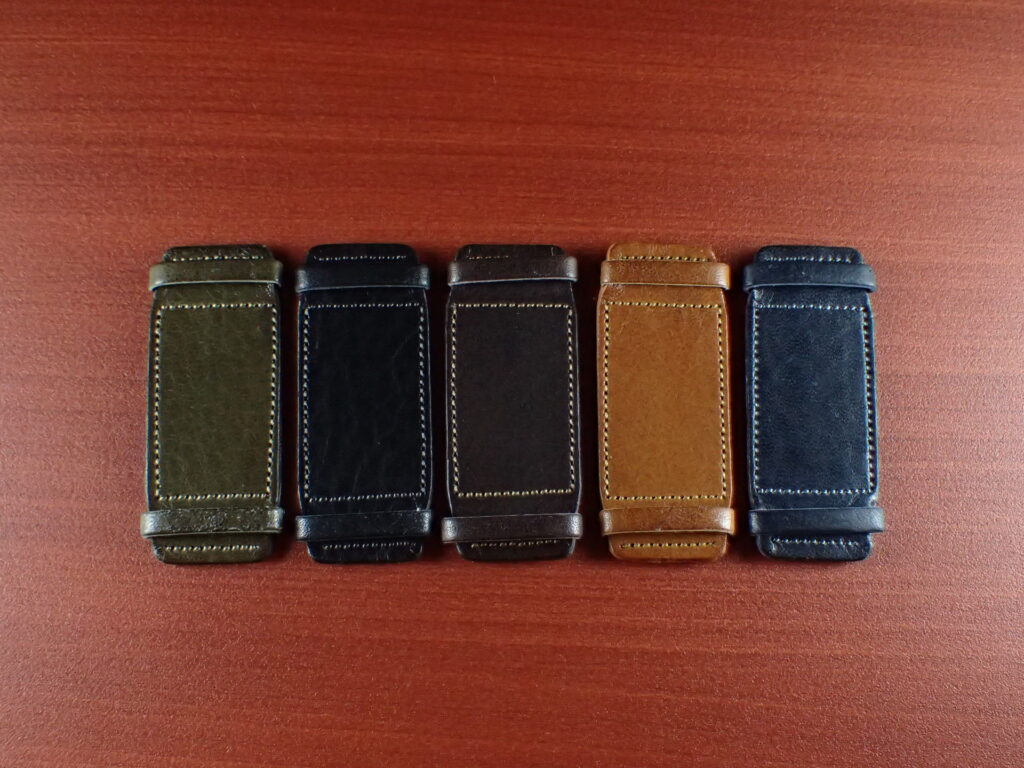
As with round watches, choosing a slightly smaller (narrower) pad than the case makes it less noticeable from above.
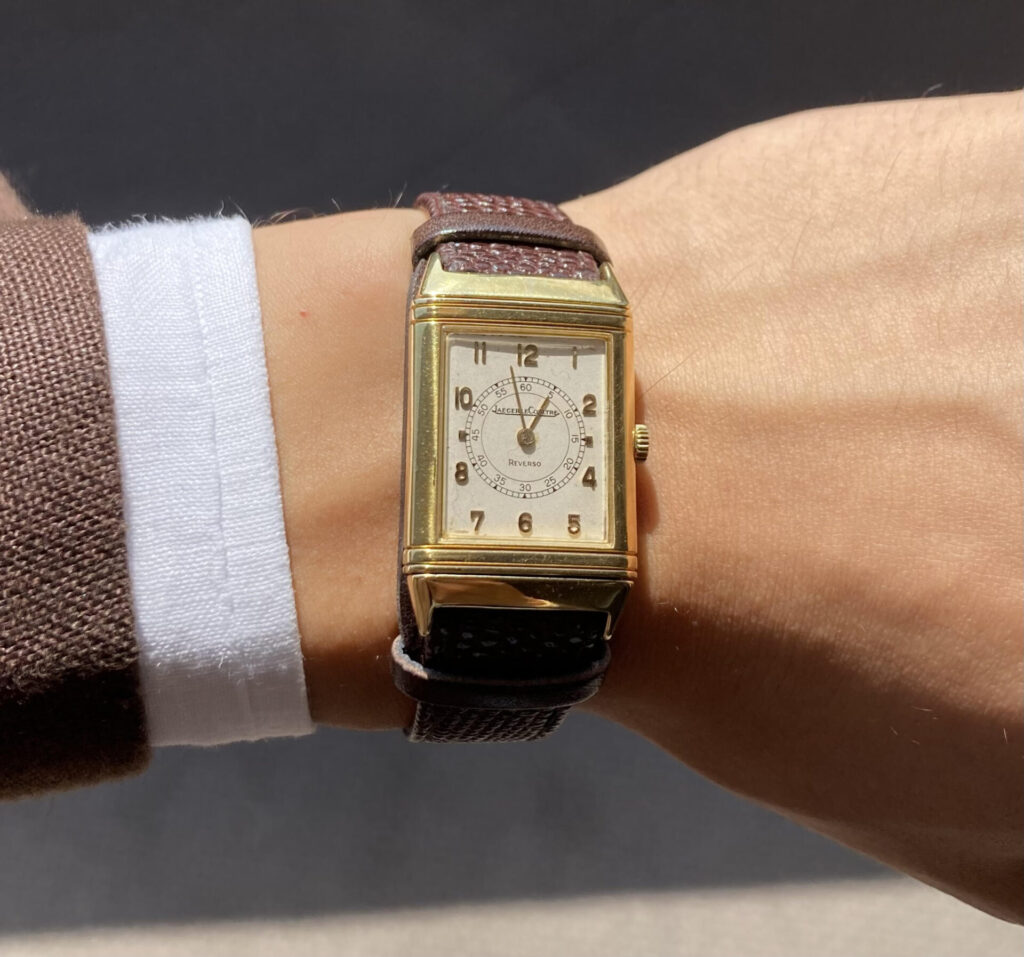
For example, with the Jaeger-LeCoultre Reverso, the reversible case construction already includes a metal backing between the watch and your wrist.
Therefore, you may not need to worry as much about wearing it without a pad.
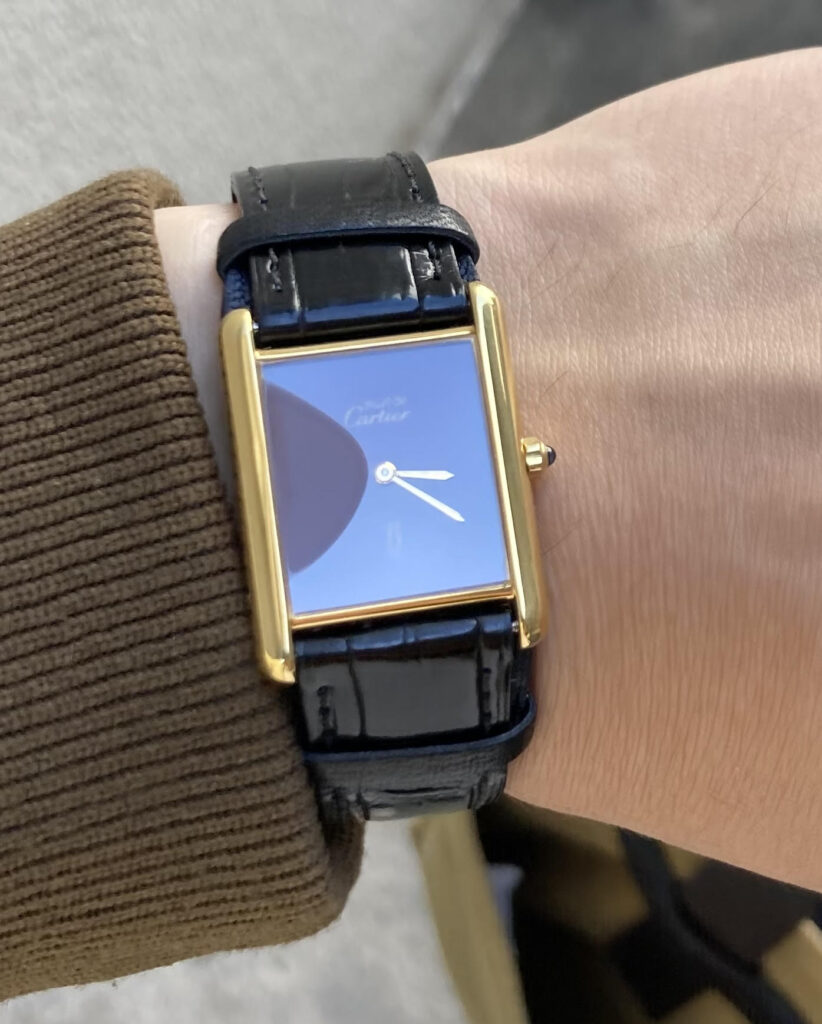
With the Cartier Tank, however, there is no such metal backing, and the case sits directly against your wrist. In that case, a pad offers greater peace of mind.
In general, rectangular watches are said to be more difficult to seal tightly than round watches, meaning water resistance can be weaker.
For that reason, I personally believe square watches benefit even more from using a pad.
Where to Buy a Watch Pad
As for where to purchase one, I recommend Accurate Form.
Accurate Form Watch Strap from Tokyo, Japan
They have a physical shop in Minami-Aoyama, Tokyo, and also sell online internationally.
The range of leather options is extensive, and the pricing is very reasonable. A watch pad costs in the 3,000-yen range, which is approximately $20–$25 USD depending on exchange rates.
As mentioned earlier, mismatched leather can stand out. Since Accurate Form also sells watch straps, purchasing both together ensures a perfect match.
Alternatively, you could have a pad custom-made to match your existing strap.
Conclusion
Most vintage watches, if mechanical rather than quartz, can be repaired even if water or sweat enters the case.
However, such repairs are often expensive.
For that reason, I believe it is wiser to spend a small amount upfront on preventative measures rather than pay a large repair bill later.
While adding a pad may slightly reduce the pure dressy appearance, the practical benefits far outweigh that minor drawback.
If you have never tried using a watch pad before, it may be worth considering.
Thank you for reading.



コメント