Hello, I’m Mr. Linen.
Today, I would like to explore the width of jacket sleeves.
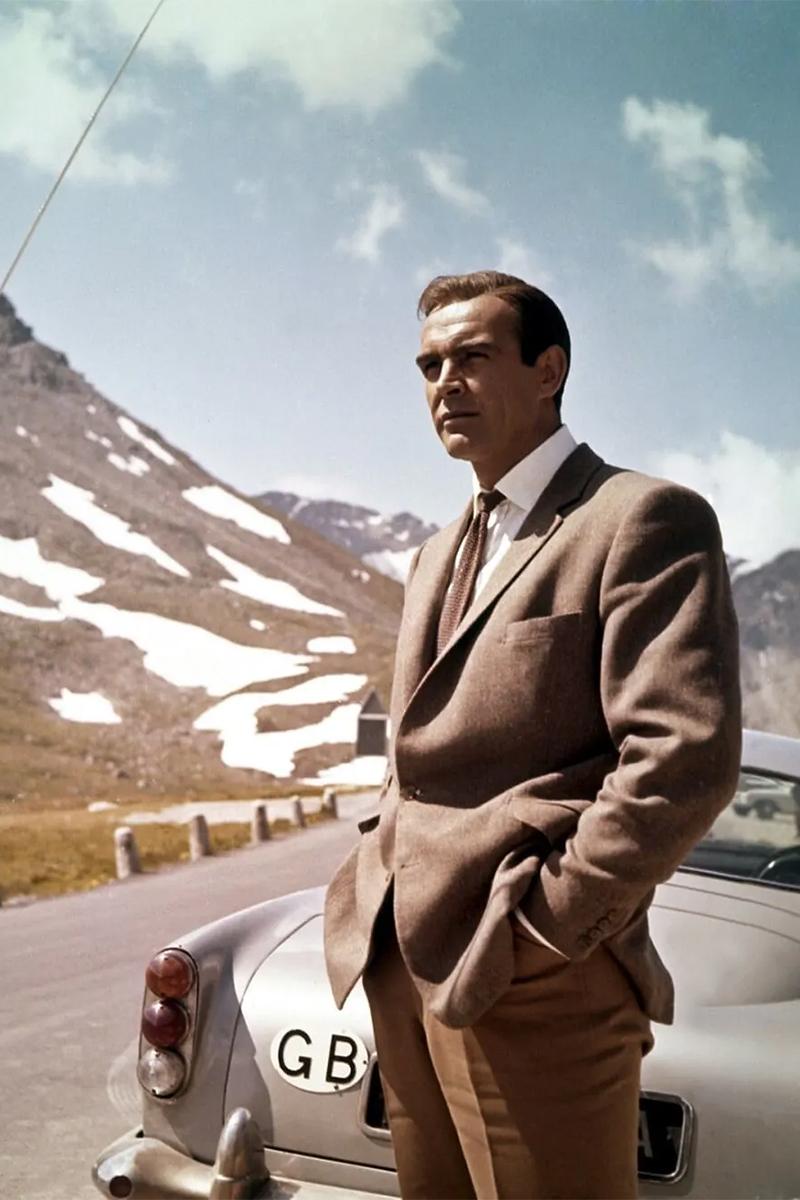
Which is more classic—slimmer or wider sleeves? In old films, sleeves often appear quite wide. But can we really equate “classic” with “wide”? Is it safe to jump to that conclusion?
Extremes—whether too slim or too wide—fall outside the realm of classic style. So this discussion is limited strictly to moderate proportions.
Slim
First, to clarify: here I am referring to the thickness of the sleeve itself—from the shoulder down to the cuff.
I am not referring to the armhole—the opening where the sleeve attaches to the body (chest and torso) of the jacket.
(Though the size of the armhole also changes according to the width of the sleeve, so the two are interconnected.)
Let us begin with slimmer sleeves.
The advantage is that the sleeve follows the arm closely, making it obvious that the jacket was made to order.
Ready-to-wear garments must accommodate a wide range of body types. If sleeves are cut too slim, men with larger arms simply cannot wear them. Therefore, when sleeves are slim, there is a higher likelihood that the jacket is custom made.
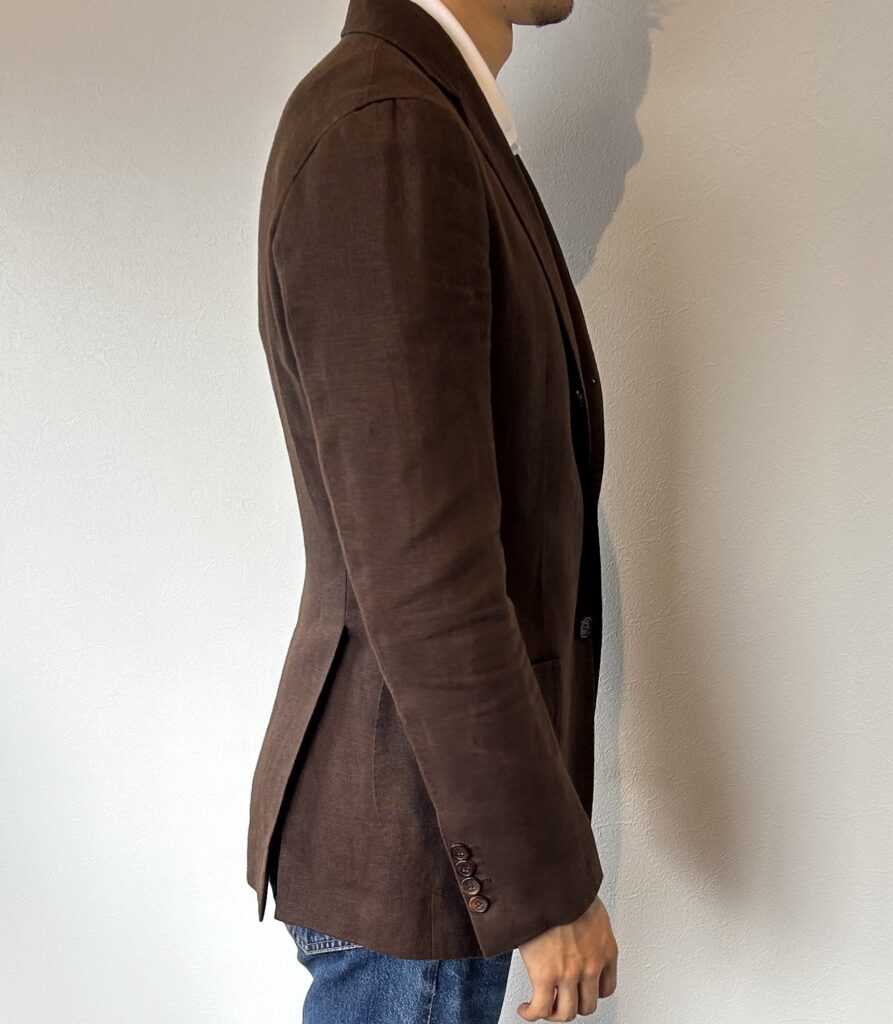
The disadvantage is tightness.
Especially when bending the elbow deeply, it can feel restrictive.
And tightness means wrinkles form more easily around the elbow.
It is also hotter. There is little room for air to circulate.
It may be helpful to imagine the difference between skinny trousers and wide-leg trousers.
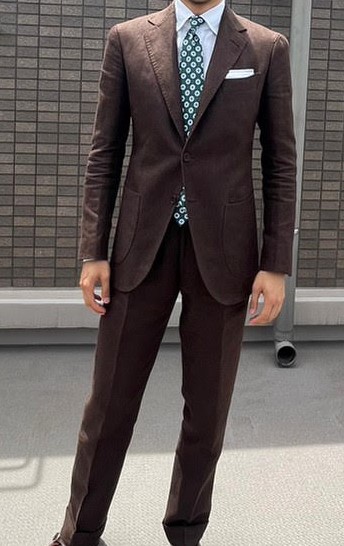
This jacket in the photo was made with relatively slim sleeves, and when I bend my elbow, it feels slightly tight.
The fabric is 100% linen, but the sleeves are lined with cupro, which does not allow much airflow, making it quite hot.
However, it is not all disadvantages.
Because it is tight, the wrinkles are sharply defined, and I think this enhances the character of heavy linen (thick linen fabric).
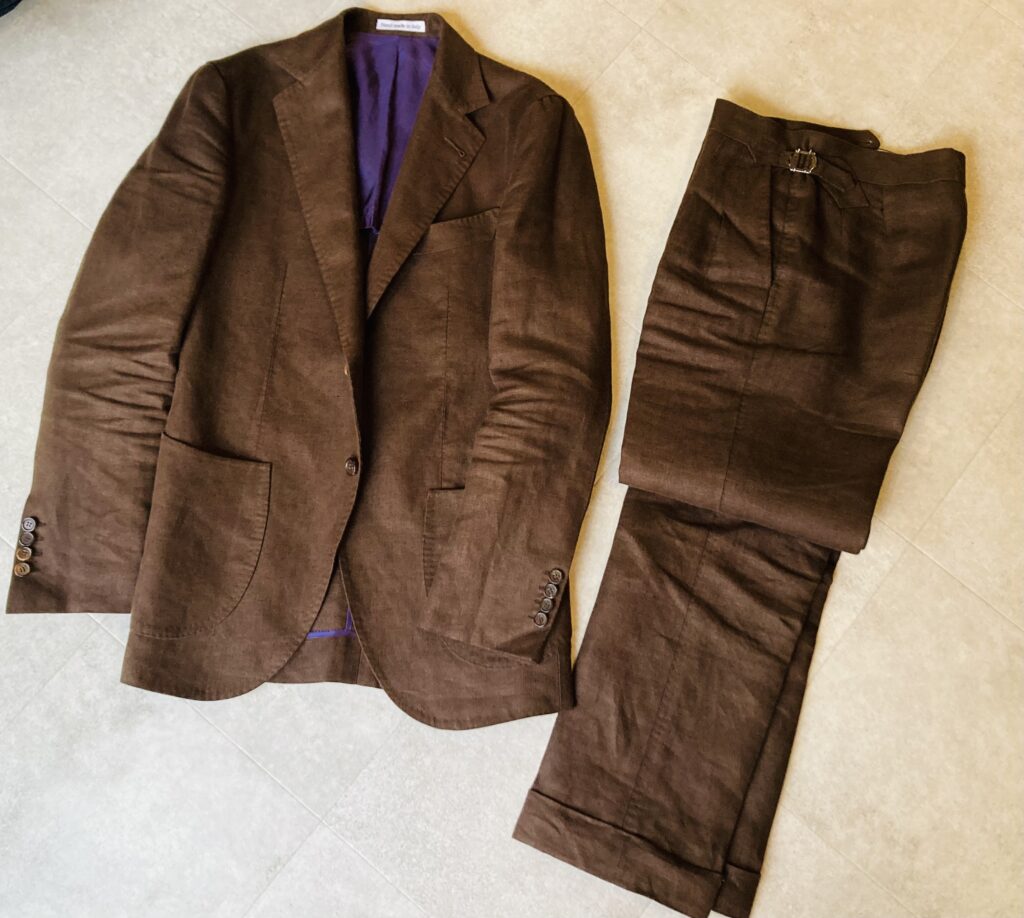
If the sleeves were wider, the wrinkles would be shallower.
So when it comes specifically to linen, slimmer sleeves can actually have certain advantages.
Wider
What about wider sleeves?
The advantage is ease of movement.
Your arms slide smoothly into the jacket, and after putting it on, bending your elbows feels unrestricted and comfortable.
Air also flows more easily, making it cooler.
The disadvantage is that it can look slightly clumsy.
Again, it depends on degree, but if the sleeve is too wide, it can look like you are wearing the wrong size.
As mentioned earlier, with linen fabric, wrinkles become shallower and the fabric develops less visible character.
This jacket is made from the exact same fabric as the earlier brown slim-sleeve jacket, but in a different color. The sleeve circumference is approximately 3–4 cm (1.2–1.6 inches) wider.
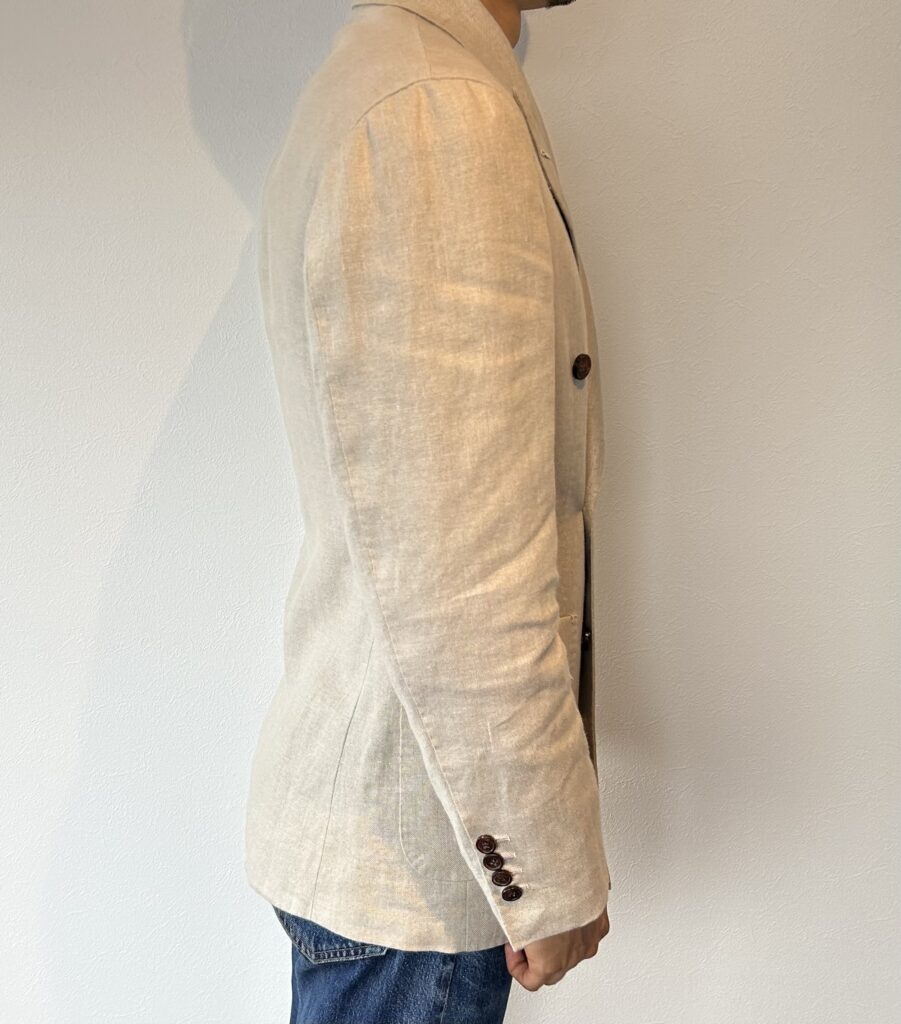
I would not call it extremely wide, but it falls more into the wider category.
Overall Silhouette
Functionally, I personally feel that wider sleeves are better. They are comfortable and cool. That may sound obvious.
But visually, which is better?
If the jacket waist is strongly suppressed (cut tightly), slimmer sleeves tend to look more balanced.
This is typical of traditional British tailoring.
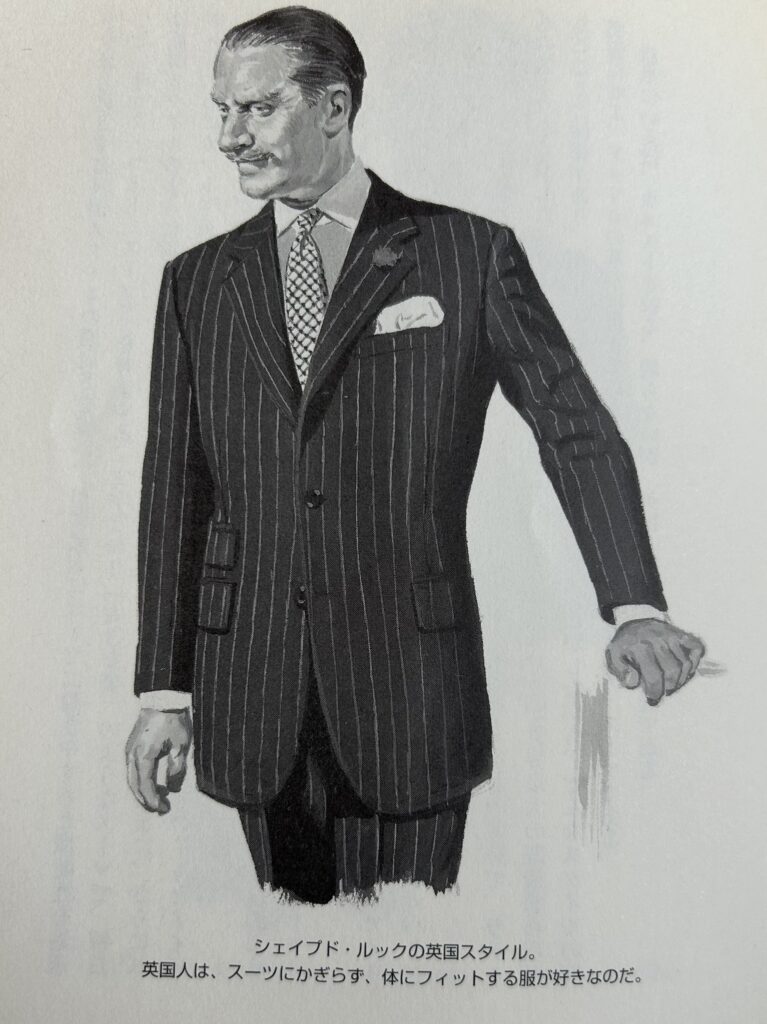
If the waist is more relaxed, fuller sleeves tend to work better.
This can be seen in Italian and American styles. (Modern Italian tailoring might lean slimmer today, but this is simply a stylistic comparison.)
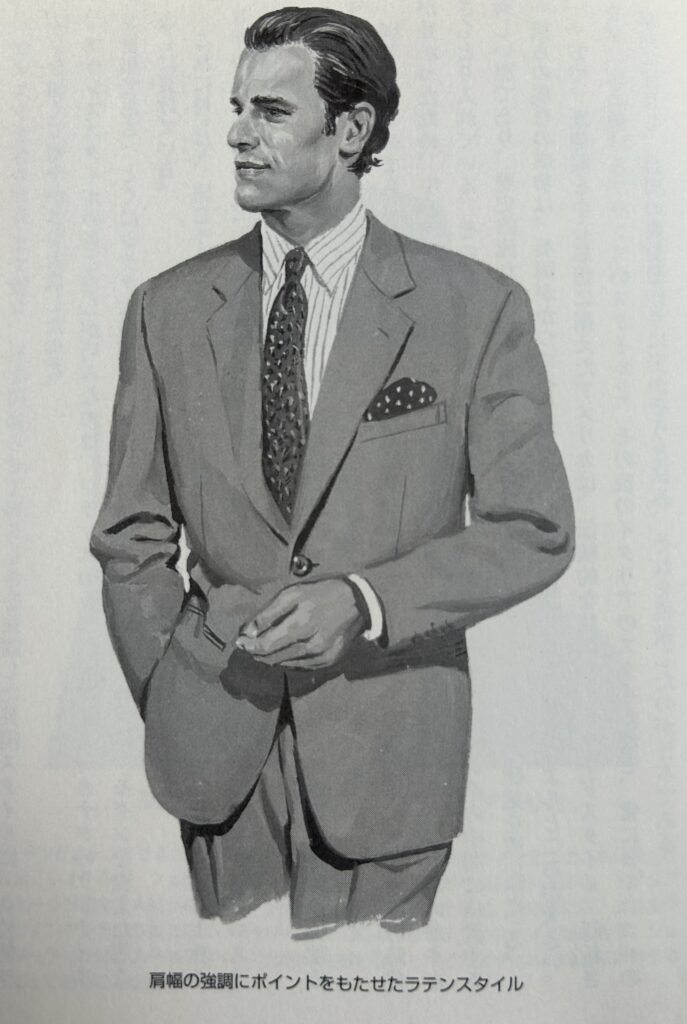
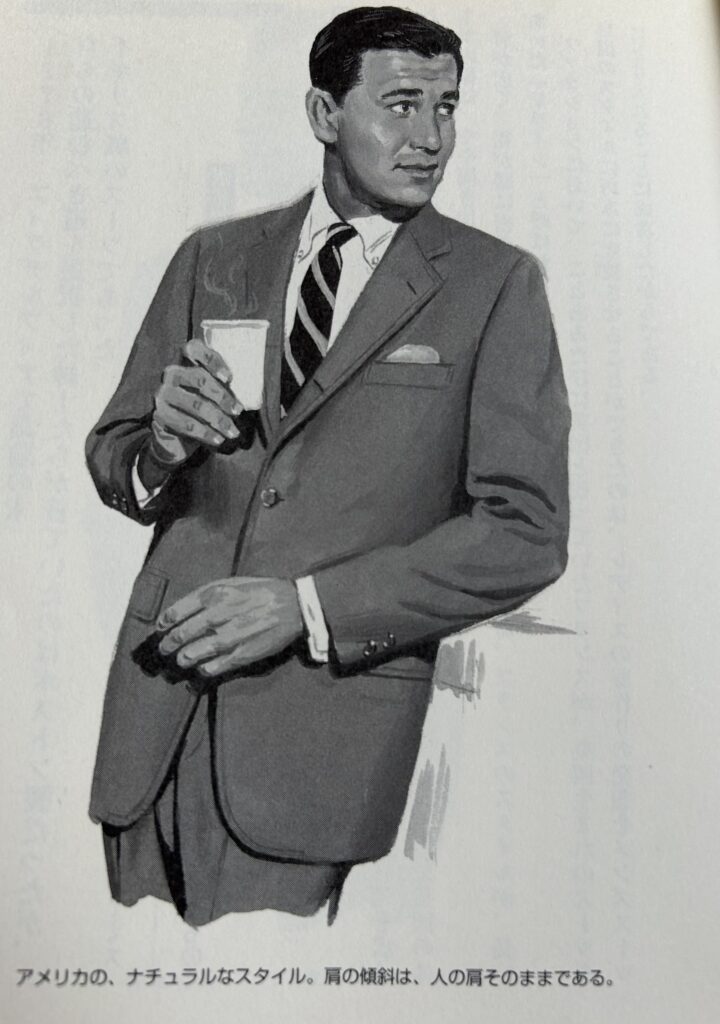
In other words, when considering sleeve width, the overall silhouette—especially the waist width—becomes an important factor.
In my brown jacket, as you can see from the shape at the back, the waist is quite suppressed.
Accordingly, the sleeves are also slim. I think the balance is not bad.
The off-white jacket with wider sleeves also has a fairly tight waist—when buttoned, I can just barely slip my hand inside.
In contrast, the sleeves have considerable room.
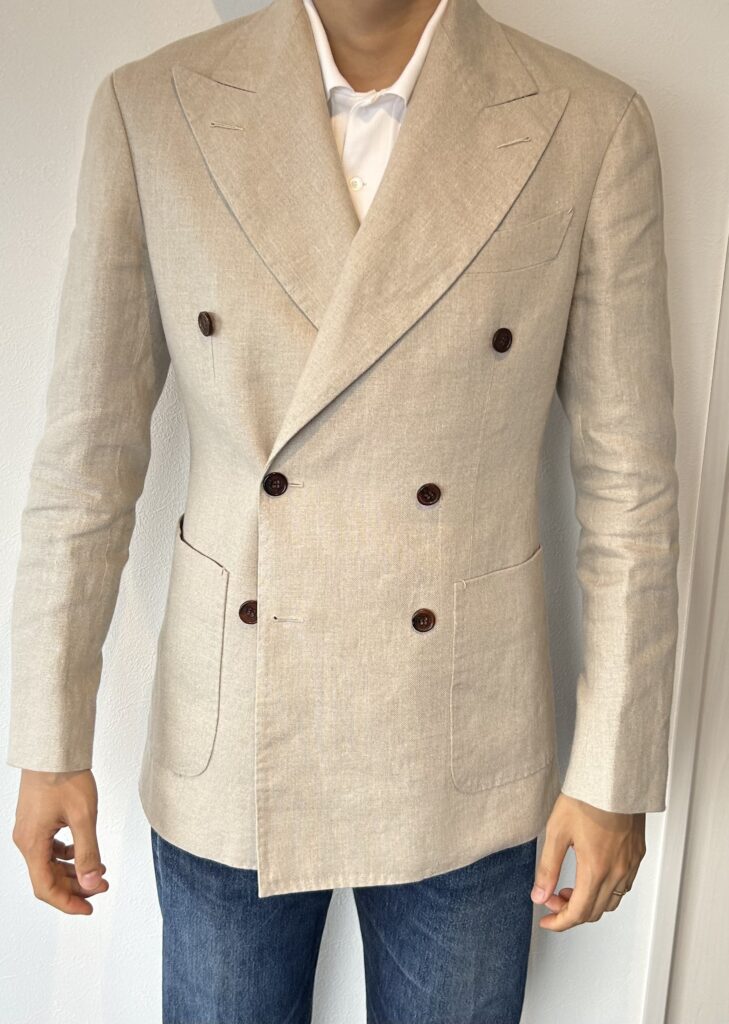
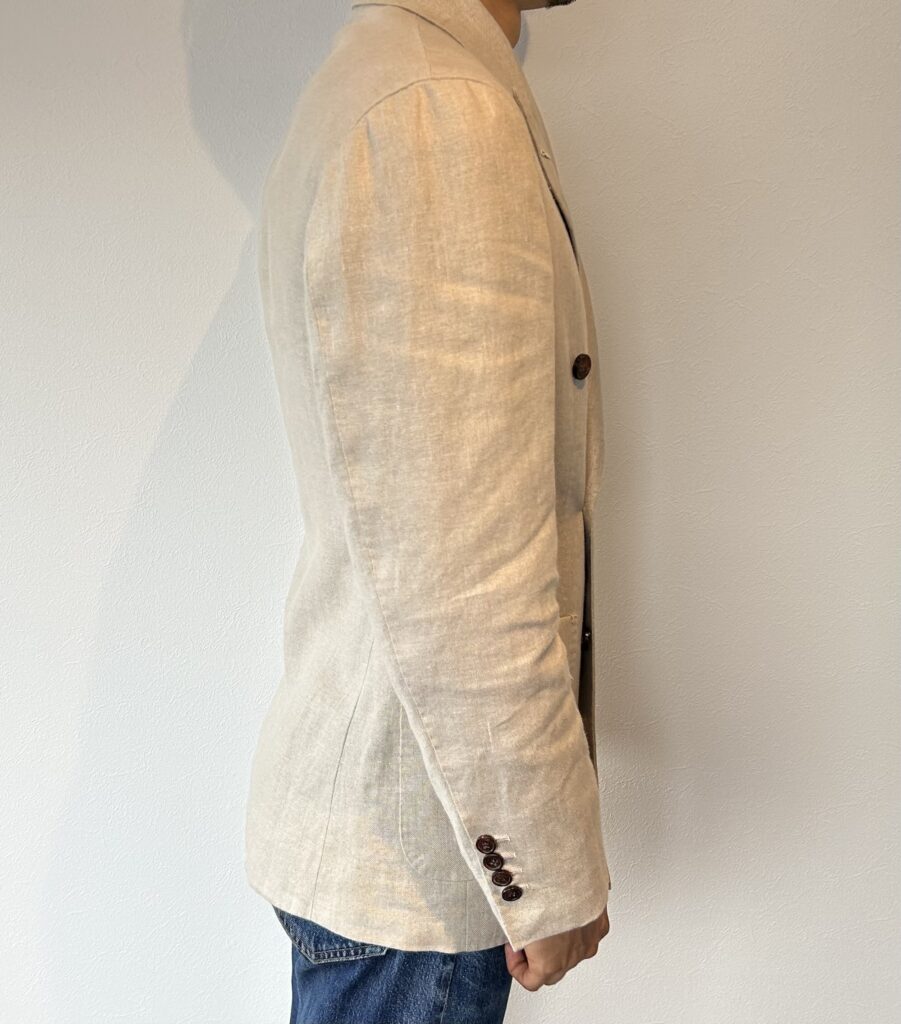
The sleeves are not extremely wide—just slightly fuller—so I feel the balance works, though slightly slimmer sleeves might improve it.
This next jacket is made of flannel, and quite a thick one.
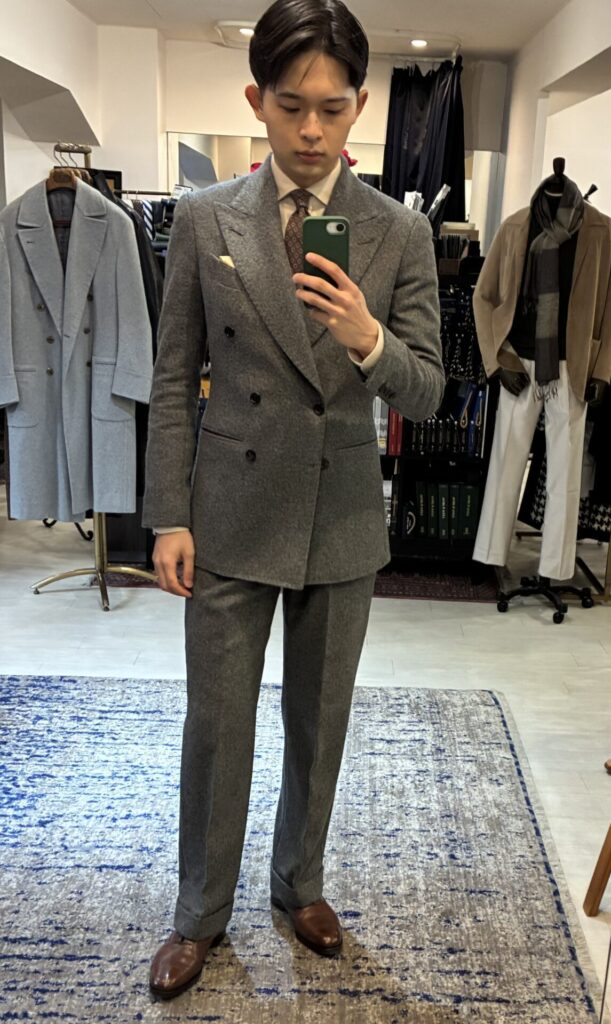
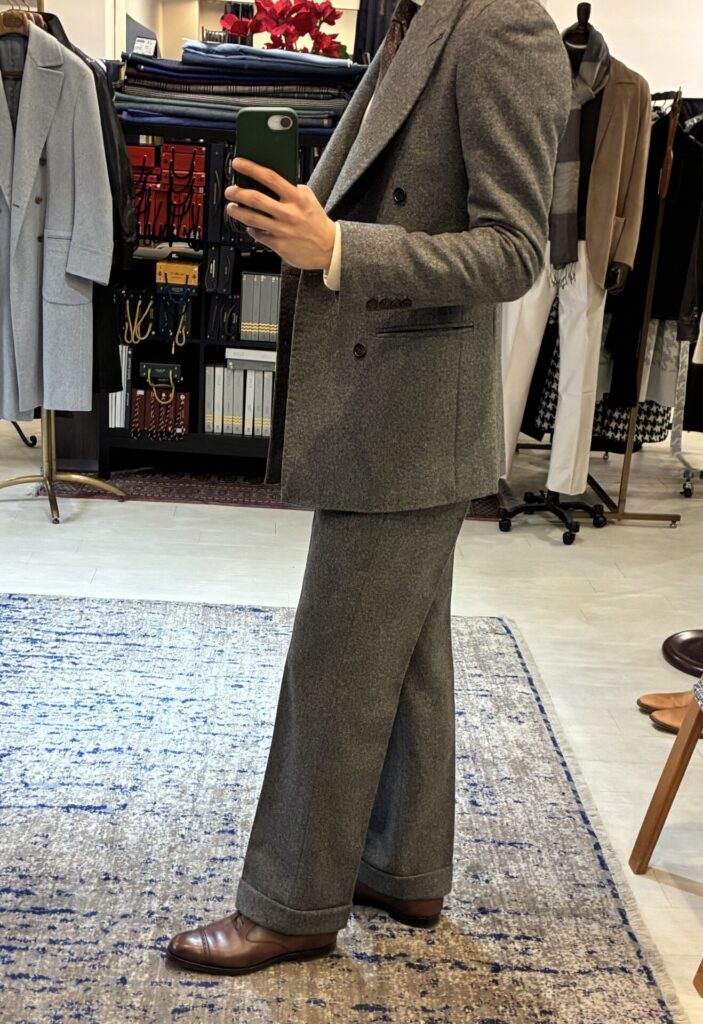
The sleeve measurements are the same as the brown linen jacket, but since the fabric is thicker than linen, it feels tighter.
The waist is similar in tightness to the off-white jacket.
When I bend my elbow, it feels quite tight.
I am not yet fully accustomed to wearing it, so after several years, the elbow area may relax and adapt slightly.
From a design perspective, I feel the sleeves could have been slightly wider (a bit slimmer than the off-white linen).
Because flannel wrinkles less than linen, the aesthetic benefit of slim sleeves is smaller.
Which Is More Classic?
To determine sleeve width, fabric and design are factors, but my conclusion is that waist width is the most significant element.
Looking at the Duke of Windsor, King Charles III, and Gianni Agnelli of Italy, their proportions are exceptionally well balanced. Their sleeves do not appear particularly slim nor particularly wide.
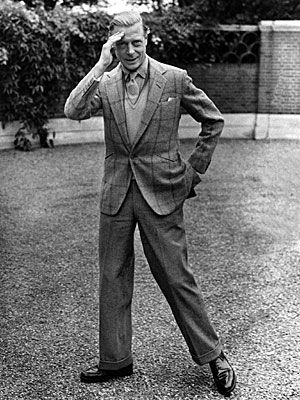


The most classic look is simply well-balanced moderation—perhaps not the most exciting conclusion.
The sleeve widths of my brown linen and grey flannel jackets fall within the classic range, but I believe slightly wider sleeves—and perhaps a slightly fuller waist—might feel even more traditionally classic.
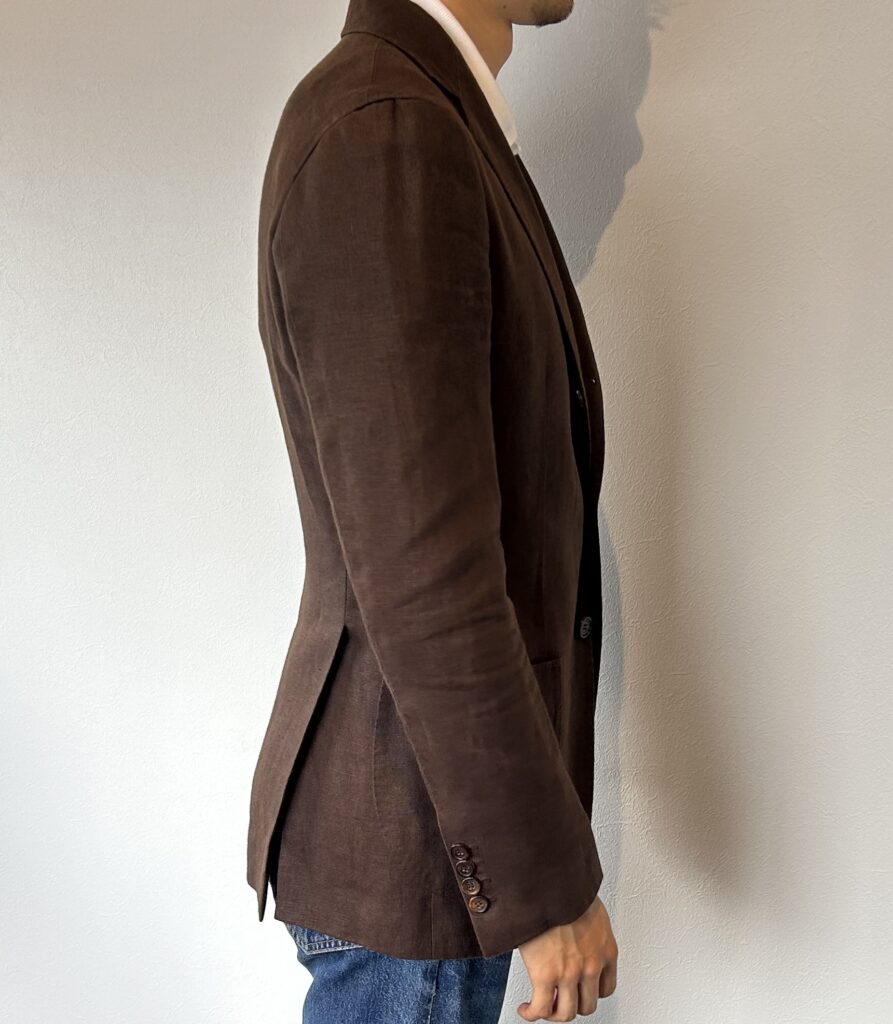
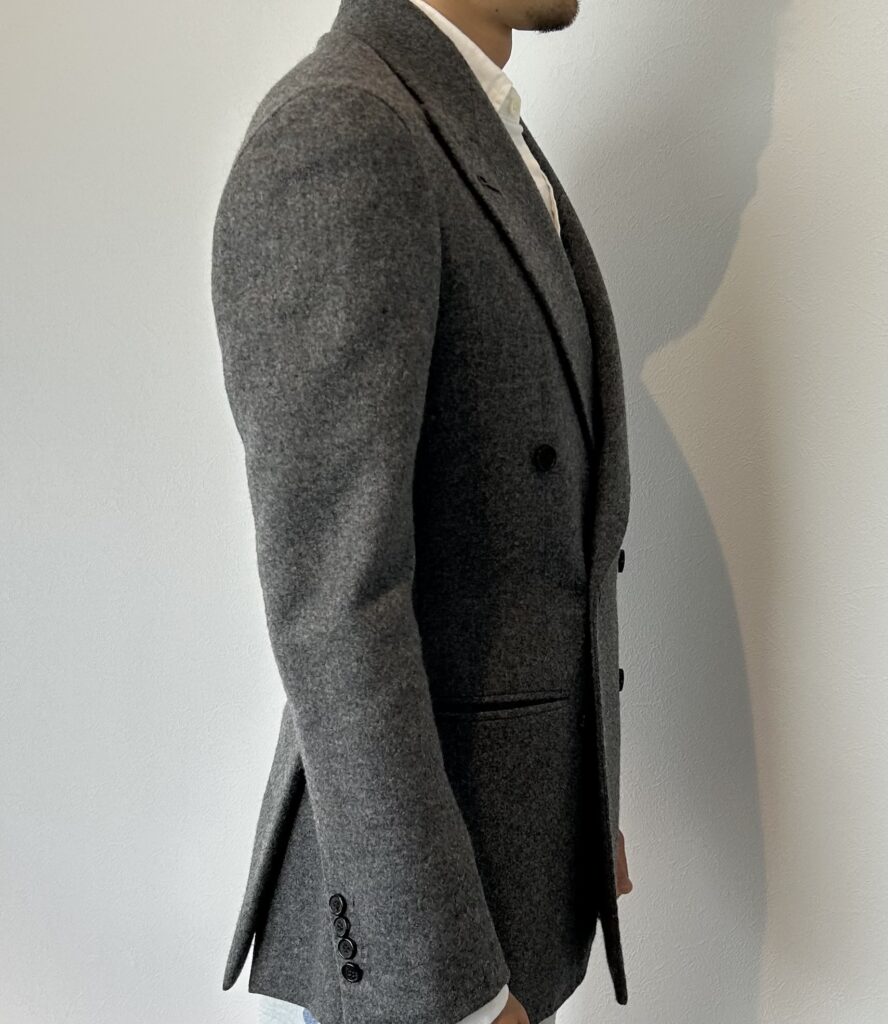
In my case, I am slim, with a narrow waist and thin arms. If I fit garments strictly to my body, they become extremely slim.
A skin-tight suit that emphasizes thinness is neither elegant nor classic.
For slim men, it may be better not to fit the waist and sleeves too closely, but to allow a little extra room.
For very muscular men with large arms, making sleeves slim simply because the arms are large will result in a tight, strained look.
In such cases, cutting the sleeves with enough ease beyond the arm’s circumference will create a more elegant and classic appearance.
That’s all. Thank you for reading.



コメント