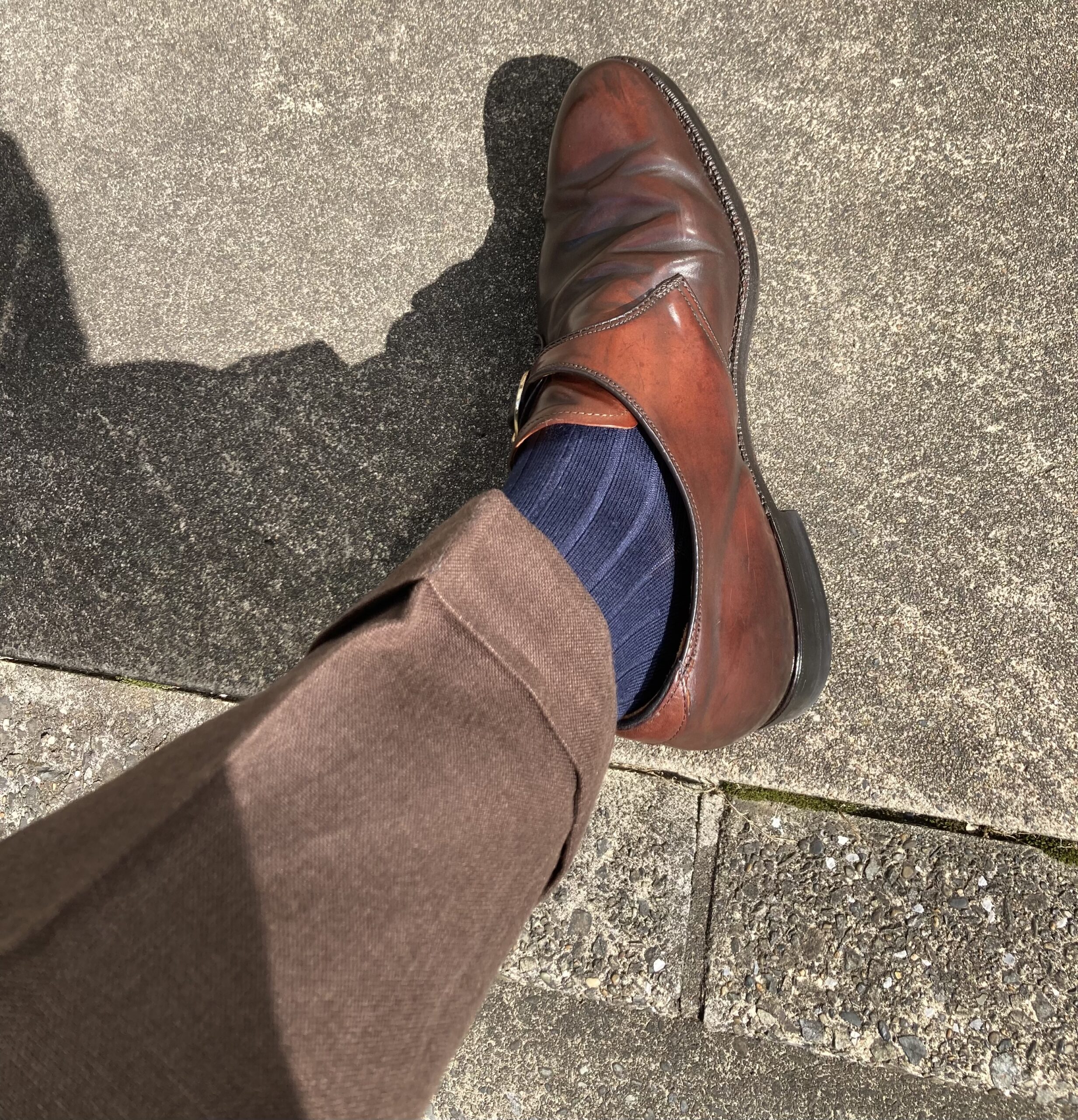
Hello, this is Mr. Linen.
How do you decide on the color of your socks?
As I will mention later, there is a thought that classic dress socks should be limited to black or navy.
This time, I would like to explore the correct way to choose sock colors from a classic menswear perspective.
Socks Are Essential
Wearing loafers or sneakers barefoot—or using no-show socks to create a barefoot look—is completely common today. Personally, I have no intention of denying that style.
However, this blog is dedicated to studying classic style. Therefore, we will proceed on the premise that in classic menswear, socks—specifically long over-the-calf socks—are essential, and that bare skin should never be visible when seated.
Those well-versed in classic style often refer to them not as “socks” but as “hose.” For simplicity, I will not dwell on terminology here.
Four Ways to Choose Sock Colors
I believe there are four major approaches to choosing sock colors:
1. Match the trousers
2. Match the shoes
3. Standardize on black or navy
4. Introduce an accent color
1. Match the Trousers
Grey suit with grey socks.
Brown suit with brown socks.
Navy suit with navy socks.
This is a safe and reliable choice.
Matching your socks to your trousers in a suit or jacket-and-trousers combination is almost always correct.
In casual outfits, however, doing the same can be more difficult.
Dark blue denim with navy socks may result in a flat, overly serious look.
Olive cargo pants with olive socks can make you look like you’re blending into the forest.
For casual wear, slightly shifting the tone—or even choosing a completely different color—often works better.
2. Match the Shoes
The next method is matching your socks to your shoes.
This is also generally a safe choice.
If you wear a grey suit with black leather shoes, black socks are perfectly acceptable—along with grey.
The same logic applies whether the suit is brown or navy.
Some people suggest matching either the trousers or the shoes—or choosing a color halfway between the two.
This next method may sound slightly unconventional outside certain traditional circles: wearing only black or navy socks, regardless of the suit or jacket combination.
The late Japanese menswear authority Masakatsu Ochiai wrote:
“Classic hose should be plain dark navy or black. Nothing else properly fits a classic suit style. There is no need to waste time deciding whether to match the socks to the trousers or the shoes. Simply wear black with black shoes, and black or dark navy with brown shoes. That is sufficient.”
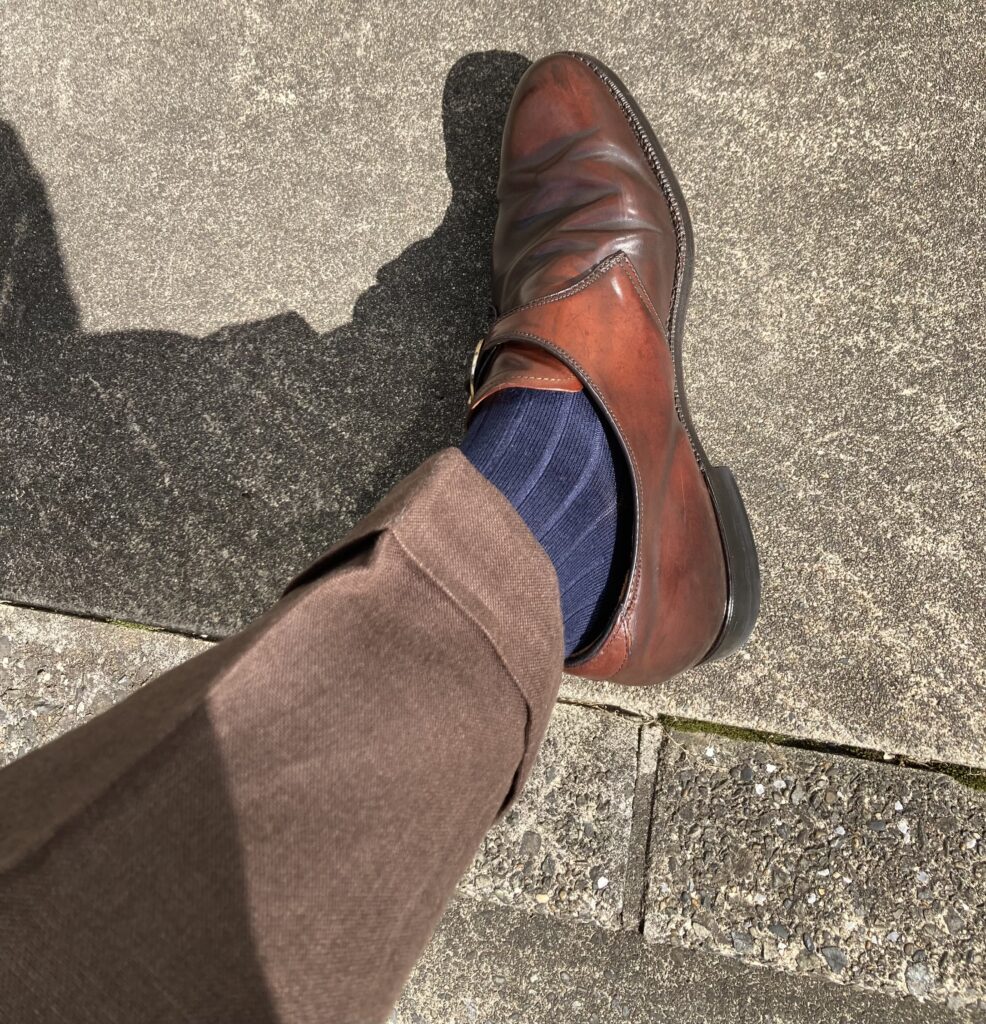
When I first read this, I was puzzled. However, given that it comes from a respected authority in classic menswear, it must hold weight within that tradition.
Additionally, Tatsuya Nakamura, Creative Director of BEAMS, once mentioned in an interview that Italians tend to wear navy socks almost exclusively. Even with casual outfits—such as white trousers and sneakers—they choose navy socks because a dress-oriented mindset is embedded in their cultural DNA.
Considering that Masakatsu Ochiai favored Italian tailoring and frequently referenced Italian style in his writing, this philosophy makes sense.
4. Introduce an Accent Color
Finally, there is the method of introducing an accent color—choosing something outside the standard suit palette of black, navy, and brown.
Strictly speaking, bold accent colors are not part of traditional classic rules, so I would not recommend them when wearing a formal suit with a tie. This approach works better in more casual-leaning outfits.
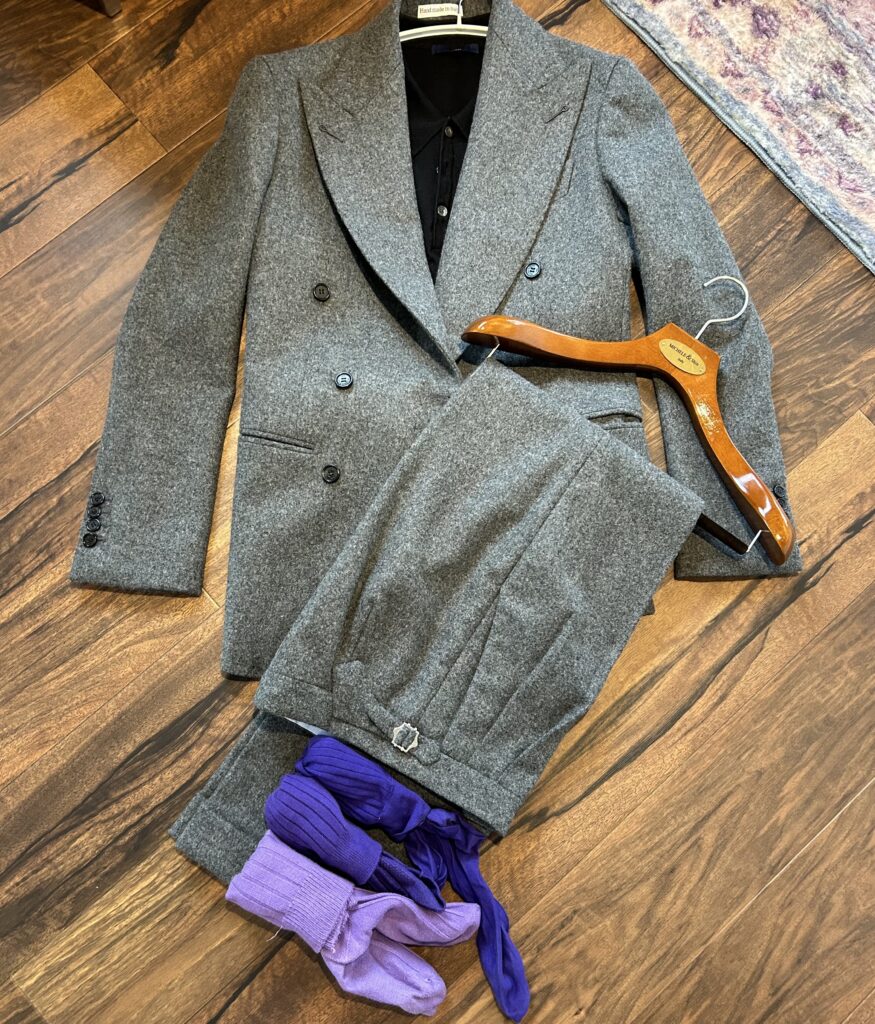
For example, a grey flannel set-up paired with a black turtleneck or knit polo, and then purple socks. Black suede shoes would complete the look.
Important When Adding Color
When introducing color, it is important to “pick up” a color already present in your outfit.
This means choosing socks that match or closely resemble a color used elsewhere.
A common mistake is picking up a color that is too bold.
For example, imagine a summer outfit: a red polo shirt from Lacoste, grey pants, and white loafers. Wearing bright red socks to match the shirt would likely feel excessive.
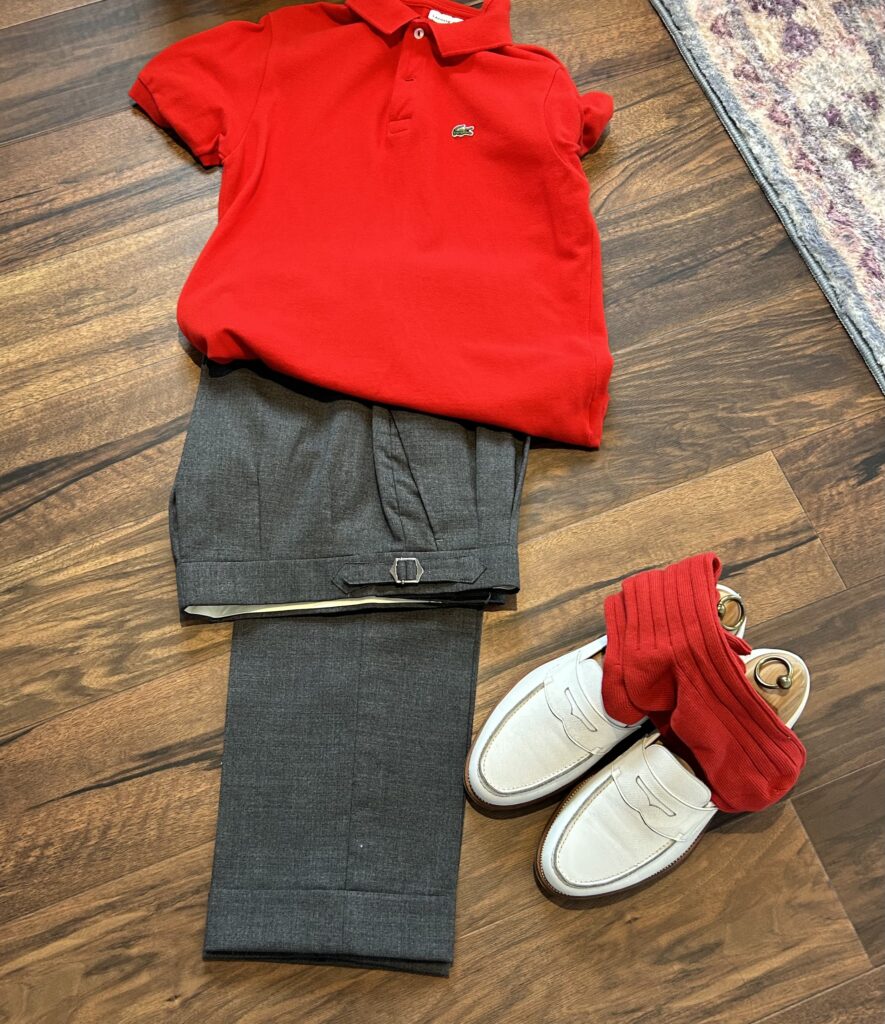
A seasoned master like Yukio Akamine might make that work (he has done so on Instagram), but for most of us, it can look too intensive.
Tip 1: Adjust the Shade
The first tip is to shift the shade.
In the red polo example, instead of bright red socks, an extremely pale pink—almost white—would subtly relate to the shirt without appearing overdone. That said, since the red polo is already bold, white or grey socks may ultimately be the safest and most balanced choice.

Similarly, if pairing a purple knit with purple socks, varying the intensity—dark knit with lighter socks, for instance—can reduce the impression of trying too hard.
Tip 2: Pick Up a Subtle Color
An even better approach is to pick up a color from a less noticeable detail.
Returning to the red Lacoste polo example, the small crocodile logo is green.
So instead of red socks, choose green socks.
Not a bright green—but a darker, subdued green. This creates cohesion without attracting too much attention.

Another example: in a casual suit or jacket outfit with a multi-colored tie.
Choose one of the tie’s secondary colors—not the dominant one—and echo it in your socks. This feels more natural and less forced.
In the tie shown below, picking up the navy polka dots works better than the brighter green.
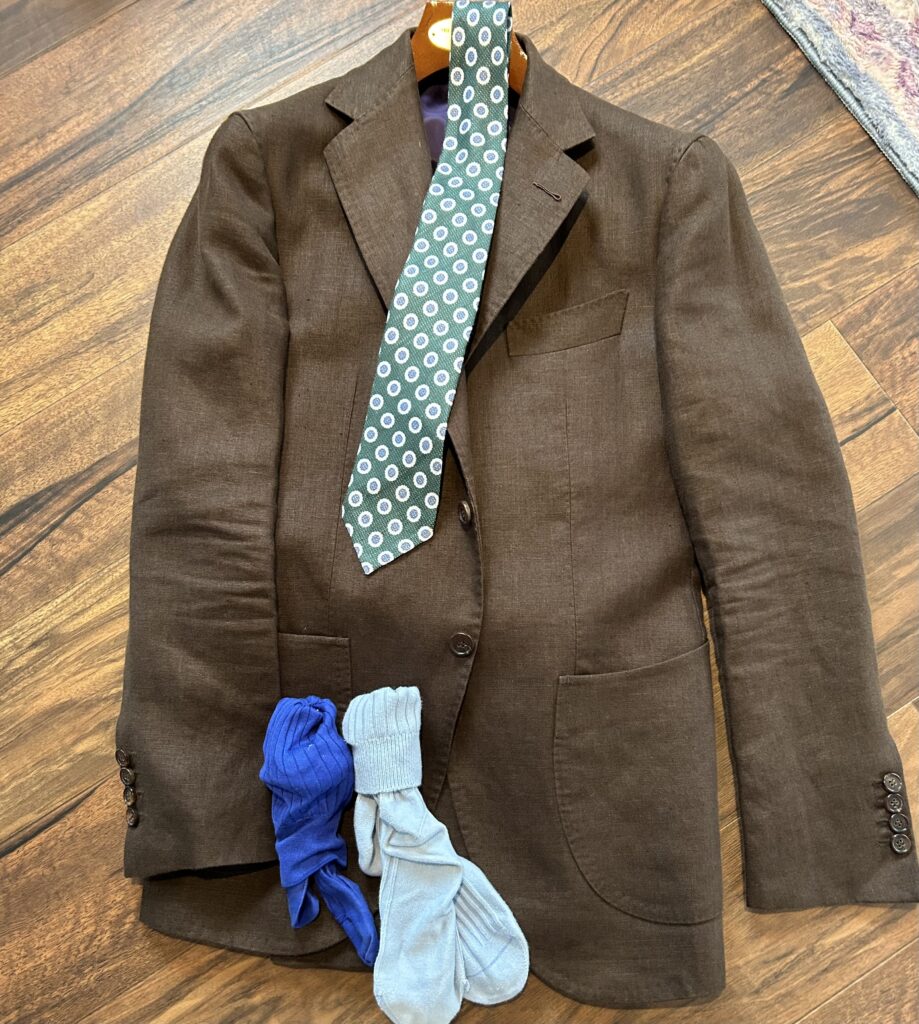
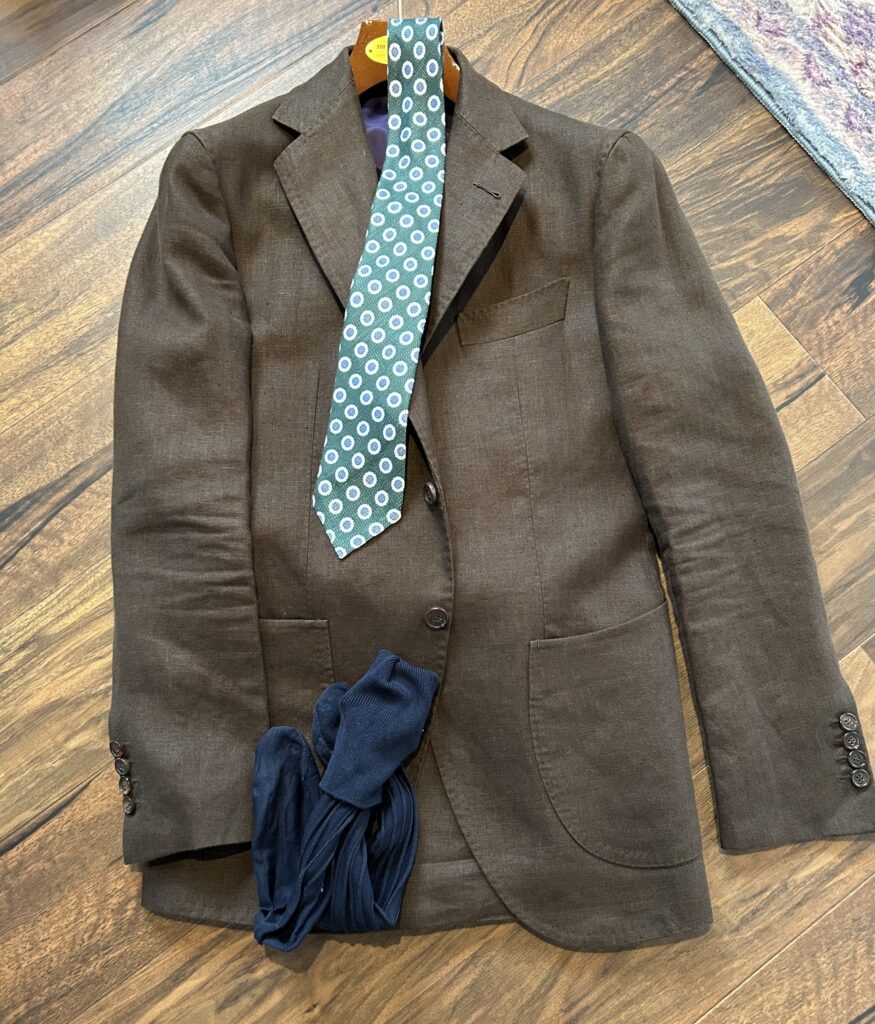
Bright blue stands out too much against a brown suit. A deeper navy sock strikes a better balance.
Summary
In short: with suits or jacket-and-trousers combinations, err on the side of restraint. In casual outfits, the key is to avoid looking like you are trying too hard.
That said, Masakatsu Ochiai’s assertion that “socks should be limited to black or navy” was quite shocking to me. Is this truly common wisdom around the world?
If you have other recommended approaches for choosing sock colors, I would love to hear them.
Thank you for reading.



コメント