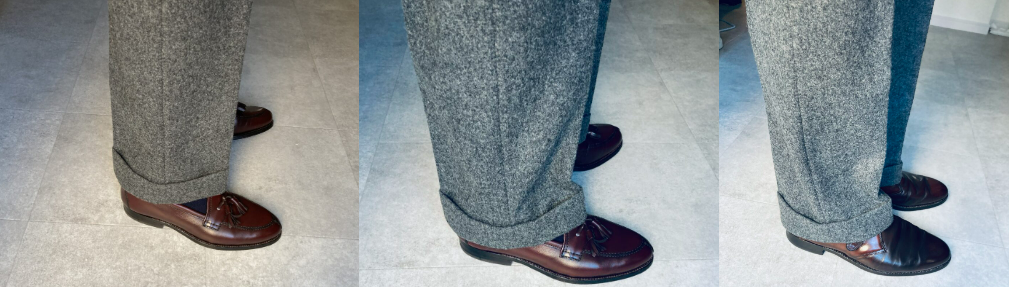
Hello. My name is Mr. Linen.
I want to wear classic suits—timeless, unaffected by trends, and always correct.
I study menswear daily with that goal in mind, but one question never seems to have a simple answer: what is the correct length for tailored trousers?
Rather than pushing my own opinion too strongly, this article explores the subject based on the thinking of classic tailoring professionals.
The “Correct” Trouser Length
I will start with the conclusion. A half break to full break is the most classic and reliable trouser length.
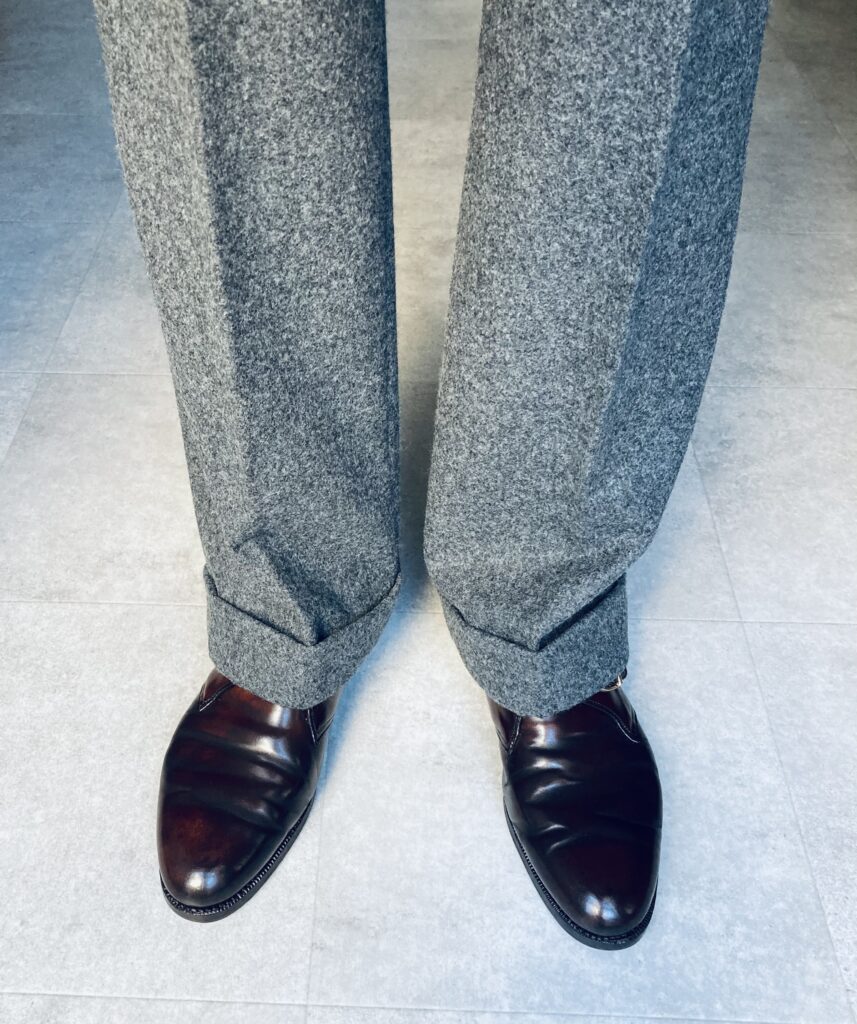
However, this conclusion is still quite rough. The ideal trouser length changes depending on several factors:
a. Waist position (rise)
b. Whether braces (suspenders) are worn
c. How easily the fabric wrinkles
d. Hem finish (plain or cuffed)
e. Hem width (leg opening)
f. Shoes worn with the trousers
I will explain each factor later, but first, let me explain why half break to full break is considered the most classic option.
If trousers are worn by a mannequin that does nothing but stand still, no break looks the cleanest. The crease drops straight down, and there are no wrinkles at all.
But humans walk, sit, and cross their legs. Every time we move, the trouser hem rises compared to when standing still. A length that still looks elegant—without exposing too much leg—during these movements is precisely the half-break to full-break range.
If someone were to spend their entire life sitting, then perhaps two or even three breaks would be ideal, as the leg would remain fully covered. But that is not realistic.
Another reason: when observing well-known figures who embody classic style—such as King Charles III, the Duke of Windsor —their trousers are almost always finished with half or full breaks.
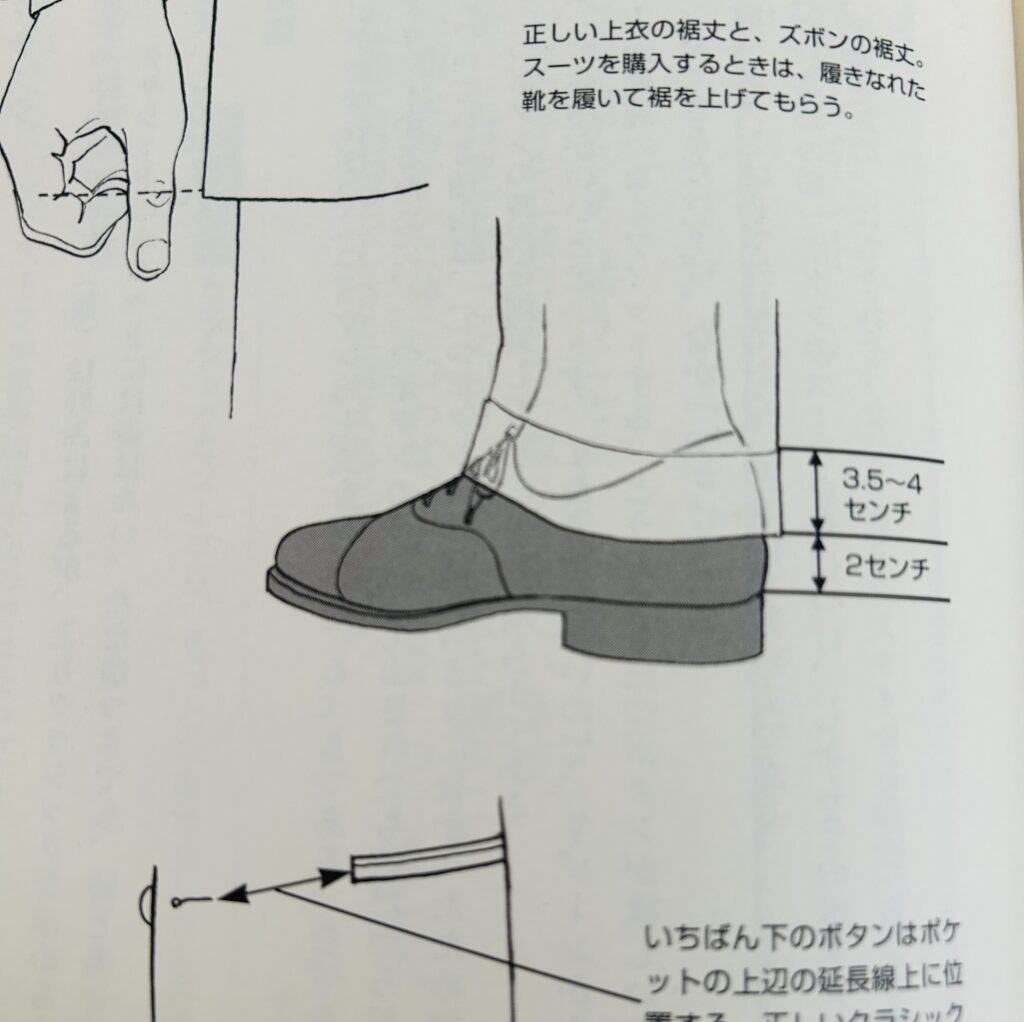
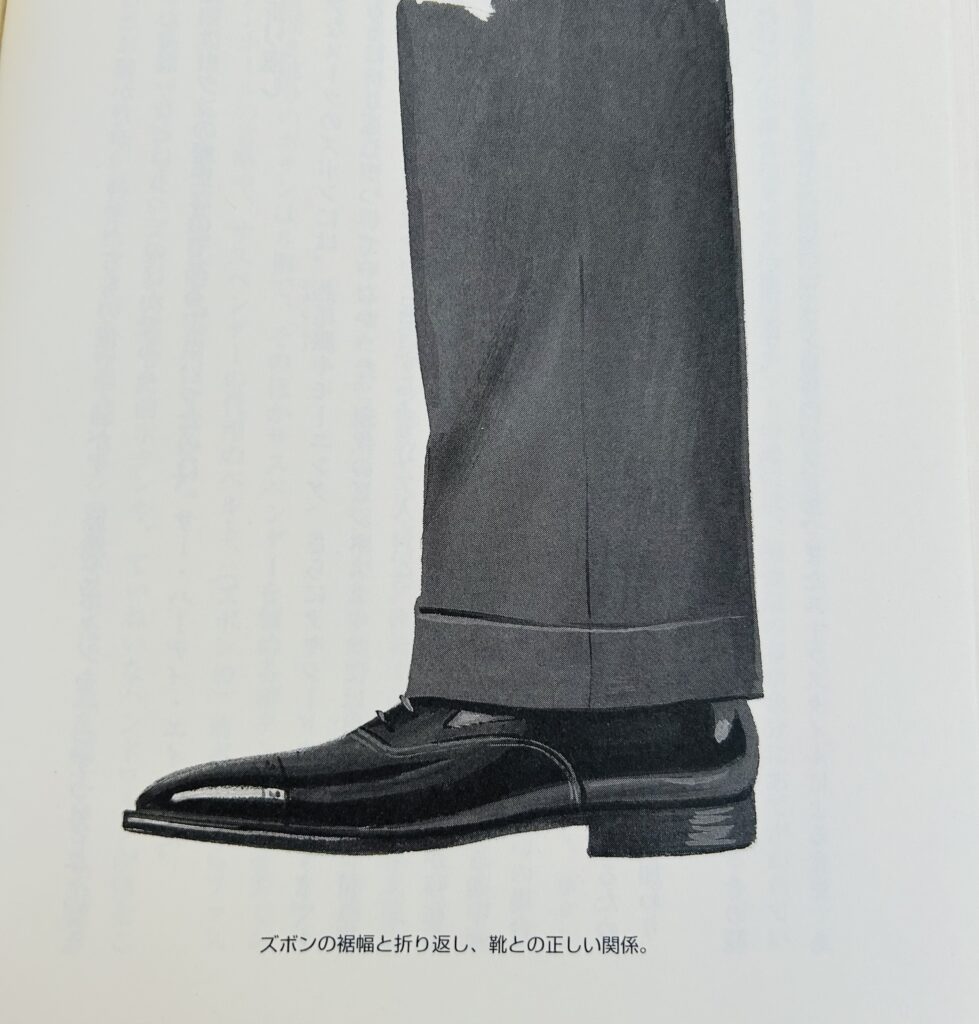
I also consulted written sources, including “Men’s Clothing Techniques” by Masakatsu Ochiai, a respected menswear critic who received Italy’s “Classico Italiano Award” and authored numerous books on classic style.
The book states the following:
a & b: Waist Position and Braces (suspenders)
Since waist position and braces are closely related, I will discuss them together.
When measuring trousers, where should the waist measurement begin?
Body structure varies, but for a classic look, the top of the trousers should sit slightly above the navel. The higher the rise, the longer the legs appear.
If trousers are intended to be worn with braces, the length should be set slightly longer than trousers worn without them. Otherwise, the braces will lift the trousers too much, making the hem noticeably short.
c: Fabric and Wrinkling
When sitting, wrinkles form around the hips and behind the knees. This causes the hem to rise slightly.
Wool recovers well from wrinkles, but linen and cotton do not. As a result, trousers made from these fabrics effectively become shorter while worn.
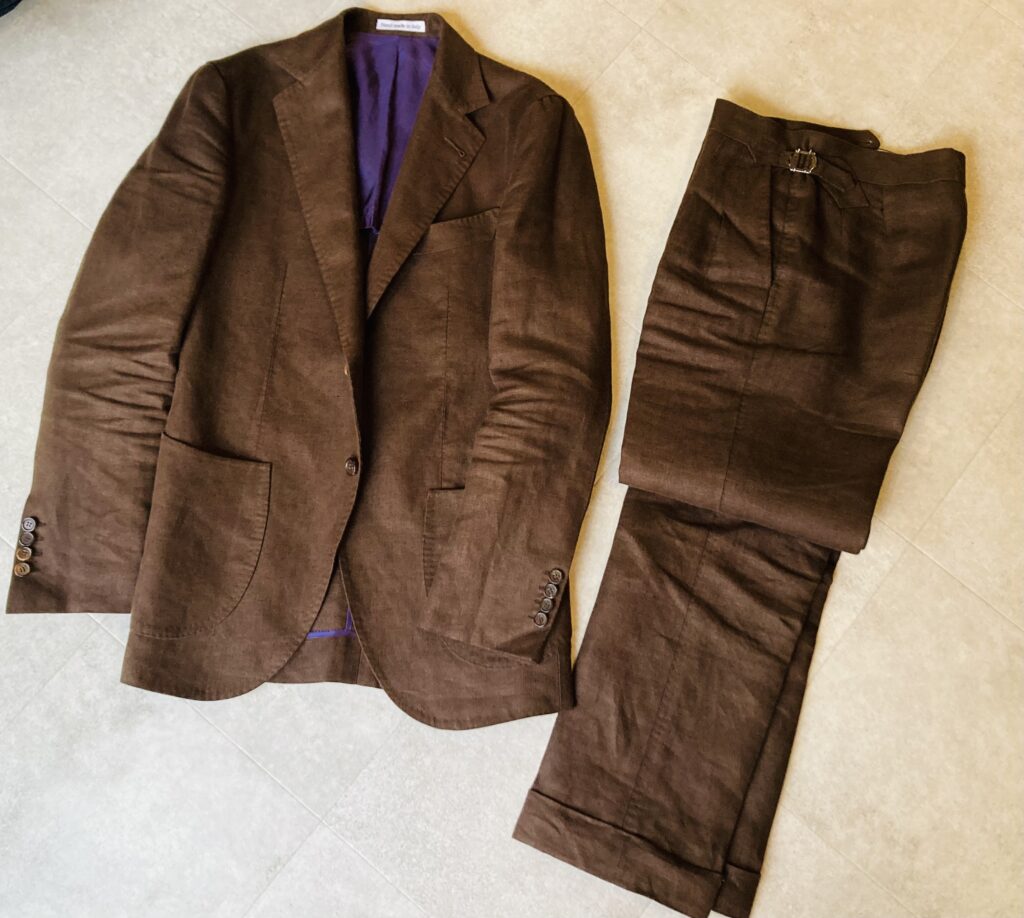
If the fabric wrinkles easily, setting the length to a full break when standing will usually result in a half break once wrinkles form. As a reference, I personally add about 5–10 mm (≈0.2–0.4 in) to linen trousers compared to wool.
d & e: Hem Finish and Hem Width
Many suit enthusiasts prefer cuffed trousers, except for formalwear such as tuxedos.
Cuffs add visual weight, help the trousers drape cleanly, and can later be converted to plain hems if preferences change.
Classic cuff depth is typically 3.5–4 cm (≈1.4–1.6 in), though some prefer wider one like 5 cm (≈2 in).
Hem width is another important factor. While 17–18 cm (≈6.7–7.1 in) was common in very slim eras, today wider 20–21cm (≈7.9–8.3 in) is standard. Historically speaking, up to 25 cm (≈9.8 in) remains within classic proportions.
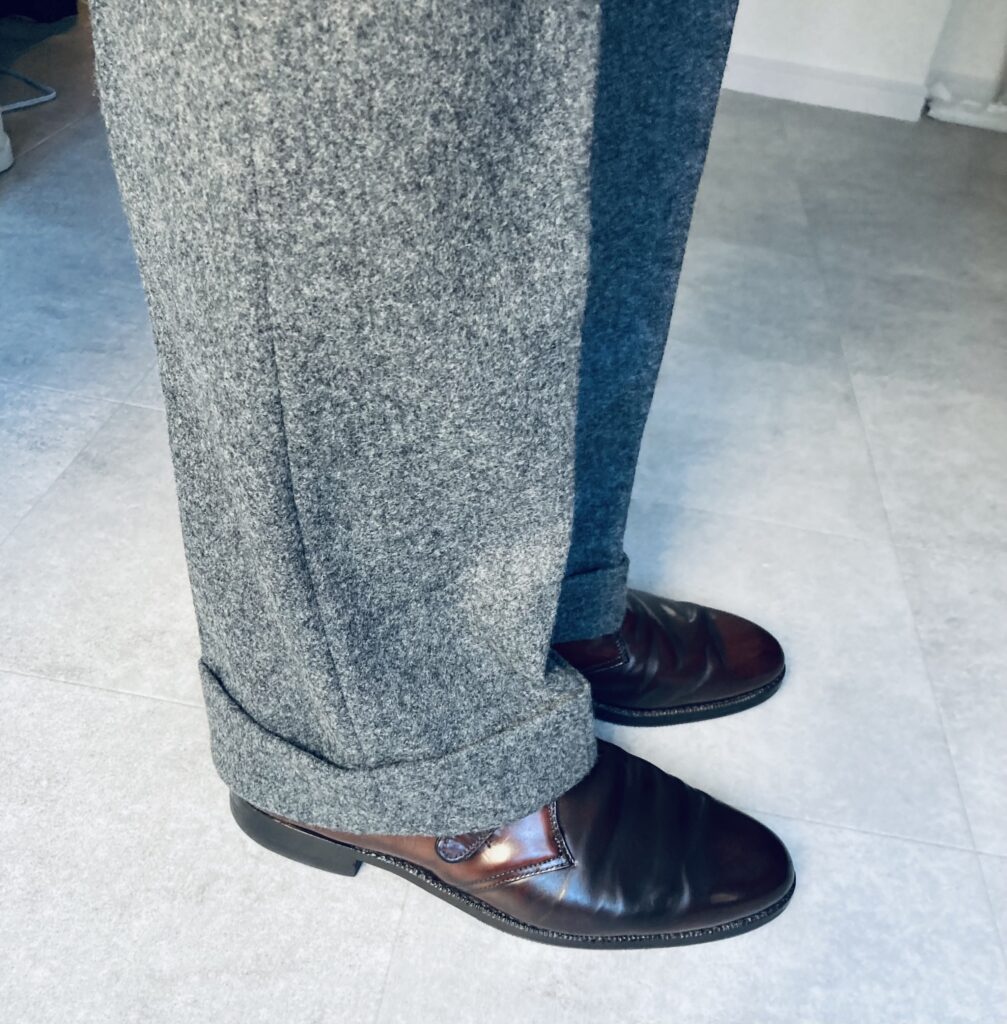
Wider hems pair beautifully with half to full breaks. Narrow hems work better with shorter lengths to avoid bunching around the shoe.
f: Shoes
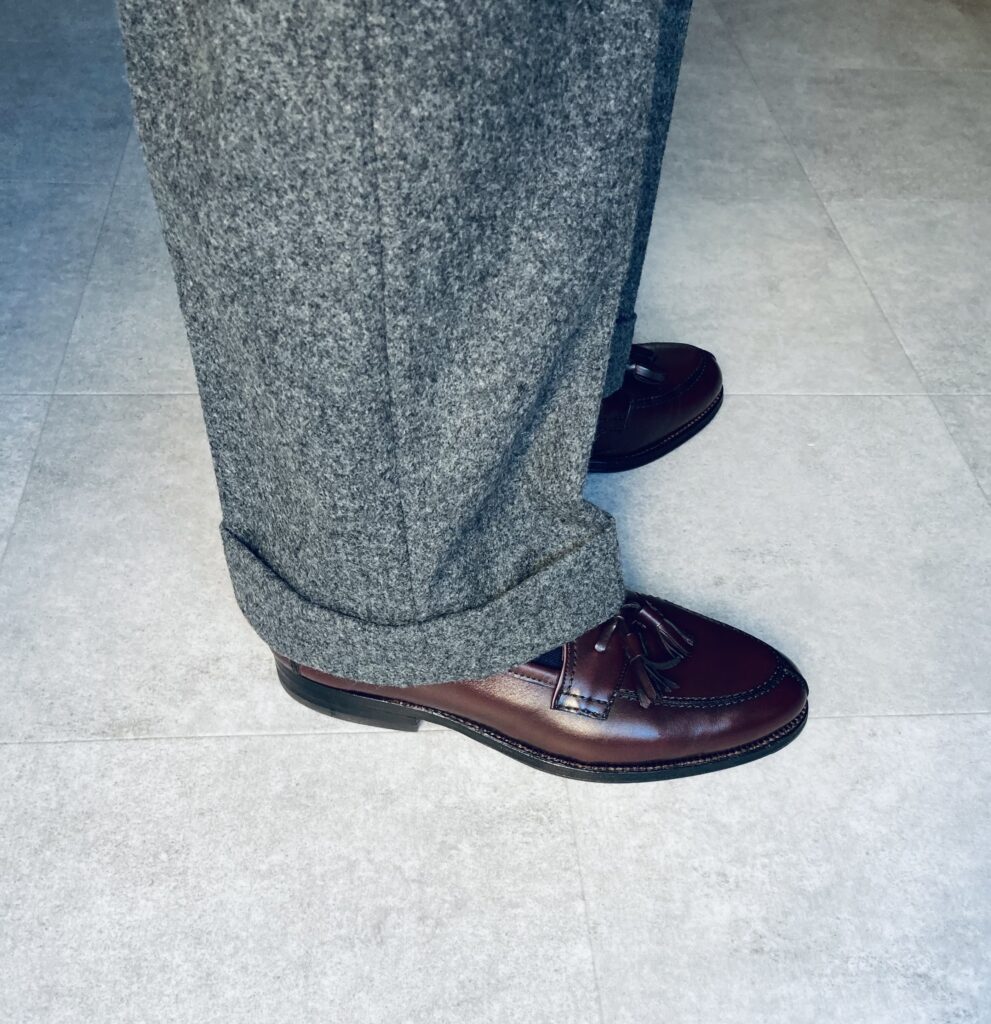
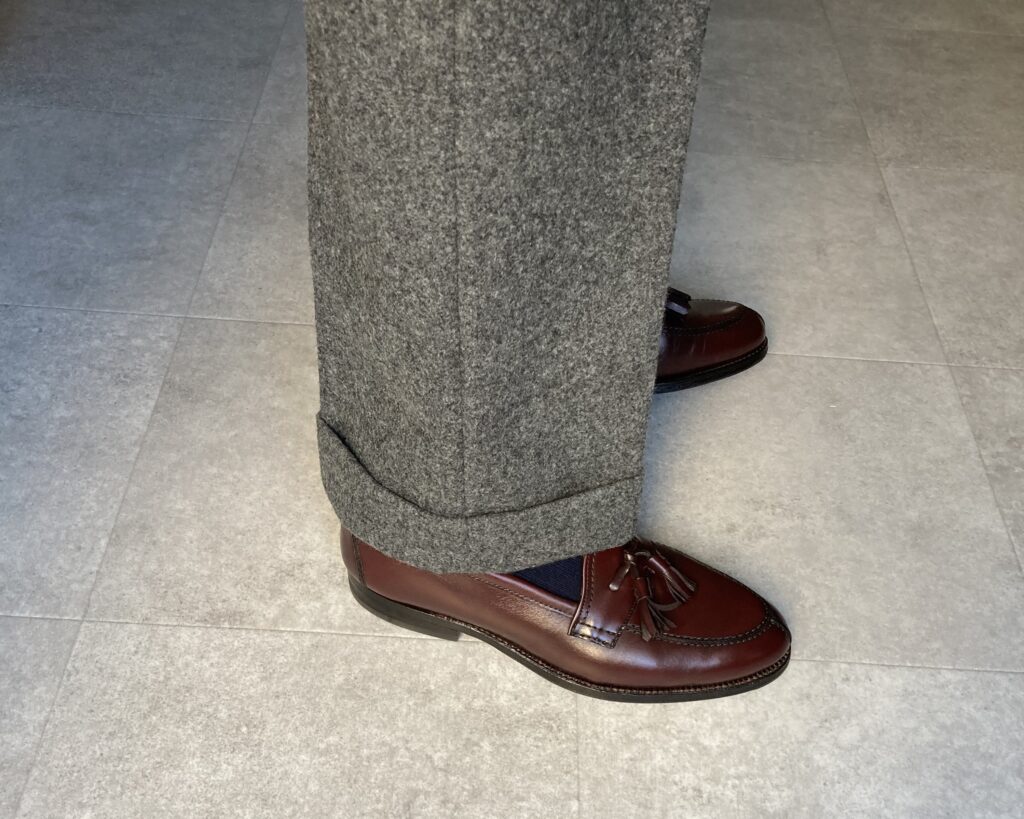
Most people wear one pair of trousers with multiple shoes, so length usually remains unchanged. Still, loafers deserve a brief mention.
Because loafers expose more of the instep, socks are more visible. A slightly longer length can help maintain balance, as long as the hem width is not too narrow.
Conclusion
Half break to full break is not a trend—it is the result of over a century of tailoring history, optimized for people who move, sit, and live their lives.
This may seem like a minor detail, but this depth is exactly what makes suits so fascinating.
I said at the beginning that I would not inject too much personal opinion—but perhaps I did. I simply love wide, longer trousers. Please forgive me.
Thank you for reading.






コメント