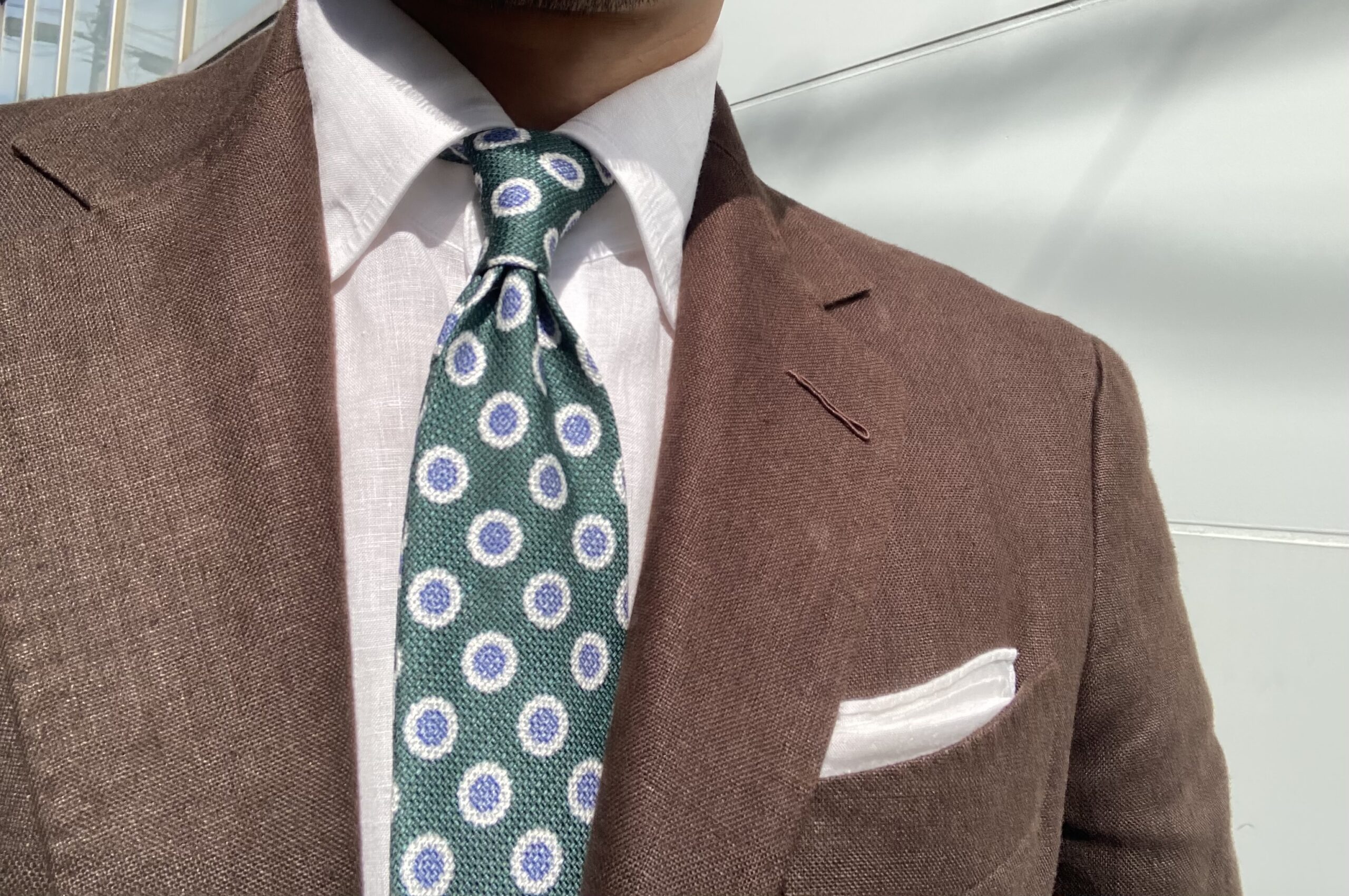
Hello. My name is Mr. Linen.
For those with more than a passing interest in clothing, creating a small indentation known as a “dimple” when tying a necktie may feel like common sense.
The V-zone of a gentleman is all about three-dimensionality. If a tie simply sits flat in the center without a dimple, the impression becomes flat and lifeless. That is why dimples are often considered essential.
Both in Japan and abroad, it seems that nearly 100% of well-dressed men create a dimple.
However, when looking at photographs of Gianni Agnelli—often described as Italy’s ultimate style icon—I found many examples where the dimple is either absent or extremely subtle.
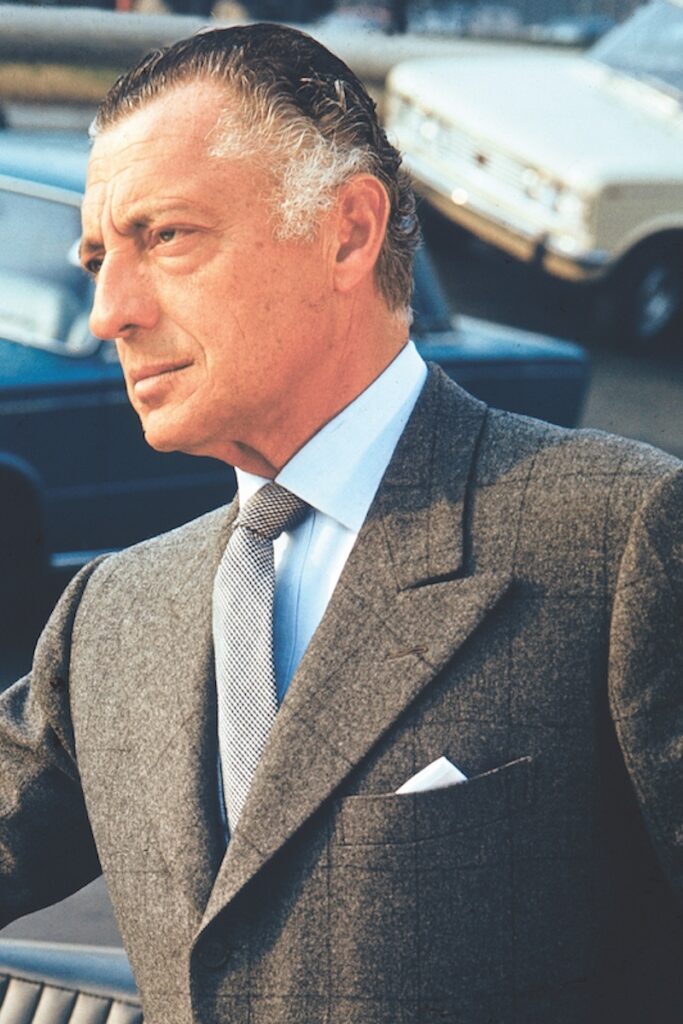
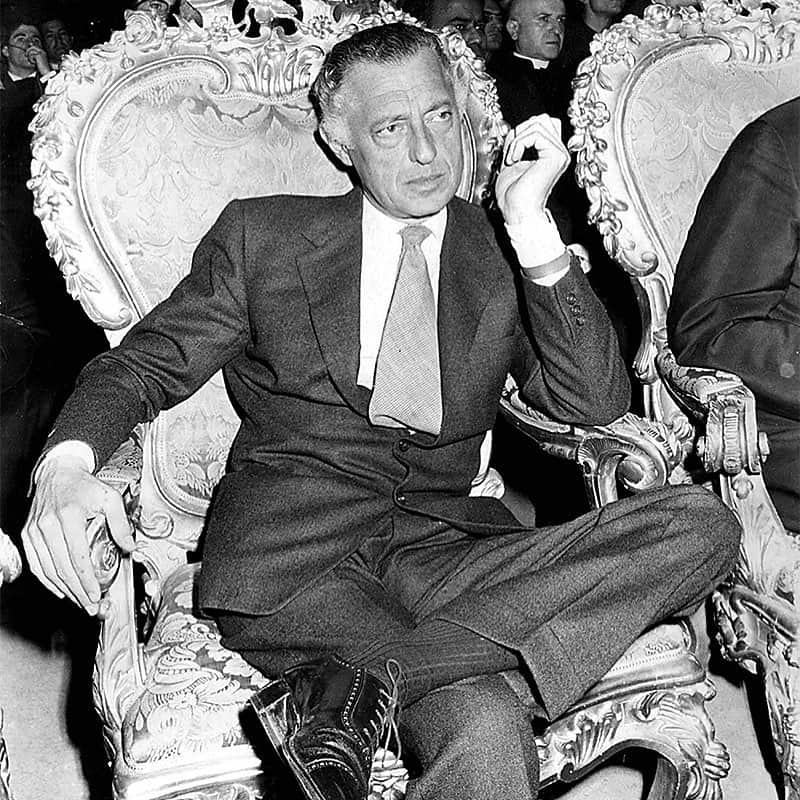
At his level, he looks effortlessly stylish even without a dimple. In fact, the absence of a dimple gives the impression that he is not trying too hard, which somehow makes him look even cooler.
So, is a tie dimple truly essential? That is what I would like to examine in this article.
Are Dimples Essential?
I will start with the conclusion.
Basically, yes—a dimple is essential. However, for seasoned veterans who fully understand classic style, deliberately going without a dimple can also work.
The fundamental reason a dimple is needed is to add depth and dimension to the V-zone.
The benefit of deliberately omitting it is what we might now call a sense of “ease” or “relaxed nonchalance”—in other words, looking as though you did not put in excessive effort.
That said, this is very much an advanced technique.
Those Who Practice the No-Dimple Style
Besides Gianni Agnelli, another figure I personally admire—Masakatsu Ochiai, a highly respected Japanese authority on classic menswear—also appears in several photographs wearing either no dimple or an extremely small one.
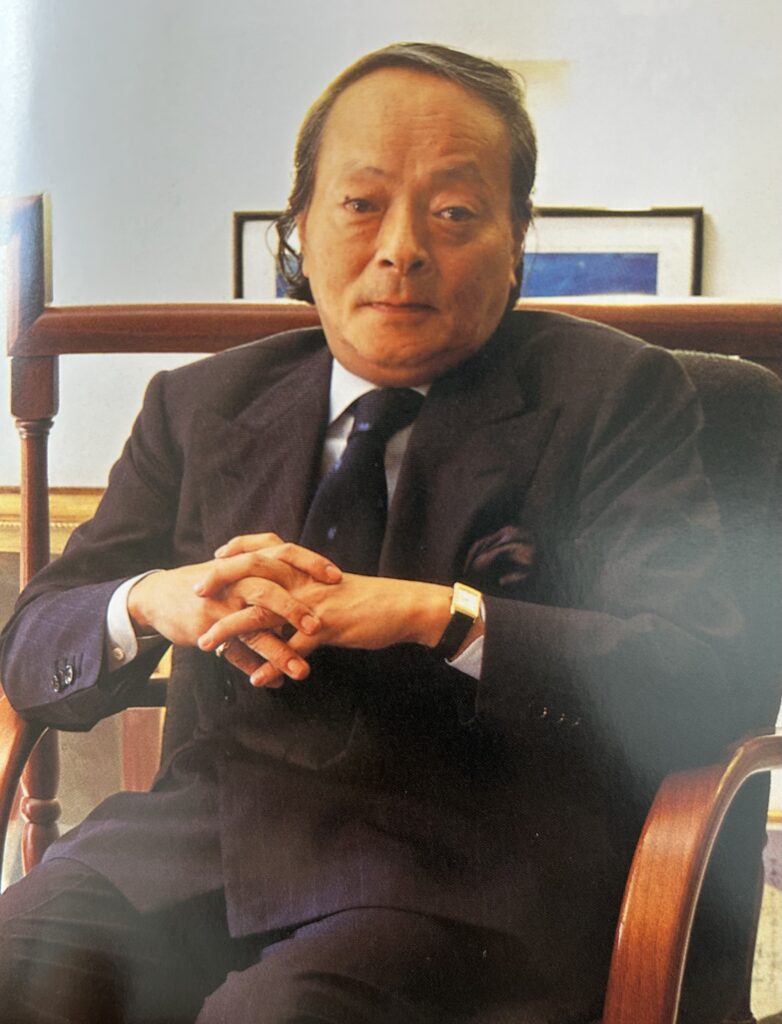
Gianni Agnelli can also be seen in many photos wearing a clear dimple, so one gets the sense that he simply tied his tie naturally in the morning—if a dimple appeared, fine; if not, that was fine too.
The same seems true for Masakatsu Ochiai. In his writings, you can find passages like this:
“The so-called dimple has nothing to do with classical expression itself. It can add a bit of dimension to an otherwise flat outfit, or a touch of refinement to a tie that is not particularly high quality.”
He also wrote that a single knot can make the neck area look weak, suggesting that he preferred tying a fairly large, relaxed knot without paying special attention to creating a dimple.
What these two figures share is an Italian approach to style. Although Ochiai is Japanese, nearly all of the suit brands featured in his books are Italian.
Both clearly understand classic menswear deeply, yet compared with British style, their approach feels noticeably more natural and relaxed.
Now, let us turn our eyes to Britain and look at King Charles III and the Duke of Windsor.
Compared to the Italian examples, they more often wear clearly defined dimples, yet even so, there are photographs where the dimple is barely visible or entirely absent.
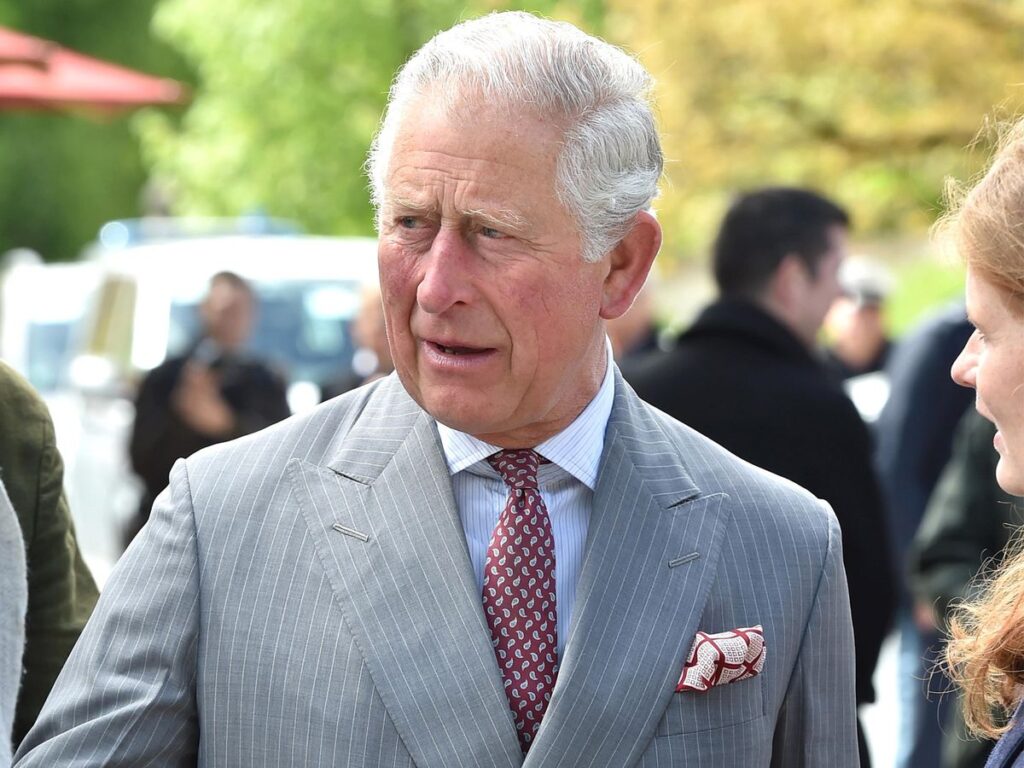
https://www.25ans.jp/princess/british-royal-family/g87931/princecharles-20191023/
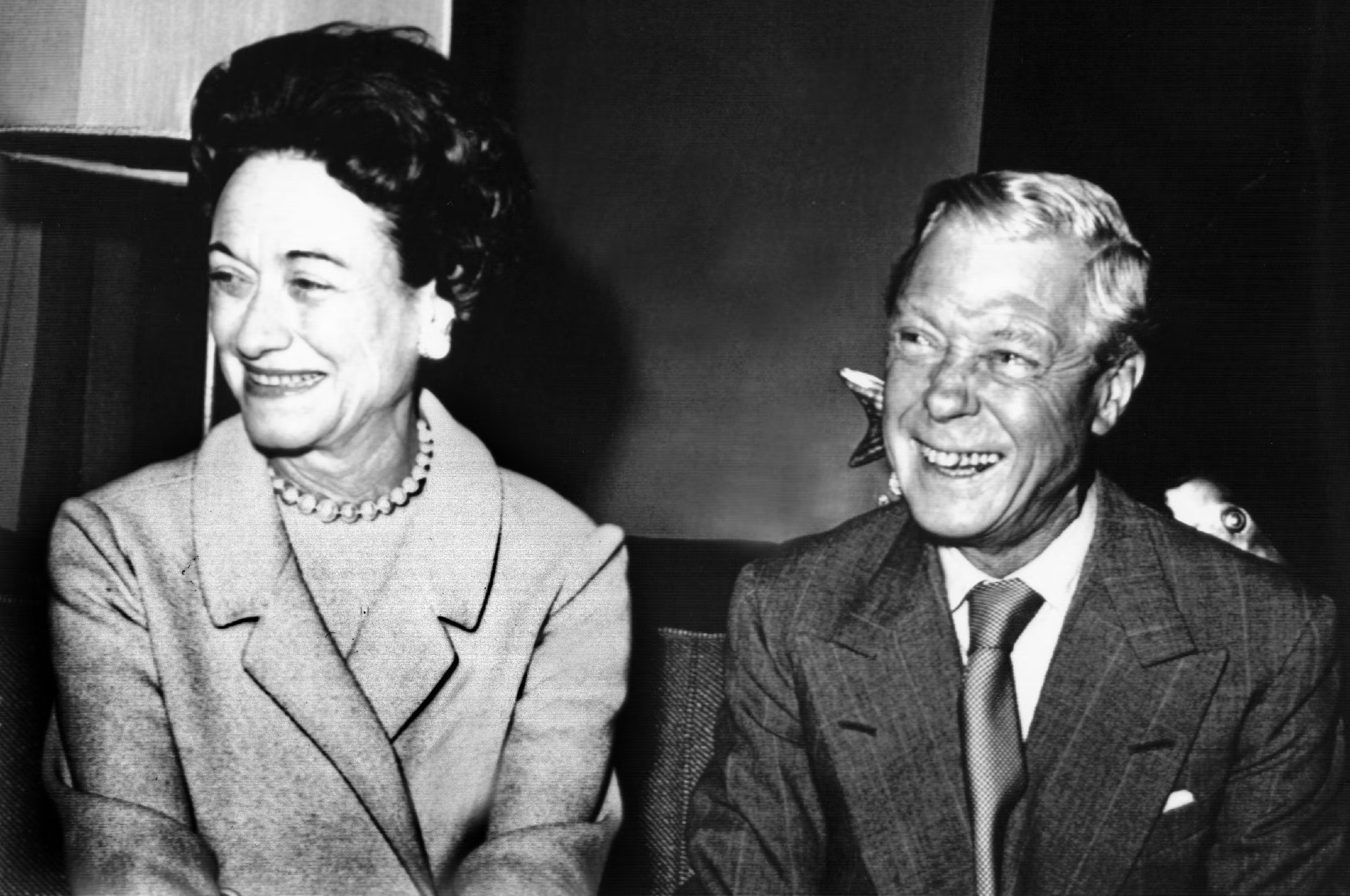
It is unlikely that older neckties were harder to shape into dimples, so it is probably fair to say that they simply did not place much importance on deliberately creating one.
As we have seen, true masters of classic style can make it work even without a dimple.
Types of Tie Dimples
When we say “dimple,” it does not refer to just one style.
The most common type is a single dimple in the center.
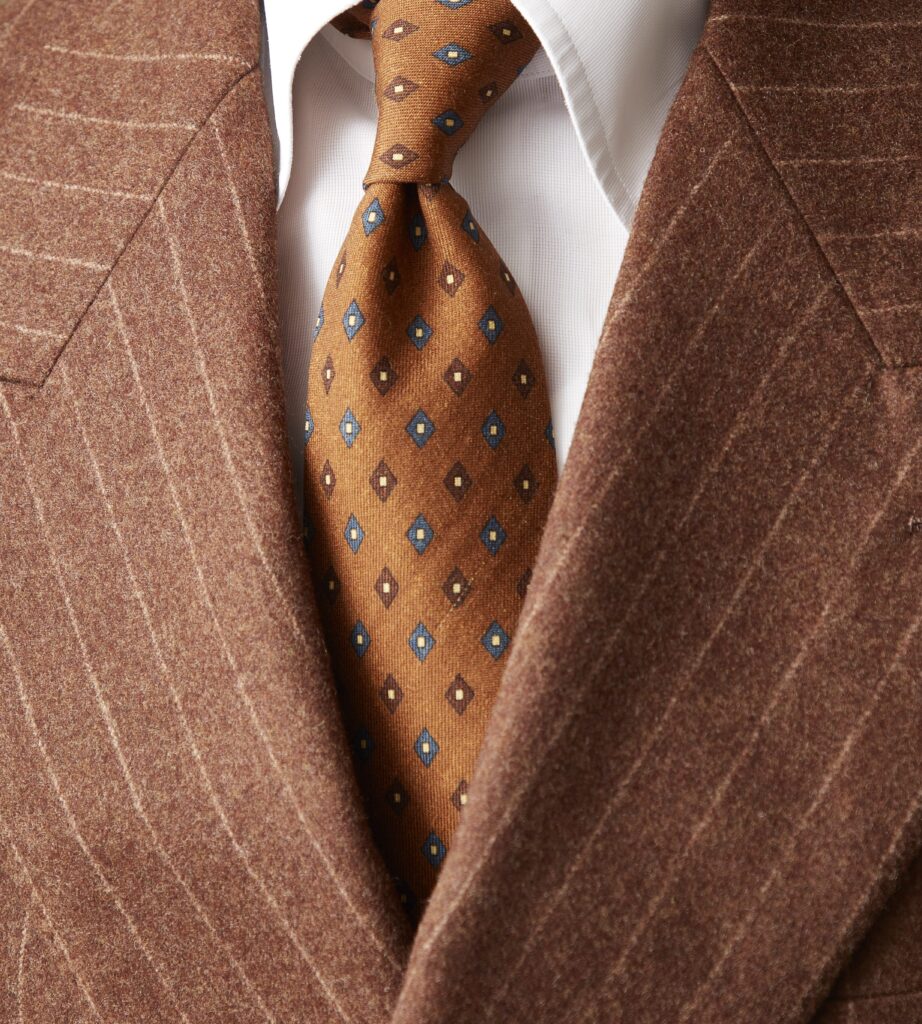
https://therakejapan.com/special/a-lifetime-in-style/
Another style features two dimples on either side.
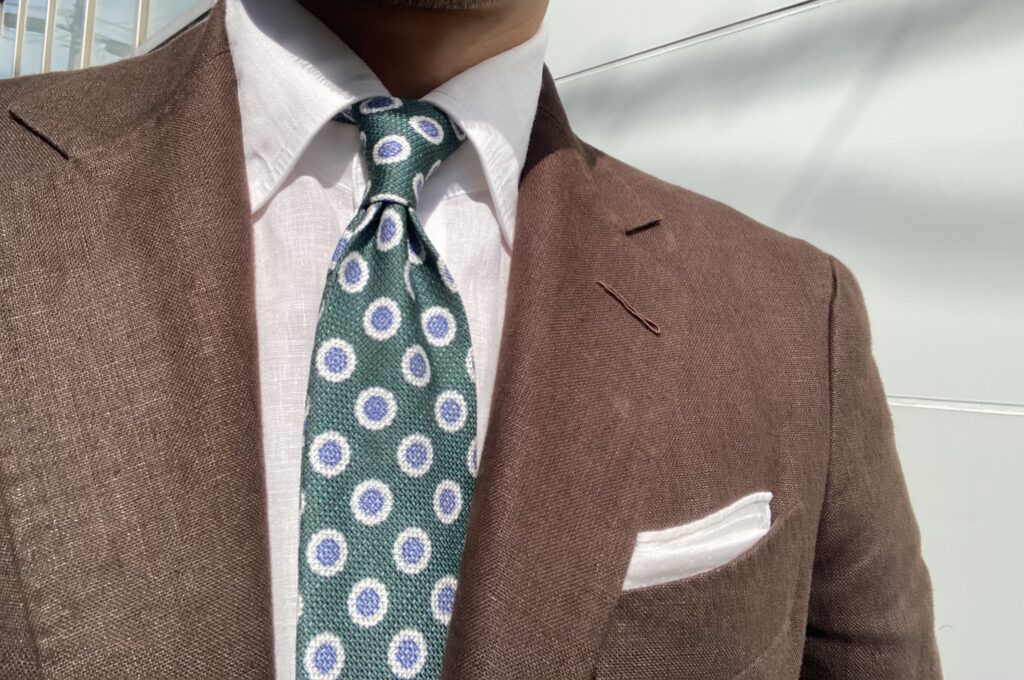
There may be other variations, but these two are the main ones.
Personally, I choose the two-dimple style—simply because I am not very dexterous and cannot create a clean single dimple. When I try, it ends up too shallow and looks more like a wrinkle than a dimple.
With some practice things may change, but for me, the two-dimple style is overwhelmingly easier.
From a classical standpoint, either is acceptable. However, the two-dimple style can sometimes look a bit too “constructed,” so if you are able to do it well, the simpler single dimple may be the better option.
A Side Note
Many people have probably experienced damaging a tie because a hangnail or rough skin caught on the fabric while tying it.
Masakatsu Ochiai reportedly used special leather gloves without lining when tying his neckties.
In his books, he wrote that good gloves allow you to feel objects almost exactly as if you were using bare hands.
Owning leather gloves specifically for tying ties—truly impressive. I would like to become that kind of man someday.
(Later I got a pair of that kind of gloves.)





コメント