Hello. My name is Mr. Linen.
The other day, I wrote about suit care and mentioned that if you own a garment steamer, dry cleaning is unnecessary for 3 to 5 years.

That said, there are times when you sweat heavily, or accidentally spill beer.
A steamer alone can’t deal with that. And even if you send your suit to dry cleaning, water-based stains like sweat and beer won’t come out.
Professional wet cleaning would cost at least around USD 100.
In those cases, the solution is simple: just wash them at home.
Once you actually try it, you’ll be surprised how easy it is.
Today, I’ll show you how. I hope you find it helpful.
Suits Are Not Actually Weak Against Water
Most suits have a “Do Not Wash” symbol on the care label.
However, this is largely to protect manufacturers from responsibility when someone throws a suit into a washing machine and ruins it. In reality, most suits can be washed with water.
Materials that truly cannot be washed with water are silk and leather.
Wool, which makes up the majority of suits, is sheep’s hair. There’s no way a natural animal fiber would be weak against rain.
For cotton or linen suits, washing with water is even less of an issue.
So in reality, most suits—or rather, most garments—can be washed at home.
Washing itself is easy, but preventing shrinkage by avoiding high heat during drying, and properly pressing out wrinkles, are extremely difficult.
That’s where professional wet cleaning earns its value.
Only Trousers Can Be Washed at Home
A suit consists of a jacket and trousers (pants).
As mentioned earlier, while washing itself is possible, drying and pressing without ruining the shape is very difficult.
This applies especially to jackets.
Jackets are three-dimensional garments.
People often say the V-zone is all about structure, and that’s why a well-structured jacket is considered a good jacket.
Pressing such a three-dimensional garment without losing its shape requires not only skill, but also specialized equipment.
For example, sleeves. If you have a cylindrical ironing board, you can simply slide the sleeve over it and press from above.
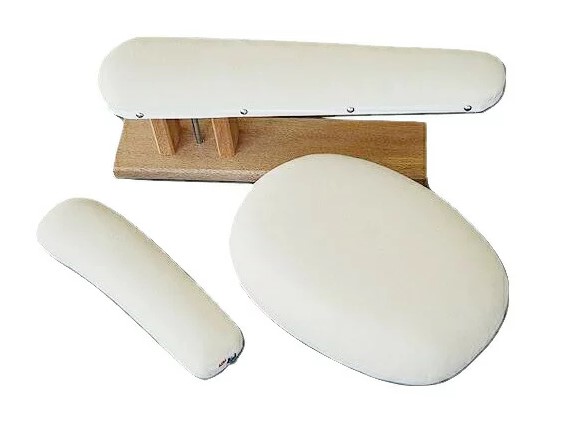
But almost no one has something like that at home.
I once read that rolling up a bath towel and sliding it inside the sleeve could work as a substitute, so I tried it—but it didn’t go very well.
The shoulder and chest area is even more difficult.
If you have a mannequin at home, you could dress it and press the jacket on top of it. Without one, it’s practically impossible.
Trousers, on the other hand, are three-dimensional when worn, but once laid flat on the floor, they’re just flat pieces of fabric.
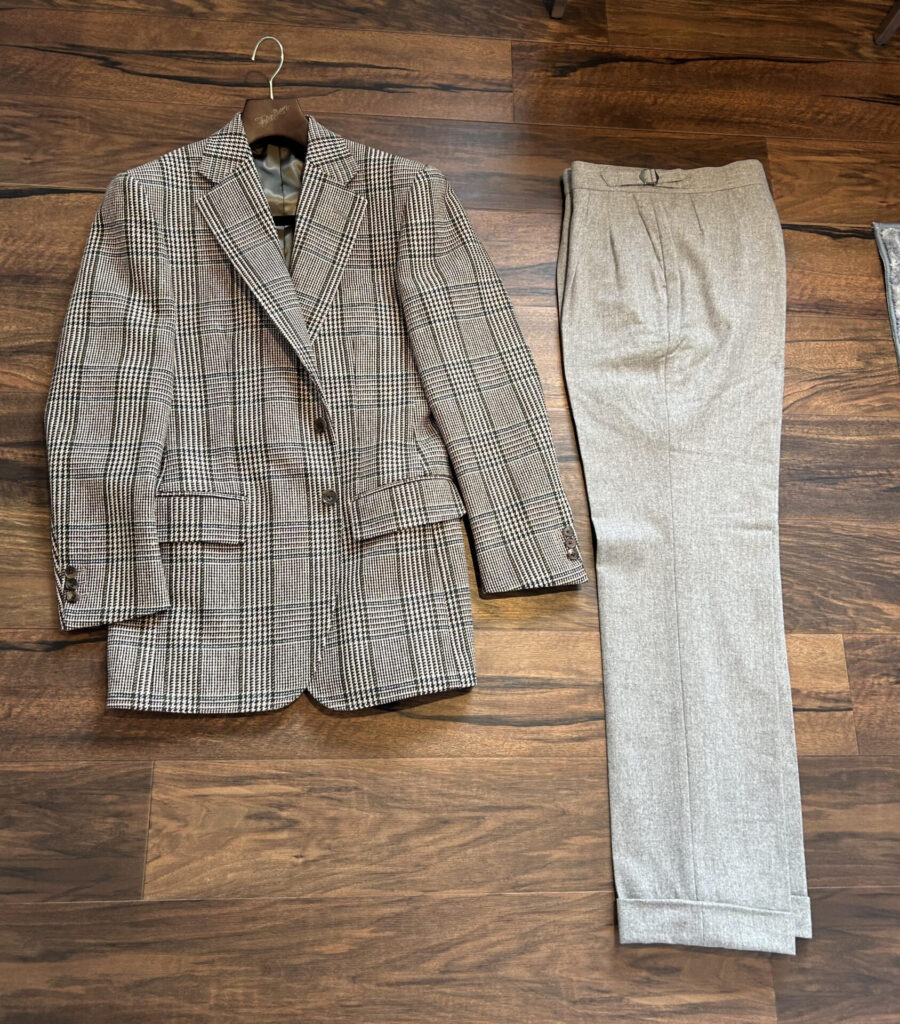
With a normal ironing board, pressing them is very easy.
That’s why slacks can be washed at home.
Washing and Rinsing
From here, I’ll explain the actual washing process.
First, prepare detergent.
A standard delicate-garment detergent is fine, but I chose this one made specifically for cashmere.
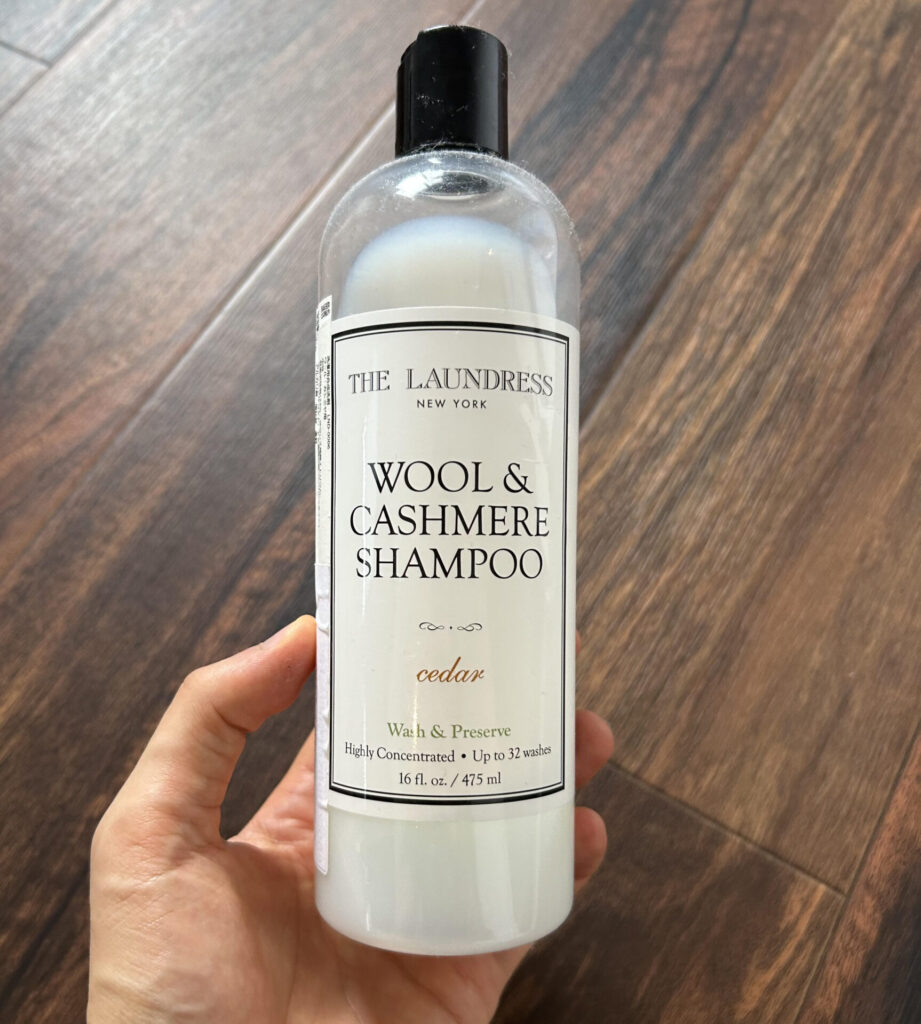
I don’t even own a cashmere suit, but I figured that if it’s gentle enough for cashmere, it wouldn’t damage any other fabric.
The bathtub is the easiest place to work.
Fill the tub with water (never hot water). About 15 cm (6 inches) deep—enough to fully submerge the trousers.
Add a generous amount of detergent. Too little won’t clean properly, so don’t be stingy.
Stir until it becomes nicely foamy.
Then, boldly drop the slacks into the water.
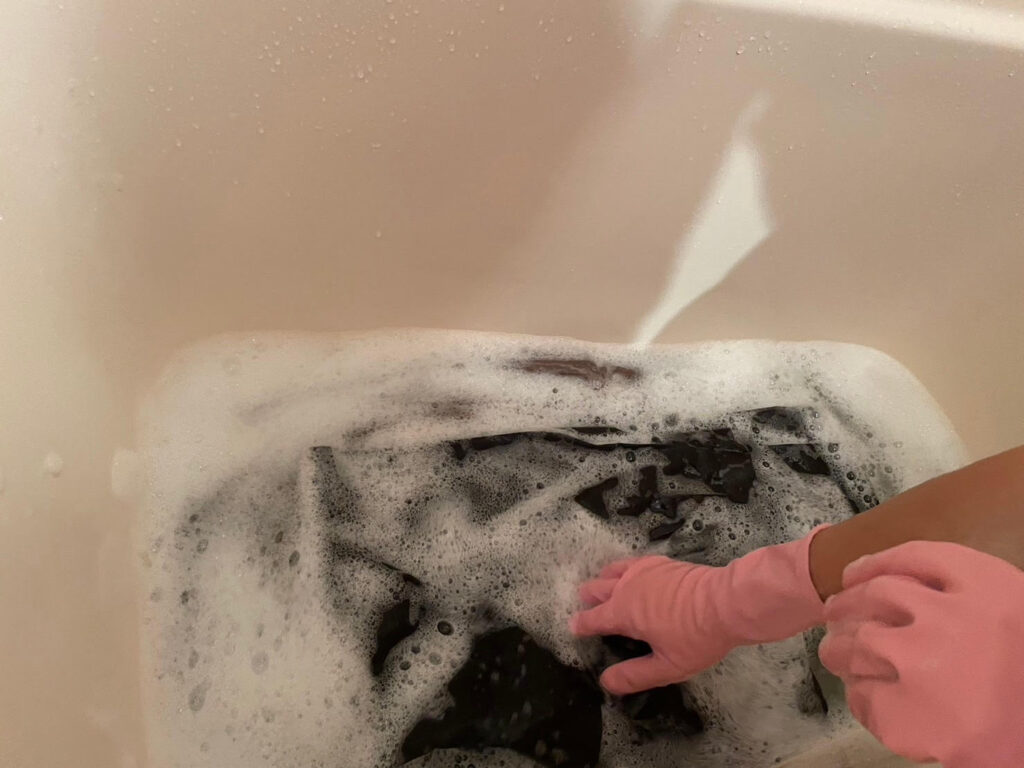
Lay them flat, just like when ironing, and place them gently.
Once fully submerged, gently press and move them by hand so the detergent penetrates the fabric.
Let them sit for a few minutes. I’m not sure what the “correct” time is—I usually wait 2–3 minutes.
After that, drain the tub.
Next is the rinsing step.
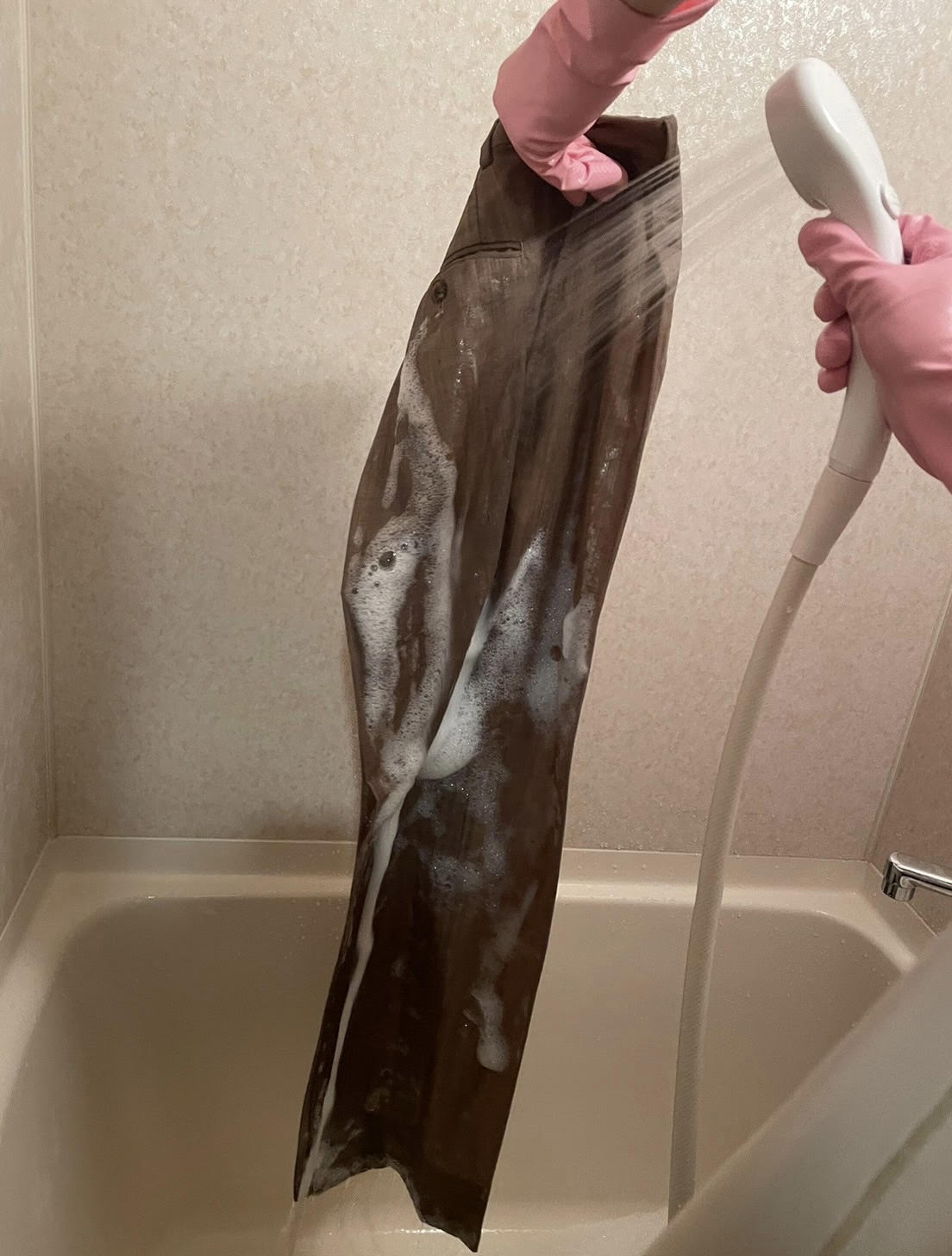
Instead of repeatedly filling and draining the tub, I make good use of the shower.
Rinse thoroughly from both the outside and inside of the slacks, washing away as much detergent as possible.
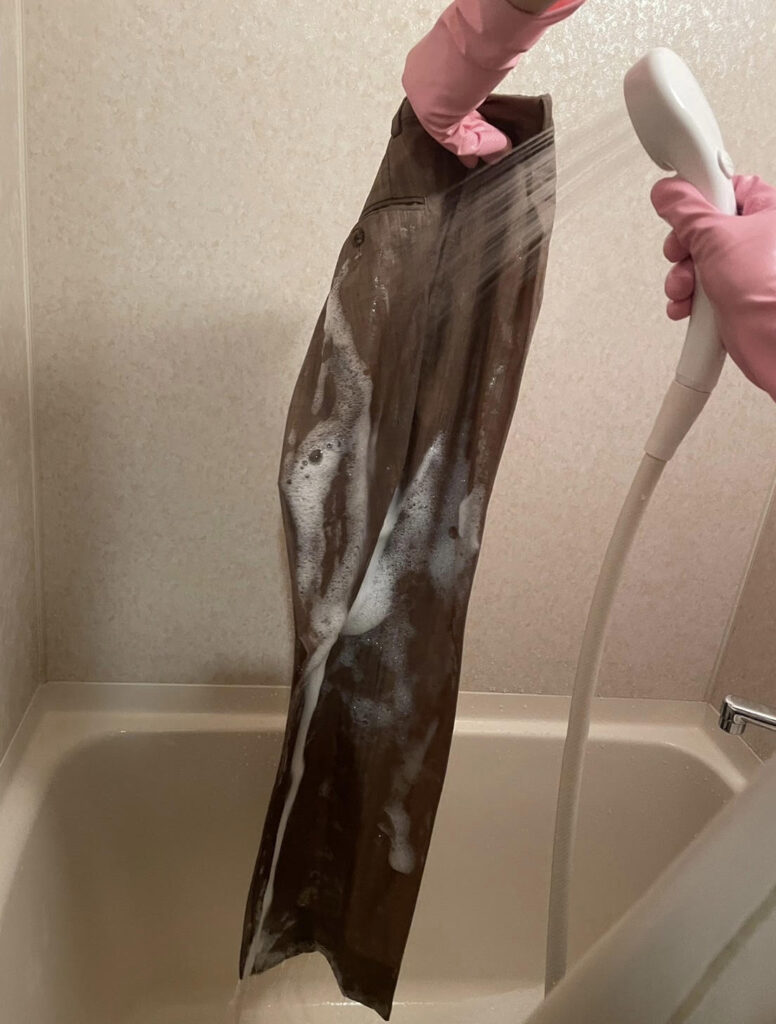
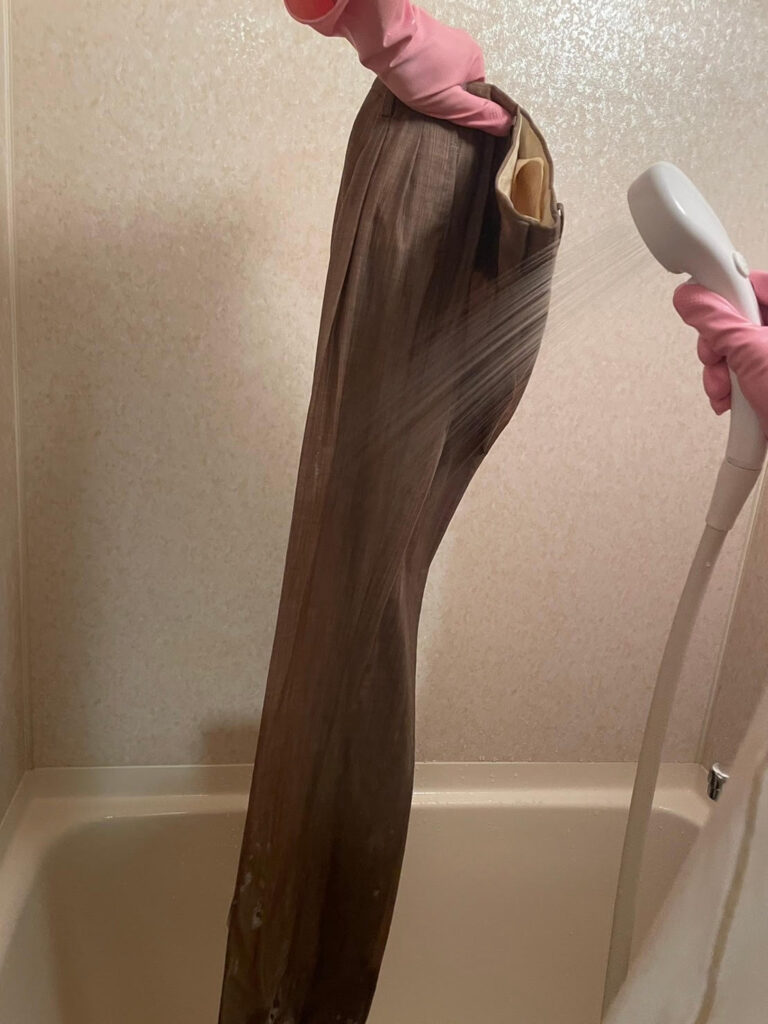
Once the foam is mostly gone, fill the tub again and gently press the fabric as before.
If foam still appears, repeat once more. When no foam comes out at all, you’re done.
Water Removal and Drying
Next comes drying.
Before drying, you need to remove excess water.
After rinsing, the slacks are soaked and will drip heavily when lifted.
You can’t wring them like a towel. Using a washing machine’s spin cycle is an option, but I find that scary, so I sandwich the slacks between bath towels and let them absorb the water.
One towel won’t be enough—use several without hesitation. How much water you remove here is crucial.
Now for drying.
Hang the slacks on clip hangers.
Hangers that fold the slacks in half cause overlapping fabric, which slows drying.
Using two hangers like this helps them dry faster.
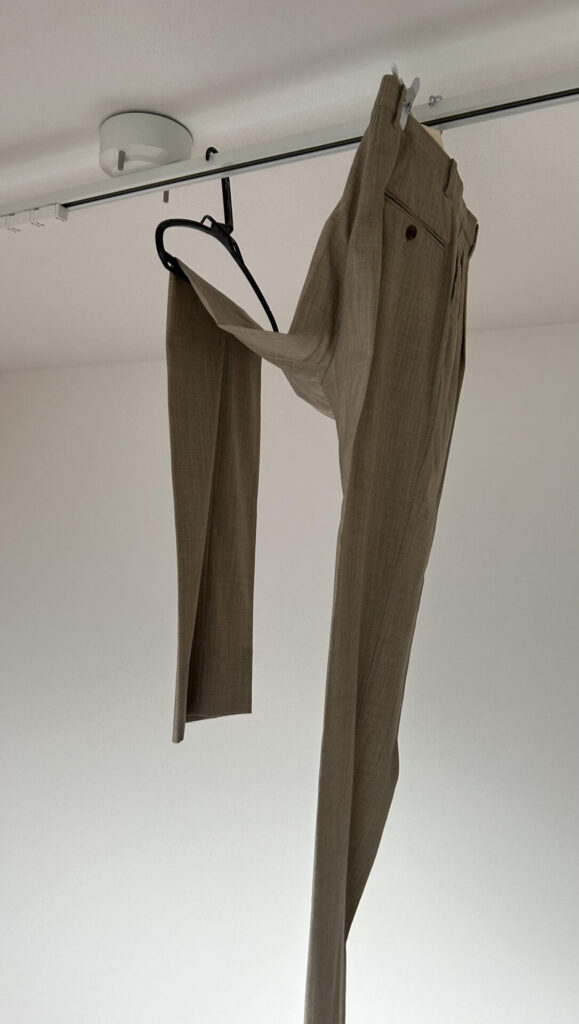
Once they’re partially dry, flip them upside down. The weight helps stretch out wrinkles.
If you do this from the start, they may be too heavy and slip off the hanger.
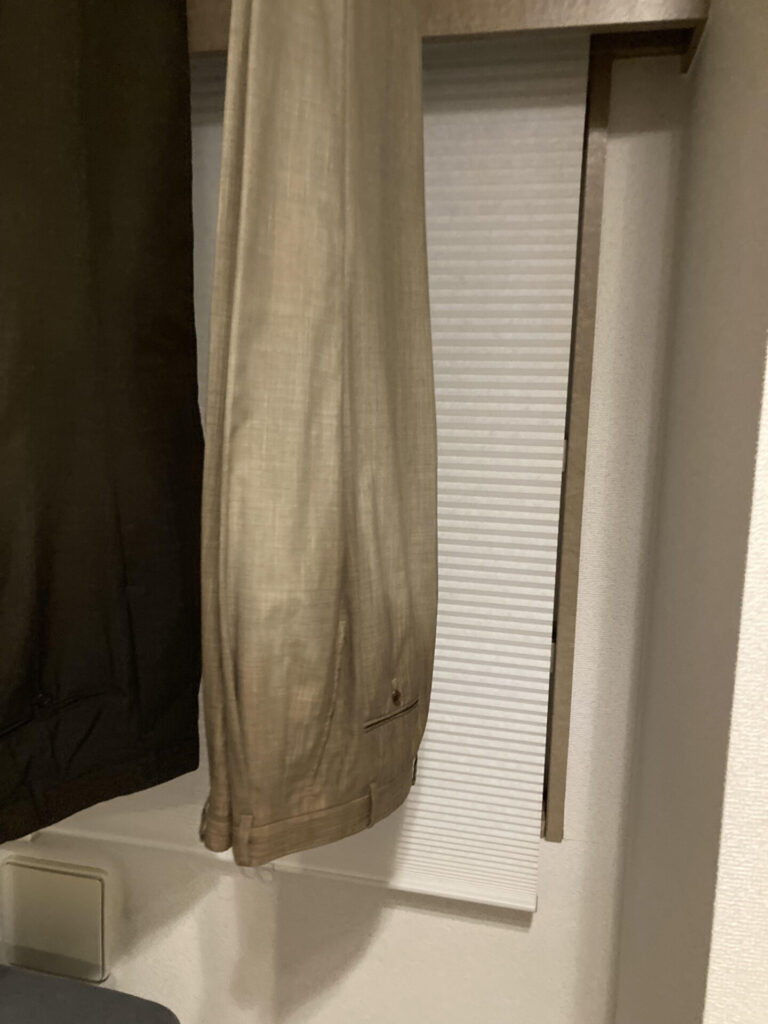
If your home has a bathroom drying function, that’s the fastest option.
You might worry about shrinkage due to heat, but it’s nowhere near as hot as a laundromat dryer, so it’s safe. (I’ve done it myself.)
If not, air drying is your only choice.
Use a fan and turn on your air conditioner’s dry mode to speed things up.
That said, summer humidity makes this difficult, so I wouldn’t recommend it.
I wash both summer and winter slacks together during the dry winter season.
I’ve never tried drying them in direct sunlight, but it likely increases the risk of shrinkage, so I don’t recommend it.
If drying takes too long, water stains may appear.
In this case, the pocket area stayed wet longer and eventually turned into water stains.
(This happened when I used only a fan, without bathroom drying.)
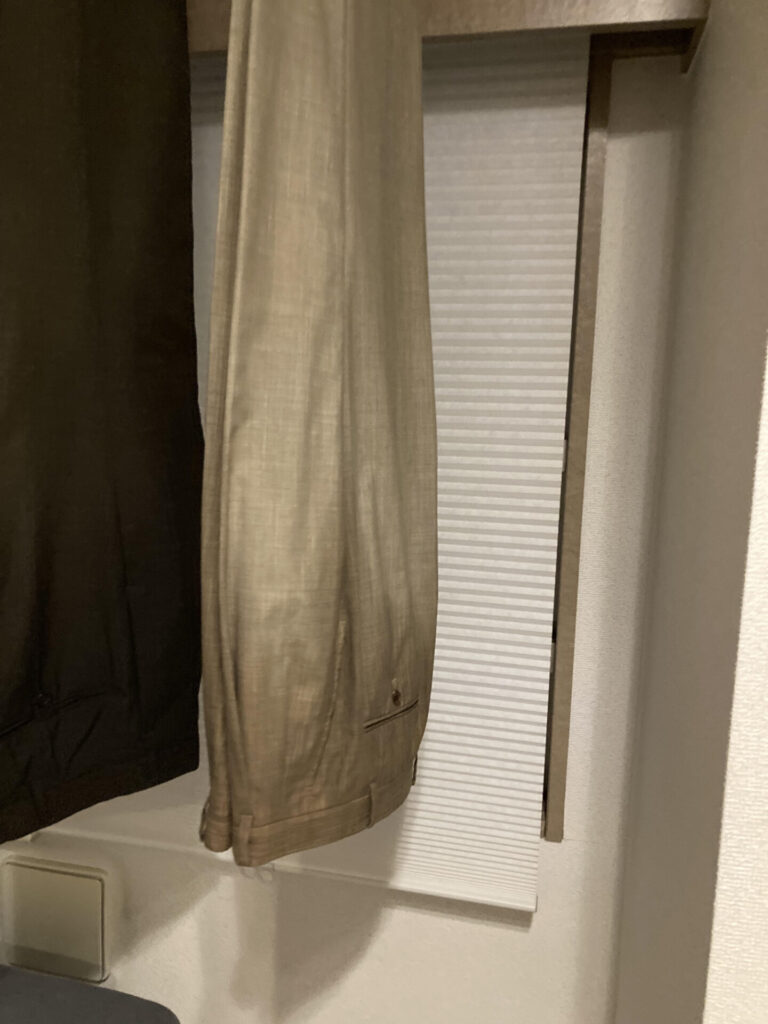
I don’t know a perfect way to prevent water stains.
It really comes down to how much water you remove with towels, and how dry the room is.
Pressing
Once everything is completely dry, all that’s left is pressing.
If you’ve followed the drying method above, there should be very few wrinkles.
So just iron them normally.
Depending on the fabric, the center crease may fade, but a faint trace usually remains. Align your press with that line and you’ll be fine.
Conclusion
That’s how I hand-wash slacks at home.
In my experience, this method causes no shrinkage at all.
I’ve done this with linen and cotton, as well as wool—not only lightweight fabrics, but also heavy flannel.
I thought flannel would dry slowly due to its thickness, but perhaps because it’s brushed and holds air, it actually dried faster than expected.
I haven’t tried tweed yet, but I plan to eventually.
It takes time, but it’s almost free—and most importantly, it thoroughly removes sweat and urine, which feels incredibly satisfying.
If you’ve never washed your slacks at home before, why not give it a try?



コメント
You can dry them on the Spin cycle in a washing machine. I would suggest turning them inside out and rolling them up and putting them in a washing bag and zip the bag closed. That method has worked beautifully for me in the past.
Thank you for your comment.I will try the method you taught me!