Hello. My name is Mr. Linen.
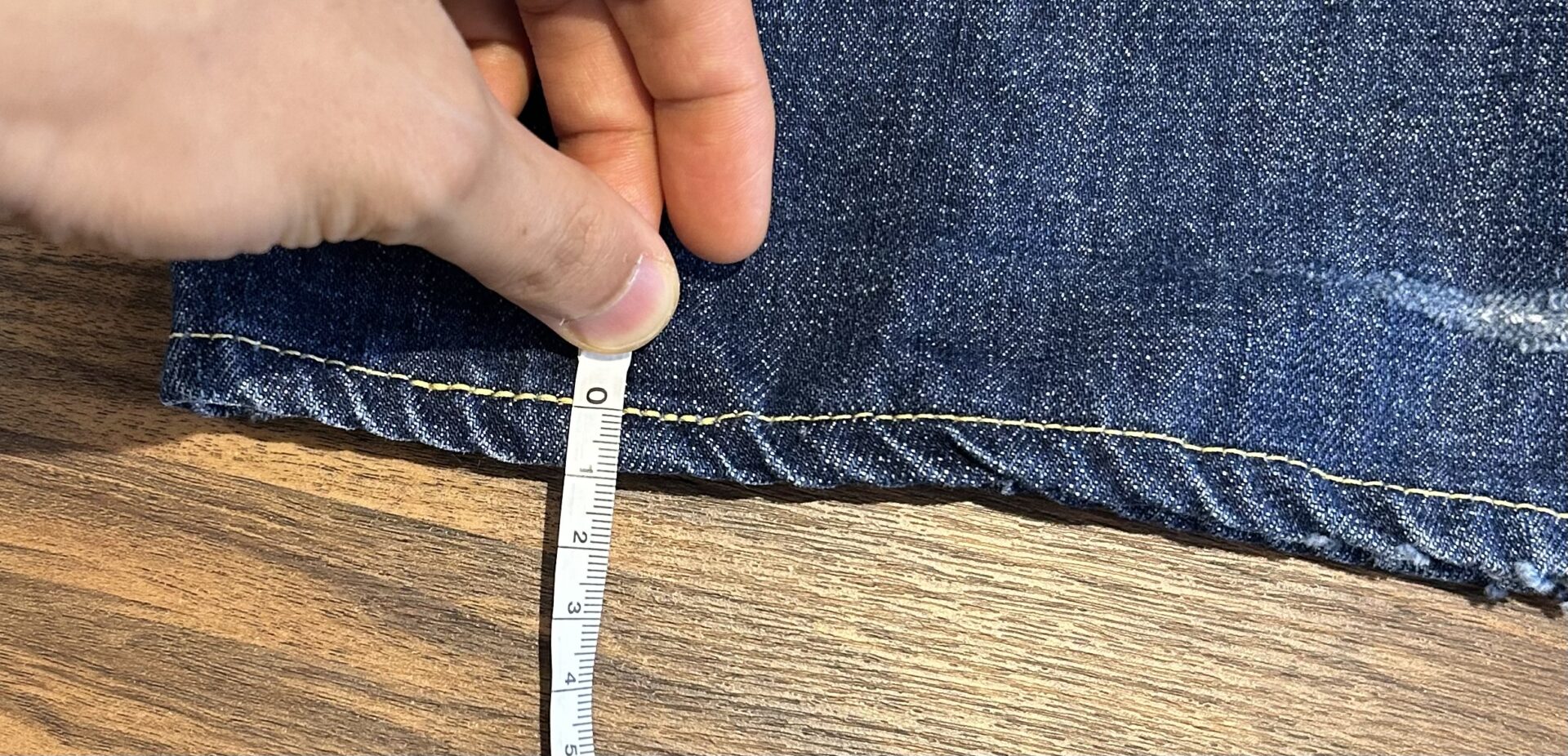
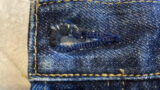
I’m not sure what to properly call it, but this length here—from the very edge of the hem to the stitching (please see the opening photo).
When hemming denim, I believe this is an extremely important point.
What does this length actually change?
And specifically, how many millimeters is ideal?
This time, I’d like to take a closer look at that.
About Chain Stitching
Before getting into the main topic, let me briefly explain chain stitching.
If you already know this, feel free to skip ahead.
Chain stitching is one type of sewing method. From the front side of the fabric it looks normal, but when you look at the reverse side, the thread literally forms a chain-like pattern.
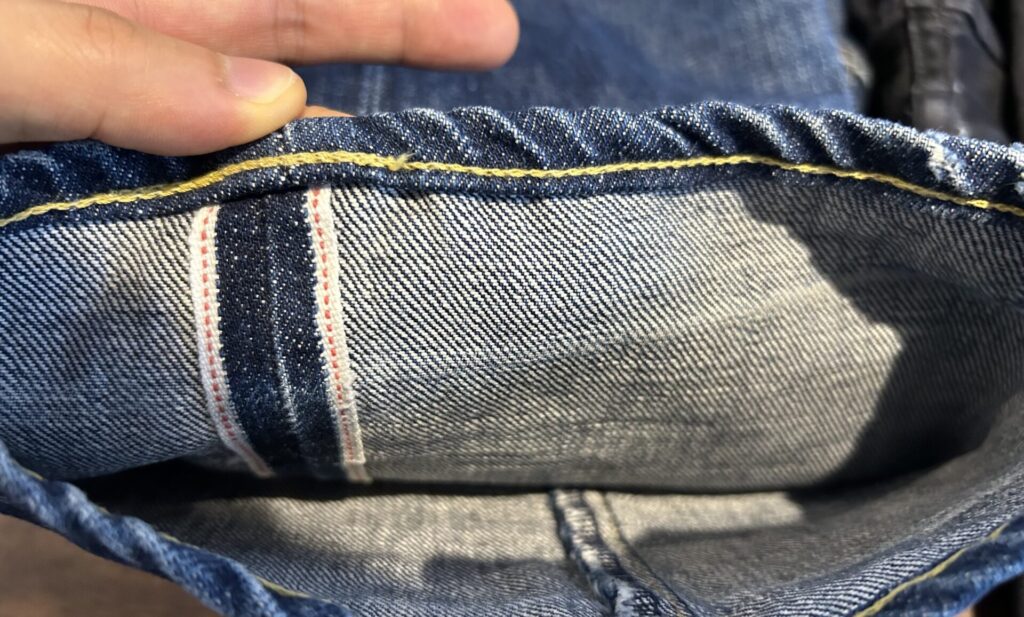
Among people who like vintage denim, many tend to prefer chain stitching.
The reason chain stitching is appreciated is the way the fading appears after repeated washing. Compared to regular stitching, it simply looks better.
More specifically, with chain stitching, the fading appears diagonally. With regular stitching, the fading appears straight.
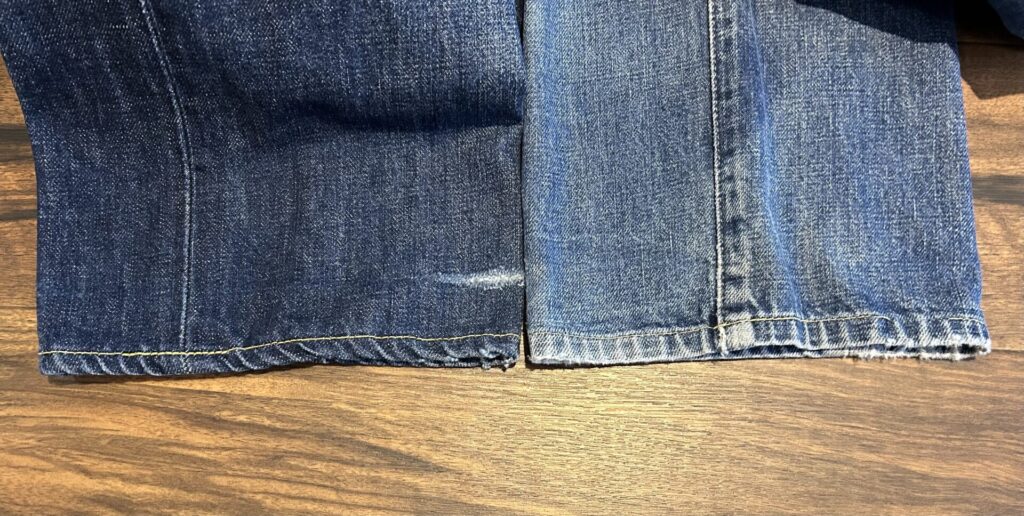
If you ask me what exactly is cool about diagonal fading, I honestly don’t know.
There’s a good chance I’ve simply been conditioned to think diagonal fading looks cooler—but somehow, it really does.
To achieve this diagonal fading, there is an even deeper point involved: which sewing machine is used.
Not every sewing machine can do chain stitching, but there are many machines that can. It’s a bit like car autopilot systems.
However, older machines—specifically the UNION SPECIAL 43200G—are said to be ideal for producing diagonal fading. This is the machine that was (probably) actually used back when what we now call “vintage denim” was still being made as regular production items.
Please compare these two hems.
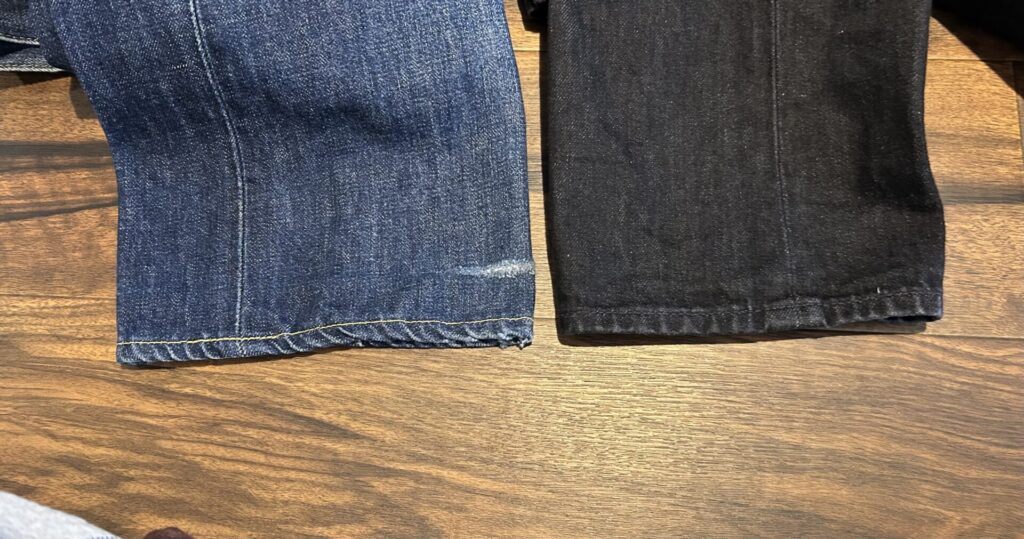
Both are chain stitched, but the blue denim shows diagonal fading, while the black denim shows straight, vertical fading.
The blue pair was hemmed using the UNION SPECIAL 43200G. The black pair was chain stitched using a different normal machine.
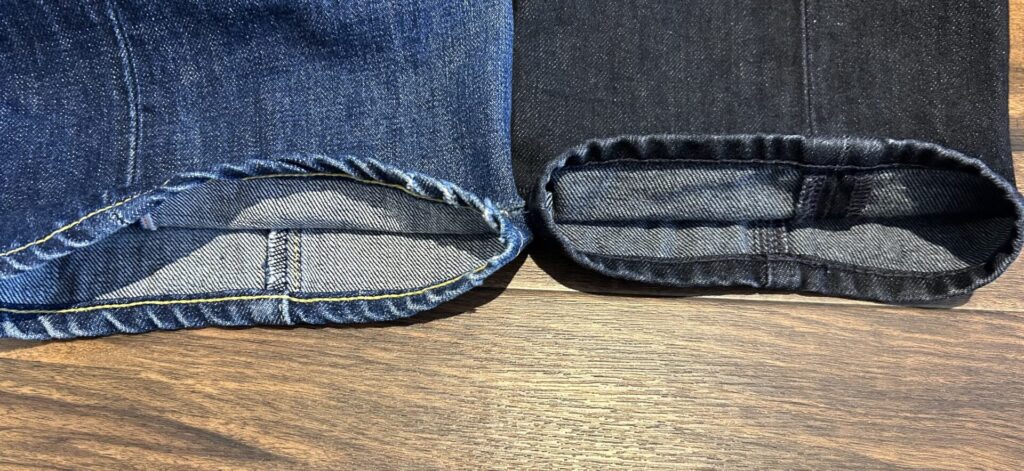
This clearly shows that not all chain stitching is the same.
How the Length from Hem Edge to Stitch Changes the Result
Next, let’s look at what actually changes depending on the distance from the hem edge to the stitching.
What changes is the width (or fineness) of the diagonal fading.
The longer the distance from the hem edge to the stitch, the wider the fading becomes. The shorter the distance, the finer and tighter the fading appears.
Below is a comparison using the exact same denim model, Levi’s 503B, hemmed with a 10 mm (0.39 inch) allowance versus an 8 mm (0.31 inch) allowance.
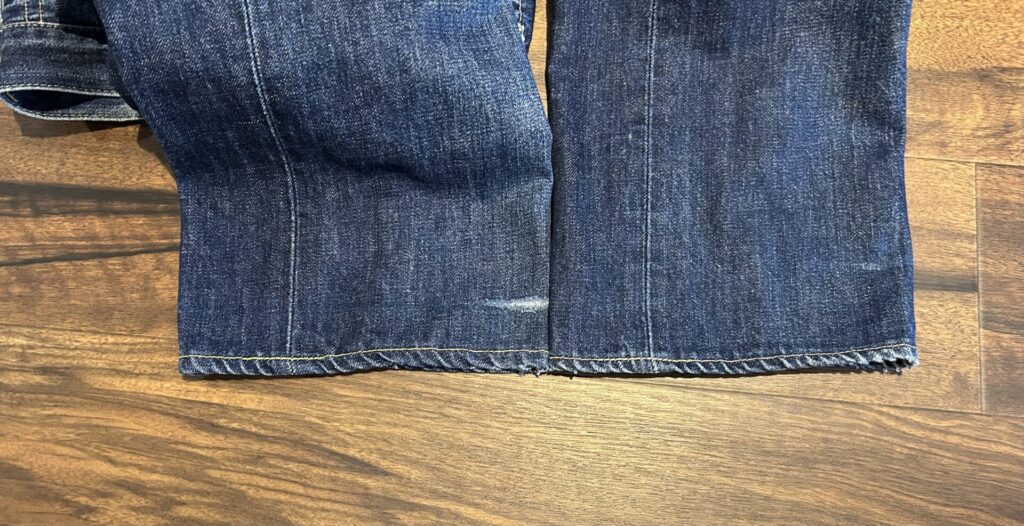
Both were done by the same shop, using the exact same UNION SPECIAL 43200G machine.
The 10 mm hem shows wider fading, while the 8 mm hem shows finer fading.
There is no right or wrong here—it’s purely personal preference. That said, I personally prefer the finer look of 8 mm.
About 10 mm seems to be the maximum recommended length. Any longer than that, and the fading becomes difficult to appear at all.
How to Bring Out Fading Faster
If you buy brand-new rigid denim (with starch still in it), this isn’t an issue. But when buying second-hand denim, hemming creates a problem.
The denim overall may already have fading, but the hem shows none—making it obvious that the jeans were bought used and then hemmed later.
Repeated washing will eventually fix this, but you can’t realistically wash denim every day. Still, you want the fading to appear sooner.
In that case, I recommend a simple method.
Wash only the hem.
Soak just the hem in water, squeeze it firmly by hand, and hang it to dry.
Do this every day for one week, and the fading will appear quite noticeably.
Depending on conditions, it may start to smell damp, so adding detergent once every three washes might be a good idea.
Don’t Forget Non-Blue Denim
Denim comes in many colors—blue, black, white, and others. The darker the original color, the more visible the hem fading becomes, making proper chain stitching more noticeable.
White denim, on the other hand, barely shows fading.
I recently bought a deadstock pair of white denim second-hand.
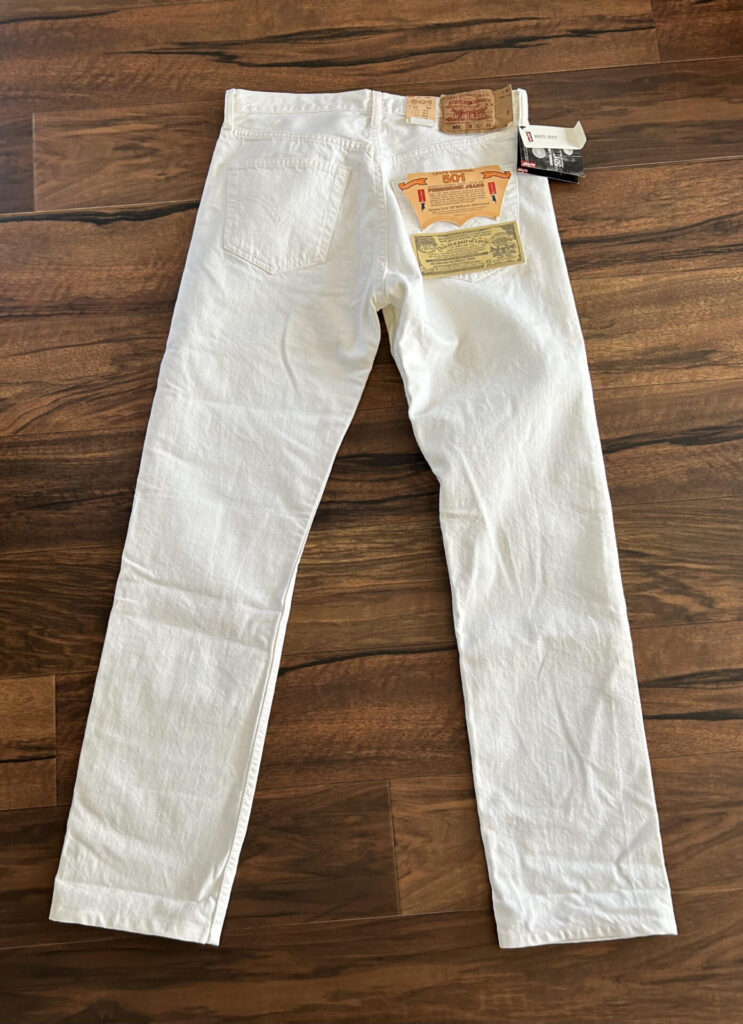
The distance from the hem edge to the stitch is about 15 mm (0.59 inch), and it’s not chain stitched. Even after washing, almost no fading appears, and visually it feels flat and dull. Perhaps it’s because of the 15 mm length.
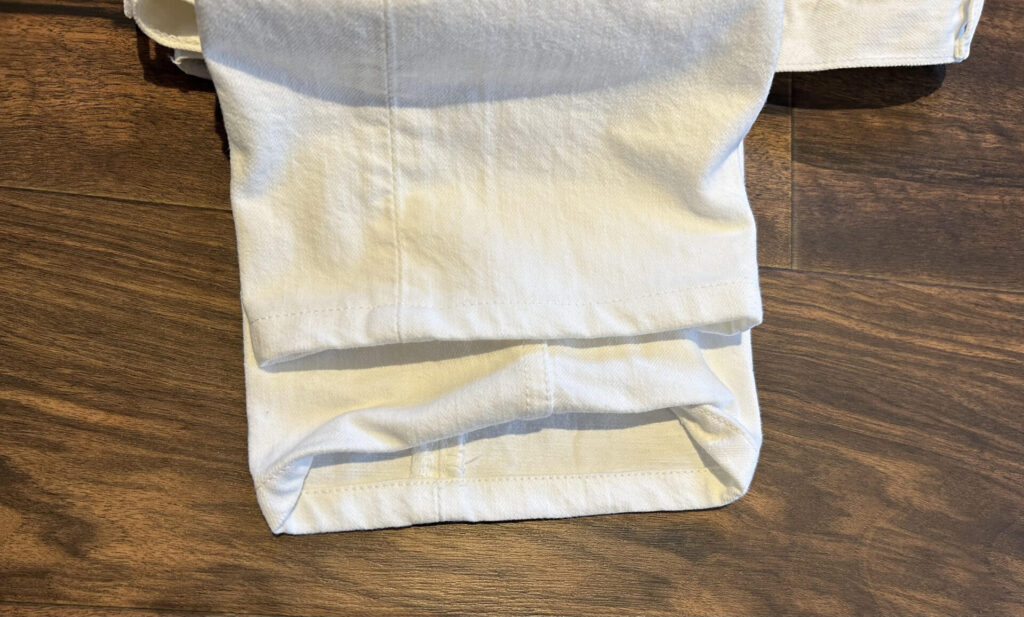
Since fading is hardly visible on white denim, I initially thought there was no need to switch to chain stitching. However, I still can’t bring myself to like the result, so I’ve decided to send them for alterations and have the hem redone with an 8 mm chain stitch.
Conclusion
My personal recommendations for denim hemming are:
Chain stitching using a UNION SPECIAL 43200G machine
A hem length of 8 mm (0.31 inch) from edge to stitch
That’s all.
Thank you very much for reading.




コメント